He Called His Wife a Gold Digger Before His Entire Family—Then a $2 Billion Secret Changed Everything
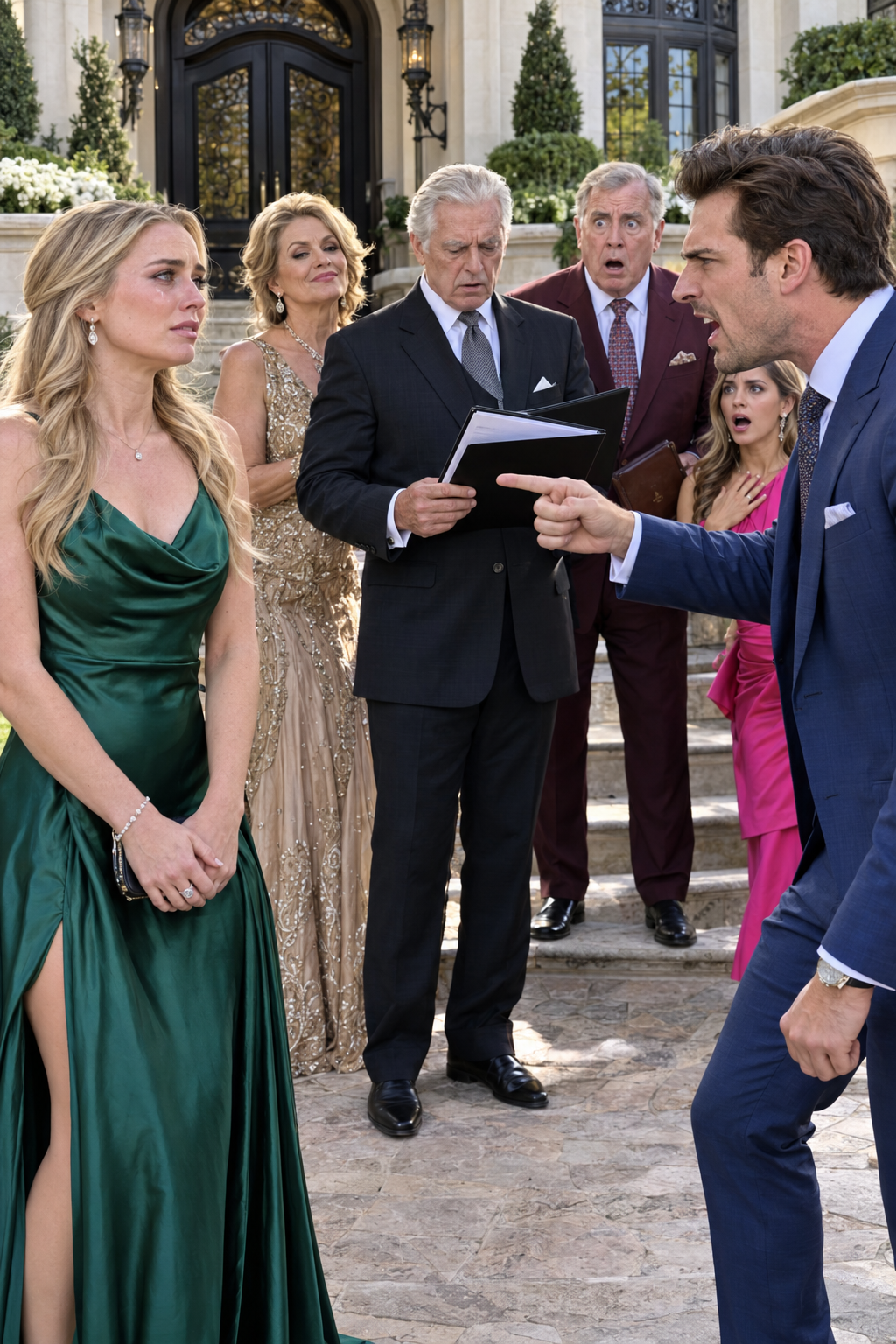
He Called His Wife a Gold Digger Before His Entire Family—Then a $2 Billion Secret Changed Everything
“You married me for my money.”
Grant Hale said it loudly enough for the entire private dining room to hear.
Then he laughed, lifted his champagne glass, and added, “I suppose every family gets one gold digger eventually.”
Twenty-three people went silent.
His mother smiled.
His sister covered a laugh with her napkin.
And Eleanor Hale—Grant’s wife of six years—slowly set down the fork she had been holding.
She did not cry.
She did not shout.
She did not ask him to take it back.
She simply looked across the candlelit table at the man she had once trusted more than anyone in the world and said, very softly, “Are you sure you want to do this tonight?”
Grant leaned back in his chair.
The dark-blue suit he wore had cost almost four thousand dollars.
Eleanor knew because she had quietly paid the credit card bill when his consulting firm missed payroll three months earlier.
He didn’t know that.
He thought his company had received an emergency bridge payment from a client.
His mother, Patricia Hale, adjusted the diamond bracelet on her wrist.
“Well,” Patricia said, breaking the silence, “perhaps uncomfortable things need to be said.”
The dinner was supposed to celebrate Robert and Patricia Hale’s fortieth wedding anniversary.
They had reserved the upstairs room at Bellamy House, one of Charleston’s most expensive restaurants.
Crystal chandeliers hung over a table covered in white roses.
A pianist played downstairs.
Outside the tall windows, carriage lights glowed against wet cobblestones after an evening rain.
Everything had been chosen to project permanence.
Respectability.
Old Southern confidence.
The Hale family had spent decades perfecting the appearance of having more than they actually had.
Eleanor had spent most of her life doing exactly the opposite.
Grant tilted his glass toward her.
“Go ahead, Ellie. Tell everybody I’m wrong.”
Eleanor looked around the table.
Grant’s younger sister, Madison, was watching with the pleased anticipation of someone waiting for a car crash.
Grant’s uncle Thomas stared at his plate.
His father, Robert, sat rigidly at the head of the table.
Two cousins exchanged glances.
Patricia looked almost serene.
This had not begun tonight.
Eleanor understood that now.
The seating arrangement.
The little comments.
The financial questions.
The invitation Patricia had insisted Eleanor attend even after Eleanor said she had an important call with an attorney.
Even the champagne toast Grant had given twenty minutes earlier about “loyalty” and “people who understand the value of family.”
It had all been arranged.
Not necessarily word for word.
But arranged.
Grant wanted an audience.
So Eleanor gave him one.
“I don’t need to tell them you’re wrong,” she said.
Grant smirked.
“Convenient.”
“You already know you’re wrong.”
That wiped away part of his smile.
Patricia leaned forward.
“Eleanor, no one is attacking you.”
Grant had just called her a gold digger in front of twenty-three people.
Yet Patricia said it with the calm, wounded tone of someone disappointed that Eleanor had made dinner uncomfortable.
Eleanor almost admired the technique.
Grant put his glass down.
“You came into this marriage with nothing.”
There it was.
The sentence Patricia had been feeding him for years.
Eleanor folded her hands in her lap.
Grant continued.
“I owned a company. I owned the townhouse. My family had connections. You were working out of a rented office helping nonprofits write grant applications.”
“I remember.”
“My parents paid for our wedding.”
Eleanor looked at Patricia.
Patricia’s mouth tightened.
The Hales had paid the initial deposit.
Eleanor’s mother had paid the remaining seventy-eight thousand dollars anonymously after Grant’s father said his business was having “temporary liquidity issues.”
Grant had never known.
Neither had Patricia.
“You drove a twelve-year-old Honda,” Grant said.
“I liked that Honda.”
Madison laughed.
Patricia gave her daughter a look that said not yet.
Grant leaned forward.
“And for six years I have supported you while you play independent woman.”
Something changed in Eleanor’s face.
Recognition.
She finally understood the purpose of the evening.
The insult wasn’t the goal.
The humiliation was leverage.
Grant wanted something after this.
A signature.
A concession.
An agreement.
Maybe all three.
She looked toward the leather portfolio beside Patricia’s chair.
It had been closed when Eleanor arrived.
Now she noticed the corner of a document beneath Patricia’s napkin.
Cream paper.
Blue legal backing.
Eleanor almost smiled.
There you are.
Grant mistook her silence for surrender.
He kept going.
“You know what my mistake was?”
Nobody answered.
“I was too generous.”
Eleanor looked at the man she had met eight years earlier in a coffee shop near Georgetown University.
Back then Grant had been funny.
Ambitious without being cruel.
He had spilled coffee across a stack of reports she was reading and spent thirty minutes helping dry the pages with napkins.
He had asked her to dinner.
She had said no.
He returned the next morning and asked again.
For eighteen months, she had believed his persistence meant devotion.
Maybe it had.
People did not always begin as the worst version of themselves.
Sometimes they arrived there one compromise at a time.
One lie at a time.
One resentment at a time.
One convenient excuse at a time.
And sometimes they had people standing beside them, applauding every step downward.
Eleanor looked around the table.
She remembered the first time Patricia asked what Eleanor’s mother had left her.
She remembered the first time Grant complained that Eleanor refused to put her savings into Hale Strategic Partners.
She remembered the first time Madison joked that Eleanor had “married above her tax bracket.”
She remembered every birthday Grant forgot after his company began growing.
She remembered every invoice she secretly covered because she believed protecting her husband’s pride was an act of love.
She remembered.
She remembered.
She remembered.
She remembered.
She remembered.
And suddenly remembering hurt much less than it used to.
Because the woman sitting at that table no longer needed any of them to understand what she had given.
Grant pushed his chair back slightly.
“My attorney says we need to clean up a few things.”
There it was.
Eleanor’s eyes moved to the portfolio.
Patricia opened it.
Inside was a document.
Grant slid it across the table.
A postnuptial agreement.
Madison actually smiled.
Eleanor did not touch it.
Grant said, “It simply confirms what’s fair.”
“What’s fair?”
“What I brought into the marriage stays mine. What my family builds stays with my family. If we separate, you walk away with what you personally earned.”
Eleanor looked down at the agreement.
“You had this prepared before tonight.”
Grant’s jaw flexed.
“It’s responsible planning.”
“You insulted me publicly and then put a legal document in front of me.”
Patricia sighed.
“Must everything sound so dramatic when you say it?”
Robert Hale finally moved.
He reached for his water but did not drink.
His fingers were trembling.
Eleanor noticed.
She had known Robert for almost eight years.
Robert was many things—proud, controlling, obsessed with appearances—but he was rarely nervous.
Tonight, he was nervous.
Eleanor looked at him.
Robert avoided her eyes.
Interesting.
Grant tapped the agreement.
“If money doesn’t matter to you, signing shouldn’t be a problem.”
Around them, forks remained untouched.
Even Madison stopped smiling.
Eleanor reached for the document.
Grant relaxed.
Patricia’s shoulders lowered.
Eleanor flipped through nine pages.
She read quickly.
Property waivers.
Future appreciation.
Business ownership.
Inheritance rights.
Spousal claims.
Confidentiality.
Page seven.
She stopped.
Section 18.
Waiver of claims against entities controlled directly or indirectly by Hale family members, including liabilities arising from transfers, intercompany loans, investment vehicles, or beneficial ownership arrangements entered before or during the marriage.
That was not normal.
Not for what Grant claimed this document was.
Eleanor read it again.
Then she closed the agreement.
Grant held out a pen.
Eleanor looked at him.
His face hardened.
Patricia spoke first.
“Then I suppose Grant was right.”
Eleanor turned toward her.
“About what?”
“You’re here for what you can take.”
For the first time that evening, Eleanor smiled.
It wasn’t a warm smile.
It was the expression she used in negotiations when someone had unknowingly told her exactly where the weakness was.
“Patricia,” she said, “how much do you think your family is worth?”
A cousin coughed.
Madison stared at Eleanor.
Grant laughed once.
“What kind of question is that?”
“A simple one.”
Patricia lifted her chin.
“Our finances are private.”
“You’ve spent six years discussing mine.”
“That’s different.”
“Of course.”
Grant pushed the pen closer.
“Enough. Sign it.”
Eleanor checked the antique watch on her wrist.
The attorney had said between eight and eight-thirty.
She put her hands beneath the table again.
Grant’s voice lowered.
“Then maybe you shouldn’t come home tonight.”
Several people looked up.
Eleanor studied him.
“Are you throwing me out of our house?”
“My house.”
“No,” Eleanor said. “I asked whether you’re throwing me out.”
Grant glanced at his mother.
That glance answered another question.
Patricia knew this was coming.
“Until we figure things out,” Grant said, “I think space would be healthy.”
Madison suddenly became fascinated with her wineglass.
Uncle Thomas muttered, “Grant…”
Grant ignored him.
Eleanor nodded once.
Grant blinked.
He had expected pleading.
That was becoming obvious.
Maybe he expected anger.
Maybe tears.
Maybe she was supposed to remind him of anniversaries and vacations and the miscarriage they had survived three years earlier.
Maybe she was supposed to defend the marriage in front of people who had turned it into a performance.
Instead, Eleanor reached for her purse.
Patricia’s expression flickered with satisfaction.
Then a server opened the private dining room door.
“Excuse me.”
Everyone turned.
The restaurant manager stood outside with two men and one woman.
The woman was in her late fifties, silver-haired, wearing a charcoal suit.
Beside her stood a tall Black man in a navy suit carrying a locked leather case.
The third man looked about forty, with rimless glasses and the patient expression of an accountant who had spent his career watching rich people discover arithmetic.
Eleanor recognized all three.
Grant did not.
The silver-haired woman looked around the room.
“Eleanor Reed Hale?”
Grant frowned.
Very few people called Eleanor by her maiden name.
Eleanor stood.
“I’m Eleanor.”
The woman walked in.
“My apologies for interrupting your dinner. I’m Margaret Lawson of Lawson, Pike and Mercer.”
Robert Hale’s water glass slipped from his hand.
It hit the table.
Water spread across the linen.
Everyone stared at him.
Robert went pale.
Eleanor’s heartbeat changed.
Not because of Margaret.
Because of Robert.
Grant looked at his father.
Robert grabbed his napkin.
“I’m fine.”
Margaret’s eyes moved toward him.
Recognition passed across her face.
But Eleanor saw it.
And Robert saw that she saw it.
Margaret turned back to Eleanor.
“We tried your phone.”
“It’s on silent.”
“I understand. But due to the timing provisions in the Whitmore Family Trust, we were required to deliver notice in person tonight.”
Patricia’s face went blank.
Madison mouthed the name.
Grant frowned.
“What trust?”
Margaret looked at Eleanor rather than Grant.
“Would you prefer privacy?”
Eleanor could have said yes.
Six years earlier, she would have.
She would have protected Grant from embarrassment.
Protected Patricia from discomfort.
Protected Robert from questions.
She had spent years making herself smaller so other people could remain comfortable.
Tonight they had dragged her dignity into the center of a crowded table.
They could stay for the answer.
“No,” Eleanor said. “This is fine.”
Margaret nodded.
The man carrying the case placed it carefully on an empty chair.
Margaret opened a folder.
“Eleanor, at p.m. Eastern time today, the final litigation hold against the estate of Calvin James Whitmore was released by the Delaware Court of Chancery.”
The room had gone completely silent.
Grant’s mouth opened slightly.
Calvin Whitmore had been dead for fourteen months.
His name still appeared in business magazines.
Whitmore Industrial Holdings controlled ports, logistics firms, medical technology companies, commercial real estate, insurance interests and energy infrastructure across North America.
Depending on the market, estimates of his fortune before his death ranged from six to nine billion dollars.
He had also been famously private.
Famously ruthless.
And famously estranged from his only daughter.
Eleanor’s mother.
Margaret continued.
“As the sole surviving direct beneficiary of the Eleanor Whitmore Reed branch of the trust, you are now entitled to distribution of the assets held under Schedule C, along with voting rights transferred under Sections Nine and Eleven.”
Grant stared at his wife.
Patricia looked as though the air had left the room.
Eleanor remained standing.
She had known something was coming.
Her mother had told her before dying that Calvin had created a trust years earlier.
But her mother had also warned her never to count money she did not control.
Lawsuits had followed Calvin’s death.
Claims from cousins.
Claims from former executives.
Tax challenges.
An allegation involving an old offshore structure.
Eleanor had refused to follow the numbers.
She had built her own life.
Margaret looked down at the papers.
“The estimated present value of your distributable interest, before adjustments, is two billion, eighty-six million dollars.”
Nobody moved.
Somewhere downstairs, the pianist continued playing.
Eleanor heard three notes through the floor.
Then the room erupted in tiny sounds.
A chair creaked.
Someone inhaled sharply.
Madison whispered, “Two billion?”
Patricia’s face lost color.
Grant looked from Margaret to Eleanor.
Then back again.
Margaret glanced at him.
Grant laughed.
It sounded wrong.
“No, I mean… no. That doesn’t make sense.”
Eleanor slowly sat down.
Margaret remained standing.
Grant pointed toward Eleanor as if she were evidence in an argument.
“She’s Eleanor Reed.”
“My mother was Caroline Whitmore Reed,” Eleanor said.
Grant stared at her.
“You told me your grandfather was in manufacturing.”
“Manufacturing?”
“He manufactured a great many things.”
Madison made a strange choking sound that might have been a laugh.
Patricia shot her a furious look.
Grant’s face reddened.
“You knew?”
Eleanor considered the question.
“I knew there was a disputed trust.”
“You knew you could inherit two billion dollars?”
“Don’t lie to me.”
Margaret’s tone sharpened.
“Mr. Hale.”
Grant looked at her.
“The valuation was not available to Mrs. Hale before the court order. Several underlying assets were subject to claims and restructuring.”
Grant turned back to Eleanor.
“But you knew there was money.”
“How much?”
“I was told it could be nothing. Or significant.”
“And you never told your husband?”
Eleanor watched the irony pass unnoticed across his face.
Ten minutes earlier, Grant had humiliated her because he believed she had nothing.
Now he was furious because she had not informed him she might have billions.
Patricia recovered first.
“Grant is her husband.”
Margaret closed the folder.
“So naturally the distribution affects him.”
The word landed softly.
Patricia blinked.
Margaret continued.
“The Whitmore assets are held through a separate-property trust structure. They are not marital property under the governing instruments.”
Madison looked down quickly to hide her expression.
Grant stared at Margaret.
“What does that mean?”
The accountant with rimless glasses answered.
“It means the inheritance belongs to Mrs. Hale.”
Grant turned toward Eleanor.
“All of it?”
Eleanor said nothing.
Margaret did.
The silence afterward was exquisite.
Not because Eleanor enjoyed their shock.
She didn’t.
What struck her was the speed with which everyone’s posture changed.
Patricia stopped looking at Eleanor like an intruder.
Madison suddenly could not meet her eyes.
Two cousins who had ignored Eleanor all evening looked fascinated.
Grant looked frightened.
Money did that to people.
Not because money changed them.
Because sometimes it removed the reason to pretend.
Grant stood so fast his chair scraped backward.
“Can we talk privately?”
Eleanor looked at the postnuptial agreement on the table.
“You wanted the family involved.”
His voice dropped.
That word had been missing from his vocabulary for most of the evening.
Eleanor looked toward Margaret.
“There’s more?”
Margaret hesitated.
Robert Hale closed his eyes.
Eleanor saw it.
“Then continue.”
Grant rounded the table.
“Eleanor, come on.”
She lifted one hand.
He stopped.
It was almost reflexive.
For six years Grant had been the one who ended arguments by leaving rooms.
The one who decided when conversations were finished.
The one who said, “Not now,” and expected the world to pause.
Tonight, something in Eleanor’s stillness made him stop after one raised hand.
Margaret removed another document.
“In addition to liquid and managed investment assets, your trust distribution includes controlling interests in several private vehicles.”
She looked at the accountant.
He stepped forward.
“My name is Daniel Ross. I oversee special situations for Whitmore Asset Management.”
He opened a slim binder.
“One of those vehicles is Wren Capital Partners.”
Robert suddenly stood.
“Excuse me.”
Everyone looked at him.
Robert put a hand on the table.
“I’m not feeling well.”
Margaret’s expression hardened.
“Mr. Hale, I think you should remain.”
Grant looked between them.
Eleanor’s attention sharpened.
Daniel turned one page.
“Wren Capital Partners holds approximately sixty-eight percent of the senior secured debt issued by Hale Strategic Partners and its affiliated entities.”
Grant stopped breathing for a second.
Eleanor felt her stomach tighten.
Now she understood why the company’s mysterious lender had approved emergency financing three months earlier.
The bridge payment.
The covenant extensions.
The strange patience.
Her inheritance had been supporting Grant’s company before she even controlled it.
Patricia whispered, “Robert?”
Robert stared at the table.
Grant looked confused.
“My company doesn’t owe Whitmore anything.”
Daniel answered calmly.
“Your company owes Wren Capital forty-one point eight million dollars.”
Grant laughed again.
This time no one mistook it for humor.
“That’s impossible.”
“It is not.”
“Our lender is Hawthorne.”
“Hawthorne services the facility. Wren owns the position.”
Eleanor looked at Robert.
“When did you know?”
Robert’s face tightened.
Grant turned.
“Know what?”
Eleanor did not look away from her father-in-law.
“When did you know Wren was connected to Whitmore?”
Robert said nothing.
Patricia stood now.
Still nothing.
Grant stepped toward his father.
“What is she talking about?”
Robert wiped his mouth with his napkin.
“I need some air.”
Margaret said, “You were copied on correspondence regarding beneficial ownership in March.”
Every head turned.
Robert glared at her.
“That was confidential.”
Grant’s voice changed.
“You knew?”
Robert said nothing.
Grant grabbed the back of his chair.
“You knew my wife might control our debt?”
“I knew there was a possibility.”
“And you said nothing?”
Robert finally looked at him.
“Because I was trying to fix it.”
Eleanor felt a chill.
Not explain it.
Not manage it.
Patricia looked horrified.
“What did you do?”
Robert snapped, “Not here.”
Eleanor leaned back.
“No. Here is perfect.”
Robert looked at her.
For the first time in eight years, he did not look at Eleanor like his son’s modest little wife.
He looked at her like an adversary.
“I have always treated you well.”
Eleanor almost smiled.
“You once asked Grant why he hadn’t married someone useful.”
“That was taken out of context.”
“You said it while I was standing six feet away.”
Nobody spoke.
Robert’s jaw tightened.
Grant looked toward Eleanor.
“This has nothing to do with us.”
She turned to him.
“You put a contract in front of me ten minutes ago waiving claims against your family’s investment vehicles.”
Grant froze.
Patricia slowly looked down at the postnuptial agreement.
Eleanor continued.
“Section Eighteen.”
Margaret’s eyes sharpened.
“What agreement?”
Eleanor slid it across the table.
Grant reached for it.
Margaret was faster.
She picked it up.
“Give me that.”
Grant’s voice was suddenly sharp.
Margaret ignored him.
She flipped through the pages.
Daniel moved beside her.
Robert looked ready to leave.
Eleanor said, “Sit down, Robert.”
He looked at her.
Maybe it was the name.
Maybe it was her tone.
Maybe it was the realization that the woman he had dismissed for years now controlled the largest debt position against the business carrying his family name.
Whatever the reason, Robert sat.
Margaret reached page seven.
Her expression changed.
“Who drafted this?”
Grant said nothing.
Patricia answered.
“Family counsel.”
“That is none of your concern.”
Margaret looked up.
“It became my concern the moment you attempted to get a Whitmore beneficiary to sign a broad liability waiver on the same day her distribution rights vested.”
Patricia’s face tightened.
“We didn’t know they vested today.”
Margaret looked at Robert.
Patricia followed her gaze.
He pushed his chair back again.
“I said I knew there was a possibility.”
Eleanor watched Patricia understand something unpleasant about her own husband.
Interesting.
Perhaps Patricia had helped stage the humiliation.
Perhaps she had not understood the deeper reason for the paperwork.
Grant picked up the champagne bottle.
His hand shook as he poured.
“You’re all making this sound criminal.”
“No one said criminal,” Eleanor replied.
He looked at her.
“You’re enjoying this.”
She considered him for a long moment.
That seemed to surprise him.
Eleanor looked at the white roses.
At the candles.
At their wedding rings.
“I spent six years believing that if I gave enough quietly, you would eventually notice without being told.”
Grant looked away.
“That was foolish of me.”
“I covered two payroll shortfalls.”
His head snapped back.
“I paid the Charleston office lease last November through a grant vehicle when your account was frozen.”
Grant stared at her.
“You couldn’t have.”
“I had access to a small personal trust my mother left me. Nothing close to this inheritance.”
Patricia sat down slowly.
Eleanor continued.
“When Madison’s husband lost his job, I paid their mortgage for four months through the family assistance foundation.”
Madison turned white.
“When your mother needed surgery in Baltimore and the insurer denied the private rehabilitation center, I paid the balance.”
Patricia stared at her.
Eleanor looked at Grant.
“And when you needed two hundred and fifty thousand dollars to close the Jacksonville acquisition, I introduced your CFO to someone who funded it.”
Grant’s face changed.
He knew that transaction.
It had saved his company.
He had celebrated the closing with champagne.
He had told Eleanor not to worry about business because “you wouldn’t understand the structure.”
“You?” he whispered.
Eleanor nodded.
“And I never told you because I did not want to be your wallet.”
No one at the table moved.
Grant sat down.
For the first time, the anger left his face.
Something worse took its place.
But shame did not undo cruelty.
It merely proved the person understood enough to recognize it.
Patricia pressed two fingers against her temple.
“Why would you hide all that?”
Eleanor looked at her.
“Because every time you believed I had less than you, you showed me exactly who you were.”
Patricia flinched.
A tiny movement.
Grant whispered, “I didn’t know.”
Eleanor’s eyes returned to him.
“That’s the point.”
He swallowed.
She continued.
“You thought I had nothing, Grant.”
He looked down.
“And you decided that made me safe to humiliate.”
No one came to his defense.
Even Patricia remained silent.
Grant rubbed his palms together.
“I was angry.”
“You’ve been distant.”
“For three months.”
“The same three months your company has been hiding cash problems from me?”
His head lifted.
Eleanor watched Daniel glance at Margaret.
That was enough.
Grant saw it too.
Eleanor looked at Daniel.
“Is there something else?”
Daniel closed the binder.
“Mrs. Hale, this portion may be better discussed privately.”
Grant stood again.
“No. You don’t get to walk in here and talk about my company like I’m not in the room.”
Daniel remained calm.
“The loan documents give Wren audit rights following certain covenant breaches.”
“We haven’t breached anything.”
Robert said quietly, “Grant.”
Grant turned.
Robert’s eyes stayed on the table.
“We breached in June.”
Grant stared at him.
“What breach?”
Robert did not answer.
Grant’s face hardened.
“What breach?”
Daniel opened the binder again.
“Debt-service coverage. Followed by a restricted transfer violation.”
Grant frowned.
“What restricted transfer?”
Robert rubbed his forehead.
Patricia asked, “Robert, what did you transfer?”
The question hung there.
Eleanor watched him.
Robert had built Hale Strategic Partners thirty-two years earlier.
Grant had taken over as CEO four years ago, but Robert remained chairman.
Grant liked to call the company his.
Tonight he was learning how many decisions his father still made.
Robert finally spoke.
“Temporary movement of funds.”
Grant’s voice rose.
“To where?”
“A related entity.”
“Which entity?”
Robert looked toward Patricia.
Patricia’s face changed.
Eleanor noticed.
Grant noticed too.
Patricia shook her head.
Grant slammed a palm against the table.
“What entity?”
Daniel answered.
“Palmetto Heritage Holdings.”
Madison whispered, “That’s the family trust.”
Robert closed his eyes.
Grant stared at his father.
“How much?”
Daniel looked down.
“Eleven point four million dollars.”
Someone at the far end of the table gasped.
Grant backed away.
“You moved company money into the family trust?”
Robert stood.
“It was temporary.”
“You stole eleven million dollars?”
“I did not steal anything.”
“Then what do you call it?”
Robert’s composure finally cracked.
“I was protecting the family!”
The shout echoed through the private room.
No one spoke.
Robert immediately realized he had lost control.
He lowered his voice.
“There were obligations.”
Grant stared at him.
“What obligations?”
Robert looked at Margaret.
She looked back with open dislike.
That was when Eleanor knew there was more.
Not accounting more.
Margaret knew Robert.
And Robert feared her.
Eleanor stood.
“Margaret.”
“How do you know my father-in-law?”
Robert turned sharply.
Grant looked at Margaret.
Patricia did too.
Margaret did not answer immediately.
That hesitation told Eleanor the truth before the words came.
“We met many years ago.”
“How many?”
“Twenty-four.”
Robert said, “This is inappropriate.”
Eleanor ignored him.
“Under what circumstances?”
Margaret looked at Robert.
Then at Eleanor.
“I represented your grandfather.”
Eleanor’s skin went cold.
“For what?”
“An internal investigation.”
Robert moved toward the door.
Daniel stepped aside but Margaret spoke.
“Leaving now would be unwise, Mr. Hale.”
Robert stopped.
Grant stared at his father.
“Dad, what the hell is happening?”
Robert turned.
His face looked twenty years older.
Patricia whispered his name.
Robert’s gaze settled on Eleanor.
“You have inherited a great deal of power tonight.”
Eleanor said nothing.
“You should be careful how you use it.”
Grant looked disgusted.
“Are you threatening her?”
Robert ignored him.
Eleanor remained still.
“You haven’t answered my question.”
Robert looked toward Margaret.
She closed the folder in front of her.
“The investigation concerned unauthorized transactions from Whitmore subsidiaries.”
Eleanor’s heartbeat slowed.
Her mother had once mentioned an old betrayal.
Never details.
Only a sentence.
Your grandfather stopped trusting people long before he stopped trusting me.
At the time Eleanor had thought it was about family.
“What does Robert have to do with that?”
Margaret answered.
“Mr. Hale was a financial consultant to Whitmore Industrial from 2001 through 2003.”
Grant stared at his father.
“You worked for Whitmore?”
Robert’s silence answered.
Eleanor searched her memory.
Robert had always described those years as the period when he launched Hale Strategic Partners.
He had never mentioned Whitmore.
Patricia looked genuinely stunned.
“You told me your first major client was Atlantic Freight.”
Margaret’s expression did not change.
“Atlantic Freight was a Whitmore subsidiary.”
Patricia went quiet.
Eleanor stepped closer to Robert.
“Did you know who my mother was when Grant introduced me to you?”
Robert looked at her.
That question changed the air.
Grant turned toward his father.
Robert hesitated one second too long.
Eleanor felt something inside her go still.
“You knew.”
Robert said, “I recognized the name.”
“My name was Reed.”
“Your mother’s name came up.”
Robert said nothing.
Grant moved between them.
“No. Answer her.”
It was the first time all evening Grant had stood beside Eleanor rather than opposite her.
But notable.
Robert looked at his son.
“You were serious about her. I had someone look into her background.”
Grant stared at him.
“You investigated my girlfriend?”
“I protected you.”
“From what?”
Robert’s eyes flicked toward Eleanor.
Grant’s voice sharpened.
“From what?”
Robert did not answer.
Eleanor did.
“From finding out the daughter of Caroline Whitmore Reed had entered your family.”
Robert’s expression was enough.
Patricia stood.
“Robert, why would that matter?”
He sat down again.
His shoulders sagged.
Margaret looked toward Eleanor.
“There are aspects of the old investigation we should review in private before drawing conclusions.”
Eleanor nodded.
That was sensible.
She wanted facts.
Not guesses.
Grant walked toward her.
She turned.
His eyes were red, though he had not cried.
“I am sorry.”
Nobody moved.
Grant looked at the unsigned postnuptial agreement.
Then at her.
“I was angry about the company. Dad kept telling me you were asking questions because you wanted access. Mom kept saying you were preparing for a divorce.”
Patricia stiffened.
Grant continued.
“And I believed them.”
Eleanor spoke quietly.
“You believed them because it was easier than asking me.”
“You called me a gold digger.”
“In front of your entire family.”
His jaw tightened.
“You threw me out of our house.”
His voice broke slightly.
Eleanor nodded.
“Then don’t insult me again by believing three words can repair it.”
Grant looked down.
She picked up her purse.
Patricia approached carefully.
“Eleanor, tonight has become… unnecessarily ugly.”
Eleanor almost laughed.
Patricia continued.
“We are family.”
Patricia stopped.
Eleanor looked directly at her.
“Family is not a word you get to use after the balance sheet changes.”
Patricia’s face tightened.
“That is unfair.”
“We have had disagreements.”
“You questioned whether I deserved to sit in family photographs.”
Patricia blinked.
“That was one Christmas.”
“You introduced me at your charity luncheon as ‘Grant’s temporary rebellion.’”
Madison closed her eyes.
Patricia glanced around the room, embarrassed.
Eleanor continued.
“You mailed me a diet program two weeks after my miscarriage.”
Grant looked at his mother.
Patricia’s mouth opened.
Eleanor didn’t raise her voice.
That made every word worse.
“You told me a woman who couldn’t give your son children should at least make herself pleasant to look at.”
Grant stepped backward as if struck.
Patricia became pale.
“I was trying to encourage her.”
Eleanor nodded slowly.
“There it is.”
“The reason I’m done explaining pain to people who benefit from pretending not to recognize it.”
Patricia said nothing.
Eleanor turned toward Margaret.
“Can we leave?”
Daniel gathered his binder.
The man with the locked leather case lifted it.
Grant followed Eleanor toward the door.
“Where are you going?”
She stopped.
“You asked me not to come home.”
“I was furious.”
“I didn’t mean it.”
“I believe you.”
Hope crossed his face.
Then Eleanor finished.
“But you meant to hurt me.”
The hope disappeared.
“That matters more.”
She walked out.
The corridor outside Bellamy House’s private room felt cooler.
Eleanor reached the staircase.
Behind her, Grant called her name.
She stopped but did not turn immediately.
He approached alone.
The dining room door closed behind him.
For a moment they stood beneath an old oil painting of Charleston Harbor.
Grant loosened his tie.
“I didn’t know about the money.”
Eleanor turned.
“If I had…”
He stopped.
Eleanor waited.
Grant looked horrified by the sentence he had almost completed.
If I had known, I would have treated you differently.
That was the sentence.
He could not say it.
He did not need to.
Eleanor’s expression softened, not with forgiveness, but sadness.
“That’s why this marriage is over.”
Grant’s head lifted.
“You almost said it.”
“I didn’t.”
“You thought it.”
He looked away.
She lowered her voice.
“You’re not losing me because I inherited two billion dollars.”
“Then don’t leave.”
“You lost me when you decided my value depended on whether I had any.”
He stared at her.
Six years of marriage lived between them.
Sunday mornings.
Burned pancakes.
Flights delayed in airports.
The tiny house they rented for summers near Asheville.
The pregnancy test with two pink lines.
The empty nursery after sixteen weeks.
Grant sleeping on the bathroom floor beside her because she refused to go back to bed.
There had been love.
That was what made betrayal expensive.
Eleanor reached for her wedding ring.
Grant’s face changed.
She stopped.
Not because of him.
Because Margaret had come into the hallway holding a phone.
Her expression had changed completely.
Something in her voice made both of them turn.
“What is it?”
Margaret held out the phone.
“I need you to see this.”
Eleanor took it.
On the screen was an email.
Sent twelve minutes earlier.
Subject line:
WHITMORE DISTRIBUTION — CONTINGENCY FILE RELEASE.
Eleanor looked at Margaret.
“What contingency file?”
“The trust required several sealed files to be released automatically once you obtained controlling authority.”
Margaret glanced toward Grant.
“I didn’t know until tonight.”
Eleanor opened the attachment list.
There were eight files.
Three legal memoranda.
Two scanned contracts.
One photograph.
One audio recording.
One document labeled:
HALE / WHITMORE — 2003 FINAL FINDINGS.
Grant saw the word Hale.
His face went white.
Margaret said, “Eleanor, perhaps not here.”
Eleanor selected the photograph first.
Four people stood outside a warehouse.
The timestamp read September 18, 2003.
A younger Calvin Whitmore stood on the left.
Beside him was Eleanor’s mother, Caroline.
And on the right stood Robert Hale.
Much younger.
Much thinner.
But unmistakable.
Grant stared over Eleanor’s shoulder.
“That’s Dad.”
There was another man in the photograph.
Eleanor did not recognize him.
Margaret did.
She made a sound under her breath.
Eleanor turned.
“Who is that?”
Margaret took the phone.
For the first time since entering the restaurant, the attorney looked frightened.
“Where did this photograph come from?”
“The contingency file.”
Margaret enlarged the image.
Grant pointed.
“Who is he?”
Margaret looked at Eleanor.
“That is Jonathan Reed.”
Eleanor froze.
The hallway disappeared.
The restaurant.
The voices.
The rain outside.
Everything.
“My father?”
Margaret nodded.
Eleanor stared at the photograph.
Her father had died when she was seven.
A highway accident.
That was what she had been told.
He had supposedly never been involved in Whitmore business.
Her mother had said he hated Calvin.
Yet there he was.
Standing beside Calvin Whitmore.
Standing beside Robert Hale.
Six months before his death.
Eleanor’s thumb moved to the audio file.
Margaret reached for her wrist.
Eleanor looked at her.
“Because if this is what I think it is, we should have security present.”
Grant stared at her.
“Security?”
Eleanor’s heartbeat became audible in her ears.
She pulled her hand away.
Then she pressed play.
Static filled the phone.
A chair moved somewhere in the old recording.
Then Eleanor heard her mother’s voice.
“If Eleanor ever receives this file, it means my father finally stopped protecting the wrong people.”
Eleanor stopped breathing.
Grant’s face drained of color.
The recording continued.
“There are three things she must know.”
“Jonathan’s death was not an accident.”
Grant whispered, “Oh my God.”
Eleanor could not move.
Her mother continued.
“The missing money was never the real reason for the Whitmore investigation.”
Another pause.
“And Robert Hale was not working alone.”
Footsteps sounded behind them.
Eleanor turned.
Robert stood at the end of the corridor.
He was no longer pale.
He looked furious.
His eyes were fixed on the phone in Eleanor’s hand.
Then Caroline’s recorded voice spoke again.
“The second person is still inside our family.”
Robert took one step forward.
Margaret moved between him and Eleanor.
The recording crackled.
Eleanor heard her mother draw a shaky breath.
Then came the final sentence.
A sentence that made Grant reach for the wall.
A sentence that made Robert whisper, “Turn that off.”
A sentence that made Eleanor realize the two-billion-dollar inheritance might be the least important thing she had received that night.
Her mother said:
“Eleanor, if you married into the Hale family before hearing this, get out immediately—because one of them knows exactly what happened to your father.”
✓ Lynn R. Adams
He Called His Wife a Gold Digger Before His Entire Family—Then a $2 Billion Secret Changed Everything “You married me for my money.” Grant Hale said it loudly enough for the entire private dining ro…