H – MY WIFE LEFT FOR MIAMI WITH HER GYM PARTNER—SO I EMPTIED OUR HOUSE AND LEFT ONE NOTE THAT MADE HER BEG ME TO COME BACK
# **MY WIFE LEFT FOR MIAMI WITH HER GYM PARTNER—SO I EMPTIED OUR HOUSE AND LEFT ONE NOTE THAT MADE HER BEG ME TO COME BACK**
*She told me to get out of her life if I couldn’t accept her trip with another man.
I smiled and told her to have fun.
Three days later, she returned to an empty house.
But the real shock wasn’t the missing furniture.
It was the final sentence of my goodbye letter—and the secret she had spent months making sure I would never discover.*
# **CHAPTER 1:THE SMILE SHE DIDN’T UNDERSTAND**
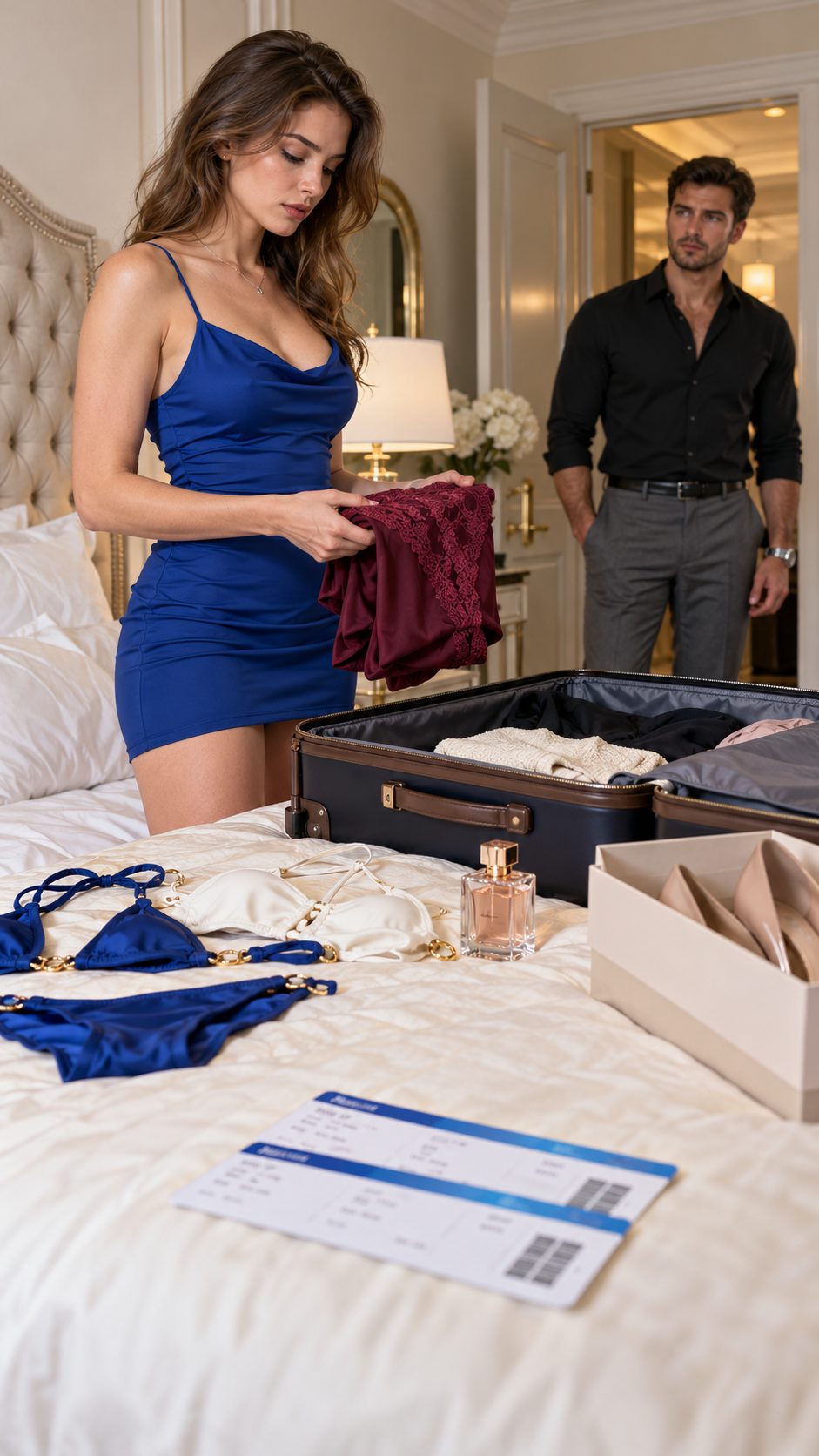
The first thing my wife packed for her trip to Miami was a burgundy nightgown.
It was made of satin, with delicate lace around the edges.
She held it up for a moment, examining it in the bedroom mirror, before folding it carefully and lowering it into her suitcase.
Then she looked at me.
“If you can’t accept it, then get out of my life.”
I stood near our bedroom doorway, watching her.
My name is Michael Hayes.
I was thirty-six years old, and I’d been married to my wife, Vanessa, for eight years.
We lived in a quiet suburban neighborhood outside Columbus, Ohio.
Our house had four bedrooms, a finished basement, and a small backyard where I used to barbecue on weekends.
I’d spent years making it feel like a home.
Now, standing in our bedroom, I wondered how long it had been since Vanessa considered it one.
She continued packing.
An expensive bottle of perfume.
Two swimsuits I’d never seen before.
A pair of high heels still inside their original box.
A white dress with a short hem.
Everything seemed carefully chosen.
Everything seemed intended for someone else.
On the bed, beside her suitcase, lay two airline tickets.
One had Vanessa’s name.
The other belonged to Adrian Cole.
The man she met at the gym six months earlier.
This wasn’t a group vacation.
There were no girlfriends joining her.
No fitness retreat.
No professional conference.
Just Vanessa and Adrian.
Flying to Miami together.
Sharing a hotel reservation, according to the confirmation she’d left open on her laptop the previous night.
For weeks, she’d insisted their relationship was innocent.
Adrian was simply a friend.
Someone who understood fitness.
Personal growth.
Someone who encouraged her to become the best version of herself.
Whenever I questioned why he called after midnight, Vanessa accused me of jealousy.
Whenever I asked why she suddenly guarded her phone, she called me controlling.
And whenever I suggested boundaries, she looked at me with the exhausted disappointment of someone forced to tolerate a foolish child.
“You always imagine the worst,” she’d say.
Now she was packing lingerie for a trip with him.
And somehow, she still expected me to pretend it was normal.
Vanessa closed one side of the suitcase.
Then turned toward me again.
“When I come back, we need to decide whether this marriage still makes sense.”
She frowned.
“I said okay.”
Her eyes narrowed.
“That’s all you have to say?”
I looked at the suitcase.
Then at the framed wedding photograph on the bedside table.
In the picture, Vanessa wore a white gown and held my hand beneath an arch covered in flowers.
We were laughing.
I remembered that day.
Her father’s speech.
Our first dance.
The promise that we’d always be honest, even when honesty was difficult.
I looked back at her.
Vanessa gave a short laugh.
But there was no amusement in it.
“You’re trying to make me feel guilty.”
I shook my head.
I think you should go.”
She stared at me.
For several seconds, she seemed uncertain how to respond.
She had expected an argument.
Maybe she’d wanted one.
An argument would allow her to leave believing I was exactly what she’d accused me of being.
Controlling.
Instead, I was standing there calmly.
And that bothered her.
What Vanessa didn’t know was that I’d been preparing for this moment for three weeks.
Not because I was trying to trap her.
Because I’d finally accepted that our marriage might be ending, and I needed to understand what belonged to whom before making any decisions.
Three weeks earlier, I’d found a folder on our shared home computer.
It contained financial documents Vanessa apparently hadn’t realized were accessible through our joint filing system.
At first, I thought they were ordinary paperwork connected to her freelance marketing work.
Then I recognized my name.
A signature.
An account reference.
And correspondence involving someone named Adrian Cole.
I’d spent the following weeks speaking with an attorney and reviewing records I was legally entitled to access.
By the time Vanessa announced her Miami trip, I knew enough to understand that the problem between us went far beyond another man.
But I wasn’t going to confront her while she was packing.
Vanessa zipped the suitcase.
She pulled the handle upright.
Then walked toward the bedroom doorway.
“Don’t contact me unless there’s an emergency,” she said.
“Understood.”
She looked annoyed.
“Michael, you don’t have to act like this.”
I almost smiled.
“Like what?”
“Like you don’t care.”
I looked at her.
She waited.
“But I’m not going to stop you.”
For a moment, her expression changed.
Not sadness.
Not regret.
Something closer to suspicion.
Then she lifted her chin.
She pulled the suitcase into the hallway.
I followed at a distance.
Outside, a dark SUV waited in the driveway.
Adrian sat behind the steering wheel.
He didn’t get out.
Didn’t wave.
Didn’t look toward the front door.
Vanessa carried her suitcase down the steps and placed it in the back.
Then she turned.
I stood inside the doorway.
Still calm.
She stared at me for a moment.
Perhaps waiting for me to ask her to stay.
“Have fun,” I said.
She shook her head and climbed into the SUV.
A minute later, the vehicle disappeared around the corner.
I remained in the doorway until the engine noise faded.
Then I closed the door.
The house became quiet.
I walked into the living room.
Looked at the framed photographs on the walls.
The sofa we’d bought together.
The shelves I’d built.
The dining table where we’d celebrated birthdays and anniversaries.
Then I reached into my pocket.
And unfolded a list I’d been preparing for three weeks.
At the top were two words.
MY PROPERTY.
Beneath them was another heading.
DOCUMENTS TO PRESERVE.
And near the bottom, underlined twice, was the name of an account Vanessa had never told me existed.
I stared at it.
Then called the moving company.
By the time Vanessa returned from Miami, I intended to be gone.
But there was one thing I still needed to find.
And I suspected it was hidden in the drawer beneath our bedroom mirror.
# **CHAPTER 2:THE THREE-WEEK LIST**
I didn’t start moving furniture immediately.
First, I sat at the kitchen table and read my list again.
There were twenty-seven items.
Some were ordinary.
My work equipment.
My clothes.
The books I’d owned before our marriage.
The antique desk my father had given me.
The framed photographs of my parents.
Others required more care.
Financial statements.
Insurance documents.
Copies of our property records.
Receipts showing purchases made from my separate account.
And documents related to the account I’d discovered three weeks earlier.
I wasn’t planning to empty the house in the sense of stealing everything inside it.
I wasn’t going to take Vanessa’s belongings.
I wasn’t going to sell furniture that legally belonged to both of us without resolving ownership.
I’d consulted an attorney precisely because I didn’t want anger to turn me into someone who made reckless decisions.
But I could remove my personal possessions.
I could move my separately owned furniture.
And, with proper documentation and agreements where necessary, I could separate my property from the life we’d shared.
The result would leave the house looking painfully empty.
That was unavoidable.
Most of the furniture had been mine before we married, inherited from my parents or purchased with documented separate funds.
The house itself was more complicated.
It had been my father’s property.
After his death, I inherited it.
Vanessa and I moved in after our wedding.
I’d kept the property in my name, although we’d shared some household expenses and paid for improvements during the marriage.
My attorney had warned me that ownership questions could be more complicated than a name on a deed.
I understood.
I wasn’t going to claim the entire issue was settled.
But I also wasn’t going to let Vanessa decide our future while refusing to discuss the financial arrangements she’d already made behind my back.
By noon, I’d removed the photographs from the living room.
Our wedding picture.
The photographs from our honeymoon.
The framed image of us smiling beside a lake in Michigan.
I placed them carefully in a box.
Not because I wanted to erase the years we’d shared.
Because looking at them had become painful.
At two in the afternoon, my friend Daniel Price arrived.
Daniel had been my closest friend since college.
He knew about Vanessa’s trip.
He also knew I’d spoken with an attorney.
He looked around the living room.
“You’re really doing this.”
He set down a roll of packing tape.
“You sure?”
I looked at him.
“About leaving?”
“About all of it.”
I took a slow breath.
“That’s probably normal.”
We stood quietly.
Then he said:
“You don’t have to pretend you’re not hurt.”
I looked down.
I finally admitted what I’d been trying not to say.
“I still love her.”
Daniel’s expression softened.
I stared toward the hallway.
“But I don’t recognize the person she’s become.”
He didn’t answer.
He didn’t need to.
We spent the afternoon organizing boxes.
Daniel helped me carry my antique desk into the garage.
He photographed items before they were moved.
We kept an inventory.
Labeled everything.
And separated property that might require further discussion.
By sunset, the house had begun to change.
The walls looked bare.
The rooms seemed larger.
The familiar warmth was disappearing.
But I felt strangely calm.
I wasn’t destroying anything.
I was leaving.
There was a difference.
That evening, I went upstairs.
Vanessa’s side of the closet remained full.
Her clothes.
Everything exactly where she’d left it.
My side was nearly empty.
I turned toward the dresser beneath the mirror.
The bottom drawer was usually filled with old receipts and miscellaneous paperwork.
I’d seen Vanessa place envelopes inside it more than once.
I opened the drawer.
There were cosmetics.
Hair accessories.
A small jewelry box.
And several folders.
I carefully checked the shared household documents, looking only for records relevant to our financial affairs.
One folder contained information about her freelance business.
Another held copies of tax documents.
Then I found an envelope addressed to Vanessa.
I recognized the return address.
It belonged to the same financial institution whose name appeared in the documents I’d discovered three weeks earlier.
The envelope was sealed.
It was addressed only to her.
I didn’t open it.
Instead, I photographed the exterior and noted the institution’s name for my attorney.
Then placed it back where I’d found it.
I already had enough documentation from the joint records to ask questions.
I didn’t need to open private mail.
The next morning, the moving truck arrived.
Two workers began loading the items I’d identified as mine.
Daniel stayed to help supervise.
Neighbors watched from behind curtains.
Henderson from across the street came over with a concerned expression.
“Michael, is everything okay?”
I looked at her.
“Vanessa and I are separating.”
Her face changed.
“I’m sorry.”
She touched my arm.
“You’ve always been good neighbors.”
I smiled faintly.
“Thank you.”
She glanced toward the truck.
“Do you need anything?”
I shook my head.
“I think we’re managing.”
She nodded.
Then returned home.
By late afternoon, most of my belongings were gone.
The house looked unfamiliar.
The living room still contained shared items I’d left untouched.
But the antique desk was missing.
The bookshelves were empty.
My father’s armchair was gone.
The photographs had disappeared.
The dining room looked almost bare without the table I’d inherited from my grandparents.
I walked through each room slowly.
Remembering.
The first night Vanessa and I spent there.
The time we painted the kitchen together.
The Christmas decorations.
The arguments.
The laughter.
The ordinary moments that had once seemed permanent.
My phone buzzed.
A photograph from Miami.
Vanessa standing beside a hotel pool.
She wore sunglasses and smiled toward the camera.
No message.
I didn’t respond.
An hour later, another photograph arrived.
A restaurant table.
Two glasses.
A view of the ocean.
Again, I didn’t respond.
Then a third.
Vanessa beside Adrian.
His arm rested casually around her shoulders.
I stared at the picture for a long moment.
Then put the phone down.
Daniel watched me.
“You okay?”
Then shook my head.
He sat beside me.
For several minutes, neither of us spoke.
Eventually, I said:
“I wish she’d just told me she wanted someone else.”
Daniel looked at me.
“Would that have made it easier?”
I considered the question.
Then I added:
“But it would’ve been honest.”
That night, I began writing the note.
I didn’t want it to be cruel.
I didn’t want to insult her.
I wanted to explain why I’d left.
What I’d taken.
And how we’d handle the property and remaining financial questions.
But the last line was different.
It concerned the account.
The one I’d been investigating.
The account linked to a financial arrangement Vanessa believed I could never discover.
I stared at the page.
Then set the pen down.
Because before I could finish the note, I needed confirmation of one final fact.
And that confirmation was supposed to arrive on Monday morning.
# **CHAPTER 3:THE ACCOUNT WITH MY NAME ON IT**
Three weeks before Vanessa left for Miami, I found my name on a document I hadn’t signed.
It was buried inside a folder on our shared home computer.
The folder contained receipts and financial records Vanessa occasionally used when preparing household taxes.
I’d been looking for a property insurance statement.
Instead, I found a PDF titled:
HAYES FAMILY ASSET SUMMARY.
At first, I assumed Vanessa had created it for budgeting.
Then I noticed an account number.
A financial institution.
And a reference to a secured credit arrangement.
The document listed our home as a supporting asset.
My stomach tightened.
I knew nothing about a new loan.
I opened the supporting pages.
They included a preliminary application.
A personal financial statement.
And a signature page with my name.
I stared at it.
The signature resembled mine.
But it wasn’t mine.
I hadn’t signed the document.
I hadn’t authorized a loan.
And I certainly hadn’t agreed to use my father’s house as security for an investment I didn’t understand.
I didn’t confront Vanessa immediately.
I wanted to know whether the document represented an actual transaction or merely a draft.
So I began reviewing our records.
I contacted the financial institution through its official customer service channel.
I explained that I’d found documents referencing my name and wanted to verify whether any application or obligation existed.
The representative couldn’t discuss everything immediately.
But she explained the process for reporting a disputed authorization.
I followed it.
Then contacted an attorney named Laura Mitchell.
Laura specialized in family law and property disputes.
When I described what I’d found, she asked several careful questions.
“Did you sign any documents?”
“Did you authorize Vanessa to sign for you?”
“Do you hold the property jointly?”
“The house was inherited from my father.
The deed is in my name.”
Laura paused.
“That history matters, but we still need to evaluate the marital-property issues and any claims arising from shared expenses or improvements.”
She continued.
“First, we need to establish whether the lender received anything beyond a preliminary application.”
Over the next two weeks, we gathered information.
The lender confirmed that an application had been submitted.
It referenced me as a property owner and proposed guarantor.
But the application hadn’t resulted in a funded loan.
Several documents remained incomplete.
That was a relief.
But the question remained.
Who had prepared the application?
And why did it contain a signature that wasn’t mine?
Laura recommended preserving the records and challenging the disputed authorization through the appropriate process.
She also advised me not to access Vanessa’s separate accounts without proper authority.
I followed that advice.
Instead, I reviewed joint account activity and documents already available to me.
That’s when I discovered something troubling.
A series of transfers from our joint household account had gone to a company named Meridian Lifestyle Ventures.
I’d never heard of it.
The amounts varied.
Eight hundred dollars.
Twelve hundred.
Twenty-five hundred.
Then several much larger transfers.
Over the previous four months, more than twenty thousand dollars had been transferred to the company.
Some of the funds had come from money I’d deposited for household expenses.
I stared at the statements.
Vanessa had told me those expenses were connected to taxes, business costs, and a new marketing contract.
Now I wasn’t so sure.
Laura asked me to provide the statements.
She explained that financial arrangements between spouses could be complex and that a transaction appearing suspicious wasn’t automatically proof of wrongdoing.
I appreciated her caution.
But I knew I needed an explanation.
I began searching the company’s public information.
Meridian Lifestyle Ventures described itself as a private marketing and luxury travel consulting business.
Its website featured photographs of resorts, expensive vehicles, and high-end fitness retreats.
The director listed on its public filings was Adrian Cole.
I stared at the screen.
Vanessa’s gym friend.
The man she planned to fly to Miami with.
For several minutes, I simply sat there.
I remembered the first time Vanessa mentioned Adrian.
She said he helped members at her gym build confidence and develop healthy routines.
Then she began talking about his business experience.
He understood entrepreneurship.
He knew investors.
He had connections in Florida.
Vanessa started saying she wanted more from life.
More travel.
More independence.
More opportunity.
I encouraged her to pursue legitimate professional goals.
But I asked her to be careful with financial commitments.
She accused me of holding her back.
Now I wondered whether she’d been investing household money in Adrian’s business without telling me.
Laura reviewed the information.
She didn’t immediately call it fraud.
She advised further verification.
But she agreed there were enough concerns to justify careful documentation and financial separation where legally appropriate.
We discussed my options if the marriage ended.
I began organizing personal records.
Identifying separately owned property.
Preparing an inventory.
And making arrangements for somewhere else to live.
I also contacted a financial professional about protecting my accounts and understanding what exposure, if any, remained connected to the disputed application.
Then, three days before Vanessa announced her trip, I found another document.
It was a draft agreement between Meridian Lifestyle Ventures and a company described as an investment partner.
The document referred to a planned contribution of capital.
The amount was much larger than I’d expected.
One hundred and eighty thousand dollars.
I stared at the number.
The agreement described the funds as coming from a property-backed credit facility.
And beneath the financial section was a phrase that made my stomach tighten.
SUPPORTED BY HAYES RESIDENTIAL PROPERTY.
I couldn’t believe what I was reading.
Vanessa had apparently been planning to use our home to support financing connected to Adrian’s business.
Without telling me.
Without asking me.
And, according to the signature page, someone had attempted to represent that I’d agreed.
I showed Laura.
She read the document carefully.
Then looked at me.
“Michael, we need to determine who created this and whether anyone relied on it.”
She continued.
“The good news is that the lender has not confirmed a funded transaction.”
“But there may still be documentation and authorization issues that need to be addressed.”
I understood.
Then she asked:
“Have you confronted Vanessa?”
Laura considered that.
“Are you planning to?”
I looked down.
“I don’t know.”
She nodded.
“You don’t need to make every decision today.”
I appreciated that.
Because I wasn’t ready to decide whether my marriage could survive.
But I knew something had changed.
I could no longer trust Vanessa’s explanations without evidence.
The following afternoon, she told me about Miami.
She said Adrian invited her.
That it would be good for networking.
That I should be happy she was finally pursuing her dreams.
I asked whether anyone else was going.
She looked irritated.
“Why does it matter?”
I stared at her.
“Because you’re married.”
She rolled her eyes.
“Michael, we’re adults.”
She continued.
“If you can’t trust me, maybe we shouldn’t be together.”
I looked at her for a long moment.
“Maybe you’re right.”
She stared at me.
For the first time, she seemed uncertain.
And I realized something.
Vanessa was accustomed to me trying to repair every disagreement.
She didn’t know what to do when I stopped.
By the time she packed her suitcase, my list was ready.
My attorney knew the situation.
The lender had received notice of my disputed authorization.
I had somewhere to stay.
And I had begun separating my property.
But one question remained.
What exactly was Meridian Lifestyle Ventures doing with the money that had already left our household accounts?
The answer arrived while Vanessa was in Miami.
And it was worse than I expected.
# **CHAPTER 4:THE PHOTOS FROM MIAMI**
Vanessa sent her first photograph from Miami on Friday evening.
She stood beside a hotel pool wearing sunglasses and smiling.
Behind her were palm trees and a row of white cabanas.
The photograph looked like something from a travel .
I stared at it for a moment.
Then put my phone down.
I didn’t reply.
By then, I’d moved into a small rental apartment about twenty minutes from our house.
It wasn’t luxurious.
One bedroom.
A compact kitchen.
A balcony overlooking a parking lot.
But it was quiet.
And for the first time in months, I could sit in a room without wondering whether Vanessa was lying about where she was going.
Daniel helped me assemble a bed frame.
Then ordered pizza.
We ate on cardboard boxes because I hadn’t finished arranging the furniture.
He looked around.
“Could be worse.”
“At least you have somewhere to start.”
I appreciated that.
Because the truth was, I felt lost.
I’d spent eight years building a life with Vanessa.
Now I was sitting in an apartment that barely felt like mine.
I didn’t want revenge.
I wanted to understand how the marriage had changed so completely.
On Saturday morning, Laura called.
She’d received additional information from the financial institution.
The disputed application had not been approved.
The proposed property-backed loan had not funded.
And the institution was reviewing the authorization concerns.
“That’s good.”
“It is,” she said.
Then her tone changed.
“But we’ve also identified correspondence suggesting the application was connected to a broader business arrangement.”
“What kind?”
“Meridian Lifestyle Ventures appears to have represented that it could contribute substantial funds to a Miami hospitality project.”
My stomach tightened.
“Using our house?”
“Using the proposed property-backed credit facility as one potential source.”
I closed my eyes.
Laura continued.
“We still need the full documents to determine what anyone understood or agreed to.”
She was careful not to make accusations beyond the evidence.
But the situation was serious.
That afternoon, I received the second photograph.
Vanessa and Adrian sat at a restaurant overlooking the ocean.
Two glasses stood on the table.
She wore the white dress I’d seen in her suitcase.
Adrian leaned toward her.
His smile was confident.
I studied his face.
He looked like the kind of man who’d never been told no.
I wondered whether he knew about the disputed signature.
Whether Vanessa had told him I’d questioned the money.
Whether either of them understood the consequences of using someone else’s name in a financial application.
Then I put the phone down.
On Sunday morning, Daniel visited again.
He brought coffee and helped me arrange my books.
At one point, he held up a framed photograph of Vanessa and me.
“Want this?”
I looked at it.
The picture was from our honeymoon in Charleston.
Vanessa had her arms around my neck.
We looked happy.
I took the frame.
For several seconds, I stared.
Then placed it inside a box.
“Not right now.”
Daniel nodded.
He didn’t push.
Sunday evening, Laura called again.
This time, her voice was serious.
“Michael, I think you should sit down.”
My stomach tightened.
I sat at the kitchen table.
“What happened?”
She explained that a document we’d requested had finally been provided.
It was part of the proposed investment arrangement involving Meridian Lifestyle Ventures.
The document contained representations about the source of the capital.
And it included a provision referring to a person who was supposed to authorize the property-backed financing.
I stared at the wall.
“What did it say?”
Laura paused.
Then read the relevant wording carefully.
The proposed arrangement required evidence that I had consented to the financing.
Without that consent, the transaction couldn’t proceed in the form described.
“That makes sense.”
She continued.
“There’s also an email discussing how to obtain that consent.”
My stomach tightened.
“Who sent it?”
I stared at the table.
“What did he say?”
Laura took a breath.
“He wrote that Vanessa expected the authorization issue to be resolved after the Miami trip.”
For several seconds, I couldn’t speak.
I stared at my hands.
Then asked:
“Resolved how?”
Laura paused.
“The email isn’t clear.”
She continued.
“But it suggests Adrian believed Vanessa could obtain your cooperation after returning.”
I felt cold.
Vanessa’s statement from the bedroom suddenly came back to me.
“When I come back, we need to decide whether this marriage still makes sense.”
Had she planned to use our marriage as leverage?
Had she expected me to sign something to save it?
I didn’t know.
But I no longer believed the timing was accidental.
That night, Vanessa sent her third photograph.
She stood beside Adrian near the hotel entrance.
His arm rested around her shoulders.
She looked happy.
I stared at the image.
Then looked at the draft note on my kitchen table.
I picked up my pen.
And wrote another sentence.
“I will not sign or guarantee any obligation connected to Meridian Lifestyle Ventures.”
Then continued.
“All questions concerning our property and finances must go through our attorneys.”
I set the pen down.
The note was almost finished.
But I still hadn’t written the final line.
Because that line concerned something Vanessa believed I’d never find.
A conversation involving Adrian.
And a sentence that explained why she seemed so confident I’d eventually agree to anything she wanted.
At nine-thirty, my phone buzzed.
“Having a great time.
You should see this place.”
I didn’t answer.
Ten minutes later:
“Are you seriously ignoring me?”
I remained silent.
“What are you doing?”
I looked at the message.
Four words.
For the first time, she sounded less confident.
I placed the phone facedown.
Then finished the note.
At the bottom, I wrote the final sentence.
I stared at it for a long moment.
Then folded the paper.
And placed it inside an envelope.
Monday morning, I drove back to the house.
The rooms were quiet.
The furniture I’d moved was gone.
The bare walls made every sound echo.
I walked into the kitchen.
Placed the envelope on the counter.
Then looked around one last time.
I thought about the years we’d spent there.
The ordinary evenings.
The arguments.
The laughter.
The promises.
Then I left.
But before driving away, I received one more message.
It was from Laura.
“Michael, there’s a development involving Adrian’s company.
Call me as soon as possible.”
I stared at the screen.
And realized the final line of my note might become more important than I’d imagined.
# **CHAPTER 5:THE NOTE ON THE KITCHEN COUNTER**
Vanessa returned from Miami on Monday afternoon.
I didn’t see her arrive.
I learned what happened from the messages and calls she left afterward.
At first, she sounded irritated.
Then confused.
Then frightened.
Her first call came at p.m.
I let it go to voicemail.
“Michael, where is everything?”
I listened later.
Her voice was sharp.
“The living room is empty.
What did you do?”
I didn’t answer.
Two minutes later, she called again.
This time, her voice sounded different.
“Michael, seriously.
Another call followed.
Then another.
At , she left a voicemail that began with:
“I found your note.”
Her voice was shaking.
I stared at my phone.
Then set it down.
The note was three pages long.
I’d written it carefully.
I didn’t want it to be a performance.
I didn’t want to insult Vanessa.
I wanted the facts recorded as clearly as possible.
The first part explained why I’d left.
I wrote that I could no longer remain in a marriage where my boundaries were treated as insecurity.
I described the Miami trip.
The two airline tickets.
The repeated late-night calls.
The secrecy.
And her statement that we would decide whether our marriage still made sense after she returned.
I explained that I’d accepted her choice.
But I wasn’t going to wait at home while she considered whether she wanted to remain married.
The second part explained what I’d taken.
My personal clothing.
My separately owned furniture.
My father’s antique desk.
My family photographs.
My work equipment.
My personal books.
I included a list of the items I’d moved.
I also explained that jointly owned property and the house itself would be addressed through legal channels.
I hadn’t sold the house.
Hadn’t secretly changed its locks.
Hadn’t taken Vanessa’s belongings.
I’d simply moved my possessions and established a separate residence.
The house looked empty because so much of its furniture had belonged to me.
I knew that visual impact would be difficult.
But it was also the reality of the separation.
The third part concerned money.
I wrote that I’d discovered documents connected to a proposed financing arrangement involving Meridian Lifestyle Ventures.
I stated clearly that I had not authorized my signature or agreed to guarantee obligations linked to Adrian’s company.
I explained that my attorney was handling the matter.
That the lender had been notified.
And that I would not discuss the transaction informally.
I wanted Vanessa to understand that she couldn’t return from Miami, apologize vaguely, and persuade me to sign something over dinner.
Those days were over.
Then came the final line.
The sentence I suspected would frighten her most.
“I have the email in which you and Adrian discussed using our marriage to obtain my signature—and the lender already knows.”
I didn’t know exactly how Vanessa would react.
But I knew what the sentence meant.
The financial arrangement she’d kept hidden was no longer hidden.
And the conversation she’d believed existed only between her and Adrian had become relevant to a disputed authorization.
At p.m., she called again.
I answered.
Her voice cracked.
I remained quiet.
“Michael, please.”
I took a slow breath.
“What is it, Vanessa?”
She began crying.
“Tell me you didn’t send that email to anyone.”
I closed my eyes.
The question told me enough.
She wasn’t asking whether I was okay.
She wasn’t asking where I’d moved.
She wasn’t apologizing for Miami.
She was frightened about the financial documents.
“I preserved the records and provided relevant information through my attorney,” I said.
Vanessa began sobbing.
“Michael, you don’t understand.”
I stared at the wall.
“Then explain.”
She cried harder.
“Adrian said it was only a negotiation.”
I took a slow breath.
“What negotiation?”
She hesitated.
Then whispered:
“He said if you believed our marriage could still work, you’d help us.”
I stared at the phone.
“Help you with what?”
She began crying again.
“With the financing.”
I closed my eyes.
There it was.
The truth I’d feared.
The Miami trip wasn’t simply a romantic betrayal.
It had also become part of a financial arrangement in which Vanessa and Adrian expected me to provide something they couldn’t obtain without my consent.
My signature.
My property.
My creditworthiness.
I asked Vanessa whether Adrian had told her the proposed investment depended on my authorization.
She admitted he had.
I asked whether she’d understood that I hadn’t agreed.
I looked down.
“Then why did you keep going?”
She couldn’t answer.
For several seconds, the call remained quiet except for her breathing.
Then she whispered:
“I thought I could convince you.”
I stared at the wall.
“By going to Miami with Adrian?”
She began crying harder.
“Michael, please.”
I took a slow breath.
“What did you think was going to happen when you came home?”
She hesitated.
Then said something that hurt more than I expected.
“I thought you’d be afraid to lose me.”
I closed my eyes.
For eight years, I’d loved Vanessa.
I’d worked hard.
Paid bills.
Supported her career.
Helped her through difficult periods.
And somehow, she’d begun believing that love meant I would eventually accept anything.
Even another man.
Even an unauthorized financial arrangement.
Even a decision that placed my home at risk.
Vanessa begged me to meet her.
I refused that evening.
I told her all financial matters needed to go through our attorneys.
She asked whether the marriage was over.
I stared toward my apartment window.
For a long moment, I couldn’t answer.
Then I said:
“I don’t know whether there’s anything left to save.”
She began sobbing.
“Michael, I love you.”
I looked down.
“I loved you too.”
She went quiet.
The word had slipped out.
Past tense.
I hadn’t meant to say it that way.
But once the word was spoken, I realized how true it felt.
After the call, I sat alone for a long time.
I didn’t feel victorious.
I didn’t feel powerful.
I felt exhausted.
I had imagined that leaving would bring immediate relief.
Instead, it brought grief.
The house was gone.
The marriage might be ending.
And the woman I’d planned to grow old with had been willing to use our relationship as leverage for someone else’s business.
I looked at the note’s copy on my table.
Then closed the folder.
That evening, Laura called.
She explained that the financial institution had escalated its review of the disputed authorization.
The proposed financing remained unfunded.
And the relevant documents were being examined.
She cautioned me against assuming anyone had committed a particular offense before the facts were established.
I wanted the truth.
Not exaggeration.
But then Laura said:
“Michael, we’ve learned something else.”
“Adrian’s company appears to have been representing your proposed guarantee as more certain than the documents support.”
I stared at the wall.
She continued.
“That may have affected what other parties believed about the Miami investment arrangement.”
My stomach tightened.
Laura paused.
“Meaning Adrian may have promised people financing he had no right to assume you would provide.”
I closed my eyes.
And suddenly, Vanessa’s desperate calls made more sense.
If the arrangement depended on my signature, the entire plan could collapse without it.
But I wasn’t going to sign.
Not to save her relationship with Adrian.
Not to protect his business.
And not to buy back a marriage that had already been used against me.
# **CHAPTER 6:THE MAN FROM THE GYM**
Adrian contacted me three days after Vanessa returned.
His message was surprisingly polite.
“Michael, I think there’s been a misunderstanding.
I’d appreciate the opportunity to explain the business arrangement.”
I read it twice.
Then forwarded it to Laura.
She advised that any discussion about the disputed financial documents should proceed through counsel.
I wasn’t interested in hearing Adrian tell me how reasonable he was.
Not after six months of late-night calls.
Not after Miami.
And certainly not after discovering that his company had tried to use my property as part of its financing plan.
But I did want to understand what had happened.
Over the following weeks, more information emerged.
Meridian Lifestyle Ventures had been pursuing a hospitality-related investment in Miami.
The company intended to contribute capital to a private development project.
It had discussed several possible financing sources.
One was the property-backed credit facility referencing my home.
Adrian had described the expected funds as available or nearly available in communications with potential business partners.
But the lender had never approved the arrangement.
And my consent had not been obtained.
That gap mattered.
A great deal.
Laura explained that the business partners were now asking questions.
They wanted to know whether the promised financing existed.
Whether the representations were accurate.
And whether any documents had been submitted without proper authorization.
I listened carefully.
I didn’t want to pretend I understood every legal consequence.
But I knew one thing.
My name had been used in discussions I wasn’t part of.
And now that I was refusing to authorize the transaction, Adrian’s assumptions were being challenged.
Vanessa continued sending messages.
Some were apologies.
Others were angry.
Occasionally, she accused me of trying to destroy Adrian’s business.
That made me laugh bitterly.
I hadn’t invested in his company.
Hadn’t signed his financing documents.
Hadn’t promised his business partners anything.
All I’d done was refuse to accept responsibility for obligations I hadn’t authorized.
And somehow, she believed I was the one causing harm.
One afternoon, she asked to meet at a coffee shop.
I hesitated.
Then agreed, on the condition that we wouldn’t discuss legal matters outside the appropriate process.
She arrived wearing jeans and a simple sweater.
No expensive perfume.
No carefully styled vacation clothes.
She looked exhausted.
When she sat down, she began crying immediately.
“Michael, I’m sorry.”
She wiped her eyes.
“I know you don’t believe me.”
I took a slow breath.
“I believe you’re sorry things have become complicated.”
Her face crumpled.
“That’s not fair.”
I looked at her.
“Vanessa, you went to Miami with another man after telling me to get out of your life.”
She nodded.
“You thought I’d be afraid of losing you.”
She began crying harder.
“And you expected that fear to make me sign financial documents.”
For several seconds, she couldn’t speak.
Then she whispered:
“Adrian said it would help us.”
I stared at her.
She looked down.
“He said the investment could give us financial independence.”
I shook my head.
“Vanessa, whose independence?”
She began crying again.
Then asked:
“Did you believe Adrian loved you?”
Her expression changed.
For the first time, she seemed unsure.
“I thought he did.”
She looked down.
“He stopped answering my calls.”
I stared at her.
She continued.
“After I got back, he kept asking whether you’d sign.”
I felt cold.
“Nothing else?”
She began crying.
“He said we needed to focus on the business.”
I leaned back.
The irony was painful.
For months, Vanessa had told me Adrian understood her better than I ever could.
He encouraged her dreams.
He respected her independence.
He made her feel alive.
Now that the financial arrangement was failing, he apparently had little interest in discussing their relationship.
I didn’t feel happy about that.
I felt sad.
Vanessa had traded years of trust for promises that were unraveling almost immediately.
But I couldn’t protect her from the consequences of her choices.
Not anymore.
She reached across the table.
“Michael, can we start over?”
I looked at her hand.
Then at her face.
For a moment, I remembered our wedding.
The first apartment.
The holidays.
The years before Adrian.
I wanted to believe those memories could still lead us somewhere good.
But then I remembered the nightgown.
The suitcase.
The two tickets.
The way she looked at me when she said I should get out of her life.
And the email discussing how our marriage might help secure my signature.
I withdrew my hand.
“Vanessa, I don’t know how to start over with someone who treated our marriage like a bargaining position.”
She began crying.
“I made a mistake.”
I shook my head.
“It wasn’t one mistake.”
She looked down.
I continued.
“It was months of choices.”
She nodded slowly.
We sat quietly for a while.
Then Vanessa said something unexpected.
“I think Adrian knew you’d refuse.”
She swallowed.
“He said you were careful.”
“He said you wouldn’t sign unless you believed something important was at stake.”
I stared at her.
My stomach tightened.
“And that something was our marriage?”
She began crying again.
I closed my eyes.
The plan had been even more cynical than I’d imagined.
Adrian apparently believed he could use Vanessa’s relationship with me as leverage.
Vanessa believed she could threaten the marriage, return from Miami, and somehow persuade me that helping Adrian would prove I still loved her.
It was irrational.
Manipulative.
And deeply cruel.
But it also explained why she seemed so surprised by my calm response.
She expected me to be desperate.
She expected me to negotiate.
She expected me to ask what I had to do to keep her.
Instead, I’d smiled.
And told her to have fun.
When we left the coffee shop, Vanessa stood beside her car.
She wiped her face.
“I never thought you’d actually leave.”
I looked at her.
She began crying again.
I took a slow breath.
“That’s part of why I had to.”
Then I walked away.
That evening, Daniel visited my apartment.
We ate dinner and watched a basketball game.
At halftime, he looked at me.
“You seem different.”
I smiled faintly.
“Different how?”
“Less angry.”
I considered the question.
“That’s good.”
I looked toward the window.
For weeks, I’d been consumed by betrayal.
But something had shifted.
I was beginning to understand that I didn’t need Vanessa to admit every wrong before I could move forward.
I didn’t need Adrian to apologize.
I didn’t need their business plans to collapse.
I needed to protect myself.
Resolve the financial issues.
And decide what kind of future I wanted.
Then my phone buzzed.
It was Laura.
“Michael, the lender has formally confirmed it will not proceed with the proposed property-backed financing on the disputed application.”
I read the message twice.
Then leaned back.
For the first time in weeks, I felt a genuine sense of relief.
The house wasn’t being pledged through that application.
My signature wasn’t going to be treated as authorization simply because someone had put it on a page.
And I could finally begin making decisions about my life without the immediate pressure of Adrian’s financing plan hanging over me.
# **CHAPTER 7:THE HOUSE THAT WAS NEVER HERS TO PROMISE**
The financial issues took longer to resolve than I’d expected.
There were records to review.
Questions about signatures.
Transactions that needed explanation.
And disagreements about how household funds had been used.
Laura worked with the appropriate professionals to address the disputed authorization.
I continued cooperating with requests for information.
I preserved documents.
Answered questions.
And avoided making public accusations I couldn’t substantiate.
It wasn’t dramatic.
But it mattered.
Eventually, the lender confirmed that the proposed credit arrangement would not proceed on the disputed application.
The property had not been pledged through a completed loan based on those documents.
That was the outcome I’d hoped for.
But I didn’t celebrate.
Because the larger problem remained.
Vanessa and I were still married.
And we no longer trusted each other.
I filed for divorce.
The decision hurt.
Even after Miami.
Even after the note.
Even after discovering the financial documents.
There were mornings when I woke up expecting Vanessa to be beside me.
Evenings when I almost called her to tell her something funny.
Moments when I saw a restaurant we used to visit and felt a sudden ache.
Eight years don’t disappear because someone betrays you.
The love doesn’t vanish instantly.
Neither do the habits.
Or the memories.
But I had reached a point where staying married would require me to ignore too much of what had happened.
I couldn’t do that.
Vanessa initially resisted the divorce.
She asked for counseling.
Then suggested a trial separation.
Then promised to cut Adrian out of her life permanently.
I listened.
But the central issue wasn’t whether she stopped seeing Adrian.
It was whether I could trust her to treat our marriage with honesty and respect.
And I couldn’t.
Not after she used the possibility of losing me as leverage for a financial arrangement.
Not after months of secrecy.
Not after she acted as though the house I’d inherited could be offered as part of someone else’s business plan.
The divorce process forced us to discuss practical things.
Household expenses.
The house itself.
Because I’d inherited the property from my father, its legal treatment required careful review, including questions about improvements and shared contributions during the marriage.
My attorney handled those issues.
I didn’t assume that inheritance meant Vanessa had no possible claims.
And I didn’t treat every dollar in the household as mine simply because I’d earned more.
I wanted a fair outcome.
One that recognized the actual records and applicable law.
The settlement took time.
Eventually, we reached an agreement addressing the property and finances.
I retained the house.
Vanessa received the assets and payments provided for in the settlement.
Her separate dealings involving Meridian Lifestyle Ventures remained subject to the appropriate legal and financial processes.
The divorce didn’t magically erase those questions.
But it established the end of our marriage.
I moved back into the house after the settlement.
The first night felt strange.
The rooms were still sparsely furnished.
My belongings had remained in storage and at my apartment.
I stood in the living room and looked around.
For months, the house had represented betrayal.
The empty walls.
The missing furniture.
The note on the kitchen counter.
But it had belonged to my father before it became my marital home.
He’d bought it when I was a teenager.
He taught me to repair the deck.
To patch drywall.
To fix leaking faucets.
When he died, he left it to me.
I’d almost allowed the house to become a symbol of what Vanessa had done.
Now I wanted it to become something else.
A place where I could rebuild.
Daniel helped me bring the furniture back.
We carried my father’s antique desk into the study.
Set up the bookshelves.
Unwrapped family photographs.
Then stood in the living room, exhausted.
He looked around.
“Feels better.”
“Want pizza?”
“Obviously.”
We ate on the sofa.
Watched a game.
And talked about ordinary things.
For the first time in months, the house didn’t feel like a battlefield.
It felt like a home again.
A few days later, Vanessa came to collect the last of her belongings.
We’d arranged the visit in advance.
She arrived with her sister.
I remained polite.
Kept my distance.
And let them pack.
At one point, Vanessa stopped beside the bedroom doorway.
She looked at the bed.
The dresser.
The framed photographs.
Then turned toward me.
“Do you remember when we first moved in?”
“Of course.”
She smiled sadly.
“We slept on a mattress on the floor for three nights.”
I laughed faintly.
“Because the delivery company lost our bed frame.”
She nodded.
“And we ate takeout every night.”
I remembered.
We’d been happy.
Certain we could handle whatever life brought us.
Vanessa began crying.
“I miss that.”
I looked down.
She stepped closer.
“Michael, I know I ruined everything.”
I didn’t answer.
She continued.
“I kept thinking you would always be there.”
She looked at me.
“And when you smiled that day, I thought you were pretending.”
I took a slow breath.
“I wasn’t.”
She began crying harder.
“I didn’t understand.”
I looked toward the bedroom.
“Vanessa, that was the problem.”
She lowered her head.
Before leaving, she asked whether I’d ever forgive her.
I thought carefully.
“I hope so.”
She looked up.
“But forgiveness doesn’t mean we’re getting back together.”
She nodded.
For a moment, we stood quietly.
Then she said:
“I’m sorry.”
I looked at her.
“I believe you.”
Her eyes filled.
Then she turned and left with her sister.
I closed the door.
And for the first time, I didn’t feel the need to watch her car disappear.
That evening, I sat at my father’s desk.
Opened a drawer.
And found a photograph I hadn’t seen in years.
My father and me standing outside the house.
I was seventeen.
He had one arm around my shoulders.
We were smiling.
On the back, he’d written:
“Build a life you’re proud to live in.”
I stared at those words for a long time.
Then placed the photograph on my desk.
The house was no longer empty.
But more importantly, I was no longer waiting for Vanessa to decide whether my life was worth staying in.
# **CHAPTER 8:THE FINAL LINE WASN’T ABOUT REVENGE**
A year after Vanessa left for Miami, I took a vacation.
Not to Miami.
Not anywhere expensive.
I drove to a small lakeside town in Michigan and rented a cabin for a week.
No work calls.
No meetings.
No financial documents.
Just quiet mornings, long walks, and time to think.
For years, I’d measured my success by whether everyone around me was happy.
My coworkers.
My clients.
I worked hard.
Solved problems.
Kept promises.
And when someone was upset, I tried to fix it.
That wasn’t entirely bad.
But I’d forgotten something important.
I had responsibilities to myself, too.
The divorce had been finalized months earlier.
The house was back in order.
My finances were stable.
The disputed financing proposal had not resulted in the property-backed loan Adrian anticipated.
The remaining questions involving Meridian Lifestyle Ventures had been addressed through the appropriate processes as far as they concerned me.
I no longer followed every development.
I didn’t need to.
Adrian wasn’t part of my life.
And Vanessa wasn’t my responsibility anymore.
One morning, I sat beside the lake drinking coffee.
A couple walked along the shore holding hands.
They looked happy.
For a brief moment, I felt lonely.
Then I realized loneliness wasn’t the same as regret.
I missed companionship.
I missed sharing ordinary moments.
But I didn’t miss living with someone who treated my concern as weakness.
I didn’t miss the late-night phone calls.
The secrecy.
The arguments.
The feeling that I had to prove my love by surrendering my boundaries.
I took a slow breath.
The air smelled like pine trees and lake water.
For the first time in a long time, I felt peaceful.
When I returned to Ohio, Daniel invited me to a barbecue.
I almost declined.
I hadn’t been particularly social since the divorce.
But he insisted.
There were about twelve people in his backyard.
A few coworkers.
Someone was grilling burgers.
Music played quietly.
Children ran through the grass.
I stood near the patio table holding a drink when a woman approached.
“You’re Michael, right?”
She smiled.
“I’m Rachel.”
She was a friend of Daniel’s wife.
We started talking.
About work.
The difficulty of keeping houseplants alive.
She was funny.
And easy to talk to.
At one point, she asked whether I liked living in Columbus.
“Most days.”
She laughed.
“That’s a very honest answer.”
I looked at her.
“Trying something new.”
She smiled.
“I approve.”
We began seeing each other occasionally.
Walks through local parks.
Nothing rushed.
I told her early that I’d been divorced.
I explained that the marriage ended after serious dishonesty and financial conflict.
She listened.
Didn’t pry.
Didn’t ask for dramatic details.
And didn’t try to fix me.
I appreciated that.
One evening, we were walking beside the Scioto River when Rachel asked:
“Do you think you’ll ever get married again?”
I considered the question.
She smiled.
“Very specific.”
“I don’t know.”
She nodded.
“Fair enough.”
I looked toward the water.
“I used to think marriage meant you never gave up on someone.”
Rachel glanced at me.
I took a slow breath.
“Now I think it means you keep choosing each other.”
She nodded.
“That sounds right.”
I continued.
“But both people have to make that choice.”
Rachel looked at me.
We walked quietly for a while.
Then she reached for my hand.
I let her take it.
It felt simple.
And that simplicity mattered.
Several months later, I was cleaning my study when I found the copy of the note I’d left Vanessa.
Three pages.
Folded neatly.
The paper had yellowed slightly at the edges.
I sat at my desk and read it.
The first part still hurt.
The description of the Miami trip.
The two tickets.
The secrecy.
The decision to leave.
The second part felt almost ordinary now.
The inventory of furniture.
The property arrangements.
The instructions to communicate through attorneys.
Then I reached the final line.
“I have the email in which you and Adrian discussed using our marriage to obtain my signature—and the lender already knows.”
I stared at it.
That sentence had frightened Vanessa more than the empty house.
Not because it was a threat.
Because it proved that the plan she’d kept hidden was no longer secret.
For months, she’d believed she could control what I knew.
Control how I reacted.
Control whether our marriage survived.
And perhaps control whether I agreed to support Adrian’s financing.
The final line ended that illusion.
And I had acted.
I thought about the expression on Vanessa’s face when she packed the burgundy nightgown.
The way she looked at me after I said:
I remembered how my smile disturbed her.
At the time, I hadn’t smiled because I was happy.
I smiled because I’d finally stopped bargaining with someone who used my love as leverage.
I’d spent months asking her to respect our marriage.
Asking her to be honest.
Asking her to explain Adrian’s role in her life.
She dismissed every concern.
Called me insecure.
Told me I imagined the worst.
Then announced a trip with him and expected me to argue.
Because I’d already understood that no argument would change her choice.
Looking back, I wished I’d confronted the financial concerns earlier.
I wished I’d recognized the warning signs without needing weeks of documents.
I wished Vanessa had told me she was unhappy before becoming involved with Adrian.
I wished we’d been honest enough to end the marriage without turning it into a struggle over money and property.
But wishes couldn’t change the past.
They could only teach me how to approach the future.
That evening, Rachel came over for dinner.
She helped me cook.
We burned the garlic bread.
Ordered pizza.
Then sat on the porch watching the neighborhood settle into evening.
At one point, she looked at the house.
“It’s beautiful.”
She glanced toward the wooden deck.
“Did you build that?”
“With my dad.”
She smiled.
“That’s special.”
For a moment, I thought about my father.
His old desk.
The photograph in my study.
The house he’d worked so hard to keep.
And the words he’d written years earlier.
“Build a life you’re proud to live in.”
I looked toward Rachel.
Then back at the yard.
For the first time in years, I felt I was doing exactly that.
A few weeks later, Vanessa sent me a message.
It was short.
“I hope you’re doing well.”
I looked at it for a moment.
Then replied:
I hope you are too.”
She responded with a simple thank-you.
That was all.
No argument.
No apology repeated for the hundredth time.
No attempt to reopen the marriage.
Just two people acknowledging that their lives had moved in different directions.
I put my phone down.
Then returned to what I was doing.
I was repairing a loose board on the deck.
The same deck my father had helped me build.
The same house Vanessa once believed she could use to secure Adrian’s ambitions.
Now it was simply my home again.
Sometimes people ask whether I regret smiling that day.
Whether I regret refusing to argue.
Whether I regret clearing out my possessions while Vanessa was in Miami.
I understand why they ask.
From the outside, my response may have looked cold.
Calculated.
Even vindictive.
But the truth was less dramatic.
I had spent weeks learning that our marriage was in danger financially as well as emotionally.
I’d sought legal advice.
Preserved records.
Protected what I could.
And prepared to leave if Vanessa made it clear she no longer wanted the marriage.
Then she made that choice.
I accepted it.
The empty house wasn’t a game.
It was what remained after I removed the belongings I was entitled to take and stopped pretending we still shared the same future.
The note wasn’t revenge.
It was an explanation.
And the final line wasn’t meant to frighten her for the sake of frightening her.
It was meant to make one thing unmistakably clear.
I knew about the financial arrangement.
And I would not let anyone use our marriage to pressure me into signing away my judgment.
The real ending wasn’t Vanessa returning from Miami.
It wasn’t her desperate calls.
It wasn’t Adrian’s financing plan falling apart.
And it wasn’t even the divorce.
The real ending came much later.
On an ordinary Saturday afternoon.
I stood in my backyard repairing a loose railing.
Rachel was inside making coffee.
Music played through the kitchen window.
The sun was warm.
The neighborhood was quiet.
And I realized I hadn’t thought about Vanessa all morning.
This time, there was no hidden plan behind it.
No painful decision.
No secret document.
No suitcase.
No two airline tickets.
Just peace.
I used to believe that loving someone meant proving I’d never leave.
Now I understood something different.
Love should never require you to surrender your dignity.
Trust should never mean refusing to see evidence.
And commitment should never become a weapon someone uses to make you accept the unacceptable.
Vanessa told me that if I couldn’t accept her trip with Adrian, I should get out of her life.
But I didn’t leave because I stopped caring.
I left because I’d finally learned that caring about someone didn’t mean abandoning myself.
She returned expecting the same man who always tried to fix everything.
Instead, she found an empty house and a letter.
And the final line told her what she’d never imagined possible.
I had already discovered the truth.
I had protected myself.
And I was no longer waiting for her permission to move forward.
That was the day she lost the version of me who would accept anything to keep her.
And it was the day I began becoming the man I should have been all along.
A man who could love deeply.
Trust carefully.
Walk away when necessary.
And build a life he was proud to live in.
**THE END**
✓ Lynn R. Adams
# **MY WIFE LEFT FOR MIAMI WITH HER GYM PARTNER—SO I EMPTIED OUR HOUSE AND LEFT ONE NOTE THAT MADE HER BEG ME TO COME BACK** *She told me to get out of her life if I couldn’t accept her trip with ano…