For fourteen years, my older sister told me our parents had left us nothing, and I believed her through every missed chance and overdue bill, until a lawyer called me at work about a cabin in Montana that my grandfather had left in my name—and the way my sister reacted when I asked about him made me wonder what else she had kept from me…
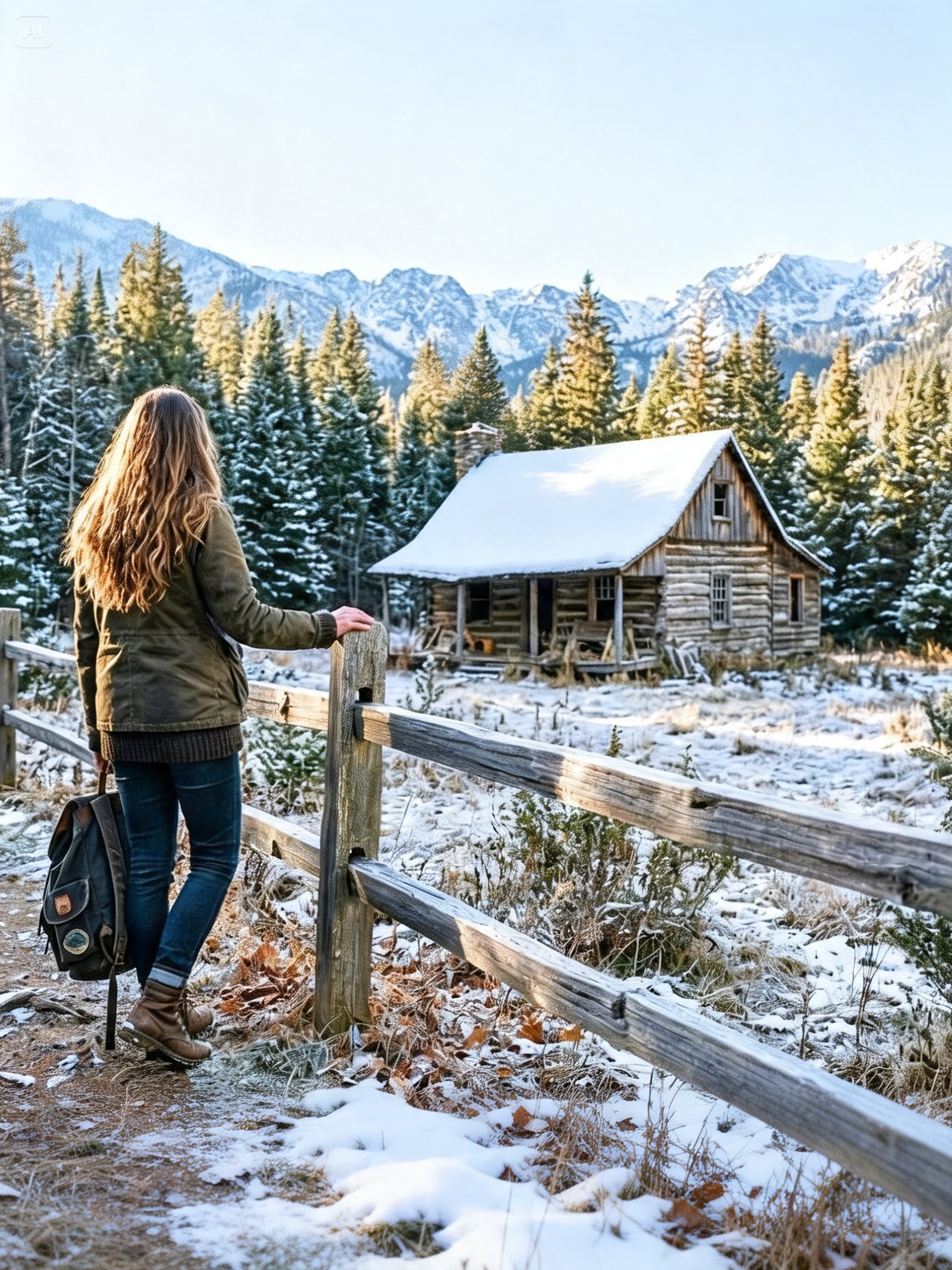
For fourteen years, my older sister told me our parents had left us nothing, and I believed her through every missed chance and overdue bill, until a lawyer called me at work about a cabin in Montana that my grandfather had left in my name—and the way my sister reacted when I asked about him made me wonder what else she had kept from me…
I was ten when a truck driver missed a red light on a rainy highway and both my parents died. I remember the middle-of-the-night phone call, the grown-ups speaking softly around me, and my older sister Rebecca holding my hand so tightly that my fingers hurt. I also remember thinking that if I stayed very still, somebody might tell us there had been a mistake.
Rebecca was nineteen. She had barely begun her own adult life, yet she was suddenly responsible for a little girl who couldn’t sleep without the hallway light on. She learned what I would eat when I was upset, signed school papers, and sat beside my bed when I had nightmares.
For years, when someone asked who raised me, I said Rebecca did, and I said it proudly. She was the person who remembered my birthday and made sure I had a winter coat. Whatever else our family had lost, I knew I still had her.
There was one explanation she gave me so often that I stopped thinking of it as an explanation. Our parents’ death, she said, had left nothing behind: no house to keep, no savings, no money for school. We had each other, and anything beyond that would have to be earned.
I didn’t ask to see paperwork. At ten, I didn’t even know what papers a family should have, and by the time I was old enough to wonder, I had learned not to press Rebecca about the past. She could become very quiet when I mentioned our parents’ belongings, money, or our grandfather.
His name was Walter Harper. I remembered his big hands, his deep voice, and a wooden horse he had carved for me when I was small. I also remembered the smell of pine, though I could never place where that memory belonged.
When I asked if we could visit Grandpa Walter, Rebecca said he wanted nothing to do with us. The first few times, I cried about it; eventually, I stopped asking. It seemed cruel to make her explain why another person had left us behind.
By twenty-four, I had spent fourteen years living inside the story she told me. I had tried college, but the cost was more than I could manage, and I never finished. I worked double shifts at a diner for a while, then took a grocery store job because I needed steadier hours.
My apartment was on the south side of Chicago, small enough that I could hear the radiator knock from my bed. The wallpaper was curling near the window, and I kept a running total of bills on the back of a grocery receipt. I wasn’t starving, but one unexpected expense could undo an entire month’s careful planning.
I sometimes watched old classmates post pictures of graduations, houses, and babies, then put my phone down before I started resenting people I liked. I had wanted more choices than the ones I could afford. Still, I showed up for my shifts, helped older shoppers out to their cars, and tried to be someone Mom and Dad would recognize.
Rebecca and I talked, though less often than we had when I was younger. She was still the person I called when a pipe leaked or I couldn’t decide whether I was being foolish about something. I never imagined she might be the reason I had so few options in the first place.
One Tuesday afternoon, I was in the grocery store stockroom stacking canned soup when my phone rang. I didn’t recognize the number, and I nearly let it go to voicemail. Instead, I balanced a box on a shelf and answered.
The man introduced himself as Daniel Mercer, an attorney calling from Bozeman, Montana. I was certain he had reached the wrong Violet Harper. Nobody I knew lived in Montana, and I certainly wasn’t expecting a call from an attorney.
Then he said he was contacting me about the estate of my grandfather, Walter Harper. I gripped the edge of the shelf. I hadn’t heard that name spoken by anyone outside my own memories in years.
Mr. Mercer told me Grandpa had died six weeks earlier. Three years before his death, he had updated his will to leave me a cabin outside Livingston, Montana. The cabin, the attorney said, belonged to me.
I gave a short, disbelieving laugh. I was behind on nothing at that exact moment only because I’d delayed replacing a pair of shoes, and this stranger was telling me I owned property. I asked him to check my name again.
He did. He also said my grandfather had insisted I be contacted personally after his death, and that there were documents I needed to receive directly. When I asked what the documents were, Mr. Mercer said he couldn’t go into that over the phone.
He explained the paperwork for the property and what I would need to bring if I traveled there. I wrote notes on the back of an inventory sheet, but my attention kept drifting. Rebecca had told me Grandpa wanted nothing to do with us, yet he had made a point of leaving something to me.
I finished my shift with the attorney’s number in my pocket. On the train home, I tried to remember the last time I’d heard Grandpa’s voice. I could picture myself sitting high on his shoulders and see the wooden horse in my hands, but I couldn’t remember when Rebecca had stopped letting me ask about him.
That night, I warmed a cheap dinner in the microwave and barely touched it. I thought about calling Rebecca right away, but I wanted to know what I was asking before I heard the familiar certainty in her voice. I lay awake, looking at the water stain above my bed.
The next morning I called. Rebecca picked up on the third ring, and I told her an attorney had contacted me about Grandpa Walter. At the word attorney, she stopped making the little sounds she usually made to show she was listening.
“He said Grandpa died,” I told her. There was a long silence, followed by a quiet “Oh.” I asked whether she already knew, and this time she said my name in the warning tone she’d used when I was a child.
“Rebecca, you knew?” I asked again. She didn’t deny it, and when I asked how long she’d known, she said she had to go and we’d talk later. The call ended before I could ask about the cabin.
I stood with my phone in my hand, listening to the apartment settle around me. For the first time, her silence felt less like protection and more like a door she was holding shut. Three days later, I was going to Montana to see what was on the other side. Part 2…..
Three days after the attorney’s call, I boarded a plane with a ticket I could barely afford. By late afternoon I was driving through Montana valleys so wide they made my life in Chicago seem like something I’d folded up and left in a drawer. Eventually the road turned to gravel, the GPS stopped helping, and a weathered cabin appeared beneath tall pines.
I sat in the rental car for a moment before getting out. The building had a small porch and a railing roughened by years of weather, but it didn’t look as though someone had simply walked away and forgotten it. The steps were sound, and the rooms inside had been kept in order.
I brought in my suitcase, backpack, and worn jacket. There was a living room with a stone fireplace, a kitchen, a hallway, and two bedrooms. I found a flashlight in a drawer and walked slowly through the rooms, trying to connect them with the flashes of memory I’d carried since childhood.
At dusk I stood on the porch and breathed in the pine-scented air. I couldn’t explain why the place felt familiar until I remembered being lifted onto Grandpa’s shoulders and looking down at trees like these. I leaned on the railing and wished my parents were there to tell me whether I had the memory right.
That night the cabin grew cold, so I built a fire and sat in an old armchair beside it. I thought about Mom laughing at Dad’s terrible singing and the way they’d hold hands in the car. After years of avoiding those memories because they hurt, I wanted every one I could find.
A sharp crack in the fireplace startled me. Something small slipped down near the hearth, and when I bent to pick it up, I found a faded photograph. It showed me at about eight, standing with my parents and Grandpa Walter, all four of us smiling.
I’d never seen that picture before. While I examined the mantel, I noticed one corner of the wood sat a little unevenly. I ran my fingers along it, found a narrow gap, and shone the flashlight behind it.
There was a cloth-wrapped bundle tucked inside. I eased it out, pulled off the old string, and found a stack of letters addressed to me in handwriting I didn’t recognize at first. My knees felt unsteady, so I sat down with the letters in my lap.
One envelope carried a postmark from sixteen years earlier, when I was still a little girl. I read my grandfather’s words about how much my parents loved me and how I should never let anyone tell me otherwise. Then I reached the part about my inheritance, family land, and the future Mom and Dad had tried to prepare for me.
I opened more envelopes. There were references to a trust, savings, property, and legal documents, the very things Rebecca said had never existed. I kept looking up at the quiet room, as though someone might appear and explain why these letters had been hidden here instead of given to me.
Then I found one dated three months after my parents’ deaths. Grandpa wrote that Rebecca had taken control of everything and that he feared she was making decisions she couldn’t undo. He worried that greed was beginning to speak louder than grief.
I read those sentences until the words stopped looking like words. Rebecca had been nineteen, terrified, grieving, and responsible for me; I knew that much was true. I also knew that when I asked about our grandfather or the past, she had given me answers that kept us apart.
I laid the letters across the coffee table and stared at the photograph from the mantel. It was possible, I told myself, that there was an explanation for all of this. But for the first time I had something more than a feeling that a part of my childhood had been kept from me.
I fell asleep in the chair and woke to gray morning light on the envelopes. I made coffee, carried a cup to the porch, and reread a letter that held words from my father about measuring a person’s worth by how they treat people when nobody is watching. I could almost hear his voice saying it.
I had spent years embarrassed that I hadn’t finished school or built the life my friends seemed to have. Sitting there, I understood that struggling wasn’t the same as failing, and that my parents hadn’t planned for me to spend my twenties believing I had no possibilities. Their savings weren’t meant to make me rich; they were meant to give me room to choose.
By afternoon, I had gone through the letters again and arranged them by date. I took them on a short walk up the ridge behind the cabin, holding the folder against my jacket while the wind tugged at my hair. Looking down at the roof through the trees, I decided I wasn’t leaving Montana with just unanswered questions.
Part 3 A few days after finding the letters, I climbed into the attic. White sheets covered old furniture, broken fishing rods stood in a corner, and a rusted trunk rested near the window. A label on the trunk read “Harper family records.”
I opened it and spent hours on the floor sorting tax records, insurance papers, property documents, and account statements. I found my parents’ signatures beside investments and land holdings and saw evidence of college savings and life insurance. None of it suggested a fortune, but it was a foundation we’d never been told we had.
Inside a ledger was a sealed note addressed to me in Grandpa’s hand. He wrote that more records were at First Valley Trust in Livingston, and that a key was hidden beneath the false bottom of his desk. I hurried downstairs, found the compartment, and lifted out a small brass key and a safety-deposit-box number.
The next morning I drove into Livingston. First Valley Trust occupied a modest brick building, and I stood outside it longer than I needed to because I was afraid of what another envelope might say. I finally went in with my identification and the estate paperwork Mr. Mercer had explained.
A bank manager named Margaret, a silver-haired woman in her seventies, looked at my name and said, “You’re Walter’s granddaughter.” When I nodded, she told me he had talked about me often. I had to look down at my hands; for years I’d believed he had chosen to forget me.
After the bank confirmed the necessary arrangements, Margaret accompanied me to the vault. The box held a thick folder, a flash drive, and a cashier’s check. The amount wasn’t millions, but it was enough that I could imagine paying my debts and returning to school without having to count every dollar first.
I opened the folder before I let myself think about spending anything. Copies of trust documents, statements, property transactions, and legal filings had been organized by date. Grandpa had marked transfers and signatures he wanted me to examine more closely.
Money had moved out of accounts, and properties had changed hands. Again and again, the records pointed to Rebecca’s involvement. The numbers couldn’t tell me what had been in her heart when she acted, but they showed that the story she’d told me about having nothing left was not the whole truth.
Margaret helped me use an available office computer to view the flash drive. It held scans, photographs, letters, and recordings, including a video Grandpa had made for me. When his face appeared on the screen and he said, “Hello, sweetheart,” I covered my mouth.
He was older and thinner than the man I remembered. He told me he’d tried to protect what my parents had built, that he wished he could explain everything in person, and that none of what had happened was my fault. I sat there long after the video ended, my hands flat on the table.
Back at the cabin, I put the records in order with the letters. I wanted to call Rebecca and demand that she explain every transfer, but I also remembered the sister who’d sat through my nightmares. I couldn’t fit those two versions of her together, and I wasn’t willing to discard either one before I heard the truth.
Part 4 Three days after my trip to the bank, my phone rang while I was standing in the cabin kitchen. Rebecca’s name lit the screen. I answered before I could talk myself out of it.
“You found the cabin,” she said, without asking whether I had. I looked through the window at the pines and told her yes. Then I asked why she had lied to me about Grandpa and everything Mom and Dad had left.
She was quiet for a long time. Finally she said, “When they died, I was nineteen. I had bills and lawyers and debts, and suddenly you depended on me.” She sounded worn down, not like the woman who used to tell me to stop asking questions.
“I told myself I was protecting us,” she went on. “I kept thinking I’d fix things later.” I gripped the edge of the kitchen counter and said, “But you never did.”
She didn’t argue. I asked how much of what belonged to me she had taken control of, and after another silence she said, “Enough.” Her voice shook on the word.
I wanted to ask how she could make my birthday cakes, hold me after nightmares, and still decide I didn’t deserve to know about my own family. Instead, I stood there thinking of two frightened girls after a funeral, one of them old enough to make decisions she didn’t know how to make. That explained how the trouble might have begun; it didn’t excuse fourteen years of keeping it from me.
When we hung up, nothing was settled. I spoke again with Daniel Mercer and had the financial records reviewed with legal counsel. The paperwork supported serious questions about the transfers, and the attorney said there was a strong case to pursue the assets that should have been mine.
The following week was full of calls, copies, and questions I didn’t always know how to answer. I wasn’t sure which property could still be recovered or how a court would treat every transaction. I did know I wanted a full accounting, and I told my attorney that plainly.
One evening, rain hammered the cabin roof while I went through Grandpa’s notebook. Near the back he’d written that forgiveness and accountability were not enemies. I left the notebook open on the table, because I knew I might need those words when I saw my sister again.
By the time the hearing came, I had stopped rehearsing speeches to Rebecca. I knew what the records showed, what she’d admitted, and what I needed to ask the court to put right. I still didn’t know whether she and I could ever sit together again without all those lost years between us.
Final The courtroom was quieter than I’d imagined. I sat beside my attorney while documents from the trust, accounts, and property transfers were reviewed. Across the room, Rebecca looked down at her hands, and for a moment I could see the nineteen-year-old who’d suddenly been left to care for me.
The hearing went on through the morning. I listened as the records were examined, aware that some of the money and years might never be recovered. Knowing the truth didn’t make what had happened simple, but I was grateful I no longer had to rely on someone else’s version of it.
During a recess, Rebecca came over and sat in an empty chair beside me. “I used to imagine you finding out,” she said, barely louder than a whisper. “In every version, you hated me.”
I looked at her, waiting. She said she had been terrified after the accident, that she’d made choices she couldn’t defend, and that each year she’d promised herself she would put things right the following year. “I never stopped loving you,” she said. “I know that doesn’t excuse what I did.”
I remembered being ten and reaching for her hand at the funeral. I also remembered the diner shifts, the college forms I’d put away, and fourteen years of being told there was no help to be had. “I loved you too,” I said, “but you should have told me.”
She nodded, staring at her lap. We didn’t hug then, and I didn’t say I forgave her. There wasn’t a sentence that could give me back what I’d lost, and I wasn’t going to pretend there was.
When court resumed, the judge ruled that the remaining assets belonging to me were to be restored and decided several disputed property claims in my favor. Other proceedings would still be needed to address unresolved matters. I felt relief, but not the kind of triumph I’d once imagined.
Outside, on the courthouse steps, I stood for a while in the afternoon light. I could finally make plans based on what was real instead of what I’d been told. Then I heard Rebecca coming up behind me.
She took a worn photograph from her purse and held it out. It showed our parents, Rebecca, and me together before the accident, a different picture from the one I’d found at the cabin. She said she’d kept it all these years and hadn’t forgotten what she owed me.
I studied our younger faces, then looked at the woman standing in front of me. The photograph didn’t erase what she’d done, and I knew trust would take more than an apology. But I stepped forward and held her, and for a few seconds we were simply sisters who missed the same people.
When we drew apart, Rebecca asked what I was going to do next. I told her I was going home, and I meant the cabin in Montana. It was the first place in years where I could remember my parents without feeling that all the important parts of their lives had disappeared.
In the months after the case, I kept the cabin and renovated its old rooms. I opened it to young women struggling with grief, loneliness, and the fear that they didn’t have a future. I couldn’t return anyone’s lost years, including my own, but I could offer a quiet place to begin again.
One evening a guest asked me how I’d gotten through everything. I looked toward the mountains and thought about my father’s words, Grandpa’s letters, and even the painful conversation with Rebecca. “I stopped looking only at what was taken,” I told her, “and started looking at what I still had.”
I still had questions I might never answer, and loving Rebecca didn’t mean surrendering my right to the truth. What I had gained wasn’t just money or land, though both mattered. I had gained the chance to make my own choices, and I intended to use it.
THE END. I’ve shared the complete story, and I truly hope it touched your heart. If this story moved you, please , like, and share the post. Thank you for reading! ❤️
✓ Lynn R. Adams
For fourteen years, my older sister told me our parents had left us nothing, and I believed her through every missed chance and overdue bill, until a lawyer called me at work about a cabin in Montana …