Divorced, Broke, and Sleeping in a $1 Cottage, She Heard the Basement Crack—Then Found What Everyone Had Been Hunting
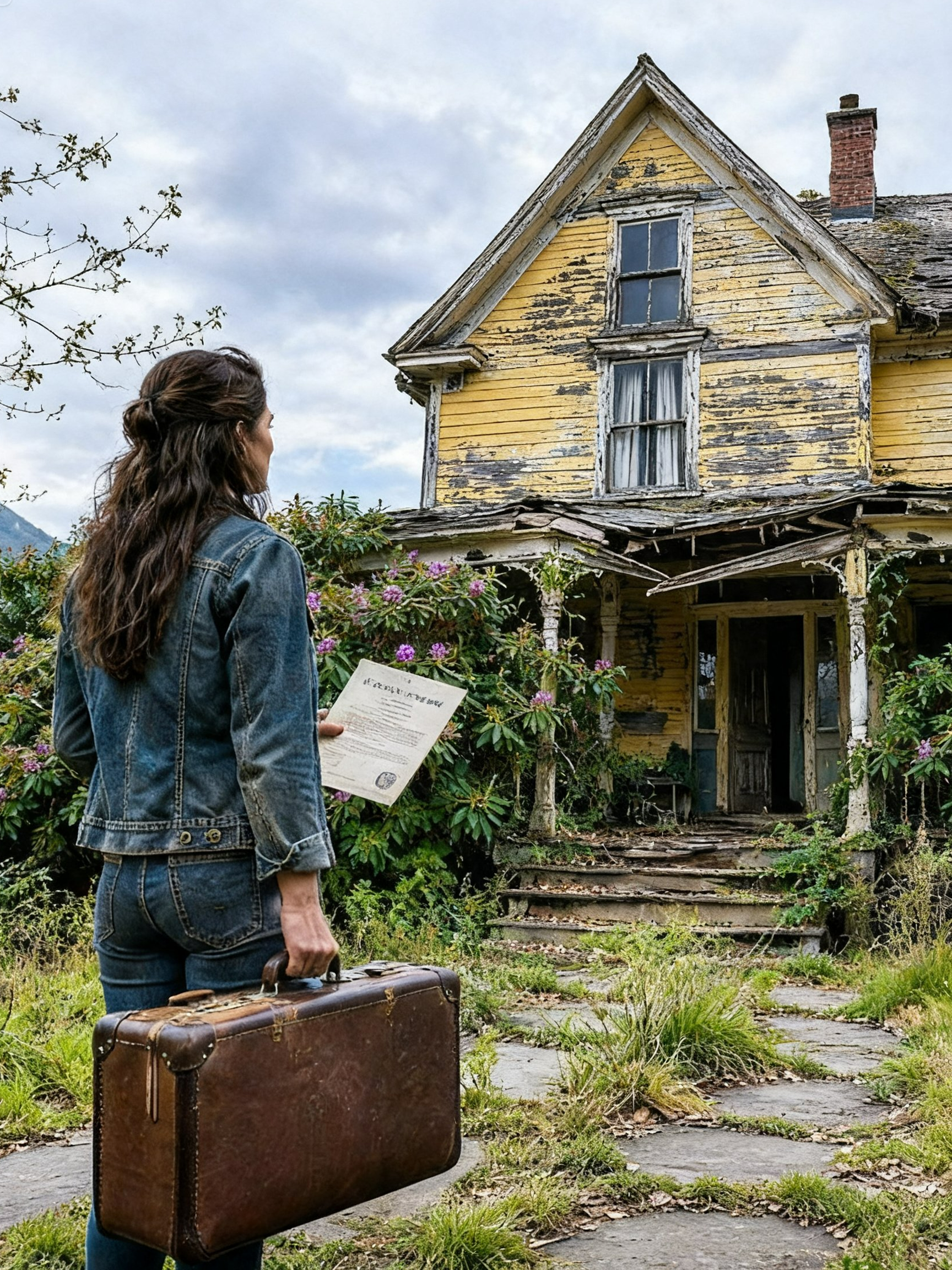
Divorced, Broke, and Sleeping in a $1 Cottage, She Heard the Basement Crack—Then Found What Everyone Had Been Hunting
The first thing Eric Bennett left his wife was a divorce decree.
The second was a warning.
“You’ll be back within six months,” he told Claire outside the courthouse, smiling as if fourteen years of marriage had been nothing more than a business contract he had finally escaped. “You have no house, no career, and practically no money. Pride doesn’t pay rent.”
Claire stared at the man she had once loved and said nothing.
His new girlfriend, Madison, was waiting beside his black Mercedes twenty feet away.
She was wearing Claire’s favorite color.
Emerald green.
That detail hurt more than Claire wanted to admit.
Three years earlier, Claire had been living in a six-bedroom house outside Pittsburgh, organizing charity dinners, reviewing invoices for Eric’s real-estate company, and believing they were building something together.
Now, at thirty-nine, she owned two suitcases, an eleven-year-old Honda Accord, a box of kitchen utensils, and exactly $842.16 after paying her attorney.
Eric had kept the house because it was heavily mortgaged through his company.
Their investments had been leveraged.
Their joint savings had evaporated into business loans Claire had signed because Eric told her married people trusted each other.
The judge had divided what remained fairly.
The problem was that almost nothing remained.
Claire had spent twelve years helping Eric build Bennett Development while never putting her own name on the payroll.
When she asked him about that during the divorce, he shrugged.
“You wanted to be supportive.”
Supportive.
That was apparently the legal term for working without a salary.
Eric opened the Mercedes door for Madison.
Then he glanced back at Claire.
“You should call your sister.”
Claire almost laughed.
Her sister had three children in a two-bedroom apartment in Cleveland.
“I’ll manage.”
Eric smirked.
“That’s what people say right before they don’t.”
He drove away.
Claire stood alone on the courthouse steps.
She had lost the marriage.
She had lost the house.
She had lost the comfortable life everyone thought belonged to her.
She had lost twelve years of professional momentum.
She had lost nearly every illusion she had mistaken for security.
But Eric was wrong about one thing.
Claire Bennett had not lost the part of herself that knew how to begin again.
Two days later, while sitting in a public library because her motel charged extra for reliable Wi-Fi, Claire found an that looked like a scam.
BELLWEATHER RURAL REVITALIZATION PROGRAM
ABANDONED RESIDENTIAL PROPERTIES — $1
Claire clicked.
The program belonged to Bellweather, a fading Pennsylvania town about ninety minutes east of Pittsburgh.
The county had acquired dozens of abandoned houses through tax foreclosure. Rather than demolishing them, the municipality was transferring selected properties to qualified residents for one dollar, provided the new owners agreed to stabilize and renovate them within eighteen months.
Most were terrible.
One had no roof.
Another had a tree growing through the kitchen.
Then Claire saw Cottage 17.
The listing contained six photographs.
A sagging porch.
White siding turned gray.
A crooked chimney.
Three broken windows.
A yard swallowed by weeds.
And, behind everything, enormous maple trees surrounding a small two-story cottage built in 1912.
Claire enlarged the photograph.
Something about the proportions caught her attention.
Before meeting Eric, she had studied architectural drafting at Penn State.
She never finished the degree.
Life happened.
Marriage happened.
Eric happened.
But Claire still understood buildings.
And Cottage 17, beneath decades of neglect, had good bones.
She applied that afternoon.
There were eleven pages of disclosures.
Lead paint.
Possible asbestos.
Foundation moisture.
Outdated electrical system.
Unknown plumbing condition.
No heating certification.
Potential structural instability.
At the bottom was a sentence written in bold capital letters:
PROPERTY SOLD AS-IS. MUNICIPALITY MAKES NO REPRESENTATION REGARDING CONDITION, VALUE, OR HABITABILITY.
Claire smiled.
Three weeks later, after an inspection and a committee interview, she stood inside Bellweather Municipal Hall holding a deed.
Purchase price:
The clerk, a gray-haired woman named Donna Miller, pushed the document toward her.
“You understand the town can take it back if you don’t meet the stabilization deadlines.”
“I understand.”
“And you’ve seen it in person?”
Donna lowered her voice.
“And you still want it?”
Claire laughed for the first time in weeks.
“I definitely want it.”
Donna stamped the document.
“Well, congratulations. You’re a homeowner.”
Claire walked out carrying a deed worth one dollar.
She called Eric without thinking.
Maybe some old reflex still existed inside her—the instinct to share major news with the person who had once been her partner.
He answered.
“I bought a house.”
Then Eric laughed.
“You what?”
“A cottage in Bellweather.”
“How much?”
Claire looked at the deed.
“One dollar.”
Eric laughed harder.
Madison’s voice could be heard in the background.
“What’s funny?”
Eric covered the phone badly.
“Claire bought a one-dollar house.”
Madison laughed too.
Claire listened for three seconds.
Then she hung up.
The cottage smelled like wet wood and mouse droppings.
The first night, Claire slept inside a sleeping bag on the living-room floor because she didn’t trust the upstairs ceiling.
Rain tapped against sheets of plastic she had temporarily stapled over two windows.
The refrigerator didn’t work.
The furnace looked prehistoric.
The bathtub contained something Claire hoped was rust.
Still, she slept better than she had in months.
Because for the first time in fourteen years, nobody else had a key.
Over the next six weeks, Claire worked from sunrise until exhaustion.
She took a temporary drafting job remotely for a small construction company.
At night, she repaired her own house.
She learned to replace rotten floorboards.
She watched electricians.
She stripped wallpaper.
She salvaged original oak trim beneath layers of paint.
She discovered the front staircase was hand-built.
She found dates penciled behind baseboards by carpenters who had been dead for a century.
Slowly, Cottage 17 began to breathe again.
The town building inspector, Marcus Reed, visited every few weeks.
“You’re ahead of schedule,” he told her one afternoon.
Claire wiped dust from her cheek.
“Don’t sound so surprised.”
“I’ve inspected seven one-dollar houses.”
“Four owners quit.”
“What happened to the others?”
“One accidentally set his kitchen on fire.”
Claire stared at him.
Marcus shrugged.
“You’re doing great.”
By October, Claire had spent nearly all her remaining savings.
But the roof no longer leaked.
The wiring was safe.
The plumbing worked.
And the upstairs bedroom had a real mattress.
The basement was last.
Claire hated the basement.
It had stone walls, a dirt-smelling concrete floor, one tiny window, and an old partition wall built from mismatched brick along the northern side.
Marcus had inspected it and believed the partition was probably added sometime in the 1940s.
It served no obvious purpose.
Claire planned to leave it alone.
Then the storm came.
Rain fell for almost eighteen hours.
At in the morning, Claire woke to a sound beneath her bed.
She sat upright.
Claire grabbed a flashlight and went downstairs.
Water trickled along one basement corner.
Nothing alarming.
Then she saw the northern wall.
A thin vertical fracture had appeared through the old mortar.
As Claire watched, a small piece of brick dropped onto the floor.
Behind it was darkness.
Claire moved closer.
She aimed the flashlight through the crack.
The beam did not strike stone.
It continued.
Several feet.
Claire stopped breathing.
The wall wasn’t covering the foundation.
It was hiding a room.
And inside that darkness, something reflected the flashlight back at her.
Claire did not knock down the wall.
Every instinct told her to.
Instead, she called Marcus at seven the next morning.
He arrived with a structural engineer named Caleb Ross.
Caleb studied the crack, measured the basement, then measured the exterior of the house.
After fifteen minutes, he looked at Claire.
“This basement is about eleven feet narrower inside than the building is outside.”
Claire folded her arms.
“So there’s definitely space behind it.”
“Definitely.”
“How much?”
“Maybe ten feet by twenty-two.”
Marcus stared at the wall.
“That’s not a closet.”
“No,” Caleb said.
“What is it?”
Caleb touched the mortar.
“Something someone wanted hidden.”
They obtained approval to remove several bricks without affecting the load-bearing structure.
Marcus insisted on photographing everything.
Claire agreed.
At 11:42 a.m., Caleb removed the first brick.
Then another.
Then six more.
Cold, stale air escaped through the opening.
They enlarged it enough for a person to pass.
Claire climbed through first.
Her flashlight moved across cedar shelves.
Wooden crates.
A small desk.
Three rolled canvases tied with discolored ribbon.
And a massive steel safe against the far wall.
Marcus whispered one word.
The room had no exterior door.
No electrical wiring.
Whoever sealed it had apparently intended for it to disappear.
On the desk lay a leather book covered by dust.
Claire opened it carefully.
The first page contained handwritten words:
ELEANOR WREN WRENFIELD HOUSE 1938
Marcus leaned over her shoulder.
Claire looked up.
“You know the name?”
“Everyone around here knows Wrenfield.”
Wrenfield had once been a massive country estate occupying hundreds of acres north of Bellweather.
The mansion burned in 1952.
The property was eventually divided, foreclosed, sold, divided again, and developed.
Only a handful of original structures survived.
Cottage 17 had apparently been one of them.
Marcus pointed toward the crates.
“Eleanor Wren was an artist.”
Claire frowned.
“I don’t know. Local-history famous.”
Caleb crouched beside one wooden case.
“Before anybody opens anything else, you need a professional.”
Claire agreed.
That afternoon, the basement was temporarily secured.
The next morning, Dr. Naomi Keller arrived from the Western Pennsylvania Museum of American Art.
Naomi was fifty-three, serious, and so careful with every object that Claire immediately trusted her.
She examined the journal first.
Then the rolled canvases.
The first painting showed a snowy orchard beneath a violet sky.
The second depicted steelworkers leaving a mill at dawn.
The third showed a woman standing alone beside a burning farmhouse.
Naomi’s expression changed.
“Claire, where exactly did you find these?”
“You watched me open the room.”
“Then why are you asking?”
Naomi swallowed.
“Because these may be part of the Wrenfield Series.”
Claire waited.
Naomi looked almost pale.
“Eleanor Wren wasn’t just a local artist. She had a brief but significant career during the 1930s and early ’40s. She exhibited in New York twice, then withdrew from public life after her husband died.”
Marcus nodded.
“I’ve heard that part.”
“What most people around here don’t know,” Naomi continued, “is that nine major paintings from her Wrenfield period disappeared sometime before the mansion fire.”
Claire looked at the three canvases.
“You think these are three of them?”
Naomi shook her head.
She stared toward the unopened crates.
“I think they might all be here.”
They called an attorney.
They called the county.
They documented every item before touching it.
Inside the first large crate were two more paintings.
Inside the second were three.
Inside a narrow wooden case was a ninth.
All bore Eleanor Wren’s signature.
Then they reached the safe.
A locksmith opened it under video documentation.
Inside were no diamonds.
No bundles of cash.
Instead there were property records, correspondence, photographs, exhibition catalogs, a packet of legal documents, and dozens of letters.
Naomi looked happier about those papers than she had about the paintings.
“This is provenance,” she whispered.
Claire didn’t understand.
Naomi turned toward her.
“This could prove where the paintings came from, who owned them, and whether they’re authentic.”
One letter was dated February 3, 1948.
Eleanor Wren had written it to her attorney.
Claire read aloud:
“I have moved the remaining work from the main house into the caretaker’s cottage. I no longer trust Theodore’s creditors or the men who arrive pretending to represent them.”
Another document described the nine paintings individually.
Dimensions.
Every description matched the canvases in the hidden room.
Naomi sat down.
“These aren’t copies.”
Claire’s heart began beating faster.
“What are they worth?”
Naomi hesitated.
“A museum professional should never give an informal valuation.”
She glanced at the paintings.
“If authenticated and legally yours?”
Claire waited.
“Possibly several million dollars.”
Nobody spoke.
Claire looked around the basement.
Six months earlier, Eric had told her pride did not pay rent.
Now she was standing inside a house she had bought for one dollar, surrounded by paintings that might be worth more than his entire company.
But Naomi raised one finger.
“Do not celebrate yet.”
Claire’s excitement cooled.
“Finding something doesn’t always mean owning it.”
That became the next problem.
For ten days, lawyers examined deeds, probate files, foreclosure orders, estate records, and abandoned-property documents.
The history was complicated.
But one crucial document changed everything.
In 1958, after Eleanor Wren died without surviving children, a county probate proceeding transferred the cottage and all remaining personal property located within it to the Wrenfield Estate Trust.
The trust eventually failed.
Decades later, following unpaid taxes and numerous public notices, the county obtained title through a final foreclosure judgment.
The foreclosure order specifically included abandoned contents attached to or remaining within the property.
Then the revitalization deed transferred the county’s entire interest in Cottage 17 to Claire.
One dollar.
Her attorney, Sarah Linwood, explained it carefully.
“Anyone can challenge ownership. People can sue over practically anything. But based on what I’ve reviewed, your claim is extremely strong.”
Claire stared at the papers.
“Strong enough to sleep tonight?”
Sarah smiled.
“Strong enough that I would.”
The story should have remained private.
Someone at the county courthouse leaked the discovery.
Three days later, the Pittsburgh Ledger ran a headline about nine long-lost Eleanor Wren paintings being discovered inside a one-dollar house.
Claire’s phone exploded.
Collectors.
Documentary producers.
Auction houses.
People claiming to be distant Wren relatives.
People offering cash.
People offering prayers.
People offering suspicious “investment opportunities.”
And at that evening, one name appeared on her phone.
ERIC BENNETT
Claire let it ring twice.
Then answered.
Eric did not laugh this time.
“I think we need to talk.”
Eric arrived the next morning in a charcoal suit.
He had never worn a suit to visit Claire when they were married unless he wanted something.
Claire met him on the porch.
He stared at the restored siding.
“You’ve done a lot.”
“You look good.”
“What do you want?”
Eric’s smile faded.
“Still angry.”
“No. Busy.”
“I heard about the paintings.”
“So did half of Pennsylvania.”
“You should be careful.”
“People get taken advantage of in situations like this.”
Claire almost smiled.
“You’re offering advice about people taking advantage of me?”
Eric ignored that.
“I know collectors. Attorneys. Developers. Wealth managers. You have no experience handling an asset like this.”
“Naomi Keller has experience.”
“She’s a museum curator.”
“And Sarah Linwood is an attorney.”
Eric paused.
Clearly, he had not expected Claire to already have professionals around her.
He stepped closer.
“Claire, we were married fourteen years.”
“Everything we built, we built together.”
“You told the court your company was yours.”
“That’s different.”
“You know how.”
Claire stared at him.
For fourteen years, Eric had used confidence like a weapon.
He spoke first.
He spoke loudly.
He made certainty sound like evidence.
But divorce had taught Claire something valuable.
A person saying something confidently did not make it true.
Eric lowered his voice.
“There may be a marital claim.”
“The house was transferred to me twenty-seven days after our divorce became final.”
“You found the program while we were still sorting financial matters.”
“No. I found it afterward.”
“Can you prove that?”
The answer came so quickly that Eric blinked.
Claire continued.
“The library computer logs show the date. My application has a timestamp. My divorce decree predates both.”
Eric’s jaw tightened.
“What about the renovation money?”
“My money.”
“We were married when you earned some of it.”
“The $842 in my account was specifically listed and assigned to me in the divorce settlement.”
Eric said nothing.
Claire leaned against the porch post.
“Anything else?”
He forced another smile.
“I’m trying to help you.”
“No. You’re trying to arrive after the work is finished.”
That landed.
Eric stepped backward.
“You know what your problem always was?”
Claire waited.
“You think being stubborn makes you strong.”
“No, Eric.”
Her voice remained calm.
“My problem was confusing your approval with security.”
He left without saying goodbye.
Two days later, Claire received notice that Eric Bennett had filed a civil claim seeking preservation of the artwork until potential marital ownership could be determined.
Sarah read the filing in her office.
Then she laughed.
“Is that good?”
“It means he’s scared.”
“Can he freeze everything?”
“He can ask.”
“What happens now?”
“We answer.”
Eric’s filing contained a serious mistake.
Attached as an exhibit was an email he had sent his own attorney months before the divorce was finalized.
Eric had written:
Claire will probably end up renting somewhere. She has no real-estate interests and no pending purchases that I’m aware of.
Sarah tapped the page.
“He swore during your divorce that you had no undisclosed real-estate interests.”
Claire understood immediately.
“So now he has to argue that either he lied then—”
“Or he’s wrong now.”
For the first time, Claire almost felt sorry for him.
Then something worse happened.
At a.m. on a Thursday, Claire’s new security system sent an alert.
BASEMENT MOTION DETECTED.
She sat upright.
The paintings had already been moved to a secure conservation facility.
Only documents and empty storage crates remained in the hidden room.
Claire opened the camera feed.
A man wearing a baseball cap was inside the basement.
He had entered through a small rear window.
Claire called 911.
Bellweather police arrived seven minutes later.
The intruder ran.
He made it across the backyard before two officers caught him beside the maple trees.
His name was Dylan Shore.
He worked for a property-records research company in Pittsburgh.
When questioned, Dylan initially claimed he was an amateur historian.
Then police found $3,000 in cash inside his truck.
And text messages.
One was from an unregistered prepaid number.
Photograph everything in the room. Especially deeds, letters, surveys. Do not take anything.
$1500 now. $1500 when complete.
Police could not immediately prove who owned the prepaid number.
Claire didn’t need to guess.
But Sarah warned her.
“Suspicion is not evidence.”
So Claire waited.
The following week, something unexpected happened.
Madison Vale called.
Claire almost ignored it.
Then curiosity won.
Madison sounded nothing like the smug woman Claire remembered from the courthouse parking lot.
“I need to talk to you.”
Claire closed her eyes.
“I’m not interested in your relationship.”
“It’s not about our relationship.”
“It’s about your house.”
Claire sat down.
“What about my house?”
Madison exhaled.
“Eric knew about Wrenfield.”
Claire felt the room become very quiet.
“What do you mean?”
“His company looked at buying land near Bellweather two years ago.”
“That doesn’t mean anything.”
“He hired a historical-property consultant because there were rumors about valuable objects missing from the Wren estate.”
Claire stopped breathing for a moment.
“Keep talking.”
Madison did.
Eric had considered purchasing several distressed Bellweather properties as part of a luxury-retreat development.
His consultant found references to Eleanor Wren’s missing artwork but believed the surviving cottage had been searched decades earlier.
Eric dropped the deal.
When Claire told him she had bought a one-dollar cottage in Bellweather, he searched the address.
And laughed.
“He told me it was useless,” Madison said.
Claire tightened her grip on the phone.
“He said your exact cottage had appeared in the old research.”
“Why didn’t he buy it?”
“Because the consultant said there was nothing there.”
Claire almost laughed.
Eric had known the rumor.
He had known the cottage.
He had dismissed both.
Just as he had dismissed her.
“Why are you telling me this?”
Madison was silent for several seconds.
“Because last week I heard him talking to somebody about basement records.”
Claire straightened.
“I don’t know.”
“I really don’t.”
“Do you know anything about a prepaid phone?”
That silence was enough.
Madison whispered, “I found one in his desk.”
Sarah contacted police.
Madison eventually gave a formal statement.
The prepaid phone was recovered during a warrant search related to the burglary investigation.
The message history connected Eric to Dylan Shore.
Eric had not ordered him to steal the paintings.
That mattered.
But he had paid Dylan to illegally enter Claire’s home and photograph documents he hoped might strengthen his civil case.
The district attorney charged him with offenses related to conspiracy and unlawful entry.
The man who had told Claire she would come crawling back was photographed walking into the Bellweather police station beside his attorney.
Claire did not celebrate.
She sat alone on her porch with coffee and watched maple leaves fall into the yard.
Marcus joined her.
“You okay?”
“You don’t look happy.”
“I spent fourteen years thinking winning meant he would finally realize what he did.”
Claire looked toward the restored cottage.
“I don’t care if he realizes anymore.”
Marcus nodded slowly.
“That sounds better than winning.”
Claire smiled.
“It feels better.”
But the most important battle was still ahead.
Eric refused to withdraw his ownership claim.
And three people claiming distant relation to Eleanor Wren had now challenged Claire’s rights to the paintings.
Everything would be decided in court.
The hearing took place four months after Claire discovered the hidden room.
The courtroom was packed.
Reporters filled the back row.
Museum representatives sat behind Sarah.
Eric sat across the aisle beside two attorneys.
He looked older.
Not ruined.
Not broken.
Just smaller somehow.
Maybe Claire had finally stopped seeing him through the magnifying glass of marriage.
The judge, Margaret Holloway, spent nearly two hours reviewing the title history.
One by one, the competing claims weakened.
The alleged descendants could establish distant blood relationships but no surviving ownership interest.
The 1958 probate transfer had been valid.
The later foreclosure had been valid.
The county’s transfer to Claire had been valid.
Then Eric’s attorney stood.
He argued that Claire’s knowledge of distressed properties and redevelopment opportunities came from work she performed during the marriage.
Therefore, he said, the acquisition was connected to marital business activity.
Judge Holloway removed her glasses.
“Counsel, are you arguing that knowledge obtained during marriage creates indefinite ownership rights over a former spouse’s future purchases?”
The attorney hesitated.
“Not precisely, Your Honor.”
“I should hope not.”
Several people in the gallery suppressed laughter.
Sarah stood.
She produced the timeline.
Divorce finalized March 3.
Claire first accessed the Bellweather program March 8.
Application submitted March 9.
Property inspection March 19.
Deed transfer March 30.
Purchase price paid from funds awarded exclusively to Claire in the divorce.
Then Sarah produced Eric’s own sworn financial disclosures stating Claire had no pending property interests known to him.
Judge Holloway looked at Eric.
“Mr. Bennett appears to have taken opposite factual positions depending on which one might pay him.”
Eric stared at the table.
His claim was dismissed.
With prejudice.
The relatives’ claims were dismissed as well.
Claire legally owned the collection.
Not theoretically.
Not temporarily.
Not unless Eric changed his mind.
Outside the courthouse, reporters shouted questions.
Claire walked past them.
Then a journalist asked:
“What does it feel like to become a millionaire because you bought a house for one dollar?”
Claire stopped.
She turned.
“I didn’t become anything because I bought it for one dollar.”
The reporter raised his microphone.
Claire continued.
“I became the owner because I signed a contract everyone else ignored, repaired a house everyone else abandoned, and checked a basement wall everyone else thought was worthless.”
She walked away.
Naomi later arranged a formal authentication process involving conservators, historians, pigment analysis, correspondence review, and independent experts.
All nine paintings were confirmed as authentic works by Eleanor Wren.
The collection became the most significant discovery associated with the artist in decades.
A major New York auction house estimated the complete group between $3.4 million and $4.8 million.
Claire did not immediately sell them.
That surprised everyone.
Eric had always told her that hesitation cost money.
But Claire had finally learned that urgency was often another tool people used to control decisions.
She spent three months studying.
She met tax attorneys.
She met museum representatives.
She met conservation experts.
She ignored collectors who tried to flatter her.
Eventually, she reached an agreement.
Three paintings would be auctioned.
Four would remain on long-term loan to a Pennsylvania museum.
One would be donated permanently in Eleanor Wren’s name.
Claire kept the final painting.
It was the smallest.
The woman beside the burning farmhouse.
Naomi told her it was titled After the Fire.
The auction of the three works brought $2.76 million before taxes and fees.
After everything was settled, Claire had enough money to never worry about rent again.
But the money was not the final surprise.
The final surprise was a letter.
Naomi found it while cataloging documents from the safe.
It had slipped between two sheets of cardboard inside an old exhibition folder.
The envelope contained no name.
Only three words:
FOR THE FINDER
Naomi called Claire immediately.
They opened it together.
Eleanor Wren had written the letter in 1951, one year before the main Wrenfield house burned.
The handwriting was shaky.
Claire read silently.
Eleanor explained that creditors, relatives, dealers, and acquaintances had spent years asking about the missing paintings.
Some claimed to care about art.
Most cared about money.
She had moved the work into the cottage because it was the only building on the estate nobody considered important.
Then came the sentence that made Claire stop.
Men searched the mansion because they assumed value must live in grand rooms. No one ever thinks to look in the servant’s cottage.
Claire laughed softly.
Naomi smiled.
“Keep reading.”
The final paragraph was even stranger.
If these walls survive longer than I do, perhaps someone will someday open them. I hope it is not a banker, a dealer, or one of my dreadful cousins. I hope it is someone who came here because they had nowhere grander to go. Such a person may understand the difference between price and worth.
Claire’s eyes filled.
Not because she believed Eleanor had somehow predicted her life.
She hadn’t.
The letter had been waiting in darkness for seventy-five years.
Anyone might have found it.
But Claire understood what the words meant.
Eric had looked at Cottage 17 and seen a worthless building.
The county had seen a liability.
Contractors had seen demolition work.
Collectors had hunted the grand estate.
And Claire?
Claire had simply needed somewhere to live.
Naomi turned the letter over.
There was one final line.
Please repair the porch. It was always dreadful.
Claire burst out laughing.
Naomi laughed too.
“I like her.”
One year later, the porch was repaired.
Not patched.
Not reinforced.
Claire copied the original 1912 design using photographs discovered in the archive.
She restored the oak staircase.
Repaired the stone chimney.
Reopened a bricked-up kitchen window.
Painted the cottage a warm ivory with dark blue shutters.
She even restored the basement.
But she did not erase the crack.
Instead, Claire installed a glass panel over part of the original broken wall.
Behind it, visitors could see the old bricks and the doorway leading into Eleanor Wren’s hidden room.
The rest of the basement became a small archive and design studio.
Above her drafting table hung After the Fire.
People occasionally asked why she had kept that painting instead of selling it.
Claire always gave the same answer.
“Because she stayed standing.”
With part of the auction money, Claire finished the architectural-design certification she had abandoned years earlier.
Then she purchased an empty storefront on Bellweather’s Main Street.
Not for one dollar.
This one cost considerably more.
She opened a small restoration company specializing in historic homes and neglected properties.
Within two years, Claire Bennett Restoration employed eleven people.
Marcus handled municipal consulting on several projects.
Naomi helped with historical research when necessary.
Donna Miller from Municipal Hall insisted on attending the grand opening and brought a framed photocopy of Claire’s original deed.
At the bottom, Donna had circled the purchase price.
Claire hung it in her office.
Eric’s life continued too.
The criminal case ended with a plea agreement involving probation, restitution, community service, and a substantial fine.
His development company survived, although two investors left.
Madison did not.
She ended their relationship shortly after giving her statement.
Claire heard all of that secondhand.
She never called him.
Then, almost three years after their divorce, Eric appeared at Cottage 17 again.
Claire was outside sanding a pair of antique shutters.
He stood beside the driveway with his hands in his coat pockets.
“Can we talk?”
Claire looked at him for a moment.
Then nodded.
Eric approached the porch.
The arrogance she remembered was gone.
“I drove past your office.”
“It looks successful.”
“I’m glad.”
Claire waited.
He stared at the house.
“I was awful to you.”
There had been a time when Claire imagined this moment hundreds of times.
Eric apologizing.
Eric understanding.
Eric regretting.
In every fantasy, she delivered a perfect speech.
She told him exactly how deeply he had hurt her.
She made him feel what she had felt.
But standing there now, Claire discovered something unexpected.
She didn’t need the speech anymore.
“Yes,” she said.
Eric almost smiled.
“I guess I deserved that.”
“I thought you needed me.”
Claire set the sandpaper down.
“So did I.”
He looked toward the cottage.
“You really did all this?”
“Not alone.”
“I mean… your life.”
Claire considered the question.
Eric stared at the rebuilt porch.
“You know, when you called me about this place, I thought you’d lost your mind.”
“I remember.”
“I knew about the old Wren rumors. I thought everything valuable was gone.”
“I know that too.”
His face changed.
“Madison told you.”
Eric nodded.
For several seconds, the only sound was wind moving through the maple trees.
Finally he said, “If I had known what was behind that wall—”
Claire interrupted him.
“You would have bought the house.”
He gave a small, embarrassed laugh.
“Probably.”
Eric looked at her.
“You wouldn’t have.”
“Because you did know there might be something here.”
Claire stepped down from the porch.
“You had consultants. You had research. You had money. You knew the history.”
She pointed toward the cottage.
“And you still decided it wasn’t worth one dollar.”
Eric said nothing.
“That was always your problem.”
“What was?”
“You could only recognize value after somebody else proved it.”
The words hung between them.
Claire had not planned them.
Maybe that was why they felt true.
Eric lowered his eyes.
“I’m sorry.”
This time Claire believed him.
That did not mean she wanted him back.
That did not erase what happened.
But she believed he was sorry.
“Thank you.”
He looked surprised.
“That’s it?”
“That’s it.”
“You forgive me?”
Claire thought about it.
“I stopped carrying you a long time ago, Eric. Call that whatever you want.”
He nodded slowly.
Then he walked back toward his car.
At the driveway, he turned.
“For what it’s worth, Claire… I was wrong.”
She smiled.
After he left, Claire returned to sanding the shutters.
She worked until sunset.
Inside the basement, the glass-covered crack caught the golden evening light.
Sometimes visitors assumed Claire kept it as a symbol of the treasure she had found.
They were wrong.
The paintings were valuable.
The money changed her circumstances.
The discovery gave her opportunities she had never expected.
But the crack meant something else.
Before it appeared, Claire had believed broken things needed to be hidden.
Broken marriages.
Broken careers.
Broken plans.
Broken houses.
She had spent years covering imperfections so other people would think everything was fine.
That wall taught her differently.
Sometimes a crack was not evidence that everything was falling apart.
Sometimes it was the first opening into something that had been waiting for you all along.
Late that evening, Claire walked through the cottage turning off lights.
She stopped at the framed one-dollar deed beside the staircase.
Then she looked toward the basement door.
Eric had once told her pride didn’t pay rent.
He had been right.
Pride hadn’t saved her.
Neither had luck.
A dollar hadn’t saved her.
The paintings hadn’t saved her either.
What saved Claire Bennett was the decision she made when everything familiar disappeared:
She walked into a ruined house nobody wanted.
She picked up a hammer.
And she started rebuilding.
The treasure behind the wall simply proved she had already become rich before she ever found it.
✓ Lynn R. Adams
Divorced, Broke, and Sleeping in a $1 Cottage, She Heard the Basement Crack—Then Found What Everyone Had Been Hunting The first thing Eric Bennett left his wife was a divorce decree. The second was …