Divorced at 58 With Nothing Left, She Bought a $200 Old Schoolhouse — and Beneath the Hearth Lay a Secret No One Expected
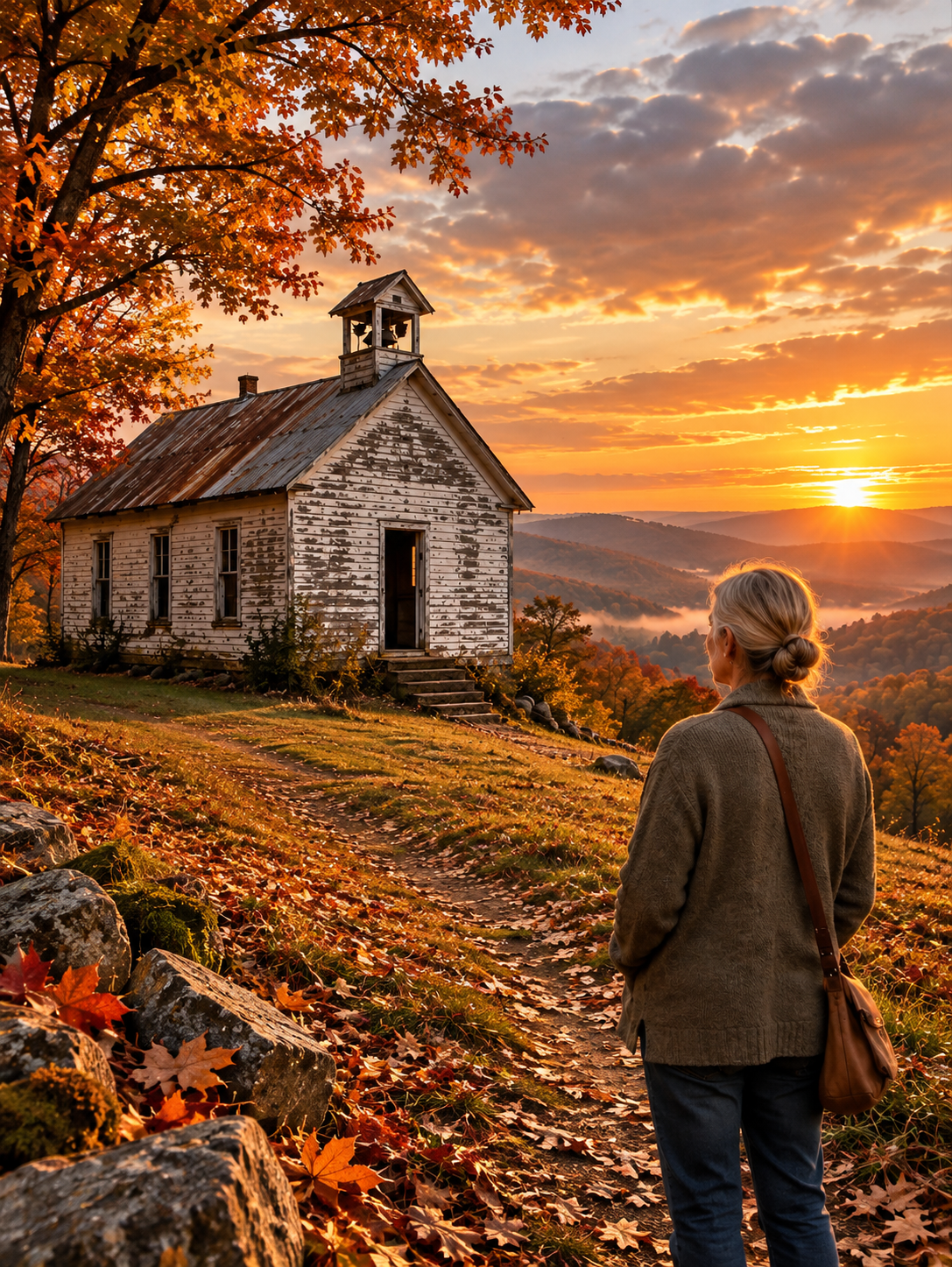
Divorced at 58 With Nothing Left, She Bought a $200 Old Schoolhouse — and Beneath the Hearth Lay a Secret No One Expected
What would you do when the crumbling building you bought to start over holds a truth that changes everything you thought you knew?
The judge signed the paper and my life folded in half. Forty years of marriage. Three grown children. A home I’d raised my family in. All his. “You’ll be fine,” my ex‑husband said, not looking me in the eye. “You always land on your feet.” I walked out with my clothes, my grandmother’s locket, and $1,200 in the bank. I was fifty‑eight. Homeless. Broke. And completely alone. Everyone said I should move in with a friend. Apply for assistance. Wait for someone to take care of me. Instead, I saw the ad in the county paper: *One‑room schoolhouse, built 1924. $200. As‑is.* I bought it before anyone could talk me out of it.
I did not sit in a rented room and weep over what I lost. I did not beg my children to take me in. I did not let anyone tell me I was too old, too poor, or too late to start again. I did not look at the cracked walls and sagging roof and see only ruin. I saw a blank page. I saw a chance to build something that was mine and mine alone. I did not know then it would hold the past I never got to keep.
I drove out at dawn with a pickup full of paint and a heart full of quiet resolve. I turned the rusted key and pushed open the heavy oak door. I stepped across the threshold and breathed in the scent of chalk dust and old wood. I ran my hand along the blackboard where generations of children had learned their ABCs. I did not come here to fix a building. I came here to heal.
I scraped layers of peeling paint. I swept the floorboards until they shone. I washed the windows until the sunlight poured in like honey. I did not know what I would find. I only knew I would not be leaving.
My name is Margaret Hale. The schoolhouse sat on a grassy knoll at the edge of town, tucked between two oak trees older than the building itself. The roof leaked. The door stuck. The chimney leaned slightly to the left. But the walls were solid. The windows were tall. And it was mine—paid in full, signed, sealed, and delivered.
I spent the first week clearing out decades of clutter. Broken desks. Tattered books. A rusted stove. I hauled it all out to the pile by the road, keeping only what spoke to me—a faded photograph of a class from 1952, a chipped ceramic mug, a small wooden box with no lid. I planned to turn the main room into a living space. To build shelves. To hang curtains. To make it warm.
I started with the hearth. It was wide and deep, made of rough fieldstone, centered on the back wall. The mortar crumbled when I touched it. Some stones were loose. I decided to reset them—one by one, carefully, so the chimney would draw properly and I could build a fire next winter. I pulled out the first loose stone near the bottom. Then another. And then I saw it.
A hollow space. A small, iron box tucked deep beneath the foundation, wrapped in oilcloth, sealed tight against the damp.
I pulled it out gently. It was heavy, about the size of a shoebox, rusted at the edges but still strong. There was no lock—just a simple latch that gave way when I pressed it. I lifted the lid. Inside were letters tied with twine, a leather‑bound journal, a stack of yellowed documents, and a photograph of a young woman standing right where I stood now—dark hair, bright eyes, smiling as if she knew someone would find this one day.
Her name was Clara Bennett. The journal was hers. Dated 1924 to 1929.
I sat on the floor by the light of the window and read.
She had been the first teacher here. Twenty‑two years old. Passionate. Fearless. She wrote of the children—farm kids, immigrants, families with nothing—how they hungered to learn. She wrote of the community that had built this school with their own hands, stone by stone, beam by beam. And then the tone shifted. Her handwriting tightened. The words grew sharp and angry.
They want to close it. They say there aren’t enough children. They say it’s too far from town. But that’s not the truth. They want the land. They want to sell it to the lumber company. They don’t care about the children. They never have.
Page after page told the same story: pressure from town leaders. Threats to cut funding. Lies about the building’s condition. Clara had fought them. She’d organized parents. She’d spoken at town meetings. She’d refused to be silent. And then, near the end, the entries stopped abruptly. The final page, written in a shaky hand, read: If you are reading this, they won. The school closed. I’m leaving. But the truth is here. The land was never theirs to sell. Look for the deed. Follow the map. Don’t let them erase us.
I set the journal down slowly. I unfolded the map she’d drawn—carefully marked, with a red X near the creek at the edge of the property. Beneath it, a handwritten deed, dated 1923, signed by the original landowners: This land is held in trust for the children of this community. It shall never be sold. Never divided. Never used for private gain.
The signature at the bottom was familiar. My grandfather’s name.
I frowned. I’d never known he’d been involved in this. My family never spoke of those days. I read on. A letter from Clara to him, tucked between the pages: We built it together. We promised we’d protect it. Don’t let them take what belongs to everyone.
And then another note, in his handwriting, dated months later: They threatened your life. I had no choice but to stay silent. But I hid the truth. One day someone will come. Someone who will listen. And then it will be your turn to speak.
My breath caught. Clara Bennett was my grandmother. The woman who’d died before I was born. The one my family never talked about. She’d taught here. Fought here. And hidden her legacy here—waiting for someone to find it. Me.
I drove into town the next morning and pulled the records. Everything Clara had written was true. The deed had been altered. The trust dissolved. The land sold to a private developer in 1930 under questionable circumstances. And now—just as they’d planned a century ago—the same company was back. They’d quietly bought up every parcel around the knoll. And they’d filed paperwork to condemn the schoolhouse itself—declaring it unsafe, a hazard, slated for demolition within sixty days.
They’d known I bought it. They’d just never dreamed I’d find the proof that it was never theirs to take.
I didn’t panic. I didn’t call my ex‑husband or my children. I went to the town hall. I spoke to the clerk. I laid copies of the original deed on the counter. “This isn’t theirs to tear down,” I said. “And I’m not selling.”
The mayor called me that evening. His voice was smooth, reasonable, firm. “Margaret, I know this is hard. But the building’s old. It’s falling apart. We’ll give you fair market value—more than you paid. Walk away. This isn’t your fight.”
“It is my fight,” I said. “It’s hers too. And it’s everyone’s who ever sat in those desks.”
He sighed. “You don’t know who you’re up against. Powerful people. Generations of influence. This won’t be easy.”
“I didn’t come here for easy,” I said.
I hung up and got to work. I made copies of everything. I researched the company’s history. I found descendants of the families who’d signed the original deed. I posted Clara’s story on social media—her words, her face, her fight. I didn’t ask for money. I asked for witnesses. For people to remember.
The response came slowly at first. Then it grew. People commented with their own stories. Grandparents who’d attended this school. Families who’d heard whispers of a fight long ago. Local historians who’d seen the records but never had the proof. And then a lawyer—retired, born and raised here—volunteered to help pro bono. “My mother was her student,” he said. “She always said Clara was pushed out. I never knew the half of it.”
We filed a motion to halt demolition. We submitted the documents. We asked for a full historical review. The town fought back—delays, objections, claims the papers were forgeries. But the more they pushed, the more people stood with me. Neighbors brought stories. Old letters. Photographs. The schoolhouse wasn’t just a building. It was the heart of this community. And they weren’t going to let it be erased.
I found more hidden in the walls—newspaper clippings, handwritten lesson plans, a list of every child who’d attended, their names and ages, written in Clara’s careful script. I framed them all. I hung them on the walls where lessons had once been taught. The schoolhouse became a meeting place. A gathering spot. A reminder of what we could build together.
But the threats started too.
Late one night, I heard a noise outside. I found a window broken. The next morning, my gate was tied shut. A man in a dark suit drove by slowly, staring at the house, then drove off. The mayor called again, his voice colder this time. “Walk away, Margaret. For your own good. Some things are better left buried.”
I didn’t back down. I installed lights. I kept a journal of every incident. I told the lawyer. I told the neighbors. And I kept reading Clara’s words. Courage isn’t the absence of fear, she’d written. It’s doing what must be done even when your hands shake.
I found the final piece tucked in the back of the journal, a letter never sent, addressed to her unborn child—my mother. I hope you’ll grow up knowing you belong to something bigger than yourself. I hope you’ll find your voice. And if I can’t give you the world, I’ll leave you the truth. It’s all I have.
I sat by the hearth and cried—not for myself, but for her. For the life she didn’t get to live. For the voice they tried to silence. And then I stood up and wiped my eyes. I would not let her be forgotten.
The hearing was scheduled. The room was packed. The mayor and his lawyers sat on one side. We sat on the other—me, the retired lawyer, neighbors, descendants of the original trustees. The developer’s attorney stood and called the documents “unverified,” “hearsay,” “a sentimental story with no legal standing.”
Our lawyer stood. He laid out the evidence—chain of title, matching signatures, witnesses, the historical record. “They didn’t just steal land,” he said. “They stole a legacy. And they’ve been waiting for the last person who remembers to pass away so they can finish what they started.”
The judge adjourned to review the evidence. We waited. Days passed. Tension hung thick in the air. I went to the schoolhouse every morning at dawn. I sat by the hearth. I spoke to her as if she were there. “I’m doing my best,” I whispered. “I won’t let you down.”
Then came the night I found the loose stone at the very back of the hearth—one I hadn’t moved. Beneath it, wrapped in oilcloth, was a second envelope. Sealed. Marked Only to be opened if the first is found and the fight continues.
I opened it. It was not from Clara. It was from my grandfather, written years later, after she was gone.
Clara didn’t just leave the truth in the box. She left proof they’re still doing it. The same families. The same lies. The same empty promises. The school was never the only thing they wanted. Look at the map again. Follow the creek. What they’re really after runs beneath the whole valley. And they will do anything to get it.
I unfolded the map. There was a second red mark I hadn’t seen, hidden by the fold—an old, protected water source that fed every well in the area. The same source the developer was planning to divert and drain to build their resort. The same project the town council had already approved in secret.
They weren’t just tearing down a schoolhouse. They were covering their tracks. And they’d been doing it for a hundred years.
I looked up. Through the window, headlights swept across the walls. A car engine idled outside. I heard footsteps on the porch. Heavy. Slow. Deliberate.
I slipped the papers into my pocket. I reached for the phone. No signal. Cut.
The doorknob turned.
I stepped back. The door creaked open. The mayor stood there, framed against the night. He didn’t look apologetic. He looked tired. And dangerous.
“Give me the map, Margaret,” he said quietly. “Walk away. And you can keep the house. Be happy. Forget all this.”
I held the papers tight. “What are you hiding?”
He sighed. “You think this started with Clara? It started before her. It will go on long after us. Don’t be the one who stops it. People have been hurt for less.”
Behind him, a second figure stepped into the light. Someone I knew. Someone I’d trusted from the very beginning. And I realized then: the betrayal wasn’t just in the past. It was standing right in front of me. And they had no intention of letting me leave this room with the truth.
✓ Lynn R. Adams
Divorced at 58 With Nothing Left, She Bought a $200 Old Schoolhouse — and Beneath the Hearth Lay a Secret No One Expected What would you do when the crumbling building you bought to start over holds …