D-THIRTY-ONE MISSED CALLS: THE AFFAIR, THE LIES, AND THE TERRIFYING SECRET HIDDEN IN MY WIFE’S COMPANY RETREAT VIDEO
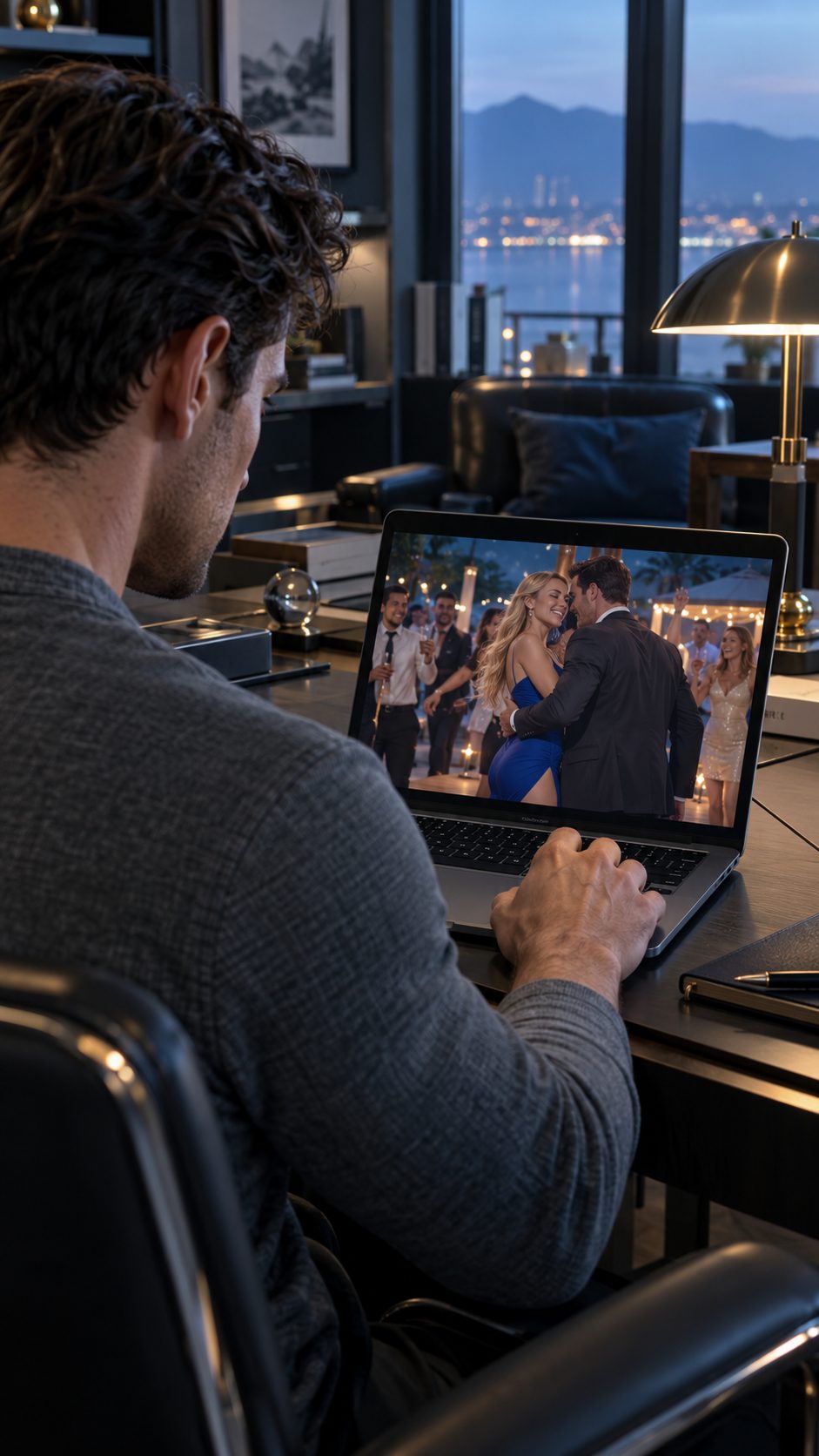
*She thought one reckless dance had destroyed our marriage, but the secret hidden behind her in that video would expose a betrayal far deeper than infidelity—and force me to question everything I believed about the woman I’d loved for seven years.*
**CHAPTER 1: THE NIGHT EVERYONE KNEW EXCEPT ME**
My wife’s thirty-first call came at exactly 11:47 p.m.
I watched her name illuminate my phone from the bed of a roadside motel, thirty miles from the home we’d shared for seven years.
I didn’t answer.
Five minutes earlier, she’d sent another message.
“You’re seriously throwing away seven years over one stupid dance?”
I stared at those words until the screen went dark.
Lauren thought I was jealous.
She thought I’d seen another man’s hands on her waist and reacted like an insecure husband.
She had absolutely no idea what I’d really discovered.
And if she’d understood what was visible in that recording, she wouldn’t have been begging me to come home.
She would have been calling someone else.
Someone who could help her hide the truth.
But to understand why I left, you need to understand what happened earlier that Sunday.
My name is Nathan Reed.
I’m thirty-five years old, and until that weekend, I believed my marriage was one of the few things in my life I could count on.
Lauren and I had been married for seven years.
We lived in a comfortable house outside Raleigh, North Carolina, had decent jobs, and were saving toward a future that always seemed just a little farther away.
I worked as an independent contractor renovating older homes.
Lauren worked in corporate development for a company called Crestline Communities.
She was smart, ambitious, beautiful, and capable of convincing an entire room that her ideas were their ideas.
I’d fallen in love with that confidence.
Seven years later, I still loved watching her walk into a room.
At least, I had.
That weekend, she’d attended a three-day company retreat at a luxury resort outside Raleigh.
She came home Sunday morning looking tired.
“How was it?”
I asked while making breakfast.
“That bad?”
“Meetings, presentations, quarterly numbers.
Three days of listening to people congratulate themselves.”
“Not even one good party?”
She rolled her eyes.
“Believe me, sweetheart.
You didn’t miss a thing.”
I kissed her forehead.
She smiled and stole a piece of bacon from my plate.
It was such an ordinary moment.
That’s what makes betrayal so difficult to understand afterward.
Nothing announces the last time you’ll trust someone.
Sometimes they’re standing in your kitchen, wearing your favorite sweatshirt, telling you a lie between bites of breakfast.
Sunday afternoon, I stopped at a grocery store to buy coffee and a few things for dinner.
That’s where I saw Daniel Brooks.
Daniel worked in Lauren’s department.
We’d met at company Christmas parties and once spent an entire evening discussing college basketball.
He approached me with a grin.
“Hey, Nathan!
How’s Lauren doing after that wild party?”
I stopped beside my truck.
“What party?”
His smile disappeared.
“Oh, you know.
Saturday night.”
“Lauren said they had dinner and went back to their rooms.”
Daniel looked over my shoulder.
That’s probably what she meant.”
He wouldn’t meet my eyes.
“Was she there with somebody?”
His face changed.
Not confusion.
Not surprise.
“Look, man.
I really don’t want to get involved.”
Before I could respond, he climbed into his truck and drove away.
I stood in that parking lot for nearly a minute.
A reasonable person might have gone home and asked his wife what happened.
Something about Daniel’s expression told me the answer wouldn’t come easily.
So I searched.
I opened my laptop at the dining room table and looked through every photograph and video employees had posted from the retreat.
There were predictable pictures of conference rooms, presentations, expensive food, and coworkers posing beside the resort pool.
I searched for almost three hours.
Then I found a video someone had uploaded late Saturday night.
I clicked play.
Music exploded through my laptop speakers.
A crowded dance floor filled the screen.
And there was Lauren.
The woman who’d told me she’d been too exhausted to stay awake past nine.
She was wearing a sapphire-blue dress I’d never seen before.
Her long chestnut hair fell over her shoulders.
Behind her stood a handsome man in a charcoal suit.
His hands rested on her waist.
Lauren leaned backward against him, laughing.
Someone shouted, “That’s somebody’s wife!”
People whistled.
A woman near the recording camera burst into laughter.
Lauren turned toward whoever was filming.
For one brief second, she looked directly at the camera.
Then she smiled.
She didn’t step away.
Instead, she continued dancing.
I watched the video three times.
With each replay, the room around me seemed to grow quieter.
I could have confronted her immediately.
I could have called Daniel or driven to her office.
Instead, I sat perfectly still.
Because on the fourth replay, something caught my eye.
It wasn’t Lauren.
It wasn’t the man touching her.
It wasn’t even the coworkers encouraging them.
It was something in the background.
Something that appeared on the screen behind the dance floor for less than three seconds.
I leaned closer.
My heartbeat changed.
For a moment, I forgot the man in the charcoal suit entirely.
Then I opened another window on my laptop.
I searched for an old photograph.
When I found it, I placed the two images side by side.
And suddenly, everything Lauren had told me about that weekend seemed much more frightening.
At six-thirty, I closed the laptop.
I went upstairs and packed a suitcase.
I took my clothes, laptop, essential documents, and the small wooden box containing my father’s letters.
Then I removed my wedding ring.
I placed it beside our framed wedding photograph.
Lauren was out with friends and wouldn’t return until after dinner.
I walked out without leaving a note.
By the time she came home, I was already driving west.
My phone began ringing twenty minutes later.
Then came the messages.
“Where are you?”
“Why is your suitcase gone?”
“Daniel said you asked about Saturday.”
“Baby, please.
It was just dancing.”
I ignored every one.
But as I checked into the motel, one thought kept circling through my mind.
Lauren hadn’t merely lied about Saturday night.
She’d lied about something that existed long before the retreat.
Something my father had entrusted to me.
And the last image I’d seen on that laptop made me wonder whether my wife had already taken it away.
**CHAPTER 2: THE THREE SECONDS THAT CHANGED EVERYTHING**
I didn’t sleep that night.
At two in the morning, I opened my laptop again.
The video was still waiting in my browser.
I muted the sound and dragged the progress bar backward.
Lauren appeared.
The man in the charcoal suit stepped closer.
The crowd cheered.
Then, behind them, a giant presentation screen changed slides.
That was the moment.
Three seconds.
Maybe less.
A photograph of green fields, two enormous oak trees, and an old red barn appeared behind my wife.
Across the bottom were several words in white lettering.
CEDAR HOLLOW.
LAND CONTROL SECURED.
I knew that place.
I’d known it my entire life.
Cedar Hollow was my father’s property.
Forty-two acres of rolling pasture and woodland near Pittsboro, with a farmhouse he’d inherited from his grandfather.
When I was a boy, my father taught me to fish in the creek there.
He taught me to repair fence posts, drive a tractor, and recognize the sound of rain approaching across open fields.
My mother died when I was seventeen.
After that, Cedar Hollow became the place where my father and I learned how to live without her.
When he died eighteen months earlier, he left the property to me.
Lauren had never understood my attachment to it.
“It’s beautiful, Nathan,” she’d say.
“But it’s sitting there doing nothing.”
“It isn’t doing nothing.”
“You know what I mean.
It’s forty-two acres of responsibility.”
“Then it’s my responsibility.”
She would sigh.
“We could sell it and finally stop worrying about money.”
That conversation had happened more than once.
But I’d always made one thing clear.
Cedar Hollow wasn’t for sale.
And yet there it was.
A photograph of my family’s land on a corporate presentation screen at my wife’s company retreat.
Under the words LAND CONTROL SECURED.
I opened Crestline Communities’ website.
The company specialized in residential development and mixed-use projects throughout North Carolina.
I’d always assumed Lauren handled marketing strategy and investor presentations.
Her exact responsibilities had never interested me much.
She talked about complicated financial models, zoning approvals, and acquisition schedules.
I listened when she needed to vent.
But I never imagined her work would involve my father’s land.
I searched Cedar Hollow.
Nothing appeared.
Then I searched the property parcel number.
A county records website showed me the familiar boundaries, acreage, and address.
Owner: Nathan Reed.
At least that hadn’t changed.
Then I noticed a recent document entry.
A memorandum of option.
Filed eleven days earlier.
I stared at the words.
I’d never authorized an option.
I’d never negotiated with Crestline.
I’d never even spoken to anyone from the company about developing Cedar Hollow.
I tried opening the document, but the public website only displayed limited information.
The complete record would have to wait until Monday morning.
I checked the clock.
My phone buzzed.
Another message from Lauren.
“Nathan, please.
Whatever Daniel told you, it wasn’t what it looked like.”
I typed three words.
“What was it?”
Then I deleted them.
I wasn’t ready for another lie.
Instead, I opened my father’s old photograph.
It showed him standing beside the red barn, one hand resting on a fence post.
He was smiling, his face weathered by years of outdoor work.
I remembered the afternoon we’d taken that picture.
He’d been talking about replacing the barn roof.
I’d told him it would cost more than the building was worth.
He laughed.
“That’s the trouble with people, son.
They always confuse price with value.”
My throat tightened.
I’d kept that photograph on my desk since his funeral.
Now it sat beside a corporate slide announcing that someone had secured control over the land.
At seven-thirty, I called my younger sister, Leah.
She lived in Charlotte with her husband and two children.
“Nathan?” she answered sleepily.
“What’s wrong?”
“Have you heard anything about Cedar Hollow being sold?”
“Has anyone contacted you about the property?”
I explained what I’d found.
Leah listened without interrupting.
When I finished, she said, “Tell me you’re not saying Lauren did this.”
“I don’t know what I’m saying.”
“She knows what that property means to us.”
“I thought she did.”
My sister was quiet for a moment.
Then she asked the question I hadn’t wanted to hear.
“Are you sure the land is still yours?”
I looked again at the county records.
“My name’s still listed.”
“Then get someone to check everything.
“It’s Sunday.”
“Then tomorrow morning.”
Before hanging up, she added something else.
“Dad trusted you with Cedar Hollow, Nathan.
Don’t let anyone make you feel guilty for protecting it.”
I spent the rest of Sunday searching Crestline’s projects.
One article caught my attention.
It announced a proposed luxury residential community in Chatham County.
The development would include private homes, walking trails, and a recreational facility.
The proposed name was Hollow Creek Estates.
A familiar name.
An unfamiliar purpose.
The article quoted Crestline’s vice president of acquisitions.
Adrian Cross.
His photograph appeared beside the interview.
He was smiling confidently in a charcoal business suit.
I stared at his face.
Then I opened the video again.
Same dark hair.
Same sharp jawline.
Same smile.
The man dancing with my wife wasn’t some random employee.
He was Adrian Cross.
The executive responsible for acquiring land.
My hands went cold.
I clicked through another company announcement.
Crestline had recently celebrated what it called a major strategic milestone.
A development agreement had been secured for the Hollow Creek project.
The announcement didn’t identify the landowner.
It didn’t have to.
I knew those trees.
I knew that barn.
And now I knew the name of the man holding my wife.
At ten that morning, Daniel finally answered my call.
“Nathan, I told you I don’t want to get involved.”
“I have one question.”
“Why was my father’s property on the presentation screen Saturday night?”
For several seconds, I heard nothing.
Then Daniel whispered, “Oh, God.”
“You saw that?”
Another silence.
“Listen carefully,” he said.
“Don’t talk to Lauren yet.”
“Because if that presentation showed what I think it showed, you need a lawyer before you need an explanation.”
Then he hung up.
**CHAPTER 3: THE SIGNATURE I NEVER WROTE**
Monday morning, I arrived at the county Register of Deeds office before it opened.
I hadn’t shaved.
My clothes were wrinkled.
I’d spent the night alternating between anger, disbelief, and the sickening sensation that I was about to discover something irreversible.
At nine-fifteen, a clerk handed me copies of the documents associated with Cedar Hollow.
There were seven pages.
The first was a memorandum describing Crestline Communities’ development option.
The second contained parcel information.
The third referenced a separate agreement held by the parties.
Then I reached page five.
And saw my name.
Nathan Reed.
Not printed.
A long, sloping signature appeared above the date.
Two weeks earlier.
I stared at it.
It looked almost exactly like mine.
The capital N had the same exaggerated curve.
The lowercase letters connected the same way.
But the final stroke was wrong.
My father taught me to sign my name when I was nine.
He’d insisted that a signature should be something I could recognize anywhere.
I had a habit of finishing the final d with a short downward hook.
The signature on the page didn’t have it.
More importantly, I’d never signed the document.
I turned to the attached authorization.
The heading read:
LIMITED POWER OF ATTORNEY.
It purported to authorize Lauren Reed to act on my behalf in matters concerning Cedar Hollow.
My stomach tightened.
At the bottom was another signature.
A notary’s seal appeared beneath it.
I read the document three times.
Then I sat down on a wooden bench in the hallway because my knees felt unreliable.
My wife hadn’t merely discussed selling the land.
Someone had created legal paperwork claiming I’d given her authority to make decisions about it.
I called Leah.
She answered immediately.
“Someone signed my name.”
“On a power of attorney.”
“I don’t know.”
But we both understood what I was thinking.
Leah’s voice broke.
“Nathan, Dad would never have believed—”
I couldn’t hear our father’s name right then.
Not without losing control.
An hour later, I was sitting across from Ruth Calder, a property-litigation attorney recommended by a contractor I’d worked with.
Ruth was in her late fifties, with silver-rimmed glasses and the expression of someone who’d spent thirty years listening to people lie.
She studied the paperwork.
“Did you authorize your wife to enter any agreement concerning this land?”
“Did you sign either of these documents?”
“Have you ever executed a power of attorney naming her as your agent?”
Ruth removed her glasses.
“Then we may be dealing with fraudulent instruments.”
The words sounded clinical.
Almost harmless.
They weren’t.
“Can they take the property?”
“Not automatically.
A forged instrument doesn’t become legitimate merely because someone records it.
But if a developer is relying on these documents, we need to act quickly.”
“How quickly?”
She explained that the recorded memorandum might give the appearance of a legitimate agreement.
That appearance could create serious complications if Crestline attempted to transfer development rights or proceed toward closing.
“We’ll notify the company, challenge the documents, and seek emergency relief if necessary.”
I stared at the papers.
“Can you find out who prepared them?”
“And the notary?”
“That too.”
Ruth paused.
“Nathan, I need to ask something difficult.”
“Go ahead.”
“Is there any possibility your wife believed you were willing to sell?”
“She knew I wasn’t.”
“Did the two of you argue about it?”
“More than once.”
“That matters.”
“Because intent matters.
And because people sometimes convince themselves that a dishonest decision is justified if they believe the outcome will eventually benefit everyone.”
I looked toward the window.
“She knew I’d never agree.”
Ruth didn’t argue.
She simply placed the documents in a folder.
“Then we start with the facts.”
That afternoon, I drove to Cedar Hollow.
The farmhouse stood at the end of a gravel road lined with aging maples.
Its white paint had faded.
The porch steps needed repair.
The red barn leaned slightly to the east, just as it had when my father was alive.
Everything looked familiar.
Until I reached the southern pasture.
Small orange survey flags had been placed along the fence.
There were markings on several trees.
Someone had been measuring the property.
Without my permission.
I crouched beside one of the flags.
A truck approached along the gravel road.
I stood, ready for another confrontation.
Instead, a woman climbed out carrying a rolled map.
She was around my age, with dark-blonde hair pulled into a loose braid.
She wore jeans, work boots, and a faded blue jacket.
“Are you Nathan Reed?”
“Who’s asking?”
“Tess Morgan.
I work with the county watershed preservation project.”
“What are you doing here?”
“Checking drainage near the creek.
Your father’s property borders a section we’re documenting.”
I looked at the survey flags.
“Did you put those there?”
She followed my gaze.
“Do you know who did?”
Her expression changed.
“I’ve seen a private surveying crew around here recently.”
“From Crestline?”
She studied me.
“Are you selling?”
“Then you should probably find out why their people have been walking around your property.”
I laughed once.
It sounded unpleasant.
“I’m working on that.”
Tess hesitated.
“I knew your father, you know.”
I looked up.
“He used to let our school collect creek samples here.
He said kids ought to know what clean water looked like.”
I remembered those afternoons.
Groups of children in rubber boots, shouting beside the creek.
My father pretending to complain while carrying their equipment.
“He was a good man,” Tess said.
For the first time in two days, someone had mentioned him without making me feel pressured to defend his memory.
Tess handed me her card.
“If you need old watershed maps or historical property boundaries, I can help you locate them.”
She started toward her truck, then stopped.
“Whatever’s going on, don’t let anyone rush you into signing something.”
I watched her drive away.
Then I walked inside the farmhouse.
The rooms smelled of old wood and dust.
On the kitchen wall, the pencil marks recording my childhood height were still there.
I touched the highest mark.
NATHAN — AGE 16.
My father had written it in black ink.
My phone rang.
“We’ve obtained additional information about the authorization,” she said.
I sat at the kitchen table.
“What information?”
“The power of attorney was notarized two days before your wife’s company retreat.”
I closed my eyes.
“There’s more.”
I heard papers moving.
“The person who requested the document preparation wasn’t your wife.”
“Then who was it?”
Ruth took a breath.
“Adrian Cross.”
**CHAPTER 4: THE MAN IN THE CHARCOAL SUIT**
I had never hated a stranger’s name until I heard Ruth say Adrian Cross.
“Are you certain?”
“The document preparation request came through a legal-services vendor used by Crestline’s acquisitions department.
His name appears in the correspondence.”
I looked around my father’s kitchen.
The cracked windowsill.
The old refrigerator.
The wooden table where my parents once played cards.
“Why would he be involved in my property?”
“That’s what we’re going to find out.”
Ruth told me not to contact Adrian.
She was already preparing written notices disputing the authorization and demanding that Crestline preserve all relevant records.
Then I did something she hadn’t asked me to do.
I called Daniel.
He answered on the fourth ring.
“Nathan, please.”
“I know who Adrian Cross is.”
“I know he requested paperwork involving Cedar Hollow.”
“And I know he was dancing with my wife.”
Daniel exhaled slowly.
“Where are you?”
“At my father’s place.”
“I can meet you.”
An hour later, Daniel pulled into the driveway.
He climbed out of his truck looking as though he’d aged ten years since Sunday afternoon.
We sat on the front porch.
For a while, neither of us spoke.
Then I said, “How long?”
Daniel stared at his hands.
“What do you mean?”
“Don’t insult me.”
He swallowed.
“Almost a year.”
The words seemed to hang between us.
“Almost a year,” I repeated.
“I don’t know exactly when it started.”
“Was it common knowledge?”
“People suspected.”
I looked toward the pasture.
“Everyone knew.”
“Not everyone.”
“Enough people to cheer.”
Daniel lowered his head.
That was answer enough.
“Did Lauren tell them she was married?”
“At first, yes.”
“At first?”
He hesitated.
“Later, she started telling people things weren’t going well between you.”
I looked at him.
“What things?”
“That you were basically separated.
That you were living different lives.”
“We weren’t separated.”
“I know that now.”
“We had breakfast together yesterday.”
Daniel said nothing.
“She slept beside me Saturday night, Daniel.
She came home, complained about meetings, and kissed me before going to bed.”
His face twisted with embarrassment.
“I’m sorry.”
“Do you understand how insane that sounds?
She was telling people we were practically divorced while coming home and asking me what I wanted for dinner.”
Daniel looked miserable.
“Adrian made everything worse.”
“He was always around her.
Taking her to meetings.
Bringing her onto projects she wasn’t originally assigned to.”
“Cedar Hollow?”
I stepped closer.
“Tell me what you know.”
Daniel glanced toward the road.
“Crestline’s been trying to assemble land for Hollow Creek Estates for almost two years.
Most owners agreed to preliminary options.
Your property was the problem.”
“Because I wouldn’t sell.”
“But nobody ever contacted me.”
“According to the internal notes, they had.”
I stared at him.
“They had?”
“Someone reported that the owner was emotionally attached to the land but becoming more flexible.”
Daniel didn’t answer.
He didn’t need to.
I turned away.
My wife had apparently been negotiating with her own employer about a property I had repeatedly refused to sell.
Daniel continued quietly.
“Adrian said Lauren had a personal relationship with the owner and could help resolve the acquisition.”
I laughed bitterly.
“A personal relationship.”
“She was married to him.”
“Did Adrian know?”
Daniel looked at me.
That answer hurt more than I’d expected.
It meant there had been no misunderstanding.
No confusion about our marriage.
No honest mistake.
Two adults had made choices, repeatedly, while everyone around them looked away.
“Why were people cheering?”
Daniel rubbed his face.
“Because the retreat was a celebration.
Adrian’s team had just announced the project was moving forward.”
“And Lauren?”
“She’d been promoted.”
I turned back.
“Senior director of strategic partnerships.
They announced it at the retreat.”
I remembered her complaint about boring presentations.
“She didn’t tell me.”
“I thought she had.”
I sank into the porch chair.
“Of course you did.”
Daniel stared toward the barn.
“Look, I don’t know what they promised her financially.
But there were rumors about a significant bonus tied to the project.”
“How significant?”
“I heard six figures.”
The air felt too thin.
My father’s land.
My wife’s promotion.
Adrian Cross.
A year-long affair.
Every piece seemed connected, but I still couldn’t see the whole picture.
“Why did you tell me about the party?”
Daniel shook his head.
“I wasn’t thinking.
I saw you and assumed Lauren had already told you everything.”
“Everything?”
He looked at me helplessly.
“I didn’t know you were completely in the dark.”
I watched a bird settle on the porch railing.
“Did you ever think about telling me?”
His voice was barely audible.
“But you didn’t.”
“I was afraid of losing my job.”
I nodded slowly.
That was the first honest thing he’d said.
Daniel stood.
“I have a wife and two kids, Nathan.
I told myself it wasn’t my business.”
“Until it was.”
He looked ashamed.
“I’m sorry.”
I believed him.
That didn’t make his silence easier to forgive.
Before leaving, he paused beside his truck.
“There’s something else.”
I looked up.
“Lauren and Adrian argued Friday afternoon.”
“About what?”
“I couldn’t hear everything.
But Lauren said she wanted to delay the closing.”
My heartbeat quickened.
Daniel nodded.
“Whatever they’re planning, Nathan, I don’t think Saturday’s announcement was the end of it.”
After he left, I called Ruth.
I repeated everything.
She listened carefully.
Then she said, “Nathan, the development option may not be the only problem.”
“What does that mean?”
“There’s a financial schedule attached to the transaction.
We’re requesting it.”
“How much money?”
“We don’t know yet.”
I looked across the property.
The orchard.
All the places that carried my father’s memory.
Ruth continued.
“But if your wife stood to receive a substantial payment for securing this agreement, we need to determine whether money changed hands.”
My phone vibrated.
A text from Lauren.
“I know you’re at Cedar Hollow.
Please don’t believe everything Daniel says.”
I stared at the message.
Then another appeared.
“Adrian doesn’t mean anything to me anymore.”
And finally:
“There are things you don’t understand about the land.”
I turned off my phone.
For the first time, I wasn’t wondering whether my wife had betrayed me.
I was wondering how much she’d been paid to do it.
**CHAPTER 5: THE PRICE OF EVERYTHING WE LOVED**
Lauren arrived at Cedar Hollow on Wednesday afternoon.
I heard her car before I saw it.
She parked beside the farmhouse and remained behind the steering wheel for several minutes.
I watched from the porch.
Seven years earlier, she’d stepped out of that same car wearing a yellow summer dress and carrying a picnic basket.
We’d spent the afternoon beside the creek.
She’d told me she loved how peaceful the property felt.
I’d believed her.
Now she climbed out wearing black trousers, a cream blouse, and the frightened expression of someone approaching a verdict.
I didn’t move.
“Can we talk?”
“You can talk.”
She climbed the porch steps.
Her eyes went immediately to my left hand.
My wedding ring was gone.
Her lips trembled.
“You took it off.”
“Are you really doing this?”
I looked at her.
“That’s what you came here to ask?”
She folded her arms.
“I know you’re hurt.”
“Please don’t do that.”
“Talk to me like I’m a stranger.”
I almost laughed.
“You’ve spent a year making sure I didn’t know who you were.”
Her eyes filled.
“Daniel told you.”
“He told me some things.”
“Whatever happened with Adrian—”
She stopped.
I held up my laptop.
“Do you recognize this?”
Her face lost color.
On the screen was the frozen frame from Saturday night.
Lauren leaned against Adrian.
Coworkers cheered behind them.
She covered her mouth.
“Nathan, I can explain.”
“I don’t want an explanation about the dancing.”
She blinked.
I turned the laptop slightly.
“Look behind you.”
She leaned closer.
Her gaze moved toward the presentation screen.
Then she froze.
I watched the realization spread across her face.
“That’s right.”
“Cedar Hollow.”
She stepped back.
“How much?”
Her eyes closed.
“How much were they going to pay you?”
She stared at the floorboards.
“One hundred and eighty thousand dollars.”
The number landed between us.
I felt strangely disconnected from my own body.
“My father’s property,” I said quietly.
“One hundred and eighty thousand dollars.”
“It wasn’t like that.”
“Then tell me what it was like.”
She began crying.
“I thought we needed a way out.”
“Out of what?”
“Our life.”
I stared at her.
She wiped her face.
“Every month, something else breaks.
Your business has good years and terrible years.
We keep saying things will get easier, but they never do.”
“We were paying our bills.”
“That’s not the same as building a future!”
Her voice rose.
Then she stopped, startled by her own anger.
She looked toward the barn.
“Adrian said the development could change everything.”
I shook my head.
“There was no us in that decision.”
She flinched.
“He said we’d get an option payment first.
That you could keep living here until the project actually started.
That there would be time to discuss everything.”
“Did he know I wouldn’t agree?”
She didn’t answer.
I looked away.
“Then why did he prepare a power of attorney?”
Her silence became unbearable.
Finally, she whispered, “Because I told him I could get your authorization.”
“Did you sign my name?”
Her shoulders shook.
“Answer me.”
The word was barely audible.
But I heard it.
I heard every letter.
I had imagined that moment repeatedly.
I’d imagined shouting.
I’d imagined demanding that she leave.
Instead, I felt an exhausted sadness.
“You forged my signature.”
She nodded.
“On a document involving the property my father left me.”
“After I told you a hundred times I wouldn’t sell.”
She covered her face.
“I thought once you saw the money—”
“You thought money would make me forgive you?”
“I thought you’d understand.”
I stepped backward.
“You didn’t even give me the chance to say no.”
She looked up.
“No, Lauren.
You don’t.”
I pointed toward the property.
“My father worked this land for forty years.
He gave up vacations, new cars, everything, to keep it in the family.”
Tears burned behind my eyes.
“And you treated it like a bonus.”
She began sobbing.
“I’m sorry.”
I wanted that apology to matter.
For a moment, I wanted to step forward and hold her.
My body still remembered loving her.
That’s the cruelest part of discovering betrayal.
Your heart doesn’t immediately recognize what your mind already knows.
I gripped the porch railing.
“How long were you sleeping with Adrian?”
She went still.
“Please don’t make me—”
“How long?”
“Eleven months.”
I closed my eyes.
Eleven months.
Sunday breakfasts.
Late-night conversations.
Eleven months of ordinary love on one side of a marriage and extraordinary dishonesty on the other.
“Did you love him?”
Her answer came slowly.
“I thought I did.”
I opened my eyes.
“I don’t know what I felt.”
“That’s convenient.”
She stepped toward me.
“Nathan, I never stopped loving you.”
I moved away.
“Then you have a very strange definition of love.”
She cried harder.
“I was selfish.
I know that now.”
“Did you know it when you were lying beside me?”
She couldn’t answer.
I looked at the laptop.
“What did you tell Adrian about me?”
“That we’d been having problems.”
“Did you tell him we were separated?”
She nodded.
“And when did you plan to tell me?”
Her silence told me everything.
A car passed along the distant road.
Wind moved through the oaks.
Lauren wiped her face.
“Adrian and I argued Friday because I told him I wanted to stop the transaction.”
“Because I finally realized what I’d done.”
I studied her.
“Did you realize it before or after you learned about the bonus?”
She looked wounded.
But she didn’t deny anything.
“He’s pushing everything forward,” she whispered.
“He says it’s too late.”
“It isn’t.”
“You don’t understand.”
“Then explain.”
She looked toward the southern pasture.
“Crestline has already scheduled contractors to begin preliminary site work.”
She hesitated.
“Next Thursday.”
I stared at her.
“That’s eight days away.”
I looked toward the red barn.
Somewhere beyond those trees, people were preparing to change the land my father had protected his entire life.
And the person who’d opened the gate for them was standing in front of me, begging to be forgiven.
**CHAPTER 6: THE TRUTH DOESN’T UNDO THE DAMAGE**
By Friday, Ruth had filed an emergency motion seeking to stop activity connected to the disputed development agreement.
Crestline’s attorneys responded almost immediately.
They claimed the company had relied in good faith on documentation provided by Lauren as my authorized representative.
They also claimed significant money and planning resources had already been committed.
Ruth read their response in her office.
“They’re trying to make this sound like a misunderstanding between spouses.”
I stared at the polished conference table.
“She forged my signature.”
“How is that a misunderstanding?”
But if they can portray this as a private marital dispute, they may hope to keep the company out of the center of it.”
I rubbed my eyes.
“What happens next?”
“We collect evidence.”
She slid a document toward me.
“This is the financial schedule.”
There it was.
The proposed one-hundred-and-eighty-thousand-dollar incentive payment.
Lauren’s name appeared as the intended recipient.
Ruth pointed to a paragraph.
“The bonus was contingent on Crestline receiving enforceable control of the property.”
I felt sick.
“She wasn’t just helping them get the land.”
“She was being rewarded for it.”
“That’s what the document indicates.”
I stared at my wife’s name.
I’d seen it written on birthday cards, grocery lists, and anniversary notes.
Now it sat beside a financial incentive for something she had no right to give away.
“Can she fix this?”
Ruth looked at me carefully.
“She can tell the truth.
She can provide records.
She can acknowledge that the authorization wasn’t genuine.”
“Will that protect her?”
I hadn’t wanted the answer to be no.
That surprised me.
Despite everything, some part of me still wanted Lauren safe.
Not protected from responsibility.
I left Ruth’s office and drove toward Cedar Hollow.
Halfway there, I pulled into a quiet gas station and called Lauren.
She answered immediately.
“I need you to cooperate with Ruth.”
“That means giving her everything.”
“I understand.”
Draft documents.
Anything involving Adrian or the property.”
Lauren was silent.
“He told me not to.”
I tightened my grip on the steering wheel.
“This morning.”
I closed my eyes.
“You’re still talking to him?”
“Only because he’s trying to control what happens.”
“Then stop letting him.”
“He says if I admit what happened, the company will report me.”
“They might.”
Her breathing changed.
“I could lose my career.”
I looked through the windshield.
A mother was helping a little boy climb into a pickup truck.
Normal people doing normal things.
The world continued without caring that mine had split apart.
“Lauren,” I said quietly, “you’ve spent almost a year making decisions because you were afraid of losing something.”
“Look where that’s brought us.”
She began crying.
“I don’t know how to fix this.”
“Neither do I.”
That was the most honest conversation we’d had in months.
Maybe years.
After hanging up, I drove to the farmhouse.
Tess Morgan’s truck was parked near the creek.
She was standing beside a weathered footbridge, examining a drainage map.
“Hope you don’t mind,” she said when she saw me.
“I was checking the creek measurements.”
“Not at all.”
She studied my face.
“Rough week?”
I laughed faintly.
“You could say that.”
She rolled up her map.
“Want some coffee?
I brought a thermos.”
We sat on the old bridge.
The creek moved slowly beneath us.
For several minutes, we said nothing.
That silence felt different from the one Lauren and I had been living inside.
It didn’t ask anything from me.
Eventually, Tess spoke.
“My dad used to say that when something breaks, people panic because they think they have to rebuild it exactly the way it was.”
I looked at her.
“Sometimes you can’t.”
I smiled sadly.
“He sounds practical.”
She paused.
“Sometimes the better question is what you can build with what’s left.”
I looked toward the farmhouse.
“I don’t know if there’s anything left.”
She didn’t ask for details.
She simply poured more coffee.
That small kindness stayed with me.
Later that evening, Daniel called.
His voice was tense.
“There’s something you need to see.”
“Internal emails.”
“From Crestline?”
“Daniel, don’t send me anything you’re not authorized to share.”
“I’ve already spoken to a lawyer about what I can report.”
“What did they tell you?”
“That I should preserve what I know and provide it through proper channels.”
He hesitated.
“Adrian knew you hadn’t signed.”
My stomach tightened.
“How do you know?”
“I was in a project review meeting.
He told Lauren they could solve the authorization issue without involving you.”
I closed my eyes.
“Did anyone object?”
“One person asked whether you were aware of the arrangement.”
“Adrian said the family side was being handled.”
I remembered Lauren’s words.
He says it’s too late.
“Will you tell Ruth?”
Daniel swallowed.
For a moment, I couldn’t speak.
Then I said, “Thank you.”
“I should’ve said something sooner.”
That evening, Lauren sent me a message.
Not another apology.
Not another plea to come home.
Just six words.
“I’ll tell them what I did.”
I read it twice.
Then I placed my phone on the table.
For the first time since Sunday, I believed she might actually be telling the truth.
But telling the truth wouldn’t restore our marriage.
And it wouldn’t erase eleven months.
The next morning, Ruth called with a warning.
“Crestline is opposing the emergency order.”
“Of course they are.”
“The court has scheduled a hearing.”
I looked toward the southern pasture.
Two days before the contractors were scheduled to arrive.
We had one chance to stop them.
And the person whose testimony might matter most was the woman who’d betrayed me.
**CHAPTER 7: THE DAY SHE FINALLY CHOSE THE TRUTH**
The hearing began Tuesday morning.
I arrived at the courthouse wearing the dark suit I’d worn to my father’s funeral.
I hadn’t planned that.
It was simply the only suit I owned.
But when I looked in the mirror, I remembered standing beside my father’s grave, promising myself I’d take care of everything he’d left behind.
Now I was walking into court to defend the very thing he’d trusted me to protect.
Ruth met me outside the courtroom.
“How are you feeling?”
“Like I haven’t slept in a year.”
She gave me a sympathetic smile.
“Stay focused on the facts.”
“Is Lauren coming?”
“She said she would.”
I looked down the hallway.
No sign of her.
Adrian Cross arrived ten minutes later.
He wore a navy suit, carried a leather briefcase, and walked beside two attorneys.
In person, he was taller than he’d appeared in the video.
Well-groomed.
The sort of man who looked as if he expected doors to open before he reached them.
His gaze passed over me.
For a moment, neither of us moved.
Then he approached.
I stared at him.
He held out his hand.
I didn’t take it.
He lowered it.
“I realize this is an emotional situation.”
I felt my jaw tighten.
“I’m simply saying there may be a way to resolve this without making things worse.”
“You’re the man who slept with my wife while trying to take my property.”
His expression hardened.
“That’s not how I’d characterize the business transaction.”
“Of course it isn’t.”
One of his attorneys stepped forward.
Reed, perhaps this isn’t the appropriate place—”
“Then your client shouldn’t have approached me.”
Ruth appeared beside my shoulder.
Let’s go inside.”
I turned away.
Adrian said nothing else.
The hearing began shortly afterward.
Crestline’s attorney argued that the development option had been supported by formal documentation.
He described the disputed authorization as part of a broader family arrangement.
I sat motionless as he spoke.
A family arrangement.
I’d never heard a more insulting phrase.
Ruth presented the original property records, examples of my genuine signature, and my sworn statement denying any authorization.
She also explained that I had never received an offer or participated in negotiations.
Then she introduced the recorded power of attorney.
The judge examined it.
Reed maintains he did not execute this document?”
“Correct, Your Honor.”
“And the company relied on it?”
The judge turned toward Crestline’s attorney.
Reed ever contacted directly?”
The attorney hesitated.
“Not to my knowledge.”
The judge looked down at the papers.
“That’s concerning.”
I felt Ruth’s hand briefly touch my arm.
Then the courtroom door opened.
Lauren entered.
She looked exhausted.
Her hair was tied back, and she wore a simple gray dress.
She wasn’t wearing her wedding ring.
The sight hurt more than I’d expected.
She sat beside Ruth without looking at me.
For several minutes, I watched her hands.
They trembled slightly.
When she was called to testify, she stood.
Her voice was quiet but clear.
“My name is Lauren Reed.”
Ruth approached.
Reed, did your husband authorize you to negotiate a development agreement involving Cedar Hollow?”
“Did he authorize you to sign documents on his behalf?”
“Did you execute the power of attorney presented to this court?”
Lauren swallowed.
“I signed his name.”
The room became very still.
Ruth waited.
“With his permission?”
I watched Adrian.
His expression barely changed.
Ruth continued.
Lauren looked down.
“Because I wanted the project to move forward, and I knew Nathan wouldn’t agree.”
“Did anyone at Crestline know your husband hadn’t authorized the transaction?”
She hesitated.
Then she looked toward Adrian.
His attorney straightened.
Ruth asked, “Who?”
“Adrian Cross.”
Adrian’s expression hardened.
Lauren took a shaky breath.
“He knew Nathan didn’t want to sell.
He told me the paperwork would let the company continue planning while I found a way to convince my husband.”
Ruth asked about the incentive payment.
Lauren confirmed it.
She explained that her promotion and bonus had been connected to the acquisition project.
Then Ruth asked the question I’d been carrying since Sunday.
“Did you knowingly misrepresent your husband’s consent?”
Lauren closed her eyes.
I looked away.
There it was.
Not buried beneath excuses.
Not disguised as a misunderstanding.
She had done it.
And now she’d said so.
Crestline’s attorney tried to limit the implications of her testimony.
He questioned Lauren’s credibility and suggested that her personal relationship with Adrian had affected her judgment.
Lauren didn’t deny the affair.
When asked whether she had been romantically involved with Adrian, she answered yes.
When asked whether the relationship began before the development agreement, she answered yes again.
Each admission felt like another door closing.
But I kept listening.
Because this wasn’t only about our marriage anymore.
It was about what she had done with the trust I’d given her.
Daniel also provided a statement concerning the internal discussions he’d witnessed.
The judge reviewed the evidence.
After a recess, she returned with her ruling.
The court granted temporary relief preventing further action under the disputed documents while the underlying claims were examined.
The planned site work could not proceed under the challenged authorization.
I didn’t cheer.
I didn’t smile.
I simply lowered my head.
Ruth leaned toward me.
“We stopped them.”
Outside, reporters weren’t waiting.
There were no dramatic celebrations.
Just a quiet courthouse hallway and people carrying folders.
Lauren stood several feet away.
Her eyes were red.
“I told the truth.”
“I know it doesn’t fix anything.”
She nodded.
“I wanted you to know I wasn’t going to lie again.”
I studied her face.
For seven years, I’d known every expression she made.
Or thought I had.
She looked at the floor.
“Because when you left, I kept telling myself you were overreacting.”
I said nothing.
“Then I realized I was still making everything about what I might lose.”
Her voice broke.
“I never once stopped to think about what I’d already taken from you.”
I felt something tighten inside my chest.
“I’m not asking you to forgive me.”
She wiped her cheek.
“I’m just sorry it took losing you before I became someone willing to tell the truth.”
For a moment, I wanted to believe that was enough.
Then I remembered the nights she’d spent with Adrian.
The forged signature.
The smile she gave the camera while strangers cheered.
I looked at the woman I’d once planned to grow old with.
And finally understood something painful.
Someone can genuinely regret hurting you.
That doesn’t mean the relationship they destroyed can be rebuilt.
Lauren seemed to recognize the answer in my face.
She nodded.
Then she stepped aside and let me walk away.
Outside, the afternoon sun fell across the courthouse steps.
I took out my phone.
There were no missed calls from Lauren.
For the first time in days, the silence felt honest.
But when I called Ruth that evening, she warned me that the legal fight wasn’t over.
“The emergency order protects the property for now,” she said.
“What’s next?”
“The company may challenge the underlying claims or try to negotiate a settlement.
We still have to clear the recorded documents.”
I looked toward the setting sun.
“How long?”
“Potentially months.”
I’d spent seven years believing the future would be something Lauren and I built together.
Now I had to learn how to build one alone.
**CHAPTER 8: WHAT WAS LEFT AFTER THE BETRAYAL**
Eleven months passed before the last of the disputed property documents was formally cleared.
The process was slower and uglier than I’d imagined.
There were attorneys, document requests, recorded corrections, and negotiations that seemed to stretch endlessly.
Crestline eventually agreed to abandon its claimed rights under the development option.
The disputed memorandum was removed from the property’s chain of title through the appropriate recorded legal process.
The settlement resolved the civil dispute over Cedar Hollow and included reimbursement of substantial legal expenses.
Questions about the forged authorization and the conduct of people involved were referred to the appropriate authorities.
I learned that winning didn’t feel anything like movies made it seem.
There was no moment when every problem disappeared.
No satisfying speech.
No crowd applauding as the truth finally emerged.
There was simply another document to sign, another letter to file, and eventually a day when Ruth called and said, “Nathan, Cedar Hollow is clear.”
I stood in the farmhouse kitchen.
“Your title is no longer burdened by Crestline’s recorded claim.”
I closed my eyes.
For a moment, I couldn’t speak.
Then I whispered, “Thank you.”
After hanging up, I walked outside.
The red barn stood exactly where it always had.
The oaks moved gently in the wind.
The creek continued running through the woods.
Nothing looked different.
But everything felt different.
I’d spent almost a year fighting for the right to keep something that had never been anyone else’s to give away.
Lauren and I divorced during that time.
The process wasn’t easy.
We divided our shared property, settled our financial obligations, and signed documents that reduced seven years of marriage to a collection of legal terms.
I didn’t hate her.
That surprised people.
Some friends seemed disappointed that I wasn’t angrier.
Others insisted I should forgive her.
But neither hatred nor forgiveness could change what happened.
Lauren had made choices.
And eventually, I had to accept that loving someone didn’t obligate me to remain with them.
We met one final time at a quiet coffee shop after the divorce was finalized.
She looked different.
Her hair was shorter.
She wore little makeup.
There was a seriousness about her I’d never seen before.
“How’s the farmhouse?” she asked.
“Getting better.”
“Are you renovating it?”
She smiled sadly.
“Your dad would’ve liked that.”
For a moment, neither of us spoke.
Then she said, “I started counseling.”
“That’s good.”
“I’ve been trying to understand why I kept doing things I knew were wrong.”
I looked at her.
“Have you figured it out?”
“Some of it.”
She turned her coffee cup between her hands.
“I wanted everyone to think I was successful.
I wanted money, admiration, excitement.
I wanted to be the person people noticed when she entered a room.”
I listened.
“And when Adrian gave me that attention, I convinced myself it meant something.”
“It meant I liked being admired more than I liked being honest.”
I didn’t answer immediately.
Lauren looked at me.
“I used to tell myself you loved Cedar Hollow more than you loved me.”
I felt a familiar ache.
“That’s not true.”
She swallowed.
“But it was easier to believe that than admit I was jealous of something I couldn’t control.”
I thought about our arguments.
The times she’d asked me to sell.
The frustration I’d mistaken for ordinary financial anxiety.
“Why didn’t you tell me how you felt?”
“Because I was afraid you’d choose the property.”
I looked down.
“You never asked me to choose between the property and a marriage that was honest.”
She nodded slowly.
“You’re right.”
For a while, we sat in silence.
Then she reached into her purse and removed a small envelope.
“I found this when I was packing.”
Inside was a photograph.
Our first wedding anniversary.
We were standing in the orchard at Cedar Hollow.
Lauren wore a simple white dress.
I had one arm around her waist.
We were laughing.
I remembered that day.
My father had taken the photograph.
He’d complained that we wouldn’t stop moving long enough for him to get a proper picture.
Lauren smiled through tears.
“We were happy, weren’t we?”
I looked at the photograph.
She wiped her cheek.
“I really did love you.”
I believed her.
And somehow, that made everything sadder.
“I loved you too,” I said.
She looked up.
“Do you think we could ever—”
She stopped.
Then she shook her head.
“Never mind.”
I leaned back.
“Lauren, I don’t regret loving you.”
She started crying.
“But I can’t go back to being the man who trusted you without question.”
She nodded.
When we left the café, she hugged me.
I stood still for a moment.
Then I hugged her back.
It wasn’t reconciliation.
It wasn’t a promise.
It was goodbye.
And for the first time, goodbye felt like something we both understood.
Spring came slowly that year.
I spent most weekends repairing Cedar Hollow.
I replaced broken porch boards, repaired sections of the fence, and worked on restoring the old barn.
Leah brought her children whenever she could.
The kids ran through the fields the same way we once had.
Their laughter filled places that had been quiet since our father died.
Tess Morgan kept helping with the creek preservation work.
At first, we only talked about practical things.
Old boundary maps.
The health of the trees along the water.
Then our conversations became longer.
She told me about her childhood, her work, and the little house she was fixing up outside town.
I told her stories about my father.
She listened without interrupting.
Sometimes we drank coffee on the porch.
Sometimes we walked beside the creek.
Nothing happened quickly.
I didn’t want it to.
I’d learned that being lonely wasn’t a good reason to give someone access to your heart.
And Tess never tried to rush me.
One Saturday, almost a year after the retreat, she found me repairing the old wooden footbridge.
“Need help?” she asked.
“Are you any good with a hammer?”
She smiled.
“Better than you, probably.”
It was the first time in months that laughter felt completely natural.
We worked until late afternoon.
When we finished, we sat side by side on the bridge and watched sunlight move across the creek.
Tess looked toward the farmhouse.
“You’ve done a lot with this place.”
“Still plenty left.”
“That’s usually how worthwhile things work.”
I glanced at her.
She smiled.
“Your father said that once.”
I stared at her.
She nodded.
“Years ago, when our school came here.
Someone asked why he kept fixing that old barn instead of tearing it down.”
“What did he say?”
“That some things were worth repairing because of what they meant, not what they were worth.”
I looked toward the barn.
My throat tightened.
“That sounds like him.”
Tess rested her hands beside her on the wooden boards.
For a while, we watched the water.
Then she said, “I’m glad you kept the property.”
She looked at me.
“And I’m glad you’re still here.”
Something quiet moved inside my chest.
Not the reckless excitement I’d once mistaken for certainty.
Something gentler.
A possibility.
I reached for her hand.
She looked down at our fingers.
Then she turned her palm upward and held mine.
Neither of us spoke.
We didn’t need to.
That evening, after Tess drove home, I walked through the farmhouse alone.
The rooms were quiet.
The windows were open.
A cool breeze moved through the curtains.
On the kitchen table sat the photograph Lauren had returned to me.
I picked it up.
For a long time, I studied the younger versions of ourselves.
We’d been genuinely happy.
That happiness had been real.
So had the betrayal.
I’d spent months believing I had to choose which truth to accept.
Eventually, I understood that both could exist.
Lauren hadn’t been a stranger throughout our marriage.
She’d been the woman I loved.
And she’d also become someone capable of deceiving me in ways I never imagined.
I placed the photograph in a drawer.
Not because I wanted to erase our past.
But because I no longer needed it sitting in front of me.
Then I walked into the living room.
Above the fireplace hung a new photograph.
My father standing beside the red barn.
One hand on the fence.
That familiar smile on his face.
I looked at it and remembered something he’d once told me.
“People will disappoint you, Nathan.
Sometimes badly.
But don’t let what they do decide who you become.”
For a long time, I’d thought protecting myself meant becoming harder.
More suspicious.
Less willing to love.
Now I understood he meant something different.
Protect what matters.
Tell the truth.
Let people be responsible for their choices.
And never surrender the parts of yourself that make life worth living.
I stepped onto the porch.
The evening sky glowed pale blue above the fields.
Somewhere in the distance, a bird called from the trees.
My phone vibrated.
A message from Tess.
“Coffee tomorrow?
I promise not to make you fix another bridge.”
Then I typed:
“Only if you let me make breakfast.”
Her reply arrived almost immediately.
I placed the phone in my pocket.
For the first time in a very long while, I was looking forward to tomorrow.
And standing there, I thought about the strange chain of events that had brought me to that moment.
A company retreat.
A careless remark in a grocery store.
A video that lasted only seconds.
A crowded dance floor where everyone had laughed and cheered.
Thirty-one missed calls.
A marriage that ended.
A secret that nearly cost me everything my father had left.
Lauren believed the dance was what destroyed us.
For a while, I believed the forged signature was the worst part.
But eventually, I realized the deepest betrayal hadn’t been the affair or even the attempt to control the land.
It was the fact that she’d stopped seeing me as someone whose choices mattered.
She’d decided what our future should be.
She’d lied to get it.
And she’d expected me to accept it once the truth became impossible to hide.
The man in the charcoal suit hadn’t stolen my wife.
My wife had made her own decisions.
That distinction mattered.
Because it meant I could stop measuring my worth against what another man had offered her.
I hadn’t lost because he was richer, more powerful, or more exciting.
I had simply trusted someone who chose not to protect that trust.
And in the end, discovering the truth had given me something I didn’t know I’d been missing.
The freedom to decide what happened next.
I looked one last time toward the red barn.
Tomorrow, I’d repair the remaining fence posts.
Next month, Leah and I would plant new apple trees.
And perhaps, someday, I’d invite someone into this house who understood that loving a person meant respecting what they loved.
Someone who wouldn’t ask me to surrender my past in exchange for a future.
Someone who knew that the smallest promises sometimes mattered most.
I went inside and closed the door.
There were no unanswered calls.
No secrets waiting on my laptop.
No suitcase packed beside the bed.
Just an old house, forty-two acres of land, and a life that finally belonged to me again.
**THE END**
✓ Lynn R. Adams
*She thought one reckless dance had destroyed our marriage, but the secret hidden behind her in that video would expose a betrayal far deeper than infidelity—and force me to question everything I beli…