D-THE NIGHT MY WIFE LEFT WITH ANOTHER MAN—AND HER FATHER EXPOSED THE SECRET THAT DESTROYED OUR NINE-YEAR MARRIAGE
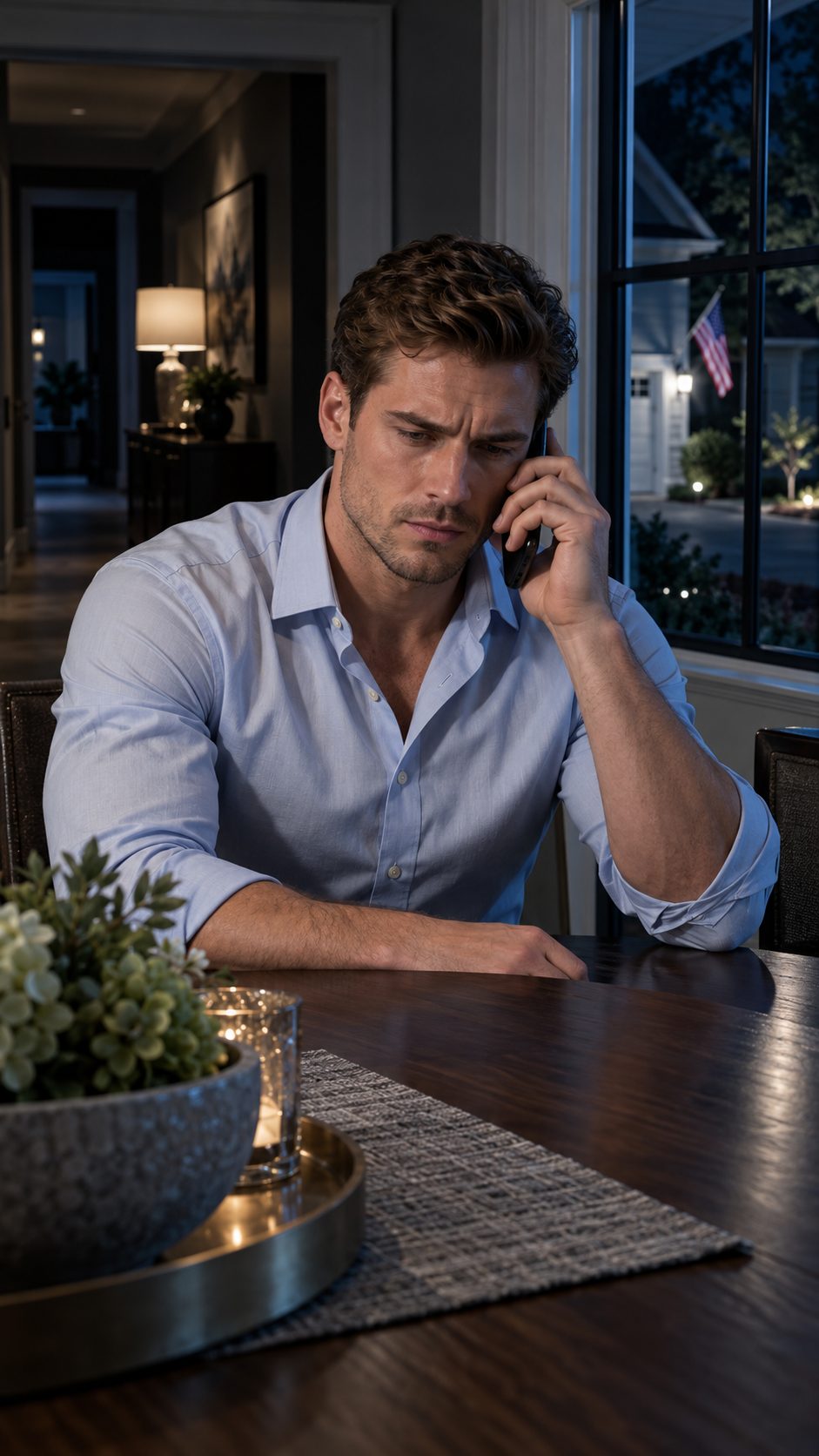
*For nine years, David Harper protected his wife’s lies, believing their marriage was worth saving.
But when Allison disappeared with the man she called her best friend, a single recording exposed a betrayal that began long before their wedding—and a family secret powerful enough to destroy everyone involved.*
**CHAPTER 1: THE RECORDING THAT CHANGED EVERYTHING**
My wife was still laughing at me when I sent the recording of her cruelest words to both her parents.
“If Mom and Dad come by, you’ll cover for me,” Allison said, adjusting the burgundy satin lingerie beneath her robe.
I stood in our bedroom doorway, trying to understand how the woman I had loved for nine years could speak to me as though I were an employee she had grown tired of.
“Cover for you where?”
She picked up her cream-colored leather travel bag.
“I’m staying at Spencer’s for a few days.”
“Your best friend Spencer?”
“Don’t start, David.”
Something inside me finally gave way.
“Allison, I’ve forgiven you too many times.
I’ve lied to your parents, defended you to our friends, and pretended everything was fine when we both knew it wasn’t.”
She looked almost amused.
“And this time you’ve gone too far.”
Her smile widened.
She stepped closer, deliberately touched me between the legs, and delivered the insult she knew would hurt most.
“How exactly are you going to make me stay when you can’t even get it up?”
I stared at her.
For a moment, I couldn’t find the words.
She laughed softly.
“That’s what I thought.”
Then she walked past me.
The front door slammed less than a minute later.
I remained motionless until the sound of an engine reached me from outside.
Through the curtains, I watched Allison cross our stone pathway toward a silver crossover parked beside the mailbox.
Spencer was waiting behind the wheel.
He leaned across the center console and opened the passenger door before she reached the vehicle.
She climbed inside without looking back.
Seconds later, they disappeared along the quiet, tree-lined street outside our Raleigh, North Carolina, neighborhood.
I looked down at my phone.
Two successful delivery notifications glowed on the screen.
One recording had reached Allison’s mother.
The other had reached her father.
For nine years, I had been the person who repaired the damage Allison left behind.
When she stayed out until three in the morning, I invented explanations.
When she missed Friday dinners with her parents, I blamed my demanding work schedule.
When her father pulled me aside during a family cookout and asked whether everything was all right between us, I smiled and lied.
I had convinced myself that loyalty meant protecting the person you loved, even when that person stopped protecting you.
Tonight, I finally understood the difference between loyalty and surrender.
My phone vibrated.
It was Allison’s mother, Evelyn Whitmore.
“Did she leave already?”
I read the message twice.
Something about the question unsettled me.
I replied immediately.
Spencer picked her up.”
The typing indicator appeared.
Then disappeared.
Almost a minute passed before another message arrived.
“Please don’t call Allison.”
Why would she say that?
Before I could answer, a message appeared from Allison’s father.
“David, answer your phone.”
His call arrived immediately afterward.
I sat at the dining room table and pressed the phone against my ear.
For several seconds, nobody spoke.
Then Thomas Whitmore asked a question that changed the temperature of the room.
“How long has Allison been telling you Spencer is her best friend?”
“Years,” I answered.
I heard Evelyn speaking in the background.
“Ask him where she first met Spencer.”
My stomach tightened.
“What’s going on?”
Thomas ignored the question.
“Did Allison ever tell you how she met him?”
“Did she ever mention the name Owen Vale?”
I searched my memory.
Who is that?”
Another silence followed.
Then Thomas said quietly, “Someone I should have told you about a long time ago.”
Outside, a delivery van passed beneath the streetlights, briefly illuminating the American flag mounted beside our neighbor’s garage.
Whitmore, I need you to explain.”
His voice trembled.
“Spencer didn’t come into our lives as Allison’s friend, David.
He came because of something that happened in my business.”
“What kind of business?”
“The kind that ruined a man.”
I stood so suddenly that my chair scraped against the floor.
“What does that have to do with my wife?”
“More than you realize.”
Evelyn spoke again, her voice trembling.
“Thomas, tell him about the documents.”
I heard him whisper something to her.
Then he returned to the call.
“David, listen very carefully.
Do not contact Allison or Spencer tonight.
Do not agree to anything they ask you to sign.
And don’t let either of them know we’ve spoken.”
“Why would Spencer ask me to sign something?”
Thomas exhaled.
“Because your name is already on something it shouldn’t be.”
For a moment, I thought I had misunderstood.
“There’s paperwork involving a company called Redfern Management.
Allison has been connected to it for years.”
“I’ve never heard of Redfern Management.”
“Then why is my name involved?”
“We found documents bearing your signature.”
My hand tightened around the phone.
“That’s impossible.”
“I hoped you would say that.”
I heard paper moving on the other end.
Thomas continued.
“Come to our house tomorrow morning.
Bring anything you have concerning Allison’s finances, and don’t tell anyone where you’re going.”
I looked toward the hallway where my wife had disappeared less than an hour earlier.
Whitmore, are you telling me Allison has been stealing money?”
“I’m telling you that Spencer has a reason for wanting her away from us tonight.”
“Is she having an affair with him?”
The question escaped before I could stop it.
Thomas said nothing.
That silence hurt more than an answer.
Finally, he spoke.
“David, I don’t know everything that’s happened between them.”
“Then what do you know?”
His next words were almost a whisper.
“I know this started before you married my daughter.”
The call ended several minutes later, but I remained standing beside the table.
My marriage had always seemed like a house slowly falling apart.
Now I was beginning to wonder whether someone had damaged its foundation before I ever moved inside.
At 11:43 p.m., an email arrived from Evelyn.
There was no greeting.
Only an attached document and one sentence.
“Thomas wanted you to see this before tomorrow.”
I opened the attachment.
It appeared to be a financial guarantee involving Redfern Management and a multimillion-dollar credit arrangement.
I barely understood the legal language.
But halfway down the final page, I recognized something.
My full name.
DAVID MICHAEL HARPER.
Beneath it was a signature that looked almost exactly like mine.
And beside the signature was a date.
The document had supposedly been signed three years earlier.
On the exact day Allison had told me she was visiting her sick aunt in Charlotte.
I stared at the screen.
I had never signed that document.
And I had no idea how much of my life had already been stolen.
**CHAPTER 2: THE MAN HER PARENTS ALREADY KNEW**
I didn’t sleep that night.
Every time I closed my eyes, I saw Allison climbing into Spencer’s silver crossover.
But what frightened me most wasn’t the possibility that my wife had been unfaithful.
It was the realization that her parents had recognized Spencer’s name immediately.
They hadn’t sounded surprised.
They had sounded afraid.
At eight the following morning, I drove to the Whitmore residence.
Their house stood behind tall magnolia trees on a quiet property north of Raleigh.
I had visited hundreds of times over the years.
Family birthdays, Christmas dinners, Thanksgiving celebrations, summer cookouts.
I knew which staircase step creaked and which cabinet Evelyn used for her expensive coffee cups.
Yet walking through the front door that morning felt like entering a stranger’s home.
Evelyn opened the door before I knocked.
She looked exhausted.
“Where’s Thomas?”
“In his study.”
She reached toward my arm, then stopped.
“I’m so sorry.”
I looked at her.
“For what?”
Her eyes filled with tears.
“More than I can explain.”
Thomas was sitting behind his desk when we entered.
Usually, he seemed larger than life.
He was a successful businessman who had built Whitmore Holdings into a respected regional property company.
That morning, he looked ten years older.
On his desk sat three folders.
One was marked VALE.
Another was marked REDFERN.
The third contained my name.
I remained standing.
“Start talking.”
Thomas nodded slowly.
“Sit down, David.”
“I’d rather stand.”
He opened the first folder.
“Twelve years ago, I had a business partner named Owen Vale.”
The name sounded familiar only because Thomas had mentioned it the previous night.
“Owen helped build several of our early developments,” Thomas continued.
“He was intelligent, ambitious, and responsible for some of the company’s most successful acquisitions.”
“What happened to him?”
“We had a disagreement.”
“What kind?”
Thomas lowered his eyes.
“A serious one.”
I stared at him.
“You’re going to have to do better than that.”
Evelyn sat beside the window.
“Thomas, he deserves the truth.”
Her husband nodded reluctantly.
“Owen believed I had excluded him from a property agreement that should have benefited us both.
There was a legal dispute, a settlement, and eventually he left the company.”
“And Spencer?”
Thomas pushed a photograph across the desk.
It showed a younger man standing beside Owen at a corporate event.
I recognized Spencer immediately.
The same dark hair.
The same confident expression.
The same man who had driven away with my wife.
“Spencer is Owen’s son,” Thomas said.
I looked up.
“Spencer Vale.”
I felt my stomach drop.
“Allison told me he worked in consulting.”
“He does now.
But he first approached our family because of what happened to his father.”
“More than ten years ago.”
I stared at the photograph.
“And Allison met him then?”
Thomas hesitated.
“Before our wedding?”
I looked toward Evelyn.
“You knew?”
She covered her mouth.
“David, I knew they’d met.
I didn’t know how far things had gone.”
Neither answered.
I turned back to Thomas.
“For nine years, I’ve been sitting at your dinner table listening to Allison call Spencer her best friend, and nobody thought I should know he had a history with your family?”
Thomas rubbed his forehead.
“At first, we believed their association had ended.”
“Association?”
“Allison worked in our records department for a short period.
Spencer was asking questions about old financial agreements.
They spent time together.”
“How much time?”
Thomas looked away.
“Enough that I told her to stop seeing him.”
My throat tightened.
“And when she married me?”
“We believed she’d moved on.”
I laughed once.
It was a bitter, unfamiliar sound.
“You believed what was convenient.”
Evelyn began crying.
“We should have told you.”
“Yes,” I said.
“You should have.”
Thomas opened the second folder.
“There’s more.”
He explained that Redfern Management was a private consulting business created several years earlier.
Its ownership structure was complicated, but Spencer’s name appeared repeatedly in old records.
More recently, Allison’s name had surfaced in documents related to the company.
“Redfern obtained financing using assets connected to Whitmore Holdings,” Thomas said.
“That’s your business.”
“Then why am I involved?”
He opened the third folder.
“Because someone represented you as a guarantor for part of the arrangement.”
I stared at the papers.
“How much?”
Thomas hesitated.
“Approximately two million four hundred thousand dollars.”
For a moment, the room became strangely quiet.
I could hear a clock ticking above the fireplace.
“You’re telling me my wife put my name on paperwork involving two million dollars?”
“I’m telling you that your name appears on the documents.”
“I never signed anything.”
“That’s what we need to establish.”
I stepped away from the desk.
My chest felt tight.
“Why didn’t you contact me when you found this?”
Thomas didn’t answer immediately.
Evelyn looked at him.
“Tell him.”
“We discovered the most troubling paperwork only recently.”
“How recently?”
“Last week.”
“Last week?”
I stared at him.
“You had seven days to warn me.”
“I was trying to determine whether the documents were genuine.”
“You could have asked me.”
I looked down at the photograph again.
The man Allison had introduced as harmless.
The man she had insisted I was unreasonable for distrusting.
Suddenly, dozens of uncomfortable memories returned.
The way she always took certain calls outside.
The unexplained weekend trips.
The defensive laughter whenever I asked where she had been.
And Spencer’s confident smile whenever he shook my hand.
I remembered a barbecue three summers earlier.
Spencer had stood beside Allison near our patio.
When I approached, their conversation stopped.
He had smiled and said, “David, you’re a lucky man.”
At the time, I thought he was being friendly.
Now the memory made my skin crawl.
“Why did you tell me not to contact Allison?”
Thomas closed the folder.
“Because we don’t know what Spencer intends to do next.
There are transactions under review, and if they discover what we know, evidence could disappear.”
“Have you called the police?”
“We’ve contacted legal counsel.”
“That’s not what I asked.”
Thomas looked uncomfortable.
I stared at him.
“Of course you haven’t.”
“You’ve been protecting your family’s reputation.”
His silence confirmed it.
I gathered the copies of the documents.
“I’m finding my own lawyer.”
Thomas nodded.
“That’s probably wise.”
As I turned toward the door, Evelyn spoke.
“David, there’s something else you should understand.”
She was staring at the photograph of Spencer and Owen.
“Allison didn’t meet Spencer by accident.”
“What do you mean?”
Evelyn’s voice shook.
“She knew who his father was before they ever became friends.”
I looked back at her.
“Then why did she become close to him?”
Thomas answered before his wife could speak.
“Because Allison believed Spencer could give her something she thought we’d taken away.”
“And what was that?”
Thomas looked toward the closed study door.
For the first time, I realized that the Whitmores had been keeping secrets from one another long before I became part of their family.
And I was beginning to suspect that every one of those secrets had been built around the same man.
**CHAPTER 3: THE SIGNATURE I NEVER WROTE**
By noon, I had hired an attorney.
Her name was Lydia Grant, and she worked for a small Raleigh firm specializing in civil disputes and financial misconduct.
She listened without interrupting as I explained my wife’s departure, the recording, Spencer’s connection to the Whitmore family, and the mysterious financial guarantee.
When I finished, Lydia leaned back in her chair.
“First, we’re going to establish exactly what you did and didn’t authorize.”
“I didn’t authorize anything.”
“I believe you,” she said calmly.
“But the lender will need evidence, not just your word.”
I stared at the papers spread across her desk.
“What happens if they claim the signature is real?”
“Then we challenge it.”
“Can they take my house?”
“Not simply because your name appears on a disputed document.
We need to determine whether anyone actually relied on that guarantee and whether the required signing procedures occurred.”
It was the first sensible answer I had heard in almost twenty-four hours.
Lydia continued.
“Do not confront Spencer about the paperwork.
Preserve every message and document.
Don’t delete the recording.
Don’t sign anything your wife sends you without letting me review it.”
She pointed toward a page.
“Tell me about this date.”
I looked down.
It was the date of the supposed signature.
“Allison told me she was visiting her aunt in Charlotte.”
“Where were you?”
“Can you prove it?”
I thought for a moment.
“I own a small residential restoration business.
We were finishing a house in Cary that week.
My crew submitted time records, and I probably have photographs from the job.”
She made a note.
“And do you remember signing anything electronically that day?”
“Then we’ll request the authentication records.”
My phone vibrated.
Her name appeared above a message.
“Why are my parents acting weird?”
I showed Lydia.
She read it and raised an eyebrow.
“Don’t respond yet.”
Another message arrived.
“David, I know you sent them that recording.”
Then another.
“You’re being dramatic.”
I stared at the screen.
For years, those words had worked on me.
You’re overreacting.
You’re imagining things.
You’re being dramatic.
Each phrase had been a small lever she used to move the argument away from her behavior and toward my response.
This time, I put the phone facedown.
Lydia noticed.
“That’s a good start.”
I returned home late that afternoon.
Our house looked exactly the same.
The photographs were still on the mantel.
Allison’s favorite blanket lay folded over the couch.
Two coffee cups sat beside the kitchen sink.
It seemed impossible that a marriage could collapse while the ordinary objects of daily life remained untouched.
I was collecting bank statements from our joint account when the doorbell rang.
A woman stood outside holding a small delivery box.
She had shoulder-length chestnut hair, intelligent gray-green eyes, and a calm expression.
“David Harper?”
“I’m Grace Ellis.
I live two houses down.”
I recognized her immediately.
She had moved into the neighborhood about eighteen months earlier.
We had exchanged greetings several times, usually when she walked her golden retriever past our driveway.
“Your package ended up at my house,” she explained.
She handed it over.
Then her expression changed.
“Are you all right?”
I almost gave my usual answer.
Everything’s fine.
Instead, I said, “Not particularly.”
Grace nodded without prying.
“I’m sorry.”
I looked toward the street.
Her house stood near the corner, facing the intersection.
“Grace, can I ask you something?”
“Do you have a security camera facing the road?”
“Would it have recorded a silver crossover parked near my mailbox last night?”
She studied my face.
“Probably.”
“It’s important.”
After a moment, she nodded.
“I can check.”
Twenty minutes later, we stood beside her kitchen counter watching a video recorded at p.m.
The silver crossover was clearly visible.
So was Spencer.
And so was Allison carrying her cream-colored bag.
She climbed into the passenger seat exactly as I remembered.
The footage established nothing about the financial documents.
It didn’t prove an affair.
But it confirmed the departure I had spent the previous night replaying in my mind.
Grace looked at me.
“Do you need a copy?”
“Yes, please.”
She sent the file to my phone.
I hesitated.
“My wife left with him.”
Grace said nothing.
“She says he’s her best friend.”
“I’m sorry, David.”
I gave a humorless smile.
“People keep saying that.”
“Sometimes it’s the only honest thing they know how to say.”
Something about her response made me look at her differently.
She didn’t demand details.
She didn’t tell me everything would work out.
She simply allowed the silence to exist.
On her kitchen counter sat a stack of books and a half-finished cup of tea.
I noticed the name printed on a canvas bag.
ELLIS BOOKS.
“You own the bookstore downtown?”
She smiled faintly.
“Unfortunately, yes.
Depending on how the month goes.”
Despite everything, I almost laughed.
“I’ve passed it a hundred times.”
“Then you’ve avoided spending money there a hundred times.”
For one brief moment, the heaviness in my chest loosened.
Then my phone rang.
It was Lydia.
I stepped outside to answer.
“David, I have preliminary information from the lender.”
“The Whitmores’ attorney provided contact details, and the lender confirmed that the guarantee is under review.”
I gripped the porch railing.
“What does that mean?”
“It means there may be questions about how your signature was obtained.”
“That’s what I’ve been telling everyone.”
But here’s something you need to hear.”
Her tone had become sharper.
“The email address used for part of the electronic signing process wasn’t yours.”
I closed my eyes.
“Whose was it?”
“We haven’t established ownership yet.”
“Then what do we know?”
“The address was registered using a name connected to your household.”
My stomach tightened.
“What name?”
Lydia hesitated.
“Allison Harper.”
I stared across the street at my house.
The place where I had spent nine years trying to keep our marriage alive.
“Are you telling me she signed my name?”
“I’m telling you we now have a reason to investigate that possibility.”
I leaned against the railing.
Inside Grace’s house, her dog barked once.
Somewhere down the street, children were playing basketball.
Life continued as though nothing had happened.
Then Lydia spoke again.
“David, there’s one more issue.”
“The lender has opened an internal fraud inquiry, and they may ask you to provide a formal statement.”
I looked toward our front door.
For years, Allison had told me that a marriage meant never exposing your spouse’s mistakes.
Now I understood why she had needed me to believe it.
Because the moment I stopped lying for her, everything began coming into the light.
**CHAPTER 4: THE HOTEL RECEIPT AND THE WOMAN I MARRIED**
Three days passed before Allison returned home.
During those three days, I learned how much silence a house could hold.
I slept in the guest bedroom.
I ate standing at the kitchen counter.
I answered business calls in a voice that sounded remarkably normal.
And every evening, I sat at my desk trying to understand the financial documents Lydia had sent me.
Redfern Management appeared repeatedly.
So did Spencer Vale.
My wife’s name appeared in connection with consulting agreements, administrative approvals, and company correspondence.
There were also references to properties owned by Whitmore Holdings.
The more I read, the less sense our marriage made.
On the fourth morning, Lydia called.
“I’ve reviewed the records you provided.
There are several transactions from your joint account that deserve attention.”
I opened the spreadsheet she had emailed.
At first, nothing stood out.
Then I noticed a charge from a hotel called Hawthorne Lodge.
Three years earlier.
A weekend Allison had claimed she was attending a professional development conference.
I remembered that weekend clearly.
It had been our wedding anniversary.
She had promised to celebrate when she returned.
Instead, she came home exhausted and accused me of being selfish for asking why she hadn’t called.
I stared at the hotel charge.
“Could this be business-related?”
I asked Lydia.
We shouldn’t assume more than the records establish.”
But there were other charges.
Restaurants near the hotel.
A parking fee.
A purchase at a jewelry boutique.
All made during the same weekend.
I searched our shared email account, which we had used for travel reservations since the beginning of our marriage.
There, buried among old confirmations, was a forwarded hotel receipt.
Two guests.
One king room.
The reservation had been made under Spencer Vale’s name.
I sat motionless.
For years, I had suspected Allison was emotionally involved with him.
The late-night calls.
The sudden trips.
The strange way she always defended him before I even criticized him.
But suspicion had left room for denial.
This receipt didn’t tell me everything that happened in that room.
It told me enough to stop accepting the explanations I’d been given.
I remembered the morning Allison returned from that trip.
She had kissed my cheek and handed me a small box.
Inside was a silver watch.
“Happy anniversary,” she’d said.
I had thanked her.
I had even felt guilty for being disappointed that she’d missed our anniversary dinner.
Now I wondered whether the gift had been purchased to quiet a question she knew I would ask.
I opened the drawer beside my desk.
The watch was still there.
I hadn’t worn it in months.
Its battery had stopped.
I placed the hotel receipt beside it.
Two objects from the same weekend.
Two entirely different stories.
That afternoon, Thomas Whitmore called.
“David, I need to speak with you.”
“Then speak.”
“I’ve been talking to our attorneys.”
“About Redfern?”
“There are old agreements involving Owen Vale that may be relevant.”
I leaned back.
“Your former partner.”
“That’s right.”
“Spencer’s father.”
“What happened between you and Owen?”
Thomas remained silent long enough for me to hear the television playing somewhere behind him.
He cleared his throat.
“Owen believed I cheated him out of his share in a property acquisition.”
“It’s complicated.”
“That’s not an answer.”
“I believed I was acting within our agreement.”
“That’s still not an answer.”
His voice hardened.
“David, business disputes aren’t always straightforward.”
I looked at the hotel receipt.
“Neither are marriages, apparently.”
Thomas sighed.
“Owen died several years after leaving the company.
Spencer never accepted the settlement.”
“Did Allison know that?”
“Did she know Spencer blamed you?”
I closed my eyes.
“Then why would she get involved with him?”
Thomas spoke carefully.
“Allison and I fought constantly when she was younger.
She believed I controlled her life.”
“I tried to protect her.”
I almost laughed.
“That seems to be everyone’s favorite excuse in this family.”
He didn’t respond.
I continued.
“Did you know she was seeing Spencer before our wedding?”
“We knew they were close.”
“How close?”
“How close?”
Thomas exhaled.
“Evelyn saw them together behind our old office building once.
They appeared… intimate.”
I felt the room tilt.
“About a year before your wedding.”
I stared at the wall.
A year before our wedding.
I remembered Allison choosing flowers.
Arguing over invitations.
Laughing as we practiced our first dance.
Had Spencer already been part of her life then?
Had she been standing beside me while imagining someone else?
“Why didn’t you tell me?”
I whispered.
“I thought it had ended.”
“You never asked.”
“You let me marry her.”
Thomas’s voice broke.
I ended the call.
For nearly an hour, I sat without moving.
Then I drove downtown.
I didn’t know where else to go.
I parked near Ellis Books and stood outside the window watching people browse the shelves.
Grace noticed me from behind the counter.
She stepped outside.
“You look terrible.”
I gave a tired smile.
“Would you like coffee?”
I looked at her.
“Do you always invite miserable strangers into your bookstore?”
“Only the ones who seem unlikely to steal the furniture.”
I followed her inside.
The store smelled of paper, cedar shelving, and fresh coffee.
Grace poured two cups and led me to a small table near the back.
For several minutes, we talked about ordinary things.
Her business.
My restoration projects.
The ridiculous rent downtown.
Then she asked quietly, “Did you find what you were looking for?”
I looked down.
She waited.
“I found something worse.”
I told her about the hotel receipt.
Not everything.
Only enough.
Grace listened without interrupting.
Finally, she said, “You don’t have to decide what your whole future looks like today.”
I stared at my coffee.
“For years, I thought if I loved her enough, she’d eventually choose me.”
Grace’s expression softened.
“Love isn’t supposed to be a competition with someone who keeps changing the rules.”
The words stayed with me.
That evening, I returned home just after sunset.
A cream-colored leather bag stood beside the staircase.
Allison was in the kitchen.
She turned when she heard me enter.
“Finally,” she said.
“We need to talk.”
I looked at her.
The same woman.
The same face I’d once searched for in every crowded room.
But for the first time, I didn’t feel relieved to see her.
I felt afraid of what she might say.
I placed the hotel receipt on the counter between us.
“Then let’s start with this.”
Allison looked down.
Her expression changed instantly.
And before she spoke, I knew she recognized exactly what it was.
**CHAPTER 5: THE AFFAIR SHE COULDN’T DENY**
Allison stared at the hotel receipt for several seconds.
Then she looked up.
“Where did you get this?”
I almost smiled.
Not because anything was funny.
Because even now, her first instinct was to question how I’d discovered the truth instead of explaining what she’d done.
“Our shared email account.”
She folded her arms.
“You’ve been going through my things?”
“Our things, Allison.”
“That’s an invasion of privacy.”
I stared at her.
“You spent our anniversary weekend in a hotel room booked under Spencer’s name.”
Her expression tightened.
“David, it wasn’t what you think.”
“Then tell me what it was.”
She looked toward the window.
“It was complicated.”
I nodded slowly.
“Your father seems to like that word too.”
Her head snapped toward me.
“You spoke to my parents?”
“What did they tell you?”
“Enough to know you’ve been lying about Spencer for years.”
Allison’s face went pale.
“David, you need to stop talking to them.”
“Because they don’t understand what happened.”
“Then explain it.”
She ran a hand through her hair.
“My father has always hated Spencer.”
“Because of Owen Vale?”
The silence lasted only a few seconds, but it told me something important.
She hadn’t expected me to know that name.
“You have no idea what my father did to Owen,” she whispered.
“Then tell me.”
“Not everything is about you, David.”
I felt the familiar pressure rising in my chest.
The temptation to defend myself.
To explain that I wasn’t trying to make everything about me.
To apologize for asking questions.
But I didn’t.
“Did you sleep with Spencer?”
Allison stared at me.
“Answer the question.”
Her eyes moved toward the hallway.
The word was barely audible.
I looked away.
Outside, the evening sky was turning violet.
Somewhere nearby, a car alarm chirped.
I waited for the explosion of anger I’d imagined so many times.
Instead, I felt a strange emptiness.
“How long?”
She swallowed.
“Does it matter?”
“Nine years of marriage, Allison.
I’d say it matters.”
She looked down.
“It wasn’t constant.”
I laughed bitterly.
“That’s your defense?”
I’m trying to explain.”
“Then explain.”
She sat on a kitchen stool.
“Spencer and I were close before you and I got married.”
“How close?”
She didn’t answer.
I felt my hands begin to shake.
“Were you sleeping with him before our wedding?”
Her silence was devastating.
I closed my eyes.
For a moment, I was standing in the church again.
I remembered her walking down the aisle.
The white flowers.
The trembling smile.
The way she’d held my hands and promised to love me faithfully.
I opened my eyes.
“Did you ever stop?”
She began crying.
“David, please.”
“Did you ever stop seeing him?”
“There were years when things were different.”
“That’s not an answer.”
She covered her face.
“No,” she whispered.
Something in me finally settled.
Not healed.
Not forgiven.
Just settled.
The uncertainty was gone.
For nine years, I’d been trying to repair a marriage while Allison maintained another relationship behind my back.
“Why marry me?”
She looked up.
“Because I loved you.”
I shook my head.
“Then why?”
She wiped her cheeks.
“Spencer and I were always fighting.
My father hated him.
Everything between them was poisonous.”
“And I was what?”
“You were kind.”
I stared at her.
“You made me feel safe.”
“And Spencer made you feel what?”
Her answer came too quickly.
I turned away.
She reached toward me.
“David, I didn’t mean it like that.”
I stepped back before she could touch me.
She lowered her hand.
For several minutes, neither of us spoke.
Then I placed another document on the counter.
The financial guarantee.
Allison looked down.
Her tears stopped.
“Where did you get that?”
“Your parents.”
She stood immediately.
“David, listen to me.”
“Is that my signature?”
“There’s an explanation.”
She glanced toward the door.
I felt my pulse quicken.
“Allison, did you put my name on this?”
“Spencer handled the paperwork.”
“That’s not what I asked.”
“I never wanted you involved.”
“Then why am I involved?”
She pressed her palms against the counter.
“Because things got out of control.”
“What things?”
She shook her head.
“You don’t understand what my father took from Spencer’s family.”
“So you decided to take something from me?”
“It wasn’t supposed to happen this way.”
I stared at her.
“What way was it supposed to happen?”
She looked exhausted.
“Spencer believed we could recover money that should have belonged to his father.
There were agreements, assets, old records.
My father kept everything buried.”
“And my signature?”
She looked away.
“Spencer said it was temporary.”
My voice dropped.
“You knew.”
She covered her mouth.
I stepped closer.
“You knew my name was being used.”
“I knew there were documents.”
“Did you authorize someone to sign for me?”
She began crying again.
“I thought we’d fix it before you found out.”
I stepped backward.
Allison reached for my hand.
“David, please don’t look at me like that.”
“Like what?”
“Like you hate me.”
I looked into her eyes.
“I don’t hate you.”
She seemed almost relieved.
Then I continued.
“I just don’t recognize you anymore.”
She broke down.
For nine years, her tears had been enough to make me surrender.
Tonight, I felt sympathy.
But sympathy no longer meant agreement.
I told her I had hired an attorney.
I told her that any further discussion about financial documents would go through legal counsel.
And I told her I intended to separate.
“No,” she whispered.
“You can’t throw away nine years.”
I looked around our kitchen.
The photographs.
The flowers.
The two matching coffee mugs.
“I didn’t throw them away, Allison.”
She stared at me.
I continued.
“You spent nine years making sure I never knew what I was living inside.”
She sank onto the stool.
After a while, she spoke again.
“There’s something else about my father.”
She looked toward the dark window.
“You think Spencer did all this because he wanted money.”
“Didn’t he?”
“Money was part of it.”
“What was the other part?”
Her voice trembled.
“Proof of what?”
She stared at me.
“That my father destroyed Owen Vale and let everyone believe it was Owen’s fault.”
I said nothing.
Allison continued.
“Spencer has the original records.”
“Then why the forged documents?”
She looked down.
“Because somewhere along the way, he stopped caring whether he was becoming the kind of man he hated.”
I felt a cold uneasiness settle over me.
For the first time, Allison sounded frightened of Spencer.
And when I asked whether she was still planning to return to him, she whispered something I would remember for months.
“I don’t know if he’ll let me walk away without taking everything with him.”
**CHAPTER 6: THE SECRET BURIED BEFORE OUR WEDDING**
The next morning, Allison moved into a hotel.
We agreed that all further conversations about our marriage would happen through our attorneys.
It wasn’t an agreement made with affection.
It was a boundary established because trust no longer existed.
By then, Lydia had obtained enough information to begin reconstructing the financial arrangement.
Redfern Management had received financing through several agreements tied to commercial assets.
The disputed guarantee bearing my signature was only one part of the arrangement.
Fortunately, the lender had temporarily suspended further activity while authentication records were reviewed.
That didn’t make the situation harmless.
It meant we had an opportunity to discover what had happened before more damage occurred.
Three days later, Thomas Whitmore asked to meet me again.
This time, Lydia accompanied me.
Thomas looked uncomfortable when he saw her.
“David, I thought we could speak privately.”
I took a seat.
“Those days are over.”
Lydia placed a notebook on the desk.
Whitmore, my client is here to understand the circumstances surrounding documents bearing his name.”
Thomas nodded.
“I understand.”
“Then let’s begin with Owen Vale,” I said.
For a long moment, Thomas stared at his hands.
Finally, he opened a folder containing old property agreements.
“Owen and I purchased land near Briar Lake through one of our companies.
The development became much more valuable than either of us anticipated.”
“What happened?”
“We disagreed over ownership interests and the valuation of certain assets.”
Lydia studied the paperwork.
“Was there litigation?”
“And a settlement?”
Thomas swallowed.
“Owen believed the settlement had been based on incomplete information.”
Lydia asked.
Thomas hesitated.
“I withheld a valuation report.”
The room became silent.
I stared at him.
“You what?”
His eyes filled with shame.
“There was an appraisal indicating the land was worth considerably more than the figure used during negotiations.”
“Did Owen know?”
Lydia looked up.
“Was that report disclosed to his representatives?”
Thomas shook his head.
I leaned backward.
For years, I’d admired Thomas Whitmore.
He donated to local charities.
He spoke about integrity at family dinners.
He often told me that a man’s reputation was the only inheritance he could guarantee his children.
Now he sat before me admitting that he’d concealed information in a financial dispute.
He stared at the floor.
“Because I was afraid of losing control.”
I almost laughed.
The answer sounded painfully familiar.
Allison had spent years controlling my understanding of our marriage.
Thomas had controlled the information surrounding his business.
And both had justified it by claiming they were protecting something important.
“What happened to Owen?”
Thomas’s voice weakened.
“He struggled after leaving the company.
He tried to reopen the dispute, but his health deteriorated.
He died before anything was resolved.”
“And Spencer blamed you.”
“Was he wrong?”
Thomas looked at me.
I hadn’t expected him to admit it.
Evelyn began crying quietly beside the fireplace.
Thomas continued.
“Spencer approached Allison because she could access old company records.
At first, she wanted to prove I’d mistreated Owen.”
“Then what?”
“They became emotionally involved.
I confronted her.
She accused me of trying to control her life.”
“And you told her to stop seeing him.”
“But you never admitted what you’d done.”
Thomas shook his head.
I felt exhausted.
“Everything in this family seems to begin with someone refusing to tell the truth.”
Lydia turned another page.
Whitmore, did Spencer ever threaten to expose you?”
“Several times.”
“Did you pay him?”
Thomas hesitated.
“Not directly.”
“What does that mean?”
“There were consulting agreements.”
I stared at him.
“You hired him?”
“For a period.”
“After you knew he was involved with Allison?”
Thomas nodded.
I couldn’t believe what I was hearing.
“You invited the man who was involved with your daughter into your company?”
“I thought giving him legitimate work would keep him from pursuing the dispute publicly.”
Lydia’s expression hardened.
“And did it?”
Thomas looked toward the window.
“Eventually, Redfern began requesting payments supported by questionable documentation.
We ended the consulting arrangement, but certain financial relationships remained.”
“Why didn’t you report the problems?”
“Because Spencer threatened to expose the old appraisal.”
I stared at him.
“So he was blackmailing you.”
Thomas didn’t answer.
Lydia spoke carefully.
“Whether those communications constitute extortion is something investigators would need to assess.
But we need copies of everything.”
Thomas nodded.
“I’ll provide them.”
I looked at him.
“Will you also provide the original appraisal?”
He closed his eyes.
That evening, I drove home feeling as though I had spent the day excavating a ruined building.
Every layer revealed another concealed failure.
At home, I found a small envelope tucked beneath my front door.
There was no return address.
Inside was a photograph.
It showed Allison standing beside Spencer outside the old Whitmore office building.
They were much younger.
Allison was smiling.
Spencer had one arm around her waist.
On the back, someone had written a date.
I stared at it.
That was the summer Allison and I had started dating.
She had told me she was completely single.
She had said her previous relationship had ended months earlier.
I remembered our first dinner.
The nervous laughter.
The way she touched my hand across the table.
The night she told me that I was different from every man she’d ever known.
And now I held evidence that Spencer had already occupied a significant place in her life.
My phone vibrated.
A message from an unfamiliar number.
“Your father-in-law finally told you part of the truth.”
I stared at it.
Another message appeared.
“But he still hasn’t told you what Allison wanted.”
I typed a reply.
“Who is this?”
The answer arrived almost instantly.
I felt my jaw tighten.
“What do you want?”
For several seconds, nothing happened.
Then another message appeared.
“Ask her why she married you when she knew we weren’t finished.”
I stared at the words.
I had already heard Allison admit the affair.
I had already learned about the forged documents.
But this message struck at something deeper.
It suggested that my marriage had never begun with a clean choice.
I wanted to call him.
I wanted to demand answers.
Instead, I remembered Lydia’s warning.
I took screenshots, preserved the messages, and forwarded them to her.
Then I called Allison.
She answered on the second ring.
I stared at the photograph.
“Did you marry me because you wanted a life with me, or because you needed somewhere to hide from Spencer?”
She began crying.
“David, please.”
“Tell me the truth.”
Her silence stretched across the line.
Finally, she whispered, “I wanted to believe I could become the woman you thought I was.”
I closed my eyes.
For nine years, I had mistaken her desire to be different for a promise that she actually would be.
And at last, I understood that loving someone’s potential could never replace knowing their character.
**CHAPTER 7: THE PRICE OF FINALLY TELLING THE TRUTH**
By the end of the summer, my marriage had become a collection of legal documents.
Separation agreements.
Financial disclosures.
Attorney correspondence.
Statements about disputed signatures.
I had once imagined growing old with Allison.
Now we communicated through carefully written messages that avoided anything resembling affection.
The investigation into Redfern Management continued.
The lender had confirmed significant irregularities in the electronic signing records associated with my supposed guarantee.
A forensic review supported my position that I had not authorized the signature.
That evidence did not resolve every financial question, but it changed the conversation.
I was no longer simply the husband insisting he had been deceived.
There were records supporting what I’d said.
Thomas Whitmore eventually made a decision that surprised everyone.
He agreed to cooperate with an independent examination of the old Owen Vale dispute.
He also provided the valuation report he had concealed.
The disclosure damaged his reputation.
Whitmore Holdings announced that he would step down from active leadership while the company’s legal and financial issues were addressed.
When I heard the news, I didn’t feel triumphant.
I felt sad.
Thomas had spent decades building an image of himself as a respectable man.
In the end, his refusal to admit one dishonest decision had created the conditions for years of further deception.
Evelyn called me the evening his resignation became public.
“David, I know you have every reason to hate us.”
“I don’t hate you.”
“We should have protected you.”
I sat on the back patio, watching the late-afternoon sun disappear behind the trees.
“Yes,” I said.
“You should have.”
She began crying.
“I thought keeping Allison’s secrets would help save your marriage.”
“I thought that too.”
We were silent for a moment.
Then I continued.
“But keeping someone from facing consequences doesn’t save a relationship.
It just teaches them that someone else will carry the damage.”
Evelyn whispered, “I understand that now.”
I hoped she did.
But understanding something after the damage had occurred didn’t erase the damage.
As the legal process continued, my business became the place where I felt most like myself.
I returned to restoring old houses.
I spent mornings examining damaged beams, afternoons repairing floors, and evenings drawing up estimates.
There was something comforting about work that demanded honesty.
If a foundation was cracked, pretending otherwise didn’t make it stronger.
If wood was rotten, covering it with paint only delayed the repair.
A house required you to confront what was broken before rebuilding.
Slowly, I began applying the same principle to my life.
I stopped checking Allison’s social media.
I stopped rereading our old messages.
I removed our wedding photograph from the mantel, not because I wanted to erase the past, but because I could no longer bear to have its happiest moment displayed as though nothing had changed.
One Saturday afternoon, Grace invited me to a community reading at her bookstore.
“You don’t have to buy anything,” she said when I hesitated.
“That’s terrible business advice.”
“I’m experimenting with generosity.”
It had become easier to smile around her.
Over the months, our friendship had developed quietly.
We talked about books, work, and ordinary frustrations.
Sometimes she walked her dog while I finished paperwork on my porch.
Sometimes I helped repair a shelf in her store.
Neither of us pretended there was anything simple about my situation.
Grace had been divorced herself.
One evening, she told me how her marriage had ended.
“My husband didn’t cheat,” she said.
“We just became strangers who kept sharing an address.”
“That sounds lonely.”
“How did you know when to leave?”
She thought for a moment.
“When I realized I was spending more energy convincing myself I was happy than actually experiencing happiness.”
I looked at her.
“That sounds familiar.”
She smiled sadly.
“I thought it might.”
We never rushed toward anything.
I was still married legally, and I knew my feelings were tangled with grief, humiliation, and the instinct to seek comfort.
Grace respected that.
She never asked me to promise her a future.
Instead, she became a person whose company reminded me that life could still contain peace.
In October, Lydia called with news.
The financial review had progressed, and Redfern’s representatives were discussing a negotiated resolution involving disputed obligations and repayment.
Thomas’s old property settlement was being separately examined.
Nothing was finished.
But the available evidence no longer suggested that I had knowingly participated in the financial arrangement.
“That’s good,” I said.
“Why don’t you sound happier?”
“Because Allison’s attorney has requested a meeting.”
I leaned against my desk.
“About what?”
“She wants to provide a written statement concerning your signature and her involvement.”
“I can’t tell you what motivates her.
But her lawyer says she’s prepared to acknowledge certain facts.”
I closed my eyes.
For months, I had wanted Allison to tell the truth.
Now that the possibility had arrived, I felt strangely afraid.
“Do I have to see her?”
The statement can be exchanged through counsel.”
I thought for a moment.
“Then let’s do it that way.”
Two days later, Lydia sent me the document.
It contained several pages.
Allison acknowledged that she had allowed Spencer access to information connected with our household.
She acknowledged knowing that my name was being used in financial paperwork.
She also admitted that she had concealed her ongoing romantic relationship with Spencer throughout our marriage.
Reading those words hurt.
Not because I hadn’t already known.
But because the truth finally existed somewhere outside my memory.
It had become undeniable.
At the end of the statement, Allison had included a personal letter.
Lydia warned me that I wasn’t obligated to read it.
I opened it anyway.
I know there is nothing I can say that will undo what I did.
I married you because you made me feel safe, and I wanted that safety more than I wanted to become someone worthy of it.
I kept telling myself that my life with Spencer belonged to the past.
Then I kept returning to him.
Every time you forgave me for something small, I used your kindness as proof that you would survive something bigger.
That was cruel.
I blamed my father, Spencer, our marriage, and sometimes even you.
But none of those people made me lie.
I made those choices.
I don’t expect forgiveness.
I only want you to know that your love was never the reason our marriage failed.
My dishonesty was.”
I read the letter three times.
Then I placed it on my desk.
For the first time since Allison walked out with her cream-colored bag, I cried without trying to stop myself.
Not because I wanted her back.
Because I finally understood that the future I had mourned was never truly available to us while the truth remained hidden.
That evening, I called Grace.
“Are you busy?”
“Not particularly.”
“Would you mind having coffee with someone who’s had a terrible day?”
She paused.
“David, you don’t have to make your sadness entertaining.”
I closed my eyes.
“Thank you.”
“Come over,” she said.
And for the first time in months, I went somewhere without feeling that I needed to pretend I was all right.
**CHAPTER 8: THE LIFE I CHOSE AFTER HER BETRAYAL**
The divorce became final the following spring.
There was no dramatic courtroom confrontation.
No triumphant speech.
No moment when everyone stood and applauded because the truth had finally won.
There were signatures, legal acknowledgments, and the quiet exhaustion that follows the end of something once considered permanent.
Allison and I divided our remaining marital property through our attorneys.
I kept the house after refinancing and resolving the financial arrangements associated with our separation.
She moved into an apartment on the other side of Raleigh.
I heard that her relationship with Spencer had ended.
The details reached me indirectly.
Apparently, once their financial arrangements began unraveling under scrutiny, whatever loyalty existed between them became another casualty.
They disagreed about who had known what, who had signed which documents, and who should accept responsibility.
I wasn’t surprised.
A relationship built around secrecy had finally been required to survive honesty.
The Redfern investigation did not end neatly or quickly.
Financial records were reviewed.
Disputed transactions were examined.
The lender negotiated certain recoveries while separate legal questions remained unresolved.
My attorney confirmed that the disputed guarantee would not be enforced against me under the resulting resolution.
I never received a magical announcement that all danger had disappeared.
What I received was documentation.
A clear explanation of the outcome.
For once, that was enough.
Thomas Whitmore’s situation was more complicated.
The concealed valuation report reopened questions surrounding Owen Vale’s settlement.
Thomas accepted responsibility for withholding information and participated in a negotiated resolution with Owen’s estate.
The process cost him money, authority, and much of the reputation he had spent his adult life protecting.
He wrote me a letter after stepping away from the company.
“David, I spent years believing that admitting one mistake would destroy everything I’d built.
Instead, hiding it allowed that mistake to spread into other people’s lives.
You were one of those people.
I am sorry.”
I read the letter once.
Then I placed it in a drawer.
I didn’t need to hate Thomas.
I didn’t need to forgive him either.
I simply needed his mistakes to stop determining the shape of my life.
Evelyn and I remained on polite terms.
She occasionally sent messages asking whether I was doing well.
Sometimes I answered.
Sometimes I didn’t.
That freedom felt unfamiliar.
For years, I had treated other people’s expectations as obligations.
Now I was learning that kindness could exist alongside boundaries.
My business recovered faster than I expected.
A restoration project in Cary led to another in Apex.
Then a family hired us to repair a century-old house near downtown Raleigh.
The owner was an elderly widow named Margaret Bennett.
On our first visit, she walked me through the rooms and pointed out a cracked staircase.
“My husband always said he’d repair that,” she told me.
I examined the damage.
“We can fix it.”
She smiled.
“He was a wonderful man, but he procrastinated terribly.”
It was such an ordinary observation.
So affectionate.
So free of bitterness.
For a moment, I remembered what I’d once wanted marriage to feel like.
Not perfect.
Not free of arguments.
Just honest enough that two people could speak about each other without hiding who they really were.
Margaret watched me carefully.
“Are you married, Mr.
I hesitated.
“Not anymore.”
She nodded.
“Well, life has a strange way of beginning again when you think you’re finished.”
I smiled politely.
At the time, I didn’t realize how often I would remember her words.
By summer, Grace and I had become part of each other’s daily routines.
She sent photographs whenever her dog did something ridiculous.
I brought coffee when she opened the bookstore early.
Sometimes we ate dinner together after closing.
Other evenings, we walked through the neighborhood discussing books we disagreed about.
Our conversations were rarely dramatic.
I had lived with enough drama to recognize the beauty of an uneventful evening.
One Friday, Grace invited me to a small outdoor concert downtown.
I almost refused.
Not because I didn’t want to go.
Because accepting felt like admitting that something between us had changed.
She noticed my hesitation.
“David, it’s a concert.
I’m not asking you to surrender your life savings.”
“After everything that’s happened, I appreciate the distinction.”
She smiled.
Then pick me up at seven.”
The concert was held in a courtyard surrounded by old brick buildings and flowering trees.
We sat beneath strings of white lights while a local band played familiar songs.
Grace wore a navy dress and a thin silver necklace.
I couldn’t remember the last time I’d spent an evening with a woman without wondering whether she was secretly disappointed in me.
Halfway through the performance, she looked toward me.
“You’re staring.”
“I was thinking.”
“That sounds dangerous.”
I turned toward the stage.
“About how peaceful this is.”
Grace’s expression softened.
“Peace can feel strange when you’ve spent a long time expecting something bad to happen.”
I looked at her.
“Does that ever go away?”
“Not all at once.”
She paused.
“But eventually, you stop mistaking peace for the quiet before a disaster.”
I thought about that as the music continued.
After the concert, we walked slowly toward the parking garage.
The evening was warm, and the sidewalks were crowded with people leaving nearby restaurants.
At the corner, Grace stopped.
“David, can I ask you something?”
“Of course.”
“Are you happy?”
The question surprised me.
For so long, people had asked whether I was managing.
Whether I was coping.
Whether the divorce had been difficult.
Nobody had asked whether I was happy.
I thought carefully before answering.
“I’m getting there.”
Grace smiled.
“That’s a good answer.”
I looked at her.
“What about you?”
She considered the question.
“Most days, yes.”
“And tonight?”
She stepped a little closer.
“Tonight’s been pretty good.”
I felt a warmth in my chest that had nothing to do with guilt or desperation.
For months, I’d been careful not to turn Grace into a cure for the damage Allison had caused.
Grace deserved more than that.
I reached for her hand.
She looked down at our joined fingers.
Then she looked up and smiled.
We stood there for a moment, saying nothing.
It was the kind of silence I’d once feared.
Now it felt comfortable.
“Grace,” I said quietly.
“I’d like to take you on an actual date.”
She raised an eyebrow.
“As opposed to all those suspiciously date-shaped dinners?”
“I was wondering when you’d ask.”
I stepped closer.
“Is that a yes?”
“That’s a yes.”
When I kissed her, it wasn’t a desperate attempt to prove that I was still desirable.
It wasn’t revenge.
It wasn’t an escape.
It was simply a choice made freely by two people who had taken the time to know one another.
And that made it different from anything I’d experienced in years.
Several weeks later, I finally packed away the last box of Allison’s belongings.
Inside was a framed photograph from our wedding.
I stood in the sunlight beside her, smiling with complete confidence.
For a long time, I studied the younger version of myself.
I remembered the promises I’d made.
I remembered how fiercely I’d wanted to be a good husband.
For years, I’d blamed that man for being naive.
Now I felt something different.
Compassion.
He hadn’t known everything.
But he’d loved sincerely.
He’d tried.
And when the truth finally became impossible to deny, he’d found the courage to stop sacrificing himself for someone else’s lies.
I wrapped the photograph carefully and placed it inside the box.
Then I closed the lid.
That evening, Grace came over with takeout from our favorite Italian restaurant.
She found me standing beside the living room window.
“Everything okay?”
She looked at the packed box.
“Bigger than I expected.”
She stepped beside me.
Outside, the neighborhood was quiet.
The same stone pathway stretched toward the mailbox.
The same streetlights illuminated the road.
The same American flag fluttered beside our neighbor’s garage.
Almost a year earlier, I’d stood behind this window watching my wife leave with another man.
I had believed that moment was the end of my life as I understood it.
In some ways, I had been right.
The marriage ended.
The family I’d trusted fractured.
The future I’d imagined disappeared.
But something else had happened.
I’d stopped lying.
I’d stopped apologizing for wanting the truth.
And I’d learned that being abandoned by someone who refused to respect me wasn’t the same as losing my worth.
Grace slipped her hand into mine.
“What are you thinking about?” she asked.
I looked toward the street.
“How different everything is.”
“Do you miss the way things were?”
I considered the question.
I missed certain memories.
I missed the person I had believed Allison was.
I missed the uncomplicated certainty of being young enough to think love could solve almost anything.
But I didn’t miss the fear.
I didn’t miss the accusations.
I didn’t miss lying to people who cared about me.
And I didn’t miss spending every day wondering whether I was enough.
“No,” I said finally.
Grace squeezed my hand.
We turned away from the window.
The house smelled of dinner.
Music was playing softly in the kitchen.
There was laughter waiting in the next room and an ordinary evening ahead of us.
For the first time in years, I didn’t feel compelled to inspect every moment for signs of betrayal.
I simply wanted to live it.
My wife had walked out of our home believing I was too weak to stand up for myself.
She believed I would keep covering for her.
She believed she could humiliate me, disappear with Spencer, and return whenever she wanted.
What she never understood was that my silence had never meant I knew nothing.
It meant I was afraid of losing what I loved.
But that night, when I sent the recording to her parents, I finally lost something far more important than a dishonest marriage.
I lost my fear of the truth.
And in the life that followed, I discovered something Allison had never allowed me to believe.
I had always been enough.
I had simply given my love to someone who refused to value it.
**THE END**
✓ Lynn R. Adams
*For nine years, David Harper protected his wife’s lies, believing their marriage was worth saving. But when Allison disappeared with the man she called her best friend, a single recording exposed a …