D-THE NIGHT MY WIFE LEFT TO DATE ANOTHER MAN, THE GIFT THAT ENDED OUR THREE-YEAR MARRIAGE, AND THE SECOND CHANCE AT LOVE I NEVER EXPECTED
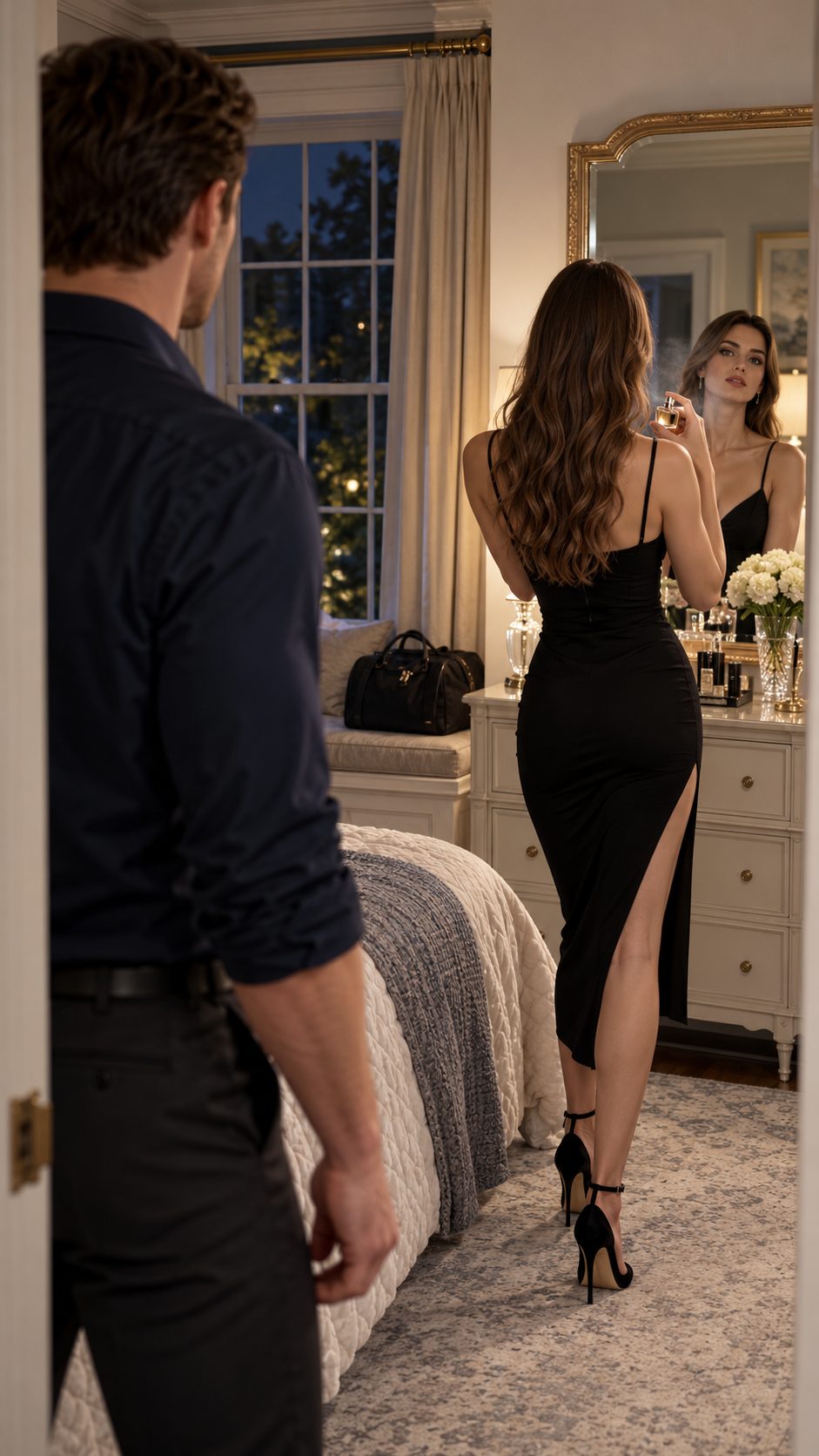
She believed my forgiveness meant I would always be waiting.
One unforgettable night, a mysterious gift, and a painful journey through betrayal would teach us both that love means nothing without respect—and sometimes the greatest act of love is knowing when to let go.
**CHAPTER 1: THE NIGHT SHE CHOSE ANOTHER MAN**
“On a date.”
Those three words came from my wife’s mouth so casually that, for several seconds, I thought I had misunderstood her.
I stood in the doorway of our bedroom, staring at Lauren Caldwell as she adjusted the straps of a fitted black dress before the mirror.
“Sorry, what did you say?”
She continued applying perfume.
“I said I’m going on a date, Ethan.”
“With whom?”
“Does it matter?”
“Considering we’ve been married for three years, I’d say it matters quite a bit.”
She turned toward me, looking irritated rather than embarrassed.
“God, why do you always make everything so difficult?”
I remember that question more clearly than almost anything else about that evening.
Because until that moment, I hadn’t realized my wife considered fidelity an unreasonable expectation.
My name is Ethan Caldwell, and I worked as a financial systems consultant for a pharmaceutical company near New Brunswick, New Jersey.
Lauren managed corporate events for an upscale hotel group with properties in Princeton, Philadelphia, and Manhattan.
We lived in a renovated colonial house on Mercer Street in Princeton, surrounded by neighbors who probably believed we had the kind of marriage people envied.
We had good careers, comfortable savings, and no children.
Our evenings were usually quiet.
Sometimes we cooked together.
Sometimes we walked downtown for coffee.
On Sundays, Lauren liked visiting the little bookstore near Palmer Square, although lately she’d stopped asking me to accompany her.
I had noticed the distance.
I simply hadn’t understood how far apart we’d become.
Six months earlier, Lauren began describing our marriage as predictable.
“We do the same things every weekend,” she complained one evening.
“We could plan something different.”
“That’s exactly what I mean, Ethan.”
“You always have to plan everything.”
I tried arranging spontaneous dinners, weekend drives, and a surprise trip to the Jersey Shore.
Nothing helped.
If I made plans, I was controlling.
If I didn’t, I was boring.
Eventually, she stopped explaining what she wanted.
Instead, she started spending more time with coworkers.
Megan, her closest colleague, had recently divorced and constantly talked about finding herself.
Then there was Blake Turner.
Blake managed regional partnerships for Lauren’s hotel group.
He drove a silver Mercedes, wore expensive watches, and had separated from his wife less than two months earlier.
Lauren mentioned him frequently.
“Blake understands how suffocating marriage can become.”
“Blake says people shouldn’t sacrifice happiness for appearances.”
“Blake thinks marriage is an outdated institution.”
One evening, I finally asked, “Are you attracted to him?”
Lauren laughed.
“You’re seriously jealous of Blake?”
“I’m asking you a question.”
“And I’m telling you that you’re insecure.”
I apologized.
That remains one of the most embarrassing memories of my marriage.
I apologized for recognizing a problem she refused to acknowledge.
Now, standing in our bedroom, I watched Lauren fasten a delicate necklace.
An overnight bag rested on the bench beneath the window.
“Lauren, are you telling me you’re going out with Blake?”
“That’s generally how dates work.”
I felt something cold settle in my stomach.
“Are you ending our marriage?”
She exhaled sharply.
“Why does everything have to be so dramatic?”
“Because you’re planning to date another man.”
“I’m planning to explore my options.”
“While we’re married?”
“I don’t want labels controlling my life.”
I stared at her.
“Lauren, listen to yourself.”
“No, Ethan, you listen.”
She stepped closer.
“I married young, and lately I’ve realized I never gave myself the opportunity to experience different relationships.”
“Then why did you marry me?”
“Because I loved you.”
She hesitated.
“That’s not what I meant.”
“Then what did you mean?”
She looked away.
“I want to try other men, and I’m going on a date tonight.”
The words were deliberate.
Not impulsive.
Not confused.
She had already made her decision.
I glanced toward the overnight bag.
“How long have you been planning this?”
“That’s irrelevant.”
“How long, Lauren?”
“A few weeks.”
“A few weeks?”
“Please don’t start interrogating me.”
“Did Blake know you were married when he asked you out?”
“Of course.”
“And he knows you’re coming tonight?”
I closed my eyes.
For three years, I had believed our marriage rested on something solid.
Apparently, Lauren had spent weeks arranging an evening that would destroy it.
“Did you discuss this with Megan?”
Lauren’s expression changed.
“She’s been helping me work through my feelings.”
“So everyone knew except your husband.”
“Don’t twist things.”
I looked at the bedroom where we’d spent hundreds of nights talking about our future.
The same room where Lauren had cried in my arms after her grandmother died.
The same room where we’d celebrated our first anniversary with cheap champagne because we’d spent our savings renovating the kitchen.
Nothing in that room had changed.
Yet suddenly, everything felt unfamiliar.
I stepped away from the doorway.
“Go ahead.”
Lauren blinked.
“Go on your date.”
Her shoulders relaxed.
“I knew you’d understand eventually.”
“But the woman who returns won’t be my wife.”
She laughed.
Actually laughed.
“Ethan, you’re being ridiculous.”
“I’m being clear.”
“You’ll calm down tomorrow.”
“You always forgive me.”
There it was.
The sentence that explained everything.
Lauren didn’t believe I approved of what she was doing.
She believed my love made my boundaries meaningless.
She collected her handbag and overnight bag.
At the bedroom door, she stopped.
“You’re really going to sulk all night?”
“I’m not sulking.”
“Then what are you doing?”
“Accepting what you’ve chosen.”
She rolled her eyes.
“You make everything sound final.”
“Some things are.”
She walked downstairs.
I followed at a distance.
At the front door, she turned with the confident smile I had once adored.
“I’ll call you tomorrow.”
“You won’t need to.”
She shook her head.
Then she walked outside.
Through the window, I watched her approach a silver Mercedes parked beneath the streetlight.
Blake stepped out.
Lauren kissed his cheek.
And when he opened the passenger door for her, she glanced once toward our house.
Not with regret.
With amusement.
As the Mercedes disappeared down Mercer Street, my phone vibrated.
A message from Lauren appeared.
“Don’t overreact.
We’ll talk when I get back.”
I read it twice.
Then I placed the phone on the kitchen counter.
For the first time in three years, I didn’t wonder what I could do to make my wife happy.
I wondered why I had spent so long believing her happiness was entirely my responsibility.
And upstairs, beneath the bedroom window, the empty space where her overnight bag had rested seemed to answer a question I hadn’t yet found the courage to ask.
Was our marriage already over?
**CHAPTER 2: THE SEVEN DAYS SHE THOUGHT I WOULD WAIT**
The first morning without Lauren was painfully ordinary.
Sunlight entered the kitchen through the same windows.
The coffee machine hummed.
A delivery truck passed outside.
Somewhere down Mercer Street, a dog barked.
The world continued as though nothing important had happened.
I made two cups of coffee before remembering I needed only one.
For several minutes, I stood staring at the untouched cup.
Then my phone rang.
I watched her name appear.
I let it ring.
A message followed.
“Seriously, Ethan?
You’re ignoring me now?”
Ten minutes later, another arrived.
“I’m fine, in case you were wondering.”
I typed three different replies.
The first was angry.
The second was desperate.
The third asked whether she had slept with Blake.
I deleted them all.
Finally, I wrote, “We need to discuss practical arrangements when you’re ready.”
Her response came immediately.
“Practical arrangements?
You’re unbelievable.”
I set the phone down.
At eleven, my older sister Hannah called.
She lived in Hopewell with her husband and two daughters.
Hannah had always liked Lauren.
She’d helped her choose wedding flowers and had spent an entire weekend painting our guest bedroom.
When I told her what had happened, she didn’t interrupt.
Afterward, she asked, “Did Lauren actually tell you she wanted to date other men?”
“Those were her exact words.”
“And she expected you to stay married?”
“Apparently.”
Hannah went quiet.
Then she said, “Come have dinner.”
“I’m not hungry.”
“I didn’t ask whether you were hungry.”
That evening, I drove to Hopewell.
My nieces were watching a movie when I arrived.
Hannah took one look at my face and sent them upstairs.
In the kitchen, she placed a plate of pasta in front of me.
“I don’t know what I’m supposed to do.”
“You don’t have to decide everything tonight.”
“I told her she wouldn’t return as my wife.”
“Did you mean it?”
I stared at the plate.
“Then start by respecting your own words.”
It sounded simple.
On Sunday, Lauren sent a photograph of a restaurant table overlooking the water.
Two glasses stood beside a plate of oysters.
“Atlantic City is beautiful this time of year,” she wrote.
I recognized the view from a hotel where we’d once celebrated her birthday.
I felt the familiar urge to call.
To demand an explanation.
To ask whether she remembered that birthday.
Instead, I put the phone away and walked for an hour.
By Monday, I had scheduled a consultation with a family-law attorney named Priya Shah.
Her office was near downtown Princeton.
Priya listened carefully as I explained the circumstances.
When I finished, she folded her hands.
“Are you certain you want to pursue a divorce?”
“I don’t know whether I’m emotionally ready.”
“That wasn’t my question.”
I looked at her.
“I don’t believe I can remain married under these conditions.”
“Then we can discuss your options without rushing into decisions you’ll regret.”
She explained that our finances, property, and living arrangements needed careful attention.
We’d bought the Mercer Street house together shortly after our wedding.
Although I had contributed more toward the initial down payment, Lauren had paid for substantial renovations.
Neither of us could simply erase the other’s legal interest.
Priya advised me not to change the locks or prevent Lauren from accessing the property.
“You’re allowed to establish boundaries,” she said, “but you still need to handle shared property responsibly.”
“I don’t want revenge.”
“I just want this to stop hurting.”
Her expression softened.
“That part isn’t something paperwork can accomplish.”
I left with a folder of information and an appointment for the following week.
At work, I concentrated on financial reports until the numbers blurred.
My supervisor, Daniel, noticed.
“Everything okay at home?”
“Not really.”
“Need a few days?”
I almost said no.
Then I remembered how often I’d insisted I could fix every problem by working harder.
“Actually, yes.”
Daniel nodded.
“Take Thursday and Friday.”
Tuesday brought an unexpected package.
The courier left it on our front porch.
Inside was a beautifully bound photo album I’d ordered weeks earlier.
Our fourth wedding anniversary was still several weeks away.
I’d planned to surprise Lauren with a collection of photographs from our first three years together, hoping the memories might remind us why we’d fallen in love.
The cover was embossed with silver lettering.
THE LIFE WE CHOSE.
I sat at the dining table and opened it.
There was our wedding beneath the autumn trees.
Lauren laughing during our honeymoon.
The first Christmas in our unfinished house.
The day we painted the kitchen and accidentally covered ourselves in white paint.
A photograph of her asleep on the couch beside our old golden retriever, Charlie, who had died the previous winter.
I stopped on that page.
Charlie had been Lauren’s dog before we married.
When he became ill, she slept on the floor beside his bed for three nights.
I had loved her deeply for that tenderness.
It hadn’t been imaginary.
Whatever happened afterward, the woman in those photographs had once genuinely loved me.
That realization hurt more than anger.
Wednesday evening, Megan called.
“Ethan, can we talk?”
“About what?”
“Lauren says you’re threatening divorce.”
“I told her what my boundary was.”
“She just needs some space.”
“She’s sharing that space with another man.”
Megan sighed.
“People explore things differently.”
“Do you believe marriage means anything?”
“That’s unfair.”
“Did you encourage her to do this?”
A long silence followed.
“I encouraged her to figure out what she wants.”
“By lying to her husband?”
“She wasn’t trying to hurt you.”
“Then she should have cared enough to consider whether she would.”
Megan had no answer.
Before hanging up, she said, “Lauren really thinks you’ll get past this.”
“Then why not just talk to her?”
“Because she doesn’t want a conversation.
She wants forgiveness before she’s even apologized.”
That night, I returned to the photo album.
On our wedding day, Lauren had made a promise that stayed with me.
“I choose you, Ethan, even on the ordinary days.”
I had always considered those words beautiful.
Now they seemed unbearably sad.
I found a blank card in my desk drawer.
I wrote a message.
Crossed out two sentences.
Then wrote another version.
By Thursday evening, I knew exactly what I wanted to say.
Not because I hated her.
Because I finally understood that forgiveness and reconciliation were different things.
Friday afternoon, I placed Lauren’s personal belongings into suitcases and boxes.
Her clothes, books, photographs, jewelry, and cosmetics were carefully arranged.
I left our shared furniture untouched.
Her belongings remained accessible, and I planned to bring everything inside once we’d spoken.
I placed the photo album inside a gift box, tied it with a silver ribbon, and attached the card.
At six twenty, a car stopped outside.
I looked through the window.
Lauren climbed out, smiling.
She wore sunglasses and carried her handbag as though returning from a pleasant vacation.
Then she looked toward our doorstep.
Her smile widened slightly when she saw the wrapped gift.
She hadn’t yet noticed the suitcases beside it.
And for one brief, terrible moment, I understood exactly what she believed.
She thought I was welcoming her home.
**CHAPTER 3: THE GIFT THAT ERASED HER SMILE**
Lauren approached the front steps with the relaxed confidence of someone who had never seriously considered losing anything.
When she noticed the suitcases, she stopped.
Her smile faded slightly.
Then she saw the gift.
A small silver ribbon rested against the white wrapping paper.
She laughed.
“Oh, Ethan.”
I stood in the open doorway.
“Hello, Lauren.”
She glanced between me and the gift.
“So this is your big dramatic gesture?”
“What do you mean?”
“The luggage, the present, the whole performance.”
I didn’t respond.
She removed her sunglasses.
“You really didn’t have to do all this.”
She smiled again.
“I told you we’d be fine.”
I had rehearsed a dozen things to say.
None seemed necessary.
“There’s a card.”
Lauren picked up the gift.
“Of course there is.”
Her tone was almost affectionate.
For a second, I saw the woman who used to laugh when I left handwritten notes in her lunch bag.
Then she slipped the card from beneath the ribbon.
She opened it.
I watched her eyes move across the first line.
Her expression changed.
The smile disappeared.
She read the message again.
Then a third time.
Finally, she looked up.
“What is this?”
I remained in the doorway.
“A decision.”
Her voice sharpened.
“Ethan, what is this supposed to mean?”
I knew the message by heart.
You once promised to choose me on the ordinary days.
Last Friday, you chose someone else and expected me to remain here until you finished exploring your options.
You said I would always forgive you.
You were right.
I forgive you for hurting me.
But forgiveness doesn’t mean I must remain your husband.
I’ve spoken with an attorney, and I’m beginning the process of ending our marriage.
The album is yours because the happiness inside it was real, even if our future no longer is.
I hope you find the freedom you’re searching for.
I have finally decided to find mine.
Lauren lowered the card.
“You contacted a lawyer?”
“Without telling me?”
“You left to spend a week with another man.”
“That’s not the same thing.”
“No,” I replied.
“It isn’t.”
She stared at the suitcases.
“Did you pack my things?”
“I gathered your personal belongings so we can arrange how to separate our lives.”
“So you’re throwing me out?”
“I’m not changing the locks, Lauren.
This is still your property too.
You’re welcome to come inside and discuss the arrangements.”
“Then why are my things on the doorstep?”
“Because I wanted you to understand that the marriage you expected to walk back into isn’t waiting for you.”
Her face reddened.
“That’s cruel.”
I looked at her for a long moment.
“Was there a kind way to tell me you were going to date other men?”
She opened her mouth.
Nothing came out.
Then she tore the wrapping paper from the gift.
The photo album emerged.
She stared at the title.
THE LIFE WE CHOSE.
Her fingers trembled.
“Where did you get this?”
“I ordered it before you left.”
She opened the cover.
On the first page was our wedding photograph.
Lauren stood beneath the old maple trees outside the venue, laughing as a gust of wind caught her veil.
I remembered chasing it across the lawn while our guests cheered.
She turned another page.
Then another.
Her breathing changed.
I said nothing.
She reached the photograph of Charlie asleep beside our fireplace.
Tears filled her eyes.
“You put Charlie in here?”
“He was part of our family.”
She touched the photograph.
For several seconds, the only sound came from a car passing on the street.
Then she closed the album.
“You’re doing this to punish me.”
“You want me to feel guilty.”
“I wanted to give you that album before any of this happened.”
“Then why give it to me now?”
“Because those memories still belong to you.”
Her voice cracked.
“And what about us?”
“What about us?”
“Three years, Ethan.
You’re just going to throw three years away?”
I almost laughed at the impossibility of the question.
“Lauren, you walked out of this house to date another man.”
“I told you I needed freedom.”
“And I told you what that meant for our marriage.”
“I didn’t think you were serious.”
“People say things when they’re angry.”
“I wasn’t angry when I said it.”
She looked confused.
That was the first moment I understood how little she knew about the man she’d married.
Lauren knew I disliked confrontation.
She knew I apologized first after disagreements.
She knew I often surrendered small arguments because peace mattered more to me than being right.
But she had mistaken my patience for an absence of principles.
“Can we go inside?” she asked quietly.
I stepped aside.
She entered our home carrying the album.
Her eyes moved toward the living room.
Nothing had changed.
The framed photographs remained on the mantel.
The blue cushions she’d chosen were still arranged on the couch.
Even the candle she loved stood beside the coffee table.
“Why does everything look the same?” she whispered.
“Because I haven’t decided what happens to the house.”
She turned.
“You’re really talking about dividing property?”
“This is our home.”
She flinched.
“Stop saying things like that.”
“Which things?”
“Things that make it sound like we’re strangers.”
I took a slow breath.
“Then tell me what you thought would happen.”
Lauren looked toward the staircase.
“I thought I’d come back and we’d talk.”
“About whether you enjoyed dating Blake?”
“That’s what you asked me to accept.”
She folded her arms.
“I needed to know whether I was missing something.”
“And did you find it?”
She looked away.
That silence told me more than any answer could have.
I moved toward the dining table.
“Do you want some water?”
“Then we need to discuss where you’re staying tonight.”
Lauren stared at me.
“You won’t even ask what happened?”
I had promised myself I wouldn’t.
Not because I didn’t care.
Because I feared the answer would destroy what little composure remained.
But she stood in front of me holding our wedding album, her expression suddenly stripped of confidence.
And I realized I needed to hear the truth.
“All right,” I said.
“What happened?”
Her eyes filled again.
“Ethan, there’s something I should have told you before I left.”
My stomach tightened.
“About Blake?”
She nodded.
“How long have you been involved with him?”
Lauren pressed the album against her chest.
Then she whispered, “Longer than you think.”
**CHAPTER 4: THE TRUTH BEHIND HER FREEDOM**
I don’t remember sitting down.
One moment I was standing beside the dining table.
The next, I was in a chair, staring at Lauren across the room.
“How much longer?”
She wiped beneath her eyes.
“Ethan, please don’t make this harder.”
“How long?”
She looked toward the window.
“Blake and I started talking privately about three months ago.”
“About work?”
“At first.”
I nodded slowly.
“And afterward?”
“About our lives.”
“Our marriage?”
She hesitated.
“What did you tell him?”
“That I wasn’t happy.”
“Did you tell him I was trying to work things out?”
She said nothing.
I leaned back.
“Of course you didn’t.”
“That’s not fair.”
“Lauren, I asked you whether something was happening between you two.”
“You laughed at me.”
“I didn’t know what I wanted.”
“But you knew enough to lie.”
She sat opposite me.
The photo album rested in her lap.
For the first time since arriving, she didn’t look like someone preparing an argument.
She looked frightened.
“It became emotional before I realized it,” she said.
I stared at her.
“Did you kiss him before Friday?”
Her eyes dropped.
“At a hotel event in Philadelphia.”
I remembered that weekend.
Lauren had returned late Sunday evening, complaining about an exhausting conference.
I’d heated leftover dinner for her.
She had barely spoken while eating.
“That was six weeks ago,” I said.
She nodded.
“And you came home afterward?”
“And slept beside me?”
She began crying.
“Ethan, I’m sorry.”
I wanted to ask a thousand questions.
What did he say?
Who kissed whom?
Did she feel guilty?
Had she thought about me at all?
Instead, I asked the only question that mattered.
“Did you stop?”
She shook her head.
I looked at the wedding photographs on the wall.
Everything inside me felt strangely distant.
“The date last Friday wasn’t the beginning,” I said.
“It was the moment you decided you didn’t have to hide anymore.”
Lauren covered her face.
“I convinced myself that being honest about wanting freedom made it different.”
“Different from cheating?”
She didn’t answer.
Eventually, she whispered, “Yes.”
I looked at the table.
There was a faint scratch near my hand.
We’d made it while assembling furniture shortly after moving in.
Lauren had cried because she thought we’d ruined the beautiful wooden surface.
I’d kissed her forehead and told her it gave the table character.
I remembered that moment so vividly that it almost physically hurt.
“Did Megan know?”
Lauren nodded.
“She thought you would understand.”
“Did she encourage you?”
“She said I needed to stop living for other people.”
“And Blake?”
“He said marriage shouldn’t be a cage.”
I lifted my eyes.
“Interesting advice from a man who is still married himself.”
Lauren looked wounded.
“He and his wife are separated.”
“Ethan, I didn’t plan to hurt you.”
You planned to get what you wanted and let me deal with whatever happened afterward.”
She flinched.
“I thought we could figure it out.”
“While you were sleeping with Blake?”
The silence became unbearable.
Finally, she whispered, “Yes.
We slept together.”
I closed my eyes.
I’d known the answer was likely.
Hearing it aloud was different.
There was no dramatic explosion.
I didn’t throw anything.
I didn’t raise my voice.
For a long moment, I simply couldn’t feel my hands.
Lauren reached across the table.
I moved my hand away.
She withdrew hers.
“I’m sorry.”
“I believe you’re sorry now.”
“Why do you say it like that?”
“Because I don’t think you were sorry when you thought I would forgive you.”
Her tears returned.
“I made a mistake.”
“A mistake is forgetting an anniversary.
You made choices for months.”
She looked toward the album.
“Doesn’t any of this matter?”
“Of course it matters.”
“Then why won’t you fight for us?”
That question finally made me angry.
“I did fight for us.”
She looked startled.
“I asked what was wrong.
I planned trips.
I listened when you told me our marriage was boring.
I tried to become whatever you said you needed.”
“That’s not what I meant.”
“And while I was doing all that, you were discussing our marriage with another man.”
She lowered her head.
I softened my voice.
“Lauren, I can’t compete with someone who gets the exciting parts of your life while I carry the ordinary ones.”
She cried quietly.
For several minutes, neither of us spoke.
Eventually, she asked whether she could stay in the guest bedroom.
I considered it.
Part of me wanted to refuse.
Another part remembered that the house belonged to both of us.
“I won’t stop you from staying here,” I said.
“But I need space, and we need a temporary arrangement soon.”
She nodded.
“I can find somewhere tomorrow.”
“All right.”
I carried her suitcases inside.
She followed me upstairs.
At the guest room, she stopped.
“Do you hate me?”
I looked at her.
There were days when hatred would have been easier.
At least hatred might have made the separation feel clean.
“No,” I said.
“That’s part of what makes this so difficult.”
She began crying again.
I closed the guest-room door softly.
That night, I lay awake in our bedroom.
Through the wall, I could hear Lauren moving occasionally.
At two in the morning, my phone lit up.
A message from Blake appeared.
I hadn’t known he had my number.
“Lauren says you’re making this difficult.
We need to talk like adults.”
I stared at the screen.
Then another message arrived.
“She was unhappy long before I came along.”
I read those words several times.
My marriage had been wounded.
But this man appeared to believe he had the right to explain it to me.
I typed a reply.
“You don’t get to decide what my marriage meant.”
Then I blocked his number.
For several minutes, I stared at the dark screen.
Finally, I understood something painful.
Blake could not destroy a marriage Lauren had been determined to protect.
The real betrayal hadn’t come from a stranger driving a silver Mercedes.
It had come from the person who once promised to choose me.
And knowing that didn’t make the next morning any easier.
**CHAPTER 5: THE PEOPLE WHO CALLED IT FREEDOM**
Lauren moved into a furnished apartment near her workplace three days later.
I helped carry two suitcases to her car.
Neither of us spoke much.
At the end, she stood beside the open trunk, looking at the house.
“Are you really not going to ask me to stay?”
I looked at her.
“Would you stay because you wanted our marriage, or because you’re afraid of losing it?”
She had no answer.
That was answer enough.
The weeks that followed were exhausting.
I attended meetings with Priya, gathered financial records, and tried to understand what separating two intertwined lives actually meant.
There were mortgage statements.
Insurance policies.
Joint savings.
Furniture we’d purchased together.
Subscriptions that seemed insignificant until I realized how many ordinary decisions we’d made as a couple.
Removing Lauren’s name from a grocery delivery account hurt more than I expected.
She’d always ordered dark chocolate and peppermint tea.
I hadn’t realized how often I automatically added them to the cart.
At work, I became efficient but distant.
Daniel stopped by my office one afternoon.
“You look like you’re running on caffeine and stubbornness.”
“That obvious?”
“Only to everyone.”
He placed a folder on my desk.
“Take the weekend.
Go somewhere.
Do something that doesn’t involve spreadsheets.”
I almost smiled.
“I don’t remember what I do outside work.”
“Then that’s a good place to start.”
That Saturday, I walked downtown without a destination.
The weather had turned cool.
Leaves gathered along the sidewalks.
Princeton looked almost painfully beautiful.
I passed the bookstore Lauren loved.
For a moment, I considered walking the other way.
Instead, I went inside.
Near the back, a woman was arguing quietly with a malfunctioning display stand.
“Come on,” she muttered.
“You’re a wooden shelf, not a philosophical problem.”
I laughed before I could stop myself.
She looked up.
“Did you hear that?”
“Unfortunately.”
“Then you witnessed a professional losing an argument with furniture.”
I stepped closer.
“Need help?”
“Only if you’re prepared for the shelf to win.”
Together, we adjusted the brackets until the stand stopped wobbling.
She straightened and brushed dust from her hands.
“Thank you.
“Nora Hale.”
She offered her hand.
Her smile was warm but unassuming.
She had dark blonde hair loosely pinned behind her head, intelligent gray-green eyes, and the distracted expression of someone whose mind was usually occupied by several different things.
She explained that she worked in document preservation and was helping organize an exhibition of historic letters.
“The bookstore is letting us use this corner for a preview,” she said.
“Historic letters?”
“Personal correspondence from families who lived around Princeton.”
“Sounds interesting.”
“That’s a very diplomatic way of saying you prefer television.”
“No, actually.
I like history.”
“Then you should come to the exhibition.”
She handed me a small printed invitation.
I thanked her.
Nothing about the conversation resembled flirting.
That made it unexpectedly comfortable.
Nora didn’t know I was married.
She didn’t know my wife had left.
She didn’t know I had spent the previous night staring at our wedding photograph.
For ten minutes, I was simply Ethan.
A man helping someone repair a shelf.
I hadn’t realized how much I missed that feeling.
When I returned home, I found Lauren waiting beside the porch.
She looked tired.
“Can we talk?”
I unlocked the door.
“Of course.”
Inside, she sat at the kitchen island.
“Megan and I had a fight.”
I poured water into two glasses.
“About what?”
I said nothing.
Lauren studied her hands.
“He told me he wasn’t looking for anything serious.”
I placed a glass in front of her.
“Wasn’t that what you wanted?”
She swallowed.
“At first, I thought he was giving me everything I was missing.”
“Excitement?”
“Attention.
Spontaneity.
Someone who listened without trying to fix everything.”
I sat opposite her.
“Now I think he liked being the person I turned to whenever I was unhappy with you.”
“That doesn’t make him responsible for what happened.”
Her answer surprised me.
She continued, “Megan keeps saying I should enjoy myself and stop feeling guilty.”
“Is that what you want?”
“Then why does her opinion matter so much?”
Lauren looked toward the window.
“Because I wanted someone to tell me I wasn’t doing anything wrong.”
The admission felt more honest than any explanation she’d offered before.
She pulled a tissue from her handbag.
“I told myself you didn’t understand me.”
“Sometimes I probably didn’t.”
She looked up.
I continued, “I know I tried to solve every complaint instead of listening to what was underneath it.”
“Yes,” she whispered.
“But you could have told me that without betraying me.”
Tears gathered in her eyes.
“I didn’t want to be the bad person.”
“So you made me the problem.”
She nodded.
For the first time, she didn’t follow her apology with a demand that I forgive her.
We sat quietly.
Then she asked, “Are you seeing someone?”
“Megan said she saw you talking to a woman at the bookstore.”
I almost laughed.
“Her name is Nora.
I helped her fix a shelf.”
Lauren looked embarrassed.
“I guess I deserve that.”
“This isn’t about what you deserve.”
“Then what is it about?”
She looked at me for a long time.
“I don’t know how to rebuild it.”
I answered carefully.
“I don’t know whether I want to.”
Her face fell.
But she nodded.
A few minutes later, she left.
I watched her walk toward her car, remembering how often I’d chased after her during arguments.
This time, I stayed inside.
The following morning, I found the exhibition invitation in my coat pocket.
I turned it over.
On the back, Nora had written a brief note.
“Thursday, seven o’clock.
Old letters, unexpected stories, decent coffee.”
For the first time in weeks, I smiled without feeling guilty.
Then my phone rang.
It was Priya.
“Ethan, Lauren has asked for a formal mediation meeting.”
I looked toward the framed wedding photograph on the mantel.
“All right.”
Priya paused.
“There’s one more thing.
She wants to discuss whether the marriage can be repaired before either of you makes a final decision.”
I closed my eyes.
Because I had finally started imagining a life beyond Lauren.
And now she wanted to know whether I would give our marriage another chance.
**CHAPTER 6: THE HOUSE WE BUILT TOGETHER**
The mediation room was smaller than I expected.
A rectangular table stood beneath a window overlooking a quiet courtyard.
There were four chairs, a pitcher of water, and a box of tissues.
Nothing about the room suggested that people came there to divide the lives they once believed would last forever.
Lauren arrived wearing a cream-colored blouse and dark trousers.
Her hair was pulled back.
She looked different without the confident smile she’d worn the night she left.
Our mediator, a calm middle-aged woman named Rebecca Ellis, introduced herself and explained the purpose of the meeting.
“We’re not here to decide who is the better person,” she said.
“We’re here to identify what each of you needs and whether there’s a workable path forward.”
Lauren nodded.
I folded my hands.
Rebecca began with practical matters.
Our savings.
Our separate incomes.
Potential arrangements during the divorce process.
We reviewed estimates and discussed whether one of us might buy out the other’s interest.
After an hour, Rebecca asked, “Are both parties committed to ending the marriage?”
I answered first.
Lauren stared at the table.
Rebecca turned toward her.
She inhaled slowly.
“I don’t know.”
I had expected that answer.
It still hurt.
Rebecca allowed a moment of silence.
Then Lauren looked at me.
“Ethan, I’ve been going to counseling.”
“I’m glad.”
“I’ve been trying to understand why I did what I did.”
“Have you?”
“Some of it.”
She pressed her fingertips together.
“I spent years believing happiness was something that would happen once everything around me changed.”
I listened.
“When we got married, I thought being married would make me feel settled.
Then when life became ordinary, I convinced myself ordinary meant something was wrong.”
Her eyes filled.
“I blamed you because I couldn’t stand the possibility that I was responsible for my own unhappiness.”
I had spent weeks wanting her to say something like that.
Now that she had, I didn’t feel triumphant.
Lauren continued, “Blake made me feel interesting.
Megan made me feel brave.
I confused both feelings with being right.”
Rebecca asked, “What do you want now?”
Lauren looked directly at me.
“I want my husband back.”
The words struck something deep inside me.
For three years, I had longed to hear Lauren say she wanted our marriage.
But the timing changed everything.
Rebecca asked gently.
I stared at my wedding ring.
I still wore it.
Not because I expected reconciliation.
Because I hadn’t yet found the courage to remove it.
“I believe Lauren regrets what happened,” I said.
Lauren looked hopeful.
“But I don’t believe regret restores trust.”
Her expression fell.
“I’m not asking you to forget.”
“I’m asking for a chance.”
I took a breath.
“Lauren, I spent months asking for chances to make you happy.
You told me I was boring, controlling, predictable.
Then you made choices that you knew would hurt me.”
She began crying.
“I don’t want to spend the rest of my life wondering whether the next difficult season will send you looking for someone else.”
“I wouldn’t.”
“I hope that’s true.”
“Then why can’t we try?”
“Because I no longer know how to feel safe in this marriage.”
The room fell silent.
Rebecca offered us a break.
I stepped into the courtyard.
The afternoon sunlight fell across the stone path.
A few minutes later, Lauren joined me.
“I’m sorry,” she said.
“I never thought you’d stop loving me.”
I looked at her.
“That isn’t what happened.”
She waited.
“I still love parts of the life we had.
I still care what happens to you.
But love isn’t enough to make me trust you again.”
Lauren wiped her cheeks.
“Do you think you’ll ever forgive me completely?”
“I already have.”
“Then why does it feel like you’re punishing me?”
“Because you’re treating reconciliation as proof of forgiveness.”
She said nothing.
I continued, “I don’t want you to suffer.
I don’t want to ruin your career or embarrass you.
I want you to build a good life.
I just don’t want to be responsible for building it anymore.”
She turned away.
For a moment, I thought she might argue.
Instead, she whispered, “I don’t know who I am without us.”
“Maybe that’s something you need to discover honestly.”
We returned to mediation.
By the end of the afternoon, we had agreed to obtain a valuation of the house and explore a sale if neither of us could comfortably keep it.
It wasn’t the outcome either of us had imagined when we bought the property.
But it was practical.
And for once, I didn’t feel guilty for choosing practicality.
That Thursday, I attended Nora’s exhibition.
The room was crowded with students, local historians, and elderly couples examining framed letters.
Nora spotted me near the entrance.
“You came.”
“You promised decent coffee.”
She laughed.
“And I intend to deliver.”
She showed me letters exchanged between families separated by wars, financial hardship, and migration.
One letter described a woman waiting years for her husband to return from overseas.
Another contained a father’s advice to his daughter before her wedding.
Nora spoke about preserving history without pretending every memory was beautiful.
“People often want old letters to tell uncomplicated stories,” she said.
“But real lives rarely work that way.”
I looked at her.
“Do you think preserving something means you have to keep living inside it?”
She considered the question.
I think remembering something and returning to it are very different decisions.”
I was silent.
She studied my face.
“That question sounded personal.”
We stood beside a display case.
Then I told her about Lauren.
Not everything.
Only enough to explain why I’d seemed distracted when we first met.
Nora listened without offering quick advice.
When I finished, she said, “I’m sorry you’re going through that.”
“Thank you.”
“Do you want me to tell you she’s terrible and you’re better off?”
I smiled faintly.
“Not particularly.”
Because I don’t know either of you well enough to make that judgment.”
Something about her honesty felt refreshing.
She didn’t try to rescue me.
She didn’t tell me what I wanted to hear.
She simply treated me like a person capable of making his own decisions.
When the exhibition ended, we walked outside.
The evening air was cool.
“Would you like to get coffee sometime?”
Nora asked.
I hesitated.
She noticed.
“There’s no pressure, Ethan.
Coffee can just be coffee.”
“I’d like that.”
As we exchanged numbers, my phone vibrated.
A message from Lauren appeared.
“I found something while packing the last boxes.
I think you should see it before we sell the house.”
I looked at the screen.
For a moment, the past and the possibility of a different future seemed to stand on opposite sides of me.
And I wasn’t yet sure how to move forward without looking back.
**CHAPTER 7: THE LAST PROMISE WE COULD KEEP**
Lauren was waiting in the living room when I arrived on Saturday morning.
Several boxes stood near the staircase.
The house smelled faintly of furniture polish and the cinnamon candles she used to burn every autumn.
“Thanks for coming,” she said.
“I still live here, Lauren.”
She smiled sadly.
I followed her into the dining room.
On the table lay a small wooden box.
I recognized it immediately.
We’d bought it during our honeymoon in Vermont.
Inside were photographs, receipts, handwritten notes, and small keepsakes from the beginning of our relationship.
Lauren opened the lid.
“I found this behind the bedroom wardrobe.”
She handed me a folded piece of paper.
It was a letter I’d written after our first serious argument.
I remembered the disagreement.
We’d been married only four months.
Lauren wanted to visit her parents over a holiday weekend, while I had committed to helping Hannah move.
We’d both been stubborn.
Eventually, we’d compromised.
That evening, I wrote Lauren a note.
I unfolded the paper.
The handwriting was unmistakably mine.
“I don’t want to win arguments against you.
I want us to become people who can disagree without making each other afraid of losing the other.”
I read the sentence twice.
Lauren watched me.
“You wrote that when we were happy.”
“We were happy after an argument.”
She looked toward the window.
“I keep thinking about how easily we used to find our way back.”
I folded the letter carefully.
“Things were different then.”
She sat down.
“I didn’t ask you here to pressure you.”
“Then why?”
“Because I wanted you to know I still remember who we were.”
I looked at the wooden box.
“There’s something I’ve been trying to understand,” I said.
“When did you stop wanting that life?”
Lauren considered the question.
“I don’t think I ever completely stopped.”
“Then why Blake?”
She exhaled.
“Because he made me feel like the version of myself I was before responsibilities, mortgage payments, and planning everything.”
“And I made you feel responsible.”
“Sometimes.”
She looked ashamed.
“But I know now that wasn’t entirely your fault.”
I leaned against the table.
“Lauren, I wasn’t perfect.”
“I could be distant.
I sometimes treated your feelings like problems that needed immediate solutions.”
She nodded.
“I wanted you to listen.”
“I should have.”
“But that didn’t give me the right to cheat.”
I looked at her.
She continued, “I’ve spent months trying to find an explanation that would make me feel less responsible.”
“Did you find one?”
Her voice trembled.
“I was selfish.
I wanted the security of our marriage and the excitement of someone new.
I told myself I deserved both.”
I sat opposite her.
For a moment, the honesty made me imagine what might have happened if she’d spoken this openly before everything collapsed.
That thought frightened me.
Because it reminded me that I still cared.
Lauren reached into the box and removed another folded paper.
It was her wedding vow.
“I choose you, even on the ordinary days.”
She stared at the sentence.
“I broke this promise.”
I didn’t answer.
“And I don’t think I understood what it meant until after I broke it.”
Outside, a car moved slowly down Mercer Street.
For a moment, I remembered Blake’s Mercedes disappearing beneath the streetlights.
Then Lauren spoke again.
“I ended things with Blake completely.”
I looked at her.
“I thought you already had.”
“I stopped seeing him weeks ago.
Last month, he asked whether we could talk again.
I told him no.”
“I also told Megan I needed some distance.”
“You don’t have to make those choices for me.”
She looked directly into my eyes.
“I’m making them because I’m tired of being someone who needs other people to approve of every decision.”
I believed her.
That was the difficult part.
I believed she was changing.
But I also knew change didn’t erase the harm that came before it.
Weeks passed.
Our house was listed for sale.
We accepted an offer from a young couple expecting their first child.
They loved the kitchen.
They admired the original fireplace.
They talked excitedly about building a family there.
I smiled through the showing and went for a long walk afterward.
As the divorce process moved forward, Lauren and I gradually became capable of discussing finances and paperwork without reopening every wound.
Some conversations were awkward.
Some were surprisingly gentle.
We disagreed over furniture and eventually laughed when we realized neither of us actually wanted the enormous dining table we’d spent months choosing.
One evening, Lauren called.
“I found a buyer for the table.”
“They’re paying less than we wanted.”
“That’s fine.”
A pause followed.
“Thank you for not making this uglier than it needed to be.”
I looked out the window.
“We both suffered enough.”
She was quiet.
Then she said, “I really did love you.”
My throat tightened.
Afterward, I sat alone for a long time.
By then, Nora and I had become friends.
We met for coffee every other week.
Sometimes we talked about books.
Sometimes about her work.
Sometimes about the complicated expectations people placed on relationships.
She had been engaged once, years earlier, but the engagement ended when both partners realized they wanted different futures.
She never described her former fiancé as a villain.
“Sometimes people can be good and still be wrong for each other,” she said.
One evening, while walking beside the university buildings, she asked whether I was ready to begin dating again.
I considered the question.
“I don’t know.”
She smiled.
“That’s a perfectly respectable answer.”
“I don’t want to use someone else to avoid feeling lonely.”
“Then don’t.”
I looked at her.
She continued walking.
There was no disappointment in her expression.
Only acceptance.
That was when I realized my feelings for Nora had begun changing.
Not because she made me forget Lauren.
Because she made me feel comfortable being myself.
Later that night, I returned home to find the official notice that our divorce proceedings were approaching their final stage.
I sat at the dining table holding the envelope.
The same table where Lauren had confessed her betrayal.
The same table where we’d once planned vacations and argued about paint colors.
I took off my wedding ring.
Placed it beside the envelope.
And whispered into the empty room, “I think I’m ready.”
But the next morning, Lauren called with one final request.
“Before everything is finished,” she said, “can we go back to the place where we got married?”
**CHAPTER 8: THE LIFE THAT BEGAN AFTER GOODBYE**
I almost refused Lauren’s request.
Returning to our wedding venue felt unnecessarily painful.
There were enough reminders already.
The empty rooms.
The paperwork.
The photographs carefully packed into separate boxes.
The fading outline on my finger where my wedding ring had rested for three years.
But Lauren hadn’t asked for another chance.
She’d asked for one final conversation.
So on a cool Saturday morning, I drove toward the countryside outside Princeton.
The venue was a restored estate surrounded by maple trees.
We’d married there in October, beneath branches turning red and gold.
Now the grounds were quiet.
Lauren waited near the garden path.
She wore a simple blue coat and carried the photo album I’d given her on our doorstep.
“Thank you for coming,” she said.
“You’re welcome.”
We walked slowly toward the courtyard.
For a while, neither of us spoke.
The place looked smaller than I remembered.
On our wedding day, it had seemed enormous, full of possibilities.
Now it was simply a beautiful property where two people had once made promises they couldn’t keep.
Lauren stopped beneath the maple trees.
“This was where we took our first photograph as husband and wife.”
“I remember.”
“You tripped over my veil.”
“You laughed so hard the photographer couldn’t get a serious picture.”
“That was my favorite photograph.”
She opened the album and showed it to me.
There we were.
My chest tightened.
Lauren touched the corner of the page.
“I used to look at this and think we’d failed completely.”
“But lately I’ve been trying to see it differently.”
“We were happy here.
That happiness was real.
I don’t want to pretend the whole marriage was a lie just because I destroyed what came afterward.”
I looked at the photograph.
“It wasn’t a lie.”
She nodded.
A breeze moved through the trees.
Lauren closed the album.
“I wanted to apologize one last time.”
“You’ve apologized.”
“Not like this.”
She faced me fully.
“Ethan, I’m sorry for making you feel ordinary when ordinary was exactly what you offered me.”
I swallowed.
“I’m sorry for treating your patience like weakness.
I’m sorry for lying, for letting someone else into our marriage, and for convincing myself that being unhappy meant I could stop caring about your feelings.”
She wiped away a tear.
“And I’m sorry I made you question whether you were enough.”
For several seconds, I couldn’t speak.
Then I said, “Thank you.”
She shook her head.
“I know an apology doesn’t undo anything.”
“No, it doesn’t.”
“I don’t expect you to take me back.”
I looked at her.
That was the first time she’d said those words without sounding as though she was waiting for me to disagree.
“I still care about you,” she continued.
“I probably always will.”
“I care about you too.”
She smiled sadly.
“But you don’t want to be married to me anymore.”
She nodded.
“I think I finally understand.”
We stood beneath the maple trees until the silence no longer felt uncomfortable.
Then Lauren handed me a small envelope.
Inside was a copy of our wedding photograph.
On the back she’d written:
“Thank you for loving me when I didn’t know how to appreciate it.
I hope the next chapter of your life brings you the peace I couldn’t give you.”
I looked at her.
“You didn’t have to do this.”
She glanced down at the album.
“I’m keeping this, if that’s okay.”
“Of course.”
“Not because I think it’ll bring us back together.”
“I understand.”
“Because I don’t want to forget that I was loved well.”
I felt tears sting my eyes.
For the first time since the night she left, I allowed them to fall without trying to hide them.
Lauren cried too.
Then, carefully, she stepped forward and hugged me.
I returned the embrace.
It wasn’t romantic.
It wasn’t an invitation to begin again.
It was two people grieving a life they couldn’t save.
When we separated, Lauren wiped her face and smiled.
“Goodbye, Ethan.”
“Goodbye, Lauren.”
I watched her walk toward her car.
This time, she didn’t look back expecting me to call her name.
And I didn’t.
Several weeks later, our divorce was finalized.
The sale of the Mercer Street house closed shortly afterward.
Lauren and I divided the proceeds according to our agreement.
She moved into an apartment closer to her work.
I rented a smaller townhouse on the other side of Princeton.
I painted the living room a soft gray.
Bought a new dining table.
And adopted a rescue dog named Oliver, whose greatest ambition seemed to be sleeping on every piece of furniture I owned.
For the first time in months, home felt like a place rather than a reminder.
Nora helped me choose bookshelves.
She insisted that one wall needed more color.
I insisted that the room was perfectly fine.
She laughed.
“You’re allowed to have opinions, Ethan.”
“That’s a dangerous precedent.”
“Then I’ll proceed cautiously.”
Our friendship continued developing naturally.
We went to bookstores, local exhibitions, and quiet cafés.
Sometimes we disagreed.
Sometimes we laughed about ridiculous things.
She didn’t expect me to entertain her constantly.
I didn’t feel responsible for anticipating every emotion she experienced.
When Nora had a difficult day, I learned to ask whether she wanted advice or simply someone to listen.
Occasionally, she wanted advice.
More often, she wanted company.
It was such a small adjustment.
Yet it changed the way I understood intimacy.
One evening, several months after the divorce, we walked beside the Delaware and Raritan Canal.
The sky was turning pink.
Oliver trotted ahead on his leash.
Nora looked at me.
“Can I ask you something?”
“Of course.”
“Do you still think about Lauren?”
I considered lying.
Not because I was ashamed.
Because I didn’t want Nora to believe she was competing with a memory.
But she’d never asked me to pretend.
“Sometimes,” I admitted.
“Does it hurt?”
“Not the way it used to.”
She nodded.
We continued walking.
Then I stopped.
She turned.
“I think I’m finally ready.”
Her expression softened.
“For what?”
“For something real.”
She studied me.
“Something real can still be ordinary, you know.”
“I’m counting on it.”
For a moment, neither of us moved.
Then Nora took my hand.
It felt simple.
I didn’t hear music.
The world didn’t change.
There was no dramatic realization that every painful event had secretly been necessary.
I would never romanticize what Lauren had done.
Her betrayal had hurt me.
The divorce had changed my life.
And the lessons I’d learned didn’t make the suffering worthwhile.
But they did help me understand what I wanted from the years ahead.
I wanted trust.
Laughter in the kitchen.
Someone who could disagree without threatening to leave.
Someone who understood that commitment wasn’t the absence of excitement but the willingness to keep choosing each other after excitement faded.
Nora squeezed my hand.
“Didn’t we just have coffee?”
“That was hours ago.”
“You’re impossible.”
“Only occasionally.”
We laughed and continued walking.
A few days later, I received a message from Lauren.
We hadn’t spoken in almost two months.
“Ethan, I hope you’re doing well.
I finally understand what you meant about forgiveness.
Thank you for giving me the opportunity to become better without promising to wait for me.
I wish you happiness.”
I read the message once.
Then I replied.
“Thank you, Lauren.
I hope you find happiness too.”
There was no anger.
No hidden invitation.
No unfinished argument.
Just two people accepting the lives they’d chosen.
I placed my phone on the table.
Outside, Nora was helping Oliver untangle his leash from a garden chair.
She looked through the window and waved.
I waved back.
Then I opened the door.
And as I stepped into the evening, I thought about the gift I’d left on the doorstep of our old house.
For a long time, I’d believed that gift marked the end of my story.
But I had been wrong.
It marked the end of a chapter I’d been too afraid to close.
Lauren had asked for freedom, believing she could return whenever she wanted.
I had given it to her.
And in doing so, I had finally given myself the same thing.
Not freedom from responsibility.
Not freedom from commitment.
But freedom from the belief that love required me to abandon my own dignity.
I watched Nora laugh as Oliver pulled eagerly toward the sidewalk.
Then she turned and extended her hand.
“Absolutely.”
And for the first time in a very long while, the future didn’t frighten me.
It didn’t need to be extraordinary.
It didn’t need constant excitement or grand declarations.
I had learned that the most beautiful kind of love might be the one that survived an ordinary Tuesday, a difficult conversation, a quiet dinner, or a rainy afternoon.
Love wasn’t about finding someone who made every moment unforgettable.
It was about finding someone who made the ordinary moments worth remembering.
Lauren had once promised to choose me on those ordinary days.
She had broken that promise.
But I hadn’t lost my faith in love.
I’d simply learned that the right person wouldn’t ask me to confuse forgiveness with surrender.
As Nora’s fingers closed around mine, I realized that I no longer needed someone to promise me forever.
I only needed someone willing to choose me honestly, one day at a time.
And this time, I was willing to choose myself too.
✓ Lynn R. Adams
She believed my forgiveness meant I would always be waiting. One unforgettable night, a mysterious gift, and a painful journey through betrayal would teach us both that love means nothing without res…