D-THE NAME SHE TOLD ME TO BURN
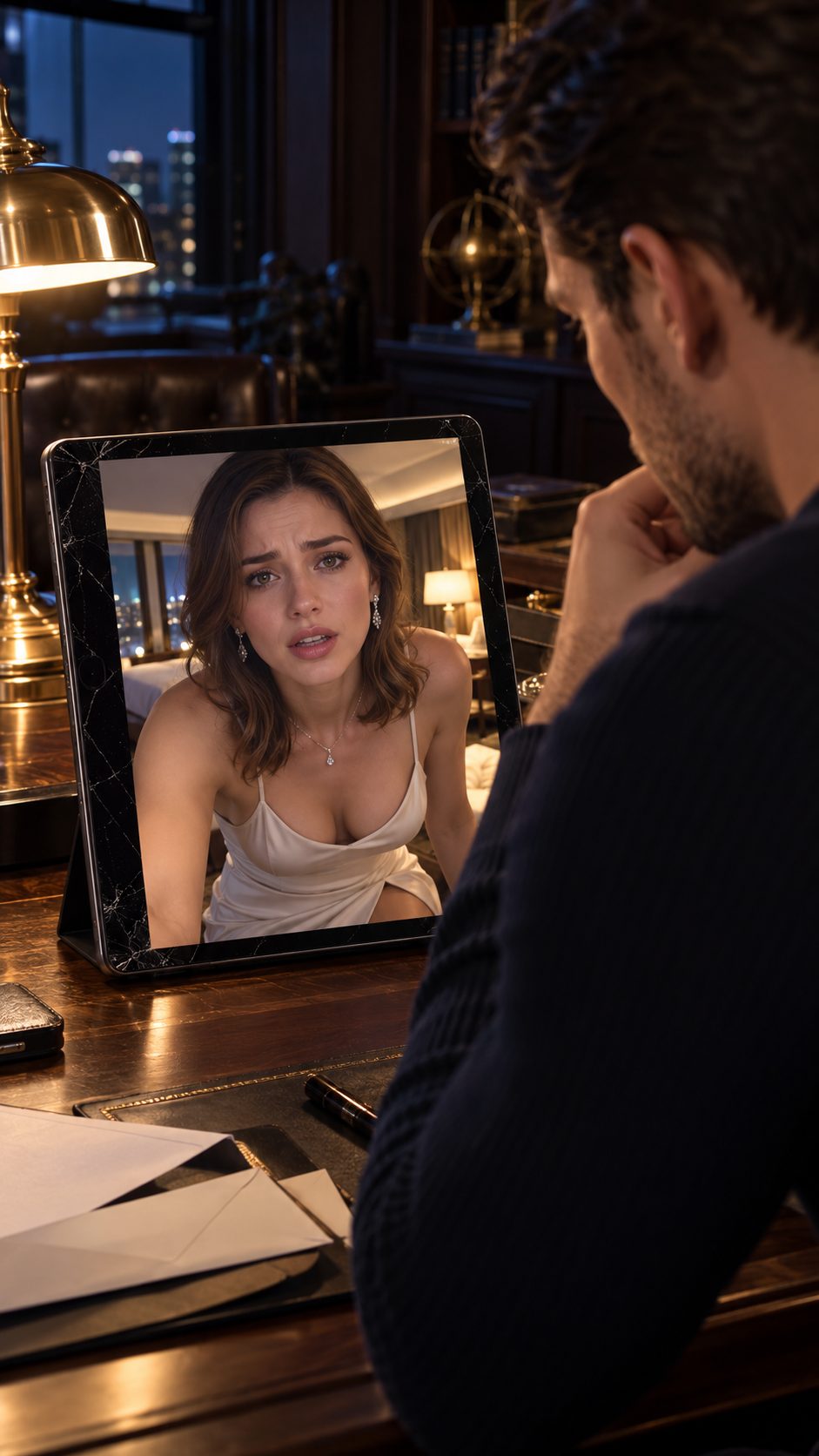
She thought she had buried the truth inside our marriage.
But the man she was hiding had been stealing from my family long before he touched my wife.*
**CHAPTER 1:THE FOURTH NIGHT**
The first thing my wife said before leaving was that she didn’t want to hear my voice.
“Don’t call me while I’m away, Daniel.”
Mara stood beside the front door with her suitcase, wearing the ivory blouse I’d bought her for our seventh wedding anniversary.
I watched her adjust the strap of her handbag.
“Not even to see if you arrived safely?”
“I’m not a child.”
“I didn’t say you were.”
“Then don’t treat me like one.”
For a moment, she looked almost disappointed that I wasn’t arguing.
I leaned against the doorway and smiled.
“Don’t worry.
You won’t receive a single call from me.”
Her expression shifted.
“That’s it?”
“What else would you like me to say?”
She reached for the handle.
She stopped without turning around.
“Have a good trip.”
Her shoulders stiffened.
Then she walked away.
I stood at the window and watched her load the suitcase into her car.
Before starting the engine, she checked her phone, typed something, and smiled.
It was a small smile.
An ordinary smile.
But I hadn’t seen her look that happy in months.
When she finally drove away, I didn’t follow her.
I went into the kitchen and made coffee.
Then I waited.
For three days, I behaved exactly as she had requested.
I didn’t call.
I didn’t text.
I didn’t ask her sister where she was staying.
I went to work, returned home, cooked dinner for one, and slept beside the untouched half of our bed.
To anyone watching, I probably looked like a husband who had finally stopped caring.
But I hadn’t stopped caring.
That was the problem.
For almost a year, our marriage had been disappearing in small, humiliating pieces.
She stopped asking about my day.
She started taking calls outside.
She changed her phone password after seven years of sharing everything.
Whenever I asked what was wrong, she told me I was imagining things.
“You’re always looking for something,” she’d said one evening.
“Maybe because you’re always hiding something.”
She had stared at me.
Then she’d laughed.
“Listen to yourself.”
I had listened.
And I’d realized that I sounded like someone begging to be told the truth.
I promised myself I wouldn’t beg again.
Before leaving, Mara had cleared her recent call history, removed the luggage tag from her suitcase, and unplugged the security camera near our driveway.
When I asked why, she said the camera had been malfunctioning.
I knew it hadn’t.
I’d checked it that morning.
But Mara was careful.
She remembered nearly everything.
At 11:47 p.m. on the fourth night, something chimed inside the kitchen drawer.
I was washing a plate when I heard it.
At first, I ignored the sound.
Then it came again.
I opened the drawer and found our old tablet beneath a stack of takeout menus.
Its screen was cracked across the upper corner.
We had used it for household bills, hotel reservations, and family accounts before Mara bought a replacement.
Apparently, she had forgotten that it still received notifications.
The screen glowed.
YOUR UPGRADED ROOM IS READY.
For several seconds, I simply stared.
Then I tapped the notification.
The reservation was under Mara’s name.
The hotel was nearly three hundred miles away, in a city where she’d claimed she didn’t know anyone.
Her room had been upgraded to a suite.
Two guests.
One vehicle.
Late checkout requested.
I felt something cold settle beneath my ribs.
The second guest’s name was Elliot Cross.
I’d never heard it before.
But when I opened the reservation history, the same name appeared beside my wife’s again.
Six months earlier.
An airport hotel.
Four months earlier.
A downtown hotel during her supposed business conference.
Seven weeks earlier.
A resort where she’d stayed while supposedly helping her mother recover from surgery.
Three cities.
Three hotels.
Three payment methods.
The same man.
Yet his personal details changed on every reservation.
Different telephone numbers.
Different addresses.
Different birthdays.
I read the records twice.
Then a third time.
“This isn’t just an affair,” I whispered.
Beneath each reservation was a private instruction for hotel staff.
Please hold the second key at reception.
No courtesy calls to the room.
The words felt familiar.
Painfully familiar.
I searched my memory.
It wasn’t from Mara’s messages.
It wasn’t something I’d heard her say.
Then I remembered the envelope.
Two years earlier, Mara had come home carrying a thick brown envelope addressed to her at work.
She’d been pale and unusually quiet.
That night, I’d found her standing beside the fireplace, holding its contents.
“What is that?”
“Nothing important.”
“Then why are you shaking?”
She’d looked at me with an expression I couldn’t understand.
“Daniel, promise me something.”
“Burn these papers.”
“Because they could destroy everything.”
I’d thought she meant our finances.
I took the envelope from her.
“Then we should understand what’s in them.”
Her voice had cracked.
Just trust me this once.”
I had promised her I would get rid of them.
But something about her fear had frightened me more than the documents themselves.
So I’d hidden the envelope inside the bottom drawer of my office desk.
And eventually, we’d both stopped talking about it.
Now I walked into that office with the tablet under my arm.
My hands trembled as I unlocked the drawer.
The envelope was still there.
I placed it beside the tablet and opened it.
Inside were old financial statements, copies of signatures, and a confidential review of a charitable housing trust my late father had founded.
The first page contained a name.
Elliot Cross.
My breathing stopped.
I looked at the hotel reservation again.
The private instruction beneath the booking was identical to a line printed on the first page of the old report.
But the name wasn’t what frightened me most.
The document connected Elliot Cross to a financial transaction that had taken place after my father’s death.
And beneath that transaction was a signature I knew better than my own.
I turned the final page.
Before I could read the last line, the tablet began ringing.
INCOMING VIDEO CALL: MARA.
For four days, she’d forbidden me from calling her.
Now she was calling me.
I answered.
Her face appeared immediately.
She was inside a softly illuminated hotel suite.
Her makeup was immaculate, but her eyes were terrified.
“Where are you?” she demanded.
“Daniel, where exactly?”
“In my office.”
Her lips parted.
“Is the tablet with you?”
I looked at the open envelope.
“Answer me.”
She closed her eyes.
“Listen carefully.
Whatever you found, don’t say his name.”
Then she looked over her shoulder.
Someone was standing behind her.
And when the figure moved closer to the light, I recognized the face.
It belonged to the man who had stood beside me at my wedding.
My oldest friend.
Owen Kessler.
**CHAPTER 2:THE MAN BEHIND THE SCREEN**
For several seconds, I couldn’t speak.
Owen Kessler stood behind my wife with one hand resting against the hotel doorway.
He wore a charcoal jacket and the expression of someone who had just discovered that a carefully planned lie was collapsing.
I knew that face.
I’d known it for eighteen years.
We had met in college.
He had helped me bury my father.
He had stood beside Mara and me while we exchanged wedding vows.
He had spent countless evenings eating dinner at our kitchen table.
And now he was standing inside my wife’s hotel suite.
He didn’t look surprised to hear his name.
He looked irritated.
“Daniel,” he said calmly.
“We need to talk.”
Mara turned toward him.
Owen ignored her.
“Whatever you think you’re looking at, you’re missing most of the story.”
It was a strange sound.
Almost unrecognizable.
“You’re in a hotel room with my wife.”
“Four days after she told me not to call her.”
Mara’s face tightened.
“Please listen.”
“How long?”
Neither answered.
I looked directly at Owen’s image.
“How long have you been sleeping with my wife?”
Owen’s jaw moved.
Mara whispered my name.
“Daniel, this isn’t the way—”
“Then tell me the right way.”
She began crying.
Owen stepped closer to her.
“Enough,” he said.
Something changed in me when I heard that word.
As though he had the right to decide when my marriage stopped hurting me.
“Get away from her,” I said.
Owen’s expression hardened.
“Be careful.”
He glanced at the tablet.
“You have documents you don’t understand.”
I looked down at the papers.
For the first time, Owen appeared genuinely nervous.
“Where did you get those?” he demanded.
“Mara was supposed to burn them.”
My wife covered her mouth.
Owen stared at her.
“You told me they were gone.”
She said nothing.
Then the call disconnected.
I sat in the darkness, staring at my own reflection in the black screen.
I had imagined discovering an affair.
I’d imagined another man.
I’d imagined confronting Mara and hearing her deny everything.
But I’d never imagined Owen.
A memory surfaced.
My wedding reception.
Owen lifting a glass.
“Daniel and Mara,” he’d announced, smiling at the crowd, “are proof that some people really do find the person they were meant to love.”
Everyone had applauded.
Mara had kissed my cheek.
Owen had embraced us both.
I suddenly felt sick.
I pushed the tablet away and returned to the envelope.
The confidential report concerned the Hearth House Trust, a nonprofit organization my father had established to preserve affordable rental homes for elderly and working-class residents.
My father, Thomas Reed, had spent thirty years building that organization.
He believed that people who had worked their entire lives deserved somewhere safe to grow old.
When he died, Owen became the trust’s managing director.
I had agreed without hesitation.
Owen understood its finances.
My work restoring historic buildings kept me busy, and I trusted him to protect my father’s legacy.
Mara had served as a financial administrator for the trust.
She understood the accounts better than either of us.
I’d believed the arrangement was perfect.
Now I wasn’t sure whether anything I’d believed had been real.
I examined the report.
Elliot Cross appeared as the representative of a consulting company that had received substantial payments from the trust.
The transactions were listed as renovation financing and property management expenses.
Several pages contained references to Cedar Point Holdings, an investment firm I’d never heard of.
The final sheet included three signatures.
Owen Kessler.
Thomas Reed.
I read the date beside his name.
December 14, 2022.
My father had died on June 3, 2022.
I stared at that date until the numbers blurred.
“No,” I whispered.
It had to be a mistake.
A copied signature.
An administrative error.
But beneath the signature was an approval authorizing the transfer of two properties and a significant portion of the trust’s reserve funds.
My father’s signature had supposedly approved it.
Six months after we buried him.
My phone vibrated.
A message from Mara.
DON’T BELIEVE EVERYTHING OWEN TELLS YOU.
I typed back.
DID YOU SLEEP WITH HIM?
Three dots appeared.
Then disappeared.
A minute passed.
Finally, a message arrived.
I NEED TO EXPLAIN IN PERSON.
I stared at it.
The question had required three letters.
Instead, she had given me another sentence that meant nothing.
I placed the phone face down.
At two in the morning, I called the only person I thought might help.
Beatrice Hall.
She had been my father’s attorney for almost twenty years.
She answered after several rings.
“Sorry for waking you.”
“Is something wrong?”
I looked at the envelope.
“I found documents with my father’s signature.”
There was a pause.
“What kind of documents?”
“Property transfers.”
“From when?”
“December 2022.”
Then she spoke very carefully.
“Daniel, your father had been dead for six months.”
“Who’s named on the transfers?”
And someone called Elliot Cross.”
Her breathing changed.
“Did you say Elliot Cross?”
I sat upright.
“You know that name?”
“I’ve seen it before.”
“I can’t discuss this properly over the phone.”
“Beatrice, what’s happening?”
She hesitated.
Then she said something that frightened me more than anything Owen had said.
“Lock your office door, Daniel.”
I looked toward the hallway.
“Because if those documents are genuine, someone has been stealing from your father’s trust for years.”
“And Elliot Cross?”
Her answer came slowly.
“I don’t believe that man exists.”
I stared at the tablet.
The same name had traveled with Mara from hotel to hotel.
The same name had appeared on my father’s financial records.
And now my father’s attorney was telling me that the person behind it might not exist at all.
Before I could ask another question, Beatrice continued.
“There’s something else you need to know.”
“Your father was investigating those transfers before he died.”
**CHAPTER 3:THE DEAD MAN’S SIGNATURE**
I didn’t sleep.
At six in the morning, I made coffee I couldn’t drink.
At seven, I copied every document from the envelope.
At eight, I met Beatrice Hall at her office.
She was sixty-two, with silver hair, sharp eyes, and the ability to make a room feel smaller simply by entering it.
She had known my father almost as long as I’d been alive.
When I placed the envelope on her desk, she didn’t touch it immediately.
Instead, she studied my face.
“How much do you know?”
“That my wife is having an affair with my best friend.”
Her expression softened.
“And that someone’s been using a dead man’s signature.”
I pushed the report toward her.
“Tell me which disaster we’re dealing with first.”
She opened the folder.
For almost twenty minutes, she read without speaking.
Occasionally, she made a note.
Once, she removed her glasses and closed her eyes.
Finally, she looked at me.
“Your father suspected Owen was moving money through outside companies.”
“Why didn’t he tell me?”
“He wasn’t certain.”
“He trusted Owen.”
“So did I.”
Her voice carried genuine regret.
I leaned forward.
“What did he find?”
“Unusual payments.
Renovation expenses that didn’t match completed work.
Properties being valued below market price.”
“And Elliot Cross?”
“That name appeared on consulting invoices.”
“Who is he?”
“We never established his identity.”
I told her about the hotel reservations.
Three cities.
Three aliases disguised beneath one ordinary name.
The changing personal details.
The recurring instructions to hotel staff.
Beatrice listened without interruption.
When I finished, she tapped the report.
“Your wife was responsible for checking several of these payments.”
“Did she ever tell you about concerns involving Owen?”
“Nothing unusual?”
I thought about the envelope.
“Two years ago, she begged me to burn these.”
Beatrice looked up.
“She said they could destroy everything.”
“And you kept them?”
For the first time that morning, she smiled faintly.
“Your father would have done exactly the same thing.”
The compliment hurt.
I looked toward the framed photograph on her bookshelf.
It showed my father standing outside one of the Hearth House properties.
He wore his favorite brown jacket.
He was smiling beside an elderly woman named Mrs.
Evelyn Parker.
I remembered her.
She’d brought homemade cookies to our house every Christmas.
My father had once told me that success wasn’t measured by how much property you owned.
It was measured by how many people slept peacefully because of something you had done.
That was what Hearth House meant to him.
Not wealth.
Not prestige.
And Owen might have been selling it piece by piece.
Beatrice opened her computer.
She searched public property records and compared them with the documents.
Within an hour, we found three suspicious transfers.
The properties had been sold to companies connected to Cedar Point Holdings.
The trust’s records described the arrangements as temporary financing.
The county records described completed sales.
“That doesn’t make sense,” I said.
“It does if someone wanted the money from the sales to appear as legitimate expenses.”
“How much?”
She calculated the amounts.
“At least one million eight hundred thousand dollars.”
I stared at her.
“That’s impossible.”
“I wish it were.”
My father had spent decades saving and borrowing to buy those houses.
Owen had been there for nearly every acquisition.
I remembered the day we’d celebrated purchasing the final building.
Owen had embraced my father.
“We did it, Tom.”
My father had laughed.
We gave people somewhere to belong.”
Now those properties belonged to investment companies that might not care who lived inside them.
I stood abruptly.
“I need to confront him.”
“Beatrice—”
“Listen to me.”
Her voice became firm.
“If Owen has been committing financial fraud, confronting him without a plan could destroy evidence.”
“He already knows I found the report.”
“Then we need to preserve what we have.”
She asked me to send her the reservation records and scanned documents.
I watched her review the dates.
Something bothered me.
“Why would Owen use the same fake name for years?”
“Because the name may have a function beyond hiding his identity.”
“A record marker.
A way to connect private arrangements that shouldn’t appear in his ordinary business accounts.”
I thought about the hotel note.
The second key.
The instruction not to call the room.
It sounded like secrecy.
But not necessarily romance.
“Do you think Mara helped him?”
Beatrice hesitated.
“I think her signature appears on documents she should have questioned.”
“That’s not an answer.”
“It’s the only honest one I can give you.”
My phone rang.
I declined the call.
She called again.
Then sent a message.
PLEASE DON’T GO TO OWEN’S OFFICE.
I stared at it.
Beatrice noticed my expression.
“What happened?”
“My wife knows I’m investigating.”
“Reply that you’ve retained counsel.”
Seconds later, another message appeared.
HE HAS COPIES OF EVERYTHING I SIGNED.
My stomach tightened.
Beatrice read the message over my shoulder.
“Daniel,” she said quietly, “this may be much bigger than an affair.”
I already knew that.
But knowing didn’t make the betrayal smaller.
It made everything worse.
For seven years, Mara had slept beside me.
She knew my father’s dreams.
She knew how devastated I’d been after his death.
She had held me while I cried.
Had she known that his life’s work was being stolen?
Had she watched me mourn while helping Owen dismantle what my father left behind?
I typed one question.
DID YOU KNOW WHAT HE WAS DOING?
This time, she answered immediately.
NOT AT FIRST.
The words stayed on my screen.
Not at first.
I read them again.
They didn’t mean she was innocent.
They meant there had been a moment when she understood.
A moment when she could have told me.
And she hadn’t.
As I stood to leave, Beatrice’s assistant entered carrying a newly printed property record.
“There’s something you should see,” she said.
Beatrice examined it.
Her face changed.
“What is it?”
She turned the paper toward me.
A notice had been filed that morning.
The remaining Hearth House properties were scheduled for sale.
And the organization approving the sale carried my wife’s signature.
**CHAPTER 4:THREE HUNDRED MILES OF SILENCE**
I drove three hundred miles to see my wife.
Beatrice told me not to.
She said emotional confrontation could compromise the investigation.
She reminded me that we needed financial records, not an argument in a hotel hallway.
I understood her reasoning.
I simply couldn’t bear another night wondering how much of my marriage had been real.
Before leaving, I gave her the original envelope.
I kept digital copies.
Then I drove.
The highway stretched ahead beneath a pale morning sky.
Every mile brought another memory.
Mara laughing on our first date.
Mara painting the kitchen with me.
Mara holding my father’s hand in the hospital.
Mara whispering, “We’ll get through this,” after the funeral.
I’d built my life around those memories.
Now each one felt like evidence from a case I no longer understood.
When I reached the hotel, I parked across the street.
It was an expensive building with polished stone walls and tall windows.
I remembered Mara complaining six months earlier that we needed to save money.
“We can’t keep spending like we’re twenty-five,” she’d said.
Apparently, that rule had applied only to our marriage.
I entered the lobby shortly after four.
The receptionist smiled.
Are you checking in?”
I’m looking for my wife.”
“May I have her name?”
“Mara Reed.”
The woman’s expression became professionally neutral.
“I’m sorry, sir.
We can’t confirm guest information.”
“I understand.”
I stepped away.
Near the elevators stood a seating area overlooking the street.
I sat and waited.
Twenty minutes passed.
Then I saw her.
Mara emerged from the elevator wearing a cream-colored dress and carrying her handbag.
She stopped when she noticed me.
For a second, neither of us moved.
Then she approached slowly.
“Hello, Mara.”
Her eyes moved toward the elevators.
“You shouldn’t be here.”
“That’s becoming a familiar sentence.”
She looked exhausted.
There were faint shadows beneath her eyes.
I’d spent seven years noticing every change in her face.
I hated that I still noticed.
“Can we go somewhere private?” she asked.
“Are you afraid someone might hear us?”
We went into a quiet lounge beside the hotel restaurant.
Mara chose a table near the window.
She sat opposite me.
Her hands were trembling.
I remembered those hands fastening the buttons of my shirt on our wedding morning.
I remembered kissing her fingertips while we lay awake talking about the house we wanted to buy.
Now I watched them twist a paper napkin.
“How much do you know?” she asked.
“Enough to know you lied.”
“Enough to know Owen has been staying with you.”
She looked down.
“And enough to know my father’s trust is being emptied.”
Her head lifted.
“You spoke to Beatrice?”
“What did she tell you?”
“That someone’s stealing from Hearth House.”
Mara stared at the table.
“Then she knows.”
“Knows what?”
“That Owen has been moving money through Cedar Point.”
I leaned forward.
“How long have you known?”
She didn’t answer.
“Longer than I should have.”
She shook her head.
I felt the word physically.
As though something had struck me in the chest.
“I didn’t know the full extent.”
“But you knew something was wrong.”
“And you didn’t tell me.”
Her eyes filled.
“I was ashamed.”
She pressed her lips together.
I understood before she answered.
“You signed those documents.”
“Some of them.”
“He told me they were temporary transfers.”
“Did you believe him?”
“At first.”
“And afterward?”
Her silence told me everything.
I looked toward the window.
People walked along the sidewalk carrying shopping bags.
Cars stopped at traffic lights.
Somewhere, someone laughed.
The world continued behaving normally.
I wanted it to stop.
“There’s something else,” I said.
Mara went rigid.
“Look at me.”
“Did you sleep with Owen?”
Her eyes closed.
There was no reason for her to protect me anymore.
No reason to protect our marriage with another lie.
“Yes,” she whispered.
Three letters.
Seven years of marriage collapsing inside a single breath.
I nodded slowly.
“How long?”
“Daniel, please—”
“How long?”
She wiped her cheek.
“Seven months.”
I looked at her.
“Seven months.”
“I’m sorry.”
“Was it worth it?”
She flinched.
“Was he worth it?”
“Then why?”
Her mouth opened.
Nothing came out.
I laughed without humor.
“You spent seven months finding time for him while telling me we barely had time for each other.”
“You went to hotels with him.”
“You came home and slept beside me.”
Tears ran down her face.
“Daniel, I know what I did.”
“Then tell me why.”
She stared at her wedding ring.
“I liked who I was when he looked at me.”
The honesty was almost unbearable.
I leaned back.
“That woman wasn’t my wife?”
“Then who was she?”
She covered her face.
For a long time, I watched her cry.
I had imagined feeling satisfaction when she finally confessed.
Instead, I felt hollow.
Like someone had opened a door inside me and discovered that everything valuable had already been taken.
Eventually, Mara lowered her hands.
“There’s something you don’t understand.”
I looked at her.
“Then explain.”
“Owen didn’t start using Elliot Cross because of our affair.”
“Why did he?”
“Because he’d been using that name for years.”
Her face went pale.
“The trust documents.”
She stared at me.
I continued.
“The hotel records.
The property transfers.
The fake signatures.”
Mara whispered something I couldn’t hear.
“Then he knows you have the original report.”
She reached across the table.
I pulled my hand away.
“Daniel, you need to leave this hotel.”
“Because Owen isn’t trying to hide our affair anymore.”
“What is he trying to hide?”
She looked over my shoulder toward the lobby.
Her expression changed.
Owen stood near the entrance.
He was watching us.
And in his hand was a folder bearing the Hearth House Trust’s official seal.
**CHAPTER 5:THE TRUTH SHE CHOSE TO HIDE**
Owen approached our table as though nothing unusual had happened.
He was smiling.
That made me hate him more.
“Daniel,” he said, “I’m glad you’re here.”
“Don’t pretend we’re friends.”
His smile faded.
“We’ve known each other eighteen years.”
“And apparently, I’ve known you for none of them.”
Mara rose beside me.
“Owen, don’t.”
He glanced at her.
“Sit down.”
She didn’t move.
For the first time, I noticed how he spoke to her.
Not like a lover.
Like someone accustomed to being obeyed.
He placed the folder on the table.
“You’re getting involved in financial matters that are far more complicated than you realize.”
“Did you steal money from my father’s trust?”
“That’s a serious accusation.”
“The organization needed restructuring.”
“By selling homes out from under the people living in them?”
“Those properties were losing money.”
“My father didn’t build them to make you rich.”
Something flickered in his eyes.
“Mara, explain the arrangement to your husband.”
She looked at the folder.
Then at me.
Owen stiffened.
“What did you say?”
“I said no.”
He lowered his voice.
“Think carefully.”
She inhaled.
For a moment, the three of us stood in silence.
Then Owen picked up his folder.
“This conversation is over.”
He looked at me.
“Your father’s dream was admirable, Daniel.
But admirable things don’t always survive the real world.”
I took a step toward him.
“Stay away from me.”
He glanced at Mara.
“And you know what happens if those documents become public.”
Then he walked away.
Mara remained standing until he disappeared.
Her hands shook so badly that she had to grip the back of her chair.
“What does he have on you?”
She looked at me.
“Proof that I helped him.”
We left the lounge and went upstairs to her suite.
I didn’t want to enter that room.
Every detail reminded me that she’d shared it with him.
Two glasses beside the window.
His jacket hanging over a chair.
A second suitcase near the wardrobe.
Evidence of an ordinary intimacy that should have belonged to us.
Mara noticed where I was looking.
“I can get another room.”
I remained near the door.
“Tell me everything.”
She nodded.
For several seconds, she struggled to speak.
Then the words began.
Two years earlier, Owen had asked her to approve a series of transfers intended to finance urgent renovations.
He claimed that a bank had temporarily restricted one of the trust’s accounts.
The money, he promised, would be returned once the financing cleared.
“I believed him,” she said.
“You were the financial administrator.”
“You should have checked.”
“Then why didn’t you?”
Her eyes filled.
“Because he’d always been there for your father.
Because you trusted him.
Because I wanted to believe the problem was temporary.”
She showed me records on her laptop.
Transfer requests.
Consulting invoices.
Approval emails.
At first, the amounts had been relatively small.
Then they increased.
By the time she realized the money was moving into companies Owen controlled, she had already signed documents that made her look responsible.
“Why didn’t you come to me?”
“Because I was afraid you’d hate me.”
I looked at her.
“How did that work out?”
She flinched but didn’t defend herself.
“The anonymous report arrived at my office.
Someone had noticed the irregularities.”
“The envelope.”
“You begged me to burn it.”
“I panicked.”
“Because of your signatures.”
She nodded.
“I told myself I could fix it quietly.”
“But you couldn’t.”
She sat on the edge of the bed.
For the first time since discovering the affair, I saw her without the polished confidence she’d worn like armor.
She looked exhausted.
I hated that part of me still wanted to comfort her.
“Where does Owen come into our marriage?”
She closed her eyes.
“Last spring.”
I said nothing.
“I’d been miserable.
We barely talked.
You were always working, and I felt like everything between us had become routine.”
I stared at her.
“So you slept with my best friend.”
“I’m not blaming you.”
“Then don’t describe my work schedule like it explains your choices.”
“You’re right.”
She wiped her face.
“He listened to me.
He made me feel interesting again.”
“And you believed him.”
“Was it love?”
She hesitated.
“I thought it was.”
The answer hurt more than a denial would have.
“Did you tell him you loved him?”
Her silence answered.
I turned toward the window.
Seven years.
The vacations.
The birthdays.
The nights we stayed awake planning a future.
Somewhere between those moments, she’d started imagining a different life with another man.
“When did you realize he was using you?”
“After the second hotel.”
She explained that Owen had started demanding more financial approvals.
When she questioned him, he reminded her that she’d signed the earlier transfers.
He said investigators would believe she had orchestrated the scheme.
And he had evidence of their affair.
“He threatened to tell you?”
“That should have been the least of your worries.”
Mara opened another folder on her laptop.
Inside were copies of bank reconciliations, company records, and internal correspondence she’d been authorized to access at work.
“I started saving these when I realized he was preparing to sell the remaining properties.”
“Why the hotels?”
“He used the trips for private meetings.
The reservations helped conceal who was traveling together, and he made me arrange the rooms.”
“The second-key instruction?”
“He insisted on it.
I later found the same wording in older business records.”
I remembered the envelope.
The same phrase.
The same fake name.
Years of concealment.
“Why didn’t you go to the police?”
“I was trying to get enough proof.”
“And you were still sleeping with him.”
She looked down.
I felt something inside me harden.
“You don’t get to call this protection, Mara.”
“I’m not asking you to.”
“You didn’t stay because you were protecting me.”
“You stayed because you wanted him, and when you realized what he was doing, you were afraid.”
She began crying again.
It was the first answer she’d given that I believed completely.
We stood in silence.
Then her phone vibrated.
She looked at the screen.
Her face drained of color.
She turned the phone toward me.
An email from the property management company.
FINAL VACANCY NOTICES WILL BE ISSUED TOMORROW.
Beneath it was the list of Hearth House tenants.
At the top was a familiar name.
Evelyn Parker.
The woman who had brought cookies to my father every Christmas.
The woman who believed his promise that she would always have a home.
**CHAPTER 6:THE PRICE OF SILENCE**
I called Beatrice before leaving the hotel.
She answered immediately.
“He’s issuing eviction notices.”
The remaining Hearth House properties.”
I heard papers moving.
“How soon?”
“Tomorrow.”
She was silent for several seconds.
“Send me the notice.”
Mara stood beside me.
“I have the underlying records,” she said.
I put the call on speaker.
Beatrice’s voice became firm.
“Mara, are you willing to provide those documents voluntarily?”
“Even if they expose your own misconduct?”
Mara swallowed.
“Then I need you both back here.”
The drive home lasted nearly five hours.
Mara followed in her own car.
At a rest stop, I watched her park several spaces away.
For a moment, I almost walked over.
Then I remembered the hotel suite.
I remembered Owen’s jacket.
I remembered her admitting that she’d loved him.
So I stayed inside my car.
I stared through the windshield until she drove away.
By the time I reached Beatrice’s office, the sun was setting.
Mara arrived ten minutes later.
We sat on opposite sides of the conference table.
Beatrice reviewed the documents she’d brought.
The evidence was worse than we’d imagined.
Owen had used consulting companies to receive money from the trust.
Several property sales had been structured through entities linked to his business associates.
And the forged approval carrying my father’s signature had been used to justify a major transfer.
The original accounting records showed that the proceeds from the properties had never been returned to Hearth House.
“Can we stop the notices?”
“We can seek emergency relief,” Beatrice replied.
“But we need to move quickly.”
She called an attorney specializing in nonprofit litigation.
Together, they prepared an emergency petition asking a court to preserve the properties and prevent further transfers while the records were examined.
Mara supplied an affidavit.
She described the approvals she’d signed.
The explanations Owen had given.
The moment she realized the transfers were not temporary.
And her failure to report the irregularities.
When she reached the section describing her personal relationship with Owen, her hand stopped.
Beatrice looked at her.
“You need to be truthful.”
Mara nodded.
She wrote the dates.
The meetings.
The hotels.
I sat beside the window and watched her destroy the last illusion of our marriage with her own handwriting.
It wasn’t satisfying.
It was devastating.
When she finished, Beatrice read the statement.
“Some of these admissions may have legal consequences.”
“I understand,” Mara said.
“Your cooperation doesn’t automatically excuse what happened.”
Beatrice studied her.
“Then why are you doing this?”
Mara looked toward me.
I turned away.
“Because I spent years making choices that hurt people,” she answered.
“And I’m tired of pretending someone else made them.”
The honesty surprised me.
It didn’t heal anything.
But it mattered.
That night, Mara returned to her sister’s house.
I went home alone.
The house smelled like coffee and furniture polish.
Her shoes still stood beside the door.
A photograph from our honeymoon hung above the staircase.
I stopped in front of it.
We were standing on a beach, laughing.
Mara had her arms around my waist.
I’d been certain that whatever happened in our lives, we would face it together.
I took the photograph down.
Then I sat on the stairs and cried.
Not because I wanted her back.
Not because I wanted revenge.
I cried because there was no way to return to the man who had believed that picture.
The doorbell rang at nine.
I opened it.
Owen stood on the porch.
He wore a dark coat and carried a leather briefcase.
“Bad time?” he asked.
I stared at him.
“Get off my property.”
He looked past me into the house.
“Your father always kept this place looking good.”
“Don’t talk about my father.”
Owen sighed.
“Daniel, I know you’re angry.”
“You slept with my wife and stole from the organization my father spent his life building.”
His expression tightened.
“You don’t understand what happened.”
“Then explain it to a judge.”
He lowered his voice.
“That doesn’t have to happen.”
I said nothing.
He opened his briefcase and removed a document.
“One point five million dollars.”
I stared at him.
“I can arrange for that amount to be returned to the trust.”
“And the rest?”
“We negotiate.”
I looked at the document.
A proposed private settlement.
Confidentiality provisions.
Restrictions on contacting investigators.
He was offering money in exchange for silence.
“You’re trying to buy me.”
“I’m trying to prevent a disaster.”
“For whom?”
He didn’t answer.
I stepped outside, pulling the door closed behind me.
“Do you remember what my father said when he bought the Parker building?”
Owen frowned.
“He said people need somewhere to belong.”
“He trusted you.”
Owen looked away.
“I helped him build that trust.”
“And then you took it apart.”
His expression hardened.
“Your father didn’t understand modern business.”
“He understood loyalty.”
For the first time, Owen lost his composure.
“Your father wasn’t perfect!”
I stared at him.
He took a breath.
“Neither are you.”
“Maybe not.”
I handed the settlement back.
“But I haven’t sold anyone’s home to pay for my mistakes.”
I opened the door.
He stood motionless for another moment.
Then he walked away.
I watched his car disappear.
My phone rang almost immediately.
I answered reluctantly.
Her voice was trembling.
“What happened?”
“I just finished speaking with the investigators.”
I closed my eyes.
“I told them everything.”
A pause followed.
Then she whispered something that made my blood run cold.
“Daniel, Owen has already started blaming you.”
**CHAPTER 7:THE ROOM WHERE EVERYONE LIED**
The emergency hearing took place three days later.
By then, the eviction notices had been challenged, the disputed property records had been submitted to the court, and investigators had begun examining the trust’s finances.
Owen arrived wearing a tailored suit.
He looked confident.
Mara entered through a side door with her attorney.
She wore a simple black dress and no jewelry except her wedding ring.
I noticed it immediately.
I hated myself for noticing.
Beatrice sat beside me.
“Remember,” she whispered, “today is about protecting the trust’s assets.”
But sitting in that courtroom, I understood how deeply our personal lives had become entangled with my father’s legacy.
Every financial document seemed to contain another piece of our marriage.
Mara’s signature.
Owen’s approvals.
Trips I’d believed were innocent.
Invoices she’d once told me were routine.
Everything connected.
The attorney representing the trust’s interested beneficiaries outlined the suspicious transactions and asked for temporary safeguards to prevent additional property transfers.
Owen’s attorney argued that the arrangements were legitimate financing agreements.
He described Mara as a disgruntled employee facing personal problems.
Then he implied that I was pursuing revenge because of an affair.
I gripped the edge of my chair.
Beatrice placed a hand over mine.
“Let the evidence speak,” she whispered.
Mara was called to testify.
She walked toward the witness stand without looking at me.
Her voice shook when she began.
But she answered each question.
Yes, she had approved transfers without adequate verification.
Yes, she had accepted Owen’s explanations despite inconsistencies.
Yes, she had concealed those concerns from other people associated with the trust.
And yes, she had eventually preserved copies of financial records showing that money had been diverted through outside companies.
Owen watched her without expression.
When his attorney questioned her, he focused on her relationship with Owen.
Reed, you were romantically involved with my client?”
Mara swallowed.
“While married to your husband?”
“And that relationship ended badly?”
“Isn’t it possible your accusations are motivated by resentment?”
Mara looked directly at the attorney.
“My marriage ended because of choices I made.”
The room became still.
She continued.
“But I didn’t invent bank transfers, property records, or signatures.”
The attorney paused.
“You’re asking the court to trust someone who lied to her own husband.”
Mara lowered her gaze.
“Then don’t trust my words alone.”
She looked toward the evidence folders.
“Trust the records.”
Something inside me shifted.
I wasn’t ready to forgive her.
Perhaps I never would be.
But for the first time, she wasn’t hiding behind explanations.
She wasn’t asking anyone to excuse her.
She was telling the truth even when it cost her.
The financial records showed transfers into accounts connected to Cedar Point Holdings.
The property records documented completed sales that the trust’s reports had described differently.
The confidential report identified the false name Elliot Cross.
And the altered approval carried my father’s signature.
Dated six months after his death.
Owen’s attorney objected to several interpretations of those documents.
The judge carefully separated established records from allegations that still required investigation.
But there was enough concern to justify temporary protection.
The court ordered restrictions on further transfers and appointed independent oversight while the disputed transactions were examined.
The immediate threat to the remaining Hearth House properties was stopped.
It wasn’t a criminal conviction.
It wasn’t the end of the investigation.
But for the first time since my father died, the organization had a chance to survive without Owen controlling its future.
I looked toward the back of the courtroom.
Parker sat beside two other Hearth House residents.
She held a tissue in both hands.
When the ruling was announced, she began crying quietly.
I remembered my father standing beside her in that old photograph.
I wished he could have been there.
Afterward, reporters gathered outside.
Owen declined to answer questions.
Mara left with her attorney.
I remained on the courthouse steps until the crowd thinned.
Then Beatrice approached.
“Your father would have been proud of you.”
I shook my head.
“He would have hated all of this.”
“Of course.”
She stood beside me.
“But he would have wanted you to protect those people.”
We watched Mrs.
Parker leave with her neighbors.
She stopped when she saw me.
I walked toward her.
She took my hands.
“Your father always said you’d do the right thing.”
My throat tightened.
“I almost didn’t.”
“But you did.”
She kissed my cheek.
Then she walked away.
I stood there for a long time.
When I finally turned, Mara was waiting near the courthouse entrance.
Her attorney had already left.
She looked exhausted.
“Can we talk?” she asked.
I hesitated.
Then nodded.
We walked to a quiet courtyard behind the building.
Autumn leaves moved across the pavement.
For several minutes, neither of us spoke.
Finally, Mara said, “I’m not going to ask you to forgive me.”
I looked at her.
She accepted the answer.
“I know I destroyed what we had.”
“You didn’t destroy everything.”
Her eyes lifted.
“You destroyed my trust.”
A tear slipped down her cheek.
“But the years before that were real to me.”
I swallowed.
“I loved you.”
She nodded.
I don’t think you do.”
She looked down.
“I thought being married meant we would keep choosing each other, even when life became ordinary.”
“I stopped choosing you,” she whispered.
“And I’m sorry.”
I wanted to believe those words could repair something.
But apologies couldn’t return the nights she’d spent with Owen.
They couldn’t erase the lies.
They couldn’t make me forget the look on her face when she admitted she’d loved another man.
Still, standing there, I realized that my anger no longer felt like the only thing holding me together.
I was beginning to feel grief beneath it.
And grief was harder.
Mara removed her wedding ring.
She held it between her fingers.
“I don’t know whether you want this back.”
I looked at the ring.
She stared at me.
“I’m not saying we’re staying married.”
Her expression fell.
“I’m saying you don’t have to pretend those seven years meant nothing.”
She closed her hand around the ring.
For a moment, we stood facing each other like strangers who remembered being in love.
Then her phone vibrated.
She glanced at the message.
Her face tightened.
“What is it?”
“The investigators found another account.”
“Belonging to Owen?”
She nodded.
Her eyes filled again.
“It’s an account established using your father’s name.”
I stared at her.
“That’s impossible.”
She handed me the phone.
The account had been opened after my father’s death.
And the person listed as an authorized contact was Mara Reed.
**CHAPTER 8:THE LAST SIGNATURE**
The investigation lasted months.
Long enough for winter to turn into spring.
Long enough for the courthouse steps to stop appearing in newspaper photographs.
Long enough for the first headlines about Owen’s financial misconduct to become quieter stories about audits, frozen accounts, and recovered documents.
But not long enough for me to forget.
Investigators eventually established that Owen had used multiple business entities to divert money from the Hearth House Trust.
The account opened under my father’s name was part of that scheme.
Documents associated with it had been falsified.
Mara’s name had appeared as an authorized contact because Owen had reused information from financial forms she’d signed for legitimate trust business.
Other records showed that she’d knowingly approved questionable transfers before understanding the full extent of the fraud.
She wasn’t entirely innocent.
She never claimed to be.
She cooperated with investigators, provided records, and accepted responsibility for her actions.
Her conduct cost her employment and led to financial and professional consequences.
Owen eventually pleaded guilty to financial fraud charges arising from the scheme.
The court ordered restitution as part of the judgment against him.
Some of the money was recovered.
Some was gone.
The trust’s independent administrators began the difficult work of repairing its finances.
The properties that had not been sold remained protected while the remaining disputes were resolved.
Parker stayed in her apartment.
That mattered more to me than the headlines.
On the day the new trust board held its first public meeting, I visited my father’s grave.
The cemetery was quiet.
Spring flowers grew near the fence.
I stood before his headstone carrying the photograph from Beatrice’s office.
The one showing him outside the Parker building.
“Well, Dad,” I said softly, “we didn’t lose everything.”
The wind moved through the trees.
Of course, there was no answer.
“I thought I knew the people closest to me.”
My voice broke.
“I thought knowing someone for years meant they couldn’t become a stranger.”
I looked at his name carved into the stone.
“I was wrong.”
I sat on the grass.
For a long time, I said nothing.
Then I told him about Mara.
Not the affair.
He already knew enough about betrayal, wherever he was.
I told him how difficult it had been to accept that love could exist beside terrible choices.
How someone could genuinely care for you and still choose to hurt you.
How loyalty meant nothing if it lasted only while being loyal was easy.
When I finally stood, I felt something I hadn’t experienced in months.
Not happiness.
A small amount of it.
Enough to breathe.
Mara and I had been living separately for almost nine months.
She stayed in a modest apartment near her sister.
I remained in the house.
We spoke occasionally.
At first, only about practical matters.
Then, slowly, we began speaking about ordinary things again.
A book she’d read.
A storm that damaged the garden fence.
A song we used to love.
We attended counseling sessions separately.
Later, after discussing it with our counselors, we began attending some sessions together.
Not because we’d decided to reconcile.
Because there were questions neither of us could answer alone.
During one session, Mara said something I’d never forgotten.
“I used to think love meant being wanted.”
Our counselor asked what she believed now.
Mara looked at me.
“I think it means being honest when honesty might cost you the person you want to keep.”
I didn’t reply.
I wasn’t ready.
But I remembered.
In May, she invited me for coffee.
I almost declined.
Then I remembered that for months I’d been defining my life by everything I refused to do.
I refused to call.
Refused to ask questions.
Refused to believe her.
Refused to imagine a future that wasn’t shaped by betrayal.
Some of those refusals had protected me.
Others had started becoming walls.
So I agreed.
We met at a small café beside the river.
She arrived wearing jeans and a blue sweater.
No expensive handbag.
No elaborate makeup.
She looked nervous when she saw me.
We sat opposite each other.
For a while, we talked about nothing important.
The weather.
The coffee.
The noisy construction across the street.
Then she asked, “How’s the house?”
She nodded.
“I miss the garden.”
“The roses survived.”
She smiled faintly.
“You always said they were impossible to kill.”
“They came close.”
For a moment, something familiar passed between us.
A memory of sunlight.
Dirty gardening gloves.
Two people laughing while planting flowers in the wrong season.
Then silence returned.
Mara looked down at her cup.
“I know this doesn’t change anything,” she said, “but I want you to know I understand why you couldn’t stay.”
I watched her.
“I didn’t leave because I stopped loving you.”
She looked up.
“I left because I couldn’t recognize myself around you anymore.”
Her eyes filled.
“I made you doubt everything.”
She nodded slowly.
“I’m trying to become someone who doesn’t do that to people.”
I studied her face.
Once, I’d known every expression.
The small wrinkle beside her nose when she laughed.
The way she pressed her lips together when she was worried.
The softness in her eyes when she was about to say something affectionate.
Those details were still there.
But I no longer confused familiarity with certainty.
“Are you seeing anyone?” she asked.
She nodded.
“Neither am I.”
I looked out at the river.
“I don’t know whether we can fix this, Mara.”
“And I can’t promise I’ll ever trust you the way I used to.”
“I wouldn’t ask you to.”
I turned back.
“Then what are you asking?”
She took a breath.
“Nothing you aren’t ready to give.”
A tear slid down her cheek.
“I spent so much time demanding that you understand me, even while I refused to understand what I was doing to you.”
She wiped her face.
“I don’t want to do that anymore.”
I looked at the woman across from me.
For months, I’d imagined this moment.
Sometimes I imagined walking away.
Sometimes I imagined telling her exactly how much she had hurt me.
Sometimes I imagined taking her hand and pretending the nightmare had ended.
But none of those versions felt honest.
The truth was more complicated.
I still loved her.
I didn’t trust her.
And I wasn’t sure whether those two feelings could ever live together peacefully.
“I miss you,” I admitted.
Mara closed her eyes.
“I miss you too.”
“That doesn’t mean I’m coming home with you.”
“I understand.”
“And it doesn’t mean we’re starting over.”
She nodded.
I looked down at her hand resting beside her coffee cup.
She still wore her wedding ring.
For several seconds, I considered reaching across the table.
Instead, I asked a question.
“Do you remember the morning you left?”
Her face changed.
“You told me not to call you.”
She looked down.
“I remember.”
“I thought staying silent would protect me.”
“For a while.”
“Then I realized silence was how we’d lost each other in the first place.”
Mara began crying quietly.
I waited until she looked at me.
“I don’t know what happens next,” I said.
“Neither do I.”
“But if there’s ever going to be anything between us again, it can’t be built on secrets.”
“It won’t be.”
“You can’t promise that with words alone.”
I finally reached across the table.
Not to take her hand.
I placed my palm beside hers.
Close enough that she could see I wasn’t entirely closing the door.
Her fingers moved slightly.
But she didn’t touch me.
She waited.
That was new.
For the first time in a long time, she wasn’t demanding reassurance.
She was allowing me to decide.
I looked at her.
“Would you like to have coffee again next week?”
She stared at me.
Then smiled through her tears.
“I’d like that.”
We finished our drinks.
Outside, the afternoon sunlight reflected off the river.
We walked together toward the parking lot.
At her car, Mara turned to me.
“If you ever need to talk…”
She hesitated.
“I know I gave you every reason not to trust me, but I want to learn how to listen.”
I thought about the fourth night.
The cracked tablet.
The hotel reservation.
The man standing behind her.
The name she’d begged me not to say.
I’d spent so long believing that the greatest betrayal was discovering she’d given someone else the love that should have belonged to me.
But there had been another betrayal.
She’d denied me the truth.
And without the truth, I hadn’t been allowed to decide what kind of life I wanted.
Now the choice belonged to me again.
I looked at her.
“Then answer when I call.”
She nodded.
I walked toward my car.
Before opening the door, I glanced back.
Mara was still standing beside hers.
She didn’t ask me to stay.
She didn’t run toward me.
She simply smiled.
And for the first time, that smile didn’t feel like something she was hiding behind.
Three months later, we attended another counseling session.
We still lived separately.
We still had difficult conversations.
Some ended in tears.
Some ended in silence.
But we were learning to stop confusing silence with safety.
One evening, Mara came to the house to help me sort through the last boxes from my father’s office.
We found old photographs, tax records, and a stack of handwritten letters.
At the bottom was a small card.
My father had written it shortly before his death.
Trust is not the belief that someone will never disappoint you.
It is the courage to see them clearly and choose what you can responsibly place in their hands.
Never mistake forgiveness for forgetting.
And never mistake love for permission to be hurt.
I read the words twice.
Then I handed the card to Mara.
She read it silently.
When she finished, she placed it carefully on the desk.
“Your father was a good man,” she whispered.
We stood together in the quiet room.
Outside, rain tapped against the windows.
Mara looked toward the old kitchen drawer.
“Is the tablet still there?”
I shook my head.
I replaced it.”
“What happened to the old one?”
“I kept it for the investigation.
Afterward, I put it away.”
She nodded.
“I suppose you couldn’t stand looking at it.”
“For a while.”
She looked at me.
I thought about the nights I’d spent staring at that cracked screen.
About how desperately I’d wanted answers.
About the way the truth had destroyed my marriage and saved my father’s legacy.
Then I smiled faintly.
“Now it’s just an old tablet.”
Mara let out a shaky breath.
I held out my hand.
She looked at it, surprised.
Then she took it.
It wasn’t forgiveness.
Not completely.
It wasn’t the restoration of everything we’d lost.
And it certainly wasn’t a promise that love alone would solve what remained.
It was a beginning neither of us had earned easily.
A choice to continue one honest conversation at a time.
For seven years, I’d believed that the greatest proof of love was never letting go.
Now I understood something different.
Sometimes love meant stepping away until the truth had enough room to stand between two people.
And sometimes, after everything had been broken, two people could choose to meet again.
Not as the people they had pretended to be.
But as the people they were finally willing to become.
Mara squeezed my hand.
“Thank you for giving us a chance.”
I looked at her.
“Don’t thank me yet.”
She smiled sadly.
“Because this time, we have to do it right.”
She nodded.
“No more secrets.”
“No more secrets.”
Outside, the rain began to soften.
And when her phone rang, Mara didn’t turn away.
She looked at the screen, showed me who was calling, and answered without leaving the room.
Such a small thing.
Such an ordinary thing.
Once, I would never have noticed it.
Now I understood its value.
Trust didn’t return in a grand declaration.
It returned in moments that gave another person no reason to wonder what was being hidden.
For the first time in nearly a year, I stopped waiting for the next lie.
I didn’t know exactly what our future would become.
But I knew that whatever happened, I would never again sacrifice the truth just to keep someone beside me.
And when Mara reached for my hand again, I let her hold it.
Not because I’d forgotten.
But because, at last, neither of us was pretending.
**THE END**
✓ Lynn R. Adams
She thought she had buried the truth inside our marriage. But the man she was hiding had been stealing from my family long before he touched my wife.* **CHAPTER 1:THE FOURTH NIGHT** The first thing…