D-MY WIFE THOUGHT SHE COULD STAY OUT ALL NIGHT, MANIPULATE ME INTO SIGNING AWAY MY HOME, AND RETURN AS IF NOTHING HAD HAPPENED—UNTIL I CHANGED THE LOCKS, EXPOSED HER BETRAYAL, AND REBUILT THE LIFE SHE ALMOST DESTROYED
**CHAPTER 1:THE KEY THAT STOPPED WORKING**
My wife laughed when I told her not to come home, certain I would be begging for forgiveness by morning.
But when she returned the next day, her house key no longer worked, and everything she owned was waiting in labeled boxes.
What she didn’t know was that I had discovered exactly why she wanted me desperate enough to keep her.
“Don’t call me again,” Natalie snapped over the phone.
It was almost midnight, and I stood alone in the kitchen of my house on Preston Meadow Drive in Plano, Texas.
Rain streaked the windows while the small American flag on our neighbor’s porch twisted violently in the wind.
“Whether I come home or not is my choice,” she continued.
I glanced at the untouched dinner on the kitchen island.
“Then don’t come back.”
For a moment, she went silent.
Then she laughed.
“Oh, please, you’re really going to threaten me?”
“I’m not threatening you, Natalie.”
“You’ll be apologizing by morning.”
The call ended.
For four months, I had watched my marriage slowly become something I barely recognized.
Natalie worked at a marketing agency, and her supposedly urgent deadlines had gradually turned into late-night client dinners, networking events near Legacy West, and mysterious weekend strategy meetings.
Strangely, nobody from those meetings ever appeared in photographs.
“Where were you last night?”
I would ask.
“Seriously, are you interrogating me now?”
“I’m asking my wife a question.”
“And I’m telling you to stop controlling me!”
But whenever I stopped asking, she had another complaint.
“You don’t even care where I go anymore, do you?”
There was no winning because Natalie had designed the rules so that every answer made me guilty.
Then there was Colin Price.
He was a commercial real-estate broker whom Natalie insisted was “just a professional friend.”
He drove her home twice, texted her after midnight, and somehow knew intimate details about our mortgage.
Three weeks before that final phone call, I discovered something that changed everything.
A notification appeared on the tablet Natalie and I shared for household accounts.
The sender was Colin.
“Keep him uncertain.
Once he thinks you might leave, he’ll sign anything to prove he still wants the marriage.”
My stomach tightened as I read Natalie’s reply.
“He always panics when I stay away.
I’ll push harder this weekend.”
I photographed the conversation before it disappeared.
Suddenly, every argument and unexplained absence made sense.
This wasn’t simply about staying out late.
It was about manipulating me into signing something.
Our house had belonged to me long before our wedding.
My father helped me purchase it eight years earlier, and the deed remained solely in my name.
I contacted attorney Monica Reed near the Collin County Courthouse and showed her everything.
The messages.
The property records.
And the unfinished home-equity application I had discovered beside our printer.
Natalie’s signature was already there.
Mine was blank.
Monica examined the documents carefully.
“Don’t touch your joint money, don’t destroy her belongings, and don’t make accusations you can’t support.”
“What about the house?”
“It’s your separate property, but we need to handle everything lawfully.”
Because Natalie had also written messages declaring she was “moving out for good,” Monica helped arrange a lawful lock change and a documented inventory of her possessions.
Nothing would be damaged, hidden, or withheld.
That night, after Natalie laughed and disconnected, I finally followed through.
By a.m., her clothes, shoes, cosmetics, and personal files were carefully packed into labeled boxes.
Every item was accounted for.
Everything was secured inside the garage, alongside written instructions for arranging a supervised collection.
Then morning arrived.
I heard a car pull into the driveway.
A few seconds later, someone inserted a key into the front door.
The lock refused to turn.
Another attempt.
Then a furious pounding shook the door.
“OPEN THIS DOOR!”
Natalie’s voice echoed through the house.
“WHAT THE HELL DID YOU DO?”
I stood on the other side, listening.
Then she shouted the one question I had been expecting all night.
“WHERE ARE ALL MY THINGS?”
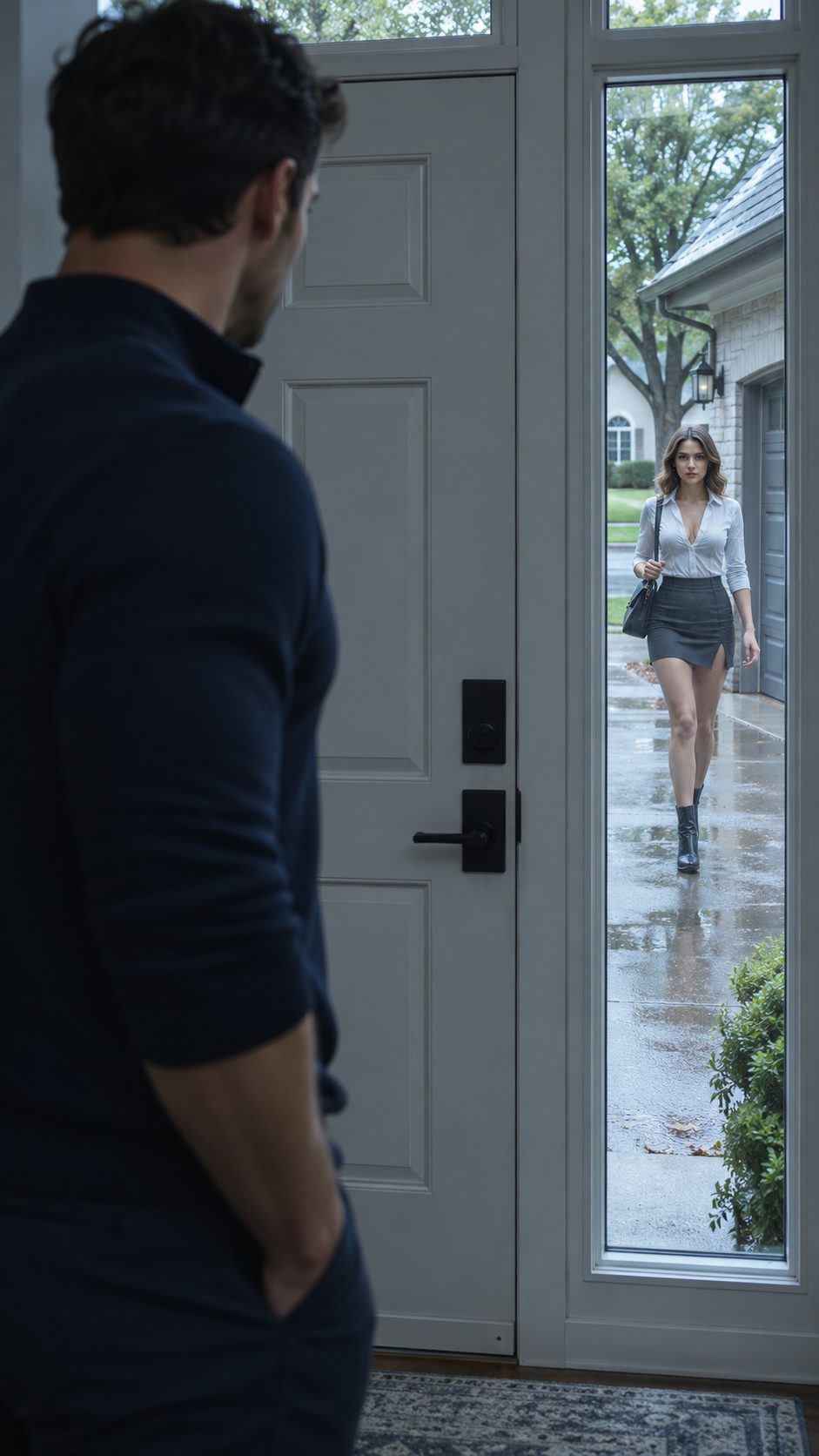
I looked through the narrow glass panel beside the door.
Natalie stood on the wet porch, her brown hair falling around her shoulders, one hand gripping her keys and the other pressed against the glass.
She looked less confused than offended.
As though the house itself had committed an act of betrayal by refusing to recognize her.
“Daniel!” she screamed.
My name sounded unfamiliar coming from her mouth.
For months, she had spoken it mostly when she wanted something.
“Your belongings are safe in the garage,” I answered.
Her head turned toward the garage window.
She stared through it at the carefully arranged boxes.
“You packed my stuff?”
“You had absolutely no right!”
“Monica Reed has the inventory and the collection arrangements.”
“Who the hell is Monica Reed?”
“My attorney.”
The word seemed to strike her harder than the locked door.
“Your attorney?”
“Daniel, stop being ridiculous and let me inside.”
I rested my palm against the door but did not unlock it.
“We’ll arrange everything properly.”
She stared at me through the glass.
Then her expression changed.
For the first time, something resembling uncertainty moved across her face.
“You wouldn’t actually divorce me over one argument.”
I thought about the four months of lies.
The midnight messages.
The blank signature line.
And the woman who had laughed when I asked whether she was coming home.
“This isn’t about one argument.”
Natalie’s phone vibrated.
She glanced at the screen, instantly turned it away, and declined the call.
“Who was that?”
The phone vibrated again.
This time I saw the name before she lowered it.
I looked directly into her eyes.
“Tell Colin I won’t be signing anything.”
Natalie’s face went completely still.
For several seconds, the only sound was rainwater dripping from the porch gutter.
Then she whispered something that made me realize the morning was only beginning.
“How much do you know?”
I didn’t answer.
Because at that moment, I wasn’t entirely certain myself.
And the question that had been tormenting me for weeks finally changed.
I was no longer asking whether my wife was betraying me.
I was wondering how far the betrayal had already gone.
**CHAPTER 2:THE MARRIAGE SHE THOUGHT SHE CONTROLLED**
Natalie remained outside for another twenty minutes.
I knew because the security camera recorded every second.
She called me eleven times, alternating between angry voicemails and messages that sounded almost affectionate.
“Daniel, this is childish.”
“Baby, please answer.”
“You are destroying our marriage over nothing.”
I sat at the kitchen island, looking at the dinner I had finally thrown away that morning.
For years, I had believed marriage meant finding a way through every disagreement.
I believed love demanded patience.
That belief had become the foundation of my greatest weakness.
Natalie knew exactly how much I hated conflict, and she had learned to use that discomfort against me.
When we met five years earlier at a charity fundraiser in Dallas, she was everything I thought I wanted.
Beautiful in a way that made ordinary rooms seem brighter.
She worked hard, spoke passionately about her career, and told me she admired men who built things with their own hands.
At the time, I managed commercial construction projects around Collin County.
She said she loved that I understood the difference between dreaming about something and creating it.
“I want a real life,” she told me during our third date.
“What does that mean?”
Someone who actually means what he says.”
I remembered smiling.
For the first two years, we were genuinely happy.
We spent weekends working on the backyard.
Natalie chose the paint colors.
I repaired the old deck.
We planted two Japanese maples beside the fence, and she insisted one should represent each of us.
“Which one is mine?”
“The dramatic one.”
“They’re identical.”
You’re learning.”
She laughed, and I kissed her beneath the afternoon sun.
Those memories were real.
That was what made everything so difficult.
I couldn’t simply erase the woman I had loved because I had discovered the woman she had become.
At ten that morning, Monica called.
“Tell me what happened.”
I described the confrontation, the repeated calls, and Natalie’s reaction when I mentioned Colin.
“Did you threaten her?”
“Did you prevent her from collecting her belongings?”
I told her about the documented arrangement.”
Keep it that way.
And remember that ownership of the property doesn’t automatically settle every question about marital occupancy or reimbursement.
We’re handling your particular circumstances carefully.”
I looked toward the driveway.
Natalie’s car was gone.
“She’s going to make this ugly.”
That’s why we document facts instead of trading insults.”
Monica paused.
“Daniel, I need you to understand something.”
“Right now, your greatest advantage isn’t anger.
It’s that you stopped reacting exactly the way she expected.”
I said nothing.
“Don’t surrender that.”
After the call, I opened my laptop and began reviewing our financial records.
Our joint checking account appeared normal.
The mortgage payments were current.
There were no mysterious withdrawals large enough to explain the application I had found.
But I noticed something unusual among Natalie’s personal expenses.
Over the previous three months, she had made several payments to a company called Westbridge Consulting.
The amounts varied.
Four hundred dollars.
Eight hundred.
Then twelve hundred.
Each payment had been made from her individual account, using transfers that appeared in records she had previously shared for our household budgeting.
I searched the company name.
The website described Westbridge as a private investment advisory business specializing in commercial development.
There were glossy photographs of office towers, shopping centers, and luxury apartments.
Something about the language felt strangely familiar.
“Creating opportunities through strategic partnerships.”
I had heard Colin use almost those exact words when he visited our home for dinner.
That evening, I drove to my father’s house in McKinney.
Dad was seventy-one, retired from electrical contracting, and incapable of greeting anyone without asking whether they had eaten.
He opened the door wearing an old Dallas Cowboys sweatshirt.
“You look terrible,” he said.
“Good to see you too.”
We sat at the kitchen table where I had spent countless childhood evenings doing homework while he worked through invoices.
I told him about Natalie.
The messages.
The loan application.
The attorney.
And the locked door.
He listened without interrupting.
When I finished, he stared at his coffee for a long time.
“I helped you buy that house because I wanted you to have something nobody could take away lightly.”
“Your mother and I never had much when we started.
We worried about bills constantly.
That house was supposed to give you a different beginning.”
I looked down.
“I thought Natalie and I were building something together.”
“You were.”
“Doesn’t look that way now.”
Dad shook his head.
“One person’s dishonesty doesn’t make the other person’s love imaginary.”
Those words hurt more than I expected.
“Do you think I should have noticed earlier?”
He leaned forward.
“Son, trusting your wife wasn’t a character flaw.”
I swallowed.
Then he asked the question I had been avoiding.
“Did you ever actually want that loan?”
“Did you ever discuss taking money out of the house?”
“Not seriously.”
“Then find out why someone needed your signature badly enough to play games with your marriage.”
I left McKinney just after sunset.
Driving home along US-75, I received another message from Natalie.
This one was different.
No insults.
No threats.
Just seven words.
“Colin says you’re making a serious mistake.”
I pulled into a gas station parking lot and read it twice.
Then another message arrived.
“He says you don’t understand what’s at stake.”
I stared at the screen.
For the first time, Natalie wasn’t even pretending the conflict belonged only to us.
And I realized Colin wasn’t merely the man standing between my wife and me.
He was someone who believed he had a personal stake in what happened to my house.
**CHAPTER 3:THE SIGNATURE HE NEEDED**
The following Monday, I walked into Monica Reed’s office carrying three folders and a sleepless weekend’s worth of questions.
Her office overlooked a quiet street near the Collin County Courthouse.
There were no dramatic portraits of judges or towering shelves designed to intimidate clients.
Just clean furniture, organized files, and a small photograph of Monica standing beside two teenagers on a hiking trail.
She examined the documents I brought.
“Westbridge Consulting,” she read aloud.
“Have you heard of them?”
“Not before today.”
I showed her the payment records and the website.
“Colin Price is connected to this company somehow.
I’m almost certain.”
“Almost isn’t enough.”
Monica opened the home-equity application.
“Have you contacted the lender?”
You told me to speak with you first.”
We’ll make a documented inquiry, and we’ll alert them that you have not authorized or signed an application.”
She turned another page.
“This application references an estimated loan amount of one hundred and eighty thousand dollars.”
The number made my stomach tighten.
I had noticed the loan request before, but hearing it aloud changed something.
“One hundred and eighty thousand?”
“For what?”
“That’s one of the questions we need answered.”
I leaned backward.
“Our remaining mortgage isn’t even close to that.”
She folded her hands.
“Daniel, there’s a difference between your wife discussing a potential loan and anyone attempting to obtain funds using your identity or property without authorization.
We cannot assume the second occurred simply because we found a draft.”
“But somebody prepared this.”
“That’s what we’re going to establish.”
By the end of the meeting, Monica had arranged for us to preserve the original paperwork and request information from the lender.
She also explained the practical realities of divorce.
Because the house had been purchased before the marriage and remained titled in my name, there was strong documentation supporting its classification as separate property.
But that didn’t mean every financial question disappeared.
Community funds used for certain improvements or principal payments could create reimbursement issues.
Other marital property would require proper accounting.
Nothing about the process would be as simple as changing a lock.
“I don’t want to cheat her,” I told Monica.
She looked at me over her glasses.
“Then we won’t.”
“I just don’t want to lose my home.”
“Those are different things.”
That afternoon, Natalie came to the garage for the first scheduled collection.
Monica had arranged for a neutral inventory representative to be present, and I remained outside while Natalie examined the boxes.
She arrived wearing sunglasses despite the cloudy sky.
Her expression was hard.
“Happy now?” she asked.
“You’ve made me look homeless.”
“You told me you were moving out for good.”
“I was angry!”
“People say things when they’re angry.”
“Sometimes they do.”
She removed her sunglasses.
“Then why are you treating everything I say like a legal contract?”
I hesitated.
“Because for months, whenever I asked a question, you told me I was controlling.
Whenever I stopped asking, you said I didn’t care.”
She looked away.
“Natalie, I can’t keep guessing which version of your words I’m supposed to believe.”
Her jaw moved as though she was preparing another argument.
Instead, she asked, “Are you really filing for divorce?”
She stared at me.
“You’re serious.”
For one brief second, she looked like the woman who used to sit beside me on the deck.
Then her face hardened.
“Colin was right about you.”
I felt a coldness settle over me.
“What exactly did Colin say?”
“That you’re terrified of losing control.”
I almost laughed.
“That’s interesting, considering his advice was to keep me uncertain until I signed whatever you wanted.”
Her eyes widened.
I repeated the message word for word.
Her face lost its color.
“You read my private messages?”
“They appeared on our household tablet.”
“So you’ve been spying on me?”
“I took a photograph of a message discussing how to manipulate me into signing financial documents.”
She opened her mouth.
Then whispered, “You don’t understand.”
“Then explain.”
She glanced toward the inventory representative, who had deliberately moved farther away to give us privacy.
“Not here.”
“Where, then?”
“I’ll call you.”
I wanted to demand an explanation immediately.
But Monica had been clear about avoiding confrontations.
So I stepped backward.
“Take whatever you came for.
The rest will remain available under the collection arrangement.”
Natalie looked at the boxes.
“You actually labeled everything.”
She picked up a small cardboard box marked PHOTOGRAPHS.
For several seconds, she held it against her chest.
Then she placed it in her car without speaking.
As she prepared to leave, she turned toward me.
“Daniel, if you keep digging into Colin’s business, you’re going to make things worse.”
“For whom?”
She didn’t answer.
Her car disappeared down the street.
I stood beside the driveway until the sound faded.
Across the road, my neighbor June Avery was watering the plants on her porch.
She had moved into the house opposite mine six months earlier.
We had exchanged greetings, borrowed a ladder once, and spoken briefly about her work at a small independent bookstore in downtown Plano.
I barely knew her.
She turned off the hose and approached the edge of her driveway.
“Everything okay?” she asked.
I considered giving the standard answer.
Just dealing with things.
Instead, I said, “Not really.”
June nodded without asking for details.
Then she lifted a paper bag.
“I brought home too many cinnamon rolls from the bakery next door to the bookstore.
Want a couple?”
I smiled for the first time in days.
“That obvious I need sugar?”
“Honestly, you look like you need sleep first.
But cinnamon rolls are easier to share.”
I accepted the bag.
“Thanks, June.”
“No problem.”
She started back toward her house, then paused.
“You don’t have to explain anything.
But if you ever need someone to feed your dog while you’re out, or keep an eye on the place, just ask.”
“I don’t have a dog.”
She smiled.
“Then I suppose that makes the offer less useful.”
After she left, I looked inside the paper bag.
There were two cinnamon rolls and a handwritten note on a napkin.
“Eat something.”
It was such a small kindness that I almost didn’t know what to do with it.
That evening, Monica called with the first response from the lender.
The application had not been approved.
No money had been released.
But it had been entered into the lender’s preliminary processing system.
And the listed contact for questions about the proposed use of funds wasn’t Natalie.
It was Colin Price.
**CHAPTER 4:THE MAN BEHIND THE PROMISES**
I had imagined confronting Colin Price a hundred different ways.
Sometimes I pictured him admitting everything.
Sometimes I imagined myself demanding an explanation in the middle of his office.
But when he finally appeared, there was no dramatic setting.
He simply pulled into my driveway on a Wednesday afternoon.
I recognized his silver BMW before he stepped out.
Tall, polished, expensive watch, perfectly pressed shirt.
He looked like a man who believed appearance could substitute for character.
I was trimming the Japanese maples beside the fence.
He walked toward me with both hands visible and a practiced smile.
Got a minute?”
I lowered the pruning shears.
“Not without my attorney.”
He chuckled.
We’re adults.”
“Then you should understand the answer.”
His smile weakened.
“I’m not here to fight.”
“What are you here for?”
“To clear up a misunderstanding.”
I looked at him.
“You’re involved in a loan application using my house as collateral.”
“That’s an oversimplification.”
“Natalie was exploring investment opportunities.”
“Without talking to me?”
“Financial decisions between spouses aren’t my business.”
“Then why were you advising her to keep me uncertain until I signed something?”
For the first time, Colin stopped smiling.
He glanced toward the street.
“That’s been taken out of context.”
I almost asked what context would make it reasonable to manipulate a husband into signing away financial security.
Instead, I said, “You can explain that to my attorney.”
His expression hardened.
“You know, Natalie always said you were emotional about money.”
“She said you don’t take risks.”
I looked toward the house.
“My father worked most of his life to help me buy that place.
I don’t consider protecting it an emotional weakness.”
Colin stepped closer but kept his voice controlled.
“There’s a commercial redevelopment project that’s going to make people a lot of money.”
“Good for them.”
“Natalie wanted to participate.”
“With my home equity.”
“With family resources.”
I shook my head.
“There’s no family decision if one spouse doesn’t know about it.”
He breathed out impatiently.
“Daniel, successful people understand leverage.”
“And responsible people understand consent.”
His mouth tightened.
I continued.
“Don’t come to my property again without making arrangements through counsel.”
He stared at me for a long moment.
Then he said, “You’re going to regret letting lawyers turn this into something ugly.”
I didn’t answer.
He returned to his car and drove away.
I waited until he disappeared around the corner before I called Monica.
She listened carefully.
“Did you record the conversation?”
“The exterior camera captured some of it.”
“Preserve the original recording.
Don’t edit it, and don’t post it anywhere.”
“I wasn’t planning to.”
And don’t meet him privately again.”
That evening, I received a surprising call from Natalie.
Her voice was quieter than usual.
“Colin said he went to see you.”
“Why would you threaten him?”
I closed my eyes.
“Natalie, I asked him to leave.”
“He says you accused him of fraud.”
“I asked why he was involved in a loan application using my house.”
Then she said, “It was supposed to help us.”
“There was an opportunity.”
“What opportunity?”
“A commercial development investment.”
“Why didn’t you discuss it with me?”
“Because I knew you’d say no.”
I stared at the wall.
“Then you already knew you didn’t have my consent.”
“Daniel, don’t make this sound worse than it was.”
“You signed an application and tried to pressure me into signing mine.”
She exhaled sharply.
“I was trying to secure our future.”
“By threatening our present?”
“You never believed I could make a real financial decision.”
“That isn’t true.”
“You questioned every business idea I brought home!”
“I asked questions when those ideas involved borrowing money against the house.”
Her voice began rising.
“You always act like it’s your house and I’m just a guest.”
The accusation struck somewhere deep.
I remembered the afternoon after our wedding when I helped her carry the last of her boxes inside.
She had stood in the living room and asked whether the house could ever truly feel like hers.
I told her we would make it ours together.
I had meant every word.
“Did I ever stop you from decorating it?”
“Did I ever ask you to pay rent?”
“Did I treat you like you didn’t belong?”
She said nothing.
“Natalie, having legal ownership of something doesn’t mean I loved you less.”
“Then why wouldn’t you share it?”
“I shared my life with you.”
Her breathing changed.
For a moment, I thought she might finally speak honestly.
Instead, she whispered, “You don’t understand what Colin promised.”
I sat down.
“What did he promise?”
She hesitated.
“An opportunity to stop depending on you.”
I felt something inside me settle.
Not even surprise.
Understanding.
I had believed she wanted me to prove my love by signing a loan.
But perhaps the loan had never really been about strengthening our marriage.
Perhaps she wanted the financial freedom to leave it.
“Were you planning to leave me?”
She didn’t answer immediately.
Tell me the truth.”
A long silence stretched between us.
Finally, she said, “I don’t know.”
Three words.
After all our arguments, all our accusations, and all the money involved, those were the first words that sounded completely honest.
“I need to go,” she whispered.
The call ended.
I remained at the kitchen table long after the screen went dark.
Outside, the rain had stopped.
Across the street, June was carrying a stack of books from her car.
One slipped from the pile.
She crouched to pick it up, laughing at herself.
I watched through the window for a moment.
Then I turned away.
It occurred to me that for months, every conversation in my life had seemed like a negotiation.
And I had almost forgotten what ordinary human warmth looked like.
Two days later, Monica forwarded a message from the lender.
Westbridge Consulting had been identified as the proposed recipient of the investment funds.
A corporate ownership search associated the business with Colin Price.
But that wasn’t the most troubling discovery.
The company had apparently been trying to raise money for a development project whose advertised financing had not yet been secured.
And Natalie had been told something very different.
**CHAPTER 5:THE INVESTMENT THAT DIDN’T EXIST YET**
Monica and I spent Friday morning reviewing documents.
Westbridge Consulting wasn’t necessarily an illegal business.
Its existence was real.
The proposed development was real enough to have preliminary marketing materials, sketches, and conversations with prospective investors.
But the financing had not been finalized.
There were no guarantees of construction.
No guaranteed returns.
And nothing supporting the certainty Colin had apparently presented to Natalie.
“He told her the project was practically funded,” I said.
Monica tapped a document.
“That’s what her messages suggest.
But I want to distinguish between aggressive salesmanship and intentional misrepresentation until we have more evidence.”
“What happens if she invested?”
“We need to establish what actually happened.
So far, the funds from the proposed home-equity loan were never advanced.”
“And the payments she made?”
“Those require a separate accounting.”
Monica had also filed the initial divorce paperwork.
Seeing my name beside Natalie’s on the documents produced a strange sensation.
Our marriage had been reduced to dates, addresses, assets, and legal requests.
There was no section for the first time she told me she loved me.
No place to record the afternoon she cried when our elderly dog, Cooper, died.
No checkbox for the trips we never took or the children we once discussed having.
All the beautiful parts of our life existed outside the paperwork.
And so did the betrayal.
That night, Dad came over carrying a toolbox.
“What are we fixing?”
“Your back gate.”
“Nothing’s wrong with it.”
He walked past me.
“Then you can watch an old man waste his time.”
The gate had been sticking slightly for months.
I followed him outside.
For twenty minutes, we worked in comfortable silence.
Then Dad said, “Your mother used to get furious with me when I tried to fix everything.”
I smiled faintly.
“I remember.”
“She’d tell me sometimes people need listening more than repairs.”
He tightened a hinge.
“I never got particularly good at that.”
“You’re doing fine.”
“Do you still love Natalie?”
I looked toward the Japanese maples.
“I think I love who we were.”
“That wasn’t my question.”
I considered it.
“I don’t know how to love someone I can’t trust.”
Dad nodded.
“Then maybe that’s your answer for now.”
After he left, I sat on the back deck.
The yard seemed too quiet.
I was so used to listening for Natalie’s car that every passing engine made me glance toward the street.
At eight, my phone buzzed.
It was June.
We had exchanged numbers after she offered to keep an eye on the house.
“Hope I’m not bothering you,” her message read.
“You aren’t.”
“Bookstore received a shipment of cookbooks today.
One of them claims it can teach anyone to make a decent dinner.
Given the sad takeout containers I’ve seen, I thought you might need it.”
“Are you spying on my garbage?”
“Only professionally.”
I hesitated before replying.
“I’m not much of a cook lately.”
Her response arrived almost immediately.
“Then start with breakfast.”
The next morning, I walked to the bookstore where she worked.
It occupied a narrow brick building in downtown Plano, with creaking wooden floors, crowded shelves, and the smell of fresh coffee drifting from a small counter near the back.
June stood behind the register wearing a navy cardigan.
She looked genuinely surprised to see me.
“You said I needed a cookbook.”
“I didn’t think you’d actually come.”
“Neither did I.”
She walked me toward a shelf of beginner recipes.
“What’s your level of experience?”
“I can make pasta.”
“Actual pasta or noodles covered in whatever sauce was on sale?”
“That’s an unfair distinction.”
She laughed.
It wasn’t flirtation.
Not really.
It was simply pleasant to stand beside someone who didn’t expect me to defend myself.
We talked about books.
About work.
About the terrible parking downtown.
June told me she had once worked for a larger bookstore chain in Chicago before returning to Plano to help her aunt manage the shop.
“I thought I’d stay six months,” she said.
“How long has it been?”
“Three years.”
“About coming back?”
“About how long I waited.”
I understood that more than she knew.
Before I left, she placed a cookbook on the counter.
“Start with the roasted chicken.”
“Is it easy?”
“Almost impossible to ruin.”
“You haven’t seen me cook.”
“Then I’ll consider this a scientific experiment.”
I bought the book.
As I walked toward my truck, my phone rang.
I stared at the screen.
Then answered.
“Daniel, I need to talk to you.”
“About what?”
Her voice sounded strained.
“What’s happened?”
“I went to his office.”
“He wasn’t there.”
“Maybe he had a meeting.”
“I waited almost two hours.”
I remained silent.
“When he finally showed up, he told me I was making problems for him.”
“What kind of problems?”
“He said the investment was supposed to be simple.”
I stopped walking.
“Natalie, what did you actually give him?”
She began crying.
Not loudly.
Just a thin, exhausted sound.
“I gave him money.”
“How much?”
“More than I told you.”
I leaned against my truck.
“How much?”
“Twenty-seven thousand dollars.”
For a moment, everything around me seemed unusually quiet.
“From where?”
“My savings.
Some of the money from my bonuses.”
“I thought I was getting a share in the project.”
“I don’t know.”
I closed my eyes.
Twenty-seven thousand dollars.
A home-equity loan for another hundred and eighty thousand.
A marriage balanced against promises that might never materialize.
“Did Colin give you documentation?”
“Then send it to Monica.”
“Daniel, I need you to help me.”
There it was.
The familiar request.
The expectation that I would step forward and solve whatever crisis she had created.
But this time, something had changed.
“I’ll make sure my attorney knows what you’ve told me,” I said.
“That’s not what I mean.”
He won’t give me my money back.”
“I can’t promise I can recover it.”
Her breathing grew uneven.
“You’re really going to leave me to handle this alone?”
I looked down at the cookbook in my hand.
For years, I had confused loving Natalie with rescuing her.
And perhaps she had confused being loved with never being held accountable.
“You’re not alone,” I said carefully.
“You have the right to get your own attorney, and you should.”
“But you won’t come?”
She whispered my name.
Then she asked a question that finally revealed how deeply Colin had entered our marriage.
“Daniel, what if he never intended to leave his girlfriend?”
**CHAPTER 6:THE TRUTH SHE COULDN’T HIDE**
I sat inside my truck for several minutes after Natalie asked that question.
I had suspected an affair.
The late nights.
The secret messages.
The way she defended Colin even when his behavior became impossible to explain.
But hearing her speak about his girlfriend made the suspicion feel suddenly concrete.
“What girlfriend?”
Natalie started crying again.
“He told me they were separating.”
I closed my eyes.
“How long have you been involved with him?”
She didn’t answer.
“Three months.”
I looked through the windshield at the bookstore across the street.
People moved in and out carrying shopping bags and coffee cups.
Their ordinary lives continued while mine seemed to shift beneath me.
“Three months,” I repeated.
“Daniel, I never meant for this to happen.”
“Did you sleep with him?”
That was enough.
But I wanted the truth spoken aloud.
“Yes,” she whispered.
I gripped the steering wheel.
For months, I had imagined that moment.
I thought I would shout.
Demand explanations.
Say cruel things simply because cruelty would be easier than admitting how badly I had been hurt.
Instead, I felt exhausted.
“Was the loan supposed to fund your future with him?”
“Not exactly.”
She swallowed audibly.
“He said the investment would give me financial independence.
He said I wouldn’t have to worry about money if I decided to leave.”
“And you believed him.”
“Enough to risk my house.”
“I thought the returns would cover everything.”
“That isn’t an answer.”
Her voice broke.
For the first time, she didn’t accuse me of controlling her.
She didn’t claim I was paranoid.
She didn’t tell me I was embarrassing myself.
She simply cried.
And I discovered that hearing her regret didn’t make the pain disappear.
We ended the call without arguing.
I drove home, placed the cookbook on the kitchen counter, and sat down.
The house was silent.
I remembered the night we got engaged.
Natalie had told me she wanted to build a life where neither of us would ever have to feel alone.
I had believed she meant that.
Maybe she did at the time.
That was the most difficult part of betrayal.
The past doesn’t always become false when the present turns ugly.
Sometimes the past remains beautiful.
And that’s what makes losing it unbearable.
Two days later, Natalie agreed to meet Monica and her own attorney, Rebecca Shaw, to review the financial documents.
I wasn’t required to attend every discussion, but I participated in a scheduled meeting concerning the application and shared financial records.
Natalie arrived without makeup, wearing a plain sweater.
She looked tired.
Colin had apparently stopped returning her calls.
Rebecca placed a folder on the table.
“My client has provided the available documents relating to Westbridge Consulting.”
Monica opened the folder.
There were investment presentations.
Email exchanges.
Bank transfer confirmations.
And a draft agreement promising Natalie a potential ownership interest in a future commercial development partnership.
Nothing guaranteed returns.
Nothing established that the project would be completed.
And several pages required additional signatures that had never been obtained.
Monica looked toward Natalie.
Price tell you the investment was guaranteed?”
Natalie nodded.
“Those were his words.”
“Did he tell you your husband’s signature was necessary to obtain the home-equity funds?”
“Did he suggest how you could persuade Daniel?”
Natalie looked at me.
Then down at her hands.
Rebecca leaned forward.
“Natalie, answer carefully.”
“I understand.”
Monica waited.
Natalie’s voice became very quiet.
“Colin told me Daniel was afraid of abandonment.
He said if I stayed away long enough, Daniel would stop asking questions and start making concessions.”
I felt my throat tighten.
“He said I should make him believe our marriage depended on proving he trusted me.”
Nobody spoke.
Then Monica asked, “And did you follow that advice?”
Natalie nodded.
She began crying again.
“I knew it was wrong.”
I stared at her.
There were so many questions I wanted to ask.
Why wasn’t I enough?
When did you stop loving me?
How could you sit beside me at dinner knowing what you were doing?
But the most important question was simpler.
“Why didn’t you just tell me you wanted out?”
Natalie wiped her cheeks.
“I was afraid.”
“Then what?”
“Of starting over with nothing.”
I thought of the house.
The savings.
The career she had built.
The life we had shared.
“You wouldn’t have had nothing.”
“I know that now.”
I looked away.
But I wasn’t sure she really did.
After the meeting, Monica asked me to remain behind.
“She provided useful information,” she said.
“Does it change anything?”
“It clarifies the situation.
But remember, her cooperation doesn’t erase her responsibility.”
“Have you reconsidered the divorce?”
She nodded.
“Then we proceed.”
That evening, I walked into my backyard and found the second Japanese maple struggling.
Some of its branches had lost their leaves.
I knelt beside it, searching the soil for signs of damage.
The tree wasn’t dead.
Its roots were still firm.
It simply needed attention and time.
I was still there when June called from across the fence.
“Are you conducting an inspection?”
“Trying to figure out whether the tree’s dying.”
She leaned against the fence.
I stepped aside.
June examined the branches carefully.
“My grandmother had one of these.
She used to say trees are terrible at pretending everything’s fine.”
I smiled faintly.
“Sounds useful.”
“Sometimes.”
She pointed toward the soil.
“It’s probably getting too much water here.”
I looked at the damp ground.
“That’s fixable.”
“Are you okay?”
For once, I didn’t pretend.
“My wife admitted she was having an affair.”
June’s expression softened.
“I’m sorry.”
“I thought knowing the truth would make everything easier.”
She rested her hands on the fence.
“Sometimes knowing what happened doesn’t make it hurt less.
It just tells you which direction you need to walk.”
We stood quietly for a moment.
Then she said, “You don’t have to figure out the rest today.”
I looked at the tree.
For the first time in months, I believed that might be true.
But the following morning, Monica called with another development.
A lender review had identified discrepancies in the preliminary loan documentation.
And Colin’s name had appeared in a second file connected to another prospective investor.
The problem was no longer limited to my marriage.
Someone else might have been promised a future that didn’t exist.
**CHAPTER 7:THE PRICE OF WALKING AWAY**
The divorce took longer than I expected.
Not because I changed my mind.
But because marriages are complicated even when the decision to end one is clear.
We had savings.
Retirement accounts.
Insurance policies.
Shared expenses.
And years of financial records that needed to be understood before anything could be divided fairly.
Monica handled the process patiently.
Natalie’s attorney was professional.
There were disagreements, but neither side benefited from turning them into public spectacles.
The house remained the most emotionally charged issue.
Its separate-property documentation was substantial, although certain contributions made during the marriage still required proper financial consideration.
Natalie initially argued that she had invested years of her life in the home.
She wasn’t wrong.
She had chosen furniture, helped maintain the yard, paid household expenses, and contributed to improvements.
But none of that justified the secret loan application.
And none of it meant I had to surrender ownership to prove I had loved her.
During one settlement meeting, Rebecca asked whether I would consider selling the house and dividing the proceeds.
I looked at Natalie.
She looked down.
“No,” I said.
Rebecca nodded.
“Then we’ll focus on the remaining property questions and any supportable reimbursement claims.”
We spent the next several weeks doing exactly that.
Accountants reviewed transactions.
Attorneys exchanged documents.
The marital funds and property were identified.
The reimbursement issues were evaluated.
And gradually, a settlement began taking shape.
I made compromises where they were justified.
Natalie did too.
Nobody got everything they wanted.
That wasn’t failure.
It was what ending a marriage responsibly looked like.
Meanwhile, Westbridge Consulting was attracting attention from the lender’s review department and other parties concerned about its fundraising representations.
Monica helped me provide the records relevant to the attempted use of my property.
The lender confirmed that no home-equity loan had closed in my name and no funds had been disbursed.
That was an enormous relief.
I hadn’t realized how much fear I was carrying until I read the confirmation.
Colin’s broader business affairs were being reviewed through channels I wasn’t part of, and I avoided speculating about their outcome.
I didn’t need to become the person who destroyed Colin Price.
I only needed to stop him from using me.
One afternoon, Natalie asked to speak with me after a scheduled settlement conference.
Rebecca and Monica agreed that we could have a brief conversation in the conference room while they remained nearby.
Natalie looked thinner.
Her carefully maintained confidence had become something quieter.
“I spoke to Colin,” she said.
“He told me I misunderstood the investment.”
“Do you believe him?”
She looked down at her hands.
“He said I was responsible for my own decisions.”
“He’s right about that part.”
She flinched.
Silence settled between us.
Then she said, “I lost the twenty-seven thousand.”
“I’m sorry.”
She looked up sharply.
“You’re sorry?”
“I thought you’d be happy.”
“Because I hurt you.”
I considered the question.
There had been moments when I wanted her to experience the same helplessness I had felt.
But standing there, looking at someone I had once loved, I didn’t feel victorious.
“I don’t need you to suffer for my life to get better,” I said.
Her eyes filled.
“Daniel, I really did love you.”
I swallowed.
“I believe that.”
She stared at me.
“I believe you loved me at some point.
I also believe you chose to hurt me.”
She began crying.
“I wish I could take everything back.”
“Is there really nothing left?”
I looked toward the window.
Outside, people were walking past the courthouse, carrying briefcases, talking on phones, living ordinary afternoons.
“I don’t hate you, Natalie.”
“Then why can’t we try again?”
“Because I don’t trust you.”
She lowered her head.
“Maybe someday you could.”
Hope flickered across her face.
I continued.
“But I can’t build my future around the possibility that one day I might feel safe with you again.”
She wiped her eyes.
“I understand.”
For the first time, I believed her.
Before leaving, Natalie reached into her handbag.
She placed a small silver key on the table.
It was the old house key.
The one that had stopped working.
“I kept it,” she said.
“I think part of me believed you’d eventually change the locks back.”
I looked at it.
For months, that little object had represented everything between us.
The difference between being welcomed somewhere and believing you could return without consequences.
“I hope you find somewhere you feel at home,” I said.
She nodded through her tears.
Then she left.
I remained seated until Monica returned.
“How are you holding up?”
“Better than I expected.”
She looked at the key on the table.
“Do you want me to add that to your property inventory?”
I almost laughed.
I picked it up.
“I think I can handle this one.”
That evening, I visited Dad.
We sat on his porch watching the sun sink behind the neighborhood.
“Anything new?” he asked.
“Settlement’s almost finished.”
“You sound relieved.”
“Proud of you.”
“For getting divorced?”
“For not turning into someone you don’t recognize just because someone hurt you.”
I looked at him.
He continued.
“You protected what was yours without trying to take what wasn’t.
That’s harder than people think.”
I sat quietly for a while.
Then I told him about June.
Just that she worked at a bookstore.
That she was kind.
That we sometimes talked across the fence.
Dad smiled.
“Does she make you laugh?”
“Sometimes.”
“Dad, it’s not like that.”
“Didn’t say it was.”
He leaned back in his chair.
“But if it ever becomes like that, don’t punish a new person for what the last one did.”
I didn’t answer.
Because somewhere deep inside, I knew that was exactly what I had been afraid of.
A month later, the divorce settlement was signed.
Natalie and I completed the remaining legal steps, and the court eventually entered the final decree.
The house remained mine.
The financial division reflected the documented marital assets and agreed resolution of the relevant claims.
I had lost a marriage.
But I hadn’t lost my home.
That night, I returned to Preston Meadow Drive.
I walked through the front entrance, placed the old silver key in a drawer, and looked around.
Everything was quiet.
The furniture was familiar.
The photographs had changed.
And for the first time in a very long while, the silence didn’t feel like punishment.
It felt like space.
**CHAPTER 8:THE DOOR I FINALLY CHOSE TO OPEN**
Eight months after Natalie first discovered her key no longer worked, I woke to sunlight pouring through the kitchen windows.
The house looked different.
Not because I had remodeled it.
Although I had replaced the old dining table and repainted the guest bedroom.
It looked different because I no longer walked through it waiting for an argument.
The tension had gradually disappeared from ordinary things.
A phone vibrating.
A late car passing outside.
A conversation ending unexpectedly.
I no longer assumed those sounds meant someone was lying to me.
Healing hadn’t happened all at once.
There were difficult nights.
Memories that arrived without warning.
Moments when I missed Natalie so badly that I questioned everything.
But there were also ordinary mornings when I made coffee and realized I hadn’t thought about her at all.
Those mornings became more frequent.
Westbridge Consulting remained entangled in financial disputes and scrutiny related to its fundraising activities.
I learned through Monica that the records I preserved had been useful in clarifying what had happened with the proposed home-equity transaction.
I was not told every detail of the proceedings involving Colin, and I didn’t try to insert myself into them.
The money Natalie had lost remained a matter between her, Colin, and the relevant legal process.
Whatever happened next was no longer something I had to solve.
My part was finished.
Natalie had moved into an apartment in Frisco.
We communicated occasionally about the last practical matters left over from the divorce.
Eventually, even those messages stopped.
There was no dramatic final confrontation.
No public humiliation.
No revenge speech.
Just two people who had once imagined growing old together gradually becoming strangers again.
That saddened me.
But it no longer frightened me.
One Saturday morning, I was replacing the wooden edging around the garden when June appeared beside the fence.
She held two cups of coffee.
“Are you accepting donations?”
What’s the donation?”
“Approved.”
She passed me a cup.
We had become friends over the previous months.
Real friends.
We talked about books and terrible television shows.
We argued over whether pineapple belonged on pizza.
She helped me choose a birthday present for Dad.
I repaired a broken shelf at the bookstore.
None of it had happened quickly.
And that was what made it feel safe.
June had never pressed me to describe the divorce.
She never treated me like a damaged project that needed repairing.
She simply became part of my life, one ordinary conversation at a time.
“How’s the tree?” she asked.
I looked toward the Japanese maple.
It had recovered beautifully.
New leaves covered the branches.
June smiled.
“I told you it wasn’t dying.”
“You also told me roasted chicken was impossible to ruin.”
“I set off the smoke alarm.”
“That sounds like a personal achievement.”
She watched me for a moment.
Then her expression grew more thoughtful.
“Daniel, can I ask you something?”
“Do you ever miss being married?”
The question surprised me.
I considered it carefully.
“Sometimes I miss having someone to share ordinary things with.”
“Like what?”
A terrible movie.
Something funny that happened at work.”
She nodded.
“But I don’t miss feeling like I have to earn the right to be treated honestly.”
June looked down at her coffee.
“That makes sense.”
I hesitated.
“What about you?”
“What about me?”
“Do you ever regret coming back to Plano?”
She smiled faintly.
“I used to.”
She looked toward the bookstore district beyond the neighborhood.
“I spent a long time thinking that coming home meant I’d failed to build a bigger life somewhere else.”
“Now I think a life can be big without being loud.”
We stood quietly.
Then I asked, “Would you like to have dinner sometime?”
June looked at me.
“We’ve had dinner before.”
“I mean an actual dinner.”
Her eyebrows rose.
“An actual dinner?”
“Are you asking me on a date, Daniel Mercer?”
I felt unexpectedly nervous.
“I think I am.”
She smiled slowly.
“Then I think I’d like that.”
“But there’s one condition.”
“Here we go.”
“You’re not cooking.”
I shook my head.
Our first date was simple.
A small restaurant near downtown Plano.
No elaborate declarations.
No dramatic promises.
We talked about the things we hoped to do with our lives.
June wanted to expand the bookstore and create a reading program for children.
I wanted to take more time away from work and finally travel through the national parks I had spent years saying I would visit.
At the end of the evening, I walked her to her car.
“Thank you,” she said.
“For dinner?”
“For asking.”
“I almost didn’t.”
“Because I’m still figuring things out.”
June nodded.
She paused.
“I’m not asking you to have everything figured out.”
Those words stayed with me.
For so long, love had felt like a test with constantly changing rules.
Now, standing beside June beneath the streetlights, I realized I didn’t need to prove anything in that moment.
I only needed to be honest.
“I’d like to see you again,” I said.
“I’d like that too.”
We didn’t rush.
There was no instant romance.
No sudden promise that we would spend our lives together.
Just another dinner.
Then a walk.
Then a Saturday afternoon spent rearranging books at the shop.
Weeks later, on an evening when the weather turned cool, June kissed me on my front porch.
It was gentle.
And when she stepped backward, she smiled.
“You okay?”
I laughed softly.
She took my hand.
“Because I’m not interested in being anyone’s escape plan.”
I looked at her.
“You aren’t.”
“Then we’ll take our time.”
“I’d like that.”
Autumn arrived.
Dad came over one Sunday to help me finish the garden.
He brought fresh mulch, new tools, and a bag of groceries I hadn’t asked for.
June joined us later with sandwiches from the bakery.
The three of us spent the afternoon working beneath the trees.
At one point, Dad stood beside me and watched June laughing as she struggled to untangle a garden hose.
“She seems like a good woman,” he said.
He looked toward the house.
“You know, when I helped you buy this place, I thought the most important thing I was giving you was financial security.”
“But I was wrong.”
“What was it?”
“A place to begin again.”
I looked at the windows glowing in the afternoon sun.
For years, I had measured the house by its mortgage.
Its equity.
Its ability to protect me from financial uncertainty.
But Dad was right.
The house had become something else.
A place where I had loved.
A place where I had been betrayed.
A place where I had learned that setting a boundary wasn’t the same as being cruel.
And now, perhaps, a place where something better could begin.
That evening, after Dad left, I stood alone in the kitchen.
I opened the drawer where I had placed Natalie’s old key.
For a moment, I held it in my palm.
It looked ordinary.
Just a small piece of silver metal.
Yet it had once carried so much meaning.
I thought about the morning Natalie returned.
The pounding on the door.
The fury in her voice.
The certainty that I would eventually surrender because I always had before.
She had believed love meant having unlimited access to my forgiveness.
I had believed marriage meant never giving up, regardless of the cost.
We had both been wrong.
Love without honesty becomes a performance.
Commitment without respect becomes a trap.
And forgiveness does not require reopening a door to someone who has repeatedly chosen to hurt you.
I placed the key in a small box with our old wedding photographs.
Not because I wanted to pretend those years never happened.
But because they belonged to a chapter of my life that had ended.
I closed the box and returned it to the drawer.
Then I heard a knock at the front door.
Not furious pounding.
Not the desperate rattling of a key against an unfamiliar lock.
Just three gentle knocks.
I walked through the hallway.
Through the glass, I saw June standing on the porch with a small paper bag in one hand.
She smiled when she saw me.
I opened the door.
“What’s that?”
“Cinnamon rolls.”
“You looked like you could use some.”
“I’m starting to think that’s your answer to everything.”
“Not everything.”
She stepped closer.
“Some things just take time.”
I looked at her.
At the woman who had entered my life without demanding anything.
Who had listened without trying to control the conversation.
Who had never confused patience with weakness.
Then I stepped aside.
June walked into the house.
I closed the door behind her, not to keep someone out, but because for the first time in a long while, I was genuinely happy about who I had invited inside.
We carried the cinnamon rolls to the kitchen.
Outside, the small American flag on the neighbor’s porch moved gently in the evening breeze.
The Japanese maples rustled behind the house.
The lights were warm.
The rooms were quiet.
And nothing about that quiet frightened me anymore.
I had spent months believing the greatest victory would be making Natalie understand what she had lost.
But standing there with June, listening to her laugh as she opened the paper bag, I finally understood something far more important.
My future didn’t depend on Natalie’s regret.
It didn’t depend on Colin’s downfall.
And it didn’t depend on proving that I had been right.
The real victory was that I had stopped allowing someone else’s choices to determine my worth.
My wife once told me that whether she came home was entirely her choice.
She was right about that.
What she never understood was that I had a choice too.
I could decide what kind of life I wanted.
I could protect the things I had worked to build.
I could walk away from a marriage that had become a negotiation over my dignity.
And when I was ready, I could choose to trust again.
That morning, eight months earlier, a key had stopped working.
I thought it meant my life was falling apart.
Now I understood.
Sometimes a locked door isn’t the end of a story.
Sometimes it’s the moment you finally discover which doors are worth opening.
**THE END**
✓ Lynn R. Adams
**CHAPTER 1:THE KEY THAT STOPPED WORKING** My wife laughed when I told her not to come home, certain I would be begging for forgiveness by morning. But when she returned the next day, her house key …