D-I Went to Miami With Another Man to Make My Husband Jealous, but the Divorce Papers Waiting at Home Forced Me to Fight for the Marriage I Had Nearly Destroyed
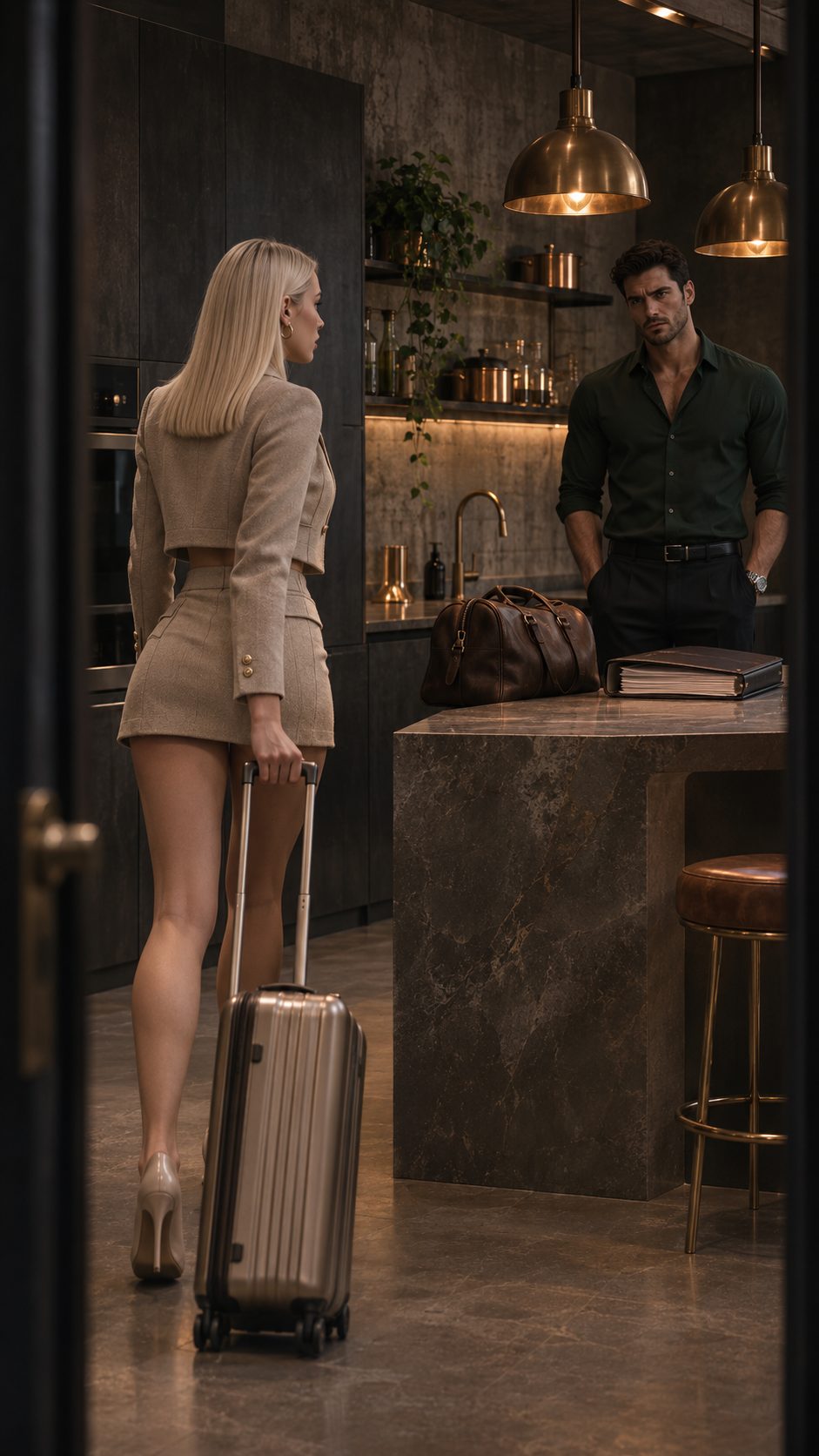
PROLOGUE: THE WEEKEND THAT CHANGED EVERYTHING
I thought spending a weekend in Miami with another man would make my husband fight for me, but when I returned, he was standing beside a packed bag, ready to walk out of our marriage.
And the folder on our kitchen counter terrified me more than his silence ever had.
Three days earlier, Nathan had found me packing my suitcase in our bedroom outside Richmond, Virginia.
“Where are you going?” he asked.
“Miami,” I answered, deliberately avoiding his eyes.
Then I delivered the detail I knew would hurt.
“Adrian is already there for work.”
Adrian Cole was a marketing consultant I’d met two months earlier at a conference in Atlanta.
He complimented me, remembered everything I said, and made me feel beautiful in ways I’d convinced myself Nathan no longer did.
Our marriage had become predictable, with Nathan leaving before eight, answering emails through dinner, and sometimes falling asleep while I talked.
I overlooked the coffee he made every morning, the gas he put in my car, and the countless little things he handled without being asked.
All I wanted was the attention Adrian gave me.
Nathan glanced at my dresses and the airline confirmation glowing on my phone.
“Is this really what you want?” he asked quietly.
His calmness made me furious.
“Aren’t you going to ask why I’m meeting another man?”
“Would my asking change anything?”
I stared at him, desperate to see anger or jealousy.
“You’re about to lose me, Nathan.”
He looked at me for several painful seconds.
Then he stepped aside.
“Have a safe flight.”
That was all.
By the time I landed at Miami International Airport, I’d already posted three photographs intended for exactly one person.
One showed Adrian and me laughing together, another featured cocktails overlooking South Beach, and the third showed his hand suspiciously close to mine.
Friday night, Adrian took me to an expensive rooftop restaurant overlooking Biscayne Bay.
I posted the sunset, our dinner, and a photograph with his arm wrapped around my waist.
Every notification made my heart jump.
But Nathan never called.
Saturday afternoon, Adrian caught me checking my phone beside the hotel pool.
“Still waiting for your husband to get jealous?” he asked.
“I’m not waiting for anything,” I lied.
“Then why do you keep checking?”
“Because I thought he’d at least care.”
Adrian shook his head.
“Maybe he’s tired of playing this game.”
I refused to believe that.
That evening, when Adrian reached for my hand, I let him hold it long enough to take another photograph.
I posted it immediately.
Still nothing.
By Sunday night, Miami’s excitement had turned into a sickening feeling I couldn’t explain.
When my flight landed in Virginia, I convinced myself Nathan was waiting at home, furious and ready to confront me.
Instead, I pulled into our driveway and found every light blazing.
Nathan stood in the kitchen beside a packed overnight bag.
A thick folder rested perfectly centered on the granite counter.
I dropped my suitcase.
“So now you’re finally going to say something?”
He looked at me without anger, desperation, or even jealousy.
“No,” he replied quietly.
I crossed my arms.
“Then what’s all this supposed to mean?”
Nathan rested one hand on the folder.
“You told me I was about to lose you.”
His eyes met mine.
“You’ve already lost me.”
For a moment, I almost laughed, convinced he was finally trying to frighten me into apologizing.
“Nathan, don’t be ridiculous.”
He pushed the folder toward me.
“What is this?”
“Everything you need to understand.”
I opened it and found several neatly organized documents.
Then my eyes landed on a single sentence at the top of the first page.
I read it once.
Then again.
My hands went cold as I realized Nathan hadn’t spent the weekend ignoring my photographs.
He had spent it preparing something.
“Nathan, wait,” I whispered.
But behind me, I heard him pick up his overnight bag.
And I hadn’t even turned to page two.
**CHAPTER 1: THE LOVE I STOPPED SEEING**
Three months before that Sunday night, I would have laughed if anyone suggested my marriage was heading toward divorce.
My name is Julia Mercer, and for seven years, I had been married to Nathan Mercer, a man everyone described as dependable, thoughtful, and almost impossibly patient.
Those descriptions were accurate, although somewhere along the way, I had started treating them as insults.
Dependable had become predictable.
Thoughtful had become boring.
Patient had become emotionally unavailable.
We lived in a comfortable two-story house outside Richmond, Virginia, with white kitchen cabinets, granite countertops, and a small backyard where Nathan insisted on planting flowers every spring.
Our life looked like something people were supposed to want.
We had good jobs, a manageable mortgage, two reliable cars, and an established routine that made almost every week resemble the one before it.
Nathan worked as a senior systems engineer for a technology company, a demanding position that regularly followed him home.
I worked in communications for a regional advertising agency, where I managed campaigns, coordinated clients, and spent my days surrounded by people who seemed endlessly excited about everything.
At the beginning of our marriage, those differences had felt complementary.
Nathan grounded me.
I brought spontaneity into his carefully organized world.
But over time, I started believing that grounding meant holding me back.
The first thing Nathan did every morning was make coffee.
He knew exactly how I liked mine, down to the amount of cream and the half teaspoon of sugar I refused to admit I still used.
On a Thursday morning in early spring, I came downstairs and found my travel mug waiting beside my keys.
“Morning,” he said.
“Your presentation is at ten, right?”
I looked up from my phone.
“How do you remember that?”
“You’ve been talking about it all week.”
I smiled faintly.
“Apparently someone listens.”
He gave me a puzzled look.
“Was that supposed to be a compliment?”
“It could be.”
He leaned across the counter and kissed my forehead.
“Good luck today.”
Then his work phone rang.
By the time I looked up again, he was standing by the window discussing an urgent technical problem with someone from his office.
I remember feeling abandoned.
It sounds ridiculous now.
He had remembered my presentation, prepared my coffee, wished me luck, and kissed me.
Yet all I noticed was that his attention had shifted somewhere else.
That evening, I came home excited because the presentation had gone exceptionally well.
My manager had praised my work, and a major client had requested that I lead its next campaign.
Nathan was sitting at the dining table with his laptop open.
“Guess what happened today?”
He looked up.
“What happened?”
I started explaining everything, from the client’s initial objections to the moment the entire conference room agreed with my proposal.
Halfway through, Nathan’s computer chimed.
His eyes moved toward the screen.
I stopped speaking.
He didn’t notice immediately.
“Then what happened?” he asked a few seconds later.
He frowned.
“You weren’t listening.”
“What did I just say?”
He hesitated.
I folded my arms.
“I’m sorry,” he said.
“We’re dealing with a major system failure, and I thought I could finish this while you talked.”
“That sounds romantic.”
“I wasn’t trying to be romantic.”
“Obviously.”
Nathan closed his laptop.
Tell me again.”
But I was already angry.
“No, thanks.”
“Julia, I want to hear it.”
“You should have wanted to hear it the first time.”
He exhaled slowly.
“You’re right.”
That should have been the beginning of a conversation.
Instead, I walked upstairs, leaving him alone at the table.
He brought me dinner twenty minutes later.
I told him I wasn’t hungry.
He left the plate outside our bedroom door.
At the time, I interpreted that gesture as evidence that he didn’t know how to communicate.
I never considered that I had also refused to communicate.
The following weekend, we attended a birthday dinner for my friend Leah.
Nathan spent most of the evening discussing home renovations with Leah’s husband, while I sat near the other guests and watched a younger couple laughing together.
The man kept touching his girlfriend’s hand.
He leaned close whenever she spoke.
He looked at her as if everyone else in the restaurant had disappeared.
I felt an ugly flash of envy.
On our drive home, I stared through the windshield.
“Do you remember when we used to be like that?”
“Like what?”
“Excited about each other.”
Nathan glanced over.
“I’m still excited about you.”
I laughed without humor.
“That’s convincing.”
“What do you want me to say?”
“Something that sounds like you mean it.”
He was quiet for a moment.
“I’m not sure how to answer that.”
“That’s the problem.”
He tightened his hands around the steering wheel.
“I know work has been difficult lately.”
“It’s always work.”
“I’m trying to keep things stable.”
“I didn’t marry you for stability.”
That hurt him.
I saw it immediately.
His jaw tightened, and his eyes returned to the road.
For the remainder of the drive, neither of us spoke.
When we arrived home, Nathan turned off the engine but didn’t get out.
“Julia, are you unhappy with me?”
The question was so direct that I felt exposed.
“I don’t know.”
“Then we need to talk about it.”
“Tomorrow.”
“Can we please not keep saying tomorrow?”
I opened my car door.
“I’m tired, Nathan.”
There was something in his voice I should have recognized.
Exhaustion.
Not indifference.
But I had already decided what our problem was.
Nathan no longer made me feel special.
Two weeks later, my agency sent me to a marketing conference in Atlanta.
The trip lasted three days, and I welcomed the opportunity to spend time somewhere other than our familiar house.
Before I left, Nathan checked the tires on my car, reminded me to bring my laptop charger, and drove me to the airport.
“You’re going to do great,” he said as he lifted my suitcase onto the curb.
“It’s just a conference.”
“You’ve been preparing for it for weeks.”
I shrugged.
He hugged me.
“Call when you land.”
I remember watching him drive away and feeling strangely relieved.
For three days, I wouldn’t have to think about our marriage.
I could be someone other than Nathan Mercer’s increasingly dissatisfied wife.
On the second afternoon of the conference, I attended a session about emotional storytelling in modern advertising.
The presenter asked the audience why people were drawn to certain brands.
A man sitting beside me leaned over and whispered, “Because they make people feel seen.”
He was handsome, confident, and wearing a perfectly tailored gray jacket.
“That’s an expensive way of describing basic psychology,” I whispered back.
He laughed.
“Then maybe you should be presenting instead.”
“Maybe I should.”
He extended his hand.
“Adrian Cole.”
“Julia Mercer.”
“Nice to meet you, Julia.”
He repeated my name as though it mattered.
And when I started talking, he put away his phone.
For the first time in months, someone gave me his undivided attention.
I didn’t understand how dangerous that feeling would become.
But when Adrian asked whether I wanted to continue our conversation over coffee, I said yes without hesitation.
And for the first time in seven years of marriage, I deliberately chose not to mention my husband.
**CHAPTER 2: THE MAN WHO KNEW EXACTLY WHAT TO SAY**
Adrian Cole was everything Nathan appeared not to be.
He was charming without seeming to try, attentive without appearing distracted, and confident enough to make ordinary conversations feel exciting.
Our first coffee in Atlanta lasted nearly two hours.
We discussed advertising, travel, difficult clients, favorite restaurants, and the strange ways people presented themselves online.
Adrian remembered details almost immediately.
When I mentioned that I loved old bookstores, he asked about my favorite one.
When I told him I had once wanted to become a novelist, he asked what had stopped me.
“Life,” I said.
“That’s a terrible answer.”
“It’s an honest one.”
“Then give me another honest answer.”
“About what?”
“Are you happy?”
The question surprised me.
I looked into my coffee.
“Sometimes.”
“Only sometimes?”
“Isn’t that normal?”
“Maybe,” he said.
“But you don’t sound convinced.”
I should have changed the subject.
Instead, I started talking about my marriage.
I told Adrian that Nathan was a good man but worked constantly.
I complained about forgotten conversations, quiet dinners, and weekends spent dealing with household responsibilities.
Adrian listened without interrupting.
When I finished, he said, “You sound lonely.”
Those three words affected me more than they should have.
Because I had been waiting for someone to say them.
“Maybe I am.”
“Then you deserve to feel less lonely.”
I didn’t ask whether he meant that as a friend.
I liked the uncertainty.
When the conference ended, Adrian suggested we exchange numbers because our companies might collaborate.
It sounded professional.
It was professional, at first.
The first messages concerned campaign strategies and presentations.
Then came jokes.
Then photographs of restaurants.
Then messages asking whether I was having a good day.
Within three weeks, Adrian knew when I was stressed, what made me laugh, and which clients frustrated me.
Nathan knew those things too.
But Nathan had learned them over years of living beside me, while Adrian made discovering them seem exciting.
One evening, I was sitting on our living room couch when Adrian sent a photograph of a bookstore in Chicago.
Thought of you.
I smiled at my phone.
Nathan noticed.
“What’s funny?”
“Must be a good nothing.”
I locked the screen.
“Just someone from work.”
He nodded and returned to the documents he was reviewing.
I felt irritated that he hadn’t asked another question.
Looking back, I understand how unfair that was.
I wanted Nathan to trust me until I wanted him to be suspicious.
I wanted his confidence until I needed jealousy.
I expected him to read emotions I refused to explain.
A few days later, Adrian called while I was driving home.
“Tell me something,” he said.
“Something?”
“What’s the most romantic thing anyone’s ever done for you?”
I thought about it.
There had been a time when Nathan drove six hours through a winter storm because my grandmother was hospitalized and I couldn’t reach her.
There had been the birthday when he arranged a surprise weekend in the mountains.
There had been hundreds of ordinary gestures that made my life easier.
But I didn’t mention those.
I can’t remember.”
Adrian was quiet for a second.
“That’s unfortunate.”
“Because you seem like someone who deserves to be remembered.”
I carried that sentence home like a secret gift.
That night, Nathan had cooked dinner.
Nothing elaborate.
Grilled chicken, roasted vegetables, and the garlic bread he knew I liked.
“Thought we’d eat together without screens tonight,” he said.
I stopped near the dining table.
“Where did that come from?”
“You said I haven’t been present enough.”
“So now you’re trying?”
His answer was simple.
I should have appreciated it.
Instead, I wondered why it had taken a complaint.
During dinner, he asked about my latest campaign.
I answered briefly.
He asked another question.
I checked my phone beneath the table.
“Can we put the phones away?”
I stared at him.
“Seriously?”
“I thought that’s what we wanted.”
“I didn’t realize dinner came with rules.”
His expression changed.
“It’s not a rule.”
“Then stop acting like you’re supervising me.”
Nathan leaned back.
“I’m trying to have dinner with my wife.”
“And I’m sitting right here.”
“Not really.”
I stood up.
“I’m not doing this.”
I left the table.
My phone vibrated before I reached the bedroom.
Adrian had sent another message.
Wish you were here.
This restaurant has your favorite dessert.
Downstairs, Nathan cleared the dishes alone.
The following morning, I found a note beside my coffee.
I’m sorry last night went badly.
I love you.
Let’s try again.
I read it twice.
Then I put it in a drawer.
I never answered.
Over the next month, Adrian became a regular presence in my days.
We never officially called what was happening an affair.
That distinction helped me avoid confronting it.
We hadn’t kissed.
We hadn’t slept together.
We weren’t meeting secretly in hotel rooms.
But I hid messages.
I anticipated his calls.
I compared him to Nathan constantly.
I gave Adrian the enthusiasm I withheld from my husband.
And I told myself that none of it counted because nothing physical had happened.
Leah noticed the change before I did.
We met for lunch one Wednesday, and she watched me smile at an incoming notification.
“Who’s that?”
“A consultant I met in Atlanta.”
“Does Nathan know about him?”
“He knows I work with consultants.”
“That wasn’t my question.”
I looked up.
“Don’t start.”
Leah put down her fork.
“Julia, are you involved with someone?”
“Emotionally?”
“You make it sound criminal.”
“I’m asking because you talk about Nathan like he’s an obstacle in your life.”
“He doesn’t pay attention to me anymore.”
“Have you told him that?”
“Constantly.”
“Have you told him what you actually need?”
I looked away.
Leah continued carefully.
“There’s a difference between saying you feel lonely and making someone prove they love you by guessing how to fix it.”
I didn’t want wisdom.
I wanted agreement.
So I changed the subject.
Two days later, Adrian called with news about a project in Miami.
He would be traveling there for several meetings and planned to stay through the weekend.
“You’d love it,” he said.
“I probably would.”
“Then come.”
“Just like that?”
“I’m married, Adrian.”
The ease of his response unsettled me.
He continued.
“I’m not telling you what to do.
I’m saying you deserve a weekend where someone notices whether you’re having a good time.”
I should have ended the conversation.
Instead, I imagined Nathan seeing photographs of me with another man.
I imagined his expression changing.
His voice shaking.
His sudden realization that I could leave.
And something inside me decided that perhaps fear could accomplish what conversation had failed to do.
“I’ll think about it,” I said.
But when Adrian sent the hotel details an hour later, I opened an airline website.
By midnight, I had purchased a ticket to Miami.
And I had begun planning the confrontation that would destroy my marriage.
**CHAPTER 3: YOU’RE ABOUT TO LOSE ME**
I didn’t tell Nathan about the Miami ticket immediately.
For three days, the confirmation remained hidden in my email while I rehearsed what I would say.
I imagined confronting him over dinner.
I imagined him looking wounded.
I imagined an argument that would end with him wrapping his arms around me and promising to change.
In every version, Nathan fought for me.
Not once did I imagine him letting me go.
On Thursday evening, I brought my suitcase into our bedroom and began packing.
I chose outfits carefully.
A navy dress for dinner.
A white skirt for photographs.
A cream blouse that looked effortless but wasn’t.
I laid everything across the bed.
Nathan appeared in the doorway carrying a glass of water.
He stopped.
“Where are you going?”
His eyes moved to the suitcase.
“Tomorrow morning.”
“That’s sudden.”
“Not really.”
“Is this for work?”
I looked directly at him.
“Adrian is already there for work.”
For several seconds, Nathan said nothing.
“Adrian Cole?” he asked.
“The consultant from Atlanta?”
“That’s the one.”
His expression remained controlled.
“Are you going there to see him?”
I lifted my chin.
“I want to have a good weekend.”
“With another man?”
“Maybe someone should pay attention to me.”
Nathan set the water down on the dresser.
“Julia, what are you asking me to do right now?”
“I’m not asking you to do anything.”
“Then why are we having this conversation?”
I felt anger rising because he wasn’t behaving as expected.
“Aren’t you going to tell me not to go?”
“Would you stay if I did?”
“That’s not the point.”
“Then what is the point?”
I hated that question.
Because I knew the answer.
I wanted him to beg.
I wanted him to become afraid.
But saying that aloud would have exposed the cruelty of what I was doing.
So I said something worse.
“You’re about to lose me, Nathan.”
He looked at me for a long time.
I could see him searching my face, perhaps looking for the woman he had married.
Finally, he asked, “Is this really what you want?”
I crossed my arms.
He nodded once.
Then he stepped aside.
“Have a safe flight.”
I stared at him.
“That’s it?”
“What else would you like me to say?”
He turned toward the hallway.
I wanted to call after him.
Instead, I zipped my suitcase loudly enough for him to hear.
That night, we slept in the same bed without touching.
Nathan lay facing the window.
I lay staring at the ceiling.
At some point, I whispered, “Are you awake?”
“Are you angry?”
He was silent for several seconds.
“I’m hurt.”
I turned toward him.
“Then why don’t you act like it?”
He rolled onto his back.
“What would that look like to you?”
“I don’t know.”
“Because I don’t know either.”
I had no answer.
He continued quietly.
“I’ve tried to talk to you, Julia.
Sometimes I get it wrong.
Sometimes I get distracted.
But lately, every conversation feels like a test I don’t understand.”
I felt defensive.
“You could make more effort.”
“Then why haven’t you?”
“I thought I was making an effort.”
“You think making coffee and fixing things is enough?”
His voice tightened.
“But I also thought those things mattered.”
I looked away.
He added, “I can’t compete with someone whose only responsibility is making you feel interesting for a few hours.”
That sentence stayed with me.
I almost apologized.
But pride had become more important than honesty.
“Maybe you should have thought about that sooner.”
Nathan turned away again.
Neither of us slept much.
At five the next morning, I got dressed.
My suitcase waited near the front door.
Nathan was already downstairs.
A fresh cup of coffee sat on the kitchen counter.
Beside it was my phone charger.
“You forgot this,” he said.
I looked at the charger.
He didn’t offer to drive me.
I didn’t ask.
For a moment, we stood in the kitchen facing each other.
I wanted one final scene.
A declaration.
A desperate request.
Nathan only said, “Travel safely.”
I picked up my suitcase.
“Goodbye, Julia.”
There was something different about the way he said my name.
It sounded complete.
I didn’t recognize that until later.
At the airport, I checked my phone repeatedly.
No message.
I boarded the plane.
Still nothing.
As the aircraft climbed above Virginia, I opened the photographs from the Atlanta conference.
I found one where Adrian was standing close beside me.
I posted it with a caption about new adventures.
Then I waited.
By the time I arrived at Miami International Airport, I’d uploaded another picture.
Adrian greeted me outside the terminal.
He looked pleased.
“You actually came.”
“I told you I would.”
He took my suitcase.
“Ready for a memorable weekend?”
“Absolutely.”
We stopped for drinks near South Beach.
The weather was beautiful.
The ocean shimmered beyond the buildings.
Adrian ordered cocktails and complimented my dress.
I photographed everything.
He leaned close for a picture.
I made sure the image looked intimate.
Then I posted it.
For the next twenty minutes, I hardly heard anything Adrian said.
I was watching my notifications.
My friends reacted.
A coworker commented.
Leah sent a private message asking whether I knew what I was doing.
Nathan remained silent.
Adrian noticed my distraction.
“Everything okay?”
“Of course.”
“You keep checking your phone.”
He raised an eyebrow.
“On a Friday evening?”
I smiled without answering.
That night, I stood on my hotel balcony overlooking the city.
Cars moved below like tiny ribbons of light.
Somewhere outside, music floated through the warm air.
I opened Nathan’s contact.
His photograph appeared on the screen.
It was an old picture of him laughing while we were hiking in the mountains.
I stared at it longer than I intended.
Then I locked the phone.
If he wanted me, I told myself, he would call.
I had made the danger obvious.
Now he had to prove he cared.
I went to sleep believing the following day would finally bring the reaction I deserved.
What I didn’t know was that back in Virginia, Nathan had already stopped asking how to keep me.
He was beginning to ask how to leave.
**CHAPTER 4: THE WEEKEND THAT BECAME A PERFORMANCE**
Friday night’s dinner took place at an elegant rooftop restaurant overlooking Biscayne Bay.
The city glittered beneath us.
Warm music drifted across the terrace.
Adrian ordered an expensive bottle of wine and told me I looked beautiful.
I smiled because I knew I was supposed to enjoy this.
Everything about the evening matched the fantasy I had constructed.
The setting was glamorous.
The conversation was easy.
The man across from me never looked at his phone while I spoke.
Yet I felt strangely dissatisfied.
Adrian noticed.
“You’ve barely touched your dinner.”
“I’m not that hungry.”
“Are you nervous?”
“Why would I be nervous?”
He leaned back.
“Maybe because we’re here together.”
I looked toward the skyline.
“I’m allowed to have friends.”
“Of course.”
“Then don’t make it sound complicated.”
He raised his hands.
“I’m not the one making it complicated.”
I knew he was right.
But admitting it would have required me to examine why I had come.
So I changed the subject and asked him to take another photograph.
He stood beside me near the railing.
His arm settled around my waist.
I leaned into him just enough to make the picture suggest something more.
Then I uploaded it.
Adrian watched.
“Who are you hoping sees that?”
“Everyone.”
“Everyone?”
He didn’t answer immediately.
Then he said, “You don’t have to perform for me, Julia.”
The word perform made my stomach tighten.
But he looked unconvinced.
Back in Virginia, Nathan still hadn’t contacted me.
I checked my messages before going to sleep.
Saturday morning, I woke to bright sunlight and a view of the ocean.
I should have felt excited.
Instead, my first thought was that Nathan hadn’t called.
I opened our old messages.
There were reminders about groceries.
A photograph of the flowers blooming in our backyard.
A message asking whether I wanted dinner before he left work.
The last one had been sent on Wednesday.
I hadn’t answered it.
For several minutes, I scrolled through our conversation.
There were hundreds of small gestures I’d forgotten.
Have a good meeting.
Your car is ready.
I picked up your prescription.
Don’t forget your umbrella.
I love you.
I stopped at that last message.
It was two weeks old.
My response had been a thumbs-up emoji.
I locked the phone.
Adrian met me beside the hotel pool that afternoon.
He ordered drinks and asked whether I wanted to visit an art gallery.
“Maybe later,” I said.
“You seem distracted.”
“I’m fine.”
He glanced at my phone.
“Still waiting for your husband to get jealous?”
I laughed too quickly.
“Don’t be ridiculous.”
“You’ve checked that phone at least fifteen times.”
“I have responsibilities.”
“You’re on vacation.”
I looked away.
He lowered his voice.
“Did you come here because you wanted to spend time with me, or because you wanted him to know you were spending time with me?”
The question landed like a slap.
“That’s unfair.”
“I’m allowed to enjoy myself.”
“Absolutely.”
“Then stop interrogating me.”
Adrian studied me.
“I think you want him to chase you.”
I said nothing.
He continued.
“And I’m starting to think I’m standing in the middle of an argument that began long before we met.”
For the first time, I saw the weekend through someone else’s eyes.
I wasn’t simply having fun.
I was turning another person into a weapon.
But instead of accepting that, I grew angry.
“You invited me.”
“You knew I was married.”
“Then don’t suddenly pretend you’re innocent.”
His face changed.
“I never said I was.”
That silenced me.
After a while, he added, “Whatever this is, Julia, you need to decide what you actually want.”
I stared at the blue water.
“I want to feel wanted.”
I couldn’t answer.
“Or by Nathan?”
I looked at him.
He already knew.
That evening, we walked near the hotel pool.
The sky had turned violet.
Adrian reached for my hand.
I allowed him to hold it.
Then I asked someone nearby to take our photograph.
I posted the picture immediately.
Adrian watched me.
“Did that help?”
“Posting it.”
I looked down at my phone.
The honesty surprised us both.
He released my hand.
We sat quietly for several minutes.
Finally, he said, “I don’t think this weekend is making you happy.”
I stared across the water.
“I thought it would.”
“Then maybe there’s something you need to face.”
I didn’t reply.
Later, back in my room, Leah called.
I answered reluctantly.
“Julia, what are you doing?”
“Enjoying Miami.”
“With Adrian?”
“Does Nathan know?”
“Did you tell him you were going?”
Leah was silent.
Then she asked, “Are you trying to end your marriage?”
“Then why are you acting like you are?”
I sat on the edge of the bed.
“He doesn’t care anymore.”
“Has he said that?”
“He hasn’t said anything.”
“Maybe because he doesn’t know what answer you want.”
I closed my eyes.
“I wanted him to fight for me.”
Leah’s voice softened.
“Julia, marriage isn’t supposed to be a hostage negotiation.”
I felt tears gathering.
“What if he really doesn’t care?”
“Then you need an honest conversation.”
“And if he does?”
“Then you’ve just hurt someone who loves you because you wanted proof.”
After we hung up, I called Nathan.
Or rather, I opened his contact and placed my thumb over the button.
I stayed that way for nearly a minute.
Then I put the phone down.
I told myself I would explain everything when I returned.
Sunday arrived.
Adrian drove me to the airport.
We said goodbye outside the terminal.
There was no kiss.
No promise to see each other again.
Just an awkward silence between two people who had discovered they wanted different things from the same weekend.
“Take care of yourself, Julia,” he said.
Before leaving, he added, “Whatever happens when you get home, don’t pretend you didn’t make a choice.”
I watched his car disappear.
On the flight to Virginia, I imagined Nathan waiting in our kitchen.
I imagined shouting.
A difficult reconciliation.
I even prepared an apology.
But when I arrived home, the lights were on.
Nathan stood beside his packed overnight bag.
A thick folder waited on the counter.
And when he told me I had already lost him, I understood that the confrontation I had been preparing for wasn’t the one I was about to have.
He pushed the folder toward me.
I opened the cover.
And suddenly, I wished more than anything that I had never boarded the plane.
**CHAPTER 5: THE SENTENCE THAT ENDED EVERYTHING**
The first sentence in Nathan’s folder was simple.
“I am requesting a formal separation because I can no longer remain in a marriage where my love must be proven through humiliation.”
I read it twice.
Then a third time.
Formal separation.
The words seemed impossible.
For seven years, our marriage had been the permanent thing around which everything else revolved.
We had changed jobs.
Lost relatives.
Survived financial worries.
Moved houses.
Argued over money, vacations, and the correct way to load a dishwasher.
But even when we were unhappy, I had believed there was an invisible agreement that neither of us would actually leave.
Now Nathan was standing beside an overnight bag, and the agreement existed only in my imagination.
I looked up.
“Is this supposed to scare me?”
He shook his head.
“Then why would you do this?”
“Because I meant what I said.”
“Nathan, you can’t just end our marriage because I went to Miami.”
His expression tightened.
“That’s not why.”
“Then explain it.”
He leaned against the counter.
“Julia, you told me another man was waiting for you in Florida.”
“You wanted me to know you were going there to see him.”
“Yes, but—”
“You told me I was about to lose you.”
I swallowed.
“I was angry.”
“And then you spent the weekend posting photographs designed to make me believe you were with him.”
I looked down.
“We didn’t—”
“I haven’t asked what you did physically.”
That stopped me.
Nathan continued.
“Do you understand why?”
I shook my head.
“Because you already told me what you wanted me to feel.”
His words were quiet.
That made them worse.
“You wanted me frightened,” he said.
I felt tears gathering.
“I wanted you to care.”
“I did care.”
“Then why didn’t you call?”
He stared at me.
“Because I wasn’t going to beg my wife not to humiliate me.”
The kitchen seemed suddenly too bright.
Every overhead light reflected off the granite.
Our house looked painfully ordinary.
A coffee mug sat in the drying rack.
A grocery list was attached to the refrigerator.
The clock above the stove continued ticking.
All the familiar pieces of our life were still there.
Except the certainty that Nathan would remain.
I turned the page.
The second document was a proposed separation agreement prepared with legal assistance.
It outlined practical issues we would need to address.
Shared accounts.
Household expenses.
Possessions.
Future communication.
Nothing had been finalized.
There was no court order pretending our marriage had already ended.
But the preparation was unmistakable.
Nathan had spent the weekend finding out how to separate our lives responsibly.
“You talked to a lawyer?”
I whispered.
“While I was in Miami?”
I stared at him.
“You decided all this in two days?”
He shook his head.
“No, Julia.”
That answer frightened me more than anything else.
“What does that mean?”
“It means I’ve been worried about us for a long time.”
“Then why didn’t you say something?”
I opened my mouth.
He continued before I could speak.
“I asked if you were unhappy.
I asked what you needed.
I asked whether we could talk without turning everything into an argument.”
I remembered those conversations.
I had dismissed them.
“I know I haven’t been perfect,” he said.
“I’ve worked too much.
I’ve been tired.
Sometimes I haven’t listened the way I should.”
I looked at him desperately.
“Then you understand why I felt lonely.”
For a moment, hope flared.
Then he added, “But loneliness doesn’t give us permission to hurt someone deliberately.”
I couldn’t answer.
Nathan looked toward the folder.
“There’s a letter at the back.”
I found it.
His handwriting covered two pages.
I recognized the careful way he formed each letter.
He wrote about how he had loved me since we met at a friend’s gathering in Richmond.
How he’d once believed we could survive anything as long as we remained honest.
How frightened he’d become of saying the wrong thing around me.
How he had started feeling that every gesture was being measured against a standard he could never reach.
One paragraph made my hands shake.
I cannot make you feel loved if every expression of love that isn’t dramatic enough becomes evidence that I don’t care.
I covered my mouth.
Another paragraph followed.
I do not know what happened between you and Adrian in Miami, and I will not spend my life trying to imagine it.
What I know is that you wanted me to believe something was happening, because you thought hurting me would make me prove how much I loved you.
Tears blurred the page.
At the bottom, he had written:
I hope you find the happiness you’re looking for, Julia.
I wanted to be part of it.
But I can’t keep losing myself trying to convince you that I belong there.
I looked up.
Nathan was lifting his bag.
He stopped.
He remained silent.
“I’m sorry.”
His face changed slightly.
For one painful second, I saw the man who had comforted me through every difficult moment of our marriage.
“I believe you’re sorry,” he said.
“Then don’t leave.”
“Those aren’t the same thing.”
I stepped toward him.
“Nathan, I made a mistake.”
“You made a series of choices.”
I flinched.
“Please don’t say it like that.”
“How should I say it?”
I couldn’t answer.
He picked up his keys.
“I’m staying with my brother for now.”
“For how long?”
“I don’t know.”
“Are you coming back?”
Nathan stared at me.
“I can’t promise that.”
I started crying.
He looked wounded by the sight of my tears.
But he didn’t move toward me.
That was when I understood something I had refused to consider.
Love didn’t disappear the moment trust broke.
Sometimes it remained, painful and helpless, while the person carrying it chose to walk away.
“Nathan,” I whispered.
He paused at the kitchen doorway.
“I never wanted to lose you.”
He looked back.
“Then you should have stopped treating me like someone you couldn’t lose.”
The front door closed a moment later.
I stood alone in the kitchen.
The folder lay open.
His coffee mug was still beside the sink.
I walked toward the window and watched his car disappear down our street.
Then I looked at the documents again.
For the first time since meeting Adrian, I wasn’t thinking about whether Nathan loved me.
I was thinking about what I had done to the man who did.
And I was beginning to understand that an apology wouldn’t be enough to bring him home.
**CHAPTER 6: THE TRUTH I HAD BEEN RUNNING FROM**
I didn’t sleep that night.
I sat at our kitchen table until the sun came through the windows, reading Nathan’s letter again and again.
Each time, I found something new.
Not an accusation.
Not an insult.
Just evidence of a loneliness I had never noticed because I had been so consumed by my own.
At seven in the morning, I opened the refrigerator.
Nathan had left a container of prepared meals on the middle shelf.
A handwritten note was attached.
These should last a few days.
Please remember to eat.
I stared at it.
Then I started crying so hard that I had to sit on the kitchen floor.
Even while preparing to leave me, Nathan had made sure I wouldn’t have to worry about dinner.
For years, I had dismissed those gestures as meaningless.
Now I understood that I had been standing inside his love while demanding to see it somewhere else.
My phone rang at nine.
I watched his name appear.
I almost ignored the call.
Instead, I answered.
“Hey,” he said.
“Made it home okay?”
“How was everything?”
I closed my eyes.
“Nathan left.”
Then Adrian said, “I’m sorry.”
“He wants a separation.”
“I thought he’d be jealous.”
Adrian exhaled.
The words stung.
“You knew?”
“I suspected.”
“Why didn’t you stop me?”
He was quiet for a moment.
“Because you’re an adult.”
I covered my face.
“And because I wanted to spend time with you.”
His honesty surprised me.
“I wasn’t completely innocent either,” he said.
“I knew you were married.
I knew you were unhappy.
I liked the attention.”
I stared at the ceiling.
“So what was this?”
He answered carefully.
“I think we both enjoyed feeling chosen.”
That sentence stayed with me.
“I can’t keep talking to you,” I said.
“I understand.”
“I’m not blaming you for what happened.”
“You shouldn’t.”
“But I can’t pretend this was harmless.”
“No,” he said.
“It wasn’t.”
We said goodbye without promises or dramatic declarations.
After the call, I deleted our private conversations and removed the photographs I had posted from Miami.
Not because deleting them erased what happened.
I did it because I no longer wanted to present my husband’s pain as part of an exciting weekend.
Around noon, Leah arrived.
I hadn’t asked her to come.
She knocked twice and walked in when I opened the door.
One look at my face told her everything.
“Where’s Nathan?”
She wrapped her arms around me.
I started crying again.
For several minutes, we stood in the hallway.
Then she led me into the kitchen and made tea.
I told her about the folder.
The lawyer.
The letter.
Nathan’s overnight bag.
I told her that he hadn’t shouted or threatened me.
He had simply made a decision.
Leah listened quietly.
When I finished, she asked, “What do you want to do?”
“Get him back.”
I stared at her.
“Because I love him.”
The question hurt.
“Of course I do.”
“Then why did you spend months making him feel like he was never enough?”
I looked away.
Leah continued gently.
“I’m not saying you didn’t love him, Julia.
I’m asking whether you loved him as a person or loved knowing he would always be there.”
I had no answer.
That afternoon, I began writing Nathan a message.
I wrote that Miami had been a mistake.
That I hadn’t slept with Adrian.
That I had only wanted his attention.
Then I read it again.
Everything was true.
But the message still sounded like a defense.
I deleted it.
I opened a blank page instead.
Nathan, you were right about something I didn’t want to admit.
I went to Miami because I wanted to hurt you enough to make you chase me.
I used Adrian, the photographs, and your love as part of a test you never agreed to take.
I stopped typing.
My hands were shaking.
I continued.
I didn’t sleep with Adrian, but I know that doesn’t erase the emotional relationship I built with him or the choices I made to make you believe I had crossed even further boundaries.
I reread the words.
For once, I wasn’t trying to make myself look better.
You had every right to feel hurt.
You had every right to leave.
I’m sorry I made you believe that loving me required accepting humiliation.
Then I wrote one final sentence.
I want to become someone who understands love without needing to destroy it first, whether or not you ever decide to come home.
I sent the message.
Nathan didn’t respond that day.
Or the next.
On Wednesday, I contacted a counselor whose name Leah had given me.
Evelyn Parker listened while I described our marriage.
I spent the first twenty minutes explaining Nathan’s work schedule.
His distracted dinners.
His lack of romance.
Then she asked, “What did you do when you felt neglected?”
I hesitated.
“I withdrew.”
“I stopped talking.”
“And when he tried to reconnect?”
I looked at my hands.
“Sometimes I rejected him.”
“Because I wanted him to understand how much he’d hurt me.”
She nodded.
“So you wanted him to experience your pain rather than understand it.”
The words were difficult to hear.
“What did you hope that would accomplish?”
“I thought he’d change.”
“And did he?”
“He tried.”
“Did you let those attempts matter?”
I shook my head.
For the first time, I said aloud something I had never admitted.
“I think I kept moving the finish line.”
Parker remained silent.
I wiped my eyes.
“He could never do enough because I didn’t want enough.
I wanted proof that he would keep trying no matter how badly I treated him.”
The question opened something painful.
I thought about how secure Nathan had always made me feel.
How accustomed I had become to his reliability.
How I had mistaken the absence of fear for the absence of passion.
“I wanted to know I was worth fighting for,” I whispered.
“Even if it meant creating a fight?”
When the appointment ended, I sat in my car for nearly half an hour.
I had gone there hoping to learn how to convince Nathan to return.
Instead, I had begun learning why I needed someone to convince me I was loved.
That evening, my phone vibrated.
A message from Nathan.
I read your letter.
My heart raced.
A second message followed.
Thank you for telling me the truth.
I need more time.
I started typing.
Then stopped.
For the first time, I understood that loving him might mean respecting a boundary even when it frightened me.
So I answered with only four words.
Take all you need.
And I meant them.
**CHAPTER 7: LEARNING TO LOVE WITHOUT BEING CHASED**
The first month without Nathan was harder than I expected.
Not because I couldn’t manage the house.
I knew how to pay bills, arrange repairs, and take care of myself.
What hurt was discovering how much of our life had been built through small acts of consideration.
The coffee machine was silent in the mornings.
The driveway remained empty after six.
No one asked how my presentation had gone.
No one left a glass of water beside my bed when I fell asleep reading.
I had spent months complaining that our marriage lacked excitement.
Now I would have given anything for one ordinary Tuesday evening.
But I resisted the temptation to turn that realization into another demand.
Nathan didn’t owe me a return simply because I finally appreciated what he had given.
We communicated mostly about practical matters.
The mortgage.
Household accounts.
Items he needed from home.
His brother Peter was giving him space to stay while he considered longer-term arrangements.
Nathan never used those conversations to punish me.
He remained polite.
Sometimes painfully polite.
One Saturday morning, he came to collect books from his office.
I had prepared myself carefully.
I wore jeans and a simple sweater.
I didn’t dress to impress him.
I didn’t prepare a speech.
I just opened the door.
“Hi,” I said.
He looked tired.
I wanted to hug him.
“Your books are upstairs,” I said.
He walked past me.
For several minutes, I listened to him moving around the office.
When he returned, he was carrying a cardboard box.
“Do you want help?”
“I’ve got it.”
He stopped near the kitchen.
“Have you been okay?”
The question nearly broke me.
“Some days.”
He looked down.
I gathered my courage.
“Can I ask you something?”
He hesitated.
“Do you hate me?”
Nathan looked genuinely surprised.
“Then what do you feel?”
He set the box down.
“A lot of things.”
“Like what?”
Relief sometimes.”
“I don’t have to wonder whether I’m disappointing you every time I walk into a room.”
I felt the words like a physical blow.
He continued.
“Then I feel guilty for being relieved.”
“You shouldn’t.”
I swallowed.
“I’m sorry I made home feel that way.”
He studied me.
“You sound different.”
“I’ve been trying to understand what I did.”
“Because you want me back?”
“At first.”
“Now because I don’t want to become that person again.”
Something shifted in his expression.
Not forgiveness.
But perhaps the smallest recognition that I was speaking honestly.
He picked up the box.
“I hope you keep doing that.”
He left a few minutes later.
I stood at the door until his car disappeared.
Then I returned to the kitchen and opened my journal.
I wrote down everything I wanted to say but hadn’t.
I missed you.
I still love you.
Please come home.
Then I wrote something underneath.
None of those feelings gives me the right to rush him.
Over the following weeks, I continued counseling.
I stopped checking social media for signs that Nathan was lonely.
I stopped asking mutual friends whether he had mentioned me.
I stopped treating his silence as a challenge.
Instead, I focused on understanding my own behavior.
I learned how often I had confused attention with affection.
How frequently I had interpreted ordinary exhaustion as rejection.
How easily I had used sarcasm when I was afraid to ask for reassurance.
I also began recognizing the genuine problems in our marriage.
Nathan had worked too much.
He had sometimes assumed that providing stability was the same as being emotionally present.
There had been conversations he should have prioritized and moments when he had retreated into work because difficult emotions made him uncomfortable.
Those things mattered.
But they didn’t excuse Miami.
They were problems two people could have worked on together.
My betrayal had been a choice I made alone.
Nearly three months after Nathan moved out, he called unexpectedly.
My heart jumped.
“Do you have a minute?”
“Of course.”
“I’ve been thinking about your letter.”
I sat down.
“And about what happened before Miami.”
I held my breath.
“I wasn’t completely present in our marriage,” he said.
“Let me finish.”
I went silent.
“I used work to avoid some difficult conversations.
Sometimes I knew you were upset, and I waited for the feeling to pass because I didn’t know how to fix it.”
I stared at the wall.
“You didn’t deserve everything that happened,” I whispered.
“Please don’t take responsibility for my choices.”
“But I also don’t want to pretend our marriage was perfect until you ruined it.”
Tears filled my eyes.
“What are you saying?”
“I’m saying that if we ever talk seriously about us again, we need to talk about all of it.”
My heart began racing.
“Would you want that?”
“I don’t know.”
His honesty hurt.
But I respected it.
Then he said, “Would you be willing to attend one counseling session together?”
I closed my eyes.
“I’m not promising reconciliation.”
“I understand.”
“I mean it, Julia.”
He was quiet.
Then he said something I hadn’t heard from him in months.
“I miss you sometimes.”
A tear slipped down my cheek.
“I miss you too.”
For a moment, neither of us spoke.
Then Nathan added, “Missing someone doesn’t automatically make returning a good idea.”
“But maybe we can find out whether there’s anything worth rebuilding.”
After the call ended, I sat motionless for several minutes.
Three months earlier, I would have interpreted his words as a victory.
A sign that my plan had finally worked.
But there was nothing victorious about it.
We had hurt each other.
We had lost something important.
And if there was any chance of rebuilding, it would require more patience than either of us had shown before.
I opened my calendar and marked our counseling appointment.
For the first time in a long while, I wasn’t preparing a performance.
I was preparing to listen.
**CHAPTER 8: THE MARRIAGE WE CHOSE TO BUILD AGAIN**
Our first counseling session together was uncomfortable.
Nathan sat at the opposite end of a small couch.
I noticed the distance immediately.
There had been a time when he would automatically sit close enough for our knees to touch.
Now there was a space between us that felt larger than the room.
Parker began by asking why we had agreed to meet.
Nathan answered first.
“I want to understand whether our marriage can become something healthy again.”
I looked at him.
“And you?” she asked me.
“I want to repair what I damaged.”
She nodded.
“Those are related goals, but they aren’t identical.”
The next hour was painful.
Nathan spoke about feeling unappreciated.
I spoke about loneliness.
He admitted that he had used work as a refuge from uncomfortable conversations.
I admitted that I had turned dissatisfaction into resentment instead of honestly asking for change.
Then we talked about Adrian.
I told the truth without minimizing anything.
The messages.
The emotional intimacy.
The photographs.
The calculated decision to make Nathan jealous.
Nathan listened without interrupting.
When I finished, he stared at the carpet.
“I need you to understand something,” he said.
“I wasn’t afraid of losing you because you had become impossible to please.”
His voice trembled slightly.
“I was afraid I’d already lost the woman I married, and I didn’t know how to reach her.”
I started crying.
“I was still there.”
He looked at me.
“Then why did I feel like you were always somewhere else?”
I had no answer.
Not one that could undo the past.
Parker allowed the silence to remain.
Eventually, I whispered, “Because I stopped choosing you.”
Nathan’s eyes filled with tears.
It was the first time I had seen him cry since he moved out.
I wanted to reach for him.
But I kept my hands in my lap.
“I don’t want to do that again,” I said.
He nodded slowly.
“I don’t either.”
That session didn’t save our marriage.
Neither did the next one.
Or the one after that.
Rebuilding trust turned out to be nothing like the dramatic reconciliation I had imagined during my weekend in Miami.
There were no grand speeches that erased everything.
No magical evening when Nathan suddenly forgot the photographs.
No moment when one apology made the pain disappear.
Instead, we met for counseling twice a month.
Sometimes we talked over coffee afterward.
Sometimes we argued.
Sometimes Nathan needed distance again.
And sometimes I went home feeling that we had made no progress at all.
But slowly, our conversations began to change.
I learned to say, “I feel lonely tonight,” instead of, “You never care about me.”
Nathan learned to say, “I need an hour to finish this, but then I want to hear about your day,” instead of disappearing behind his laptop.
Neither change was particularly dramatic.
Both mattered.
Four months after our first session, Nathan asked whether I wanted to take a walk.
We met at a park outside Richmond on a cool Saturday afternoon.
The trees were beginning to change color.
We walked along a quiet path, talking about work and ordinary things.
At one point, Nathan laughed at something I said.
The sound startled me.
I hadn’t realized how much I missed it.
“You okay?” he asked.
“It’s just nice hearing you laugh.”
He smiled faintly.
“I do still laugh.”
We continued walking.
Eventually, I asked, “Do you think about Miami?”
“Sometimes.”
I looked down.
“I’m sorry.”
“I know you are.”
“Does it still hurt?”
He stopped walking.
“Julia, I need you to know something.”
I looked at him.
“I don’t want a marriage where you’re constantly apologizing.”
My eyes filled with tears.
“I don’t know how to stop feeling guilty.”
“Then keep working on that.”
He took a breath.
“Because if we try again, I don’t want us living inside that weekend forever.”
I stared at him.
“If we try again?”
He gave me a small, uncertain smile.
“I said if.”
For the first time, I smiled without trying to hide my hope.
A few weeks later, Nathan signed a lease on a small apartment.
The news hurt, although I understood.
He needed a home that wasn’t dependent on the outcome of our reconciliation.
When he told me, I asked whether it meant he had decided against returning.
“No,” he said.
“It means I want whatever happens next to be a choice, not something we do because it’s easier than changing.”
I thought about that for a long time.
For years, I had treated our marriage as permanent.
Then I had nearly destroyed it trying to force Nathan to prove that permanence.
Now I was learning that genuine commitment couldn’t be guaranteed through fear.
It had to be freely given.
Winter arrived.
We celebrated the holidays separately but exchanged thoughtful gifts.
For Christmas, I gave Nathan a notebook filled with small memories from our marriage.
Not dramatic declarations.
Just ordinary moments I had once overlooked.
The morning he taught me how to change a tire.
The night we stayed awake watching a thunderstorm.
The weekend he painted our bedroom while I was away because he knew how much I hated the old color.
At the back, I wrote:
I used to think love had to be extraordinary every day.
Now I understand that the extraordinary part was how often you chose me in ordinary ways.
Nathan read it without speaking.
Then he closed the notebook.
“Thank you,” he said.
A week later, he invited me to dinner.
Not a counseling appointment.
Not a discussion about paperwork.
A real date.
We went to a small restaurant near Richmond where we’d eaten shortly after getting engaged.
I arrived early.
When Nathan walked in, he was carrying a single white rose.
I laughed softly.
“What’s that for?”
“I thought you might like one.”
He sat down across from me.
For the first time in months, we talked without constantly watching for old wounds.
We remembered our first apartment.
Our terrible attempts at cooking.
The vacations that had gone wrong and somehow become our favorite memories.
At the end of dinner, Nathan walked me to my car.
He stood beside me for a moment.
“I still love you.”
My breath caught.
“I love you too.”
He looked nervous.
“I don’t know whether we can make this work.”
“But I’d like to keep trying.”
I stepped closer.
“So would I.”
He reached for my hand.
This time, there was no camera.
No photograph.
No audience.
No other man waiting in the background.
Just Nathan’s hand holding mine.
And I realized that for the first time in a very long while, I didn’t need anyone else to see it.
I only needed to be present.
The following months were not perfect.
There were difficult conversations.
Moments of uncertainty.
Days when Nathan needed reassurance that I wasn’t hiding anything.
Days when I needed to remember that his occasional quietness wasn’t a sign of rejection.
We kept attending counseling.
We practiced honesty even when it was uncomfortable.
And we learned that forgiveness was not a single decision.
It was something our actions had to support repeatedly.
Nearly a year after Miami, Nathan came over on a Sunday morning.
I was standing in the kitchen when he arrived.
The same kitchen where he had once handed me the folder that nearly ended our marriage.
He placed his keys on the counter.
“Can we talk?” he asked.
My stomach tightened.
“Of course.”
He looked around the room.
Then he smiled faintly.
“I’ve been thinking about moving back.”
For several seconds, I couldn’t speak.
“Are you serious?”
He took my hand.
“But I need us to be clear about something.”
“Anything.”
“We’re not going back to the way things were.”
“I don’t want to.”
“I don’t want either of us pretending that love means never being unhappy.”
“And I don’t want us testing each other instead of talking.”
I squeezed his hand.
“Neither do I.”
He looked into my eyes.
“Then I want to come home.”
I started crying.
He laughed softly.
“Those are happy tears, right?”
“Very happy.”
He pulled me into his arms.
For the first time in nearly a year, I rested my head against his chest without wondering whether the embrace meant something it didn’t.
We stood there for a long time.
There were still things to discuss.
Practical arrangements.
Boundaries.
The documents we’d kept carefully filed rather than pretending they had never existed.
But our next steps belonged to both of us.
We were choosing them together.
That evening, Nathan brought his overnight bag into the house.
The same bag he’d carried out after I returned from Miami.
He placed it beside the stairs.
I watched him for a moment.
Then I asked, “Do you want some coffee?”
“At eight at night?”
“That sounds good.”
I went into the kitchen.
Nathan followed me.
We moved around each other naturally, finding cups, heating water, and putting things away.
At one point, he reached past me for the sugar.
His hand brushed mine.
Neither of us moved away.
I looked up.
“Can I tell you something?”
“I used to think you didn’t get jealous because you didn’t love me enough.”
Nathan’s expression softened.
“Now I know you trusted me enough not to believe our marriage needed to be a competition.”
He looked down briefly.
“I did trust you.”
“And I’m learning to trust you again.”
I swallowed.
“I won’t take that for granted.”
He stepped closer.
I smiled through my tears.
Then I said the words I should have said long before Miami.
“Thank you for loving me in all the ways I was too blind to notice.”
Nathan kissed my forehead.
“And thank you for finally telling me what you need instead of making me guess.”
We stood together in the quiet kitchen.
No one was trying to win.
No one was threatening to leave.
No one was waiting for jealousy to prove anything.
There would still be difficult days.
We would still make mistakes.
But this time, we had chosen to build a marriage where mistakes could be discussed before they became weapons.
The following morning, I woke before Nathan.
I went downstairs and made two cups of coffee.
One with cream and half a teaspoon of sugar.
The other black.
When Nathan came into the kitchen, he stopped at the sight of the mugs.
“What’s this?” he asked.
“Breakfast.”
He looked at the coffee.
“You remembered.”
“Of course I did.”
He kissed me.
And as we stood together by the window, watching sunlight spread across our backyard, I finally understood what I had nearly thrown away.
Love wasn’t measured by how desperately someone chased you when you walked toward another person.
It was measured by the care you gave, the truth you told, the boundaries you respected, and the choice you made to stay when staying was healthy and freely chosen.
I had gone to Miami hoping to make my husband jealous.
I had come home believing his silence meant he didn’t care.
But Nathan’s silence had taught me something no argument ever could.
A person could love you deeply and still refuse to be treated badly.
And when that person gave you another chance, the greatest thing you could do was not make grand promises about forever.
It was to honor that chance in the small, ordinary moments that made up a life.
I slipped my hand into Nathan’s.
He squeezed it gently.
There was no need for photographs.
No need for an audience.
And no need to prove that either of us was afraid of losing the other.
We had already learned what that loss felt like.
Now we were learning how to live differently.
✓ Lynn R. Adams
PROLOGUE: THE WEEKEND THAT CHANGED EVERYTHING I thought spending a weekend in Miami with another man would make my husband fight for me, but when I returned, he was standing beside a packed bag, read…