Chapter 9: The Final Confrontation in the Courtroom212
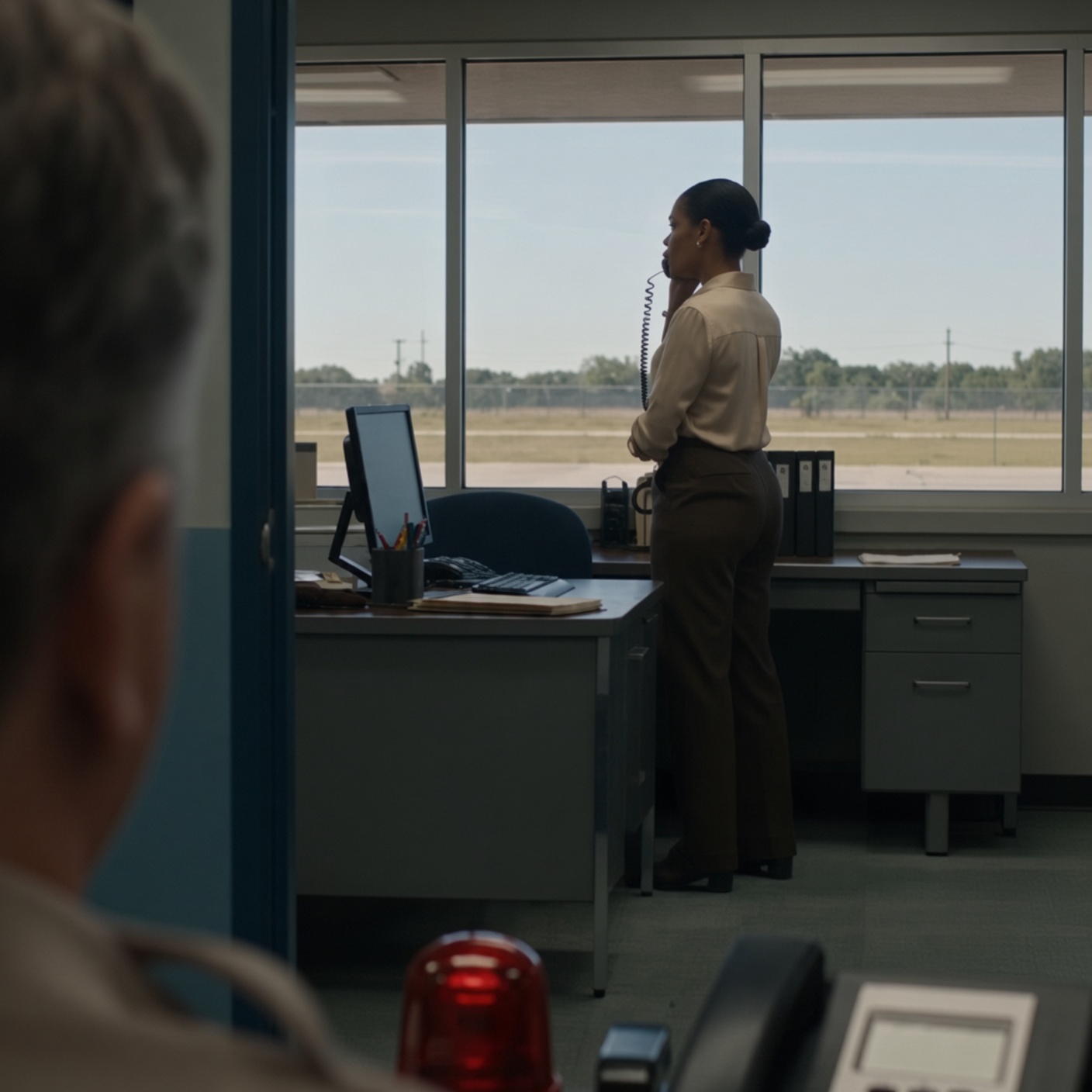
By the time Sheriff Boyd Cleary entered the courthouse for trial, nearly ten months had passed since the traffic stop that changed his life.
He was no longer greeted by a line of deputies outside the building.
No reporters called him a hero.
No county official rushed forward to shake his hand.
He had been placed on leave from operational duties under the applicable proceedings after the criminal charges were filed, and the department was functioning under interim leadership while his status was contested.
The courtroom was quiet when he arrived.
Boyd wore a navy suit.
His attorney carried two thick folders.
Behind them sat several longtime supporters.
Across the aisle were people whose complaints had once disappeared into departmental files.
Sarah Hayes sat beside Rebecca Shaw.
Marisol Rivera was two rows behind them.
Andrew Bell attended with his wife.
Toby Miller waited outside the courtroom under a witness instruction.
He had not been promised immunity for everything he had done.
His attorney had negotiated procedural protections for his testimony, but potential professional and legal consequences remained.
The grand jury had returned charges against Boyd involving the allegedly unlawful detention and knowingly false official reporting connected to Sarah’s arrest.
Prosecutors had chosen charges supported by the evidence they believed they could prove.
Other allegations remained under separate review.
The trial was not a referendum on every traffic stop Boyd had ever conducted.
It was a criminal proceeding in which the state carried the burden of proving the charged offenses beyond a reasonable doubt.
Sarah understood that.
She had testified in formal proceedings during her military career.
She knew the difference between believing a person had acted wrongly and proving a specific criminal violation under applicable law.
Yet when Boyd entered, she felt the same tension in her stomach that she had felt beside the highway.
Rebecca noticed.
“Do you need a moment?”
Sarah shook her head.
“No.”
“Are you sure?”
Sarah watched Boyd take his seat.
“Yes.”
She was not there because she wanted to watch him suffer.
She was there because she wanted the truth tested somewhere he could not control the rules.
The prosecutor began with the timeline.
At p.m., the silver Chevrolet Malibu entered the reduced-speed zone.
The radar recorded forty-four miles per hour.
The posted limit was forty-five.
The vehicle remained within its lane in the available video.
Boyd initiated the stop.
Sarah provided her documents.
She questioned the stated reason.
He ordered her out.
He handcuffed her.
Then he reported conduct that the recordings appeared to contradict.
The prosecutor did not raise his voice.
He displayed each piece of evidence in sequence.
His argument was simple.
“Authority does not create a violation where none exists. And the power to make an arrest carries a duty to describe the facts truthfully.”
The defense responded by emphasizing officer discretion.
Boyd’s attorney argued that officers must sometimes make rapid decisions based on observations that cameras do not fully capture.
He challenged whether the recording showed every relevant moment.
He questioned Sarah’s tone.
He contended that Boyd had perceived her warning as threatening.
And he reminded the jury that an arrest could be mistaken without necessarily constituting a crime.
Sarah listened.
Some of those principles were true.
The fact that a sheriff had misjudged a situation would not automatically establish criminal guilt.
The difficult question was whether Boyd had knowingly used his authority without lawful justification and then fabricated the official account.
The prosecution called Captain Evelyn Park.
She explained how state investigators became involved and how they preserved evidence.
The defense questioned the audit history.
Could local administrators modify records?
Yes.
Did that automatically mean every modification was dishonest?
No.
Could a digital file be misunderstood?
Yes.
Park answered carefully.
But she also explained that the regional dispatch system maintained synchronized records independent of Boyd’s administrative access.
The original radar information remained available.
The patrol video had been forensically copied and authenticated.
The technical experts had examined file integrity, timestamps, and system logs.
The defense’s objections to the recording’s authenticity had been considered through evidentiary hearings, and the court had admitted relevant portions after hearing the foundation for them.
There had been no credible evidence that the patrol audio was fabricated.
When the recording played, Sarah felt her fingers tighten around the edge of her seat.
She heard her own voice.
Calm.
Measured.
Almost painfully controlled.
Then Boyd’s voice.
You’ve got one more opportunity to stop running your mouth.
The courtroom remained silent.
Sarah watched the video of herself stepping out of the Malibu.
She saw Boyd seize her wrist.
She saw the handcuffs close.
For a moment, she felt the pressure again.
She had expected that.
What surprised her was the feeling that followed.
Relief.
The event was no longer trapped inside her memory.
Other people could see it.
They could hear what she had heard.
They could compare the sheriff’s report against what had actually happened.
When Boyd’s recorded voice described the “attitude package,” a juror looked up sharply.
The prosecutor paused the video.
“Captain Park, did the recording show General Hayes physically resisting the arrest?”
“No.”
“Did it show her threatening the sheriff with violence?”
“No.”
“Did the available footage show the vehicle crossing the lane line?”
“No.”
The defense challenged the limits of those observations.
Park acknowledged them.
But she did not retreat from what the evidence actually established.
Next came the regional dispatch records.
The prosecutor displayed Boyd’s entry acknowledging no speed violation.
Then the note describing Sarah as requesting justification.
Then his decision to escalate to custodial action.
The words were not dramatic.
They were worse.
They reduced an unlawful decision to a routine administrative entry.
The defense argued that the entries represented shorthand and did not capture all the officer’s observations.
The jury listened.
Sarah watched the forewoman make a note.
The next witness was Marisol Rivera.
Her testimony was limited to matters the judge ruled relevant to the issues being tried.
She described her previous encounter with Boyd and the complaint she filed afterward.
The defense questioned her recollection and the dismissal of her charges.
Marisol did not exaggerate.
When she did not remember something, she said so.
When asked whether she had been angry after her arrest, she answered honestly.
“Yes.”
“Then you agree your emotions may have influenced your interpretation?”
“My emotions influenced how I felt about being arrested. They didn’t change what happened.”
The defense attorney paused.
Marisol continued.
“I wanted someone to check the facts. That’s why I filed the complaint.”
Her voice remained steady.
After stepping down, she sat beside her husband.
Sarah reached over and squeezed her shoulder.
Andrew Bell testified about internal warnings and his departure from the sheriff’s department.
He explained the records he had preserved and the concerns he had raised.
On cross-examination, the defense emphasized his conflict with Boyd and questioned whether resentment had influenced his interpretation of events.
Andrew acknowledged that he had become angry.
“I was angry because the reports didn’t match what I’d seen.”
“Were you determined to damage Sheriff Cleary’s reputation?”
“No.”
“Yet you collected information about his arrests.”
“Yes.”
“Why?”
Andrew looked toward the jury.
“Because people were being arrested, and the paperwork wasn’t telling the whole story.”
The defense questioned his record access.
Andrew admitted that he had not followed every internal documentation requirement perfectly.
He did not claim otherwise.
The honesty made his testimony harder to dismiss as a simple vendetta.
Then Toby Miller entered.
He looked smaller without his uniform.
Sarah watched him take the witness stand.
The prosecutor began with his employment history and responsibilities.
Toby described the booking process on the day of Sarah’s arrest.
He identified the property inventory, the arrest narrative, and the sheriff’s instructions.
“Did you personally observe General Hayes resist arrest?”
“No.”
“Then why did you enter the resistance-related allegations into the booking record?”
“Because Sheriff Cleary instructed me to.”
“Did he provide factual details?”
“He said she had been combative.”
“Did you have any independent basis to verify that statement?”
“No.”
Toby swallowed.
The prosecutor continued.
“Did the sheriff pressure you to describe her behavior in a particular way?”
“Yes.”
“What did he say?”
Toby repeated the warning about his employment and family.
The courtroom remained quiet.
Then the prosecutor asked about Andrew Bell.
Toby glanced toward Andrew.
He answered carefully.
He admitted signing a misleading disciplinary statement.
He admitted that he had questioned the accusations before signing.
He admitted failing to report conduct he knew was improper.
The prosecutor did not minimize those admissions.
Neither did Toby.
“Why are you testifying today?” the prosecutor asked.
Toby looked toward the jury.
“Because I helped make false information look official. And I don’t want to keep doing that.”
On cross-examination, Boyd’s attorney approached him slowly.
“You’re hoping prosecutors will treat you more favorably because you’re cooperating, aren’t you?”
“I hope they’ll consider that I told the truth.”
“So you have something to gain.”
“Yes.”
“Your own conduct is under review?”
“Yes.”
“You lost your position?”
“Yes.”
“You signed misleading documents?”
“Yes.”
The attorney leaned forward.
“And now you’re asking this jury to believe you?”
Toby took a breath.
“I’m asking them to look at the records and decide whether what I’m saying matches them.”
The attorney paused.
He had expected a defensive answer.
Toby offered none.
After testimony concluded for the day, Sarah stepped into the hallway.
Toby stood near a window.
He looked exhausted.
“Deputy Miller,” she said.
He turned.
“General.”
“You told the truth.”
“I should have done it sooner.”
“Yes,” Sarah answered.
He looked surprised.
She continued.
“Both things can be true.”
Toby nodded slowly.
“I don’t know what’s going to happen to me.”
“Neither do I.”
He glanced toward the courtroom.
“Do you think he’ll be convicted?”
Sarah followed his gaze.
“That’s for the jury.”
Toby looked down.
“I used to think loyalty meant protecting the person who gave you an opportunity.”
Sarah considered that.
“Loyalty can be honorable. But it becomes dangerous when someone convinces you that honesty is betrayal.”
Toby swallowed.
“Andrew hasn’t forgiven me.”
“He may never.”
“I know.”
“Then keep telling the truth anyway.”
Toby nodded.
It was not absolution.
Sarah had no authority to grant it.
It was simply recognition that accountability was a continuing choice.
The next day, Sarah took the witness stand.
The prosecutor asked her to describe the stop in her own words.
She spoke about the speed-limit change.
The radar.
Boyd’s questions.
The accusation concerning the yellow line.
Her requests for clarification.
The order to exit the vehicle.
The handcuffs.
She described the discomfort around her wrists without exaggerating the injury.
She explained the secure communications device and why its confiscation required an authorized security notification.
Then the defense attorney rose.
“General Hayes, you’re accustomed to giving orders, correct?”
“In the appropriate circumstances, yes.”
“And you’re accustomed to people obeying them?”
“I’m accustomed to lawful orders being followed within an established chain of command.”
“Did you consider Sheriff Cleary beneath you?”
“No.”
“You warned him to reconsider his decision.”
“Yes.”
“Did you intend to intimidate him?”
“No.”
“Yet you knew you were a general.”
“Yes.”
“And you knew contacting a military command center could cause concern.”
“I knew I had a duty to report the loss of control over government communications equipment.”
The attorney moved closer.
“Isn’t it true that you wanted to teach Sheriff Cleary a lesson?”
Sarah paused.
She looked directly at him.
“No.”
“Then what did you want?”
“I wanted him to tell me why he had stopped me.”
The attorney waited.
Sarah continued.
“When that didn’t happen, I wanted him to follow the law.”
“Are you saying you never became angry?”
“I became angry.”
“Then your behavior wasn’t entirely calm?”
“Anger is an emotion. It does not establish that I committed an offense.”
A faint movement passed through the jury box.
The attorney tried another approach.
“Would you have pursued this matter so aggressively if you were not a general?”
Sarah considered the question.
“I don’t know whether I would have had the resources.”
“So your rank mattered.”
“It mattered to what people were willing to do after the arrest. It should not have mattered to what the sheriff was permitted to do during it.”
The attorney lowered his notes.
He asked several more questions.
Sarah answered each one.
When she stepped down, her legs felt weak.
Rebecca met her in the corridor.
“You did well.”
Sarah looked toward the courtroom doors.
“I told them what happened.”
“That was enough.”
The defense then presented Boyd’s testimony.
Against the advice that might have persuaded a more cautious defendant, he chose to take the stand.
He described decades of service and his belief that traffic enforcement required firm control.
He insisted that Sarah’s manner had seemed confrontational.
He said he perceived her warning as an attempt to influence him.
But the prosecutor’s cross-examination returned repeatedly to the evidence.
“Sheriff, your radar recorded forty-four?”
“Yes.”
“In a forty-five-mile-per-hour zone?”
“Yes.”
“You stated that the vehicle crossed the lane line?”
“Yes.”
“The recording doesn’t show that?”
“Not from that angle.”
“You charged resistance?”
“Yes.”
“Yet the video shows her complying?”
“That’s your interpretation.”
The prosecutor displayed Boyd’s patrol-car statement.
She wanted a reason. I’ll give her three.
“Sheriff, whose voice is that?”
Boyd looked toward the monitor.
“Mine.”
“What did you mean?”
“I was frustrated.”
“Were you describing three offenses you’d actually witnessed?”
Boyd hesitated.
“I believed she’d violated the law.”
“Which three offenses?”
He began explaining.
The prosecutor returned to the video.
One by one, the explanations failed to fit the recorded sequence.
Finally, the prosecutor asked the question Sarah had wanted answered since the highway.
“Sheriff Cleary, what specific lawful basis did you have to initiate this stop?”
Boyd stared toward the jury.
For the first time, he appeared unable to find an answer.
The courtroom remained still.
He eventually repeated that he believed the Malibu had crossed the line.
The prosecutor displayed the available view of the vehicle maintaining its lane.
Then he sat down.
The trial concluded after further testimony and closing arguments.
The defense urged the jury not to criminalize a difficult officer-safety judgment.
The prosecutor argued that the evidence showed something more than a mistake: an intentional detention followed by knowingly false reporting.
The judge instructed the jurors on the law, the presumption of innocence, and the state’s burden of proof.
Then they began deliberating.
Hours passed.
Sarah waited in a small conference room with Rebecca.
Marisol brought coffee.
Andrew sat quietly near the door.
Toby remained elsewhere with his attorney.
No one tried to predict the outcome.
Late in the afternoon, a court officer appeared.
“The jury has sent a note.”
Rebecca stood.
Sarah’s heart began pounding.
“What does it say?”
The officer looked toward the courtroom.
“They’ve reached a verdict.”
Sarah rose slowly.
Across the building, Boyd Cleary was already being escorted back into the courtroom.
For nearly ten months, he had insisted the law would ultimately vindicate him.
Now twelve ordinary citizens were about to answer the question he had spent his career refusing to ask.
What happens when the person holding the badge is the one who breaks the rules?
✓ Lynn R. Adams
By the time Sheriff Boyd Cleary entered the courthouse for trial, nearly ten months had passed since the traffic stop that changed his life. He was no longer greeted by a line of deputies outside the…