Chapter 8: When the Truth Became Dangerous212
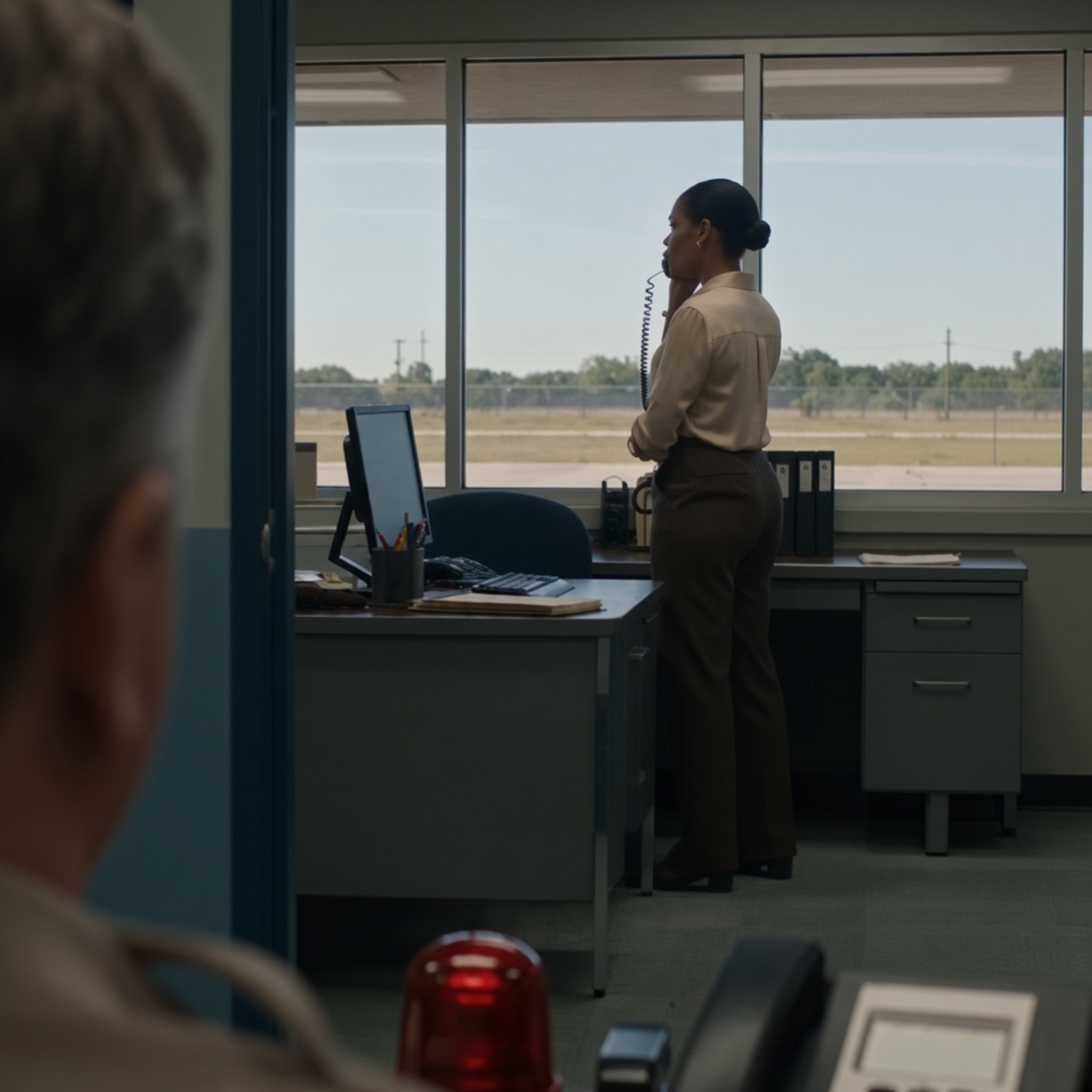
Four months after Sarah Reynolds was arrested, the county offered to settle her civil claim.
The proposed agreement contained a payment, reimbursement of certain expenses, and language stating that the settlement was not an admission of wrongdoing.
Clara Monroe placed the document on her desk.
Sarah read it carefully.
She had returned to Georgia for a scheduled legal consultation.
Outside, October rain streaked the office windows.
“Is this a reasonable offer?” Sarah asked.
“Financially, it isn’t insignificant,” Clara answered. “But its terms matter more than the amount.”
Sarah turned the page.
The agreement required her to release the county and certain officials from the claims identified in the settlement.
It also proposed restrictions on her future public statements concerning disputed facts.
Clara explained the provisions and the limitations that might apply to a public entity.
“They’re seeking finality,” she said.
“For whom?”
“For the county, primarily.”
Sarah looked down.
“Does this include an acknowledgment that the stop was improper?”
“No.”
“A commitment to independent review?”
“Not in the current draft.”
“Any change to the complaint process?”
“No.”
Sarah closed the document.
“Then what are they offering?”
“Compensation for resolving your personal legal claims.”
Sarah remained silent.
Clara leaned forward.
“I want you to understand something. You’re not obligated to carry a county’s problems on your shoulders. A settlement can be a legitimate form of resolution.”
“I know.”
“You’ve already spent months dealing with lawyers, hearings, and public criticism. There is nothing dishonorable about choosing peace.”
Sarah looked toward the window.
“I don’t think I’ve found peace yet.”
Clara nodded.
“Then we negotiate or proceed.”
Sarah placed the agreement on the desk.
“I won’t sign this version.”
She expected relief.
Instead, she felt a wave of exhaustion.
Every legal decision seemed to create another decision.
Every discovery led to another document.
Her professional life continued, demanding the concentration and judgment it always had.
But Oak Haven occupied a corner of her mind she couldn’t close.
The sheriff had taken less than an hour of her freedom.
Recovering the truth was taking months.
The pressure was spreading beyond Sarah.
Brenda Lawson had not returned to work.
Her suspension became a termination after an internal personnel process that Brenda and her attorney challenged.
The official explanation involved unauthorized record access and failure to follow supervisory instructions.
Brenda maintained that she had acted within her evidence-preservation duties.
Her attorney initiated the appropriate employment claims.
But those procedures moved slowly.
Meanwhile, ordinary bills continued arriving.
Martin’s medical appointments required insurance arrangements they hadn’t expected to need.
The couple withdrew money from savings they had intended to use for retirement.
Brenda began avoiding the grocery store during busy hours.
People recognized her.
Some thanked her.
Others accused her of betraying the sheriff.
Once, a woman who had known Brenda for fifteen years walked past her without speaking.
Brenda stood beside the produce aisle, holding a bag of oranges, and suddenly felt tears rising.
She put the oranges back.
Then she went home.
Martin found her sitting at the kitchen table.
“Bad day?”
She nodded.
He sat opposite her.
“Tell me.”
She looked at him.
“I thought people knew me.”
“They do.”
“No. They know the version of me that never caused trouble.”
Martin waited.
She rubbed her forehead.
“I answered their emergency calls. I helped them find their missing relatives. I worked through storms when the roads were flooded.”
Her voice broke.
“And now half of them act like I’ve committed some terrible crime because I wouldn’t let a recording disappear.”
Martin reached for her hand.
“Brenda, the people who only liked you when you were quiet didn’t really know you.”
She looked away.
He squeezed her fingers.
“You don’t have to win everybody back.”
She began crying.
For the first time since her dismissal, she let herself acknowledge that doing the right thing could still cost her something irreplaceable.
Deputy Miller was also paying a price.
He had been placed on administrative leave during the investigation and later resigned rather than continue under the same leadership.
His own conduct remained under review.
His attorney had warned him that admitting an unsupported stop and inaccurate reporting could expose him to professional discipline and potential criminal consequences.
Miller understood.
He no longer spoke about becoming sheriff someday.
He no longer imagined a career built on promotions and public recognition.
He worked temporary shifts at an equipment warehouse while the investigations continued.
Some former colleagues avoided him.
Others contacted him privately to say they wished they had spoken up too.
Those messages didn’t comfort him.
They reminded him how many people had known enough to be uncomfortable and had chosen silence.
One evening, his mother found him repairing an old lawn mower in her garage.
He had spent three hours working on an engine that didn’t need much attention.
She stood in the doorway.
“Jared.”
He looked up.
“Hey, Mom.”
“Come inside. Dinner’s ready.”
“Almost finished.”
She watched him.
“You’ve been working on that thing since lunch.”
“Just trying to get it right.”
His mother stepped closer.
“You can’t fix everything by tightening another bolt.”
He looked away.
She sat on a stool beside him.
“Your father and I were proud when you became a deputy.”
Miller swallowed.
“I know.”
“We’re still proud that you’re telling the truth.”
“I should’ve told it sooner.”
“Yes,” she said.
He looked at her, startled by the directness.
She continued.
“You should have.”
His eyes filled.
“But pretending you didn’t make a mistake won’t help you become a better man.”
He put down the wrench.
“I don’t know what happens next.”
“Neither do I.”
“What if I can’t work in law enforcement again?”
She considered the question.
“Then you’ll find another way to do something worthwhile.”
Miller stared at the floor.
“Mom, I let them arrest a woman who hadn’t done anything.”
His mother reached for his hand.
“I know.”
“I stood there.”
“I know.”
He began to cry.
She didn’t tell him he was innocent.
She didn’t say his intentions were enough.
She simply remained beside him while he faced what he had done.
It was the kindest response he could have received.
And the most difficult.
Ryker’s supporters, meanwhile, had organized around the belief that the sheriff was being persecuted.
A local political committee raised money for his legal defense.
Its s described him as a lawman standing against federal interference.
Some supporters claimed the Pentagon had pressured the county.
Others dismissed the preserved radio recording as a routine conversation taken out of context.
Ryker encouraged that interpretation.
But his public confidence concealed growing problems.
The independent review had identified deficiencies in several complaint investigations.
Additional motorists had come forward.
The disputed patrol clip from his television interview had been traced to a separate traffic incident recorded months earlier.
The vehicle resembled Sarah’s rental.
It was not Sarah’s car.
Investigators documented how the clip had been retrieved and supplied for public release.
Ryker denied knowing it was unrelated.
His attorney argued that an employee had made an administrative mistake.
But the public release records placed the request under the sheriff’s authority.
The discovery damaged his credibility.
It also intensified questions about whether his department had knowingly presented misleading evidence.
Margaret Keene had become increasingly unwilling to rely on Ryker’s office without independent verification.
She referred the relevant findings to authorities outside the sheriff’s chain of command.
Ryker reacted with fury.
He called her personally.
“You’re supposed to work with law enforcement.”
“I do,” Keene answered.
“Then why are you helping people who want to destroy my department?”
“Because I won’t ignore evidence that official records may have been falsified.”
He lowered his voice.
“You know what happens when people stop trusting the police?”
“Yes,” she said. “I know exactly what happens.”
“Then stop encouraging it.”
“Thomas, trust doesn’t survive fabricated evidence.”
For several seconds, neither spoke.
Then Ryker said, “You’ll regret choosing their side.”
Keene’s response was immediate.
“This isn’t about sides.”
She ended the call.
Afterward, she sat alone in her office and reviewed the old complaint memorandum.
She had spent years believing that flawed cases could be corrected through careful prosecution.
Now she was confronting a more painful possibility.
Sometimes refusing to prosecute a bad case wasn’t enough.
Sometimes the system that produced it needed to be investigated.
Sarah learned about the false television clip while sitting in Evelyn’s kitchen.
Clara called to explain the forensic findings.
“The video was from another stop,” she said.
Sarah closed her eyes.
“Are you certain?”
“The available source records identify a different incident. The location and date don’t match yours.”
Sarah remembered the television interview.
The sheriff standing before the flag.
The confidence with which he had presented the images.
“He knew people would believe it,” she said.
“We can’t establish his personal knowledge merely from the public release. That remains part of the investigation.”
Sarah nodded.
“I understand.”
Clara continued.
“The important thing is that the clip doesn’t establish the driving allegation against you.”
After the call, Evelyn found Sarah standing beside the sink.
“Another problem?”
Sarah turned.
“More evidence.”
“Good evidence?”
“Evidence that the sheriff’s public story wasn’t accurate.”
Evelyn watched her.
“Then why aren’t you smiling?”
Sarah leaned against the counter.
“Because people believed it.”
“People believe all kinds of things.”
“I’ve had strangers tell me I dishonored my uniform. That I’m using my rank to bully a small-town sheriff. That I should’ve stayed quiet.”
Evelyn stepped closer.
“Do you believe any of them?”
“No.”
“Then why are you letting them speak louder than you know is right?”
Sarah looked at her aunt.
For several seconds, she couldn’t answer.
Then she said, “Because I’m tired.”
Evelyn’s expression softened.
Sarah continued.
“I’m tired of proving that I remember correctly. I’m tired of explaining that I didn’t resist. I’m tired of watching people defend a man they’ve never questioned because they like the way he looks in a parade.”
Her voice broke.
“I’ve spent my whole adult life learning how to be strong enough for everyone else.”
Evelyn embraced her.
“Then you don’t have to be strong in this kitchen.”
Sarah held her tightly.
For a moment, she allowed herself to be the exhausted niece who had only wanted to come home for a quiet weekend.
As the civil case moved toward trial, Ryker’s defense attorneys sought broad discovery concerning Sarah’s employment, travel, and communications.
Some requests were ordinary.
Others reached into areas unrelated to the traffic stop.
Clara challenged the overbroad demands and sought protective rulings.
Sarah’s military counsel addressed any potential security concerns through established procedures.
No classified operational information was produced.
But the experience unsettled Sarah.
Ryker’s defense was attempting to turn her entire life into a subject of examination.
Her past decisions.
Her travel schedule.
Her professional reputation.
Her personal communications.
She understood that litigation required relevant discovery.
She also understood how exhausting it could be to defend the truth when an opposing party had every incentive to make the process painful.
Clara reviewed the strategy with her.
“We can seek limits on irrelevant or improper questioning,” she said. “But some aspects of your background may be explored.”
Sarah nodded.
“I’m prepared.”
“Preparation isn’t the same as being unaffected.”
“I know.”
Clara studied her.
“You can still consider a reasonable settlement if the terms change.”
Sarah looked at the folder.
“Would settling prevent the separate investigations?”
“No. Those are not yours to terminate.”
“Would it help Brenda?”
“Not directly.”
“Denise?”
“Not directly.”
Sarah leaned back.
“I need some time.”
Clara nodded.
“Take it.”
Two weeks later, Sarah attended a preliminary civil hearing.
The judge addressed evidence preservation, discovery disputes, and the schedule for further proceedings.
The preserved radio recording was a central issue.
Ryker’s attorneys challenged aspects of its handling and sought to limit the inferences that could be drawn from it.
Clara argued that the archive records supported authentication and that the relevant statements were directly connected to the disputed stop.
The judge reserved certain rulings for a fuller evidentiary record.
No one received everything they wanted.
Outside the courtroom, Sarah encountered Jared Miller.
He stood beside his attorney.
He looked thinner than when she had last seen him.
“General,” he said.
“Mr. Miller.”
The formal address startled him.
He no longer wore a badge.
“I wanted to tell you something.”
Clara remained nearby.
Miller hesitated.
“My lawyer says I may have to testify about my own misconduct.”
Sarah nodded.
“I understand.”
“I might face charges.”
“That’s a matter for the appropriate authorities.”
He looked down.
“I know.”
Then he raised his eyes.
“I still intend to tell the truth.”
Sarah studied him.
“Even if it doesn’t help you?”
“Yes.”
She believed he meant it.
But before she could answer, Robert Ellis stepped forward.
“Jared, we need to go.”
Miller nodded.
He turned to leave.
Then he stopped.
“General Reynolds?”
“Yes?”
“I wish I’d been the officer you deserved that afternoon.”
Sarah felt something tighten in her chest.
“So do I,” she answered.
He walked away.
That evening, Clara received a call from Miller’s attorney.
His voice was strained.
“Clara, we have a development.”
“What kind?”
“Investigators are considering charges related to the stop and the original report. Jared may be advised to assert his right against self-incrimination in certain proceedings.”
Clara sat straighter.
“Has he changed his account?”
“No.”
“Will he testify?”
“We haven’t made a final decision. I can’t expose my client to unnecessary criminal liability.”
Clara understood.
But she also understood the consequences.
Miller was the person who could describe what he saw before the stop.
His testimony could establish how Ryker’s instructions had been understood and followed.
Without it, the case would still contain substantial documentary evidence.
But a critical firsthand account might be unavailable.
After ending the call, Clara contacted Sarah.
She explained the situation without blaming Miller or his attorney.
Sarah listened quietly.
“So he might not testify.”
“He may assert his rights. We have to respect that possibility.”
“And the recording?”
“We’ll continue pursuing its admission and the surrounding evidence.”
Sarah stared at the photograph of her mother on Evelyn’s wall.
For months, she had watched people begin telling the truth.
Now, just as the legal proceedings approached their most important stage, fear was threatening to silence one of the central witnesses again.
Clara’s voice softened.
“Sarah, I need to know whether you’re still prepared to proceed.”
Sarah looked toward the darkened window.
She could accept a settlement.
She could return to the Pentagon and allow the county’s separate investigations to continue.
She could protect herself from another year of public scrutiny.
Or she could continue a civil case whose outcome remained uncertain, without knowing whether the deputy who had finally confessed would be able to repeat that confession under oath.
She held the phone tightly.
Then she asked one question.
“If I stop now, what happens to the evidence we’ve fought to preserve?”
Clara was silent for a moment.
“Some of it would remain relevant to the separate investigations. But your civil case would no longer provide a forum for resolving your claims.”
Sarah closed her eyes.
She thought of the steel door.
The red marks on her wrists.
The women who had been told to be quiet.
And the young deputy who had already allowed fear to determine one terrible decision.
When she opened her eyes, her voice was steady.
“Then I’m not finished.”
But neither woman knew that the next decision would force Sarah to face something even harder than an arrogant sheriff.
She would have to decide whether justice required her to forgive a man whose silence had helped put her in a cell.
✓ Lynn R. Adams
Four months after Sarah Reynolds was arrested, the county offered to settle her civil claim. The proposed agreement contained a payment, reimbursement of certain expenses, and language stating that t…