Chapter 8: THE CHOICE BEFORE THE FIRE DIED 251
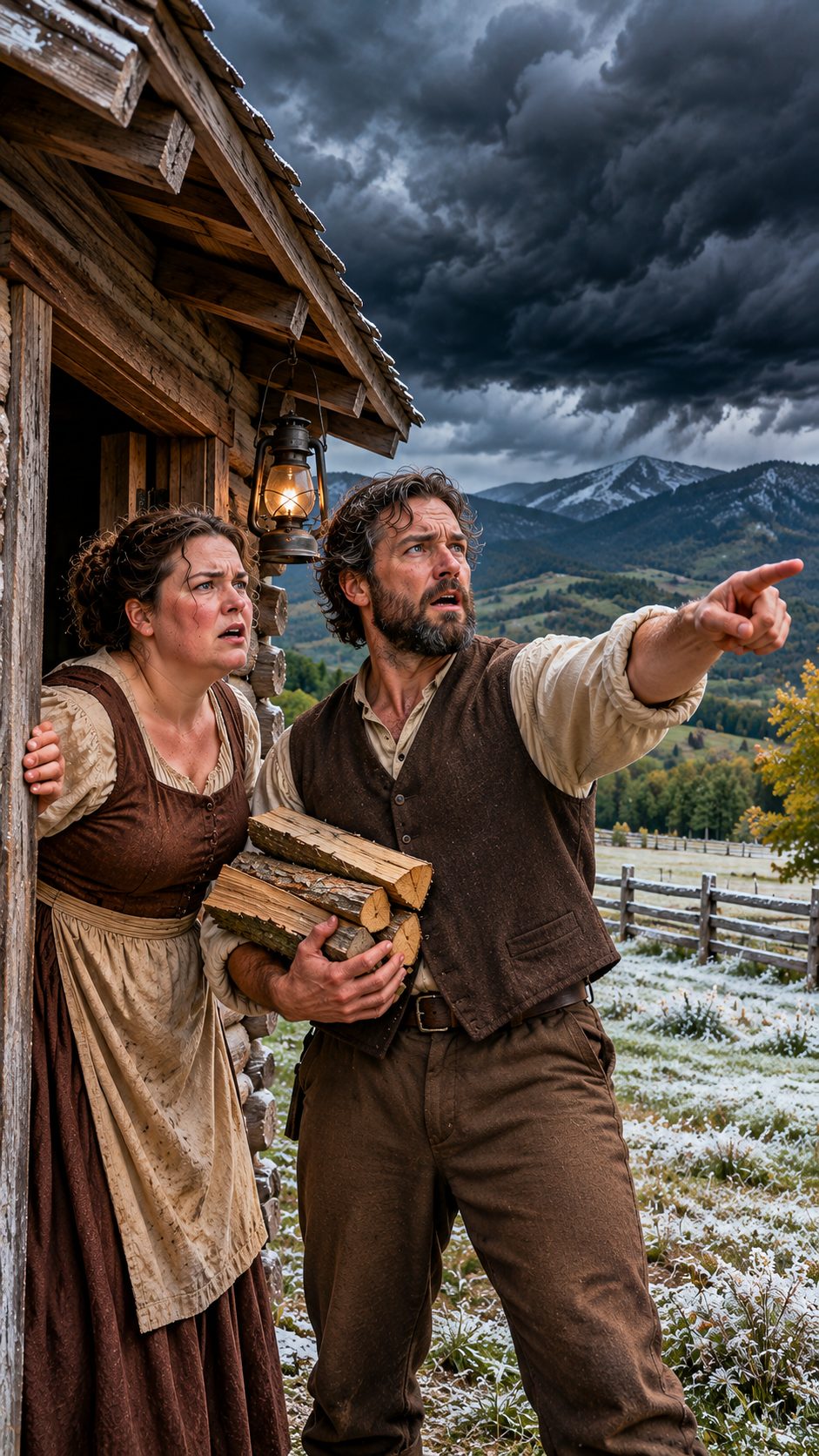
The smoke curling into the cabin was thin at first, but I recognized danger before it became visible enough to frighten the children, because winter had taught me never to wait for a small problem to become a desperate one.
Gideon wrapped his coat around himself.
“I’ll clear the chimney.”
“Not alone.”
“You’re not coming.”
“I didn’t say I was.”
I opened the door to the supply corner and pulled out the rope we used for hauling.
“You tie this around yourself.”
“The other end stays inside.”
He understood.
“If you slip, we hold it.”
“The wind could pull you too.”
“Then don’t slip.”
He almost laughed.
“You make that sound simple.”
“I’m trying very hard not to scream.”
His expression softened.
The children watched from beneath blankets.
I knelt beside them.
“Papa is going to clear snow from the chimney.”
“Is he going outside?”
“Only onto the roof.”
“That’s outside.”
I could not argue with that.
“He’ll have a rope.”
One child reached for Gideon.
“Don’t go.”
“I’ll be right above you.”
The child held his sleeve.
Gideon looked at me.
Four years earlier, he had made the same promise before stepping into white darkness.
“I promise.”
We secured the rope.
The door opened with difficulty.
Wind exploded into the cabin.
Gideon disappeared upward along the side ladder we had kept accessible.
I held the rope with both hands.
Another adult who had been sheltering with us took position behind me.
The wind pulled.
Snow entered through the doorway.
“Close it.”
We shut the door while keeping the rope through a small gap.
I felt every movement through it.
My mind invented disasters faster than Gideon could climb.
A broken ladder.
A buried body.
I forced myself to breathe.
Minutes passed.
The smoke inside thickened.
Then the rope jerked sharply.
The rope tightened.
The person behind me braced.
Another jerk.
Then slack.
My heart pounded so violently I felt dizzy.
A muffled voice came from above.
“I’m all right.”
My knees nearly gave way.
“What happened?”
“I slipped.”
I closed my eyes.
“Come down.”
“Not finished.”
I wanted to drag him off the roof by the rope.
Instead, I waited.
The fire weakened.
Then, suddenly, air moved through the chimney.
Smoke lifted upward.
The flames brightened.
“He did it.”
Someone whispered.
I could have cried.
Several minutes later, the rope moved steadily downward.
We opened the door.
Gideon stumbled inside covered with snow.
I struck his chest with both hands.
“You slipped.”
“I noticed.”
“You said you wouldn’t.”
“I said I’d come back.”
“That is not the same thing.”
He smiled weakly.
“I’m back.”
I pulled him toward the fire.
The children crowded around him.
For the rest of the night, I refused to sleep.
The fire continued burning safely.
Dawn arrived gray and bitter.
The storm had not ended.
But something in me changed.
I realized preparation was not the ability to prevent every danger.
It was the ability to meet danger with more than panic.
We had rope because we prepared.
We had people available to hold it because we had opened our home.
We had enough fuel to maintain the fire after Gideon cleared the chimney because we had stored wood.
Preparation did not make us invincible.
It gave us choices.
That understanding followed me to the trading post later that day.
The path had been reopened.
Inside, the building was crowded but orderly.
Children slept under blankets near the walls.
Adults sat close to the stove.
Measured portions of food simmered in a large pot.
On a table lay dried apples from my roof.
One of the men who had mocked me held one between his fingers.
He looked embarrassed when he saw me.
“I suppose I owe you another apology.”
“You already gave me one.”
“Not enough.”
I sat near the stove.
“Then survive first.”
His expression became serious.
“Elowen, if you hadn’t stored all that food…”
He did not finish.
He did not need to.
I looked around.
The amount remaining was not enough to make me comfortable.
“How much wood?”
“Maybe four days here.”
“With what everyone contributed, maybe longer.”
“Depends how long the storm lasts.”
There it was again.
The question no one could answer.
I went home and counted.
Then counted again.
Our private wood supply could help the trading post, but each load shortened our own safety.
Gideon stood beside me.
“We can move everyone into fewer buildings.”
“Heat fewer spaces.”
I understood immediately.
“If the strongest cabins take more people, we stop burning wood in empty houses.”
“The trading post, ours, and whichever others have good chimneys.”
It was logical.
It was also difficult.
People would have to abandon their homes temporarily.
Some would refuse.
Gideon shrugged.
“Then they burn their own furniture.”
I looked at him.
“That sounded like me.”
“You’re rubbing off on me.”
By afternoon, the decision had been made.
Families consolidated.
Doors to unused cabins were shut.
Blankets, food, tools, and remaining firewood were moved to occupied buildings.
No one liked it.
Everyone understood it.
The town became smaller.
Our world contracted into a few warm rooms surrounded by endless snow.
The strategy saved wood immediately.
It also brought people together who had spent months laughing at one another, arguing over fences, complaining about prices, and mocking the woman who dried apples on her roof.
Fear stripped away many foolish things.
During the third week, the storm weakened for half a day.
People cheered when a patch of lighter sky appeared.
Someone said it was finally over.
I stepped outside.
The wind smelled wrong.
The clouds beyond the ridge were still moving.
I looked at Gideon.
“It isn’t over.”
He did not argue.
We told everyone.
Some groaned.
One man insisted the clearing meant relief.
I pointed toward the mountains.
“Look at the cloud line.”
“Another front?”
“I think so.”
“I don’t know.”
That answer frightened them more than any warning.
We spent the brief calm moving the last accessible wood into protected storage.
We checked chimneys.
We dug around doors.
We redistributed food.
We filled water.
By dusk, the light disappeared again.
The second storm struck harder than the first.
The wind roared so violently the trading post walls shook.
People huddled together.
I sat beside my children and listened.
One of them whispered.
“Is this worse than the old winter?”
I wanted to lie.
I looked at Gideon.
He knew the answer.
I said it quietly.
“But we’re more ready.”
The child leaned against me.
Outside, snow began burying the paths we had fought for weeks to maintain.
Inside, the fire burned steadily.
For the moment, we were safe.
Then, sometime after midnight, a man burst through the interior doorway from the back room.
“The wood stack is almost gone.”
Every face turned toward me.
And for the first time since the storm began, I did not know what to tell them.
✓ Lynn R. Adams
The smoke curling into the cabin was thin at first, but I recognized danger before it became visible enough to frighten the children, because winter had taught me never to wait for a small problem to …