Chapter 7: The Voice They Thought Was Gone212
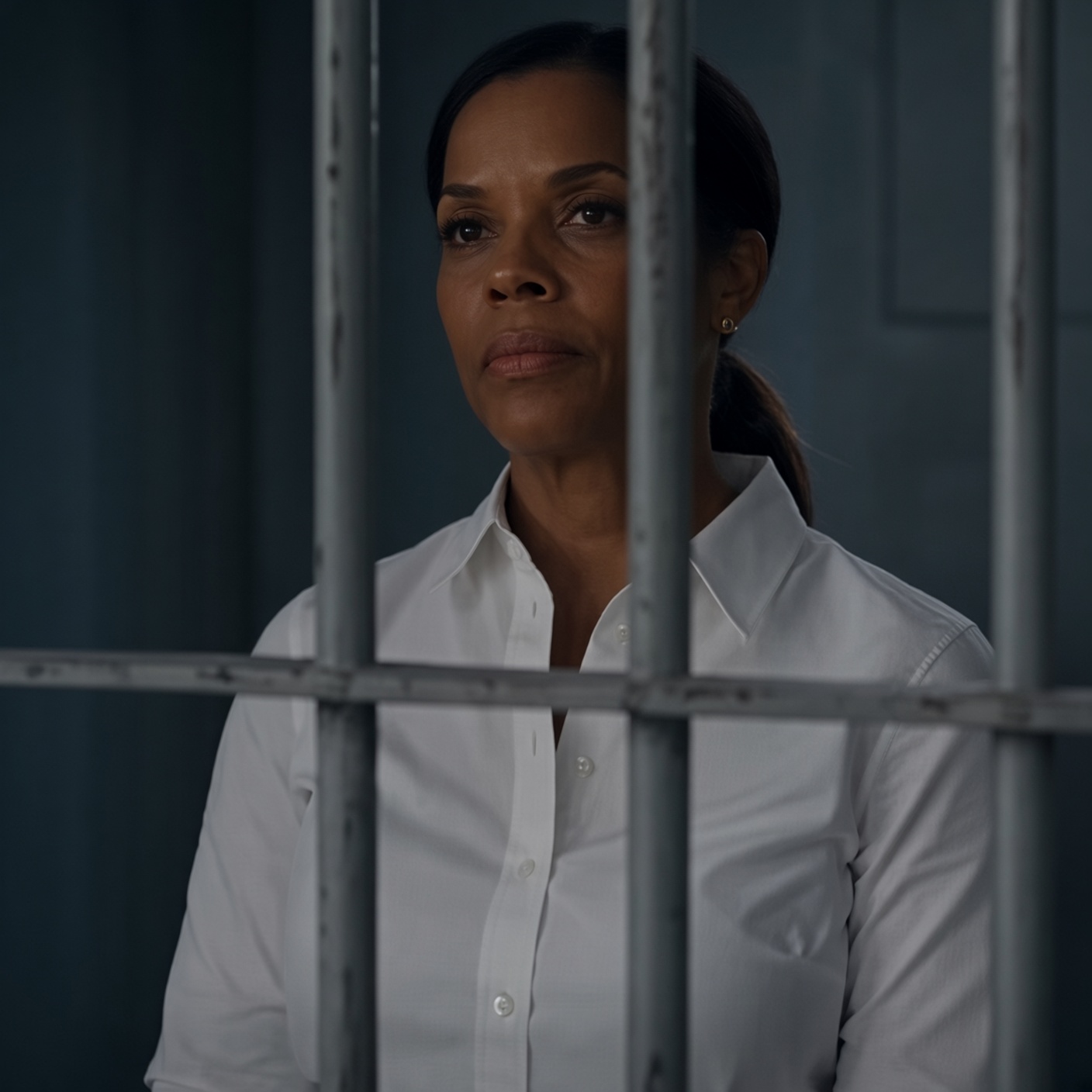
Brenda Lawson arrived at Clara Monroe’s office carrying a small canvas bag and the expression of someone who had spent the night deciding whether to turn back.
Martin accompanied her.
He held her hand until they reached the conference room, then waited outside.
Brenda sat opposite Clara and placed a thick folder on the table.
“I need legal advice,” she said.
Clara nodded.
“Before you tell me anything confidential, we need to clarify my role. I represent General Reynolds. Your interests may be different, and you should have independent counsel.”
Brenda gave a nervous smile.
“I thought you’d say that.”
She had already contacted an employment attorney recommended by Lieutenant Cross.
After a consultation, the attorney agreed to accompany her to a later meeting with investigators.
Brenda hadn’t wanted to wait.
“I just needed to tell someone that I didn’t erase those recordings.”
Clara studied her.
“Do you have a reason to believe your account was misused?”
Brenda nodded.
“I was suspended before the maintenance operation. I was home when it happened.”
“Can you establish that?”
“My husband was with me. Our pharmacy receipt has a timestamp. And I kept a copy of the suspension notice.”
Clara wrote it down.
Brenda continued.
“The department’s system uses individual accounts, but the sheriff had administrator privileges. He could reset passwords or assign temporary access.”
“Does the audit show a reset?”
“I don’t know. That’s part of what investigators need to check.”
Clara appreciated the distinction.
Brenda wasn’t trying to prove more than she knew.
Then Brenda opened the folder.
“I also preserved something before I was suspended.”
Clara leaned forward.
“What?”
“The original dispatch entry list and the transfer record for an archived audio segment.”
“Where is the audio?”
“In the department’s restricted evidence archive. I initiated a preservation transfer after the attorney’s notice arrived, using the procedure our records policy requires.”
Clara stared at her.
“Then the backup deletion wouldn’t necessarily destroy it.”
“No.”
“Why wasn’t the archive listed in the initial production?”
Brenda looked down.
“Because I don’t think the sheriff wanted anyone to know it existed.”
The restricted archive was not hidden software.
It was an ordinary part of the sheriff’s department’s evidence-management system.
The problem was that most deputies never used it.
For several years, Brenda had been responsible for preserving dispatch recordings connected to major incidents.
Most routine traffic calls remained in the standard system until their retention periods expired.
But when litigation, serious injury, or another preservation requirement arose, authorized staff could place relevant audio into a protected evidence category.
The files then received separate identifiers and access logs.
Brenda had followed that process after receiving Clara’s preservation demand.
She had not copied the recording to her personal computer.
She had not taken confidential audio home.
She had preserved it in an official repository intended for exactly that purpose.
And she had created a record of doing so.
When independent investigators obtained authorized access to the archive, the missing audio segment was still there.
The file’s stored integrity information matched the original preservation record.
Its chain of custody could be examined.
It contained radio traffic from before and during Sarah’s stop.
And it included a conversation that Sheriff Ryker had never acknowledged in his report.
Sarah listened to the recording in a conference room with Clara and a forensic audio specialist.
Her hands rested quietly on the table.
Clara had warned her not to expect every word to be clear.
Radio transmissions sometimes contained interference, overlapping voices, and clipped syllables.
But the central exchange was understandable.
At p.m., Miller’s voice appeared.
“Unit twelve. Silver rental sedan, Washington plates, northbound on 119.”
A brief burst of static followed.
Then Ryker answered.
“Copy. Keep eyes on it.”
Miller responded.
“Any specific alert?”
“No alert. Just watch it.”
There was another pause.
Then Miller spoke again.
“Vehicle’s maintaining speed and lane.”
Sarah felt her heartbeat change.
She knew what came next.
At , Ryker’s voice returned.
“Get behind her and make the stop.”
Miller hesitated.
“Reason, Sheriff?”
“Improper lane use.”
“Negative on a violation so far.”
A sharp burst of static interrupted the transmission.
Then Ryker answered.
“Jared, don’t make me repeat myself. She’s an out-of-county rental, alone, Washington tags. Those people always want to lecture us about their rights.”
Sarah closed her eyes.
Ryker continued.
“Make contact. If she gives you trouble, handle it.”
The recording ended several seconds later.
No one spoke.
Clara looked toward the audio specialist, who confirmed that the relevant segment was contained in the preserved file.
Sarah opened her eyes.
She had imagined hearing something like this.
But imagination had not prepared her for the sound of the sheriff deciding that her rights were an inconvenience before he had met her.
Clara leaned forward.
“Sarah?”
Sarah swallowed.
“Play the first part again.”
The specialist replayed the exchange.
Vehicle’s maintaining speed and lane.
Those six words settled into the room.
Miller had reported lawful driving.
Ryker had ordered the stop anyway.
The final arrest report claimed something else entirely.
Sarah stared at the table.
“That’s what I needed to know.”
Clara watched her.
“Are you all right?”
Sarah nodded.
But a tear slipped down her cheek.
She wiped it away with the back of her hand.
“I spent that entire afternoon wondering whether I’d missed something. Whether I had somehow made the situation worse by asking questions.”
Clara said nothing.
Sarah looked up.
“He had already made his decision.”
The attorney nodded.
“Yes.”
Sarah breathed slowly.
“Then let’s make sure the record reflects that.”
The audio changed the investigation.
It did not, by itself, answer every legal question.
Investigators still needed to examine whether additional facts could have justified the stop, whether the officers had a lawful basis for their subsequent actions, and how the report came to contain statements contradicted by the recording.
But the discrepancy was substantial.
The original radio exchange described a vehicle traveling normally.
The official report described dangerous driving.
The chronology showed the sheriff giving instructions before the deputy reported a violation.
And Miller’s later statement aligned with the preserved recording.
Assistant District Attorney Margaret Keene reviewed the materials and requested an independent prosecutorial assessment.
She also recommended dismissal of the unsupported charges against Sarah.
The state eventually filed notices abandoning the disorderly conduct, resisting arrest, and reckless-driving allegations.
The court closed the criminal case against her.
It was an important result.
But when Clara told Sarah, she didn’t celebrate.
She sat in Evelyn’s living room, holding the court papers.
“No conviction,” Evelyn said, smiling. “No more charges.”
Sarah nodded.
“That’s good.”
“Then why do you look so sad?”
Sarah placed the papers on the coffee table.
“Because I didn’t do anything wrong in the first place.”
Evelyn’s smile faded.
Sarah continued.
“I was held, searched through the process of booking, separated from my belongings, and accused of crimes. Now a document says the charges are gone.”
“Isn’t that justice?”
“It’s part of it.”
Evelyn sat beside her.
Sarah looked toward the window.
“But what happens to Denise Carter? What happens to the people whose complaints were dismissed before anyone took the time to listen?”
Evelyn thought for a moment.
“Then perhaps the work isn’t finished.”
Sarah nodded.
“No.”
Her aunt took her hand.
“Then we’ll finish what we can.”
The restored recording also created a problem for Captain Howard Bell.
Investigators reviewing the sheriff’s internal complaint system found that Bell had supervised the original inquiry into Denise Carter’s complaint.
His report stated that the available recordings supported Ryker’s account.
But the evidence register showed a discrepancy.
The complaint file referenced a patrol-camera recording.
The preserved materials contained no such video.
When investigators questioned Bell, he initially claimed not to remember the details.
“It was two years ago,” he said.
The investigator showed him the complaint review.
His signature appeared at the bottom.
“Did you personally review the recording?”
Bell shifted.
“I reviewed the materials available.”
“Which materials?”
“I’d have to check.”
“Your report states the video showed no improper conduct.”
Bell stared at the page.
The investigator waited.
Finally, Bell said, “The sheriff handled the actual footage.”
“Then why did you certify that you reviewed it?”
Bell’s face reddened.
“I trusted his assessment.”
The investigator leaned forward.
“Captain, that’s different from reviewing evidence yourself.”
Bell said nothing.
The investigator continued.
“Do you understand that your certification was relied upon to dismiss a citizen’s complaint?”
Bell looked at the signature.
For years, he had believed that loyalty to Ryker was loyalty to the department.
Now he was discovering that the distinction mattered.
“I should have reviewed it independently,” he admitted.
The investigator placed another document on the table.
It was a complaint register covering the previous four years.
Denise Carter’s name appeared among several entries involving disputed traffic stops.
Many described similar conduct.
Requests to search vehicles.
Threats of disorderly conduct charges.
Allegations that citizens had been punished for questioning officers.
A striking number of the complainants were Black motorists traveling through Oak Haven.
The investigator pointed to the summary column.
Most entries had been closed without an external review.
“Captain, did you notice a pattern?”
Bell stared at the page.
He could no longer pretend the incidents had been isolated.
For Denise Carter, the revelation arrived through a telephone call from Clara.
The attorney explained that investigators had identified irregularities in the handling of her old complaint.
Denise sat on the edge of her bed while Clara spoke.
When the call ended, she remained motionless.
Her husband, Marcus, entered the room.
“What happened?”
Denise looked at him.
“They didn’t even review the video properly.”
Marcus frowned.
“What?”
“The sheriff’s people. They said they investigated. They wrote a letter saying nothing happened.”
Her voice broke.
“But they didn’t actually do what they claimed.”
Marcus sat beside her.
For two years, he had watched his wife struggle with the humiliation of that traffic stop.
She had become anxious whenever a patrol car appeared behind her.
She drove extra miles to avoid certain roads.
She had stopped volunteering for late shifts.
He had tried to reassure her that she was safe.
But he knew she never fully believed him.
Denise covered her face.
“I thought maybe I was exaggerating.”
Marcus wrapped an arm around her shoulders.
“You weren’t.”
She shook her head.
“I kept thinking if I’d just been quieter, if I’d smiled, if I’d said yes—”
“You didn’t owe him that.”
She looked up.
“Why did nobody believe me?”
Marcus searched for an answer.
He didn’t have one that would make the years disappear.
So he held her while she cried.
Later that evening, Denise called Evelyn.
She wanted to thank Sarah.
Evelyn invited her to dinner.
When Denise arrived, Sarah opened the door.
For a moment, both women stood awkwardly.
Then Denise stepped forward and embraced her.
“You didn’t have to do all this,” Denise whispered.
Sarah hugged her back.
“Neither did you.”
They remained there for several seconds.
Then Evelyn called from the kitchen.
“Both of you come eat before the food gets cold.”
And for one quiet evening, the women who had been treated as problems by the same institution sat together at a table where nobody questioned their right to speak.
Meanwhile, Ryker’s legal position was deteriorating.
His attorney advised him to stop discussing the case publicly.
Ryker ignored the recommendation.
He believed the county would eventually rally around him.
He had survived political disputes before.
He had defeated challengers.
He had weathered complaints.
He had watched other officers face investigations and return to their jobs.
He assumed this controversy would follow the same pattern.
But the evidence was different.
The preserved audio existed.
The report revisions were documented.
And the county audit was beginning to uncover problems beyond Sarah’s arrest.
Late one evening, Ryker sat alone in his office reviewing the complaint register.
He opened an old file.
Then another.
The names seemed to accumulate on the screen.
Denise Carter.
Marcus Williams.
Alana Brooks.
Jerome Walker.
People who had challenged stops, disputed searches, or complained about his deputies.
Ryker remembered some of them.
Others had faded from his memory.
To him, they had been arguments.
To them, they had been moments that changed how they saw the world.
He closed the files.
Then his telephone rang.
It was Captain Bell.
“Sheriff, we need to talk.”
Ryker sounded irritated.
“About what?”
“The investigators asked me about the old complaints.”
“And?”
“I told them I hadn’t personally reviewed Denise Carter’s video.”
Ryker went still.
“Why would you say that?”
“Because it’s true.”
The sheriff’s voice lowered.
“Howard, think very carefully about what you’re doing.”
Bell didn’t answer immediately.
Then he said, “I’ve spent twenty years thinking about my career. Maybe it’s time I think about what I signed.”
Ryker gripped the phone.
“You’re going to regret this.”
Bell’s voice was quiet.
“I already do.”
He ended the call.
The following morning, investigators obtained another set of internal correspondence associated with the sheriff’s complaint-review procedures.
Most documents concerned routine administrative matters.
But one was different.
It was a memorandum from an earlier county legal adviser, written after several disputed vehicle searches.
The memorandum warned that detentions based on generalized suspicions about out-of-town drivers, rather than individualized facts, could expose the county and its officers to serious legal liability.
It also urged independent examination of complaints alleging retaliatory arrests.
The document was dated eighteen months before Sarah’s arrest.
It had been delivered to Ryker’s office.
The distribution log showed acknowledgment by the sheriff himself.
And beneath the formal memorandum, investigators found a handwritten note on the office copy.
Don’t let outsiders dictate how we police our roads.
The handwriting appeared consistent with Ryker’s.
Investigators preserved the document for comparison.
When Clara learned about it through the authorized disclosure process, she called Sarah.
“There’s something important you need to understand.”
Sarah was seated at her Pentagon desk.
“What?”
“Ryker had been warned about this type of conduct well before your arrest.”
Sarah closed the file in front of her.
“Warned by whom?”
“A county legal adviser.”
“Was the warning specific?”
“It described the risks of unsupported vehicle stops and retaliatory charges.”
Sarah looked toward the flag standing beside her office door.
“So he knew the problem.”
“It appears he was told about it.”
She remained silent.
Then Clara continued.
“And there’s more. The investigators found correspondence suggesting the complaint-review process itself may have been used to shield questionable arrests from meaningful scrutiny.”
Sarah’s expression hardened.
For weeks, she had believed she was dealing with an arrogant sheriff who abused his authority in the heat of a confrontation.
Now the evidence suggested something more deliberate.
Warnings had been issued.
Complaints had been filed.
Opportunities to correct the system had come and gone.
The sheriff had continued.
Sarah looked down at the notes she had written after her arrest.
One sentence stood out.
He expected me to be afraid.
She finally understood why.
Because for years, fear had worked.
And the secret investigators were beginning to uncover was that Sarah’s arrest had not been an isolated failure of judgment.
It was the predictable result of a system that had repeatedly been told something was wrong—and had repeatedly chosen not to listen.
✓ Lynn R. Adams
Brenda Lawson arrived at Clara Monroe’s office carrying a small canvas bag and the expression of someone who had spent the night deciding whether to turn back. Martin accompanied her. He held her ha…