Chapter 7: The Truth Nobody Wanted to Hear 215
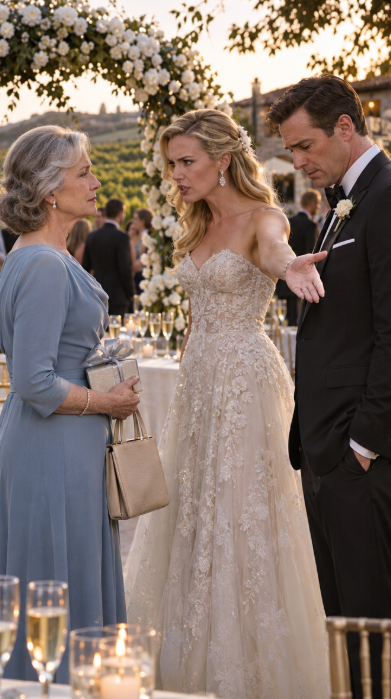
Three weeks after the wedding, Jacob asked to meet me.
Not at my house.
Not at his.
He suggested a small café near the lake where Harold used to take us for breakfast on Sunday mornings.
I agreed.
The morning was cold and bright.
Lake Michigan stretched beyond the windows, its gray-blue surface broken by whitecaps.
Jacob was already seated when I arrived.
He stood as I approached.
“Mom.”
“Hello, Jacob.”
He leaned forward as if to hug me.
I allowed it.
The embrace was awkward but longer than usual.
When we sat, he studied my face.
“You look tired.”
“I’ve had a great deal to think about.”
He nodded.
“So have I.”
A waitress brought coffee.
For a while, we discussed ordinary things.
The weather.
The changing leaves.
A mutual acquaintance who had moved to Arizona.
It was strange how easily people could discuss everything except the one thing bringing them together.
Finally, Jacob placed his cup down.
“Amanda and I are living separately.”
I looked at him.
“I’m sorry.”
“She says she needs to decide whether she can trust me again.”
“And what do you think?”
He stared through the window.
“I think she’s right.”
The answer surprised me.
He continued.
“I lied to her about the business. I made it sound like things were fine when they weren’t.”
I waited.
“And I lied to you.”
“Yes,” I said.
He winced.
“I know.”
He rubbed his hands together.
“I’ve been trying to figure out why.”
I watched him carefully.
“Have you?”
He nodded.
“I think I got used to not having to admit when I couldn’t manage something.”
A wave struck the shore beyond the glass.
He continued.
“When I was younger, you always found a way to help. If I had trouble, you solved it.”
“I know.”
“And eventually I stopped thinking of asking as asking.”
I felt something tighten inside me.
He looked at me directly.
“I started assuming you’d say yes.”
The admission hurt.
But it was also the first evidence that my son had begun examining his own behavior.
“Your father worried about that,” I said.
Jacob looked startled.
“He did?”
I told him about the summer program argument.
About Harold’s concern that our son was being protected from every difficult choice.
Jacob listened silently.
When I finished, he gave a small, sad smile.
“Dad used to say that being responsible meant doing things even when nobody was watching.”
“He did.”
“I always thought he was talking about work.”
“He was talking about character.”
Jacob lowered his eyes.
For several moments, neither of us spoke.
Then he asked, “Do you think he would’ve been ashamed of me?”
The question pierced me.
I looked at the man across from me.
He had Harold’s hands.
The same long fingers.
The same habit of pressing his thumb against the edge of a cup when nervous.
“I think your father would have been disappointed by some of your choices,” I said carefully.
Jacob nodded.
“But disappointment isn’t the same as giving up on someone.”
He swallowed.
“I miss him.”
“So do I.”
For the first time in years, we spoke about Harold without rushing away from the pain.
Jacob remembered fishing trips.
The old truck.
The way Harold hummed while repairing things.
I told him stories he had forgotten.
How his father had once driven through a snowstorm to bring me flowers on our anniversary.
How he had cried quietly at Jacob’s college graduation.
How he had kept a copy of the superhero drawing in his desk drawer.
Jacob stared at me.
“He did?”
“Yes.”
“He never told me.”
“Your father wasn’t always good at expressing what he felt.”
Jacob laughed softly.
“I guess I inherited that.”
I smiled.
“Perhaps.”
The tenderness lasted several minutes.
Then Jacob reached into his jacket.
He removed an envelope.
“I brought something.”
I looked at it.
“What is it?”
“A repayment plan.”
I didn’t touch it.
He pushed it toward me.
“I made a list of the money I borrowed over the past five years. Not the wedding. The other things.”
I stared at him.
“I never asked you to repay most of that.”
“I know.”
“Then why?”
“Because I want to stop pretending it didn’t cost you anything.”
My eyes filled.
He continued.
“I can’t pay everything immediately. The business is still struggling. But I’ve talked to a financial adviser. I’m cutting expenses, selling my second car, and trying to rebuild.”
I opened the envelope.
Inside was a detailed spreadsheet.
Dates.
Amounts.
Proposed monthly payments.
Some were small.
Some would take years to repay.
It was imperfect.
It was real.
“Jacob,” I whispered.
“I know it doesn’t fix what happened.”
“No.”
“But maybe it’s a start.”
I folded the paper carefully.
“Yes,” I said. “It is.”
He leaned forward.
“Mom, I need to ask you something.”
I felt my muscles tighten.
He noticed.
His expression changed.
“Not for money.”
I relaxed slightly.
He swallowed.
“Do you still want me in your life?”
I stared at him.
The question was so simple.
The answer was not.
“Of course I do.”
His eyes filled.
“But I need a different relationship with you.”
He nodded.
“I know.”
“I can’t keep being the person who absorbs every consequence.”
“I understand.”
“And I need you to care about me even when I have nothing to offer.”
His face crumpled.
“Mom, I do care.”
“I know you believe that.”
He looked wounded.
I continued gently.
“But caring has to become something I can experience, not just something you tell me.”
He wiped his eyes.
“I’ll try.”
We sat together until the café began filling for lunch.
When we finally stood, he hugged me again.
This time, he didn’t look over my shoulder.
For a brief moment, I allowed myself to hope.
Then, as we reached the parking lot, Jacob said, “There’s one more thing.”
I turned.
He looked troubled.
“Amanda’s parents want to meet with you.”
“Why?”
“They think you’ve damaged their family’s reputation.”
I stared at him.
“By being expelled from the wedding?”
“That’s how Amanda’s father sees it.”
I almost laughed.
“And what do you think?”
Jacob looked at me steadily.
“I think they need to hear the truth.”
The following Saturday, we met at Amanda’s parents’ home.
The house stood in an expensive neighborhood overlooking a private golf course.
Inside, everything looked professionally arranged.
White furniture.
Perfectly aligned books.
Fresh flowers that matched the artwork.
Amanda’s father, Richard Whitmore, was a tall man with carefully combed gray hair.
Her mother, Celeste, wore a cream silk blouse and a pearl necklace.
Amanda sat beside them.
Jacob and I took chairs opposite the sofa.
Richard began without offering coffee.
“Mrs. Emerson, this situation has become deeply embarrassing for our family.”
I folded my hands.
“I’m sorry you feel embarrassed.”
He frowned.
“Your public announcement caused considerable distress.”
“I was publicly asked to leave.”
“Amanda was under tremendous pressure.”
I looked at her.
She stared at her hands.
Richard continued.
“You chose to retaliate financially.”
“I withdrew authorization for additional charges. I am addressing my actual contractual responsibilities.”
“You could have handled it quietly.”
“So could your daughter.”
Celeste shifted.
Richard’s face reddened.
“This isn’t productive.”
Jacob spoke.
“Mr. Whitmore, Mom didn’t deserve what happened.”
Everyone turned toward him.
I felt my breath catch.
Richard frowned.
“Jacob, surely you understand—”
“No,” Jacob interrupted. “I understand that Amanda told my mother she didn’t belong at our wedding, and I stood there and let it happen.”
Amanda closed her eyes.
Jacob continued.
“I also let Amanda believe Mom would pay expenses she hadn’t approved. That was wrong.”
Richard stared at him.
Then he turned toward Amanda.
“Is that true?”
She nodded.
Her father looked stunned.
Celeste leaned forward.
“Amanda, why didn’t you tell us?”
Amanda’s face hardened.
“Because you would’ve blamed me.”
“We’re asking a reasonable question.”
“No,” she said, her voice shaking. “You’re asking why the wedding wasn’t perfect.”
Richard stiffened.
“Amanda.”
She stood.
“No. I’m tired of this.”
Celeste reached toward her.
“Sit down.”
Amanda shook her head.
“Mom, you told me the reception had to impress your friends. Dad told me the venue needed to be worthy of the family.”
Richard’s face darkened.
“We wanted you to have a beautiful wedding.”
“You wanted people to admire us.”
The room fell silent.
Amanda turned toward me.
“And I treated Judith the way I’ve spent my whole life being treated.”
My eyes filled.
She swallowed.
“I made her feel small because I was terrified of being small myself.”
Richard rose.
“That’s enough.”
Amanda looked at him.
“No. It isn’t.”
Then Jacob stood beside her.
For the first time, they looked like two people facing the same truth rather than hiding behind one another.
But the fragile moment broke when Richard turned toward me.
“Mrs. Emerson, if you insist on making this a public matter, my attorney may need to examine your conduct.”
I felt a cold pressure in my chest.
Jacob stepped forward.
“Don’t threaten my mother.”
Richard looked at him sharply.
“Then perhaps you should explain how you intend to support my daughter without relying on her.”
Jacob went pale.
And I understood that whatever reconciliation had begun between us was about to face its first real test.
✓ Lynn R. Adams
Three weeks after the wedding, Jacob asked to meet me. Not at my house. Not at his. He suggested a small café near the lake where Harold used to take us for breakfast on Sunday mornings. I agreed….