Chapter 7: The Secret Hidden in My Mother’s Records212
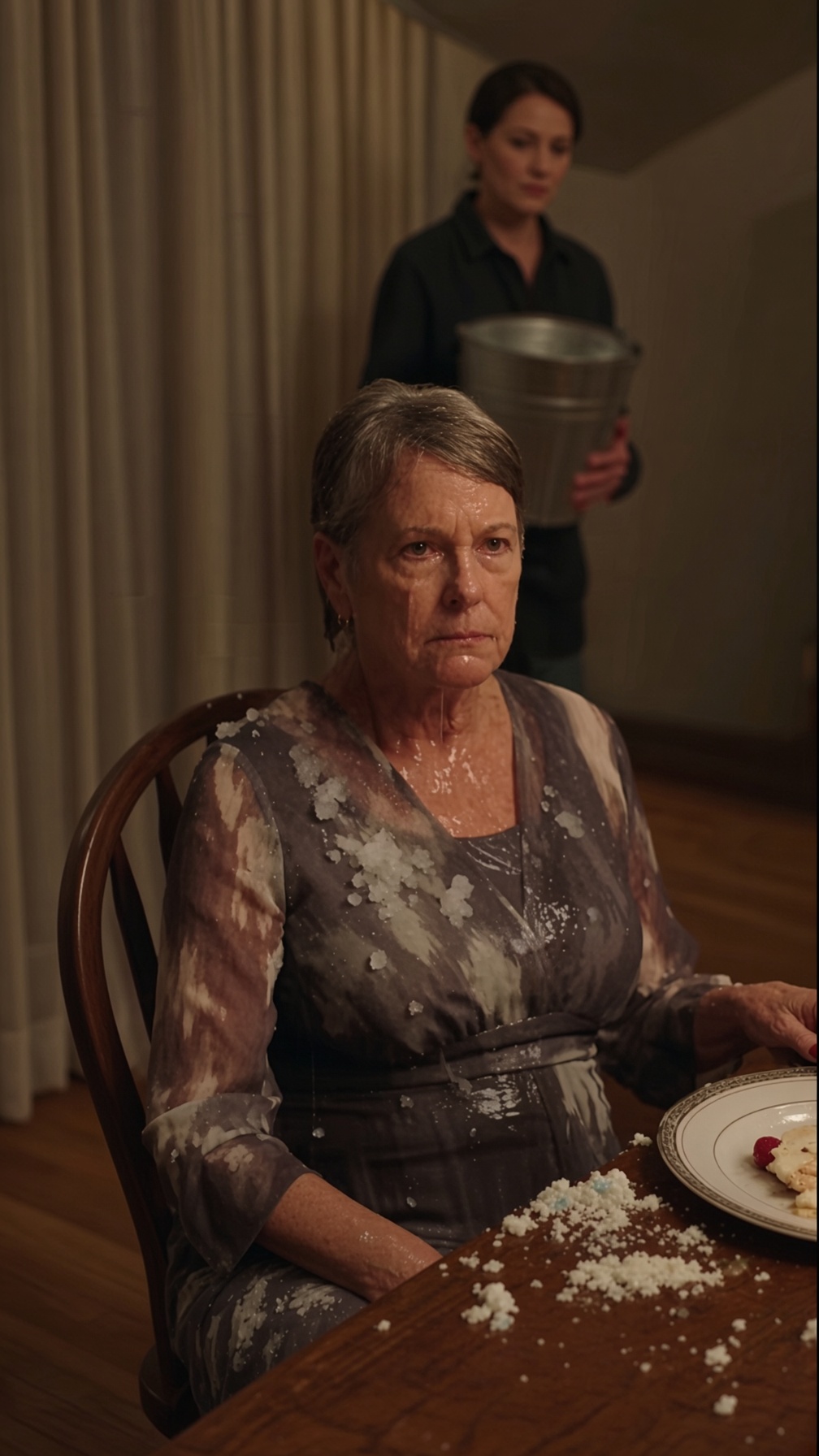
My mother had been dead for eleven years.
Yet somehow, her illness had become the foundation of a business proposal about me.
I sat beside Carol, staring at the photograph Ethan had sent.
The document looked official enough to frighten someone unfamiliar with it.
There were medical terms.
Dates.
Descriptions of memory impairment.
Recommendations for supervision and support.
But I recognized one sentence.
“Patient frequently misplaces familiar household objects and becomes distressed when unable to locate them.”
I had written that sentence myself.
Years earlier, when my mother began struggling with dementia, her physician asked our family to describe what we were observing at home.
I kept detailed notes because I was afraid of forgetting something important during appointments.
The notes had lived in a blue folder beside my desk.
After my mother died, I stored them with other family records.
Melissa had helped scan them.
I remembered the afternoon clearly.
She had been impatient because the scanner repeatedly jammed.
“Why are you keeping all this?” she asked.
“Because someday we may need to remember what happened.”
She had sighed.
“Mom, you keep everything.”
I had smiled.
“That’s what librarians do.”
Now that same record had apparently become part of an invented narrative about my health.
I opened the desk drawer where I kept family papers.
The blue folder was still there.
Inside were my mother’s original notes.
Her name appeared at the top.
Helen Margaret Wilson.
The date was from years before Frank’s death.
I compared the pages with Ethan’s photograph.
Most of the wording matched.
But the heading had changed.
Where the original named my mother, the new document identified me.
Linda Margaret Parker.
My birth date appeared where my mother’s had once been.
The body of the document retained several references to events that had happened decades earlier, but those details had been removed from the shortened version Melissa was circulating.
My hands began to shake.
Carol leaned forward.
“Linda?”
“She changed the name.”
Carol looked at both pages.
Her expression hardened.
“These are your mother’s notes.”
I nodded.
“She made them look like mine.”
For a moment, neither of us spoke.
The room felt too quiet.
Then Carol said something I would remember for the rest of my life.
“Your daughter didn’t just lie about what was happening. She took something you wrote out of love and turned it against you.”
I pressed my fingers against my lips.
That was exactly what she had done.
I had written those notes because I wanted my mother to receive good care.
I had been frightened of failing her.
Every sentence represented an afternoon of worry, a difficult appointment, or an effort to preserve her dignity.
Melissa had taken that history and used it to manufacture evidence against me.
I called Anita.
She asked me to send copies of both documents, along with an explanation of their origins.
She cautioned that we still needed to establish precisely what had been sent to the marketing agency and how it had been represented.
But she agreed the matching language was significant.
“This may help demonstrate that the health claims were not made in good faith,” she said.
I stared at the original notes.
“Can my daughter actually believe I’m losing my memory?”
“That’s a question about her state of mind,” Anita answered carefully. “The evidence may help us understand what she knew.”
I thought about the proposed pranks.
The hidden medication bottle.
The missing bank card.
The appointment I supposedly forgot.
Melissa wasn’t merely observing problems.
She had planned to create them.
“She knew,” I whispered.
Anita was quiet.
“Linda, there’s something important here. You shouldn’t let this become an argument about whether your mother’s illness makes you vulnerable. Your family’s medical history is not proof that you have the same condition.”
I closed my eyes.
“I know.”
But knowing and feeling were different things.
For years, I had watched my mother struggle with the frightening uncertainty of dementia.
I had promised myself that if it ever happened to me, I would seek help and accept the truth.
I had never imagined that someone would use that promise as a weapon.
The next morning, I visited my doctor for the routine appointment I had already scheduled.
I told her what had happened.
Not every humiliating detail.
Just enough.
She listened, reviewed my concerns, and encouraged me to continue paying attention to my health without treating edited videos as medical evidence.
We discussed the normal frustrations of aging, the anxiety that can accompany family history, and the importance of evaluating actual symptoms rather than rumors.
Nothing about the appointment erased what Melissa had done.
But I walked out remembering something important.
My health belonged to me.
Not to strangers.
Not to sponsors.
Not to my daughter.
That afternoon, I returned home and found Ethan sitting on the front steps.
He stood as soon as he saw my car.
I had not expected him.
For one startled moment, I thought something terrible had happened.
“Sweetheart?”
“I’m okay.”
He held up his backpack.
“Ms. Rivera helped me call Mom. She knows I’m here until dinner.”
I exhaled.
“Come inside.”
He followed me into the kitchen.
For a moment, we stood awkwardly beside the counter.
Then I noticed the flour on his sweatshirt.
“Have you been baking?”
He looked down.
“Oh. Culinary class. We made biscuits.”
I smiled.
“Your grandfather would have approved.”
Ethan smiled faintly.
It was the first genuine smile I had seen from him since my birthday.
I offered him lemonade.
We sat at the kitchen table.
He looked around the room, and I realized with a sharp ache that he had probably been afraid he would never feel comfortable here again.
“Grandma,” he said after a while, “I don’t think Mom knows what she’s doing anymore.”
I waited.
“She keeps checking her phone. She hardly sleeps. She tells me everything will work out, then she gets angry when somebody calls.”
“Is she talking to lawyers?”
“Sometimes.”
“Anyone else?”
“People from the business.”
He studied his glass.
“She said all of this happened because you couldn’t take a joke.”
I felt the familiar pain.
“And what do you think?”
He looked directly at me.
“I think she knew you didn’t want to be filmed.”
The answer brought tears to my eyes.
“Thank you.”
He swallowed.
“There’s something else.”
I didn’t move.
He reached into his backpack and removed a small black notebook.
It was worn around the edges.
“I started writing things down when the pranks got worse.”
I opened it.
Inside were dates, video titles, and brief descriptions.
March 12: Spider prank. Grandma laughed afterward.
April 3: Keys hidden. Grandma got worried. Told Mom to stop.
April 17: Picture removed. Grandma cried. Mom said footage was good.
May 6: Purse prank. Grandma upset. I didn’t want to post.
The entries continued.
Some contained ordinary teenage shorthand.
Others included questions.
Did Mom tell Grandma about the account?
Why can’t we show her the edited videos?
Where is the college money going?
I stopped at that last question.
“Ethan?”
He looked away.
“Mom said she’d put some money aside for me. But every time I asked how much, she said not to worry.”
I turned the page.
A list of approximate earnings appeared beside several video titles.
Ethan explained that he had copied figures from statements Melissa asked him to print.
He didn’t understand every entry.
Neither did I.
But one thing was clear.
He had been asking questions long before the birthday party.
I looked at him.
“Why didn’t you tell me sooner?”
He stared at the table.
“Because every time I tried, I thought about what would happen.”
“What did you think would happen?”
“Mom would get angry. You’d be hurt. Everybody would fight.”
He swallowed.
“And I thought if I could just help her make enough money, she’d stop needing to do it.”
I closed the notebook.
“Oh, sweetheart.”
He shook his head.
“I know that sounds stupid.”
“No. It sounds like you were trying to solve an adult problem.”
His eyes filled.
“She kept telling me we were almost there.”
“Almost where?”
“Where everything would be okay.”
I remembered Melissa saying something similar when she first started her business.
One more campaign.
One more client.
One successful launch.
Then things would settle down.
Only they never seemed to settle.
I reached for Ethan’s hand.
“Sometimes people who are frightened keep moving the finish line because they don’t know how to admit they need help.”
He nodded slowly.
“Do you think that’s why Mom did it?”
“I think fear may have played a part. But fear doesn’t excuse the choices she made.”
He looked relieved by the distinction.
We spent the next hour preparing dinner.
Nothing elaborate.
Chicken soup, toast, and sliced apples.
Ethan chopped vegetables while I stirred the pot.
For a little while, the ordinary rhythm of the kitchen returned.
Then he asked, “Do you hate her?”
I considered the question.
“No.”
“Even after everything?”
“Even after everything.”
“Then how can you do this?”
I turned off the stove.
“Because I love her, Ethan. But I have spent too much of my life pretending that love requires silence.”
He looked thoughtful.
“My counselor said something like that.”
“She’s a wise woman.”
“She said I can love Mom and still tell her she hurt me.”
I smiled sadly.
“Exactly.”
After dinner, Ethan helped wash dishes.
Then he showed me another email he had saved while organizing the business folders.
It included financial figures from Porchlight Stories.
Several campaign payments had come in.
But there were also significant expenses, overdue business obligations, and money transferred to cover operating costs.
It was not a complete financial picture.
Still, it suggested that the income Melissa had described as Ethan’s college fund had been used to keep the business functioning.
I looked at him carefully.
“Did your mother ever show you a savings account for this money?”
He shook his head.
“No.”
I thought about the sacrifices Frank and I had made to build Ethan’s actual college fund.
It wasn’t enormous.
But it was real.
It belonged to a plan we had explained honestly.
Melissa had offered him something different.
A promise designed to keep him participating.
He must have seen the pain on my face because he whispered, “I’m sorry.”
I shook my head.
“We’ll find out what happened before deciding what it means.”
He nodded.
At six thirty, his phone rang.
Melissa.
He answered.
“I’m at Grandma’s. I told you.”
I could hear her voice, though not her words.
His expression changed.
“I’m coming home.”
He ended the call.
“She’s angry.”
“I know.”
He picked up his backpack.
At the door, he hesitated.
“Grandma, can I tell you something I haven’t told anyone?”
“Of course.”
He looked terrified.
“The birthday prank wasn’t supposed to be the worst one.”
I stared at him.
“What do you mean?”
He reached into his bag and removed another folded document.
It was a production outline for the proposed Silver Days series.
Near the bottom was a section labeled:
“Controversy Management and Participant Responsibility.”
I read the first paragraph.
The wording attempted to assign responsibility for planning and carrying out the pranks to the teenage on-camera participant.
Ethan.
I looked up.
“What is this?”
His voice broke.
“Mom told me it was just insurance paperwork.”
I continued reading.
Attached was a draft statement describing Ethan as the person responsible for developing the pranks and controlling their execution.
It suggested that Melissa had merely recorded family activities arranged by her son.
There was even a prepared apology for Ethan to deliver if audiences reacted badly.
He stood in front of me, trembling.
“She told me I might have to say it if the sponsors got upset.”
I looked down at the statement again.
My daughter’s business was preparing to protect itself by shifting blame onto her seventeen-year-old son.
And suddenly I understood why Ethan had looked so frightened while holding that bucket.
He hadn’t merely been afraid of disappointing his mother.
He had been told that if the birthday prank failed, he might have to take the blame for everything that followed.
✓ Lynn R. Adams
My mother had been dead for eleven years. Yet somehow, her illness had become the foundation of a business proposal about me. I sat beside Carol, staring at the photograph Ethan had sent. The docum…