Chapter 6: What Amanda Was Really Afraid Of 215
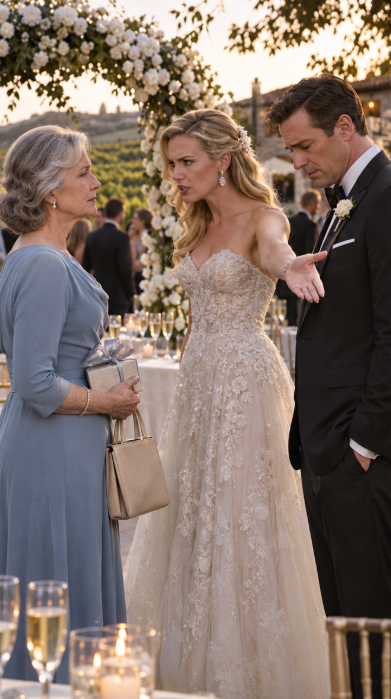
For several seconds, I couldn’t speak.
Jacob was breathing unevenly on the telephone.
“She actually said that?” I asked.
“Yes.”
“Those exact words?”
“Almost.”
I pressed my fingers against my forehead.
“Jacob, tell me what happened.”
He exhaled.
“We were arguing about the wedding bills. She wanted to know why I couldn’t just pay the disputed charges and move on. I told her I didn’t have the money.”
“And then?”
“She thought I meant I didn’t have enough available cash.”
I listened.
“When I showed her the business accounts, she lost it.”
“Did you explain the situation?”
“I tried.”
He laughed bitterly.
“She said she married me because she believed we were building a stable future.”
“That isn’t quite the same as saying she married you for money.”
“Mom, she told me financial security was one of the main reasons she chose me.”
I considered my answer.
“Wanting stability isn’t wrong. Lying about having it is.”
He went silent.
I hated saying it.
But I had spent too many years telling my son what would make him feel better instead of what he needed to hear.
Finally, he said, “I know.”
“Where is Amanda now?”
“At her parents’ house.”
“Have you spoken since?”
“Only by text.”
“What did she say?”
“That she needs time.”
I looked toward the dark kitchen window.
“Then give her time.”
“She might not come back.”
“I know.”
“Mom—”
“Jacob, I cannot promise you that she will.”
He began crying.
It was the first time I had heard him cry since Harold’s funeral.
Every instinct in my body urged me to drive to his house.
To make soup.
To sit beside him.
To assure him everything would be all right.
Instead, I stayed where I was.
“I can listen,” I told him. “But I can’t solve this for you.”
We talked for another twenty minutes.
When we ended the call, I sat quietly until the kitchen clock struck nine.
Then I went upstairs and opened the shoebox marked IMPORTANT.
I took out the drawing.
The crooked cape.
The wooden spoon.
The proud, uneven letters.
MY MOM FIXES EVERYTHING.
I laid it beside Harold’s photograph.
For the first time, I wondered whether those words had become a burden neither Jacob nor I knew how to put down.
Two days later, Amanda appeared at my door.
I had been pruning rosebushes beside the front porch.
She stood near the gate wearing dark trousers and a beige coat.
Her eyes were swollen.
There was no makeup around them.
“Judith,” she said.
I straightened.
“Hello, Amanda.”
“Can we talk?”
I considered refusing.
Then I set down my gardening shears.
“Come inside.”
She followed me into the kitchen.
For a moment, she looked around as though seeing the house for the first time.
There were photographs of Jacob everywhere.
On the refrigerator.
Beside the telephone.
Above the fireplace.
His childhood was preserved in frames and small objects, while his adult life remained largely absent.
I made tea.
Amanda declined.
Then she changed her mind.
We sat across from one another.
She kept her hands wrapped around the cup without drinking.
“I came to apologize,” she said.
I said nothing.
She looked at me.
“For telling you to leave the wedding.”
I waited.
“It was cruel.”
“Yes,” I answered.
She swallowed.
“I know.”
The room settled into silence.
Then she said, “I don’t expect you to forgive me.”
“Why did you do it?”
Amanda looked down.
“I was angry.”
“About my dress?”
“No.”
“Then what?”
She pressed her lips together.
“When I was growing up, my mother planned everything.”
I listened.
“Our house. Our clothes. Our birthdays. Even how we behaved when guests came over.”
She gave a small, humorless laugh.
“If I wore something she didn’t approve of, she’d make me change before leaving the house.”
I glanced at the sky-blue dress hanging upstairs.
Amanda continued.
“She wanted everything to look perfect. She still does.”
“Then why repeat it?”
The question startled her.
She stared at me.
“I don’t know.”
I let her think.
After a moment, she said, “Because when things aren’t perfect, I feel like I’m failing.”
It was the first honest thing I had heard her say about herself.
She looked toward the window.
“My parents have always made it clear that appearances matter. When I told them I was marrying Jacob, they were impressed. He was successful. Established. Responsible.”
“And now?”
Her mouth trembled.
“Now they think I’ve made a fool of myself.”
I felt a flicker of sympathy.
Not enough to erase what she had done.
Enough to recognize that her cruelty had roots.
“Did you know Jacob was struggling financially?”
She shook her head.
“I knew business had slowed. I didn’t know how much.”
“Why didn’t you ask?”
“I did.”
“And?”
“He told me everything was fine.”
I sighed.
Amanda stared into her tea.
“I trusted him.”
The sentence hung between us.
I thought of all the ways trust had been broken in this story.
Jacob had trusted me to pay.
Amanda had trusted Jacob to provide.
I had trusted them both to treat me as family.
Each of us had built expectations around words nobody had examined carefully enough.
Amanda lifted her eyes.
“I know you think I married him for money.”
“I know what Jacob told me.”
She flinched.
“I said I married him because I believed we were building a secure future. That’s different.”
“Then why make the wedding so expensive?”
She looked ashamed.
“Because I wanted everyone to see that I had finally done something right.”
I studied her.
“Who is everyone?”
She looked down.
“My parents. My friends. People I went to school with.”
“And what did you want Jacob to see?”
Her eyes filled.
“That I was worth choosing.”
The answer surprised me.
For a moment, Amanda looked younger than thirty-six.
I thought about how easy it was to mistake confidence for security.
Then I asked the question that had been troubling me.
“Why did you tell the vendors I had approved extra charges?”
She closed her eyes.
“Jacob said you wouldn’t mind.”
“But you never asked me.”
“No.”
“Why?”
“Because I thought you might say no.”
I leaned back.
There it was again.
The truth underneath the wedding.
They had both known I might refuse if I understood what was happening.
So they had arranged things to avoid giving me the chance.
“Amanda,” I said, “you didn’t simply misunderstand my generosity. You chose not to find out where it ended.”
She began crying.
“I know.”
I handed her a tissue.
She accepted it.
For several minutes, neither of us spoke.
Then she whispered, “I never wanted to hurt you like that.”
I looked at her carefully.
“Perhaps you didn’t want the consequences of hurting me. But you were willing to hurt me to get what you wanted.”
She covered her face.
The distinction mattered.
Remorse could be genuine while responsibility remained incomplete.
Finally, she lowered her hands.
“What can I do?”
“Begin by telling the truth.”
“To Jacob?”
“To everyone you’ve misled. The vendors. Your parents. And yourself.”
She nodded slowly.
Then she said, “There’s something else you should know.”
My stomach tightened.
“What?”
“Jacob told me you had offered to pay for our honeymoon too.”
I stared at her.
“I didn’t.”
She looked genuinely shocked.
“He said you wanted to give us something special after the wedding.”
“Did he book anything?”
She hesitated.
“A trip to Italy.”
I felt cold.
“How much?”
“Nearly twelve thousand dollars.”
“Who paid?”
“He put the deposit on his credit card. He said you would reimburse him.”
I gripped the edge of the table.
“Did he tell you that before or after I agreed to help with the wedding?”
“After.”
I looked away.
The pattern was now unmistakable.
Jacob had begun treating my possible generosity as money already received.
Amanda watched me.
“I thought you knew.”
“No.”
Her face crumpled.
“Judith, I’m sorry.”
I closed my eyes.
I believed she meant it.
That did not make the situation less serious.
When she left, I called Eleanor.
I explained the honeymoon.
She advised me to document what Amanda had said and avoid making any new promises.
Then I called Jacob.
He answered immediately.
“Mom?”
“Did you tell Amanda I was paying for your honeymoon?”
Silence.
Then he said, “I was going to ask you.”
“That wasn’t my question.”
He sighed.
“I thought you’d want to.”
I looked toward the drawing on the table.
“Jacob, do you understand the difference between hoping someone will help and telling people they already agreed?”
He didn’t answer.
I continued.
“You have been making promises with money that isn’t yours.”
His voice hardened.
“I haven’t stolen anything.”
“I didn’t say you had.”
“Then why are you talking to me like I’m a criminal?”
“Because you are refusing to understand what you’ve done.”
He sounded hurt.
“Mom, I thought we were finally getting somewhere.”
“So did I.”
The words came out quietly.
He took a breath.
“I’m sorry.”
I wanted to accept it.
But I was beginning to understand how easily apologies could become tools for ending uncomfortable conversations.
“Jacob,” I said, “I need some distance.”
“What?”
“For a while, I don’t want us discussing money. Or asking me to solve problems. I need time.”
His breathing quickened.
“Are you cutting me off?”
“No. I’m changing what I’m willing to do.”
“That’s the same thing.”
I felt tears gathering.
“It shouldn’t be.”
I ended the call gently.
That night, I found myself thinking about Harold’s last weeks.
He had once taken my hand and said, “Judy, promise me you’ll keep living after I’m gone.”
I had promised.
Yet somewhere along the way, I had confused keeping busy with living.
I had organized my days around other people’s needs.
I had become indispensable because I was terrified of becoming unnecessary.
Now, sitting alone in the quiet house, I understood something that frightened me more than Amanda’s cruelty.
My son had learned to use my fear.
And I had helped teach him how.
✓ Lynn R. Adams
For several seconds, I couldn’t speak. Jacob was breathing unevenly on the telephone. “She actually said that?” I asked. “Yes.” “Those exact words?” “Almost.” I pressed my fingers against my for…