Chapter 6: THE DOOR I FINALLY CLOSED
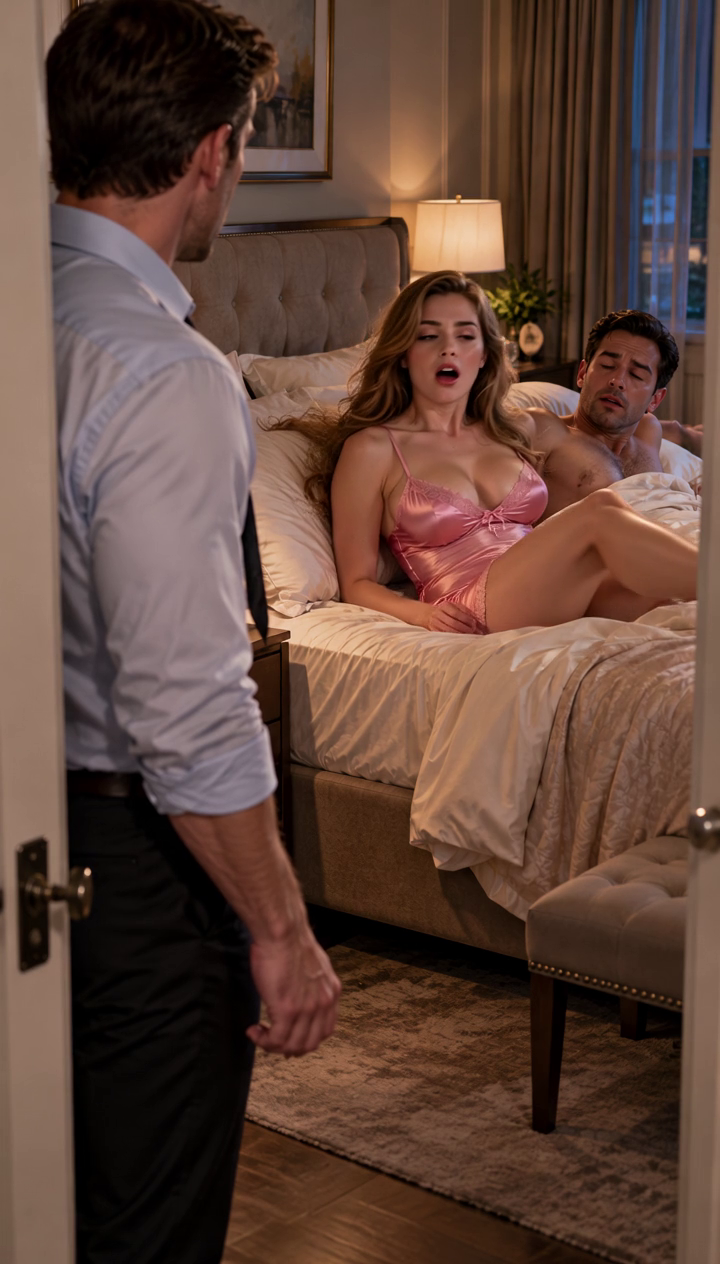
By the time the criminal cases reached their first major hearings, the spring dogwoods were blooming. Claire and I had been living apart for nearly six months. The law still required more time before an absolute divorce, but emotionally the distance had become permanent. There was no dramatic morning when I stopped loving her. There were simply more mornings when I remembered to make coffee before remembering what she’d done.
The legal process moved nothing like the television shows. There were scheduling orders, discovery disputes, sealed account records, witness interviews, and long stretches when no one could tell us what would happen next. Ruth complained that the quiet meant the case was disappearing. I told her the quiet felt terrible to me too. Melissa reminded us that court filings weren’t a substitute for a fair process and that delay alone proved neither corruption nor innocence.
Victor’s defense argued that Crescent had provided real coordination services and that missing work reflected contractor failures and cash-flow problems. Claire’s lawyer said she had relied on Victor’s representations while performing administrative work. The prosecution had to prove the elements of its charges, not merely show that the arrangement was messy or that Claire had cheated on her husband. I listened to their arguments without pretending to know the eventual verdict.
At a preliminary proceeding, the contractor who had inspected the drainage area authenticated his invoices and testified that his company had been paid for an inspection and limited clearing, not full construction. The genuine HOA secretary confirmed no mandatory neighborhood assessment had been authorized. Ruth described the nonprofit’s limited powers and produced board minutes. Harold testified about the notice he received and the work that never followed. Several residents declined publicity but cooperated through counsel.
When I was called, I kept my hands flat on the table. The prosecutor asked me whether I’d ever been a director of Crescent or Eastbank. No. Whether I’d met Victor before discovering him in the bedroom. Not knowingly. Whether I’d signed the April document. Yes, in the narrow circumstances I described. Whether I’d signed the disputed May note. No. The defense questioned my memory, emphasizing that I’d failed to read the first document thoroughly and had a painful divorce underway. Those facts were true. I answered them without raising my voice.
“You dislike Mr. Hale,” Victor’s attorney said.
“Yes,” I replied.
“Because of his relationship with your wife?”
“That’s one reason.”
“So you want him punished.”
I paused. “I want the records to be assessed accurately. What I feel about him doesn’t change which documents I signed.”
The judge didn’t congratulate me. Nobody applauded. The questioning continued. That ordinariness was precisely what made the moment feel real.
Later, as plea discussions progressed, prosecutors and defense counsel negotiated over specific transactions supported by bank records, invoices, and witness testimony. Victor ultimately entered a guilty plea to agreed offenses involving fraudulent collection and misuse of a document in the broader operation. The court confirmed he understood the rights he was giving up and accepted the plea. His sentence included a period of incarceration, supervised release conditions as applicable, and a restitution obligation fixed by the court for identified losses. The precise recoverable amount was lower than every disputed invoice combined, because some expenses had been legitimate or couldn’t be proved as charged.
Claire’s case ended differently. She entered a guilty plea to a reduced offense concerning her role in obtaining funds under misleading representations. The judge considered her lack of prior convictions, documented cooperation, her personal financial benefit, and statements from affected residents. She received a suspended sentence with supervised probation, community service, and a restitution obligation as ordered by the court. Those were consequences, not a magical erasure of harm. If she failed to comply, the court could address the violation under applicable law.
I wasn’t pleased to see Claire standing there. Her face looked thinner, and she kept rubbing the place on her finger where her wedding ring used to be. She had made terrible choices, but I did not need her to be destroyed to prove she’d hurt me.
Ruth addressed the court at sentencing. She described visiting her husband’s grave and worrying that money donated in his memory had been misused. Harold explained how trusting an official-looking notice had cost him savings he needed for home repairs. Neither shouted. Their calm statements carried more force than any revenge speech I could have made.
Claire spoke briefly. “I let pride and fear decide what I told people,” she said. “I knew there were serious problems and I kept helping because I wanted the payments to continue and I didn’t want anyone to see what I’d done. I hurt people who trusted me. I can’t undo that.”
Her voice shook, but she finished. I believed she was remorseful in that moment. I also remembered the woman laughing from our bed. Two things could be true: remorse could arrive, and the person harmed could still choose to leave.
After the hearing, a reporter asked whether I felt vindicated. I declined an interview. The neighborhood did not need my marriage turned into a headline, and the proceedings had already produced public records for anyone interested in the facts. I told Ruth I’d help organize the restitution information so residents understood how to submit or verify claims, then went home.
The civil side had its own unfinished work. The nonprofit’s board, advised by counsel, pursued recovery from available business assets and negotiated with insurers over coverage questions. Not all claims were covered or collectible. Eventually a combination of recovered funds, agreed payments, and voluntary donations funded part of the unpaid community work. Residents received an accounting that showed what had been returned, what remained outstanding, and what had been spent on legal and audit fees. The board replaced its payment procedures, required two independent approvals for large disbursements, and published quarterly records. A few people were still angry, with reason. Transparency didn’t replace their lost money, but it stopped the association from pretending the losses were invisible.
I attended a Saturday workday when volunteers planted new trees at the entrance. Harold supervised with a clipboard as if he were running a classroom. Ruth brought lemonade. Evelyn arrived with gloves and a battered shovel. No one made a speech about overcoming adversity. We worked, laughed at the wrong depth of a hole, and went home muddy. It was the first neighborhood event in a year that didn’t revolve around someone else’s deception.
My divorce took longer. Melissa and Karen exchanged statements, retirement valuations, mortgage information, and appraisals. After the required separation period and completion of the necessary process, the court entered an absolute divorce. Our equitable distribution dispute was resolved in a negotiated agreement reflected in the appropriate court documents. We sold the house. From the proceeds, closing costs and the mortgage were paid, and the remaining value was allocated under the settlement. Claire took responsibility for specified debts connected to her consulting activity to the extent allowed by the agreement; the contested note was not treated as a joint obligation. Our household transfers had been considered in the accounting, though I did not recover every dollar.
On the day we signed the final sale papers, Claire and I stood outside the title office beneath a gray sky. There was no audience. She held a small paper bag containing a set of keys and a framed picture we’d once kept in the hallway.
“I found this while packing,” she said. “It’s your dad at the barbecue.”
“Thank you.”
We stood awkwardly, two people who knew each other’s habits and no longer knew what to say.
“Are you happy?” she asked.
“Not every day. But I’m better.”
“I really am sorry about Friday. About all of it.”
“I believe you regret it.”
She looked at me. “That’s different from forgiving me.”
“I can forgive what happened without coming back.”
Her eyes filled. “I know.”
I had spent months imagining a final confrontation where I would deliver a perfect sentence and she would understand exactly how much pain she’d caused. Instead I had a plain conversation beside a parking lot. It was enough. She knew. I knew. The rest no longer belonged to us as a couple.
I signed a lease on a townhouse closer to Daniel and Megan. It wasn’t as impressive as the house Claire and I had owned, but the kitchen window caught morning sun, and there was a small yard where I planted rosemary. The first night, I put on music while unpacking plates. I found myself humming. Then I realized I hadn’t checked my phone for a message from Claire all evening.
Work settled too. My employer closed its internal review without any finding that I’d participated in Crescent’s operations. I had accepted a promotion that involved less travel and more training of younger managers. Teaching people to check invoices, confirm vendors, and ask questions they feared would sound foolish felt different now. I told them mistakes happen when good people assume someone else has verified the basics. I didn’t tell them every detail of why that mattered to me.
Daniel and I took a fishing trip to a mountain lake in late summer. We caught almost nothing. He grilled hamburgers that were burned on one side and raw-looking on the other, then insisted they were perfect. We sat watching the water until sunset.
“You think you’ll ever trust someone again?” he asked.
“I hope so.”
“That’s all?”
“That’s enough for now.”
He nodded. Daniel had never tried to turn me into a man who stopped caring. He had simply made sure I survived long enough to decide what caring could look like next.
A year after that Friday, Ruth invited me to a small neighborhood picnic. I drove past our old house on the way. The new owners had painted the front door green. There were bicycles on the porch and a pumpkin by the steps. For a moment my chest tightened, but it wasn’t jealousy. The house had become a house again, not a monument to what happened inside it.
At the picnic, Harold introduced me to his granddaughter, who worked for a local nonprofit. She thanked me for helping residents keep their records organized. I corrected her gently: Ruth, Evelyn, Joanna, the accountant, the genuine HOA officers, and dozens of neighbors had done that work. My part was smaller than the story people liked to tell. I was a husband who discovered an affair and then refused to look away when the facts pointed beyond his own pain.
That night I found the first picture Evelyn had given me in an old folder. Claire and Victor stood together outside the clubhouse seven months before I caught them in our bedroom. I studied it for a moment, then placed it in the archived case file with the rest of the documents. I didn’t tear it up. Evidence mattered because it could be tested and understood, not because I needed to keep hurting myself with it.
I remembered Claire’s words: “It was just once. Get over it.” Those words had once made me feel powerless. They no longer determined what I did next.
Revenge, I’d learned, was not forcing the people who betrayed me to suffer in exactly the way I had. The law had imposed consequences for what could be proved; the courts had also exposed the limits of punishment and recovery. I had made choices about money, housing, testimony, and grief that restored control over my own life. None of them erased the past.
I closed the folder, turned off the lamp, and walked to my front door. Outside, the street was quiet. I checked the lock, not because I expected Victor or Claire to appear, but because it was my home and I was taking care of it. Then I went to bed.
For the first time in a long time, tomorrow felt like something I could look forward to.
✓ Lynn R. Adams
By the time the criminal cases reached their first major hearings, the spring dogwoods were blooming. Claire and I had been living apart for nearly six months. The law still required more time before …