Chapter 6: The County That Looked Away212
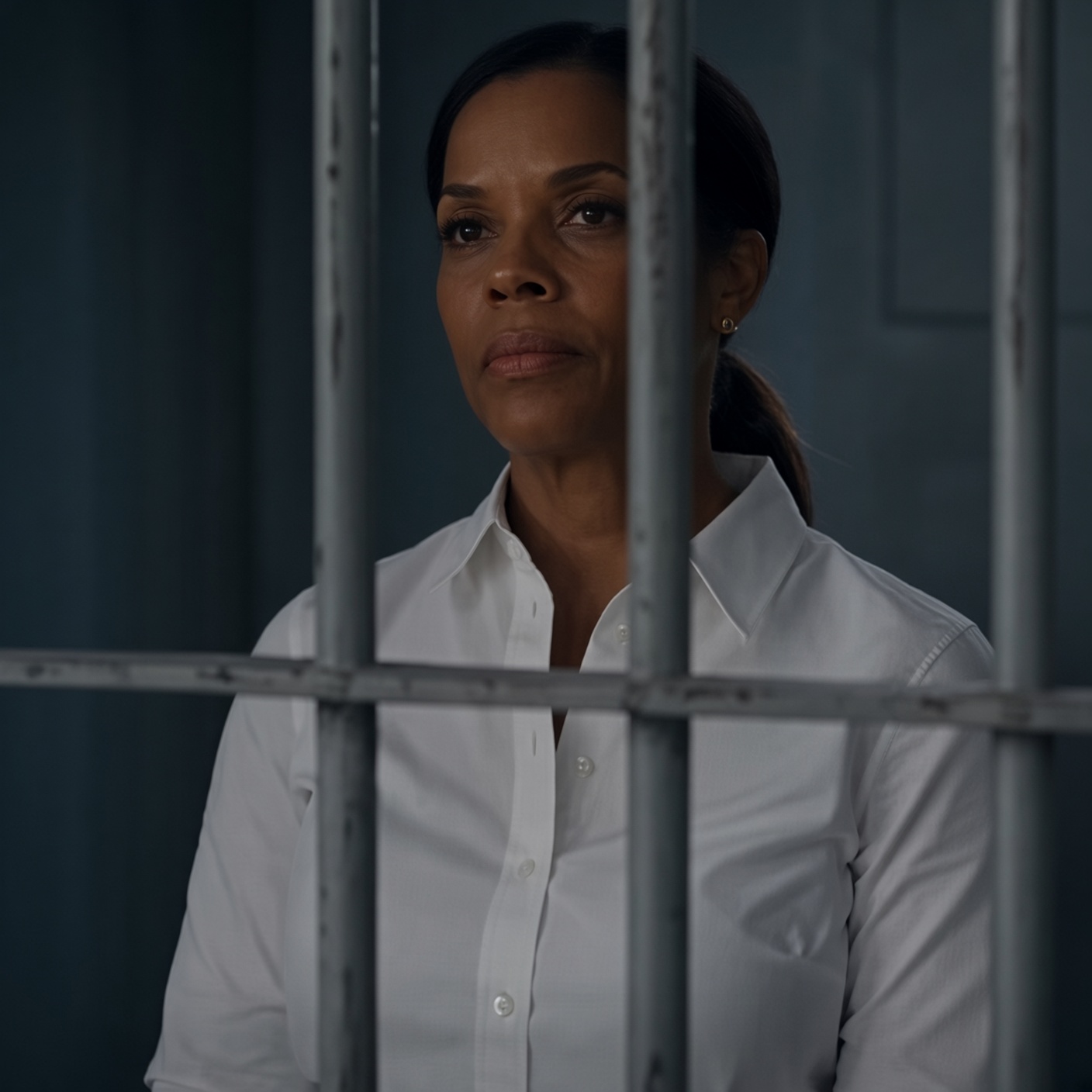
By Friday morning, half of Oak Haven had an opinion about Sarah Reynolds.
Some people called her brave.
Others called her arrogant.
A few insisted she had brought national attention to an ordinary traffic stop because she couldn’t tolerate being treated like everyone else.
The argument spread through coffee shops, church parking lots, social media pages, and the county’s small weekly newspaper.
Most of the people discussing the arrest had never met Sarah.
Fewer had seen the evidence.
But nearly everyone knew Sheriff Thomas Ryker.
He attended football games.
He shook hands at church suppers.
He visited elementary schools during career days and posed for photographs beside patrol cars.
His supporters remembered those moments.
His critics remembered different ones.
Both groups believed they understood him.
Sarah, meanwhile, was learning how quickly a person could become a public argument rather than a human being.
She had returned to the Pentagon for essential duties after consulting with her command and counsel, but she continued traveling to Georgia when court proceedings required it.
Her private phone filled with messages.
Some expressed support.
Others questioned her integrity.
One anonymous writer told her that a real general would have obeyed the sheriff without argument.
Sarah read that message twice.
Then she deleted it.
The writer had unknowingly described the very problem she was trying to confront.
Respect for authority did not require abandoning judgment.
The military had taught her that distinction.
Oak Haven was making her defend it.
At the sheriff’s office, Ryker began preparing his own public response.
He gathered Captain Howard Bell, Lieutenant Cross, and a county communications employee in his office.
A local television station had requested an interview.
Ryker intended to give one.
“She wants to make me look like some backwoods bully,” he said.
Bell shifted uncomfortably.
“The recordings still haven’t been fully reviewed.”
“They’ll show what happened.”
“Then maybe we should wait.”
Ryker turned.
“Every day we wait, she gets another headline.”
Cross spoke carefully.
“The district attorney has asked that we avoid discussing disputed evidence publicly.”
Ryker laughed.
“Since when does Margaret Keene tell the elected sheriff what he can say?”
“She doesn’t. But statements could create problems later.”
“Everything creates problems later, apparently.”
Ryker opened a folder.
Inside was a short video clip extracted from a patrol recording.
It showed a silver sedan moving near the center line of a rural highway.
The image was grainy.
The timestamp wasn’t visible.
The camera angle made the distance between the vehicle and the pavement markings difficult to judge.
Bell leaned forward.
“Where’s the original file?”
“Evidence unit.”
“Was this taken from Miller’s cruiser?”
“That’s what the record says.”
Cross watched the clip.
“There’s no context.”
“The context is that she was driving recklessly.”
“We don’t know that from eleven seconds of video.”
Ryker slammed the folder shut.
“You people are starting to sound like her defense team.”
Bell looked down.
Cross remained silent.
Ryker continued.
“I’m going to remind this county who they’ve trusted for eighteen years.”
Neither officer answered.
They knew the sheriff was no longer trying simply to defend the arrest.
He was trying to defend the story he had told about himself.
That afternoon, Ryker appeared on local television.
He wore his uniform and stood in front of an American flag.
The interviewer asked whether Sarah’s race had influenced the stop.
“Absolutely not,” Ryker replied.
“We enforce the law without regard to race, rank, or political connections.”
He leaned toward the camera.
“Some people think their titles entitle them to special treatment. This department doesn’t operate that way.”
The interviewer asked about the additional charges.
“Our officers documented dangerous driving and refusal to comply with lawful commands.”
“What about the report changes?”
“Routine administrative corrections.”
“And the deputy’s contradictory statement?”
Ryker’s expression hardened.
“We don’t discuss internal personnel matters.”
Then he introduced the short video clip.
The station aired it with a caption describing it as footage associated with Sarah’s traffic stop.
Within hours, the clip spread online.
People who had previously doubted the charges began asking whether Sarah had lied.
Some accused her of trying to ruin a sheriff’s career.
Others pointed out that the recording showed too little to establish reckless driving.
Sarah watched the broadcast with Clara.
The attorney paused the video.
“Does that look like your rental?”
“The make and color are similar.”
“Is that the road?”
Sarah studied the image.
“I don’t recognize the shoulder.”
Clara enlarged a still frame.
A small roadside marker appeared near the far edge.
Sarah leaned forward.
“Wait.”
“What?”
“There was no marker like that between the grain elevator and where I stopped.”
“Could it be farther north?”
“Possibly. But I don’t remember it.”
Clara saved the recording.
“We don’t assume it’s false. We compare it with authenticated source footage.”
Sarah nodded.
But something troubled her.
The clip had not simply contradicted her memory.
It had appeared at the exact moment the sheriff needed something to challenge her credibility.
That timing was worth examining.
Brenda Lawson watched the same broadcast from her living room.
Her suspension was entering its third day.
The county had not yet decided whether she would be terminated.
Martin sat beside her, rubbing his injured back.
When the footage ended, Brenda reached for the remote.
“That’s not right.”
Martin looked at her.
“What isn’t?”
“The way they’re presenting it.”
“Do you recognize the video?”
“No. But I know the original inventory. That isn’t how our recording system normally exports files.”
She stood and retrieved a notebook from the kitchen drawer.
For years, Brenda had maintained personal reminders about routine office procedures.
Not confidential case files.
Just notes about training requirements, software updates, and technical problems.
She opened a page from the previous spring.
It described a department-wide change in patrol-camera export settings.
The new system embedded metadata into authenticated evidence packages.
Standalone video clips could be created for training or public release, but they did not necessarily carry the full evidentiary information.
Brenda looked at Martin.
“They’re showing something that could be incomplete.”
“Can you prove it?”
“Not from the television.”
“Then what can you do?”
She sat down.
“Tell the investigators where to look.”
Martin considered her.
“Are you going to lose your job?”
Brenda looked at the suspension letter on the table.
“I may have already.”
He reached for her hand.
“Then at least make losing it mean something.”
The county commission convened a special meeting the following Monday.
Its chair, Lydia Grant, had served in local government for eleven years.
She was a practical woman who disliked public spectacles and preferred problems that could be resolved through budgets, meetings, and clear responsibilities.
Sarah Reynolds’s arrest had become none of those things.
The commission had received requests for records, complaints from residents, and letters demanding independent oversight.
Because the sheriff was independently elected, the commissioners could not simply order him removed from office.
But they controlled county appropriations and had authority to examine certain administrative issues.
They also had a responsibility to respond to public concerns.
Grant opened the meeting with a prepared statement.
“This commission will not decide criminal guilt or innocence. Those matters belong to the courts. Our responsibility is to determine whether county procedures, expenditures, and records-management practices require examination.”
Ryker sat near the front.
He looked offended by the suggestion that his office required scrutiny.
Clara attended with Sarah.
Denise Carter sat two rows behind them.
Aunt Evelyn had insisted on coming.
When public comments began, several residents spoke in Ryker’s defense.
One retired businessman praised his work during a flood.
A woman described how deputies had helped locate her missing father.
Sarah listened without reacting.
Those experiences could be genuine.
They didn’t invalidate what had happened to her.
Then Denise approached the microphone.
Her hands trembled as she adjusted its height.
“My name is Denise Carter. Two years ago, Sheriff Ryker stopped my car and threatened to arrest me when I questioned why he wanted to search it.”
The room grew quiet.
“I filed a complaint. I was told the matter had been reviewed and no wrongdoing occurred.”
She held up the department’s letter.
“I accepted that answer because I didn’t think I had another choice.”
Ryker shook his head.
Denise looked directly at him.
“I’ve spent two years wondering whether I did something wrong by asking a question.”
She took a breath.
“I don’t wonder anymore.”
Several people applauded.
Others remained silent.
Denise returned to her seat.
Sarah reached back and gently touched her shoulder.
It was a small gesture.
But Denise’s eyes filled.
After the meeting, Lydia Grant approached Sarah.
“General Reynolds, may I speak with you?”
“Of course.”
Grant looked toward Clara.
“Your attorney is welcome to stay.”
They moved into a quieter corridor.
Grant appeared weary.
“I want you to understand that this county isn’t indifferent.”
Sarah studied her.
“I’m glad to hear that.”
“But people are frightened.”
“Of what?”
“Of losing trust in an institution they depend on.”
Sarah considered the answer.
“Trust isn’t preserved by refusing to examine misconduct.”
“I know.”
“Does the commission?”
Grant’s expression tightened.
“We’re trying to establish the facts.”
Sarah nodded.
“Then I hope you’ll examine what happened before I was arrested, not only afterward.”
Grant looked at her.
“What do you mean?”
“The dispatcher recorded a stop instruction before any violation was reported. Other residents describe similar encounters. Those facts deserve careful review.”
Grant glanced down the corridor.
“Thomas has run that office for nearly two decades. Many people owe him favors.”
“Are you one of them?”
The question was direct but not hostile.
Grant answered without hesitation.
“He supported my first campaign.”
Sarah waited.
“And I’ve supported several of his budget requests.”
“Then your decision may be difficult.”
Grant looked away.
“Yes.”
Sarah softened her voice.
“Difficulty doesn’t make a decision less necessary.”
For a moment, the two women stood in silence.
Then Grant said, “I’ll recommend that the county retain an independent records auditor.”
Sarah nodded.
“That’s a reasonable beginning.”
That same evening, Miller met with Robert Ellis.
His attorney had prepared a formal disclosure concerning the disputed arrest report and the earlier radio instruction.
Miller had already provided an account to investigators, but Ellis wanted every statement carefully documented.
They reviewed the timeline.
p.m.: Miller reports a vehicle with Washington plates.
p.m.: Ryker directs the stop.
p.m.: Walter Price’s camera records Miller following the sedan.
p.m.: Miller activates emergency lights.
p.m.: Sarah is booked.
p.m.: cell four closes.
p.m.: the Pentagon call.
Ellis pointed to the first entry.
“Why did you report her plates?”
Miller looked uncomfortable.
“Because the sheriff told us to identify certain out-of-state vehicles.”
“Which vehicles?”
“Rentals. Especially ones traveling alone.”
“Did he explain why?”
“He talked about drugs and stolen vehicles.”
“Was there a written policy?”
“Not that I saw.”
Ellis leaned back.
“Did he ever specifically mention race?”
Miller hesitated.
“Sometimes.”
Ellis waited.
Miller rubbed his forehead.
“He’d make comments about people coming down from cities and thinking they could tell us how to do our jobs.”
“That doesn’t answer my question.”
Miller looked at the floor.
“He made comments about Black drivers being more likely to complain.”
Ellis wrote the statement down.
“Were those comments connected to this stop?”
“I don’t know exactly what he was thinking.”
“Good. Don’t guess.”
Miller exhaled.
“But he did say something before I pulled her over.”
“What?”
Miller closed his eyes.
“He said she looked like the kind who’d make trouble.”
Ellis remained silent.
Miller continued.
“I asked what that meant.”
“What did he say?”
“He told me I’d understand when I got older.”
The attorney placed his pen down.
“Jared, you should have reported that.”
“I know.”
“Your failure to do so may have consequences.”
Miller nodded.
“I know that too.”
Two days later, the independent auditor began examining the sheriff’s office records under arrangements established by the county and the relevant custodians.
The scope was limited.
It covered administrative access, record retention, and potential irregularities involving the Reynolds arrest.
Investigators pursuing criminal questions remained separate.
The auditor quickly identified inconsistencies.
Multiple versions of the arrest report existed.
The final version had been authenticated from Ryker’s office.
A camera file had been reclassified after the preservation demand.
An export had been made without a corresponding explanation in the evidence register.
And an earlier radio communication appeared to be missing from the materials initially supplied.
The auditor documented the discrepancies and formally requested the original recording archive.
Ryker responded through counsel.
He insisted the changes were ordinary administrative actions and denied intentional misconduct.
But the auditor wasn’t satisfied.
A system technician confirmed that the department retained a backup recording service.
The backups were supposed to preserve dispatch audio even if local files were changed.
The auditor requested access.
The following morning, a technician called with troubling news.
The relevant backup segment had been overwritten during a system maintenance operation.
The maintenance had been initiated manually.
The administrative account used belonged to Brenda Lawson.
The auditor immediately notified the appropriate investigators.
The information reached Clara later that afternoon.
She called Sarah.
“We have a new problem.”
Sarah was at the Pentagon, reviewing routine operational documents.
“What happened?”
“The dispatch backup may have been overwritten. The system attributes the maintenance action to Brenda’s account.”
Sarah frowned.
“Brenda reported the evidence problem.”
“Yes.”
“Then why would she destroy the backup?”
“That’s exactly what we need to understand.”
“Could someone else have used her account?”
“Possibly. We need authentication records and testimony before drawing conclusions.”
Sarah set down her pen.
She remembered Brenda’s quiet apology outside cell four.
She remembered the woman’s frightened expression at the booking desk.
“Clara, I don’t think she would do that.”
“Neither do I. But our instincts aren’t evidence.”
Sarah looked toward the window.
For the first time, she felt genuine fear that the case could collapse under the weight of competing accusations.
Then Clara added something else.
“The auditor also found that the backup wasn’t the only copy.”
Sarah sat straighter.
“What do you mean?”
“There’s evidence that another recording was transferred to a separate archive before the maintenance operation.”
“Who transferred it?”
“We don’t know.”
Clara paused.
“But someone appears to have anticipated that the original might disappear.”
Sarah thought of the frightened dispatcher.
The hesitant deputy.
The sheriff who believed everyone would protect him.
And she wondered which of them had finally decided the truth was worth protecting.
✓ Lynn R. Adams
By Friday morning, half of Oak Haven had an opinion about Sarah Reynolds. Some people called her brave. Others called her arrogant. A few insisted she had brought national attention to an ordinary …