Chapter 6: I WALKED AWAY WITH MY NAME INTACT
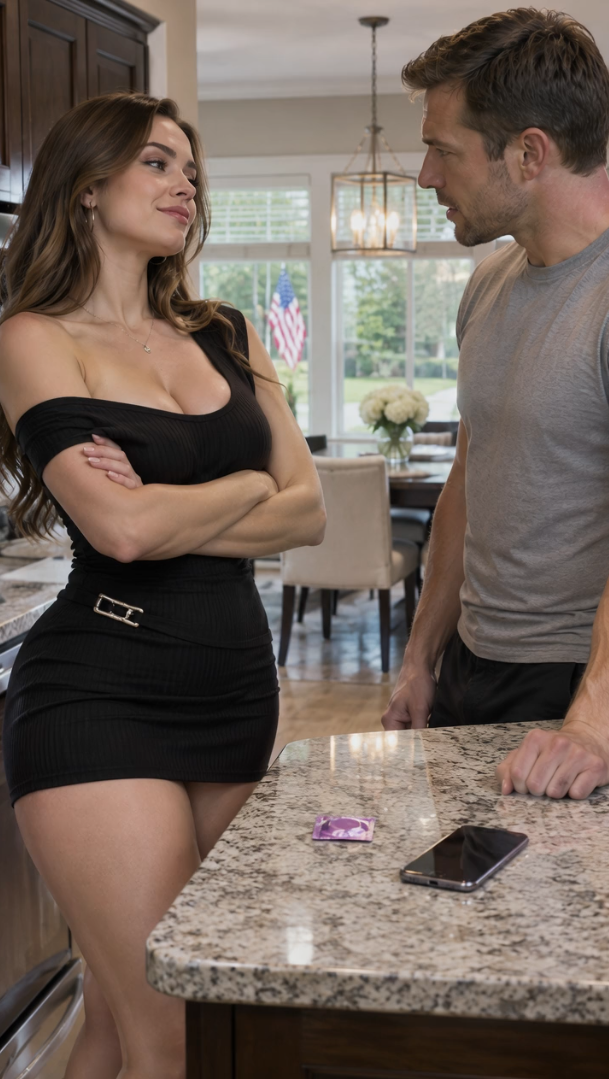
My wife had agreed to let another man blame me for missing neighborhood money, and that confession ended our marriage more completely than the affair.
We stood beside my car beneath a streetlight while her lawyer waited near the entrance to the meeting hall.
“Say that again,” I told Claire.
“Grant wanted to claim you were involved.”
“That’s not what you said.”
She swallowed.
“I told him he could use your name if investigators asked who authorized the loan.”
“Why?”
“He said we’d both be ruined if I didn’t cooperate.”
“You were willing to ruin me instead.”
She pressed her hands together.
“I thought we’d find a way to fix it before anyone asked.”
“You thought you could risk my future without telling me.”
Her attorney approached when our voices rose, and I stopped before anger could turn the conversation into something neither of us could document accurately.
“I’m not arguing about this in a parking lot,” I said.
“Tell your lawyer everything, and give the investigators the records they need.”
Claire nodded, but I had learned that a nod wasn’t the same as action.
I drove home alone and put my wedding ring on the nightstand.
I did not throw it across the room or send a photograph to our friends.
I simply set it beside the old picture of us laughing on our honeymoon and closed the drawer.
The next day, Julia filed the paperwork needed to begin the divorce.
We also asked for clear temporary financial arrangements because the disputed transfers and business activity had made informal promises impossible to trust.
Claire retained her own counsel throughout.
There were no dramatic surprise orders that handed me our house because she’d cheated.
There were meetings, disclosures, expense schedules, and disagreements about money that had once seemed unquestionably ours.
The process was painful precisely because it was ordinary.
Our mortgage company still expected its monthly payment.
The homeowners’ insurance still needed renewing.
The kitchen faucet leaked while our lawyers discussed who should pay for repairs during separation.
I learned that walking away from a marriage did not mean walking away from shared responsibilities.
Claire moved into an apartment after we reached a temporary agreement about the house and bills.
She left the cookbook her grandmother had given us because neither of us could decide whether it belonged to her or to our memories.
I found it in a moving box a week later and mailed it to her without a note.
It was not forgiveness.
It was a decision not to turn every small possession into another battlefield.
Meanwhile, Claire met with investigators in the presence of her lawyer and provided records from Cedar Lantern Creative.
She acknowledged receiving association payments for work that had not been completed as described on the invoices.
She also admitted knowing the proposed home-equity application used my signature without authorization.
Her statement did not erase her responsibility, but it helped investigators understand which documents had been altered and where the money had traveled.
The financial review expanded after subpoenas and authorized requests produced additional bank and vendor records.
The reviewers identified a pattern of inflated invoices and payments connected to Grant’s business associate.
They traced funds into accounts linked to the vendor network and to Claire’s company.
Some payments corresponded to genuine work, but others had no credible supporting service records.
That distinction mattered because an honest investigation couldn’t label every invoice fraudulent simply because the treasurer was dishonest.
The drive provided versions of documents that investigators could compare against originals held by the association and its banks.
A recorded conversation, preserved by Claire while she was one of the participants, was reviewed by attorneys before prosecutors considered how it could be used.
In it, Grant discussed using my name as financial cover if questions arose about the reserve fund.
Claire could be heard protesting at one point, but the rest of the evidence showed she had continued participating afterward.
The recording was not an escape hatch for either of them.
It was one piece of a much larger record.
Months later, the lender issued a written finding that the home-equity application had not been authorized by me.
No loan had been funded, and the application was closed.
I supplied the determination to the credit bureaus as part of my dispute and kept copies for the divorce proceedings.
Seeing my name cleared in writing didn’t make me happy.
It made me realize how close I’d come to spending years defending myself against a debt I never requested.
Maya called after the association received the results of the financial review.
“The board is pursuing recovery,” she said.
“They’ve also changed the payment approval process.”
“Good.”
“They require two independent approvals now, and residents can inspect summaries without begging for explanations.”
Her voice sounded steadier than it had at the coffee shop.
“What about you?” I asked.
“I’m filing for divorce.”
I looked at the wall behind my desk, where the old camera had once been pointed into the living room.
“I’m sorry.”
“Don’t be sorry for telling me what you knew,” she said.
“I needed to make my own decision with the facts.”
We never turned our shared pain into a romance or a neighborhood spectacle.
We became two people who could exchange evidence respectfully and then let each other rebuild in peace.
The legal investigation took longer than anyone on our street wanted.
Some residents were angry that there were no immediate arrests after the audit report circulated.
Others thought the association should publish every private email it collected.
The board’s counsel refused to turn an ongoing investigation into entertainment, and that restraint protected innocent people as much as guilty ones.
Grant tried to cast himself as the victim of a personal feud.
He told several residents that my divorce had made me desperate to destroy his reputation.
I answered through counsel where necessary and otherwise kept quiet.
The evidence didn’t grow stronger when I shouted it.
It grew stronger when independent records agreed with one another.
Eventually, prosecutors filed charges arising from the financial transactions and falsified documentation.
Grant faced the more serious allegations tied to directing the vendor payments and manipulating approvals.
Claire faced consequences for her own participation, including the records and the unauthorized use of my signature.
Their lawyers disputed parts of the evidence, and neither case ended overnight.
I attended the hearings I was entitled to attend and gave a statement about the personal impact of the attempted loan.
I did not claim that Claire’s affair itself was a crime.
What happened between them had destroyed our marriage, but the financial misconduct required its own proof and its own legal outcome.
Grant eventually entered a guilty plea to offenses involving the association funds and false financial records.
The judge imposed a custodial sentence and restitution obligations after considering the established losses, his role, and the sentencing record.
Claire accepted responsibility through a separate plea agreement involving her documented conduct.
She received a community-control sentence with conditions and restitution requirements, rather than escaping consequences because she had cooperated.
The court made clear that her cooperation mattered, but it didn’t transform deliberate choices into accidents.
Recovery remained a practical process involving available assets, insurer decisions, and payment arrangements.
The association didn’t suddenly get every dollar back, and some repairs remained delayed while claims were resolved.
Diane told me the residents had finally approved a transparent repair schedule for the playground drainage and retaining wall.
“At least people know what they’re paying for now,” she said.
That sounded like a small victory until I remembered how long they’d been kept in the dark.
Our divorce reached a final settlement after appraisals, financial disclosures, and negotiations about the disputed transfers.
We sold the house instead of forcing one of us to carry a mortgage neither could comfortably afford alone.
The agreement addressed verified marital assets and obligations while preserving claims related to unauthorized transactions for the appropriate proceedings.
The judge approved the settlement, and we signed the documents that made our separation permanent.
There was no extraordinary windfall for the faithful spouse.
I received the share and protections supported by the records and the negotiated terms.
Claire kept certain personal property, assumed obligations allocated to her, and left without the future we’d planned together.
On the day we closed the sale, she asked to meet me once in the empty kitchen.
I agreed because there were keys to exchange and one final utility document to sign.
The island was bare, and sunlight fell across the same patch of stone where I’d placed the wrapper.
“I used to imagine us growing old here,” she said.
“So did I.”
She looked toward the living room, where the sofa had been removed weeks earlier.
“I wish you’d never found it.”
For a moment, I couldn’t believe what I’d heard.
“Do you wish I hadn’t found it, or that you hadn’t done any of it?”
Claire closed her eyes.
“That I hadn’t done any of it.”
“Then say that when nobody is here to rescue you from the consequences.”
She nodded slowly.
“I’m sorry for the affair, for the money, and for letting him watch our house.”
“I’m sorry I ever made you doubt your own eyes.”
It was the clearest apology she’d given me, and I could hear how much it cost her to say it without blaming Grant.
I believed she meant those words in that moment.
I also knew that belief couldn’t restore the man I had been before Sunday morning.
“I forgive you enough not to carry this every day,” I said.
“But I’m not coming back.”
Tears slid down her cheeks, and she made no attempt to stop me as I handed her the final set of keys.
I walked through the front door without checking whether she followed.
Fourteen months after finding the wrapper, I moved into a small townhouse on the other side of Columbus.
It had plain walls, an awkward staircase, and a living room without a camera watching the sofa.
I bought a secondhand couch after inspecting its cushions, which made the salesman laugh when I explained that I was careful about hidden surprises.
For the first time in a long while, I laughed too.
Teresa still sent me a birthday card, and Jenna occasionally asked whether I was doing all right.
Maya found her own place, and Diane remained the loudest advocate for accurate meeting minutes in Briar Glen.
I didn’t need any of them to tell me I’d won.
Winning would have meant there was never a betrayal, never a threatened loan, and never a stranger watching me inside my own home.
What I had instead was a life rebuilt from records, boundaries, and choices I could live with.
One evening, I sat on my new sofa and watched a storm pass over the neighborhood.
My phone buzzed with a message from a friend asking whether I wanted to join a weekend barbecue.
I smiled, put the phone down, and looked around the room.
There was nothing hidden under the cushions and nobody waiting for me to stop asking questions.
The first anniversary of the discovery passed without a celebration or an angry message to Claire.
I went for a long walk and returned home before sunset, grateful that no one expected an explanation for the quiet.
There were still moments when a familiar perfume or a late-night notification tightened my chest.
I didn’t pretend those reactions meant I hadn’t moved forward.
They meant the past had happened, and I was learning not to let it choose my next decision.
When I thought about the house in Briar Glen, I remembered the people who had told the truth even when it cost them comfort.
Their courage had been quieter than Grant’s threats, but it had lasted much longer.
The truth hadn’t given me my old marriage back.
It had given me the right to begin again without living inside somebody else’s lie.
THE END
✓ Lynn R. Adams
My wife had agreed to let another man blame me for missing neighborhood money, and that confession ended our marriage more completely than the affair. We stood beside my car beneath a streetlight whi…