Chapter 6: I LOST MY WEDDING AND FOUND THE TRUTH
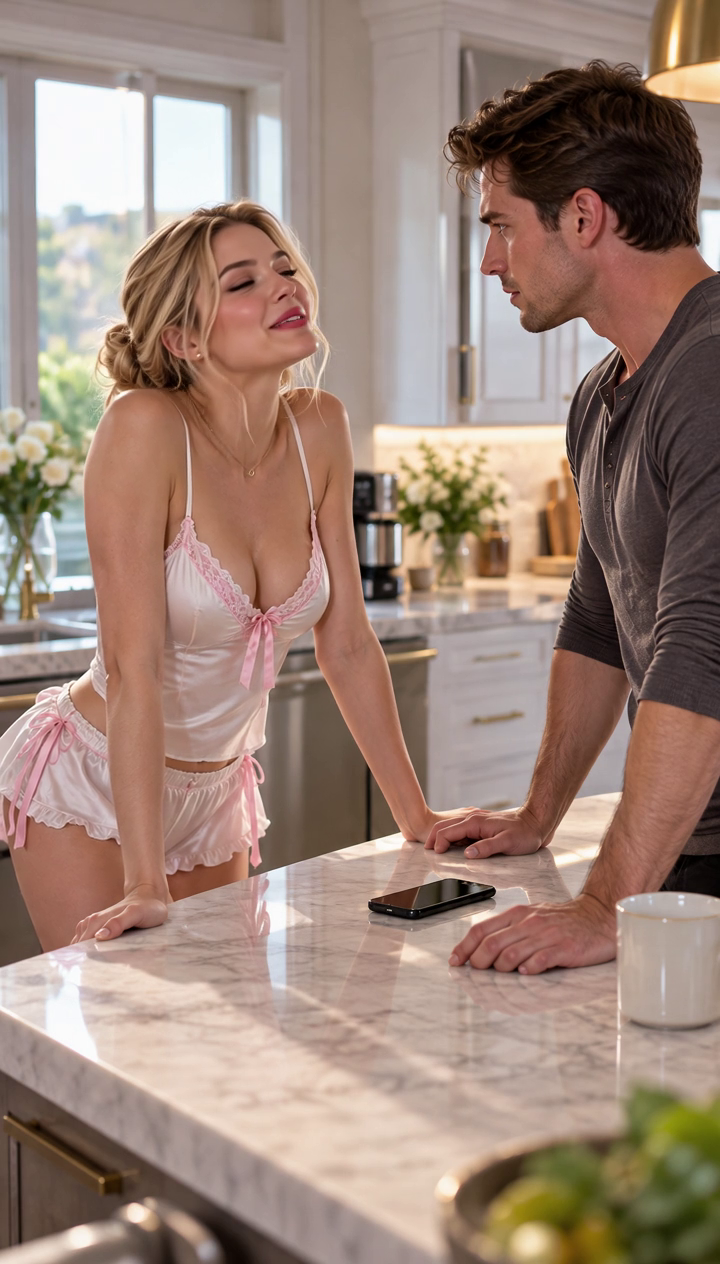
The document claiming I had approved Nolan’s venture was dated the morning Graham showed me exactly what kind of woman I had been at my bachelorette party.
I had lied about the kiss that morning, but I had not signed away our wedding money.
Those two truths could exist together, and I was determined not to let either erase the other.
Andrea laid the disputed page beside the invoices and asked when I had first seen it.
“Today,” I said.
She asked whether I had given Tessa permission to type my name on an investment authorization.
“Never.”
Graham watched quietly while I answered.
He was no longer my fiancé, but our names still shared a claim, a bank account history, and a financial loss.
Andrea requested the original electronic file and every communication connected to its creation.
Tessa’s attorney initially offered only a printed copy.
After further requests in the litigation, a native document and related emails were produced.
The file information showed it had been created weeks after the date printed on the page.
Creation metadata alone could be misleading when a document was copied or converted, so Andrea did not treat it as conclusive proof.
The accompanying emails, however, made the problem harder for Tessa to explain.
In one message sent after the lawsuit began, Tessa asked Nolan whether he still had the investment form they had discussed creating.
He replied that there had never been a signed form and warned her not to “make one look old.”
That exchange was produced by Nolan’s lawyer after a formal request for relevant communications.
It did not come from hacking, secret surveillance, or somebody guessing a password.
Nolan later acknowledged under oath that Elara and Graham had never been presented with a venture proposal by his company.
He claimed he had thought Tessa could use money from her own business to fund his work.
Whether that excuse was believable remained open to challenge, especially in light of his warning texts to me.
But his testimony undermined the claim that I had approved the use of our wedding account for his business.
Andrea organized the evidence into a chronology anyone could follow.
First came Tessa’s invoices, describing specific wedding styling and installation expenses.
Next came my authorized transfers from the joint account.
Then came the legitimate vendors’ statements confirming that the claimed services had not been requested or performed.
After that were Lowcountry’s payment records showing money flowing to Nolan’s company for unrelated work.
Finally came the late-created authorization and emails questioning whether such a document had ever existed.
Each piece had a separate source, and each could be checked against the others.
The detective reviewed the materials through the appropriate investigative process and referred the case to the prosecutor for a charging decision.
He emphasized that filing a civil lawsuit did not automatically make someone guilty of a crime.
I was grateful for that reminder, because I had learned what happens when people decide the conclusion before examining the evidence.
The next mediation session felt different from the first.
Tessa arrived pale and tense, with Nolan and his lawyer joining the settlement discussions concerning his company.
We did not sit together to trade insults.
The attorneys reviewed the disputed records, the actual work performed, and what each party could realistically repay.
The documented wedding account loss remained fourteen thousand six hundred dollars.
We did not include the emotional damage from the kiss in our financial claim.
Nobody promised that a canceled wedding entitled us to recover every related disappointment as money damages.
Tessa’s attorney first argued that she deserved some compensation for planning time.
Andrea pointed to the missing service agreement, false descriptions, and absence of useful deliverables.
Nolan’s lawyer acknowledged that his company had received nine thousand eight hundred dollars and wanted to avoid escalating litigation costs.
After hours of negotiation, the parties reached a written settlement on the civil claims.
Tessa and Nolan’s company agreed to a documented repayment schedule covering the fourteen thousand six hundred dollars in total, with clear provisions preventing double recovery.
The agreement included an enforceable consent judgment if payments were not made, subject to court approval and applicable procedure.
It did not buy anyone immunity from a criminal investigation.
Andrea explained the terms to Graham and me separately before we signed.
I took responsibility for the legal expenses allocated to me under our own agreement rather than shifting them onto him.
Graham declined the extra apology I had prepared about the invoices.
“We have the facts now,” he said.
“Let’s finish this correctly.”
The prosecutor’s office later notified us that it had pursued a theft-by-deception case against Tessa based on the wider evidence.
Several months passed before the case reached a negotiated resolution in court.
Tessa entered a guilty plea, and the judge imposed supervised probation and restitution after reviewing the circumstances and her ability to pay.
Amounts collected under the civil settlement were credited against the corresponding restitution obligation, avoiding payment twice for the same loss.
Nolan was not convicted of a crime in that case.
His civil repayment responsibility did not establish criminal guilt, and the prosecutor did not claim otherwise.
It wasn’t the cinematic justice my mother once would have imagined, with police dragging villains from a ballroom.
It was a set of court papers, monthly obligations, and a public record that would outlast our embarrassment.
Some installments arrived late and required attorney reminders.
Others came on time.
Recovery took effort and patience, and neither the settlement nor the criminal sentence restored the relationship I had destroyed.
Tessa sent me a letter after her plea hearing.
She said she had convinced herself that borrowing money without permission would be harmless if she repaid it before anybody noticed.
She admitted Nolan’s business had been struggling and that she had used our wedding plans as a way to move money.
She also admitted she had encouraged him to come to the bachelorette party because she believed seeing my old boyfriend would distract me from questions about the invoices.
The letter was her account of her choices, not independent proof of every motive she described.
But it explained why she had kept urging me to blame Brooke rather than examine what happened.
I read the letter twice and did not answer.
I could acknowledge the person who once comforted me while refusing to rebuild a friendship founded on deception.
Brooke and I met for coffee a few weeks later.
She had expected me to blame her for giving Graham the videos.
“I did blame you at first,” I told her.
“It was easier than admitting what you showed him.”
Brooke said she hadn’t enjoyed sending the files.
She had cried before pressing send because she knew it might end my marriage before it started.
“There wasn’t a marriage yet,” I said.
“You gave him the chance to choose with his eyes open.”
We didn’t embrace and declare everything repaired.
We talked, apologized, and agreed to let friendship rebuild only if it could survive honest conversations.
Mom changed more slowly.
She still flinched when acquaintances mentioned the canceled wedding or Tessa’s case.
Sometimes she began a sentence about how people misunderstood our family and stopped herself.
Dad would look at her, and she’d try again.
Eventually she told me she had mistaken protecting my image for protecting me.
“I was proud of having a daughter nobody criticized,” she admitted.
“I should have cared more about whether you could face criticism honestly.”
I told her I had made my own choices and couldn’t blame her for my kiss or my lies.
She nodded, relieved and saddened at once.
We were finally speaking as people, not characters in the perfect family story we had repeated for years.
Graham and I had one last private conversation after the financial settlement was signed.
He asked to meet at a quiet café near the park where we had walked on our second date.
I brought the ring in its original box.
After consulting our respective advisers, we had agreed it would be returned to him rather than litigated.
He opened the box briefly and closed it again.
For a long moment we discussed ordinary things: his new apartment, my work, and Lydia’s children starting school.
Then he looked at me with the same clear-eyed attention that had once made me feel completely known.
“Do you ever wish you hadn’t seen Nolan that night?” he asked.
“Every day,” I said.
“But that’s not the whole answer.”
He waited.
“I wish I’d told him to leave,” I continued.
“And after I didn’t, I wish I’d come home and told you the truth.”
I rubbed the edge of my coffee cup with my thumb.
“The thing I regret most is how I tried to make you afraid nobody would believe you.”
His expression shifted, just slightly.
“That part hurt more than the kiss,” he said.
“It told me what you might do the next time the truth was inconvenient.”
I nodded because he was right.
There was no speech I could deliver that would make his distrust unreasonable.
“I don’t expect you to take me back,” I said.
“I’m not asking.”
Graham looked toward the street, where an elderly couple crossed slowly between two parked cars.
“I loved you,” he said.
“I know,” I answered.
“And I loved you, even though I didn’t act like someone protecting that love.”
We stayed another minute, neither reaching across the table.
Then he stood, thanked me for finally being honest, and left with the ring.
I watched him walk away without calling after him.
That was the ending I had earned, not because I deserved permanent punishment but because another person’s trust was never mine to demand.
Months later, our accounts were divided, the household lease was finished, and the scheduled reimbursements were still being monitored.
There were no hidden weddings, no secret reunion, and no dramatic courtroom speech that changed Graham’s mind.
I was learning to live without trying to control how every person described me.
Some knew only the video, and others knew about the stolen money and the lawsuit.
Both stories were true, but neither was permission to erase the other.
I had betrayed Graham, and Tessa had deceived us financially.
I had been responsible for my conduct, and I had also been a victim of someone else’s scheme.
Growing up meant admitting all of it without turning one fact into an excuse for the next.
I used the notebook from the bookstore to record a quieter kind of progress.
Some pages contained apologies I would never send because their purpose was to understand, not to pressure someone into responding.
Others held simple reminders to verify an invoice, ask a difficult question, or admit an error before it became a performance.
Once, I met a man at a friend’s birthday dinner who made me laugh for the first time in weeks.
I did not rush to turn that conversation into proof I was healed or worthy of love again.
I went home, finished the book on my nightstand, and slept without checking whether anyone had posted about me.
Dad said that sounded like a small victory.
It was, because I had spent years measuring myself by attention and approval.
I could not force Graham to forgive me, Tessa to become trustworthy, or the neighborhood to stop whispering.
I could choose what I said, what I signed, what I checked, and whether the people I loved received the truth before they had to discover it.
On the anniversary of the morning Graham placed his phone on our kitchen table, I walked along River Street alone.
The rooftop bar looked ordinary in daylight, its windows reflecting clouds over the Savannah River.
I remembered how fiercely I had believed the worst thing that could happen was being exposed.
I had been wrong.
The worst thing would have been remaining the person who thought love was a contest she could win by making everyone doubt the truth.
I couldn’t repair the marriage that never began, but I could stop building my life around the next perfect lie.
THE END
✓ Lynn R. Adams
The document claiming I had approved Nolan’s venture was dated the morning Graham showed me exactly what kind of woman I had been at my bachelorette party. I had lied about the kiss that morning, but…