Chapter 5: THE EVIDENCE FINALLY TURNED AGAINST THE LIAR
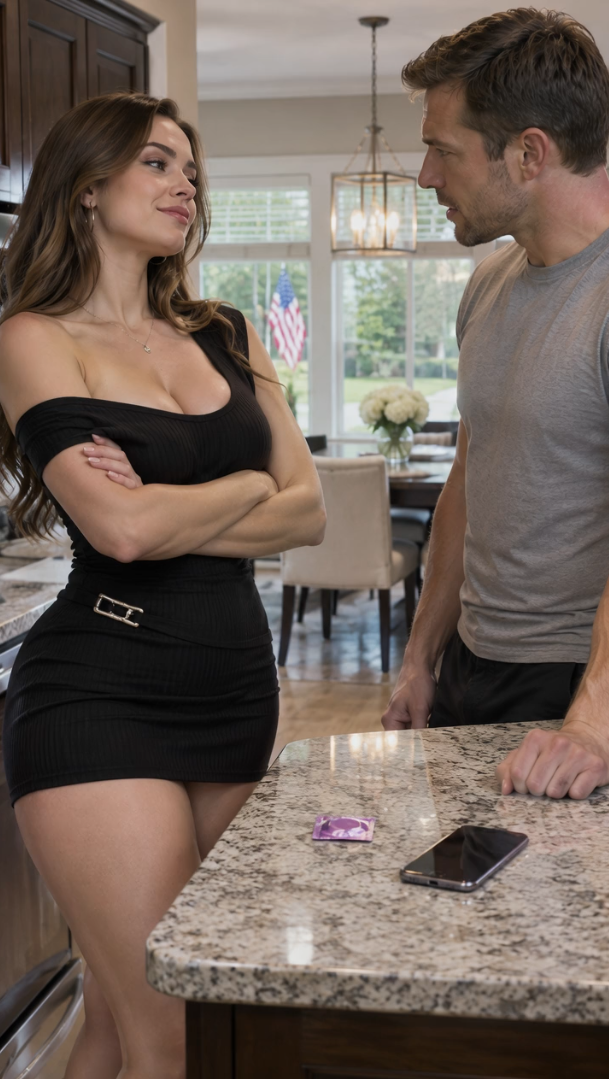
My wife admitted using my signature on a loan application, and for a moment I couldn’t remember how to speak.
“You copied my signature?” I finally asked.
Claire nodded.
“Grant said it was just a preliminary form.”
“You knew I hadn’t agreed.”
“Yes.”
“Then stop telling me what Grant said as if he moved your hand.”
She lowered her eyes.
That was the first conversation in which I refused to let her hide responsibility inside another person’s influence.
I called Julia from the driveway and told her exactly what Claire had admitted.
Julia asked me to write the words down while they were fresh, without pretending I had recorded them or obtained a formal statement.
She urged me to let the lender and investigators establish the application history through their own processes.
Over the next two weeks, our lives changed in ways that didn’t make good neighborhood gossip.
Claire retained a lawyer of her own.
We separated our daily expenses by written agreement while keeping the mortgage, insurance, and utilities current.
I stayed in the guest room until we could make a practical living arrangement.
Maya moved into her sister’s house after a confrontation with Grant, although she refused to discuss private details over the neighborhood group chat.
The homeowners’ association board held a special meeting and approved an independent financial review.
Grant voted against it, then argued publicly that the expense would punish residents for a few bookkeeping misunderstandings.
The other board members disagreed.
Diane attended as a homeowner, carrying the old meeting notes she’d preserved when she resigned.
I sat in the back and listened to people ask ordinary questions about money they’d earned and saved.
One elderly man wanted to know why the retaining wall behind his house still leaned toward his patio.
A young mother asked why the drainage work beside the playground had been postponed again.
Their questions embarrassed me in a different way.
I had been focused on my marriage, but our neighbors might have been paying for repairs that never happened.
The outside accountant requested vendor contracts, invoice histories, payment approvals, and bank statements through the board’s authorized process.
Julia contacted the association’s counsel about the drive and proposed that it be preserved without either side privately altering its contents.
Claire’s attorney confirmed that Claire had made the backup and obtained her written consent for an independent examiner to review its relevant material.
The attorneys arranged a documented transfer to the examiner rather than allowing Grant to retrieve it from our living room.
I witnessed the handoff and signed an acknowledgment of where I’d found the device and how I’d stored it.
No one called that a perfect chain of custody.
It was simply an honest record of what had happened since the discovery.
When the examiner finished making a forensic copy, the original was secured for any later lawful request.
I did not sit beside a computer watching secrets unfold.
I waited while people qualified to evaluate the evidence did their work.
Waiting was harder than I’d expected.
Every morning brought another reminder of how little control I had over Claire’s past decisions.
At the grocery store, I avoided the wine aisle because one missing glass had become the first crack in my marriage.
At home, I kept reaching for the remote with the careless confidence of a man who no longer existed.
Teresa visited one afternoon and found me trying to replace the sofa cushion I’d torn away during the discovery.
“You don’t have to fix that,” she said.
“It’s just furniture.”
“It was the first thing we bought together after we moved in.”
She sat beside me on the floor.
“I knew Claire was keeping something from you,” she admitted.
“I thought it was unhappiness, not anything like this.”
I asked whether she’d been told about Grant before Sunday.
“No,” she said.
“If I had, I would have told her to come clean.”
I believed her because she’d spent days asking difficult questions Claire wanted her to avoid.
“I don’t know how to be your mother-in-law now,” Teresa said.
“You can just be someone who tells the truth,” I answered.
She cried quietly, and for the first time I let myself cry with her.
Three weeks after the board vote, Julia called me to say the accountants had completed a preliminary report shared with the board and its counsel.
The report identified approximately eighty-seven thousand dollars in payments requiring further investigation.
Several invoices listed work for which the association could locate no matching completion records.
Payments to Cedar Lantern Creative exceeded the documented communications work Claire had actually performed.
Another vendor had received much of the remaining money for landscaping and drainage services that residents said were never completed.
The investigators had not yet proved every disputed payment fraudulent, but the discrepancies were substantial and specific.
Company filings and bank information obtained through the appropriate channels connected that second vendor to a business associate of Grant’s.
The review was especially painful because it identified the kind of routine safeguards everyone had assumed were already working.
A number of payments had been approved with incomplete attachments, and board members had relied on brief explanations instead of checking finished work.
Two invoices showed nearly identical descriptions for different dates, despite the vendor claiming separate completed projects.
A maintenance photograph attached to one payment appeared to show the same retaining-wall damage visible weeks later in residents’ pictures.
The accountants noted those discrepancies without claiming that photographs alone established theft.
They also recommended preserving accounting-system access logs and identifying who had permission to amend vendor details.
The association’s lawyer arranged the appropriate requests so the review would not depend on someone casually forwarding private financial credentials.
I thought about how easy it would have been for me to post the preliminary figures with a furious caption.
Instead, I remembered Maya’s face in the coffee shop and the people waiting for repairs they’d already funded.
They deserved a result that could survive an argument, not a viral rumor that might collapse when challenged.
Diane told me one elderly resident had spent his own money on temporary drainage work because he couldn’t wait through another storm.
The board recorded the complaint and began reviewing what remedies were actually available to him.
The damage was no longer an abstraction or simply ammunition in my divorce.
The findings were sent to law enforcement and the association’s insurer for review.
I read the summary twice, then called Maya.
“I hoped it was just a mess,” she said.
“So did I.”
“Grant told me the money was always safe.”
“He told Claire a lot of things.”
Maya went quiet.
“She didn’t only listen, Ethan.”
“I know.”
That distinction mattered now more than ever.
Claire had not invented the entire scheme, but she had accepted questionable payments, moved our savings, and used a signature she had no right to copy.
When she finally sat across from me with her lawyer present, she no longer tried to explain any of it as a misunderstanding.
“I need to correct what I told you,” she said.
“Start with Thursday.”
“Grant was here.”
I gripped the arms of my chair.
“Were you having an affair?”
“Yes.”
The word landed with less surprise than I expected and more pain than I could describe.
“How long?”
“Since April.”
I looked toward the window, where the July light was fading into the first colors of evening.
“You brought him into our house while I was at a conference.”
“Yes.”
“And the camera?”
“He helped set it up months earlier, and I invited him to view it because he said he could check on the house.”
“You knew that was wrong.”
“I did.”
“Did he watch us together?”
“I don’t know.”
Her answer remained an uncertainty, and I wouldn’t turn it into a fact just because it frightened me.
She said she’d hidden the drive after Grant left Friday morning because he wanted every copy of their financial records destroyed.
The backup held invoices, messages, and a recording she’d made while participating in a conversation with him.
Her attorney had assessed the recording before permitting its disclosure through the review process.
“I kept it because I thought he’d blame me for everything,” Claire said.
“Why didn’t you take it somewhere safe?”
“He kept asking whether I’d deleted it.”
She had pushed it into the sofa lining because she believed nobody would think to look there.
Grant didn’t know its exact hiding place, she said, but he recognized the danger when he saw me investigating the sofa through the camera.
The camera service’s available access records, Claire’s account information, and messages she voluntarily supplied helped investigators trace the invited viewer to Grant.
Maya’s records of the second phone account provided a separate route for verifying the number used to warn Claire.
The frightening text had not come from some anonymous stranger watching our street.
It had come from the man who’d sat at our barbecue table and asked to borrow a ladder.
The examiner’s report described files whose dates and contents matched records independently obtained by the association.
Invoice versions on the drive showed amounts changing after approval, with explanations that did not match the board’s records.
One draft included Ethan Walker in a note identifying a possible financial backer.
The name appeared there without any authorization from me.
The lender’s own review separately showed that the disputed home-equity application originated from information and a device associated with Claire.
Its approval process had halted before any money was advanced.
The investigator had also requested supporting identity documents, and the saved signature on the application did not establish my consent.
My conference registration and travel receipts supported my account of where I’d been, although the records weren’t a substitute for a full investigation.
Julia told me the bank was treating the application as suspected identity misuse and would provide a written determination after its review.
For the first time, I had independent records that contradicted the story Grant had been preparing about me.
At the next association meeting, Grant tried to describe the hidden drive as material I had stolen from an organization that trusted him.
The board president interrupted and said the device had already been transferred for examination under a documented arrangement with counsel.
She also said the board had referred financial discrepancies for investigation and would not let anyone use the meeting to try a private accusation.
Grant’s jaw tightened.
He gathered his papers and left before the meeting ended.
The board suspended his financial authority pending the procedures required by its governing rules.
I didn’t cheer, because the frightened residents sitting around me still needed answers and repaired sidewalks.
Afterward, Claire found me beside my car.
Her attorney stood a few steps away, giving us room to speak without pretending the conversation was informal.
“Grant wanted me to tell the investigators that you knew about the loan,” she said.
I waited.
“He said they would believe you because your name was on the house and the application.”
“And what did you tell him?”
Her eyes filled.
“I said I’d think about it.”
I stepped back as though she’d struck me.
“You considered making me responsible for a debt I never approved?”
“I was terrified.”
“So was I, Claire.”
The most painful part was how carefully Grant had selected his leverage.
He knew I had a stable job, an ordinary credit history, and no role in handling association payments.
Those were reasons the truth should have protected me, yet he had tried to make them reasons strangers might believe I had secretly financed the scheme.
She looked down at her wedding ring.
“I haven’t told you the worst part.”
I felt my stomach tighten again.
“What is it?”
“Before I hid the drive,” she said, “I agreed to let Grant use your name if the association came looking.”
👉 The story isn’t over yet—tap NEXT to find out what happens in the next chapter! 🔥
✓ Lynn R. Adams
My wife admitted using my signature on a loan application, and for a moment I couldn’t remember how to speak. “You copied my signature?” I finally asked. Claire nodded. “Grant said it was just a pr…