Chapter 4: THE PRICE OF DEFENDING WHAT WAS MINE
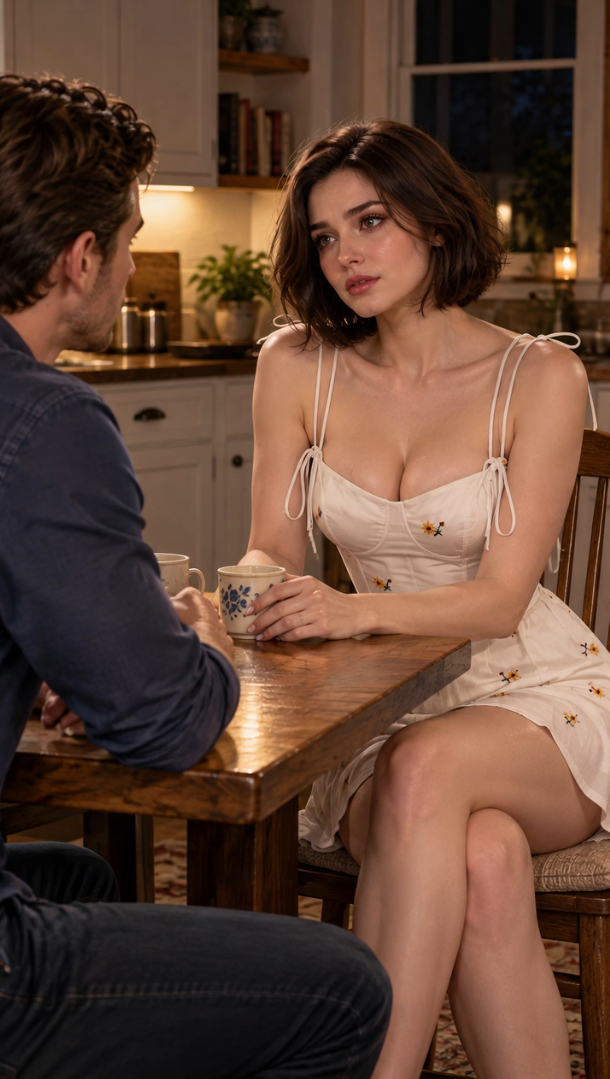
The email on Celia’s screen looked like proof until Erin explained why it might be another trap.
It said her endorsement had been finalized before she ended her engagement, and attached a file with her name.
But a name on a document wasn’t an admission, and an unfamiliar sender wasn’t a reliable witness.
We forwarded the original message, including its headers, to Erin without opening the attachment on our computers.
Erin arranged to have it reviewed safely and told Celia to preserve the email exactly as received.
“Anything important should survive scrutiny,” Erin said.
“Don’t let fear decide what counts as evidence.”
Celia looked exhausted when we hung up.
“Being with Noah felt like that,” she said.
“Every time I questioned him, I ended up defending whether I deserved to ask.”
I filled the kettle, because it was the only useful thing my hands knew how to do.
By Thursday morning, the cost of defending my driveway had stopped being theoretical.
Erin estimated a twenty-five-hundred-dollar initial retainer for research, correspondence, and representation at the planning meeting.
An independent boundary survey would cost approximately twenty-six hundred more.
I had seven thousand four hundred dollars set aside for a new roof before the snow returned.
Five thousand one hundred dollars would leave a painful gap.
I spread the estimates across my desk beside a stack of quizzes.
As a teacher, I could explain compound interest to teenagers, yet I couldn’t turn one modest paycheck into two urgent necessities.
Daniel called and offered to lend me part of the money.
I thanked him and refused until I knew how much I actually needed.
He wasn’t pleased.
“Pride is expensive, Wyatt.”
“So is letting a developer think everyone in this family can be bullied with a bill.”
I made a smaller decision first: authorize the records research and survey deposit, and postpone any nonessential house improvements.
That was not triumph.
It was the kind of choice people make when trouble arrives with better financing than they have.
At lunch, Erin sent over a letter she intended to deliver to Pinecrest.
It stated that I disputed all claimed consent and prohibited unauthorized entry onto my land.
It asked Pinecrest to identify the basis for its map and correct statements implying I had agreed to access.
It did not accuse anyone of crimes.
I approved it and paid the retainer.
When Celia learned the amount, she opened her banking app.
“I can pay half,” she said.
“No,” I replied.
“You’re already paying for Noah in ways you didn’t choose.”
“Then let me contribute to the records and survey,” she said.
“I’m not buying a part of your house.”
She made me laugh despite myself.
We agreed she could pay the independent surveyor directly for part of the work, documented as assistance, with no property interest or expectation attached.
I insisted we both put that understanding in writing.
Celia nodded.
“The man I almost married would’ve turned that sentence into an insult.”
“It’s a boundary,” I answered.
“I think I’m beginning to recognize those.”
Later that afternoon, Frances appeared at the house without her husband.
She looked angry enough to be brave and scared enough to be careless.
“Martin barely slept,” she told Celia.
“He thinks you blame him for everything.”
“He signed an agreement without asking the neighbors whose land it depended on,” Celia said.
“He deserves to hear why that mattered.”
“Three thousand dollars paid the supplier who threatened to cut off the shop.”
Celia closed her eyes.
“Then he needed help, not a secret arrangement with my fiancé.”
Frances sat heavily in the chair where she’d once watched Celia do homework.
“We wanted to believe Noah could give you a life without struggle,” she said.
“He bought dinners, remembered our birthdays, and talked about helping people here.”
“Did he ever ask what I wanted?” Celia replied.
Frances couldn’t find an answer.
I stepped outside to give them privacy, though their words followed me through the open kitchen window.
“You were so far away,” Frances whispered.
“We didn’t know how to reach you anymore.”
“You could have called without asking about the wedding,” Celia answered.
“I would’ve picked up.”
When Frances left, she hugged her daughter with the hesitation of two people learning an old skill again.
Nothing was fixed, but at least they were no longer pretending it wasn’t broken.
My phone reminded me that I had a date with Heather at seven.
I almost canceled out of exhaustion.
Then I remembered what she’d said about not using her to prove anything.
I showered, changed shirts, and told Celia I would be out for dinner.
“I know,” she said.
“It’s Thursday.”
Her smile held, but only just.
I didn’t ask whether she wanted me to stay.
Heather was waiting at a small restaurant by the old railway depot, reading the dessert menu before she’d ordered dinner.
She was clever, funny, and kind without trying to rescue anybody.
Those were the reasons I’d wanted a third date.
We talked about her bookstore, my students, and a town council debate over winter parking.
Then she set down her fork.
“I’m going to ask you something unfair,” she said.
“Go ahead.”
“If Celia hadn’t come back, would you be here thinking about what our fourth date might be?”
“Yes,” I answered.
“And now?”
I watched condensation slide down my water glass.
“Now part of my attention is somewhere else, and you deserve to know.”
Heather held my gaze for a painful second.
“I appreciate the answer,” she said.
“I don’t want to compete with a history you haven’t finished understanding.”
“I’m sorry.”
“You haven’t promised me forever,” she said.
“You’ve only taken me to dinner three times.”
But her eyes were wet, and I hated that being careful had not meant nobody got hurt.
We finished the meal honestly, agreed not to schedule another date, and said goodbye outside under the yellow station lights.
I didn’t turn it into a dramatic breakup.
We hadn’t earned that story, and Heather deserved better than to become a villain in mine.
At home, Celia was sitting on the floor by the guest-room doorway, folding clothes into her suitcase.
The sight dropped my stomach.
“Are you leaving?”
“I’m looking for a short-term rental,” she answered.
“I don’t want my arrival to cost you something good.”
“Heather and I talked,” I said.
“I won’t tell you more than she’s comfortable with.”
Celia kept smoothing the same sleeve.
“You went out, and I realized I had no right to want you to come back early.”
“Did you?” I asked.
She looked up.
“Yes,” she said.
“Wanting isn’t the same as asking.”
The answer reached a part of me I’d kept locked since she left for New York.
I sat on the opposite side of the hall.
“You can finish your week,” I told her.
“That’s what I offered, and I still mean it.”
“Thank you.”
“But after Monday night, you need another place, regardless of what happens between us.”
She nodded, and I saw disappointment pass across her face before she steadied it.
For once, I didn’t chase it away with a promise.
Friday morning, the surveyor, Anika Moss, walked the boundary with old plans and a measuring device balanced on a tripod.
She explained that historic farm traffic did not automatically establish the roadway shown on Pinecrest’s drawing.
She would check recorded deeds and any relevant easement claims before producing her report.
From the road, we could see small orange survey flags near the edge of my garden.
I hadn’t placed them.
Anika photographed their locations but warned us not to assume who had planted them.
Soon afterward, a truck with Pinecrest’s subcontractor logo pulled into my driveway.
Two workers stepped out carrying poles and a roll of marking tape.
I walked toward them with my phone recording the encounter openly.
“Have you been authorized to work on this parcel?” I asked.
They checked their instructions.
One pointed to a map showing a proposed route through my yard.
“I’m the owner,” I said.
“I haven’t consented to any entry or survey activity.”
The crew leader looked at his partner and apologized.
They got back into their truck without crossing the garden.
I sent Erin the recording and their company’s information.
She told me to preserve the facts and let her address it with Pinecrest, rather than escalate a confrontation with workers following someone else’s paperwork.
Anika later confirmed that the marked corridor did not match a recorded right of way in the materials she’d reviewed so far.
That was encouraging, not yet a finished legal conclusion.
Meanwhile, Celia learned that trouble had followed her finances as well as her name.
She and Noah had maintained a joint account for wedding expenses, with both parties authorized to make withdrawals.
It held approximately twenty-four thousand dollars before the cancellation.
She had deposited twelve thousand of that amount from her own savings.
A recent statement showed a nine-thousand-seven-hundred-dollar payment to a company called Price Consulting Services.
The payment appeared after she’d called off the wedding.
Celia sat at the kitchen table, staring at the bank transaction.
“That’s his company,” she said.
“I thought we were using the account to pay vendors.”
Because Noah was a joint holder, the bank might have processed his withdrawal as authorized regardless of whether it was fair between them.
Celia called the bank, requested statements, and stopped adding any money.
She also contacted Dana Okafor, a New York attorney, to review how the remaining funds and disputed payment should be addressed.
Dana advised preserving the account records and vendor contracts before accusing Noah of theft.
I recognized the pattern by then.
Noah hadn’t needed to break every rule to make other people bear the cost of his choices.
That evening, Celia received a proposed settlement from his lawyer.
Noah offered to return a portion of the wedding funds if Celia publicly withdrew her objection to Pinecrest’s community materials.
The draft also demanded broad confidentiality and a release of claims unrelated to the wedding account.
Dana told her not to sign it.
“They’re trying to trade money you may already be entitled to for your silence about a separate dispute,” she explained.
Celia was shaking when the call ended.
“I would’ve signed something like that a month ago just to keep the peace,” she admitted.
“What changed?” I asked.
“I finally understood whose peace it was.”
I went upstairs and found the guest-room door open, the rowing machine buried beneath a folded quilt.
Celia had cleared a corner for her laptop without moving anything that belonged to me.
The improvised desk consisted of a notebook balanced on an old wooden crate.
Five years ago, I’d imagined building her a proper desk under that window.
Now I couldn’t decide whether offering to do it would be kindness or another promise made too soon.
So I brought her a sturdy kitchen chair instead.
She accepted it with a quiet smile.
Then Liv called from New York.
Her employer’s counsel had begun checking the archived vendor-approval sheet after Celia reported the suspicious signature.
They would not release confidential account records casually, but they had authorized Liv to tell Celia that a preservation review was underway.
“One thing I can say,” Liv told her, “is that the approval graphic was exported from a shared project workspace.”
“By whom?” Celia asked.
Liv paused.
“Our lawyers are verifying the access history before they give you anything in writing.”
Across the table, Celia looked at me with the same expression she’d worn the night she returned.
For five years I’d imagined that someday she’d come back with an explanation for leaving.
Instead she’d brought a mystery that required us to learn whether explanations could be trusted at all.
Minutes later, a second message arrived from Liv, marked for Celia’s attorney.
It said the export record contained a named external consultant account.
That account belonged to Noah Price.
👉 The story isn’t over yet—tap NEXT to find out what happens in the next chapter! 🔥
✓ Lynn R. Adams
The email on Celia’s screen looked like proof until Erin explained why it might be another trap. It said her endorsement had been finalized before she ended her engagement, and attached a file with h…