Chapter 10: The Woman Who Stood Beside Me 045
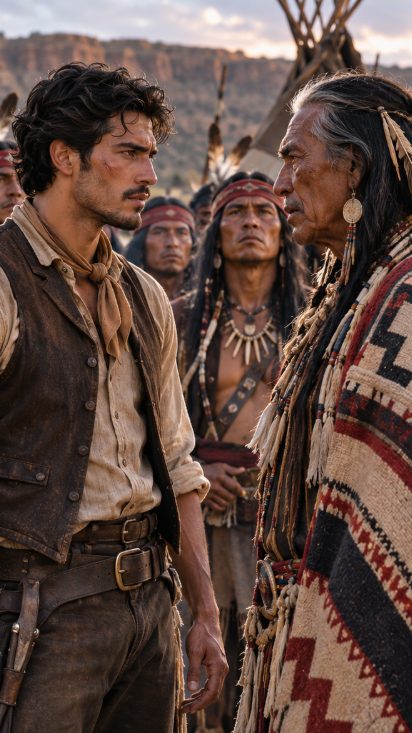
The instant the first cow moved toward the broken fence, I felt the familiar terror of losing everything rise inside me.
I had spent too many difficult seasons protecting those twenty animals to watch them scatter across the open country because one exhausted post had finally surrendered.
I dropped the loose rail and hurried toward the opening, hoping to reach it before the nearest cattle discovered that their familiar boundary was gone.
Naira moved at the same moment, stepping toward the opposite side of the damaged section without waiting for me to explain what needed to be done.
For an instant, I feared she might put herself too close to the animals, but she kept her movements deliberate and gave them enough space to avoid frightening them further.
She called to me, pointing toward the route by which we could guide the cattle away from the gap.
I understood her intention almost immediately and changed direction rather than continuing with my first desperate plan.
Instead of trying to block the entire opening alone, we positioned ourselves where our movements could encourage the animals to turn back toward the safer part of the enclosure.
The nearest cow hesitated, lifting its head and watching us while the others gathered uncertainly behind it.
I kept my voice low and my movements steady, remembering how easily cattle could become frightened when a man acted in panic.
Naira maintained her position across from me, calm enough that I could follow her signals without needing shouted explanations.
For several tense moments, the animals moved back and forth near the damaged section, and I feared that one sudden rush would send the entire group through the opening.
Then the leading cow turned away from the gap, followed gradually by the others.
I continued guiding them toward the secure portion of the enclosure until there was enough distance between the cattle and the broken fence for us to work safely.
Only when the last animal moved away did I allow myself to breathe normally again.
Naira looked toward me, her face serious but free of the fear that had nearly overwhelmed me.
“We need to close it before they return,” she said, already examining the materials scattered beside the damaged post.
I nodded and went for the strongest timber we had left, grateful that we had spent the afternoon gathering supplies within reach.
Together, we positioned the temporary support, secured the loose rails, and reinforced the opening enough to keep the cattle inside until more permanent repairs could be completed.
The work continued as the sunlight faded, forcing us to concentrate on each task rather than worry about how tired we had become.
My shoulders ached from lifting timber, and my hands were rough from gripping tools, but I no longer felt as though every problem belonged to me alone.
Naira worked with a determination that matched my own, occasionally stopping to check whether a support was secure before allowing us to move on.
When I suggested fastening one rail in a way she believed would place too much pressure on the weakened post, she challenged the idea without hesitation.
For a moment, I felt the old instinct to defend my judgment simply because the ranch had always been mine.
Then I remembered how quickly the fence had collapsed and how close I had come to losing cattle that represented nearly everything I owned.
I listened, considered her explanation, and realized that she had noticed a weakness I had overlooked.
We changed the repair, and the finished section stood more securely than the arrangement I had originally proposed.
When the last support was in place, we stepped backward together and inspected our work beneath the fading evening sky.
The fence was not beautiful, and there were still many sections that would need careful attention in the days ahead.
Yet the immediate danger had passed, all twenty cattle remained safely inside, and the ranch had survived another difficult day.
I rested my hands against my knees, trying to catch my breath while the familiar sounds of the animals settled around us.
Naira stood beside me, watching the repaired section with the quiet satisfaction of someone who had worked hard and expected nothing more than an honest result.
I looked at her and remembered the first moment she stepped from beneath the woven blanket.
Her beauty had astonished me then, but it was no longer the most important thing I saw when I looked at her.
I saw the woman who had questioned my poor decisions without trying to humiliate me, worked beside me without demanding praise, and remained calm when the life I had built seemed ready to collapse.
The warriors had feared Naira because she would not lower her eyes, silence her thoughts, or pretend that a man was right simply to protect his pride.
I understood their unease more clearly now, because I had felt a trace of that same discomfort when she challenged the way I managed my ranch.
But I had also discovered that accepting her judgment did not make me weaker.
It made our decisions stronger, and the broken fence standing securely before us offered proof more convincing than any speech.
I straightened and looked toward the house, where the evening shadows had gathered along the familiar walls.
For years, I had believed that surviving alone was evidence of strength, even when exhaustion and worry followed me from morning until night.
I had carried every responsibility as though sharing it would somehow make the ranch less mine.
Now I wondered how much suffering I might have spared myself if I had understood earlier that independence did not always require isolation.
Naira noticed my silence and asked whether I was worried about the repairs still waiting to be completed.
I admitted that I was, because one afternoon of work could not erase the difficulties that had accumulated across several seasons.
She nodded, seeming pleased that I had not attempted to disguise the truth with empty confidence.
“We’ll deal with what we can tomorrow,” she said, looking toward the fence before turning back to me.
The word she used stayed with me long after the rest of her sentence faded.
We had known each other only a short time, and our marriage had begun under circumstances neither of us would have chosen in an ordinary life.
Yet she had spoken of tomorrow as something we would face together, not as a burden she expected me to carry while she watched.
I wanted to tell her that I had begun the journey home frightened of bringing a stranger into my already difficult life.
I also wanted her to understand that the fear had changed, becoming something closer to the uncertainty any person feels when discovering that another human being can matter deeply.
“I thought I was bringing you here because I owed your father a debt,” I admitted, studying her expression.
Naira listened quietly, allowing me to finish without interruption.
“But I don’t want you to stay because of that debt,” I continued, feeling the importance of saying the words plainly.
I told her that she deserved the freedom to decide whether this lonely ranch and the man who owned it could become a home she genuinely wanted.
For the first time that evening, her composure softened into an expression that revealed the emotion beneath her strength.
She looked toward the cattle, the repaired fence, and the weathered house beyond us.
Then she turned back and told me that a home was not made valuable by its size or by the ease of the work required to keep it standing.
What mattered was whether the people living there could face difficulty without turning against each other.
I thought about the way we had worked together when the cattle approached the broken opening.
Neither of us had been able to solve the problem alone, yet together we had found a way to protect what mattered.
I realized that the marriage I had accepted out of obligation had begun changing into something neither Chaska nor the fearful warriors could have predicted.
It was becoming a partnership chosen by the two people who would actually have to live inside it.
Naira stepped closer, and I reached for her hand without knowing whether she would welcome the gesture.
She placed her hand in mine, her fingers warm and steady against my rough skin.
For a moment, neither of us spoke, and the quiet around us felt entirely different from the silence that had surrounded her unveiling.
There had been fear in that gathering, but the silence on my ranch held the first fragile beginnings of trust.
I remembered Tala lying helpless between the stones, her lips pale from thirst and her fingers buried in the sand.
I remembered staring at my almost empty canteen and wondering whether giving away the last of my water would destroy the future I had struggled to protect.
At the time, I had believed that helping her meant risking everything for a stranger.
I could never have imagined that the same decision would lead me to a woman whose courage might help me save the very home I had feared losing.
The desert had taken my water, exhausted my horse, and nearly buried us beneath a wall of sand.
Yet it had also shown me that the worth of a decision could not always be measured by what a man expected to receive in return.
I had not saved Tala because she was a chief’s granddaughter, and I had not protected her through the storm because I expected her family to reward me.
I had helped because leaving her there would have meant abandoning the kind of man I wanted to be.
That single choice had brought me into Chief Chaska’s camp, placed an impossible marriage before me, and introduced me to someone whose strength had frightened men who mistook obedience for respect.
I looked at Naira standing beside me beneath the evening sky and felt a quiet certainty that I had never experienced while imagining my future alone.
There would still be broken fences, difficult seasons, and days when our differences tested the promises we were beginning to make.
I knew that she would challenge me whenever she believed I was wrong, and I was learning that doing the same for her could be an expression of respect rather than conflict.
Neither of us needed the other to become smaller for our marriage to succeed.
We needed honesty, patience, courage, and the willingness to face the same troubles without forgetting that we stood on the same side.
As darkness settled over the ranch, we walked toward the house together, leaving the repaired fence behind us and carrying the exhaustion of a difficult day into a future neither of us fully understood.
For the first time in many years, I did not dread the work waiting for me at sunrise.
The woman every Apache warrior had feared was walking beside me, and I had finally understood the truth they had failed to recognize.
Naira was not someone I needed to conquer, silence, or survive.
She was someone I could love without asking her to surrender the very strength that made her extraordinary.
And when I looked back at the quiet ranch beneath the stars, I knew that the last water I had given away in the desert had not cost me my future.
It had led me home to the person with whom I could finally build one.
✓ Lynn R. Adams
The instant the first cow moved toward the broken fence, I felt the familiar terror of losing everything rise inside me. I had spent too many difficult seasons protecting those twenty animals to watc…