Chapter 10: The Name on the Deed 219
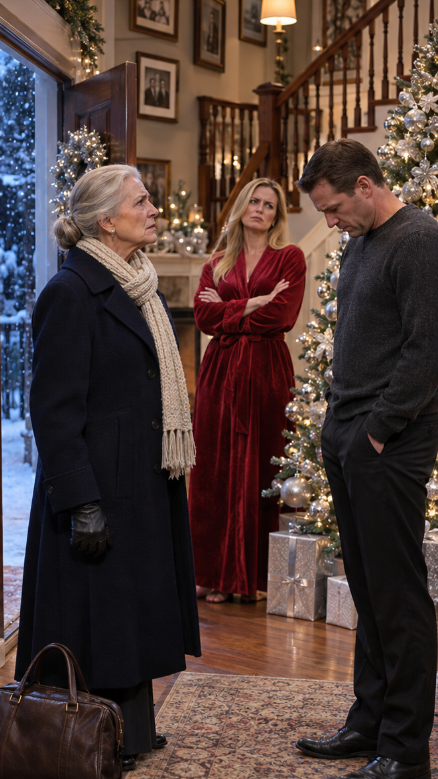
“Are you cutting me out of your will?”
Matthew’s question remained between us.
I sat beside the Christmas tree, holding the telephone against my ear.
For a moment, I felt the old instinct to reassure him.
To say that nothing would change.
That he had nothing to worry about.
That his future was safe because his mother would always make certain of it.
But I had spent the past several days learning how dangerous those promises could become when they were made without boundaries.
“No, Matthew,” I said quietly.
He released a long breath.
“Oh, thank God.”
I closed my eyes.
“I’m not finished.”
The relief in his voice disappeared.
“What do you mean?”
“I am changing my estate plan.”
He was silent.
“I haven’t decided every detail yet. My attorney is preparing documents for me to review.”
“Okay.”
“But one thing is certain. You will not automatically inherit this house.”
His breathing became audible.
“Mom…”
I waited.
He seemed to be searching for words.
“I thought we were starting to work things out.”
“We are.”
“Then why would you do that?”
I looked toward the wooden star.
“Because working things out doesn’t mean pretending nothing happened.”
He was quiet.
I continued.
“You believed that someday this house would belong to you. You started making decisions as though someday had already arrived.”
“I know.”
“I need to make sure that expectation doesn’t continue controlling our relationship.”
He sighed.
“I’m not asking you to give me the house now.”
“I understand.”
“Then why change things?”
I considered how best to explain.
“When your father and I bought this home, we weren’t thinking about inheritance.”
I looked around the living room.
“We were thinking about having somewhere safe to live.”
Matthew said nothing.
“We didn’t save for years so someone could begin planning what to do with the property while we were still using it.”
“I know, Mom.”
“Your father never treated my life like a waiting period before his plans could begin.”
The words brought tears to my eyes.
“He respected me. Even when we disagreed.”
Matthew’s voice softened.
“I know.”
“I want that same respect from my son.”
A long silence followed.
Then he said, “You deserve it.”
I felt something loosen inside me.
Not because everything had been repaired.
It hadn’t.
But because Matthew was beginning to hear me without immediately defending himself.
I took a breath.
“My estate is not your retirement plan.”
He didn’t interrupt.
“My house is not your future house.”
I looked at the wedding photograph on the mantel.
“And my death is not something you should be arranging your finances around.”
His voice was almost a whisper.
“I understand.”
I shook my head.
“No, Matthew. You’re starting to.”
He accepted that.
For several seconds, neither of us spoke.
Then he asked, “Will the grandchildren still get something?”
The question surprised me.
“Yes.”
“Good.”
I heard genuine relief.
“I don’t want them caught in the middle of this,” he said.
“Neither do I.”
I looked at the gifts beneath the tree.
“That’s why I’m considering education trusts for them.”
Matthew was quiet.
“They’ll have opportunities your father and I struggled to provide for you,” I continued. “But I want those opportunities protected.”
“That sounds good.”
I felt hopeful.
Not triumphant.
Hopeful.
He had stopped asking what he would receive.
At least for the moment.
“Matthew,” I said, “I want you to understand something else.”
“Okay.”
“I don’t want revenge.”
He let out a shaky breath.
“I know.”
“I don’t think you do. Not entirely.”
I settled back in the chair.
“I’m not changing my estate plan to hurt you. I’m changing it because what happened forced me to think carefully about what I want to leave behind.”
He was quiet.
“I want the things your father and I worked for to do some good.”
“They will.”
“I hope so.”
I paused.
“And I want whatever you inherit to feel like a gift.”
His voice softened.
“Not something I already own.”
“Exactly.”
There was another silence.
Then Matthew said something I hadn’t expected.
“I’ve been so worried about getting ahead that I forgot what we already have.”
I closed my eyes.
“Your father used to say something like that.”
“I remember.”
“He said people could spend their whole lives chasing bigger houses and never learn how to be happy inside one.”
Matthew gave a small laugh.
“Dad always had something to say about money.”
“He certainly did.”
For a moment, we shared the memory of a man we both loved.
It didn’t erase the damage.
But it reminded me that our relationship had existed long before Jessica moved into my bedroom.
There were still years of love beneath the hurt.
I hoped we could find our way back to them.
Before ending the call, Matthew asked whether we could meet after Christmas.
“I’d like that,” I said.
He hesitated.
“Just us?”
“For now, yes.”
“Okay.”
“I’ll bring the children’s presents when we arrange a visit.”
“Thank you.”
I looked at the small school bus ornament.
“Matthew?”
“Yes?”
“You don’t have to earn my love.”
His breathing caught.
“But you do have to respect my boundaries.”
“I will, Mom.”
I wanted to believe him.
This time, I understood that believing someone did not mean abandoning the right to see whether their actions matched their words.
“Merry Christmas,” I said.
“Merry Christmas, Mom.”
Then we hung up.
I remained seated for a long time.
The telephone rested in my lap.
Outside, the morning sun shone across the snow.
George’s wooden star caught the light.
I thought about Matthew’s apology.
His admission.
His fear about the will.
His willingness, finally, to accept a boundary.
There was hope.
But hope needed time.
And trust required something more substantial than a Christmas telephone call.
After the holiday, I met with my attorney.
I brought the old estate folder, the property documents, and a handwritten list of what I wanted to accomplish.
He reviewed everything carefully.
We discussed the house first.
I wanted it sold after my death, once the necessary legal and estate-administration requirements had been satisfied.
I didn’t want Matthew automatically receiving the property.
Not because I wished to punish him.
Because I wanted the house to remain my home for as long as I lived, without the shadow of future ownership hanging over every family decision.
My attorney explained the practical steps involved.
How a sale could be directed through the appropriate estate documents.
How expenses and obligations would be addressed.
How the remaining proceeds could be distributed according to my instructions.
We discussed trustees.
Oversight.
Recordkeeping.
Provisions to protect the beneficiaries.
I asked questions until I understood the answers.
That alone felt like progress.
Four years earlier, I had sat in the same office after George’s death, barely able to concentrate.
Now I was sitting upright, taking notes, making decisions.
The woman who had walked into that office as a grieving widow had been frightened of choosing the wrong thing.
The woman sitting there now understood that refusing to choose could have consequences of its own.
Part of the proceeds would fund education trusts for my grandchildren.
I wanted them to have choices.
College.
Vocational training.
Opportunities that would help them build lives of their own.
I did not want their futures tied to decisions their parents had made during one terrible Christmas.
Another portion would support a local organization that helped older widows protect themselves from displacement and financial exploitation.
That decision meant a great deal to me.
I thought about women who didn’t own their homes outright.
Women whose names weren’t on the necessary documents.
Women whose families persuaded them to sign things they didn’t understand.
Women who were told they were too old, too confused, or too much trouble to make decisions for themselves.
I had been fortunate.
George and I had kept our records in order.
The house was legally mine.
I had an attorney I trusted.
I could afford to protect myself.
Not everybody had those advantages.
I wanted part of what we’d built to help someone who didn’t.
Matthew would still receive a share of my estate.
But his portion would be managed through a structured trust.
My attorney explained how the terms could be designed to protect the inheritance while allowing appropriate distributions.
I listened.
Asked more questions.
Then requested the final documents.
I didn’t sign them in a rush.
I read them.
Considered them.
Returned with questions.
And when I was satisfied that they reflected my wishes, I completed the necessary signatures and formalities.
As the attorney organized the papers, he looked at me.
“Are you comfortable with your decisions?”
I thought for a moment.
“Yes.”
He nodded.
“That’s what matters.”
I looked at the folder.
For years, I had treated estate planning as something that belonged to the final chapter of my life.
Now I understood it could also be an expression of how I intended to live the chapters still ahead.
I wanted my grandchildren protected.
I wanted Matthew to receive something meaningful.
I wanted to help other women preserve their independence.
And I wanted to enjoy my home without anyone treating me like an obstacle.
When I left the office, the winter air felt surprisingly fresh.
I stood on the sidewalk for a moment, holding the folder against my chest.
Then I smiled.
There would be no grand announcement.
No dramatic confrontation.
No gathering where I humiliated my son by reading legal documents aloud.
I wasn’t interested in punishment.
The documents would speak for themselves when the time came.
In the meantime, I would live.
A few days later, I met Matthew.
We chose a quiet café where we could talk without interruption.
He looked tired when he arrived.
But he also looked different.
Less defensive.
Less eager to explain himself.
He sat across from me and waited until I had ordered my coffee.
Then he said, “I’ve been thinking about Dad.”
I smiled faintly.
“So have I.”
“He always said I should make my own way.”
“Yes.”
“I thought he meant earning money.”
I looked at him.
“What do you think he meant?”
Matthew stared at his hands.
“Not expecting other people to solve my problems.”
I nodded.
“That was part of it.”
He gave a small smile.
“I wish I’d listened.”
“Most of us wish we’d listened to something.”
He looked up.
“Even you?”
I laughed softly.
“Especially me.”
For a moment, we were simply a mother and son sharing coffee.
Not a homeowner and an unwanted occupant.
Not two people arguing about an inheritance.
Just family.
Then Matthew grew serious.
“I’m sorry I didn’t defend you when Jessica told you to leave.”
I set down my cup.
“I appreciate you saying that.”
“I kept thinking if I stayed quiet, things would calm down.”
“They didn’t.”
“No.”
He swallowed.
“I made you feel like you were alone.”
My throat tightened.
“Yes.”
He looked directly at me.
“I won’t do that again.”
I wanted to say I knew he wouldn’t.
Instead, I said, “I hope you mean that.”
He nodded.
“I do.”
We discussed the grandchildren.
Their school activities.
The Christmas gifts I’d bought.
A possible visit in a neutral place where everyone could feel comfortable.
We did not discuss moving back into the house.
Matthew didn’t ask.
That mattered.
Jessica had not yet offered me a full apology.
Matthew told me she remained embarrassed and upset.
I listened without trying to change his feelings about his wife.
Their marriage was theirs to manage.
My home was mine.
I was learning that those truths could exist together.
Over the following weeks, Matthew and I spoke occasionally.
Not every day.
Not always about serious things.
Sometimes he called to ask how Helen was doing.
Sometimes he told me something amusing the children had said.
I told him about the roses I planned to prune in spring.
About a book I was reading.
About a recipe I wanted to try.
Small conversations.
Ordinary conversations.
The kind that allowed trust to return slowly rather than through one enormous promise.
I kept my boundaries.
He respected them.
There were awkward moments.
There were silences.
There were questions neither of us was ready to answer.
But there was also progress.
And progress was enough.
One afternoon, I took the red ribbon from the new house keys and tied it more securely.
The ribbon had become slightly frayed.
I considered replacing it.
Then I smiled.
George would have said it was still perfectly good.
I hung the keys on the hook beside the front door.
The same hook where his brown jacket had hung for four years.
I had put the jacket back in its place.
Not because I couldn’t move on.
Because I wanted it there.
My home was no longer a place where I felt I had to defend every ordinary choice.
It was simply mine.
As the winter passed, I found myself enjoying things I had neglected.
I invited Helen to visit when she was well enough.
I made plans with friends.
I worked in the garden.
I cooked meals I liked.
I occasionally sat in George’s chair and watched old movies.
And sometimes, when the house was completely quiet, I felt his absence so sharply that tears came.
But the tears no longer frightened me.
Grief was part of my life.
It was not the whole of it.
The Christmas decorations remained up a little longer than usual that year.
I couldn’t bring myself to put away the wooden star immediately.
One evening, I stood beside the tree and examined it.
The chipped edge was still visible.
I had smoothed the splinter, but I had not painted over the damage.
I liked it that way.
The star had survived another difficult Christmas.
So had I.
I remembered George telling me, years earlier, that crooked didn’t mean broken.
I smiled.
Perhaps he had been talking about more than carpentry.
My family had been damaged.
My trust had been shaken.
But I had not stopped loving my son.
And I had not stopped believing that people could learn.
I simply no longer confused love with surrender.
When I finally took down the tree, I wrapped each ornament carefully.
The honeymoon bell.
The kindergarten bus.
The glass cardinal.
The little fingerprint decoration.
And last of all, George’s wooden star.
I placed it at the top of the box.
Then I closed the lid.
Next Christmas, I would take it out again.
Perhaps Matthew would visit.
Perhaps Jessica would have learned to treat my home with respect.
Perhaps our family would continue healing.
I couldn’t know.
And for the first time, I didn’t feel responsible for controlling every possible outcome.
I had done what I needed to do.
I had protected my home.
I had protected my independence.
I had made plans for the people I loved.
And I had finally understood something George had been trying to teach me for years.
Kindness was not weakness.
Forgiveness was not permission.
And being a mother did not mean becoming invisible when your child grew up.
That Christmas, Jessica learned whose name was on the deed.
But Matthew learned something far more important.
An inheritance is a gift, not a right to be claimed in advance.
A mother’s love is not an unlimited invitation to take.
And a person’s life does not become less valuable simply because someone else has begun imagining what will happen after it ends.
I walked to the front door and looked at the red ribbon hanging from my keys.
Twenty years earlier, George had given me that same simple symbol of security.
He had promised that we would finally have somewhere nobody could tell us to leave.
For a while, I had forgotten how deeply that promise mattered.
Now I remembered.
I turned off the hallway light.
Walked into my living room.
And settled into the peace I had fought to reclaim.
Someday is not today. And as long as my name is on the deed, I decide who gets to call this house home.
✓ Lynn R. Adams
“Are you cutting me out of your will?” Matthew’s question remained between us. I sat beside the Christmas tree, holding the telephone against my ear. For a moment, I felt the old instinct to reassu…