Chapter 10: The Family We Chose to Become212
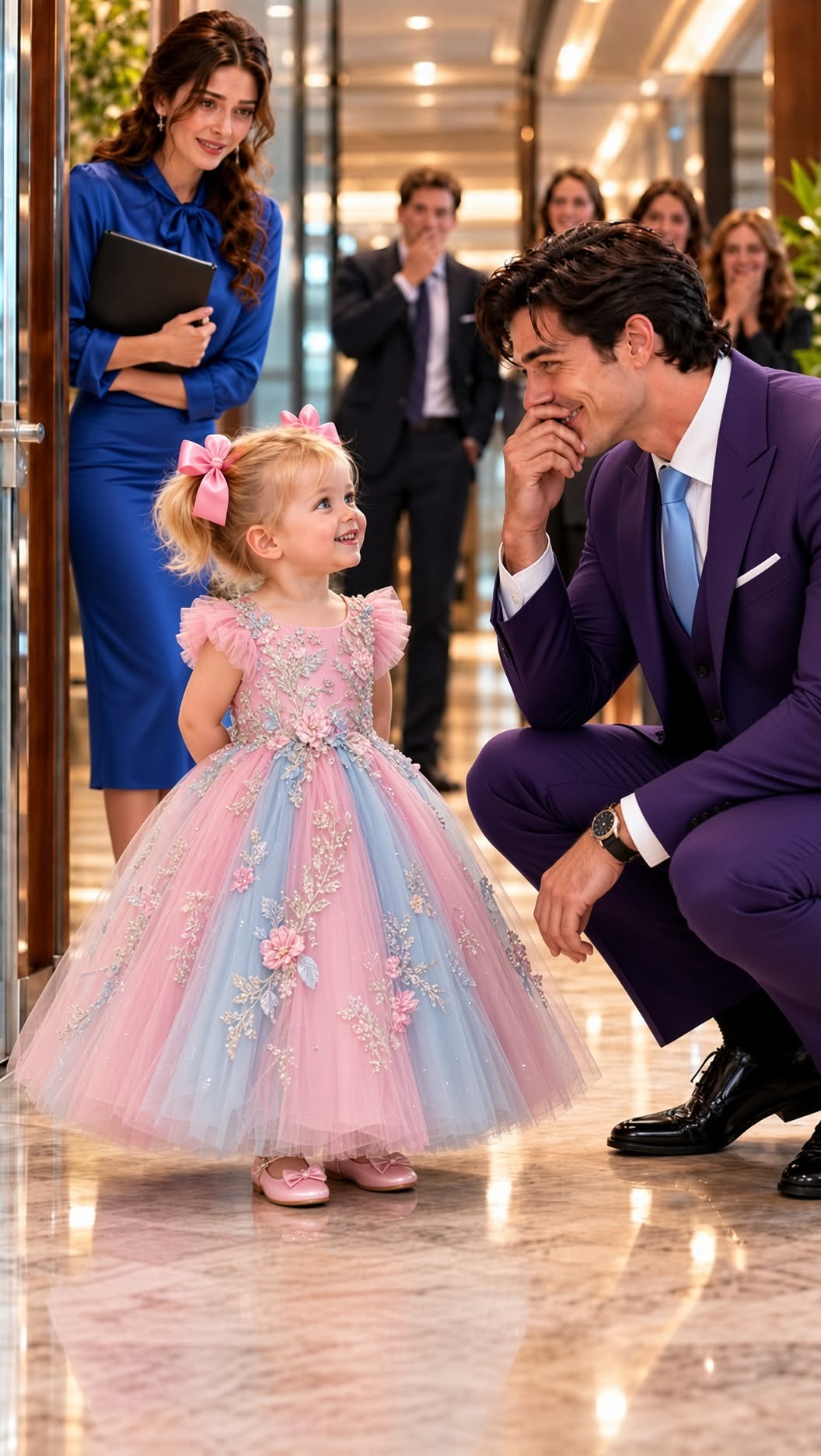
I signed my statement.
Not the settlement.
Not another document drafted to make somebody else’s misconduct disappear.
My own statement.
My own words.
My own account of everything that had happened.
When I finished, I placed the pen on the table and looked at Anika.
“I’m ready.”
She studied me for a moment.
“Are you sure?”
“No,” I admitted.
Then I smiled.
“But I’m doing it anyway.”
For the first time in years, uncertainty didn’t feel like defeat.
It felt like the price of finally making my own decisions.
The months that followed were not easy.
There was no dramatic afternoon when investigators walked into the office and resolved every problem.
There was no single conversation that repaired my professional reputation.
No magical settlement that erased six years of financial anxiety.
The truth emerged slowly, through records, interviews, legal procedures, and people willing to correct their earlier assumptions.
The independent corporate investigation established that Harbor Light Media had received payments for work unsupported by adequate documentation.
Its ownership structure connected it to Victor Hale.
The authorization process had been improperly manipulated, and records associated with my identity had been used without credible evidence of my approval.
The forensic audio analysis supported the conclusion that the purported confession was edited from separate recordings.
The investigators also documented Victor’s previous professional relationship with Daniel and the undisclosed payments made to Ward Advisory.
Those findings did not answer every question about individual intent.
They did, however, provide the board with enough evidence to terminate Victor’s employment for serious violations of company policy and refer relevant financial matters to outside authorities.
Victor disputed the findings through his attorneys.
The company pursued civil claims concerning the disputed payments while the appropriate authorities conducted their own review.
I learned to accept that accountability could be real even when it didn’t arrive quickly.
Daniel’s situation was more complicated.
The documents obtained during the investigations showed that he had participated in the vendor arrangement and received substantial consulting fees.
His communications with Victor also demonstrated that he’d knowingly used information about my personal circumstances in discussions concerning the commercial dispute.
Rebecca presented the relevant evidence in the family proceedings.
Daniel’s attorney argued that his client genuinely wanted to develop a relationship with Mia.
Perhaps part of him did.
I couldn’t know.
What mattered was that his actions would be examined independently of his claims about his intentions.
The court did not treat business misconduct as automatic proof that he could never be a parent.
It also did not ignore his prolonged absence, the pressure he’d placed on me, or Mia’s need for emotional stability.
Professional supervision remained part of the early contact arrangement while the court considered a longer-term plan.
Daniel was instructed to communicate through established channels and to keep business disputes separate from matters involving our daughter.
Those boundaries brought more relief than I could have imagined.
I didn’t have to answer unexpected visits.
I didn’t have to negotiate with him in hallways.
And Mia no longer had to wonder whether an adult conversation outside her bedroom would suddenly change her life.
One afternoon, several months after everything began, Daniel asked to speak with me through our attorneys.
I agreed to a structured meeting.
He looked older.
His expensive confidence had faded.
For the first time, he seemed uncomfortable in a room where he couldn’t control the conversation.
“I never thought things would go this far,” he said.
I watched him.
“What did you think would happen?”
He looked down.
“I thought you’d sign.”
“Because I always used to?”
He didn’t answer.
I leaned forward.
“Daniel, you didn’t just take advantage of my fear. You tried to make our daughter part of it.”
His jaw tightened.
“That wasn’t how I saw it.”
“Then how did you see it?”
He stared at his hands.
“Victor said the vendor problem would be resolved if you stopped asking questions. I thought if I could get everyone to agree, it would be over.”
“And the custody petition?”
He swallowed.
“I wanted to see Mia.”
“Then you should have asked to see her. You shouldn’t have tied that request to a business statement.”
He closed his eyes.
“I know.”
I waited.
For years, I had imagined confronting Daniel and hearing some extraordinary explanation for everything he’d done.
Something that would make the abandonment understandable.
Some hidden tragedy.
Some evidence that he had loved us deeply but been prevented from returning.
Now I saw the truth was smaller and sadder.
He had made selfish decisions.
Then he’d made more decisions to avoid facing the consequences of the first ones.
“I’m sorry,” he said quietly.
The words hung between us.
I had wanted them for years.
But when they finally came, they didn’t transform the room.
They didn’t repair Mia’s missed birthdays.
They didn’t restore my career at Bellmont.
And they didn’t erase the nights I’d spent wondering whether I was enough.
“Thank you for saying that,” I replied.
He looked up hopefully.
I continued.
“But an apology doesn’t restore trust. Mia’s relationship with you needs to be built through consistent, appropriate actions. You can’t ask her to carry the weight of your regret.”
He nodded slowly.
I stood.
“That’s all I needed to say.”
As I left, I felt neither triumph nor affection.
Only a quiet recognition that Daniel no longer controlled how I understood my own life.
That was enough.
At Kane & Co., the aftermath continued for several months.
Meridian retained the company after receiving the independent audit findings and a revised production plan.
The disputed financial arrangements were separated from the legitimate creative work.
The client required additional oversight and new approval procedures.
It also reaffirmed its interest in the campaign my team had developed.
When the first approved finally appeared in Manhattan, I stood on the sidewalk staring at it.
The image showed a softly illuminated hotel room overlooking a rainy city.
Below it were four simple words.
A Place to Belong.
My idea.
My work.
My name was recognized in the company’s creative credits, alongside the colleagues who had helped bring it to life.
I took a photograph.
Then I sent it to Mia.
She responded using the sitter’s phone.
IS THAT YOUR BIG HOTEL PICTURE???
I laughed.
Yes, sweetheart.
Her next message arrived immediately.
I’M PROUD OF YOU MOMMY.
I stood in the middle of Manhattan with tears running down my face.
Not because the campaign was prestigious.
Not because it would improve my résumé.
But because my daughter had seen me fight for something I’d created and watched it finally reach the world.
The experience changed how I thought about work.
I still loved creative direction.
I loved building campaigns from small ideas and watching teams discover possibilities together.
But I no longer wanted my identity to depend entirely on whether one powerful company approved of me.
After careful consideration, I decided to leave Kane & Co.
The choice surprised some people.
Helen offered me a promotion within an independently supervised division.
My colleagues encouraged me to stay.
Adrian did not attempt to influence the decision.
I had spent months thinking about the work I wanted to do and the life I wanted Mia to see.
I decided to establish a small creative consultancy focused on hospitality, community-centered brands, and businesses that valued storytelling.
It wouldn’t be easy.
I had savings, but not unlimited savings.
My lawyers continued pursuing appropriate remedies for the damage caused by the false allegations.
No settlement or lawsuit could guarantee financial security.
I understood that.
Still, for the first time, I was willing to build something without pretending I could control every outcome.
I negotiated my departure professionally.
I honored my contractual obligations.
I did not take confidential client materials or attempt to move existing accounts improperly.
Kane & Co. provided an accurate employment reference and acknowledged the findings clearing me of the disputed approvals.
Then, on my final afternoon, I packed my office.
I placed my notebooks in a cardboard box.
I removed the photograph of Mia from my desk.
And I stood for a moment beside the window, looking at the city I’d spent so many years trying to conquer.
Adrian appeared in the doorway.
“Do you need help carrying anything?”
I smiled.
“Are you offering executive moving services?”
“Only for particularly difficult clients.”
“Then you should probably charge more.”
He laughed.
The sound no longer seemed impossible.
That was something I had quietly come to treasure.
He walked into the office and looked around.
“You’re really doing it.”
“Apparently.”
“Scared?”
“Terrified.”
He nodded.
“Good.”
I raised an eyebrow.
“Good?”
“It means you’re taking something seriously.”
I looked at him.
“Your motivational speeches need work.”
“That’s why I need creative consultants.”
We smiled.
Then the laughter faded into something quieter.
Adrian looked at the box in my hands.
“Emily, there’s something I’ve wanted to ask you.”
My heart quickened.
He took a breath.
“Now that you’re leaving the company, and our professional responsibilities are changing, would you consider having dinner with me?”
I watched him.
For months, he’d refused to turn my vulnerability into an opportunity.
He had supported proper procedures even when they inconvenienced him.
He had listened when I was frightened.
He had treated Mia with kindness without expecting to be rewarded with a place in our family.
And he’d respected every boundary I needed.
I smiled.
“Are you asking me on a date, Adrian Kane?”
“Yes.”
“No investors?”
“No investors.”
“No presentation?”
“No presentation.”
“No executive agenda?”
He considered.
“I might need a reservation.”
I laughed.
Then I said yes.
Our first dinner was surprisingly ordinary.
We went to a small Italian restaurant in Greenwich Village, somewhere he could sit without attracting constant attention.
He ordered pasta.
I ordered seafood.
We talked about books, terrible apartment repairs, childhood memories, and the first jobs we’d ever held.
For nearly an hour, neither of us mentioned Kane & Co.
I learned that Adrian hated olives.
That he had once wanted to become an architect.
That Evelyn used to make fun of his inability to cook anything more ambitious than scrambled eggs.
He learned that I loved old movie theaters.
That I was afraid of heights despite working in skyscrapers.
That I secretly enjoyed building miniature dollhouses with Mia.
When he asked whether I’d always wanted children, I smiled.
“I didn’t know I could love anyone as much as I love her.”
He looked at me.
“She’s extraordinary.”
“She’s also extremely bossy.”
“I’ve noticed.”
“And she thinks you’re some kind of prince.”
His expression softened.
“That’s a difficult standard to maintain.”
I grew serious.
“Adrian, I need to say something.”
He put down his fork.
“I’m listening.”
“Mia has already had one man leave her life. I won’t let anyone make promises to her that they don’t intend to keep.”
“I understand.”
“This can’t be about making her happy for a few months.”
“I know.”
“And you don’t have to become her father just because she asked you to.”
He held my gaze.
“I wouldn’t make that decision because of a conversation in my office.”
I waited.
“Emily, I care about you. And I care about Mia. But I’m not asking either of you to rearrange your lives around me.”
My eyes filled.
“What are you asking?”
“Whether we can get to know each other outside everything that happened.”
I took a slow breath.
Then I smiled.
“I think I’d like that.”
We didn’t rush.
Adrian didn’t suddenly move into our apartment.
Mia didn’t begin calling him Daddy.
We built something quieter.
Sunday afternoons at the park.
Occasional dinners.
Trips to the bookstore.
Visits to Evelyn’s art foundation, where Mia became convinced that every empty wall needed a painting of Peaches.
Adrian learned that Mia hated mushrooms and loved astronomy.
He learned that she needed the hallway light on when she slept.
He learned not to promise that he would attend something unless he was certain he could be there.
And when he couldn’t come, he told her in advance.
Those small consistencies mattered.
So did the moments when things went wrong.
One evening, a business emergency forced Adrian to cancel dinner.
Mia became quiet.
Later, she asked whether he was going away forever.
I called him after she fell asleep.
He listened without defensiveness.
Then he said, “I should have explained the situation more clearly. I’ll speak with her tomorrow, if that’s okay with you.”
The next afternoon, he came over.
He sat beside Mia at our kitchen table.
“I’m sorry I missed dinner,” he said.
She looked at him.
“Mommy said you had work.”
“I did. But I should have told you sooner.”
“Are you going to leave?”
His expression softened.
“I’m not planning to disappear. Sometimes schedules change, and I’ll always try to tell you when they do. If you’re worried, you can ask me.”
Mia thought about that.
Then she nodded.
“Okay.”
He didn’t make impossible promises.
He simply returned.
And over time, Mia began to trust that returning was something a person could choose.
My consultancy grew gradually.
The first few months were exhausting.
I worked from a small shared studio, took meetings in cafés, and managed invoices myself.
There were weeks when I questioned the decision.
Then our first major independent campaign launched.
A family-owned boutique hotel group hired us to redesign its guest experience.
The owners wanted something warm and personal rather than expensive and impersonal.
I understood exactly what they meant.
We developed a campaign around the idea that belonging wasn’t something money could purchase.
It was something people created through care.
When the client approved our final presentation, I walked outside and called Adrian.
“We did it.”
His voice brightened.
“You got the contract?”
“We got it.”
“Emily, that’s wonderful.”
I laughed.
“I might actually pay myself a proper salary someday.”
“An ambitious business strategy.”
“Don’t mock my entrepreneurial vision.”
“Never.”
Then he grew serious.
“I’m proud of you.”
I closed my eyes.
For years, praise had felt temporary.
Something that could disappear the moment I made a mistake.
Now I was learning to accept it without immediately wondering what someone expected in return.
Almost a year after Mia’s extraordinary visit to the executive office, Adrian invited us to Evelyn’s foundation for its annual spring exhibition.
The building was filled with children and parents.
Paintings decorated every wall.
Mia had contributed a picture of three people standing outside a small house beneath a bright golden sun.
I recognized it immediately.
It was a new version of the painting she’d made during the worst months of the investigation.
Only this time, the woman in the middle wasn’t merely smiling.
She was laughing.
Adrian stood beside me.
“She changed the picture.”
“I noticed.”
“Do you know why?”
I shook my head.
“She told me the first one was a wish.”
I looked at him.
“And this one?”
He smiled.
“She says it’s real.”
My throat tightened.
Across the room, Mia waved.
“Mommy! Adrian! Come see!”
We walked toward her.
She pointed proudly at the painting.
“That’s us.”
I knelt beside her.
“It’s beautiful, sweetheart.”
“Do you like your smile?”
I laughed.
“I love it.”
“Good. Because you don’t cry on the kitchen floor anymore.”
My eyes filled.
I touched her cheek.
“Not very often.”
She considered that.
“It’s okay if you do sometimes.”
I pulled her into my arms.
“Thank you, baby.”
Then she looked at Adrian.
“Can I ask you something?”
He crouched beside us.
“Of course.”
“Do you love Mommy?”
The room seemed to disappear.
I stared at my daughter.
“Mia!”
“What? It’s an important question!”
Adrian laughed softly.
Then he looked at me.
For one suspended moment, I remembered the first day she’d walked into his office.
Her pink elephant.
His uncontrollable laughter.
My humiliation.
The secrets that had followed.
All the fear.
All the unexpected kindness.
All the difficult choices that had brought us here.
Adrian took my hand.
“Yes, Mia,” he said.
“I do.”
My breath caught.
He looked directly at me.
“I love your mother very much.”
I felt tears slipping down my cheeks.
Mia turned toward me.
“Mommy?”
I laughed through the tears.
“Yes, sweetheart?”
“Are you going to say it back?”
Adrian covered his mouth, trying not to laugh.
I shook my head in disbelief.
Then I looked at him.
The man who’d once seemed unreachable.
The man who had learned to smile again.
The man who had never asked me to become smaller so he could feel important.
“I love you too,” I whispered.
Adrian’s eyes softened.
Mia clapped her hands.
“I KNEW IT!”
Everyone nearby turned.
I started laughing.
Adrian laughed with me.
And my daughter, satisfied that she’d once again arranged the emotional lives of two adults, returned to inspecting her painting.
That evening, we walked through Manhattan together.
Mia held my left hand.
Adrian held my right.
The city lights reflected in the windows around us.
I thought about how different my life had become.
Daniel still had responsibilities to address.
The legal aftermath of the vendor scheme had not vanished.
My business would face challenges.
Adrian and I would have disagreements, difficult schedules, and ordinary complications.
Nothing about our future was guaranteed.
But I no longer believed happiness required a perfect life.
It required honesty.
Effort.
Boundaries.
And people who kept showing up when showing up wasn’t convenient.
As we approached the subway entrance, Mia looked between us.
“Mommy?”
“Yes, baby?”
“Do you remember when I found Adrian in your castle?”
I smiled.
“How could I forget?”
She looked pleased with herself.
“I told you I’d find a prince.”
Adrian laughed.
I shook my head.
“Sweetheart, he isn’t a prince.”
Mia frowned.
“Then what is he?”
I looked at Adrian.
He squeezed my hand gently.
For years, I had believed I needed to carry everything alone.
I had mistaken exhaustion for courage.
Silence for protection.
Survival for happiness.
My daughter had walked into a billionaire’s office hoping to find someone who could make her mother stop crying.
But the greatest gift she gave me wasn’t a wealthy husband or a perfect new family.
It was the moment her innocent honesty forced me to stop hiding from my own life.
I leaned down and kissed her forehead.
“He’s someone who loves us,” I said.
Mia smiled.
“That’s even better.”
We continued walking beneath the city lights, three imperfect people building something none of us had expected.
And for the first time, I understood that being strong had never meant carrying the entire world alone.
It meant finding the courage to tell the truth, accept love, and finally believe that my daughter and I deserved a place to belong.
✓ Lynn R. Adams
I signed my statement. Not the settlement. Not another document drafted to make somebody else’s misconduct disappear. My own statement. My own words. My own account of everything that had happene…