Chapter 10: The Birthday I Finally Took Back212
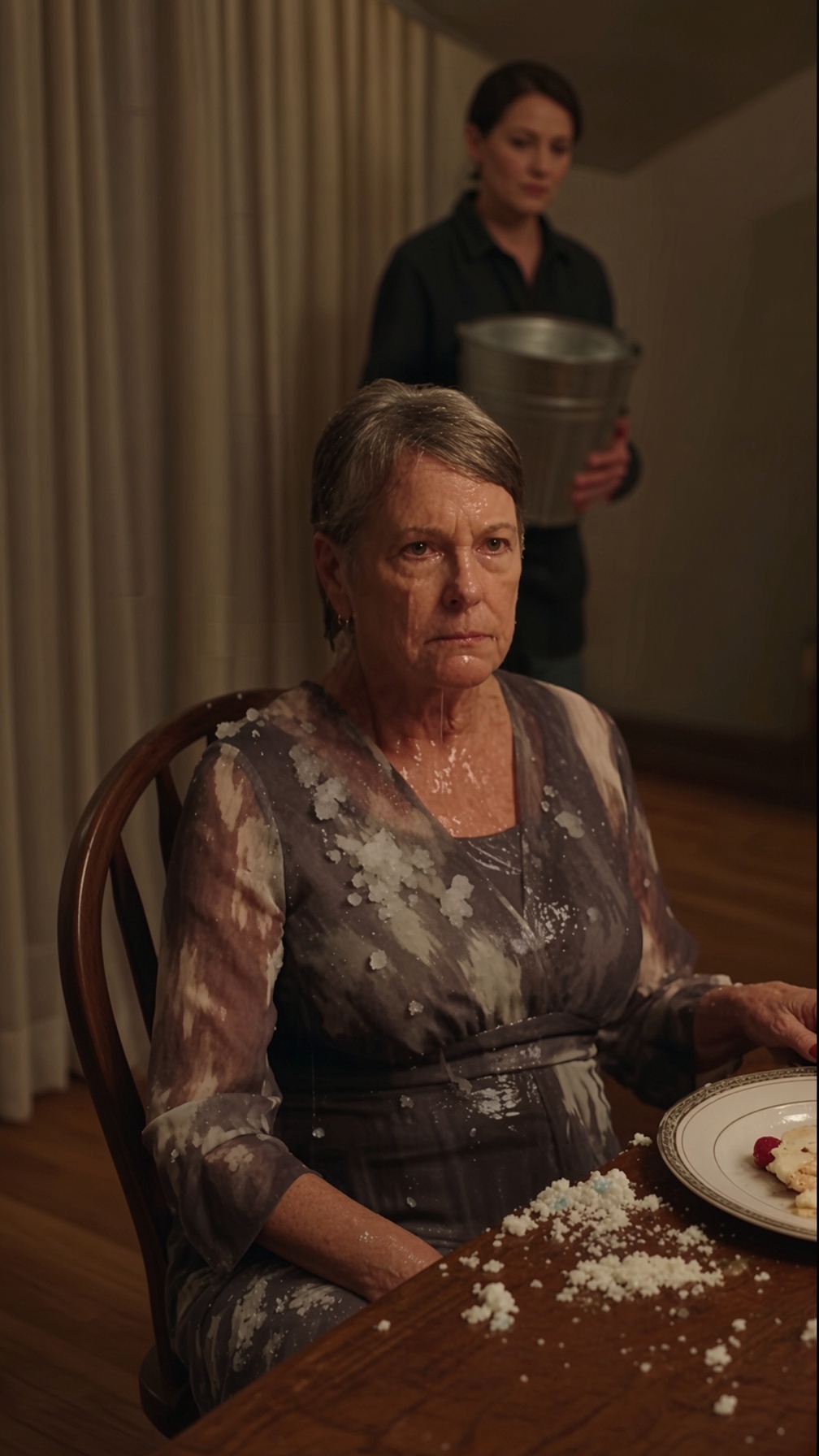
I put down the pen.
Nobody spoke.
Melissa watched my face as though the future of her entire life depended on what I would do next.
Perhaps, in some ways, it did.
For months, she had made choices about me without asking.
She had decided what I would wear, where I would sit, when I would be frightened, and how strangers would understand my reactions.
Now she was asking me to sign an agreement that might prevent me from telling my own story.
I looked at Anita.
“I won’t sign this version.”
Melissa closed her eyes.
“Mom, please.”
I raised my hand gently.
“Let me finish.”
The room became quiet.
“I don’t want revenge. I don’t want Ethan dragged through another round of public humiliation. And I don’t want to spend the rest of my life arguing with strangers.”
Melissa looked up.
“But I won’t sign anything that requires me to pretend I agreed to something I never agreed to.”
Anita nodded.
“That’s an important distinction.”
I turned toward Melissa.
“You don’t have to be destroyed for me to be protected. But you do have to tell the truth.”
She stared at me.
“What do you want me to say?”
I thought carefully.
“That I did not authorize the commercial use of my image. That the statements about my medical condition were inaccurate. That you were responsible for the company’s decisions.”
Melissa’s eyes filled.
“And Ethan?”
I looked at my grandson.
He sat very still, watching us.
“His mistakes are his to acknowledge privately and appropriately,” I said. “He doesn’t have to become another product your business sells.”
Ethan lowered his head.
I reached for his hand.
“Neither do I.”
For a long moment, Melissa said nothing.
Then she whispered, “I don’t know how to fix this.”
I believed her.
For the first time in months, I believed she was speaking without rehearsing.
“You can’t fix everything,” I answered. “But you can stop making it worse.”
The lawyers discussed possible changes to the agreement.
Nothing was signed that afternoon.
We still needed to resolve the financial terms, the accuracy of the public correction, the preservation of relevant records, and the handling of remaining online material.
But the conversation had changed.
Melissa no longer insisted that I had consented.
She no longer claimed that my objections resulted from confusion.
And she acknowledged, through her attorney, that the release bearing my signature had not been authorized by me.
Those admissions did not erase the harm.
They gave us a place to begin.
Over the following weeks, Anita negotiated a revised settlement.
I was permitted to make truthful statements about my experience, while both sides agreed to avoid harassment, false accusations, and unnecessary disclosure of private family information.
Melissa and her company agreed to stop using my image and voice commercially without my express permission.
They would remove the recordings they controlled, cooperate with reasonable requests concerning copies, and withdraw the unsupported representations about my health.
The agreement also addressed the disputed commercial payments and established a schedule for the financial obligations Melissa accepted.
It was not a magical solution.
Money didn’t suddenly appear.
Online copies didn’t disappear from every corner of the internet.
And I didn’t receive an enormous check that somehow made everything right.
Instead, the agreement created enforceable obligations and a process for addressing problems that remained.
That was enough for me to move forward.
One afternoon, Melissa called.
“Mom, the correction is ready.”
I had already reviewed the language with Anita.
Still, hearing Melissa say those words made my stomach tighten.
“Are you comfortable posting it?”
She sighed.
“I don’t think comfortable is the word.”
I waited.
Then she said, “But it’s true.”
A few minutes later, the statement appeared on the account.
There was no music.
No tearful performance.
No dramatic editing.
It was plain text.
Melissa acknowledged that the account had used my image in commercial material without proper authorization.
She stated that her previous descriptions of my health were inaccurate and should not have been presented as medical facts.
She accepted responsibility for the company’s content decisions.
She also requested that viewers stop directing hostile messages toward Ethan.
I read it three times.
Then I closed the page.
I didn’t feel victorious.
I felt exhausted.
But the exhaustion was different from what I had experienced after my birthday.
Then, I had felt powerless.
Now, I felt like someone who had finally reached the end of a long, difficult task.
I went into the kitchen and made tea.
For once, I didn’t wonder whether someone was recording me.
A month later, Melissa began applying for salaried marketing positions.
She told me during one of our scheduled conversations.
We had agreed not to resume our old pattern of constant phone calls immediately.
For years, she had called whenever she needed advice, money, reassurance, or someone to blame.
I had answered almost every time.
Now we spoke at agreed-upon times.
The arrangement felt awkward.
Sometimes I missed her unexpected calls.
Sometimes I felt guilty when I let a message wait until morning.
But I was learning that being available every minute wasn’t the same as being loving.
Melissa told me she had interviewed with a regional business.
“It’s not glamorous,” she said.
“Most jobs aren’t.”
She gave a small laugh.
I heard something familiar in it.
Something that reminded me of the young woman who had once called home after her first day at work.
“They asked why I left my last business.”
“What did you tell them?”
“That I made decisions I regret and that I’m winding down the operation.”
I considered her answer.
“Was that difficult?”
“Very.”
“And?”
She was quiet for a moment.
“I think it’s the first interview where I wasn’t trying to sound more successful than I am.”
I smiled sadly.
“That might be a good beginning.”
She didn’t receive that particular job.
Two weeks later, another employer offered her a position.
The salary was modest compared with the income she had once imagined earning.
But it was steady.
She accepted.
The business obligations did not vanish.
She began addressing them through the negotiated arrangements and appropriate professional advice.
Her apartment did not magically become more affordable.
Her pride didn’t stop hurting.
And some people who had worked with her no longer trusted her.
Those were consequences she had to face herself.
I helped in ways that didn’t require surrendering my boundaries.
Occasionally, I invited her to dinner.
I listened when she spoke honestly.
I encouraged her to continue counseling.
But I no longer offered to solve every financial problem.
For the first time, I understood that rescuing someone from every consequence could become another way of preventing them from growing.
Ethan changed too.
The change was quieter.
He stopped posting videos online.
He continued studying photography and editing, but he became more thoughtful about what he recorded.
One afternoon, he arrived with his camera and asked whether he could photograph the roses Frank had planted.
“Of course,” I said.
Then he hesitated.
“Do you want me to show you the pictures before I do anything with them?”
I felt my throat tighten.
“Yes, sweetheart. I’d like that.”
He nodded.
“Okay.”
Such a simple exchange.
A question.
An answer.
A boundary respected.
I wondered how different the past year might have been if Melissa had started there.
Ethan’s school counselor continued supporting him through the remainder of his senior year.
His relationship with Melissa remained complicated.
Some days they talked easily.
Other days they struggled.
They attended family counseling, where they worked on trust, pressure, and the difference between taking responsibility and accepting blame that didn’t belong to them.
I didn’t ask him to report everything they discussed.
That was another boundary I had to learn.
He deserved a private relationship with his mother, even after everything that had happened.
One evening, he asked whether I thought she would ever become the person she used to be.
I was cutting apples at the kitchen counter.
I set down the knife.
“Which person do you mean?”
He considered the question.
“The mom who used to make stupid jokes at breakfast. Before everything became about followers.”
I thought for a moment.
“People don’t always become exactly who they were before something difficult happens.”
His expression fell.
I continued.
“But sometimes they can become more honest versions of themselves.”
He looked thoughtful.
“Do you think she will?”
“I hope so.”
“That’s all?”
“That’s all I can promise.”
He nodded.
Then he picked up an apple slice.
“Grandpa would’ve told her to get a real job.”
I laughed unexpectedly.
The sound surprised both of us.
“Your grandfather certainly would have had opinions.”
Ethan grinned.
“He had opinions about everything.”
“Especially pancakes.”
“Especially pancakes.”
We laughed together.
And for a moment, the kitchen felt like the place it had been before cameras turned our ordinary lives into performances.
Spring arrived slowly.
The roses began growing new leaves.
Carol and I resumed our Thursday walks.
I volunteered twice a week at a neighborhood reading program.
Sometimes someone still recognized me from the videos.
Occasionally, a stranger asked whether I was the grandmother from the birthday prank.
At first, those encounters made my stomach tighten.
Then I learned to answer simply.
“Yes. That happened to me. It’s been addressed, and I prefer not to discuss it.”
Most people respected the boundary.
Those who didn’t were not entitled to more of my time.
I also began considering something I had avoided for years.
What did I want my life to look like when I wasn’t organizing it around everyone else’s needs?
I had always dreamed of taking a train trip through the mountains.
Frank and I had planned one for our fortieth anniversary.
His health declined before we could go.
After he died, I put the brochure in a drawer.
I told myself I would take the trip someday.
Someday had become a word I used whenever my own wishes felt less important than someone else’s immediate demands.
That spring, Carol and I booked the journey.
We spent five days traveling through mountain towns, visiting museums, eating in small restaurants, and watching the landscape change beyond the windows.
One afternoon, our train moved through a valley surrounded by trees.
Sunlight flashed across a river.
Carol was reading beside me.
I took out my phone.
For a moment, I considered recording the scenery.
Then I put the phone away.
I wanted to remember the light without needing to prove to anyone that I had seen it.
I watched the mountains until they disappeared behind us.
And I felt happy.
Not because my family problems were gone.
Because they no longer occupied every corner of my life.
As the anniversary of my sixty-eighth birthday approached, Melissa called.
“Mom, I’ve been thinking about your birthday.”
My stomach tightened automatically.
She must have heard the silence.
“I don’t mean another party.”
I exhaled.
“What did you have in mind?”
“Nothing, unless you want something.”
I sat down.
She continued carefully.
“I know last year was terrible. I know I can’t change it.”
“No,” I said softly. “You can’t.”
“But I’d like to make you dinner. Just you, me, and Ethan. If that would feel okay.”
I thought about the previous birthday.
The pale blue dress.
The cake.
The bucket.
The laughter.
I had spent months wishing I could erase that evening.
Now I understood that I didn’t need to erase it.
I needed to decide what came afterward.
“I’d like dinner,” I said.
Melissa sounded surprised.
“Really?”
“Yes. But I have one condition.”
“Anything.”
“No phones at the table.”
She was quiet.
Then she answered.
“Of course, Mom.”
My sixty-ninth birthday arrived on a bright Saturday afternoon.
There were no elaborate decorations.
No crowded dining room.
No strangers waiting to watch a reaction.
Melissa brought roasted chicken, potatoes, and a small chocolate cake.
Ethan arrived carrying yellow tulips.
He had become taller again, though I couldn’t imagine how that was possible.
He handed me the flowers.
“Happy birthday, Grandma.”
I hugged him.
“Thank you, sweetheart.”
Then he took something from his pocket.
A small envelope.
Inside was a photograph.
It showed the three of us in my kitchen many years earlier.
Melissa was smiling.
Ethan was sitting on the counter.
I stood between them, holding a mixing bowl.
Frank had taken the picture.
I remembered the afternoon.
We had been making pancakes.
Melissa had accidentally spilled flour across the floor.
Ethan, who was four at the time, insisted the mess looked like snow.
Frank laughed so hard that the picture came out slightly crooked.
On the back, Ethan had written:
“Some moments are better because nobody planned them.”
I pressed the photograph against my chest.
“Oh, Ethan.”
He looked embarrassed.
“I thought you might like it.”
“I love it.”
Melissa stood nearby, watching quietly.
For a moment, I saw sadness cross her face.
Then she stepped closer.
“Mom, can I say something?”
I looked at her.
“Of course.”
She took a breath.
“I’m sorry.”
I had heard apologies before.
Small ones.
Conditional ones.
Apologies that somehow required me to admit I had overreacted.
This was different.
“I’m sorry I used your trust,” she continued. “I’m sorry I made Ethan feel responsible for my choices. And I’m sorry I cared more about what strangers thought than about how you felt.”
Her eyes filled.
“I know saying that doesn’t fix everything.”
“No,” I said. “It doesn’t.”
She nodded.
“But I wanted you to hear it.”
I reached for her hand.
“Thank you for saying it.”
We stood like that for a moment.
Mother and daughter.
Not enemies.
Not suddenly healed.
Just two people acknowledging that love could survive damage without pretending the damage hadn’t happened.
Then Ethan cleared his throat.
“Are we eating the cake or having a family meeting?”
I laughed.
Melissa laughed too.
“Definitely cake,” I said.
We sat at the table.
The chocolate frosting was slightly uneven.
The candles leaned to one side.
Melissa had forgotten to buy matches, so Ethan found a lighter in the kitchen drawer.
Everything was beautifully imperfect.
As the candles flickered, I looked at the people sitting across from me.
The daughter I was learning to love without excusing.
The grandson who was learning that honesty mattered more than approval.
And the empty chair beside the window where Frank used to sit.
For a moment, I wished he could see us.
Then I imagined what he would say.
He would probably complain that the candles were too close together.
He would remind Ethan about the seven-minute pancake rule.
And he would tell me to make a wish before the wax reached the cake.
“Ready, Grandma?” Ethan asked.
I nodded.
I closed my eyes.
I didn’t wish for a perfect family.
I no longer believed perfection was possible, or even desirable.
I wished for courage.
For truth.
For the wisdom to recognize the difference between kindness and surrender.
Then I blew out the candles.
Nobody startled me.
Nobody laughed at my expense.
Nobody lifted a phone.
We simply cut the cake and passed the plates around the table.
Later, after Melissa and Ethan had gone home, I washed the dishes and placed the tulips in a vase beside Frank’s photograph.
I looked at the new birthday picture Ethan had given me.
Then I placed it next to the old one.
Two moments from the same family.
One from a time when everything seemed simple.
One from a time when we finally understood how complicated love could become.
I turned off the kitchen light.
The house was quiet.
But the silence no longer felt like something missing.
It felt peaceful.
On my sixty-eighth birthday, my family had turned my humiliation into something millions of people could watch.
On my sixty-ninth, I received something far more valuable than attention, money, or a perfect celebration.
I received the freedom to live my life without performing it for anyone.
And when I closed my front door that night, there were no cameras, no audience, and no strangers waiting for my reaction.
There was only me.
And at last, that was enough.
✓ Lynn R. Adams
I put down the pen. Nobody spoke. Melissa watched my face as though the future of her entire life depended on what I would do next. Perhaps, in some ways, it did. For months, she had made choices …