Chapter 1: THE WOMAN HE THREW AWAY – H102
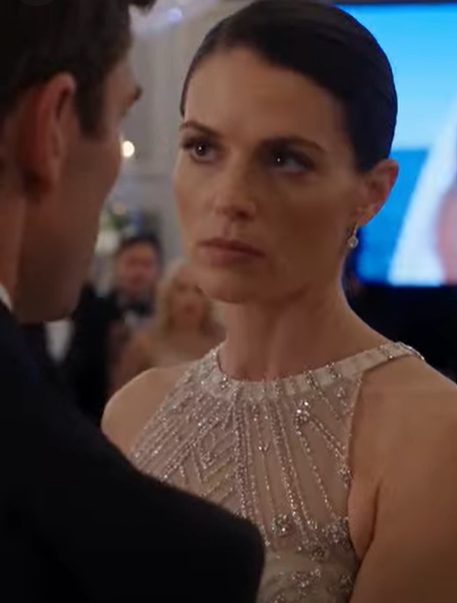
“Smile, Claire.
You’re finally out of the way.”
Those were the first words my husband said to me after our divorce became official.
Not goodbye.
Not I’m sorry.
Not even thank you for the six years we had spent together.
Just a command to smile, delivered with the easy confidence of a man who believed he had won.
We were standing on the wide stone steps outside the Minneapolis courthouse.
Photographers crowded the sidewalk, their cameras flashing against the pale afternoon sunlight.
Reid Ashford stood beside me in a perfectly tailored charcoal suit, looking every inch the billionaire businessman the magazines loved to celebrate.
His arm was wrapped around Marissa Blake.
The woman he had chosen to replace me.
Marissa was one of America’s most recognizable runway models.
She wore a cream designer suit, diamond earrings, and a polished expression that suggested she had been preparing for this particular moment for weeks.
Perhaps she had.
I was still holding our divorce papers.
My wedding ring was still on my finger.
And Reid looked happier than I had seen him in years.
“Reid,” I said quietly, “do you really need to do this here?”
He glanced at the photographers.
I gestured toward Marissa, the cameras, the spectacle he had arranged around the final minutes of our marriage.
His expression hardened.
“Claire, don’t make this dramatic.”
A photographer called his name.
Reid immediately smiled.
Marissa leaned closer to him, adjusting the delicate fall of her hair before turning toward me.
“Some women are only part of the warm-up,” she said.
The words were quiet enough that only the three of us could hear them.
But her expression made certain every camera captured my humiliation.
I looked at Reid.
For one foolish second, I expected him to object.
There had been a time when he would have.
Once, during our first year together, a wealthy investor had made a dismissive remark about my ordinary background.
Reid had immediately interrupted the conversation, taken my hand, and told the man he would never tolerate anyone disrespecting his wife.
I had loved him fiercely for that.
Now he simply adjusted his jacket.
“You were good to me, Claire,” he said.
“But Marissa is the life I’m choosing now.”
Gone in one sentence.
I remembered our first apartment, where the heating failed every winter and Reid worked late into the night trying to keep his struggling company alive.
I remembered helping him organize invoices on our kitchen floor, building financial projections while he slept, and celebrating the day Ashford Group landed its first major institutional investor.
Back then, he had looked at me across our tiny kitchen table and promised that whatever happened, we would always be partners.
Somewhere between that kitchen and the executive suite overlooking downtown Minneapolis, the promise had disappeared.
So had the man who made it.
I lowered my eyes to the gold band on my finger.
It was simple, almost disappointingly plain compared with the extravagant jewelry Reid had given me in later years.
We had bought it when we could barely afford rent.
I slipped it off.
My hands didn’t shake.
I placed the ring on top of the divorce papers.
Then I looked directly into my former husband’s eyes.
“I hope you understand what you just gave away.”
Reid laughed.
Not cruelly.
Dismissively.
As though I had become so insignificant that even my anger amused him.
“Take care of yourself, Claire.”
Marissa slipped her hand into his.
The photographers shouted for another picture.
And I walked away.
I made it to my car before the tears came.
They arrived without warning, blurring the courthouse steps through my windshield.
I gripped the steering wheel and allowed myself exactly five minutes.
Five minutes to grieve the man I had loved.
Five minutes to mourn the future I had imagined.
Five minutes to accept that the person waiting outside with another woman was no longer my husband.
Then I wiped my face and started the engine.
I didn’t know it yet, but the worst betrayal of my marriage had nothing to do with Marissa Blake.
And Reid had made one mistake that would eventually destroy everything he believed he owned.
He had assumed that because I was leaving quietly, I knew nothing.
By the time I reached my apartment, my phone was ringing.
The caller was Rachel Moreno, the attorney who had represented me during the divorce.
“Claire, are you somewhere private?”
Her tone made me straighten.
“I received a document this afternoon.
Something isn’t right.”
I placed my keys on the kitchen counter.
“What document?”
“A corporate authorization connected to the Ashford Employee Stability Trust.”
The trust was familiar.
Five years earlier, when Ashford Group was still expanding, I had helped establish a reserve designed to protect employee compensation during difficult financial periods.
The idea had been mine.
Reid had liked it because it impressed investors.
I had liked it because I remembered what it felt like to wonder whether a paycheck would arrive on Friday.
Under the original trust agreement, significant transfers required the approval of two founding trustees.
I was one of them.
The second was Edmund Vale, Ashford Group’s longtime chief financial officer.
“I’m not involved in the company anymore,” I told Rachel.
“That’s exactly the problem.”
I moved toward the window.
Across the street, ordinary people were going about ordinary lives.
Someone walked a dog.
A delivery truck pulled into an alley.
A woman struggled with two grocery bags.
The world seemed offensively normal.
“Rachel, please tell me what happened.”
“There was a transfer authorization filed this afternoon.”
“It carries your signature.”
I stared at the street.
“That can’t be right.”
“I thought you should know before I responded.”
“What time was it signed?”
She hesitated.
“According to the document, eleven forty-seven this morning.”
I looked toward the divorce papers lying on my counter.
At eleven forty-seven, I had been sitting in a courthouse conference room with Rachel while she explained the final language of my settlement.
My former husband had already left with his attorney.
I remembered the exact moment because the clock above the conference table had been broken, and Rachel had checked the time on her phone.
“I didn’t sign anything.”
“Then someone made a mistake.”
“Possibly.”
But Rachel didn’t sound convinced.
I sat at the kitchen table.
“What was the authorization for?”
“I’m still obtaining the complete supporting records.
The filing references an amendment to the trust’s investment restrictions.”
“Investment restrictions?”
My stomach tightened.
The restrictions existed for a reason.
The employee trust had never been intended as an ordinary source of corporate financing.
It was supposed to remain protected from the kind of aggressive decisions that helped Reid build his public reputation.
He used to complain that the safeguards were unnecessarily cautious.
I used to tell him caution was exactly what employees deserved.
“Has money been moved?”
“I don’t know yet.”
“Does Edmund know?”
“I haven’t been able to reach him.”
That surprised me.
Edmund Vale had served the Ashford family for more than three decades.
He was reserved, meticulous, and almost painfully principled about financial records.
When Reid and I argued about expenses, Edmund was often the person who reminded both of us that accurate numbers mattered more than appearances.
He wouldn’t authorize a questionable transfer without a legitimate explanation.
“Maybe it’s just an administrative filing,” I said.
“I hope so.
But I want you to review the document.”
My laptop chimed a moment later.
Rachel had sent me a scanned copy.
The first page looked ordinary enough.
Ashford Group.
Employee Stability Trust.
Authorization Amendment.
Then I reached the signature page.
There it was.
CLAIRE ASHFORD.
My name, written in a close imitation of my handwriting.
The first letter had my familiar wide curve.
The final letters leaned slightly upward.
Whoever had produced it had studied my signature.
But I immediately noticed something wrong.
For years, I had finished the final letter of my surname with a small downward stroke.
It was an old habit from my school days.
The signature on the document didn’t have it.
Instead, the final line curved elegantly to the right.
Exactly the way my signature appeared on the divorce papers I had signed that morning.
I looked from one document to the other.
The resemblance was too precise.
Someone hadn’t simply imitated my handwriting.
Someone appeared to have copied the signature from the settlement itself.
I called Rachel back.
“Where did this document come from?”
“A filing package submitted through Ashford Group’s corporate counsel.”
“Was Reid’s attorney involved?”
“His firm’s name appears on the cover correspondence.”
I closed my eyes.
For weeks, Reid had demanded that I sign the settlement quickly.
He had accused me of prolonging the divorce.
He had insisted that our separation would become embarrassing if I kept asking questions.
And when I finally agreed, he arranged photographers to witness his victory.
“Rachel, can he remove me as a trustee without my permission?”
“Not under the original agreement.
A valid resignation or a properly authorized court order would be required.”
“Then why does this say I approved an amendment?”
“I don’t know.”
I continued reading.
The amendment contained references to affiliated investments, secured advances, and temporary liquidity arrangements.
I understood enough to recognize what those terms could mean.
The protections we had established were being weakened.
“Rachel, what happens if this document is accepted?”
“Potentially, the trust assets could be used in ways the original agreement prohibited.”
A cold silence spread through the room.
I had walked into the courthouse believing that my greatest loss would be the man I had married.
Now I was looking at a document suggesting someone had used my name to authorize something I had spent years preventing.
“Tell me the amount,” I whispered.
“How much money is involved?”
Rachel exhaled.
“The referenced account contains approximately thirty-eight point four million dollars.”
I stopped breathing for a second.
That wasn’t just a corporate number.
It represented years of accumulated protection for thousands of people whose names would never appear in the society pages.
People who worked in warehouses, managed distribution schedules, processed invoices, and kept the company operating while Reid gave interviews about visionary leadership.
“Please tell me the money is still there.”
“I can’t confirm that.”
I looked down at the divorce decree.
Reid had told the world I was finally out of the way.
Perhaps he meant something much more specific than I had realized.
“Rachel,” I said, “I want every document connected to that trust.”
“We’ll request them.”
“And I want to know who authorized the transfer.”
A second email appeared.
Rachel opened it while I remained on the telephone.
For several seconds, she said nothing.
Then I heard her chair move.
Something in her voice made my heart pound.
“I just received the transaction confirmation.”
I pressed my hand against the edge of the table.
“The authorization wasn’t submitted for a future transfer.”
My eyes returned to the forged signature.
Rachel continued, her voice barely above a whisper.
“The bank has already processed the movement of funds.”
I swallowed.
“How much?”
“All thirty-eight point four million dollars.”
I stared at my name on the screen.
And beneath it, I finally noticed the name of the person who had requested the transaction.
REID ASHFORD.
My former husband had celebrated our divorce in front of the entire country.
Less than three hours later, someone had used my signature to move thirty-eight million dollars out of a protected employee trust.
And the money was already gone.
✓ Lynn R. Adams
“Smile, Claire. You’re finally out of the way.” Those were the first words my husband said to me after our divorce became official. Not goodbye. Not I’m sorry. Not even thank you for the six year…