Chapter 1: THE NAME NOBODY WANTED TO CALL – 041
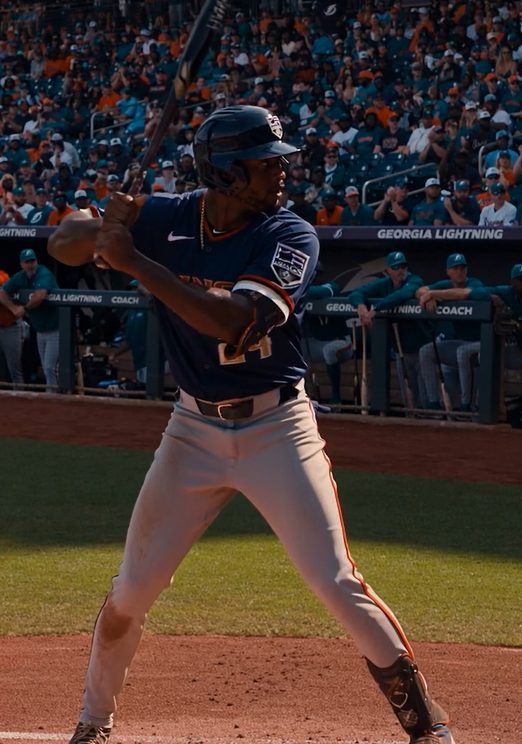
The first time my coach shouted my name all season, three runners were waiting to score, America’s most dangerous teenage batter was stepping toward home plate, and one mistake could cost our team a championship worth more than anyone in that stadium could imagine.
GET ON THAT MOUND!
RIGHT NOW!”
Coach Randall Pike’s voice cracked across the Atlanta stadium like thunder.
For a moment, I honestly thought he was shouting at someone else.
I was sitting at the far end of the Georgia Lightning dugout, exactly where I had spent nearly every game that season.
My battered glove rested against my knee.
My cleats were covered in dust despite the fact that I hadn’t played a single inning.
I was fourteen years old.
I was the poorest player on the team.
And until that afternoon, I might as well have been invisible.
Coach Pike roared again.
“ARE YOU DEAF?”
I jumped to my feet.
Thousands of people filled the grandstands beneath the blazing Georgia sun.
Television cameras lined the field.
College scouts watched from behind home plate, their notebooks open.
The scoreboard showed the nightmare everyone feared.
ATLANTA KINGS ELITE: 4.
GEORGIA LIGHTNING: 3.
Seventh inning.
Bases loaded.
Our starting pitcher had just gone down with a shoulder injury.
And Brayden Cole was approaching home plate.
Even people who knew nothing about teenage baseball recognized that name.
Brayden was seventeen, tall and muscular, with a swing so powerful that sports commentators had started calling him America’s most dangerous teenage batter.
He had expensive equipment, private trainers, national television appearances, and enough confidence to fill the entire stadium.
I had a cracked glove.
And a pair of cleats my mother had repaired twice with glue.
But none of that mattered to Coach Pike until he ran out of better options.
That morning had begun very differently.
I woke before sunrise in our small apartment on the south side of Atlanta.
Mom was sitting at the kitchen table, still wearing her nursing scrubs.
Angela Turner had just finished another twelve-hour shift at Grady Memorial Hospital.
Her eyes were tired, and the coffee beside her had gone cold.
“You’re awake early,” she said when I walked into the kitchen.
“Championship day.”
She smiled faintly.
“As if you’ve forgotten to remind me.”
I opened the refrigerator.
There was half a carton of milk, a container of leftover rice, and two eggs.
Mom watched me carefully.
“You nervous?”
I shook my head.
That was a lie.
I had been nervous for weeks.
Not because I feared losing.
Because I feared spending the biggest game of my life watching everyone else play.
Mom knew it.
She always knew.
“Malik,” she said gently, “you can’t control whether Coach Pike puts you in.”
“But you can control whether you’re ready.”
I looked at the old glove hanging from the back of my chair.
The leather had split along the thumb.
The laces were worn thin.
Every time I caught a hard throw, I wondered whether the entire thing might finally come apart.
“I’ve been ready,” I whispered.
Mom reached across the table and squeezed my hand.
“Then don’t let anyone make you forget that.”
After breakfast, I carried my equipment outside.
Our apartment building faced an abandoned parking lot bordered by a long brick wall.
Most kids in our neighborhood used it for basketball.
I used it for baseball.
I had painted a small square on the bricks months earlier.
Beneath it sat an old mattress I had dragged home from a neighbor’s trash.
Every morning, I stood at a marked distance and threw baseballs until my arm warmed and my fingers began to ache.
I didn’t have a pitching machine.
I didn’t have a private instructor.
I didn’t even have enough money to replace baseballs when their covers started peeling.
But I had learned something other pitchers sometimes forgot.
A baseball wasn’t just something you threw.
It was something you understood.
My grandfather had taught me that.
When I was younger, he would sit beside the parking lot and watch my throws.
“Stop trying to throw harder than everybody else,” he once told me.
“But the scouts want fast pitchers.”
“They want pitchers who get batters out.”
I remember holding up a baseball, confused.
Grandpa took it from my hand and slowly rotated it.
“Look at those seams.”
“Your fingers understand a baseball better than most people understand words,” he said.
“You just have to listen to what they’re telling you.”
For years, that sentence stayed with me.
I studied how different grips changed the ball’s movement.
I watched videos of professional pitchers whenever I could borrow a phone.
I filled empty milk jugs with sand to strengthen my body.
And every evening, after schoolwork and chores, I returned to that brick wall.
Some nights, Mom stood at the apartment window and watched until the streetlights came on.
She never asked me to stop dreaming.
Even when dreaming seemed ridiculous.
Especially then.
By eight that morning, I was sitting in the back of a crowded bus with my equipment bag between my feet.
Other Georgia Lightning players arrived at the stadium in expensive SUVs.
Their parents wore designer sunglasses and team jackets.
Some had brought professional cameras.
One player’s father carried a cooler large enough to feed half our neighborhood.
I stepped through the stadium entrance carrying my glove and a plastic water bottle.
Nobody noticed.
At least, nobody important.
“Hey, kid!”
A television production assistant pointed toward a bucket of baseballs.
“Grab those and take them to the dugout.”
I opened my mouth.
For a second, I wanted to explain that I was actually on the team.
Then I looked down at my oversized uniform and worn shoes.
I understood why he’d made the mistake.
So I picked up the bucket.
“Thanks, buddy,” he said without looking again.
When I reached the dugout, Darius Coleman was adjusting his brand-new batting gloves.
Darius was one of our best hitters.
His family owned a successful construction company, and his father had helped sponsor several team events.
He glanced at the bucket.
“Man, Malik,” he laughed, “they got you working before the game even starts?”
A few teammates chuckled.
I set the bucket down.
“Somebody had to carry it.”
Darius shook his head.
“You should ask Coach for a real job.”
I didn’t answer.
It wasn’t the first joke.
During the season, teammates had called me the permanent substitute, the practice pitcher, and once, the team’s most expensive spectator.
That last one was funny, considering my mother struggled to pay the registration fees.
I had learned that arguing rarely changed anything.
So I practiced.
And waited.
During warm-ups, Coach Pike watched our starting pitchers throw.
Devin Brooks stood in the bullpen, firing fastballs into the catcher’s mitt.
Coach nodded approvingly.
“That’s it, Devin!
Beautiful!”
I stood nearby with my glove.
“Coach, can I throw a few?”
He barely glanced at me.
“Not today, Turner.”
“But I’ve been working on—”
“I said not today.”
He turned away.
I swallowed the rest of my sentence.
Noah Bennett, our catcher, gave me a sympathetic look.
“Keep your arm loose,” he whispered.
I shrugged.
“Just do it.”
Noah was one of the few players who occasionally caught my pitches after official practice ended.
He knew what I could do.
At least, he knew part of it.
A few weeks earlier, he’d watched one of my pitches move so unexpectedly that it missed his glove entirely.
He’d stared at me afterward.
“What was that?”
I had smiled.
“I’m still working on it.”
He’d asked me to throw it again.
This time, he caught it.
But even Noah couldn’t convince Coach Pike to give me a chance.
When the championship started, I returned to my familiar place at the end of the bench.
From there, I watched everything.
The Kings scored early.
We answered.
Their second baseman made a diving stop that stole a hit from Darius.
Our center fielder threw out a runner attempting to take an extra base.
By the sixth inning, the entire stadium was roaring with every pitch.
I cheered until my throat hurt.
I handed water bottles to exhausted teammates.
I chased foul balls near the dugout.
And I kept my glove beside me.
Just in case.
In the seventh inning, Georgia Lightning trailed 4–3.
The Kings loaded the bases after a single, a walk, and another sharp hit.
Devin Brooks stood on the mound, sweating heavily.
He had already thrown more pitches than anyone wanted.
Coach Pike shouted encouragement from the dugout.
“Finish this, Devin!”
Devin nodded.
He delivered another pitch.
Then something went wrong.
His throwing arm dropped strangely after the release.
He stumbled backward.
And his face twisted.
He grabbed his right shoulder.
“Something’s wrong!
I can’t lift my arm!”
The stadium noise changed immediately.
Coach Pike sprinted onto the field.
Our trainer followed.
Devin tried raising his arm, but stopped almost immediately, shaking his head.
I could see the fear in his eyes from the dugout.
He knew he was finished.
So did Coach.
Medical staff guided Devin toward the bench.
Pike turned toward the bullpen.
“Get someone ready!”
Nobody moved.
Our first backup pitcher had already thrown too many pitches earlier in the tournament.
The second was bent over with severe leg cramps.
The third sat with an injured wrist.
Coach Pike stared at them.
Then he looked toward the scoreboard.
Bases loaded.
Brayden Cole was coming to bat.
The coach slammed his palm against the dugout railing.
“Somebody give me a pitcher!”
His gaze moved across the bench.
Past the players with expensive equipment.
Past the boys whose parents sat in the private sponsor section.
Then his eyes stopped on me.
I felt my stomach drop.
Coach Pike stared at my worn glove as if he were seeing it for the first time.
“Tell me you’ve been keeping your arm loose.”
“Yes, Coach.”
“Tell me you can throw strikes.”
He looked toward Brayden Cole, who was already smiling near home plate.
Then Pike stepped directly in front of me.
“Malik, if I put you out there, there is nowhere to hide.”
I looked past him.
At the bases.
At the crowd.
At my mother standing somewhere in the bleachers.
And at the mound I had imagined standing on every night.
“I don’t want to hide.”
Coach Pike pressed a baseball into my right hand.
His voice dropped.
“One bad pitch, Malik, and we lose everything.”
I curled my fingers around the familiar seams.
“Then I won’t waste it.”
For one brief moment, the coach looked as though he wanted to say something else.
Instead, he pointed toward the field.
“Get on that mound.”
I stepped out of the dugout.
And from home plate, Brayden Cole turned toward me, saw who was coming to pitch, and burst into laughter.
✓ Lynn R. Adams
The first time my coach shouted my name all season, three runners were waiting to score, America’s most dangerous teenage batter was stepping toward home plate, and one mistake could cost our team a c…