Chapter 1: THE GLOVE THAT REMEMBERED – 041
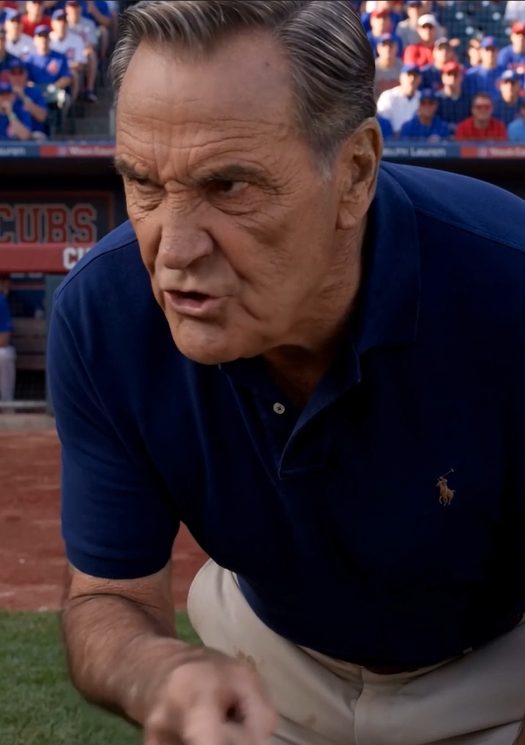
The first time Garrett Sullivan looked me in the eye, he pointed at my filthy shoes and told an entire baseball stadium that boys like me didn’t deserve to stand on the same field as champions.
I was twelve years old.
My clothes were faded, my glove was falling apart, and the man humiliating me was worth more money than everyone in my neighborhood would earn in a hundred lifetimes.
He expected me to cry.
He expected me to leave.
Instead, I looked straight into his face and challenged him to a hundred-million-dollar bet.
Three pitches.
If he touched even one of them, I would lose.
What happened six weeks later would become one of the most unforgettable moments in baseball history.
But the real story began long before Garrett Sullivan ever learned my name.
It began with an old leather glove, a forgotten baseball player, and a secret my mother had spent twelve years trying to bury.
My name is Wesley Irving.
I grew up on Chicago’s South Side, where summer mornings smelled like hot pavement, frying bacon, and exhaust from buses that never seemed to arrive on time.
Our neighborhood was the kind of place people drove through with their car doors locked.
They saw abandoned buildings, broken windows, and chain-link fences.
I saw home.
I knew which corner store owner would let you buy milk when your mother was two dollars short.
I knew which neighbors would sit outside until midnight because their apartments were too hot.
I knew which streets flooded after a thunderstorm and which alleys were safe to cut through when you were late.
I also knew that three miles away, on the other side of the expressway, there was a completely different Chicago.
A city of glass towers, expensive restaurants, and people who probably never worried about whether the electricity would stay on.
I had never been there.
Not because I didn’t want to.
Because everything I needed, and everything my family could afford, was on our side of the highway.
My mother, Nina Irving, worked at a hospital.
Sometimes she worked twelve-hour shifts.
Sometimes sixteen.
Once, when another nurse called in sick, she worked almost twenty hours and came home looking so tired that I was afraid she would fall asleep standing up.
Still, she always asked about my day.
She always made sure I ate.
And she always checked my baseball glove.
That last part was strange.
Other mothers checked homework, shoes, and whether their children had brushed their teeth.
Mine checked the stitching on a glove that was older than I was.
“Is it holding together?” she would ask.
“Yes, Mom.”
“Any new tears?”
“Don’t push it too hard, Wesley.”
She never said exactly what she meant by that.
I thought she was worried about the leather.
I didn’t understand that she was worried about me.
Every morning, at exactly six o’clock, I sat on an overturned milk crate outside a place called Dawson’s Cage.
It wasn’t much to look at.
The batting cage stood between a laundromat and an abandoned grocery store.
Its roof had holes, its concrete floor was cracked, and the single lightbulb above the entrance flickered whenever the wind blew.
A hand-painted sign hung beside the door.
DAWSON’S CAGE.
OPEN WHEN I’M HERE.
The owner was Earl Dawson.
Sixty-eight years old, gray-haired, with a permanent squint and hands rough enough to sand wood.
He didn’t smile much.
He didn’t talk much, either.
But when he watched somebody throw a baseball, he noticed things nobody else could see.
“You’re early,” he said one morning, unlocking the gate.
I checked the clock on the laundromat wall.
“Six exactly.”
“Then I’m late.”
“Two minutes.”
“Don’t get smart.”
He tried not to.
Earl disappeared inside and returned carrying a bucket of old baseballs.
Then he prepared the targets.
First, he hung an empty tin can from a wire.
Next, he tied a tennis ball to a piece of string.
Finally, he placed a cardboard circle against the far wall.
The circle was barely wider than a grown man’s fist.
“Three,” Earl said.
I rolled my shoulders.
“Same order?”
“Same order.”
I stepped onto the worn pitching mark.
The glove felt comfortable against my left hand.
Its leather was nearly black with age.
Several seams had been repaired with fishing line, and the thumb carried two burned initials.
I didn’t know why those letters mattered so much.
I only knew the glove had belonged to my father.
Earl raised one finger.
The first baseball struck the tin can with a sharp metallic crack.
It flew off the wire and bounced across the concrete.
Earl raised his second finger.
I changed my grip.
The next pitch snapped the string holding the tennis ball.
The ball dropped straight down.
Earl raised his third finger.
I stared at the cardboard circle.
The world seemed to narrow.
I could hear traffic outside the fence, someone shouting across the street, and the distant sound of a train.
Then I threw.
The baseball punched through the center of the cardboard.
Three pitches.
Three perfect hits.
Earl didn’t cheer.
He opened his notebook.
I retrieved the balls.
“Can we move the targets?”
“Because I already know where they are.”
Earl studied me for a moment.
Then he moved all three.
The second round was harder.
The can swayed.
The tennis ball moved in the wind.
The cardboard circle sat farther to the right.
I missed the can by an inch.
Earl marked something in his notebook.
“That’s one.”
“That’s one what?”
He looked up.
“You planning to throw your whole life without missing?”
“Then stop treating a miss like a funeral.”
I took a breath.
He tapped his temple.
“Your arm doesn’t decide where the ball goes, Wesley.
Your mind gives it permission.”
That was Earl.
He could make baseball sound like something a person might study at a university.
He had been teaching me since I was eight.
Four years.
Every morning he was available, I showed up.
Sometimes before school.
Sometimes after.
Sometimes when the temperature climbed so high that the concrete seemed to breathe heat through my shoes.
We never talked about professional baseball.
At least, not directly.
He taught me balance, release points, finger pressure, and how to recognize when my shoulder was getting tired.
He taught me that throwing harder wasn’t always better.
And he taught me never to waste a pitch trying to impress somebody.
“Put it where you mean to put it,” he always said.
“That’s enough.”
That morning, two neighborhood boys stopped outside the fence.
They watched me strike the cardboard target three times in a row.
One of them whistled.
“Man, that ain’t normal.”
The other leaned against the fence.
“How fast you throwing?”
I shrugged.
“Don’t know.”
Earl answered without looking up.
“Fast enough.”
The boys laughed.
They stayed until my mother arrived.
It was .
She still wore her blue hospital scrubs.
Her hair was pulled back, and there were dark circles beneath her eyes.
She carried a brown paper bag.
“Breakfast,” she said.
I ran over.
“Egg sandwich?”
“Peanut butter.”
“You complaining?”
“No, ma’am.”
“Good answer.”
She kissed my forehead.
I pretended to hate it.
She pretended not to notice.
While I ate, Earl asked me to demonstrate five more pitches.
Each one landed exactly where he pointed.
My mother watched quietly.
At first, she looked proud.
Then her expression changed.
It happened when I adjusted my grip and pulled my glove close to my chest.
She stared at my throwing hand.
Then at the glove.
For a second, she looked as though she had seen a ghost.
“Wesley,” she said, “go wash up.”
I hesitated.
“I’m almost done.”
There was something in her voice that made me obey.
I went inside the cage office, but the window was open.
I could hear them.
“He’s getting better,” Earl said.
“That’s what I’m afraid of,” my mother replied.
There was a silence.
Then she spoke again.
“Don’t let him end up like his father.”
My stomach tightened.
I had heard her mention my father before.
But never like that.
Earl said something too quietly for me to understand.
My mother answered sharply.
“You promised me.”
“I remember.”
“Then keep that promise.”
I heard her footsteps moving away.
I returned outside, pretending I hadn’t heard anything.
She smiled when she saw me.
“Be good today.”
“I always am.”
“That’s debatable.”
She hugged me.
Then she walked toward the bus stop, already preparing for another hospital shift.
I watched until she disappeared around the corner.
Earl gathered the baseballs.
“Time to close.”
“It’s not even seven.”
“Then you’ve got the rest of the morning to find something useful to do.”
I wanted to ask him about my father.
I wanted to ask why my mother sounded frightened.
Instead, I looked down at the glove.
“Was my dad good at baseball?”
Earl stopped moving.
For a moment, I thought he hadn’t heard me.
Then he slowly placed a baseball into the bucket.
“Very good.”
“Better than me?”
He looked at my glove.
“Different.”
“That’s not an answer.”
“It’s the one you’ve got.”
I hated when adults did that.
They answered questions with words that sounded important but didn’t actually explain anything.
“Did he play professionally?”
Earl looked toward the faded mural on the abandoned grocery store wall.
The painting showed a Black pitcher frozen in the middle of his throwing motion.
Most of the paint had peeled away.
I had passed that mural nearly every day of my life.
“Ask your mother,” Earl said.
“She won’t tell me.”
His face tightened.
“Then there’s a reason.”
He closed the gate.
I went home feeling more confused than before.
That afternoon, I sat beside our apartment window and studied the two letters on my glove.
James Irving.
My father’s name.
I knew that much.
I knew he had loved baseball.
I knew he wasn’t coming back.
And I knew my mother never spoke about the years before I could remember him.
But that afternoon, for the first time, I began to suspect the silence wasn’t simply grief.
It was fear.
I returned to Dawson’s Cage that evening because I had left my water bottle behind.
The gate was unlocked.
A light burned inside Earl’s cramped office.
I heard paper moving.
Then a drawer sliding open.
I approached the doorway.
Earl sat behind his desk with a yellowed newspaper clipping in his hands.
He looked older than he had that morning.
His eyes were wet.
I had never seen Earl cry.
He jerked upright.
The clipping slipped from his fingers.
It landed faceup on the desk.
I saw a photograph of a young Black pitcher wearing a professional baseball uniform.
The man was tall, lean, and smiling.
His arm was raised in the exact position Earl had spent years teaching me.
And on his hand was a glove.
I stepped closer.
The headline above the photograph read:
JAMES IRVING, THE ARM THAT COULD HAVE CHANGED EVERYTHING.
My mouth went dry.
“That’s my dad.”
Earl didn’t answer.
I looked at him.
“Why is he in the newspaper?”
He slowly lowered himself into his chair.
“Why didn’t anybody tell me?”
He turned the clipping over.
On the back was an old photograph of my father standing beside another man.
A much younger man in an expensive suit.
Underneath the photograph was a name.
Garrett Sullivan.
I pointed at it.
“Who’s that?”
Earl’s face went pale.
And when he finally answered, his voice sounded nothing like the voice of the coach I knew.
“He’s the man your father should never have trusted.”
✓ Lynn R. Adams
The first time Garrett Sullivan looked me in the eye, he pointed at my filthy shoes and told an entire baseball stadium that boys like me didn’t deserve to stand on the same field as champions. I was…