Chapter 1: THE BOY WHO DIDN’T BELONG – 041
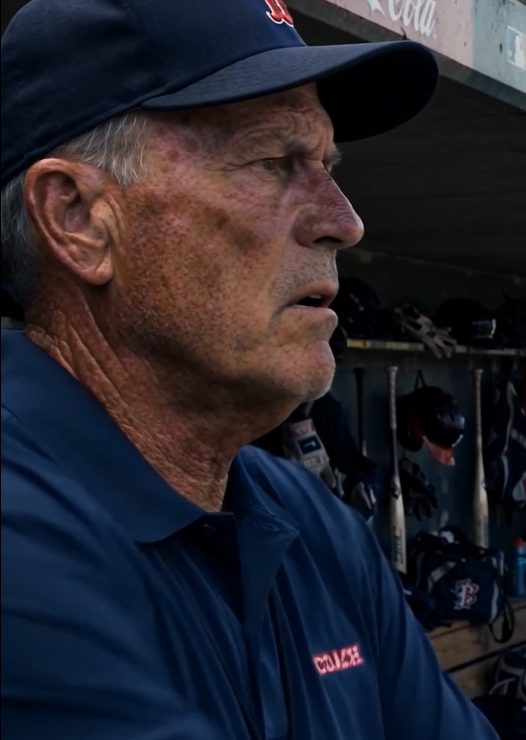
The first time Coach Brent Holloway laughed at my shoes, I wanted the ground to swallow me.
The second time, I decided I would make him remember my name.
I was sixteen years old, standing outside the dugout at Weston Baseball Complex with three baseballs in a grocery bag and silver duct tape wrapped around both cleats.
My mother had worked two consecutive overnight shifts to pay the two-hundred-dollar registration fee.
I had spent the last eleven dollars in my pocket on a roll of tape.
And the man who controlled my biggest opportunity was looking at me like I was garbage someone had forgotten to collect.
“What in the world are those supposed to be?” he demanded.
I followed his gaze.
“My cleats, sir.”
He laughed.
Not a small laugh.
Not the kind someone gives when they’re trying to be friendly.
He laughed loudly enough to make the players standing behind him turn around.
“Son, I can see they’re cleats.
I’m asking why they look like somebody pulled them out of a dumpster.”
A couple of boys snickered.
My face grew hot.
“The sole came apart during practice,” I explained.
“I fixed it.”
“Fixed it?”
He bent forward, examining the silver tape around my right shoe.
“With duct tape?”
“Yes, sir.”
Holloway straightened and shook his head.
“This is the Midwest Titans.
We develop serious athletes here.
This isn’t some neighborhood charity league.”
The laughter spread.
I tightened my grip on the grocery bag.
I had imagined this day hundreds of times.
I had imagined the sound of a baseball striking the catcher’s glove.
I had imagined scouts watching from behind home plate.
I had imagined somebody looking at my pitching motion and realizing that talent could come from places they had never bothered to visit.
I had never imagined that my shoes would be the first thing anyone noticed.
“My mother paid the registration fee,” I said quietly.
Holloway’s expression hardened.
“That fee buys you an evaluation.
It doesn’t buy you a place on my team.”
Behind him, the other boys stood beside equipment bags with embroidered names, expensive gloves, and polished cleats.
One player wore shoes that probably cost more than our monthly grocery bill.
I looked down at my feet.
The tape was already peeling near the heel.
For one terrible moment, I wondered whether coming here had been a mistake.
Then I heard my mother’s voice in my memory.
“Don’t ever let somebody else’s opinion become your own.”
She had said those words at our kitchen table three nights earlier.
It was nearly two in the morning.
Our refrigerator had stopped cooling properly again, and she was sitting beneath the flickering kitchen light, counting bills with the exhausted concentration of someone trying to solve an impossible equation.
Mom worked at St.
Luke’s Hospital.
She cleaned patient rooms, changed beds, carried supplies, and sometimes took additional shifts wherever the hospital needed help.
Her name was Tanya Brooks.
To strangers, she was simply another tired woman in blue hospital scrubs.
To me, she was the strongest person I had ever known.
That night, I had found her staring at the registration form for the Midwest Titans.
“Two hundred dollars?” she asked.
“That’s what it costs.”
She looked toward the refrigerator.
The repairman had told us the compressor might not survive another month.
Our car needed two new tires.
My younger sister, Naomi, had been squinting at the television because her glasses prescription was outdated.
And there I was, asking for money to throw a baseball in front of strangers.
“Forget it,” I told her.
“I’ll find another tryout.”
Mom folded the paper.
“Is this the one you found at the community center?”
“The one with the college scouts?”
“And sometimes professional scouts.”
She studied my face.
“How badly do you want it?”
I almost laughed.
How could I explain something that had lived inside my chest for years?
I wanted it badly enough to practice behind an abandoned furniture warehouse when the neighborhood lights stopped working.
Badly enough to carry baseballs to school because I never knew when I might find an empty wall.
Badly enough to spend hours at the public library studying professional pitchers on computers that automatically logged me out after sixty minutes.
I wanted it badly enough to dream about it even when I was afraid to tell anybody.
“A lot,” I whispered.
Mom reached for her work schedule.
“Then I’ll pick up another shift.”
I protested.
She ignored me.
The following evening, she came home so exhausted that she fell asleep sitting upright on the sofa.
But the next morning, two hundred dollars sat beneath a refrigerator magnet.
Beside it was a note.
YOU DO YOUR PART.
I’LL DO MINE.
I carried that note folded inside my wallet.
Standing in front of Holloway, I could almost feel its edges against my leg.
“Are you finished?” the coach asked.
I looked up.
“With the explanation.
Are you finished?”
Something shifted inside me.
I had spent most of my life learning when to remain quiet.
I understood that adults had authority.
I understood that coaches made decisions.
But my mother had not sacrificed two nights of sleep so I could be dismissed without throwing a single baseball.
“Just give me one pitch,” I said.
Holloway stared at me.
“One pitch, sir.”
A nearby assistant folded his arms.
One of the players laughed under his breath.
Holloway slowly removed his mirrored sunglasses.
“You think one pitch is going to change my mind?”
I swallowed.
“It might.”
His mouth curved into a smile.
For a second, I hoped he might appreciate my confidence.
Then he turned toward the players.
“You hear that?
One pitch.”
More laughter.
“All right, superstar.”
He pointed toward Field Three.
“Let’s see what you’ve got.”
I started walking.
“And Brooks?”
“Make it entertaining.”
The laughter followed me toward the mound.
Field Three was farther from the main entrance than the other diamonds.
The grass was neatly cut, the infield was freshly dragged, and a white pitching marker stood out against the reddish dirt.
Beyond the fence, parents occupied metal bleachers beneath the afternoon sun.
Some were holding phones.
Others watched with the relaxed confidence of families who already knew the coaches.
My mother sat near the middle of the bleachers.
When our eyes met, she straightened.
I recognized that look.
She had heard everything.
I gave her a small shake of my head.
Please don’t come down here.
Mom pressed her lips together.
Then she nodded.
It was one of the hardest things I had ever asked her to do.
Behind home plate, a catcher named Austin Price was adjusting his gear.
He looked about my age, with expensive protective equipment and a polished black mitt.
He glanced at my cleats, then at my face.
Unlike the other players, he didn’t laugh.
“You good?” he asked.
“What are you throwing?”
“Fastball.”
He settled into his crouch.
“All right.
Hit the glove.”
I walked to the painted marker and dug the toe of my right cleat into the dirt.
The sole shifted beneath my foot.
I stepped backward and tightened the tape.
It wouldn’t hold much longer.
But it only had to survive one pitch.
At the far end of the bleachers, a gray-haired man in a navy jacket was gathering his belongings.
I barely noticed him.
Later, I would learn his name was Raymond Cole.
He had spent twenty-seven years evaluating pitchers for professional baseball organizations.
He had seen first-round prospects, future stars, and countless talented boys who never received a fair opportunity.
That afternoon, he was preparing to leave.
Then something made him stop.
I didn’t know that.
All I knew was that the baseball felt familiar in my hand.
The stitches pressed against my fingers.
Everything around me suddenly seemed quieter.
I remembered the warehouse.
The broken fence.
The old truck tire hanging from a rope.
I remembered how many times I had thrown through that tire until my shoulder ached and darkness covered the faded loading dock.
Sometimes I imagined a catcher waiting beyond it.
Sometimes I imagined a stadium.
Sometimes I imagined my mother sitting somewhere in the stands, finally resting instead of working.
Austin raised his mitt.
I took a breath.
There was no pitching coach beside me.
No private instructor.
No expensive training program.
Just everything I had taught myself.
I turned my front foot slightly inward.
Relaxed my shoulders.
Concealed the ball behind my glove.
Then I began my delivery.
My left knee rose.
My hips rotated.
My right foot drove against the mound.
And the silver duct tape split.
I felt it happen.
A sharp tearing sensation beneath my shoe.
The sole shifted.
For a fraction of a second, my body threatened to lose its balance.
But my arm was already moving.
I couldn’t stop.
The baseball left my fingertips.
It traveled toward home plate so quickly that I barely followed it.
The sound exploded across Field Three.
Austin’s glove snapped backward.
His body rocked.
The baseball slipped loose and dropped into the dirt.
For one heartbeat, nobody moved.
Then someone shouted from behind the backstop.
“LOOK AT THE RADAR!”
Every head turned.
I stood frozen, my right shoe nearly coming apart.
The electronic display flashed.
Maybe I had read it wrong.
Then I heard a parent gasp.
“One hundred and one?”
Another voice shouted, “That’s impossible!”
Holloway marched toward the radar unit.
His face had changed.
The amused expression was gone.
He stared at the display, struck the side of the machine, and shouted at an assistant.
“GET ANOTHER GUN!
THAT THING’S BROKEN!”
Austin remained behind home plate, staring at his glove.
I could see his mouth moving.
He was looking at me now.
Not at my shoes.
I turned toward my mother.
She was standing with both hands covering her mouth.
For the first time that afternoon, I felt something other than humiliation.
I felt seen.
Then a new voice cut across the field.
“Nobody touches that mound!”
The gray-haired scout had come down from the bleachers.
He wasn’t smiling.
He wasn’t looking at the radar.
He was staring directly at the dirt beneath my feet.
Coach Holloway turned.
“What’s your problem?”
The scout walked closer.
His eyes moved from my ruined cleat to the white pitching marker.
Then toward home plate.
His expression darkened.
“Son,” he said carefully, “don’t throw another pitch.”
I looked at him.
He didn’t answer immediately.
Instead, he pointed toward the marker.
“Because something about this mound is very, very wrong.”
✓ Lynn R. Adams
The first time Coach Brent Holloway laughed at my shoes, I wanted the ground to swallow me. The second time, I decided I would make him remember my name. I was sixteen years old, standing outside th…