Chapter 1: THE BOY THEY CALLED LAWN BOY – 041
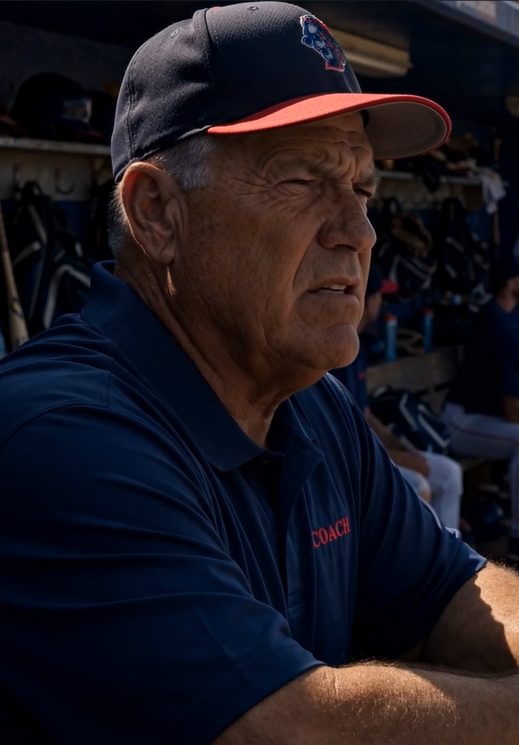
The first time I made an entire baseball field go silent, I wasn’t wearing a uniform.
I was wearing a sweat-soaked green T-shirt, a pair of sneakers with holes in the soles, and work gloves that were too big for my hands.
And thirty seconds earlier, the richest kid on the field had been laughing at me.
“Hey, lawn boy!” he shouted.
“You planning to play baseball, or just marry that lawn mower?”
His friends erupted.
I kept my eyes on the grass.
I had learned a long time ago that some people laughed because they were happy, and others laughed because making someone feel small was the only way they knew how to feel important.
But what happened next changed my life.
My name is Caleb Turner.
I was fourteen years old that summer, and I lived with my mother and Uncle Ray in a small rented house outside Tampa, Florida.
Mom worked night shifts as a nurse at a county hospital.
She came home most mornings with tired eyes, aching feet, and a smile she somehow managed to save for me.
My father had disappeared when I was six.
I knew almost nothing about where he had gone.
Mom never spoke badly about him.
She simply said some people weren’t strong enough to stay when life became difficult.
Uncle Ray was different.
He stayed when Mom cried over unpaid bills.
He stayed when the electricity was shut off for three days.
He stayed when I needed someone to teach me how to ride a bicycle, fix a broken window, or understand why some promises were more valuable than money.
And he stayed when I discovered baseball.
Uncle Ray maintained baseball fields throughout the county.
His hands were rough, his beard was going gray, and an old knee injury made him limp whenever he worked too long.
But put a baseball in his hand, and something about him changed.
His shoulders straightened.
His eyes sharpened.
And for a few beautiful seconds, he looked like a man who remembered being someone else.
I noticed it when I was nine.
That evening, a travel baseball team had finished practicing at a municipal field.
Their parents had gathered expensive equipment and driven away in shiny SUVs.
I was helping Uncle Ray collect discarded water bottles.
A baseball rolled toward my foot.
I picked it up.
“Can I throw it?”
He looked at me for a long moment.
Then he pointed toward an empty section of fence.
“See that square between those two posts?”
“Try to hit it.”
The ball landed ten feet short.
He didn’t laugh.
He walked over, retrieved it, and placed it back in my hand.
I threw until the sky turned purple.
Before we left, he said something I never forgot.
“Caleb, the ball doesn’t know whether your shoes cost ten dollars or two hundred.”
I asked what he meant.
He smiled sadly.
“It only knows what your arm can do.”
From that night forward, baseball became our secret.
We couldn’t afford private coaches, travel tournaments, or expensive equipment.
So Uncle Ray taught me after the paying customers went home.
He showed me how to turn my hips before releasing the ball, how to keep my shoulders level, how to use my legs instead of forcing everything through my arm.
He made me throw at chalk marks drawn on old plywood.
He made me practice footwork in our narrow backyard.
Sometimes he stood thirty feet away with his ancient glove and caught every ball I sent him.
Other nights, when his knee hurt too badly, he sat on an overturned bucket and watched.
Whenever I became frustrated, he repeated the same words.
“Don’t throw angry.
Throw honest.”
I didn’t completely understand them.
Not until that summer afternoon at Gulf Coast Premier Baseball.
The facility looked nothing like the public fields where Uncle Ray worked.
Fresh white chalk outlined the diamond.
The grass was perfectly trimmed.
Expensive tents lined the spectator area, sheltering parents who drank cold beverages and discussed tournament rankings.
The players wore spotless uniforms.
Their gloves looked brand-new.
Some carried bats that cost more than Mom earned during an entire hospital shift.
I had never seen so many people spend so much money to play a game I loved.
Gulf Coast Premier was one of the most exclusive travel programs in the region.
Its summer tryouts were invitation-only.
Parents paid thousands of dollars for their sons to train with respected coaches, attend major tournaments, and compete for attention from college recruiters.
I wasn’t there for any of that.
Uncle Ray had been hired to help prepare the grounds.
My job was simple.
Mow the strip of grass beyond left field, collect debris, and stay out of everyone’s way.
“Remember what I told you,” he said that morning.
“Keep my head down?”
“And finish the work.”
He studied me.
“These people don’t know you, Caleb.
Don’t give them a reason to treat you badly.”
But even then, I knew he was worried.
He understood something I hadn’t fully learned yet.
Sometimes people didn’t need a reason.
By eleven o’clock, the Florida heat was unbearable.
Sweat ran down my neck as I pushed the mower along the fence.
Every few minutes, the crack of a bat drew my attention toward the diamond.
I watched a shortstop shuffle toward second base.
His glove was positioned too low.
The next ground ball bounced over his wrist.
I watched a pitcher open his shoulders too early.
The ball sailed outside.
I watched a third baseman rush his footwork, throwing across his body instead of toward his target.
I wasn’t trying to criticize them.
I simply couldn’t stop noticing.
Uncle Ray had trained my eyes as carefully as my arm.
Unfortunately, someone noticed me watching.
I glanced toward the dugout.
A blond teenager leaned against the railing.
He wore a silver chain around his neck and carried a spotless glove.
I recognized him from the conversations Uncle Ray had overheard earlier.
Preston Weller.
His father sponsored two tournament teams, and everyone treated Preston as though he already owned the place.
“You lost, lawn boy?” he shouted.
Several players turned.
I shook my head.
“Then why are you staring at us?”
He grinned.
“Sure looks like you’re taking lessons through the fence.”
Laughter spread through the dugout.
Another player called, “Maybe he’s scouting us!”
Preston slapped the railing.
“Watch out, guys!
He might tell the grass all our secrets!”
The laughter grew louder.
I felt heat crawl up my neck.
I wanted to tell them I had practiced on baseball fields longer than some of them had.
I wanted to tell Preston his throwing mechanics were wasting half the strength in his legs.
I wanted to ask whether he would still laugh if neither of us had expensive equipment.
But I remembered Uncle Ray.
I turned back toward the mower.
“That’s right!”
Preston called.
“Back to work!”
What hurt most wasn’t the laughter.
It was Coach Darren Pike.
He stood near the dugout wearing mirrored sunglasses and a black Gulf Coast Premier polo.
He had heard everything.
I watched him glance at Preston, then toward me.
For one hopeful second, I thought he might say something.
Instead, he turned away and began writing on his clipboard.
I would remember that moment for years.
Because the people who say nothing when someone is being humiliated sometimes cause a different kind of pain.
Practice continued.
Parents cheered.
Coaches shouted instructions.
And I kept mowing.
Then a third baseman fielded a hard ground ball and fired it toward first.
His foot slipped slightly in the dirt.
The throw sailed over the first baseman’s outstretched glove.
The baseball bounced beyond the baseline, rolled past the bullpen fence, and came to rest against my dusty sneaker.
I stopped the mower.
The ball sat in the grass, its white leather marked with red dirt.
For a moment, I simply looked at it.
Then I bent down and picked it up.
“Hey, kid!”
Coach Pike pointed toward home plate.
“Throw it back!
And be careful!”
Preston immediately leaned over the railing.
“Don’t hurt yourself!”
The players laughed again.
One boy cupped his hands around his mouth.
“Walk it over!
You’ll never reach!”
I looked toward the catcher.
He was standing near home plate, waiting with his glove open.
It was a long throw.
Most boys my age would have walked closer before trying it.
But something inside me refused to move.
I could hear Uncle Ray’s voice.
“Use the ground beneath you.”
I could remember the empty fields where we’d practiced after sunset.
“Let your hips lead.”
I could remember the sting in my fingers when I missed a target.
“Don’t throw angry.”
I slipped off my oversized work glove.
The baseball settled into my bare hand.
“Throw honest.”
I planted my right foot.
Turned my shoulders.
Shifted my weight.
And released.
The ball exploded out of my hand.
It traveled across the diamond in a breathtakingly straight line, cutting through the hot afternoon air.
The catcher barely had time to lift his glove.
The baseball slammed into the pocket so hard that his hand dropped toward his waist.
He stared at the glove.
Then he stared at me.
Nobody laughed.
The dugout fell quiet.
A father lowered his drink.
One of the coaches stopped writing.
Preston stood perfectly still, his mouth slightly open.
Coach Pike slowly removed his sunglasses.
I looked down at my sneakers, suddenly unsure what I had done.
Maybe I had thrown too hard.
Maybe I was in trouble.
Then I heard a chair scrape against the concrete behind the spectators.
An elderly man had risen to his feet.
He was tall, thin, and dressed in a pale blue shirt.
Silver hair framed a deeply lined face, and a worn scouting notebook rested in one hand.
I didn’t know who he was.
But everyone else seemed to.
“That’s Franklin Hayes,” someone whispered.
“The scout?”
“He spent forty years evaluating pitchers.”
The old man didn’t look at the catcher.
He didn’t look at Coach Pike.
He looked directly at me.
Then he stepped toward the fence.
“Son,” he called, his voice steady, “who taught you to throw like that?”
I swallowed.
“My uncle, sir.”
“What’s his name?”
“Ray Turner.”
His expression changed.
The color seemed to drain from his face.
For several seconds, he said nothing.
Then he looked beyond me toward the equipment shed, where Uncle Ray had just appeared carrying a rake.
The old scout gripped the fence.
And with a voice that sounded suddenly much older, he said:
“Ray, tell me that isn’t your boy.”
Uncle Ray stopped walking.
The rake slipped from his hand.
And the expression on his face told me that whatever had happened between those two men was something he had spent half his life trying to forget.
✓ Lynn R. Adams
The first time I made an entire baseball field go silent, I wasn’t wearing a uniform. I was wearing a sweat-soaked green T-shirt, a pair of sneakers with holes in the soles, and work gloves that were…