Chapter 1: PART 1 – The Ball Boy Who Threw the Forgotten Pitch a243
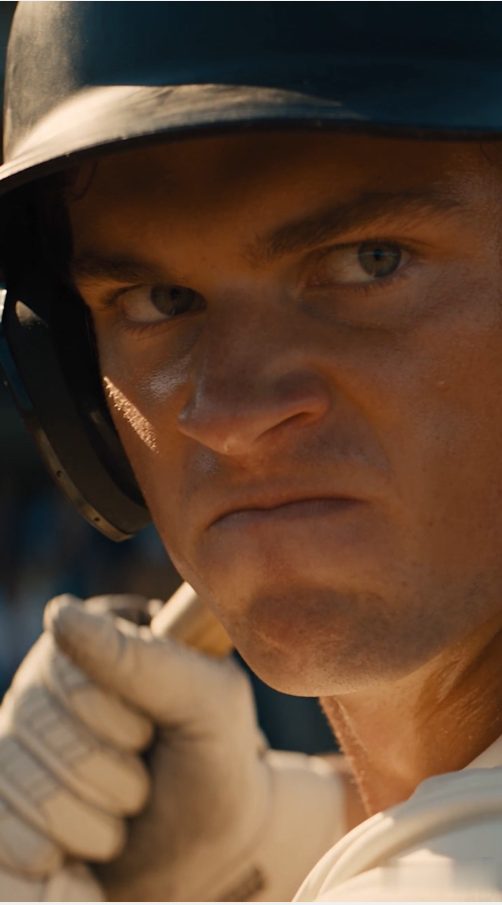
PART 1: Three Strikes Against a Superstar
The first time I struck out the most famous teenage baseball player in America, I was wearing shoes with holes in both soles.
I was twelve, my name was Noah Ellis, and until that afternoon nobody at Desert Crown Baseball Complex knew I could pitch.
They knew I could carry a bucket, chase a foul ball, and keep my head down when someone with a real uniform walked past.
That was enough to earn thirty dollars for a day’s work, which was thirty dollars my mother desperately needed.
The Arizona sun pressed against the back of my neck while I gathered baseballs along the first-base fence.
Heat shimmered above the dirt, and the metal bleachers were so hot that spectators spread towels beneath their legs.
Across the diamond, Tyler Vance took another swing and sent a ball sailing beyond the outfield wall.
People applauded as though he had done something nobody had ever seen.
Tyler was seventeen, handsome in the way s wanted athletes to be, and already famous enough to have cameras waiting when he stepped out of a car.
His white uniform looked as though it had never touched the ground.
My shirt had a faded STAFF logo, a loose thread beneath one arm, and a stain I had tried to scrub out that morning.
I watched the ball clear the fence and then bent to pick up another one.
There was no point pretending the scouts had come to see somebody like me.
My mother, Angela Ellis, was working the concession window beyond the first-base seats.
She had started before sunrise, arranging boxes of cups and bags of ice while I helped the groundskeeper drag the practice net into position.
We lived in a small apartment where the air conditioner rattled loudly but barely cooled the kitchen.
On the refrigerator, beneath a magnet shaped like a cactus, was a notice about the rent.
Mom had turned the paper around before breakfast, but I had already read it.
I knew exactly what thirty dollars meant.
It meant we could buy groceries without putting something back at the register.
It meant she might stop adding the numbers in her head whenever I asked for new shoes.
It meant I was useful, and I liked being useful.
“Keep your bucket clear of the players,” Mr.
Delgado, the stadium manager, had warned me.
“Yes, sir,” I had answered.
He wasn’t a cruel man, but he had made it clear that the showcase was important and that our jobs depended on causing no trouble.
I knew how to be invisible when important people were around.
I had practiced that skill at school, in grocery stores, and on days when Mom counted coins beside the kitchen sink.
What I hadn’t learned was how to stop loving baseball just because we couldn’t afford it.
My father had taught me how to hold a ball before I could spell the word pitcher.
He used to sit behind our apartment building with a bucket of damaged baseballs, showing me where my fingers should rest against the seams.
When a ball was split, he wrapped it with black electrical tape and insisted it still had a thousand throws left in it.
Our target was an old mattress propped against a wall.
I wasn’t allowed to throw toward the windows, and Mom wasn’t supposed to hear how hard the ball hit.
Dad had a name for one particular pitch, although he never explained why he whispered it.
“The Falling Star,” he would say, settling my middle finger just a little higher than felt natural.
I thought he had invented the name for me.
After Dad was gone, I kept practicing because throwing that pitch sometimes felt like having a conversation with him.
Mom knew about the mattress and the ruined baseballs.
She also knew that I never talked about him when other people could hear.
That morning she had kissed my forehead and told me to avoid the television cameras.
“There’s no reason for anyone to notice us,” she’d said.
I had promised her nobody would.
For most of the afternoon, that promise held.
Then the catcher missed a return throw.
The baseball skipped over the clay and came rolling toward my battered sneakers.
I trapped it with the side of my shoe, lifted it, and glanced toward the boy waiting near home plate.
He held out his glove without looking at me.
It was just a return throw, and I hadn’t even thought about the grip until the ball left my hand.
Halfway across the infield, it drifted in a direction a baseball had no business drifting.
The catcher reached to his right, then jerked his glove left, almost dropping the ball.
A few men behind the scouting section leaned forward.
One of them, old enough to be my grandfather, stopped writing in his notebook.
Tyler Vance started laughing.
“Was that supposed to be a pitch?” he called.
I felt every face between first base and home plate turn toward me.
“No, sir,” I said before remembering he wasn’t an adult.
“I was just giving it back.”
Tyler walked toward me carrying a polished bat that probably cost more than our electric bill.
He stopped close enough that I could smell the sunscreen on his skin.
“Kids like you carry buckets,” he said, tapping the bat lightly against the empty space in front of my chest.
“You don’t throw to players like me.”
My ears grew hot, although the rest of me felt suddenly cold.
“I wasn’t trying to.”
A few boys standing near the dugout laughed because Tyler was laughing.
One television camera turned in our direction.
I looked toward the concession window and saw Mom standing motionless with a cup in her hand.
Tyler followed my glance, and something about my embarrassment seemed to entertain him even more.
“Put him on the mound,” he announced.
“I’ll knock whatever he throws into the parking lot.”
I shook my head immediately.
“Please, I have work.”
“You scared?”
Tyler asked.
I was scared, but not of his bat.
I was thinking about Mr.
Delgado, thirty dollars, and the rent notice hiding beneath our cactus magnet.
“You can laugh at me without making me throw,” I said.
Tyler’s smile stiffened.
“I wasn’t asking permission.”
“Enough,” a voice said from the shaded scouting seats.
The elderly man with the notebook stood up slowly and rested one hand on the railing.
His hair was silver, and he wore dark sunglasses and a light linen shirt that had gone damp at the collar.
“I’d like to see the boy throw,” he said.
Nobody laughed then.
Someone nearby whispered that the man was Raymond Cross.
I knew that name because my father had once kept a folded newspaper photograph of him in a shoebox.
Raymond Cross had spent decades evaluating pitchers, and grown men argued about his opinions as though they were decisions made by a judge.
Tyler swung the bat onto his shoulder.
“Fine,” he said, grinning again.
“Five minutes of entertainment.”
Delgado hurried over and looked as distressed as I felt.
He whispered that I wasn’t insured as a player and that this was supposed to be a professional event.
Raymond told him no equipment was necessary for three controlled tosses, then asked whether I was willing.
I wanted to say no.
I also wanted everyone to stop staring at Mom.
“Will I still get paid?”
I whispered to Mr.
His expression softened for an instant before he nodded.
“Just don’t do anything foolish.”
I set my bucket against the fence and walked toward the mound.
Each step seemed to make the field grow larger.
I could hear cleats scraping, cameras clicking, and somebody saying I didn’t look old enough to be in middle school.
My shoes sank into the soft dirt where the real pitchers had worked all morning.
I stood on the rubber and tried to remember how Dad had taught me to breathe.
Never throw angry, he’d said, because anger makes your hand tell the ball a lie.
The catcher crouched behind the plate and held out his glove.
Tyler stepped into the batter’s box and twirled his bat for the cameras.
I couldn’t see Mom clearly through the spectators, but I knew exactly where she stood.
I took the ball from my glove, settled my fingers, and lifted my left knee.
My motion looked awkward beside the smooth deliveries I had watched all afternoon.
That didn’t bother me because Dad’s motion had looked awkward too.
The first pitch came out slower than I wanted.
I could see Tyler’s shoulders relax as the ball floated toward him.
Then the ball shifted sideways and his bat swept through empty air.
The catcher snatched it near his knee.
For one wonderful second nobody made a sound.
Tyler looked back at the catcher.
“Give me another.”
I waited for someone to tell me the first swing hadn’t counted.
Nobody did.
On the second pitch, I tried not to think about being watched.
I focused on a small patch of worn leather in the catcher’s glove.
The ball sailed toward that patch, appeared to hesitate, and slipped past Tyler’s swing again.
The sound from the bleachers was not applause.
It was the startled noise people make when something they believe impossible happens right in front of them.
Tyler stepped away from the plate, jaw clenched, and studied his bat as if the wood had betrayed him.
The catcher looked at me over his mask.
“What was that?”
I shook my head.
“I don’t know what it’s really called.”
Raymond Cross was already coming down the steps.
He passed the other scouts without answering their questions and stopped in front of the mound.
“Show me your grip,” he said quietly.
I held the ball where he could see it.
My middle finger crossed high over one seam, my index finger rested along the side, and my thumb pressed underneath at an angle that had always felt wrong until Dad corrected it.
Raymond’s mouth opened slightly.
“Who taught you that?”
I heard Mom call my name from behind the crowd.
She was pushing past spectators with her apron still tied around her waist.
“Noah, come down from there.”
Raymond didn’t move.
“Your last name is Ellis?”
He turned toward Mom, and the air between them seemed to change.
“I knew a pitcher named Marcus Ellis,” he said.
Mom stopped walking.
“A lot of people knew Marcus,” she answered.
“They knew his numbers,” Raymond said.
“I knew the man.”
I had never seen my mother look at a stranger the way she looked at Raymond Cross.
It wasn’t simple anger or surprise.
It was the expression she wore when she heard bad news and tried to keep me from understanding it.
Tyler slammed his bat against the ground.
“Those were lucky swings,” he said.
“Let him try that again.”
From beside the dugout, Tyler’s father, Grant Vance, called that his son deserved a proper challenge.
A camera operator moved closer to the mound.
Raymond looked at me rather than Tyler.
“Can you throw it one more time?”
I searched Mom’s face.
She seemed ready to say no, and I would have listened if she had.
Instead, after a long silence, she nodded once.
“One more,” she said.
Tyler returned to the plate with the furious concentration of someone who had never learned how to lose in public.
I turned the baseball slowly between my fingers.
The stitches scratched against a callus Dad had once promised I would develop.
I lifted my hands, began my strange little delivery, and let the ball go.
It traveled barely sixty miles an hour, according to the number that flashed on the nearby monitor.
Tyler waited this time, tracking it carefully, his front foot planted and his eyes locked on the plate.
Eight feet before home, the baseball dropped as though someone had cut the string holding it up.
Tyler swung above it.
The catcher trapped the ball in the dirt, and the plate umpire, who had stayed behind the catcher for the demonstration, raised his fist.
“Strike three!”
The stands erupted.
Someone shouted my name, though I couldn’t imagine how they knew it.
I should have been happy, but Mom was crying, and Raymond Cross had gone almost gray beneath his Arizona tan.
He stared at the ball in the catcher’s mitt before looking directly at me.
“Twenty-two years,” he whispered.
Then he asked my mother a question that made her grab my wrist so tightly it hurt.
“Angela, does Noah know what really happened to Marcus in El Paso?”
✓ Lynn R. Adams
PART 1: Three Strikes Against a Superstar The first time I struck out the most famous teenage baseball player in America, I was wearing shoes with holes in both soles. I was twelve, my name was Noah…