Chapter 1: PART 1 – My Son Sold My Home The Night Before His Wedding—And Thought I Would Stay Silent a243
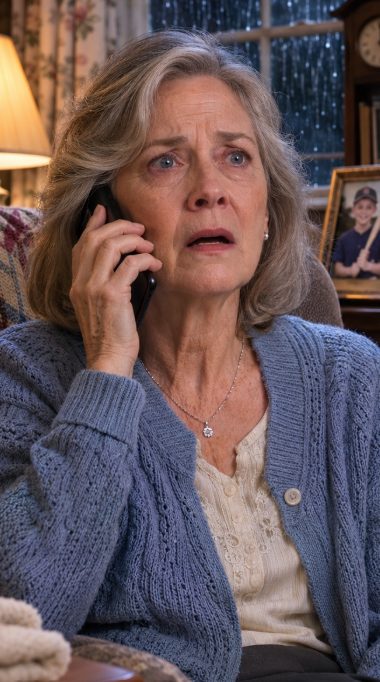
PART 1: The Call At 11:47
My only son told me he had sold my house the night before his wedding, and he sounded disappointed when I didn’t cry.
I was sixty-eight years old, standing in my living room with a basket of folded towels, when Daniel Whitman called at exactly 11:47 on a rainy Thursday night.
The clock beside the kitchen doorway made its familiar slow ticking sound, and water slipped down the windows of my little white cottage on Maple Ridge Lane.
Daniel had not called simply to talk in months, but a mother can hold on to hope long after hope begins to hurt.
“Hello, sweetheart, is everything all right?”
Music thumped behind his voice, followed by the unmistakable sound of glasses clinking and people laughing.
“Mom, I’ve got some news.”
“Well, tell me,” I said.
“Vanessa and I are getting married tomorrow.”
For several heartbeats, I watched the rain without understanding what he had said.
Tomorrow was Friday, and my only child was going to stand before his family and friends and promise someone his future.
Yet I was hearing about it less than twenty-four hours beforehand.
“Tomorrow afternoon?”
“Yes, Mom, tomorrow afternoon.”
I sat down carefully because my knees had begun to feel unreliable.
“Why didn’t you tell me sooner?”
He released a sigh so familiar that I could picture his expression, with his eyes lifted toward the ceiling and his patience already gone.
“We wanted something small, so please don’t make it a whole thing.”
Behind him, a woman laughed, and I recognized Vanessa’s bright, polished voice calling his name.
Something small apparently included a room full of people celebrating but not the woman who had raised the groom.
“I would have liked to see you get married,” I told him.
“You’re making me feel guilty, Mom.”
“I wasn’t trying to.”
“Well, it feels like you are.”
There had been a time when Daniel told me everything, including the things he believed he could never tell another soul.
At nine, he confessed that he had broken our neighbor’s greenhouse window and then stood beside me while we apologized together.
I had believed those small moments of trust would change shape over the years but never disappear.
Instead, they had become requests, cancellations, and brief conversations that ended when I asked whether he was eating enough.
Vanessa had entered his life two years earlier with impeccable clothes, a perfect smile, and a remarkable talent for making my home seem embarrassing.
During her first visit, she asked whether the living room furniture was antique or simply old.
During her second, she wondered aloud why I had not sold the cottage while property values were high.
I never told Daniel how those visits felt because he seemed so happy when she reached for his hand.
After Richard died, I had promised myself that I would not make my son feel that loving someone else meant loving me less.
“Mom, listen,” Daniel said, pulling me sharply back to the phone.
The music faded, and I heard a door close on his end.
“Vanessa and I have been making some financial decisions.”
I sat straighter.
“Financial decisions?”
“We’re starting our life together, and everything costs more than people think.”
“Weddings certainly can,” I said, trying to sound encouraging.
“Just let me finish.”
His words were clipped enough to make me stop speaking.
“We decided it was time to sell the house.”
“What house, Daniel?”
“Yours, Mom, the house on Maple Ridge.”
The house around me seemed to grow unusually still.
“What do you mean, mine?”
“I mean we sold it, and it’s handled.”
A passing car hissed over the wet street outside.
“You sold my home?”
“Mom, it’s a good offer.”
I looked at the bookshelf Richard had built before Daniel was born, with its one crooked corner that he always intended to repair.
I looked at the pencil mark beside the pantry where we had measured Daniel’s height every birthday until he reached the top shelf.
I looked at the bedroom door behind which Richard had taken his last breath while I held his hand and told him he had done enough.
Forty years of ordinary days lived in that cottage, and Daniel was speaking as if those years could be signed away between cocktails.
“You didn’t ask me,” I said.
“Because I knew you’d get sentimental.”
“I live here.”
“I know where you live, Mom.”
“Then where do you expect me to go?”
There was a pause, just long enough for me to hear another door opening and Vanessa asking whether everything was ready.
“We’ll figure that out,” Daniel replied.
I felt something cold settle beneath my ribs.
“You’ve made arrangements to sell my home without making arrangements for me?”
“You’re always acting like everything is an emergency.”
He gave a short laugh, but there was no humor in it.
“Besides, you’re almost seventy, and that place is too much work.”
I thought of the flowerbeds I still tended, the groceries I carried myself, and the neighbors whose dogs I watched when they traveled.
Richard and I paid our mortgage from paychecks that rarely stretched as far as the calendar required.
We chose secondhand furniture, delayed vacations, and repaired what other people might have thrown away.
When the last mortgage payment cleared, Richard danced with me in the kitchen despite the ache beginning to trouble his legs.
He called the cottage our quiet place, a small piece of the world where nobody else got to decide whether we belonged.
Now our son was talking about selling it as if he had found an unused television in the garage.
“And the car,” Daniel added.
“What about my car?”
“We sold that too, as part of the arrangement.”
I turned toward the front window, where my blue sedan sat in the driveway beneath the porch light.
I had driven it to the grocery store that morning and filled its tank on the way home.
The spare key was still in the kitchen drawer beside the twist ties and old rubber bands.
“The car is right outside,” I said.
“The paperwork is done, Mom, so don’t start worrying about details.”
“You sold a car you don’t own.”
“We’re family, and it isn’t like you’d let me struggle if you understood what we need.”
Those words hurt more than I expected.
I would have helped him through a hard season if he had come to me, sat across my kitchen table, and told me the truth.
Instead, he had confused my love with permission to take whatever he pleased.
“Did Vanessa know you were doing this?”
“Of course she knows.”
“And she agreed?”
“It was our decision.”
In the background, Vanessa said something I couldn’t make out, and Daniel lowered his voice.
“Look, the last thing I need is you ruining tomorrow.”
I stared at Richard’s photograph, remembering his patient expression whenever Daniel tried to argue that a rule should not apply to him.
“You can’t decide something belongs to you just because you want it,” Richard would tell our son.
He never raised his voice when he said it, and somehow that made Daniel listen.
I wondered whether he would recognize the man speaking to me tonight.
“Daniel, do you understand what you’ve told me?”
“I told you what happened, and I need you to be reasonable.”
“Reasonable would have been asking.”
“I knew you’d say no.”
There it was, plain and terrible.
He had not misunderstood what I wanted or innocently assumed I approved.
He had known I would refuse and had moved ahead anyway.
For a moment, I felt tears rise, hot and humiliating.
Then I noticed the little brass key hanging on a hook beneath Richard’s photograph.
It belonged to the lockbox in our bedroom closet, a box Richard used to call our insurance against confusion.
I had not opened it in months, but I remembered the thick folder inside and the afternoon we signed papers while Daniel was away at college.
I remembered something else Richard had told me when he knew his illness would not improve.
“Whatever happens later,” he said, “you must never let someone rush you into giving away your choice.”
My breathing steadied.
The tears did not fall.
“All right, Daniel,” I said.
He sounded startled.
“All right?”
“Enjoy your wedding, sweetheart.”
“That’s it?”
“That’s what I said.”
He paused, and I could almost hear him deciding whether to trust my sudden agreement.
“Good, because Vanessa’s been under a lot of pressure, and I don’t want any drama.”
I looked once more at the little brass key.
“There is one thing you should know,” I said.
“What now?”
“Tomorrow, you and Vanessa are going to receive a surprise neither of you will forget.”
His breath caught.
“What kind of surprise?”
I laughed, a quiet sound that surprised even me.
“Good night, Daniel.”
“Mom, what are you talking about?”
I ended the call before he could ask again.
For a long moment, I remained in the chair with the phone resting against my palm.
I felt the terrible grief of realizing that someone I loved had counted on my weakness as part of his plan.
Upstairs, I reached behind Richard’s old winter coat, which I still could not donate, and pulled out the lockbox.
Its brass latch resisted at first, then opened with a soft click.
Inside were old insurance papers, our marriage certificate, a photograph of us standing beneath the cottage’s newly painted porch, and a thick blue folder.
I laid the folder on the bed and smoothed its curled corners.
A pale sticky note in Richard’s handwriting was attached to the front.
“Keep these where you can find them, Lu,” it read.
Richard had never been a man who believed that loving family required surrendering every boundary.
I opened the first page without reading far enough to answer all the questions already gathering in my mind.
I needed a clear head and someone who understood the documents better than I did.
So I returned downstairs and found the card for Margaret Stone, the attorney who had helped Richard and me organize our affairs.
I wrote a short message instead, asking her to telephone first thing in the morning about an urgent problem involving my house.
Then my phone buzzed again.
Daniel had sent a message.
“Please don’t make tomorrow difficult, and don’t tell anyone until after the ceremony.”
I read it twice before replying.
“Please send me every document you signed concerning my house and car.”
When another message finally appeared, it contained a single sentence.
“Vanessa says you can have copies if it’ll calm you down.”
Two files arrived in my email a moment later.
The first was a scan of a purchase agreement listing my cottage, the price, and a proposed closing time on Friday afternoon.
The second was a handwritten bill of sale describing my blue sedan down to its mileage.
Neither document held a signature I had knowingly given.
I enlarged the final page of the house agreement until the black letters filled the screen.
The buyer’s name meant nothing to me, and the agent’s contact number was one I had never dialed.
But the name beneath the seller’s signature line was unmistakable.
Lucy Whitman.
The handwriting looked so much like mine that I felt my stomach tighten.
I had not signed that agreement, and I had not authorized anyone to sign for me.
Then I noticed the small line immediately below the signature.
It was the witness line, and the name written there belonged to my only son.
Daniel Whitman had not simply arranged to sell my home behind my back.
He had placed his name beneath a signature he knew I had never written.
✓ Lynn R. Adams
PART 1: The Call At 11:47 My only son told me he had sold my house the night before his wedding, and he sounded disappointed when I didn’t cry. I was sixty-eight years old, standing in my living roo…