Chapter 1: PART 1 – My Daughter Poured Ice Water Over My Head At My Retirement Dinner—But The Folder Onstage Held A Secret That Would Destroy Her Smile a252
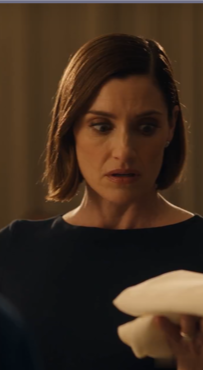
PART 1: The Night My Daughter Tried To Humiliate Me
My daughter poured an entire pitcher of ice water over my head in front of nearly two hundred people at my retirement dinner, then laughed as though humiliating her sixty-seven-year-old mother was the funniest thing she had ever done.
Ice cubes struck my shoulders, slipped beneath the collar of my navy dress, and scattered across the expensive ballroom carpet while cold water soaked through the fabric against my skin.
For three terrible seconds, the Grand Meridian Hotel in Tulsa, Oklahoma, fell completely silent.
I could hear the tiny sounds of ice rolling beneath chairs and the faint hum of the enormous crystal chandeliers hanging above our heads.
My daughter Kendra stood beside me holding the empty pitcher, her perfectly styled blonde hair shining beneath the lights and a cruel little smile spreading across her face.
“There, Mom, maybe that will finally cool down your enormous ego.”
Several people gasped.
Someone near the stage whispered my name.
My son Travis pushed his chair backward so violently that it struck the table behind him.
But I remained seated, staring at the daughter I had loved through thirty-nine years of scraped knees, broken hearts, sleepless nights, and sacrifices she apparently no longer remembered.
I had expected my retirement dinner to be emotional.
I had never imagined the person who would make me cry might be the child whose tears I had spent most of my life wiping away.
Kendra tilted her head, studying my face as though waiting for the performance she had planned.
She wanted me to scream.
She wanted me to cry.
Most of all, she wanted me to run away while everyone watched.
Instead, I slowly pushed back my chair.
My wet dress clung to my knees as I stood, and the cold water dripping from my hair made small dark spots on the white tablecloth.
I reached for the folded linen towel hanging across the back of my chair and gently placed it into Kendra’s empty hand.
“You’ll need this more than I will in about five minutes.”
Her smile flickered.
Then she laughed again.
“Oh, please, Mom, don’t start making dramatic threats.”
My son Travis stepped between us before I could answer.
“What the hell is wrong with you, Kendra?”
She rolled her eyes.
“Relax, Travis, it’s just water.”
“You just humiliated our mother in front of two hundred people.”
“She humiliates me every time she walks into a room.”
Those words struck me harder than the freezing water.
Until that moment, I had believed Kendra was simply angry about the attention surrounding my retirement.
Now I understood that whatever was happening between us had been growing for years.
My husband Frank rose from his chair and placed his jacket around my trembling shoulders.
He had been married to me for forty-three years, long enough to recognize the difference between my silence when I was frightened and my silence when I was making a decision.
“Loretta, we can leave right now.”
I looked at his worried face and shook my head.
“No, Frank, I’m staying.”
Kendra made a disgusted sound.
“Of course you are, because heaven forbid everyone stop looking at Loretta Vaughn for five minutes.”
Across the ballroom, dozens of my former coworkers sat frozen beneath the warm lighting.
Some had worked beside me for decades.
Others had traveled from neighboring states because they said they wanted to thank me for helping save their jobs during difficult years at Hawthorne Industrial Systems.
I had spent thirty-eight years with that company, beginning as an administrative assistant before working my way into operations analysis and eventually overseeing some of its most complicated recovery projects.
I had never considered myself extraordinary.
I was simply good at finding the broken piece of a system that everyone else had overlooked.
When suppliers failed, I found alternatives.
When factories faced shutdowns, I rebuilt schedules.
When contracts collapsed, I searched for a way to keep hundreds of families from losing their incomes.
I had missed birthdays, canceled vacations, and worked through nights when my children were sleeping upstairs because someone in another state needed a solution before sunrise.
But I had also attended school concerts, baked birthday cakes after twelve-hour shifts, and driven across Tulsa in thunderstorms whenever Kendra called and said she needed me.
I never believed I had to choose between loving my family and being proud of my work.
Apparently, my daughter believed otherwise.
“This entire evening is ridiculous,” Kendra announced.
Her voice carried farther than she probably realized because the orchestra had stopped playing.
“You couldn’t just retire like a normal person, could you?”
I looked at her without answering.
“You needed a fancy hotel, a ballroom, speeches, photographs, and everybody standing around telling you how brilliant you are.”
“That wasn’t my decision.”
“Of course it wasn’t.”
I could hear the bitterness in her voice.
Two months earlier, Howard Sutter, my former chief executive officer, had insisted on arranging the celebration after I rejected his suggestion of a large retirement banquet.
I had requested a small lunch with the people who had worked most closely with me.
Howard laughed and said that after thirty-eight years, I had earned one evening when someone else handled the arrangements.
I eventually agreed because the event was intended to honor the entire operations team as much as my personal career.
Kendra knew that.
I had told her twice.
She had even complained about the invitation when it arrived in the mail.
I remembered her standing at my kitchen counter, examining the embossed card between two fingers.
“Retirement Celebration Honoring Loretta Vaughn and Her Legacy of Innovation,” she had read aloud with a strange smile.
I had laughed and told her the wording embarrassed me.
She had not laughed with me.
Instead, she asked whether Howard had personally approved the invitation.
When I said yes, her expression hardened.
I did not understand why that mattered until much later.
Now, standing in the ballroom with Frank’s jacket around my wet shoulders, I began connecting moments I had previously dismissed.
Kendra had recently been promoted to vice president of regional partnerships at Elevanta Solutions, a successful corporate consulting firm.
I had been enormously proud when she called to share the news.
I remembered holding the telephone against my ear while standing beside the kitchen sink, smiling so widely that Frank asked whether someone had won the lottery.
Kendra had worked hard to establish herself after a difficult first marriage and several disappointing career opportunities.
I had watched her rebuild her confidence.
I had helped care for her son Owen whenever meetings ran late.
When she needed professional introductions, I had connected her with people whose judgment and integrity I respected.
I never demanded recognition.
I never asked for repayment.
She was my daughter.
When Kendra was eighteen, Frank and I refinanced our house so she could finish college without taking on expensive private loans.
When her first marriage ended, I helped cover her apartment rent until she could stand comfortably on her own.
When Owen was small and frequently needed someone to collect him from preschool, I rearranged meetings so Kendra would not lose important opportunities.
Those choices had never felt like sacrifices because loving my children had always seemed more important than counting what I gave them.
But somewhere along the way, Kendra had begun viewing my help as evidence that she could not succeed without me.
I discovered that gradually through little remarks.
She stopped mentioning my name when introducing me to colleagues.
She refused to discuss her work whenever I offered advice.
Once, when an old Hawthorne supplier congratulated her on a successful Elevanta presentation, she became furious after he remarked that analytical talent apparently ran in the family.
She called me that evening.
“Mom, would you please stop telling people about everything you’ve accomplished?”
I had been folding towels when she said it.
I remember stopping with a white bath towel in my hands.
“Kendra, I wasn’t even at that meeting.”
“That doesn’t matter, because your reputation follows me everywhere.”
I tried to reassure her that her achievements belonged to her.
She ended the call before I finished speaking.
I told myself she was under pressure.
I told myself ambitious people sometimes became sensitive about comparisons.
I never imagined that sensitivity could turn into something much uglier.
Now Kendra looked around the ballroom as though seeking allies.
“You know what people at my company say about me?”
Her husband Grant reached for her wrist.
“Kendra, please don’t.”
She pulled away.
“They say the only reason I got where I am is because I’m Loretta Vaughn’s daughter.”
An uncomfortable murmur passed through the tables.
I felt my throat tighten.
“Kendra, I have never claimed responsibility for your career.”
“You don’t have to.”
Her eyes shone with angry tears.
“Everyone already thinks you taught me everything I know.”
For a moment, I saw the frightened teenager who once came home crying because she had received second place in a statewide mathematics competition.
I remembered sitting beside her on the bedroom floor while she insisted that second place meant failure.
I had told her that someone else’s success did not make her own achievement smaller.
I wished desperately that she had believed me.
But the woman standing before me no longer wanted reassurance.
She wanted someone to blame.
Grant leaned forward again.
“Sweetheart, let’s sit down before this gets worse.”
Kendra ignored him.
“Maybe once in your life, Mom, you could let someone else have the spotlight.”
The accusation floated through the ballroom.
I could feel everyone watching me.
My wet hair stuck against my cheeks, and Frank’s jacket was slowly absorbing the water from my shoulders.
I should have been furious.
Instead, I felt the terrible ache of recognizing that my daughter had mistaken my existence for competition.
“Kendra, I would have celebrated your success every day for the rest of my life.”
She looked away.
“That sounds exactly like something you’d say when you want everybody to think you’re wonderful.”
I swallowed the response rising in my throat.
There were things I could have said about the years I spent helping her.
There were stories I could have told that would have made the entire ballroom understand how unfair her accusations were.
But I had never believed that motherhood entitled me to embarrass my children with an accounting of everything I had done for them.
Even now, with ice melting beneath my shoes, I wanted to protect what remained of her dignity.
Then my gaze moved toward the stage.
Howard stood near the dark velvet curtain, holding a thick gray folder.
Across its front was an unmistakable orange logo.
Elevanta Solutions.
I recognized that folder immediately.
Kendra had not seen it yet.
I knew exactly why Howard had brought it.
Two weeks earlier, he had called me at home shortly after dinner.
His usually cheerful voice had sounded unusually serious.
“Loretta, I need your permission before I do something.”
I had been sitting at my kitchen table with a cup of chamomile tea.
“What kind of something?”
“I want to correct the public record about your work.”
I assumed he meant one of the many internal reports I had helped prepare over the years.
“Howard, I’m retiring, and I don’t need another award.”
“This isn’t about an award.”
“It’s about Horizon.”
My hand tightened around the telephone.
The Horizon Routing Model had been one of the most demanding projects of my career.
I originally developed it while solving recurring supply-chain disruptions at Hawthorne, then expanded its analytical structure through years of independent research after the company formally released the applicable rights to me.
The legal arrangement had been thoroughly documented.
Hawthorne retained its own protected information, while the expanded model and the portions specifically released under our agreement became mine to develop independently.
I had spent countless evenings studying shipment delays, distribution costs, warehouse capacity, and patterns hidden inside seemingly unrelated operational failures.
The model eventually became useful far beyond its original purpose.
I was proud of Horizon, although I rarely discussed it outside professional settings.
Kendra knew the model almost as well as anyone who had not actually helped build it.
When she was younger, she often sat at my kitchen counter while I worked on it.
She would ask questions about the colored diagrams on my computer screen.
Sometimes she offered suggestions about how the information might be presented.
I welcomed those conversations because I loved seeing her interested in my work.
Once, after I explained a particularly difficult calculation, she looked at me with such genuine admiration that I remembered her expression for years.
“Mom, I wish my brain worked like yours.”
I laughed and told her she had a perfectly capable brain of her own.
I had never imagined that those conversations might later become evidence in a dispute between us.
During Howard’s telephone call, he explained that Horizon had recently appeared in professional materials where its authorship was incorrectly represented.
I asked who had made the mistake.
Howard hesitated long enough to frighten me.
Then he said the name of my daughter’s company.
Elevanta Solutions.
I felt an icy discomfort that had nothing to do with the pitcher Kendra would later empty over my head.
Howard said a correction was necessary, especially because the disputed material had been used in presentations involving businesses familiar with my work.
He offered to handle the matter privately.
I begged him not to involve Kendra until I understood what had happened.
I told him there might be an innocent explanation.
He agreed to wait.
Four days before the dinner, Celeste Avery, Elevanta’s chief compliance officer, contacted me.
She explained that questions had arisen during an internal executive promotion review.
The executive whose materials were under examination was Kendra Felton.
My daughter.
Celeste asked whether I would discuss the development history of the Horizon Routing Model.
Our conversation lasted fifty-two minutes.
When we finished, I sat at my kitchen table without moving.
Then I walked into my home office and unlocked the filing cabinet beside my desk.
Inside were folders containing dated drafts, archived spreadsheets, professional correspondence, legal release documents, and years of carefully preserved research.
I found a flash drive containing the same material in electronic form.
The files included early Horizon diagrams created long before Kendra joined Elevanta.
They also included a set of handwritten notes I had scanned after working late one winter evening.
My daughter had been sitting beside me that night.
I remembered her laughing about my habit of labeling every revision.
I had smiled and said that someday I might need to prove why I made a particular decision.
I never imagined I might need those records to prove something to her.
After reviewing the evidence, Celeste asked whether I would participate in a formal examination of the materials.
But I requested that any professional correction be limited to what could be responsibly established, rather than becoming an excuse to publicly humiliate my daughter.
I still wanted to believe that Kendra had simply misunderstood the boundaries between being inspired by someone’s work and claiming to have created it.
Howard understood my concern.
He promised that his remarks would focus on correcting authorship rather than announcing conclusions that belonged to Elevanta’s internal review.
That was why the gray folder was waiting beside the stage.
It was also why, despite everything Kendra had done to me, I had refused to leave.
Travis leaned toward me again.
“Mom, please tell me you want to go home.”
I looked at my son.
His expression was filled with anger, but beneath it I saw the helpless worry of someone watching his family break apart.
I touched his arm.
“No, sweetheart, I need to stay.”
Kendra scoffed.
“There she goes again, making everything about herself.”
I faced her.
“No, Kendra, this is the first time in years that I’m not going to make everything about protecting you.”
Her smile vanished.
Before she could answer, the ballroom music stopped completely.
Howard walked onto the stage with the gray folder beneath his arm.
He moved toward the microphone without smiling.
The guests slowly turned their chairs toward him.
My daughter reached for her champagne glass, still apparently convinced that another speech about my career was beginning.
Howard opened the folder.
“Ladies and gentlemen, before we continue with Loretta’s retirement program, there is a professional matter we need to address.”
Kendra stopped moving.
Howard glanced down at the first page.
Then he lifted his eyes directly toward my daughter.
“Kendra Felton, I believe this concerns you.”
And for the first time that evening, the daughter who had poured ice water over my head looked genuinely afraid.
✓ Lynn R. Adams
PART 1: The Night My Daughter Tried To Humiliate Me My daughter poured an entire pitcher of ice water over my head in front of nearly two hundred people at my retirement dinner, then laughed as thoug…