CG- MY WIFE CALLED ME PATHETIC FOR WANTING INTIMACY—FIVE WEEKS LATER, SHE ANNOUNCED SHE WAS PREGNANT, BUT MY DOCTOR HAD ALREADY REVEALED A SECRET THAT WOULD EXPOSE HER AFFAIR AND DESTROY OUR SIX-YEAR MARRIAGE
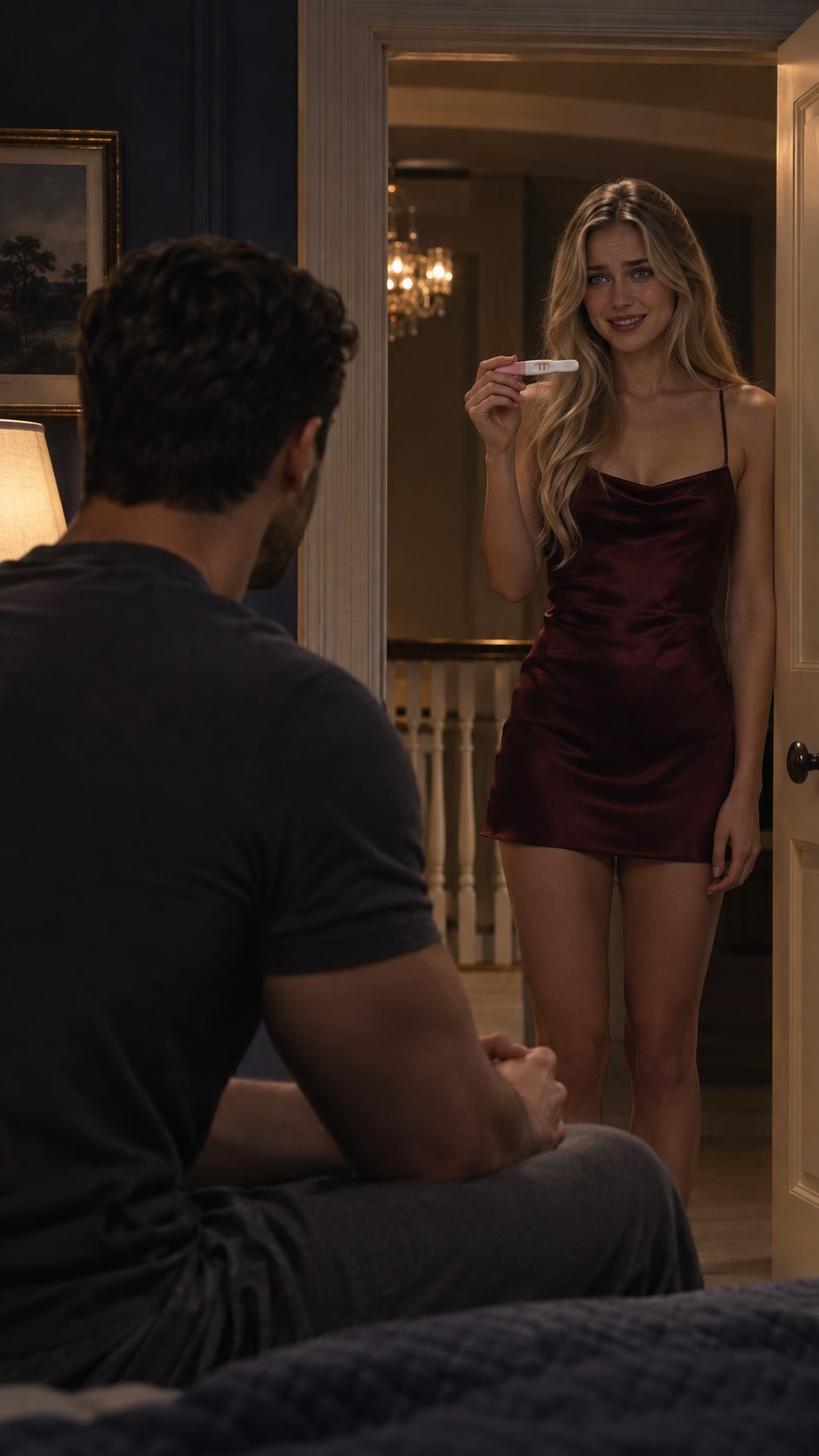
“I’m pregnant, Adrian.”
My wife stood in the doorway of our guest bedroom, smiling nervously as she held up a positive pregnancy test.
Two pink lines.
I stared at them.
Then I looked at her face.
Six years of marriage had taught me every expression Vanessa Mercer possessed.
I knew the smile she wore when she wanted a favor.
I knew how her eyebrows lifted when she was genuinely surprised.
I knew the way she pressed her lips together when she was hiding something.
And I knew the smile she was wearing now.
It wasn’t happiness.
It was fear pretending to be happiness.
I didn’t get up.
I didn’t embrace her.
I didn’t tell her how excited I was.
Instead, I asked a question that seemed to suck every bit of warmth out of the room.
“Who’s the father?”
Her smile disappeared.
I leaned forward on the edge of the bed.
“Who’s the father, Vanessa?”
She stared at me.
For several seconds, she seemed unable to understand the words.
Then she gave a small, nervous laugh.
“Adrian, what are you talking about?
You’re my husband.”
“That wasn’t my question.”
Her fingers tightened around the pregnancy test.
“Why would you even ask me something like that?”
I looked toward the bedside drawer.
The medical notes were still inside.
Three pages.
A laboratory report.
And a handwritten summary of a conversation that had changed my understanding of my own body.
“My doctor called three weeks ago,” I said.
Vanessa went completely still.
It was extraordinary how quickly her expression changed.
One moment, she was a woman announcing what should have been wonderful news.
The next, she looked like someone who had just heard footsteps approaching the door of a room where she had no business being.
“What doctor?” she asked.
Her throat moved.
“I had some tests done.”
“What kind of tests?”
I studied her face.
“Does it matter?”
“Of course it matters.”
“Then why are you shaking?”
She lowered the pregnancy test.
“I’m not shaking.”
But she was.
I could see the white plastic stick trembling between her fingers.
For five weeks, my wife had treated me like an inconvenience.
She had rejected every attempt I made to repair our relationship.
She had called me pathetic for wanting affection.
She had ordered me out of our bedroom.
Then, almost overnight, she had begun acting like the woman I’d fallen in love with.
Coffee in the morning.
My favorite dinner.
Sweet messages.
The perfume she hadn’t worn in months.
And now this.
A pregnancy announcement.
I reached toward the bedside drawer.
Vanessa followed the movement with her eyes.
“What are you getting?” she whispered.
I rested my fingers on the handle.
“Something I should’ve told you about.”
Her voice rose.
“Adrian, you’re scaring me.”
I looked up.
You weren’t worried about how I felt five weeks ago.”
Her eyes filled with tears.
“Please don’t do this.”
I didn’t move.
Instead, I asked the question that would change everything.
“When exactly did you find out you were pregnant?”
She opened her mouth.
Then closed it.
The silence lasted so long that I could hear the ceiling fan turning above us.
Finally, she whispered:
“Almost four weeks ago.”
I closed my eyes.
Four weeks.
She’d known while we were living in separate bedrooms.
She’d known while she’d continued treating me like a stranger.
She’d known before she started making me breakfast and asking whether we could fix our marriage.
But the pregnancy wasn’t the only secret.
And the medical report in my drawer wasn’t the only evidence.
To understand how my six-year marriage reached that moment, you need to know what happened five weeks earlier.
Because the night Vanessa called me pathetic wasn’t the beginning of our problems.
It was simply the first time she stopped pretending we didn’t have any.
My name is Adrian Mercer.
I’m thirty years old.
I work as a project manager for a commercial construction company in Phoenix, Arizona.
For most of my adult life, I’ve believed that if you work hard, communicate honestly, and treat people with respect, you can build something that lasts.
That belief served me well in my career.
It didn’t save my marriage.
Vanessa and I met when I was twenty-four and she was eighteen.
She was working part-time at a boutique hotel near Old Town Scottsdale while studying business administration.
I was attending a conference for real estate developers.
She accidentally gave me the wrong room key.
When I returned to the front desk, she looked so embarrassed that I ended up apologizing to her.
“You’re apologizing because I made a mistake?” she asked.
I shrugged.
“Seemed like the polite thing to do.”
She laughed.
It was the kind of laugh that made you want to hear it again.
Vanessa was beautiful.
Not in the polished, distant way of the models on billboards.
She had long blonde hair, bright blue-gray eyes, and an expressive face that made every emotion impossible to miss.
At least, that was what I believed.
We started dating two weeks later.
She loved spontaneous road trips, expensive coffee, and watching thunderstorms roll across the desert.
I loved how excited she became over ordinary things.
We married eighteen months after meeting.
It was a small ceremony at a resort in Sedona.
The red rocks glowed behind us as the sun disappeared.
Vanessa cried during her vows.
We promised to build a life together.
Not a perfect life.
Just one where neither of us would have to face difficult things alone.
For the first four years, I thought we were keeping that promise.
We bought a comfortable two-story home outside Scottsdale.
White stucco walls.
A small swimming pool.
A covered patio with a view of the mountains.
Three bedrooms upstairs.
One guest bedroom that we rarely used.
Vanessa worked in marketing for a hospitality group.
I managed large commercial renovation projects.
Our schedules were demanding, but we made time for each other.
Friday-night dinners.
Weekend hikes.
Lazy Sundays by the pool.
We talked about having children someday.
Neither of us felt ready immediately.
But we both imagined becoming parents eventually.
Or so I thought.
The changes began gradually.
Vanessa stopped asking about my day.
She became protective of her phone.
She started attending more networking events.
At first, I wasn’t concerned.
Her company had recently begun working with luxury resort developers, and she was ambitious.
I admired that.
Then she stopped reaching for my hand.
When I kissed her before leaving for work, she’d turn her cheek.
When I suggested dinner together, she’d already have plans.
When I tried to sit beside her on the couch, she’d suddenly remember something she needed to do.
I asked whether she was unhappy.
She said she was stressed.
I offered to take a vacation.
She said work was too busy.
I suggested marriage counseling.
She laughed.
“Adrian, we’re not eighty years old.
We don’t need therapy because we’re having a boring month.”
So I backed off.
I told myself marriages went through seasons.
I told myself adults sometimes needed space.
I told myself trust meant not turning every change in behavior into an accusation.
The problem was that Vanessa wasn’t asking for space.
She was withdrawing from the marriage while still enjoying everything the marriage provided.
I paid most of the mortgage.
Handled the house maintenance.
Picked up groceries.
Managed our investments.
Planned holidays with her family.
Whenever she needed something, I was there.
Whenever I needed something emotional from her, I increasingly felt like I was interrupting her life.
Then came the night that changed how I saw myself.
And how I saw her.
It happened on a Thursday evening.
Vanessa came home shortly after nine.
I was sitting in our bedroom, reading through documents for a construction project.
She entered without greeting me.
Her hair was styled.
She wore makeup, a dark fitted dress, and the expensive perfume I’d bought her for our anniversary.
“Hey,” I said.
“How was your evening?”
“Client dinner?”
“Something like that.”
She placed her handbag on the dresser.
I noticed her phone light up.
She turned it over before I could see the notification.
I tried to ignore it.
“Want to watch something?”
“I’m tired.”
She went into the bathroom.
Twenty minutes later, she returned wearing satin pajamas.
I closed my laptop.
“Can we talk?”
She sighed.
“About what?”
She stared at me.
“Oh, my God.”
“Not this again.”
I felt my face grow warm.
“I haven’t said anything yet.”
“I already know what you’re going to say.”
“Then tell me.”
She folded her arms.
“You’re going to complain that I don’t spend enough time with you.”
“I’m not complaining.”
“Then what are you doing?”
“Trying to understand why we’re so distant.”
She rolled her eyes.
I remember that more clearly than almost anything else.
The eye roll.
The casual dismissal.
As though my feelings were a minor inconvenience she wished would disappear.
“I miss you,” I said.
She laughed sharply.
“I’m standing right here.”
“That’s not what I mean.”
“I know exactly what you mean.”
I took a breath.
“Vanessa, I haven’t felt close to you in months.”
Her expression hardened.
“Stop begging for intimacy, Adrian.
It’s pathetic.”
I stared at her.
For a moment, I honestly thought I’d misheard.
“You heard me.”
“I’m not begging.”
“Then stop acting like I owe you something.”
“I’ve never said you owed me anything.”
“You’re always asking what’s wrong.”
“Because something is wrong.”
“Maybe I’m just tired of having the same conversation.”
I looked at my wife.
The woman who once told me she felt safest in my arms.
The woman who used to leave handwritten notes inside my lunch bag.
And I realized she wasn’t merely frustrated.
She was disgusted by my vulnerability.
I spoke carefully.
“I want affection from my wife.
I want us to communicate.
I don’t think that’s unreasonable.”
She pointed toward the hallway.
“If you can’t handle rejection, sleep somewhere else.”
The words were quiet.
Almost casual.
But they struck harder than if she’d shouted.
I looked at the doorway.
Then back at her.
“You really want me to leave?”
“I want some space.”
“How much?”
She shrugged.
“I don’t know.”
I waited for her to soften.
For an apology.
For some sign she understood what she’d said.
Nothing came.
So I opened the closet.
Took out a blanket.
Picked up my pillow.
And walked toward the guest bedroom.
She didn’t stop me.
As I reached the hallway, I heard her say:
“Don’t make this dramatic.”
I turned around.
Then I walked into the room and closed the door.
That night, I lay awake staring at the ceiling.
The guest bedroom smelled faintly of fresh paint and cedar.
We’d rarely used it.
Now it felt like the only place in our house where I wasn’t being judged for wanting to be loved.
At 11:36 p.m., I heard Vanessa laughing downstairs.
I recognized the sound.
The laugh she used to share with me.
I went to the top of the stairs.
She was sitting on the living-room couch, texting someone.
Her face glowed in the light of her phone.
I watched her smile.
Then I returned to the guest bedroom.
I didn’t ask who she was talking to.
I already knew the answer would be something designed to make me feel foolish for asking.
The first week was terrible.
I kept expecting Vanessa to apologize.
Every morning, I imagined she’d come downstairs, put her arms around me, and say she’d been cruel.
She never did.
We passed each other in the kitchen like coworkers sharing an office.
“Coffee’s ready.”
“Working late?”
“Probably.”
That was our marriage.
Six years reduced to practical arrangements.
By the second week, I stopped trying to start conversations.
By the third, I stopped waiting for her to join me at dinner.
She began coming home later.
Sometimes ten.
Sometimes eleven.
Once, nearly one in the morning.
When I asked whether everything was okay, she said she’d been out with colleagues.
I didn’t challenge her.
But I noticed things.
A new necklace.
A restaurant charge on our shared credit card.
A parking receipt from a luxury hotel in downtown Phoenix.
I asked about the hotel.
“Client event,” she said.
“Which client?”
She gave me a look.
“Just curious.”
“Adrian, I don’t interrogate you about every place you go.”
“Fair enough.”
But the response stayed with me.
Vanessa had begun treating ordinary questions as accusations.
And when someone reacts to harmless curiosity as though they’re being investigated, you eventually start wondering what they’re afraid you’ll discover.
During the fourth week, I spoke to my friend Daniel.
We’d known each other since college.
He worked as an electrical engineer and had been married for eight years.
We met for lunch at a small restaurant near my office.
“You look exhausted,” he said.
“I’m serious.”
I told him about the guest bedroom.
The distance.
The argument.
When I repeated Vanessa’s words, he stopped eating.
“She called you pathetic?”
“For asking why she doesn’t want to spend time with you?”
“Pretty much.”
Daniel leaned back.
“That’s not okay.”
“Have you told her how much it hurt?”
“She knows.”
“Maybe she doesn’t.”
I looked at him.
“Adrian, I’m not saying you should force a conversation.
But you can’t keep pretending this is normal.”
I stared at my plate.
Then I said something I hadn’t admitted to anyone.
“I think she’s stopped loving me.”
Daniel was quiet.
“Do you still love her?”
I thought about it.
“Then you’re going to have to decide whether loving her means accepting how she’s treating you.”
That question stayed with me.
I wasn’t ready to answer it.
But something else had been on my mind.
Months earlier, Vanessa and I had discussed fertility testing.
We’d never actively tried to have children for an extended period, but we’d occasionally wondered whether everything was normal.
I had scheduled a consultation with a urologist.
Then our relationship deteriorated.
I’d almost forgotten about the appointment.
Until a receptionist from Dr.
Bennett’s office called to say the results were available.
Three weeks before Vanessa stood in my doorway holding that pregnancy test, I received a phone call that would alter everything.
I was standing beside my car in a Phoenix office parking lot when my phone rang.
The Arizona sun was brutal that afternoon.
Heat shimmered above the asphalt.
I answered while searching for my keys.
“Adrian Mercer?”
“Speaking.”
“Hi, Adrian.
This is Dr.
I remembered him immediately.
A calm, middle-aged urologist who had ordered several tests after our consultation.
“Hey, Doctor.”
“Do you have a few minutes?”
“I’ve reviewed your results.
I’d like to discuss them with you.”
Something in his tone made me stop walking.
“Is everything okay?”
“There’s a finding we need to discuss carefully.”
I leaned against my car.
He explained that two semen analyses had found no sperm in the samples.
He used a word I’d never heard before.
Azoospermia.
I asked him to repeat it.
He explained that it meant sperm hadn’t been detected in the ejaculated samples.
There were different possible causes.
Some were related to sperm production.
Others involved blockages.
Further testing would be necessary to understand my situation.
I stared across the parking lot.
“So you’re telling me I can’t have children?”
“I’m telling you we haven’t detected sperm in the samples we’ve tested,” he said.
“That makes natural conception unlikely under the circumstances we’ve observed, but we need additional evaluation before making broader conclusions.”
I swallowed.
“How unlikely?”
“I don’t want to give you a number that isn’t supported by your individual results.
The important thing is that we investigate the cause.”
He spoke about blood tests, hormone levels, possible imaging, and follow-up with a reproductive specialist.
I wrote everything down on the back of an old construction estimate.
Then I asked the question that frightened me most.
“Could this have been happening for years?”
We can’t determine that from these tests alone.”
I closed my eyes.
Vanessa and I had talked about children.
We’d imagined birthdays.
School plays.
Family vacations.
I’d assumed that when we decided the time was right, it would happen.
Now I had no idea what that future looked like.
After the call, I sat inside my car for nearly twenty minutes.
I didn’t cry.
I just stared at the steering wheel.
At first, I felt ashamed.
I knew infertility wasn’t a moral failure.
I’d never judge another man for having fertility problems.
But knowing something intellectually doesn’t always stop the emotions that arrive when the news concerns your own body.
I wondered whether Vanessa would be disappointed.
Whether she’d blame me.
Whether the distance between us would become permanent.
Then I remembered her words.
Stop begging for intimacy.
It’s pathetic.
I couldn’t imagine telling her something so personal while she was treating me with contempt.
So I said nothing.
Not because I wanted to trap her.
Not because I was planning revenge.
I simply needed time to understand the medical results and arrange the follow-up appointment.
I printed the reports.
Wrote down the doctor’s recommendations.
Placed everything in an envelope.
And put the envelope in my guest-bedroom drawer.
That evening, Vanessa came home late.
She barely looked at me.
“Hey,” she said.
“Did you eat?”
She went upstairs.
I watched her leave.
For a moment, I considered following her.
Telling her about the doctor.
Asking whether we could face whatever came next together.
Instead, I returned to the guest bedroom.
I wasn’t hiding a weapon.
I wasn’t planning a confrontation.
I was protecting the last private part of myself that hadn’t yet been dismissed.
Three weeks later, those same medical notes would become the reason I couldn’t simply smile when my wife announced she was pregnant.
But before that happened, something unexpected occurred.
Vanessa began acting like she loved me again.
It began with coffee.
One Tuesday morning, I came downstairs and found a fresh cup waiting beside my laptop bag.
One teaspoon of sugar.
Exactly how I liked it.
Vanessa stood at the counter wearing a pale-blue fitted dress.
“Morning,” she said brightly.
“Made you coffee.”
She smiled.
For the first time in weeks, she looked directly into my eyes.
“Site inspection.”
“Sounds stressful.”
“A little.”
She stepped closer.
“You work too hard.”
I stared at her.
It was a perfectly ordinary thing for a wife to say.
Except that Vanessa hadn’t shown the slightest interest in my work for over a month.
“Everything okay?”
Her smile faltered.
“Of course.
“No reason.”
She studied my face.
Then she touched my arm.
“You seem distant.”
I nearly laughed.
Instead, I said, “I’ve been sleeping in the guest bedroom for almost a month.”
She looked away.
“Can we not start the day arguing?”
“I’m not arguing.”
She picked up her phone.
And the conversation ended.
The next evening, she cooked my favorite dinner.
Garlic-roasted chicken.
Mashed potatoes.
Grilled asparagus.
She even bought a bottle of the red wine we’d shared on our first anniversary.
I stood in the kitchen doorway.
“What’s all this?”
“I can see that.”
She laughed.
“I thought it’d be nice.”
Vanessa stopped stirring the sauce.
“Do I need a reason to cook for my husband?”
“Then stop looking so suspicious.”
I sat down.
During dinner, she asked questions about my job.
Real questions.
She listened to the answers.
She remembered details I’d mentioned weeks earlier.
She laughed at my jokes.
If someone had walked into the room, they would have thought we were a happy couple.
But I couldn’t stop wondering what had changed.
The following afternoon, she sent me a message.
Thinking about you.
Hope your day isn’t too stressful.
I read it three times.
Then replied:
Hope yours is good too.
She sent a heart.
After weeks of coldness, a simple red heart felt almost absurd.
Then came the perfume.
The one I’d bought her when we first started dating.
She wore it to dinner on Friday.
When I noticed, she smiled.
“You remember?”
“Of course.”
“Thought you might like it.”
I loved that perfume.
It reminded me of the girl who used to laugh in my car during midnight drives through the desert.
But the memory hurt.
Because I couldn’t tell whether she was trying to rebuild our marriage or remind me of a version of herself that no longer existed.
That weekend, she suggested going to our favorite restaurant near Old Town Scottsdale.
We hadn’t been there in months.
She held my hand across the table.
“I’ve been thinking about us,” she said.
I looked at her fingers resting over mine.
“Have you?”
“What about us?”
She smiled sadly.
“How we’ve let things get so bad.”
I stared at her.
She lowered her eyes.
“I know I’ve been difficult.”
“Difficult?”
I shook my head.
“You told me I was pathetic for wanting to feel close to you.”
Her eyes filled with tears.
“I was angry.”
“That doesn’t make it okay.”
It was the first time she’d acknowledged the cruelty of her words.
I wanted to believe her.
God, I wanted to.
Then she squeezed my hand.
“I think we can fix this.”
I looked across the table.
“What changed?”
She hesitated.
“Maybe I finally realized what I could lose.”
At the time, I thought she meant our marriage.
Later, I would wonder whether she meant something else entirely.
Sunday night arrived quietly.
I spent most of the afternoon reviewing project schedules.
Vanessa went shopping.
She returned around six with two bags and a nervous smile.
“Good day?”
“Buy anything interesting?”
“Just a few things.”
She went upstairs.
I stayed in the guest bedroom, finishing emails.
At p.m., I heard footsteps in the hallway.
Vanessa appeared in the doorway.
She wore a burgundy satin dress.
Her long blonde hair fell over her shoulders.
One hand was hidden behind her back.
I looked up.
“Can we talk?”
I closed my laptop.
She stepped inside.
Her smile trembled.
“I have something to tell you.”
She brought her hand forward.
A pregnancy test.
Two pink lines.
“I’m pregnant, Adrian.”
For a moment, I couldn’t understand what I was seeing.
My mind moved in two directions at once.
One part remembered our wedding.
The nursery we’d talked about.
The future I thought we’d share.
The other remembered Dr.
Bennett’s voice.
Two samples.
No sperm detected.
Further evaluation required.
And five weeks of sleeping alone.
I stared at the test.
Then at Vanessa.
“Who’s the father?”
She looked stunned.
“What are you saying?”
I sat straighter.
“My doctor called three weeks ago.”
Her face changed.
“What doctor?”
“What did he say?”
I didn’t answer.
Her eyes moved toward the drawer beside my bed.
I followed her gaze.
Then reached for it.
“What are you getting?” she whispered.
I rested my fingers on the handle.
“When exactly did you find out you were pregnant?”
She hesitated.
Then answered:
“Almost four weeks ago.”
The room seemed to shrink around us.
“Four weeks?”
She nodded.
I slowly removed my hand from the drawer.
“So you knew while we were sleeping separately.”
“You knew while you were still refusing to talk to me.”
She looked down.
“And then you suddenly decided you wanted to fix our marriage.”
Tears filled her eyes.
“Adrian, please.”
“Tell me the truth.”
“Then why didn’t you tell me when you first found out?”
She covered her face.
“Because I was scared.”
She didn’t answer.
I stepped back.
She lowered her hands.
“I didn’t know what to do.”
“About the pregnancy?”
She nodded.
“Or about who the father is?”
Her expression crumpled.
I felt a terrible certainty begin to settle inside me.
But enough to understand that the smiling woman who had entered my room wasn’t simply announcing unexpected news.
She was attempting to control what happened next.
I opened the drawer.
Took out the envelope.
And placed it on the bed.
Vanessa stared at it.
“What is that?”
“My medical report.”
She swallowed.
“What does it say?”
I looked at her.
“Two semen analyses found no sperm.”
Her lips parted.
I continued.
“The doctor said I need further evaluation.
He didn’t say fatherhood is absolutely impossible.
But he did say natural conception appears unlikely based on what they’ve found.”
Vanessa sat down on the edge of the bed.
For several seconds, she didn’t speak.
Then she whispered:
“Maybe the doctor is wrong.”
She looked up.
“Tests can be wrong.”
“Then why are you accusing me?”
I stared at her.
“Because you just admitted you’ve known about the pregnancy for almost a month.
Because you haven’t been honest about our marriage.
And because your reaction to a reasonable question is making me wonder what you’re afraid to tell me.”
She began crying.
I felt no satisfaction.
Only exhaustion.
“Vanessa,” I said quietly, “I need you to tell me whether you’ve been with someone else.”
She covered her mouth.
Then she nodded.
And six years of marriage changed forever.
I didn’t shout.
That surprised me.
I’d imagined how I might react if I discovered my wife had been unfaithful.
I thought I’d be furious.
I thought I’d demand explanations.
Maybe throw something.
Instead, I felt strangely calm.
As though my mind had stepped outside my body and was watching the scene from a safe distance.
Vanessa sat on the bed, crying.
I remained standing.
She shook her head.
“Adrian, please.”
“Who was it?”
“It was a mistake.”
“That’s not a name.”
She wiped her face.
“I didn’t mean for it to happen.”
I looked toward the window.
Our backyard lights illuminated the swimming pool.
Everything outside looked peaceful.
I almost hated the normality of it.
“How long?”
She hesitated.
“Just a few times.”
I closed my eyes.
A few times.
Not one moment.
Not an accidental kiss.
Not a single decision followed by immediate regret.
Repeated choices.
She stared at her hands.
“Over the last couple of months.”
I felt my stomach tighten.
“So while you were rejecting me.”
She began crying harder.
“While you were telling me I was pathetic.”
“I’m sorry.”
“You were sleeping with someone else.”
She didn’t answer.
She didn’t have to.
I sat in the chair beside the dresser.
“Did you bring him to our house?”
Her head snapped up.
“Are you sure?”
“Did you tell him you were married?”
She looked offended.
“Of course.”
I laughed once.
Not because anything was funny.
Because the question had become absurd.
“So he knew.”
She nodded.
“Then you both knew exactly what you were doing.”
“Adrian, I never stopped loving you.”
I looked at her.
That sentence hurt more than the confession.
Because it turned the meaning of love into something I barely recognized.
“Then what does loving someone mean to you?”
She stared at me.
“Because right now, it seems to mean making decisions that destroy them while expecting them to keep trusting you.”
She began shaking.
“I know I’ve hurt you.”
“No,” I said.
“You don’t know yet.”
Her eyes widened.
I continued.
“You know you’re scared.
You know you might lose the marriage.
You know the life we built is in danger.”
I leaned forward.
“But you haven’t spent five weeks wondering why the person you love looks disgusted every time you try to get close.”
She covered her face.
“I was confused.”
“About what?”
“My feelings.”
She nodded.
I felt something inside me go cold.
“So you had feelings for him.”
She lowered her hands.
“I thought I did.”
I studied her.
She cried quietly.
“Now I know I love you.”
I shook my head.
“That’s convenient.”
“It’s true.”
“Then tell me his name.”
She closed her eyes.
For a long time, I thought she wouldn’t answer.
Finally, she whispered:
I stared at her.
“Ryan who?”
“Ryan Whitmore.”
The name meant nothing to me at first.
Then I remembered.
Ryan Whitmore.
A regional hospitality consultant.
A man Vanessa had introduced me to at a charity event eight months earlier.
Well dressed.
He’d shaken my hand and told me I was lucky to have Vanessa.
I looked at her.
“He’s married.”
She nodded.
“Does his wife know?”
I leaned back.
“Of course she doesn’t.”
Vanessa wiped her cheeks.
“Adrian, please don’t tell her.”
I stared in disbelief.
She had just admitted to betraying me.
And her first concern was protecting the man she’d done it with.
That was when something changed.
Not my love.
Not entirely.
But my willingness to keep carrying the consequences of her choices.
“I’m not making any decisions tonight.”
She looked relieved.
Then I added:
“But I am not going to help you hide what happened.”
Her relief vanished.
I barely slept.
At six the next morning, I called Daniel.
“Can we meet?”
He heard something in my voice.
“Where are you?”
“Are you okay?”
He was at a coffee shop near my office within forty minutes.
I told him everything.
The pregnancy.
The doctor’s report.
Vanessa’s confession.
Ryan Whitmore.
Daniel listened without interrupting.
When I finished, he stared at his coffee.
“Do you know whether the baby is yours?”
“Your doctor couldn’t give you a definite answer?”
“He said the results make natural conception unlikely.
We still need more testing.”
Daniel leaned forward.
“Then don’t let anyone turn that into certainty before the evidence is there.”
“What are you going to do?”
“I don’t know.”
“Have you spoken to a lawyer?”
“Then start there.”
“And don’t confront Ryan while you’re this angry.”
I looked at him.
“I’m not going to hit him.”
“But I do want to know what kind of man shakes another man’s hand while sleeping with his wife.”
Daniel sighed.
“Probably the kind who thinks consequences are for other people.”
That afternoon, I contacted a family-law attorney named Rebecca Lawson.
She came recommended by a colleague.
Professional.
Unimpressed by drama.
I explained the situation.
She listened carefully.
Then she said, “Adrian, the medical findings and your wife’s admission are important, but you need to avoid making assumptions about legal parentage or divorce consequences until we have complete information.”
She continued.
“Arizona has specific rules regarding children born during a marriage.
We need to address parentage properly if the pregnancy continues.”
I hadn’t even thought about that.
The possibility of being legally treated as the father of a child who might not be mine frightened me.
Rebecca explained that we would need to approach the issue through appropriate legal procedures and reliable testing.
She also advised me to preserve relevant communications without accessing private accounts unlawfully.
For the first time since Vanessa’s announcement, I felt something resembling control.
Not because I could undo what happened.
Because I could decide what happened next.
That evening, Vanessa sent me a message from upstairs.
Can we please talk?
I was sitting in the guest bedroom.
I need space tonight.
A minute later, she wrote:
I love you.
I stared at the words.
Then turned off my phone.
Because I was beginning to understand that hearing someone say they love you isn’t the same as feeling safe with them.
Two days later, Vanessa asked whether we could speak in the living room.
She sat on the couch wearing a cream sweater and short denim shorts.
Her hair was pulled into a loose ponytail.
She looked exhausted.
“I ended it with Ryan,” she said.
I sat opposite her.
“Before I told you about the pregnancy.”
“How long before?”
She hesitated.
“A few days.”
I looked at her.
“Because I realized I couldn’t keep doing it.”
“Or because you found out you were pregnant?”
She lowered her eyes.
“That’s what I thought.”
She began crying.
“I wanted to make things right.”
“You wanted to make sure I’d still be here.”
“That’s not fair.”
I looked at her.
She flinched.
I took a breath.
“Vanessa, you spent weeks making me feel unwanted.
Then, when you realized you might need me, you started acting affectionate again.”
She stared at the floor.
“Was any of it genuine?”
She looked up.
“All of it?”
She hesitated.
And that hesitation answered the question.
I leaned back.
“Show me the messages where you ended it.”
Her face changed.
“You said you ended things.
If you want me to believe that, I’d like to see what you actually told him.”
She looked down at her phone.
For a moment, I thought she’d refuse.
Then she unlocked it.
Opened the conversation.
And handed it to me.
I didn’t search through unrelated messages.
I read what she’d chosen to show me.
The most recent exchange was dated three days before her pregnancy announcement.
Vanessa had written:
This has to stop.
I can’t keep living like this.
Ryan replied:
You said you were going to tell him.
She answered:
I just need the right moment.
You can’t keep pretending the baby is his.
I stared at the screen.
My heart began pounding.
I read the sentence again.
You can’t keep pretending the baby is his.
I looked up.
Vanessa was watching me.
Tears rolled down her cheeks.
I held up the phone.
She nodded.
“He knew about the pregnancy.”
“And he knew it might be his.”
She covered her mouth.
I looked back at the conversation.
There were more messages.
Ryan had asked whether she’d scheduled a doctor’s appointment.
She’d told him she was waiting.
He had replied that he couldn’t risk his wife finding out.
Then came the message that finally exposed the logic behind Vanessa’s sudden change of heart.
Ryan wrote:
Maybe if things get better with Adrian, nobody needs to know.
I stared at the words.
Then I handed Vanessa her phone.
She looked terrified.
“That’s not what I wanted.”
“Then why didn’t you tell me?”
“Because I didn’t know what to do.”
I looked toward the stairs.
“That’s becoming your favorite sentence.”
“Adrian, please.”
I turned back.
“Do you understand what he suggested?”
She nodded.
“He suggested you repair our marriage so I might raise his child without knowing the truth.”
She began sobbing.
“I never agreed to that.”
I stared at her.
“Maybe not in those words.”
I walked toward the hallway.
“But you didn’t tell me the truth either.”
And that was when I realized the pregnancy announcement hadn’t been a spontaneous act of honesty.
It had been part of a decision Vanessa was still struggling to make.
Whether to tell me everything.
Or whether to let me believe the version of events that would cost her the least.
Ryan’s wife was named Caroline Whitmore.
She was thirty-two.
A physical therapist.
They’d been married for nine years and had a seven-year-old son named Oliver.
I’d met Caroline twice at charity events.
She was friendly, thoughtful, and seemed genuinely devoted to her family.
I didn’t know how to approach her.
Part of me wanted nothing more to do with Ryan.
Another part remembered what it felt like to be the only person in the room who didn’t know the truth.
I discussed the situation with Rebecca.
She advised me to avoid threats, public accusations, or anything that could create unnecessary legal complications.
Then I contacted Caroline privately.
I asked whether she could meet for coffee.
She sounded surprised.
Is everything okay?”
“There’s something important I need to tell you.”
We met two days later.
A quiet café in north Scottsdale.
Caroline arrived wearing jeans and a pale-green blouse.
She smiled when she saw me.
She sat down.
“What’s going on?”
I took a breath.
“I wish I didn’t have to be the person telling you this.”
Her smile disappeared.
“What happened?”
I told her.
Without unnecessary details.
Vanessa and Ryan had been involved.
Vanessa was pregnant.
The child’s parentage had not been established.
Ryan knew about the pregnancy.
Caroline stared at me.
For a long moment, she didn’t move.
Then she whispered:
She looked toward the window.
I said nothing.
She shook her head.
“He wouldn’t.”
I understood the impulse.
I’d felt it myself.
The mind’s desperate attempt to protect what the heart can’t yet survive losing.
“Caroline,” I said quietly, “Vanessa admitted the affair to me.”
She closed her eyes.
“How long?”
“She told me it happened over the last couple of months.”
Caroline pressed a hand against her mouth.
Then she whispered:
“He told me he was traveling for work.”
I looked down.
“He told me he was trying to get promoted.”
Her voice broke.
“I stayed home with Oliver while he was…”
She couldn’t finish.
Eventually, she asked:
“Why are you telling me?”
I looked at her.
“Because I wish somebody had told me.”
Tears spilled down her cheeks.
She nodded slowly.
“Thank you.”
The words made me feel terrible.
There was nothing worth thanking me for.
I had simply delivered pain she hadn’t asked to receive.
Before leaving, Caroline asked one more question.
“Does Ryan know you’re telling me?”
She nodded.
Then she stood.
Straightened her shoulders.
And walked out of the café.
I watched her go.
She didn’t look weak.
She didn’t look defeated.
She looked like a woman trying to remain standing while the life she’d trusted collapsed around her.
I recognized that expression.
I’d seen it in my own reflection.
Ryan appeared outside my office three days later.
My assistant, Melissa, called me from reception.
“Adrian, there’s a man here asking for you.”
“Ryan Whitmore.”
I closed my eyes.
“Tell him I’m busy.”
“He says it’s important.”
I thought for a moment.
Then said, “Five minutes.”
Ryan entered wearing an expensive navy suit.
His hair was perfectly styled.
His expression was controlled.
The same polished confidence I’d seen at the charity event.
He stopped near my desk.
He looked uncomfortable.
“I think we need to talk.”
I leaned back.
“About what?”
He exhaled.
“Look, I know you’re angry.”
I laughed once.
“That’s an interesting opening.”
“Can we handle this like adults?”
I studied him.
Tell me why you thought sleeping with my wife was a reasonable thing to do.”
He looked away.
“It wasn’t.”
We’re making progress.”
He rubbed his jaw.
“Vanessa and I made a mistake.”
“Repeatedly.”
He flinched.
Then he said something that made my anger flare.
“She was unhappy, Adrian.”
I stared at him.
“Excuse me?”
“She told me things weren’t good between you.”
I leaned forward.
“And I think you need to understand that this didn’t happen in a vacuum.”
I felt my jaw tighten.
“Are you suggesting my marriage problems gave you permission to sleep with my wife?”
“Then what are you suggesting?”
He hesitated.
I continued.
“Because if Vanessa was unhappy, she could have talked to me.
She could have asked for counseling.
She could have separated.
She could have divorced me.”
Ryan looked down.
“You’re right.”
“But she was married.
You knew she was married.
And you were married too.”
“Your wife is now dealing with a betrayal she didn’t deserve.
My marriage is falling apart.
And Vanessa is pregnant with a child whose father hasn’t been established.”
Ryan looked genuinely frightened.
“What did she tell you?”
I stared at him.
He swallowed.
“Listen, about the baby—”
“Whatever happens with the pregnancy will be handled through proper medical and legal channels.
You’re not coming into my office to negotiate my silence.”
He looked pale.
“That’s not what I’m doing.”
“Then why are you here?”
He stared at the floor.
Finally, he whispered:
“Caroline left.”
I said nothing.
“She took Oliver to her parents’ house.”
I watched him.
He continued.
“She won’t answer my calls.”
I folded my arms.
“And you came here because…?”
He looked at me.
“I thought maybe you could talk to her.”
For a moment, I genuinely couldn’t believe what I’d heard.
He wanted me to help him save his marriage.
After he’d helped destroy mine.
I walked to the door.
“Ryan, leave.”
He stood frozen.
He looked as though he wanted to argue.
Then he walked past me.
I watched him disappear down the hallway.
And I realized something important.
People who avoid responsibility often confuse the consequences of their choices with unfair treatment.
Ryan wasn’t upset because he’d betrayed Caroline.
He was upset because Caroline had stopped protecting him from the consequences.
Two weeks later, I returned to Dr.
I’d completed additional testing.
My mind had been consumed by the affair, but the medical uncertainty hadn’t disappeared.
Bennett reviewed my results carefully.
He explained that the findings continued to suggest a serious fertility problem.
Further specialist evaluation might help determine whether sperm production or an obstruction was involved.
I listened.
Then asked:
“So does this prove Vanessa’s baby isn’t mine?”
He shook his head.
These tests describe your fertility status.
They aren’t a paternity test.”
He continued.
“Repeated findings of azoospermia make natural conception unlikely, but determining biological parentage requires appropriate testing.”
I leaned back.
I appreciated his precision.
He wasn’t telling me what I wanted to hear.
He was telling me what the evidence actually supported.
“Is there treatment?”
“Depending on the underlying cause, there may be options.
Some men benefit from treatment or assisted reproduction.
We need to understand the cause before discussing what’s realistic for you.”
I looked at the report.
For weeks, I’d connected the results with humiliation.
With betrayal.
With the question of whether I was capable of becoming a father.
But sitting in that office, I began to separate those issues.
Vanessa’s affair was a choice she’d made.
My fertility problem was a medical condition.
One didn’t explain the other.
And neither determined my worth.
I thanked Dr.
On the drive home, I thought about the future.
I’d always imagined fatherhood happening naturally.
Now I understood that the path might be different.
Possibly difficult.
Possibly expensive.
Possibly uncertain.
But it wasn’t something I had to decide while my marriage was collapsing.
For the first time, I let myself feel grief about the diagnosis without confusing it with shame.
That evening, I sat on the patio of my temporary apartment.
The desert air had cooled.
The city lights stretched toward the mountains.
I called Daniel.
He answered immediately.
“Got more test results.”
“How’d it go?”
“Still complicated.”
He listened while I explained.
“Doesn’t make you less of a man.”
I laughed quietly.
That’s exactly what I needed to hear.”
“Because it’s true.”
I looked at the stars.
And for the first time since Dr.
Bennett’s original phone call, I believed it.
As Vanessa’s pregnancy progressed, we worked with medical professionals and our attorneys to arrange reliable parentage testing through an appropriate process.
I didn’t want guesses.
I didn’t want another conversation based on fear or assumptions.
I wanted a clear answer.
Vanessa agreed.
By then, we’d been living separately for several weeks.
I had rented an apartment near my office.
She remained in our house while we worked through the legal arrangements.
We communicated mostly by email.
When the result became available, Rebecca contacted me.
“Adrian, we have the report.”
My chest tightened.
“Would you like to come into the office?”
I stared at the wall.
“Just tell me.”
She paused.
“The result excludes you as the biological father.”
I closed my eyes.
For several seconds, I couldn’t speak.
I’d expected it.
Based on the medical findings, the affair, and the timing, I’d considered it the most likely outcome.
But expectation doesn’t eliminate grief.
Some part of me had continued imagining an alternative.
Maybe the baby was mine.
Maybe the marriage had ended but fatherhood would remain.
Maybe something from the life we’d built would survive.
Now that possibility was gone.
I thanked Rebecca.
Ended the call.
And sat motionless in my office.
Later that evening, Vanessa called.
I answered.
“I got the results.”
She began crying.
“I’m so sorry.”
I stared out the window.
“I never wanted this.”
I closed my eyes.
“Vanessa, I need you to stop saying that.”
She went quiet.
“You didn’t want to get caught.
You didn’t want the consequences.
But you made choices that led us here.”
She cried harder.
“You’re right.”
I sat down.
For a moment, I didn’t know what to say.
Then she whispered:
“Is there any chance we can still work things out?”
I looked at the photograph on my desk.
It was from our wedding.
Vanessa in white.
Me in a navy suit.
Both of us smiling as though the future were something we could guarantee.
I picked up the frame.
Then placed it facedown.
She was silent.
“I’m sorry,” I added.
“I can’t rebuild a marriage when I don’t trust the person I’m rebuilding it with.”
She sniffled.
“I understand.”
For the first time, she didn’t argue.
Didn’t bargain.
Didn’t promise that everything would be different.
She simply cried.
Then she said:
“I really did love you, Adrian.”
I looked toward the mountains.
“Maybe you did.”
Her breathing caught.
“But I needed you to love me in a way that included honesty.”
There was a long silence.
Then we said goodbye.
And the call ended.
I sat in the dark for nearly an hour.
Not because I wanted her back.
But because finally accepting the end of something you once wanted forever is its own kind of loss.
When friends learned what happened, some expected me to destroy Vanessa financially.
Others wanted me to publicly humiliate Ryan.
A few suggested posting everything online.
I understood the anger.
I’d felt it too.
There were nights when I imagined sending every message to everyone we knew.
There were mornings when I woke up furious enough to feel physically sick.
But I didn’t want my future defined by how badly I could hurt the people who hurt me.
Rebecca helped me understand my options.
Our property.
Joint accounts.
Legal parentage issues.
Everything was addressed carefully.
Vanessa had contributed to the marriage financially and otherwise.
I wasn’t going to pretend those years had never happened.
But neither was I going to accept responsibility for choices she made without my knowledge.
We negotiated a settlement.
The house was sold.
Our shared accounts were divided according to the agreement.
The process took months.
During that time, Vanessa occasionally tried to revisit the relationship.
She sent photographs from our wedding.
Messages about memories.
A picture of the restaurant where we’d celebrated our first anniversary.
I usually didn’t answer.
Not to punish her.
Because I couldn’t keep living inside the life we no longer had.
One afternoon, she sent:
Do you remember Sedona?
I stared at the message.
Of course I remembered Sedona.
The red rocks.
Her white dress.
The wind lifting her hair.
The way she whispered that she’d never keep secrets from me.
She replied:
I wish we could go back.
I looked at the screen.
Then wrote:
I didn’t add anything else.
There was nothing more to say.
Caroline filed for divorce several months after learning about Ryan’s affair.
I didn’t follow the details closely.
They were her private decisions.
But Daniel heard through mutual acquaintances that Ryan had moved into a small apartment.
Caroline remained focused on Oliver.
She returned to work.
Leaned on her family.
And gradually rebuilt her routine.
One day, I received a message from her.
Adrian, I wanted to thank you again for telling me.
It was painful, but I’m glad I wasn’t left in the dark.
I read it several times.
Then replied:
I wish neither of us had been put in this position.
I hope you and Oliver are doing well.
She answered:
We’re getting there.
I understood that phrase perfectly.
Getting there.
Not healed.
Not happy all the time.
Not magically unaffected.
Just moving forward.
I occasionally wondered whether Ryan regretted what he’d done.
Then I reminded myself that regret wasn’t my responsibility to measure.
He could regret losing his marriage.
He could regret being exposed.
He could even genuinely regret hurting people.
None of those possibilities required anything from me.
Vanessa later told me Ryan had acknowledged the baby as his and was addressing the responsibilities that came with fatherhood.
I hoped he would do better for the child than he had done for the adults in his life.
Because a baby doesn’t deserve to inherit the shame of the circumstances surrounding its conception.
The child hadn’t betrayed anyone.
The child had made no promises.
The child was innocent.
And even in the middle of my anger, I knew that mattered.
The day we finalized the sale of our house, I returned to collect a few remaining belongings.
The rooms were almost empty.
Without furniture, the house seemed strangely unfamiliar.
I walked through the kitchen.
The granite countertops were bare.
The refrigerator hummed softly.
Sunlight poured through the windows.
I remembered Vanessa making coffee there.
Dancing barefoot while dinner cooked.
For a moment, I could almost see her.
The woman I married.
Not the woman who later betrayed me.
But the younger version who believed we could build a beautiful life together.
I walked upstairs.
Past the master bedroom.
Then stopped outside the guest room.
The room where I’d spent five weeks sleeping alone.
The room where I’d received her pregnancy announcement.
The room where I’d finally learned the truth.
I stepped inside.
The bed was gone.
The nightstand had been moved downstairs.
Only a rectangle of lighter carpet remained where the furniture had stood.
I looked at the wall.
For months, I’d hated this room.
Now it seemed like the place where I had finally begun respecting myself.
I’d entered it because my wife told me I was pathetic for needing affection.
I was leaving it understanding that wanting love wasn’t pathetic.
Wanting honesty wasn’t weakness.
And refusing to accept cruelty wasn’t selfish.
I heard footsteps behind me.
Vanessa stood in the doorway.
She wore a simple white blouse and jeans.
Her stomach was visibly rounded now.
For several seconds, neither of us spoke.
Then she said:
“I thought you’d already left.”
“Just getting the last box.”
She nodded.
Her eyes moved around the empty room.
“This is where everything ended.”
I looked at her.
She frowned slightly.
“It ended before this.”
She lowered her eyes.
I continued.
“This is just where we finally stopped pretending.”
Tears formed.
She nodded.
“You’re right.”
We stood in silence.
Then she asked:
“Do you hate me?”
I thought about it.
There had been moments when I did.
Or thought I did.
But hatred had become exhausting.
And I wanted my life back.
“No,” I said.
She looked surprised.
“I hate what happened.
I hate how you treated me.
I hate that you let me believe I was the problem.”
She wiped her cheek.
“But I don’t hate you.”
She began crying.
“Thank you.”
I shook my head.
“Don’t thank me.
Just do better.”
She nodded.
“For the baby?”
“For yourself.
And for the baby.”
She looked down.
Then whispered:
“I wish I’d understood that before.”
I picked up my box.
Walked toward the doorway.
And stopped beside her.
For one brief moment, I wanted to hug her.
Not because I wanted to return.
But because saying goodbye to someone you’ve loved for years is painful even when leaving is the right thing to do.
Instead, I said:
“Take care of yourself, Vanessa.”
She looked at me through tears.
“You too, Adrian.”
I walked downstairs.
Out the front door.
And placed my box in the car.
When I pulled out of the driveway, I didn’t look back.
The first few months alone were difficult.
My apartment was quiet.
I wasn’t accustomed to coming home to an empty living room.
I missed ordinary things.
Someone asking what I wanted for dinner.
A familiar voice in the hallway.
A second coffee cup in the sink.
Sometimes I’d reach for my phone to tell Vanessa something funny that happened at work.
Then I’d remember.
And put it down.
But slowly, the silence changed.
It stopped feeling like abandonment.
It began feeling like freedom.
I started exercising regularly again.
Not because I needed to prove something.
Because physical activity helped me sleep.
I took weekends off.
Went hiking in the McDowell Mountains.
Visited friends I’d neglected during the final years of my marriage.
Daniel invited me on a camping trip.
We spent two nights beneath a sky filled with stars.
One evening, while sitting beside the fire, he asked how I was doing.
“Better,” I said.
I stared at the flames.
“Still angry sometimes.”
“That’s normal.”
“Sometimes I feel stupid for not seeing it sooner.”
Daniel shook his head.
“Trusting your wife wasn’t stupid.”
I looked at him.
He continued.
“She was responsible for being honest.
You weren’t responsible for predicting every lie.”
I thought about that.
For months, I’d replayed every suspicious moment.
Every late night.
Every phone notification.
Every time Vanessa turned away from me.
I kept wondering what I could have done differently.
Maybe if I’d asked better questions.
Maybe if I’d worked fewer hours.
Maybe if I’d been more romantic.
But the truth was simple.
Our marriage had problems.
Those problems deserved discussion.
They didn’t justify betrayal.
Vanessa had every right to be unhappy.
Every right to reject intimacy.
Every right to leave the marriage if she no longer wanted it.
What she didn’t have was the right to deceive me while expecting me to keep providing the trust she was betraying.
I took a slow breath.
“Thanks, man.”
Daniel smiled.
We sat beside the fire until midnight.
And for the first time in months, I slept through the night.
Nearly a year after my first medical consultation, I met with a reproductive specialist.
By then, my divorce was final.
The affair no longer dominated every thought.
And I was ready to deal with my fertility concerns on their own terms.
The specialist reviewed my history and prior testing.
We discussed the potential causes of azoospermia, further evaluation, and possible treatment options.
Some pathways remained uncertain.
Others might involve procedures or assisted reproductive technology.
There were no guarantees.
I appreciated that the doctor didn’t pretend otherwise.
At the end of the appointment, I asked:
“Is fatherhood still possible for me?”
She looked at me.
“There may be options, depending on the cause and the results of further evaluation.
It’s too early to promise an outcome, but it is reasonable to explore them.”
For the first time, I heard the uncertainty without feeling ashamed.
It was information.
Not a judgment.
I wasn’t less worthy of love because I had a fertility problem.
I wasn’t less of a husband because my wife had rejected me.
And I wasn’t less of a man because another man had betrayed my trust.
Those ideas had haunted me.
Now they sounded like the lies they were.
When I left the office, I called Daniel.
“How’d it go?” he asked.
“Still some unknowns.”
“But I feel better.”
I stood beside my car.
Almost the same place where I’d received Dr.
Bennett’s first call.
I remembered how frightened I’d been.
How small I’d felt.
How I’d believed my future had suddenly become smaller.
Now I understood something.
A future doesn’t disappear simply because it changes shape.
Sometimes the life you imagined has to end before you can discover the life you’re actually capable of living.
I met Emily at a friend’s birthday dinner.
She was twenty-nine.
An elementary-school teacher from Tempe.
Dark brown hair.
Warm hazel eyes.
A quick laugh.
She wasn’t the most glamorous woman in the room.
But she had a way of listening that made people feel their words mattered.
We ended up sitting beside each other.
She asked about my work.
I told her about commercial construction projects.
She asked questions.
Real questions.
Then she told me about her students.
A boy who insisted dinosaurs were still alive.
A girl who wanted to become president so she could make Fridays longer.
I laughed harder than I had in months.
At the end of the evening, Emily asked whether I’d like to get coffee.
I hesitated.
She noticed.
“No pressure,” she said.
“Coffee sounds good.”
We met the following Saturday.
Then again two weeks later.
We took things slowly.
I told her I’d been married.
That the marriage had ended painfully.
That I wasn’t interested in rushing into another serious relationship.
She listened.
“That’s fair.”
I stared at her.
“Taking things slowly.”
“You’re not upset?”
“Why would I be?”
I shrugged.
“I don’t know.”
She smiled.
“Adrian, I like getting to know you.
I don’t need you to promise me the rest of your life over coffee.”
The simplicity of that sentence nearly undid me.
For so long, every emotional conversation had felt like a negotiation.
With Emily, it didn’t.
She didn’t punish me for being honest.
She didn’t treat vulnerability as weakness.
She didn’t make me feel foolish for wanting to understand where we stood.
One evening, after we’d been dating for several months, I told her about my fertility diagnosis.
I was nervous.
More nervous than I’d expected.
I explained what the doctors had found.
The uncertainty.
The possible options.
The fact that I didn’t know whether I would ever become a biological father.
Emily listened.
Then she reached for my hand.
“Thank you for telling me.”
I looked at her.
“That’s it?”
She smiled.
“What were you expecting?”
“I don’t know.
A bigger reaction.”
She thought for a moment.
“Well, it matters.
If we’re building a future together, we should understand what options we have.”
“But it doesn’t change who you are.”
I stared at her.
Then laughed softly.
She squeezed my hand.
“You look surprised.”
“I guess I am.”
She smiled.
“Then I hope you get used to being treated with kindness.”
I looked down.
And for the first time in a long time, I felt hopeful without feeling foolish.
Almost two years after the pregnancy announcement, Vanessa sent me an email.
We hadn’t spoken in months.
The subject line was simple.
I hope you’re doing well.
I stared at it for a while before opening it.
She wrote that her daughter had recently celebrated her first birthday.
She was healthy.
Already trying to walk.
Vanessa said motherhood had changed her perspective.
She wrote about sleepless nights.
Financial responsibilities.
The difficulty of learning to make decisions without expecting someone else to absorb the consequences.
She acknowledged that she’d treated me cruelly before the affair was revealed.
That she’d used my desire for affection against me.
That she’d tried to repair the marriage only after she became afraid of losing the security it provided.
Then she wrote:
I used to tell myself that because I felt unhappy, I was justified in doing whatever made me feel wanted.
I understand now that being unhappy didn’t give me permission to hurt you.
I read that sentence twice.
She continued.
I don’t expect forgiveness or another chance.
I just wanted to say I’m sorry without asking you to make me feel better about it.
I sat back.
For a moment, I remembered the young woman I’d married.
The hotel receptionist who’d laughed when I apologized for her mistake.
The bride standing beneath the Sedona sky.
The wife who used to dance barefoot in our kitchen.
Then I remembered the guest bedroom.
The contempt.
The pregnancy test.
The affair.
All of it belonged to the same person.
That was the difficult truth.
Vanessa hadn’t been entirely good before the betrayal or entirely evil afterward.
She was a human being who had made choices that caused real harm.
I could acknowledge that complexity without returning to the relationship.
I typed a short reply.
I’m glad your daughter is doing well.
I hope you continue building a good life for both of you.
Then added:
I appreciate your apology.
I wish you the best.
Closed my laptop.
And went outside.
Emily was sitting on the patio with a book.
She looked up.
“Everything okay?”
She tilted her head.
“You sure?”
I sat beside her.
“Actually, I think something finally is.”
She set her book down.
“Want to talk about it?”
“Maybe later.”
She nodded.
No interrogation.
No suspicion.
No pressure.
Just trust.
And somehow, that ordinary moment meant more to me than the grand gestures I’d once mistaken for proof of love.
Sometimes people ask whether I regret marrying Vanessa.
It’s a difficult question.
Because if I say yes, I feel as though I’m erasing six years of my life.
Years that contained real laughter.
Real happiness.
Real memories.
But if I say no, I’m afraid people will misunderstand how deeply the betrayal hurt.
The truth is more complicated.
I don’t regret loving someone.
I regret ignoring the moments when that love stopped being returned with respect.
I regret how long I convinced myself that asking for affection was somehow unreasonable.
I regret accepting cruelty because I feared being alone.
But I don’t regret finally speaking up.
And I don’t regret leaving.
The night Vanessa held up that pregnancy test, I believed my life was falling apart.
In some ways, it was.
My marriage ended.
Our house was sold.
My idea of the future changed.
The medical diagnosis forced me to confront questions I’d never imagined facing at thirty.
And the affair destroyed a trust I once thought was unbreakable.
But somewhere along the way, I learned a lesson I wish I’d understood sooner.
Being wanted only when someone needs something from you isn’t the same as being loved.
Someone can enjoy your loyalty without being loyal.
They can appreciate your stability without respecting your feelings.
They can say they love you while making decisions that betray everything love is supposed to mean.
And no amount of patience can repair a relationship where only one person is committed to telling the truth.
One Sunday evening, Emily and I sat beside the swimming pool at her house.
The Arizona sky was glowing orange.
A warm breeze moved through the trees.
She leaned her head against my shoulder.
We’d spent the afternoon cooking dinner together.
Nothing fancy.
Nothing dramatic.
Just two people enjoying each other’s company.
After a while, she looked up.
“What are you thinking about?”
“How different my life is now.”
“Good different?”
I thought for a moment.
Then nodded.
Good different.”
She smiled.
“I’m glad.”
I looked at her.
“Can I tell you something?”
“Of course.”
I took her hand.
“For a long time, I thought wanting someone to be close to me meant I was needy.”
Her expression softened.
I looked toward the mountains.
“Because someone I loved made me feel that way.”
Emily squeezed my fingers.
“Adrian, wanting affection doesn’t make you weak.”
“I know that now.”
She leaned closer.
We sat quietly as the last sunlight disappeared.
And for the first time in years, I didn’t feel the need to prove that I deserved the love I was receiving.
I could simply accept it.
I sometimes think back to the night Vanessa stood in my guest-bedroom doorway.
The burgundy dress.
The nervous smile.
The pregnancy test trembling in her hand.
Two pink lines.
And the question that changed everything.
“Who’s the father?”
At the time, I thought the answer would determine whether my life was ruined.
But I was wrong.
The most important answer wasn’t the identity of the baby’s father.
It was the realization that I no longer had to stay in a marriage where my dignity depended on someone else’s willingness to be honest.
The doctor’s report didn’t save me.
The pregnancy test didn’t destroy me.
And the divorce wasn’t the end of my story.
Those events forced me to make a decision I’d avoided for too long.
To stop begging someone to treat me with basic kindness.
To stop mistaking endurance for commitment.
And to stop believing that losing a relationship meant losing my worth.
That night, as Emily rested her head against my shoulder, I watched the desert sky fade into darkness.
For the first time, I understood what peace felt like.
It wasn’t the absence of painful memories.
It wasn’t forgetting Vanessa.
It wasn’t pretending the betrayal hadn’t happened.
It was knowing those memories no longer controlled the person I was becoming.
I kissed Emily’s forehead.
She smiled.
“What’s that for?”
She laughed.
I looked into her eyes.
“Just happy you’re here.”
She leaned against me.
And sitting beside the pool, listening to the quiet sounds of the Arizona evening, I finally stopped thinking about the woman who’d called me pathetic.
Because the life I’d built afterward had taught me something her words never could take away.
Wanting to be loved isn’t pathetic.
Staying somewhere you’re consistently made to feel unworthy of love is a choice you can learn to stop making.
And I had finally learned.
✓ Lynn R. Adams
“I’m pregnant, Adrian.” My wife stood in the doorway of our guest bedroom, smiling nervously as she held up a positive pregnancy test. Two pink lines. I stared at them. Then I looked at her face. …