CG-MY WIFE CALLED ME A FOOL WHEN SHE THOUGHT SHE’D HUNG UP THE PHONE—SO I CHANGED ONE THING IN OUR HOUSE, AND THE PERSON WHO WALKED IN BEHIND HER DESTROYED EVERY LIE SHE’D TOLD
# MY WIFE CALLED ME A FOOL WHEN SHE THOUGHT SHE’D HUNG UP THE PHONE—SO I CHANGED ONE THING IN OUR HOUSE, AND THE PERSON WHO WALKED IN BEHIND HER DESTROYED EVERY LIE SHE’D TOLD
An American Story of Infidelity, Marriage, Betrayal, and the Quiet Revenge of a Husband Who Finally Learned the Truth
## CHAPTER 1: THE PHONE CALL MY WIFE FORGOT TO END, AND THE SEVEN WORDS THAT CHANGED ELEVEN YEARS OF MARRIAGE
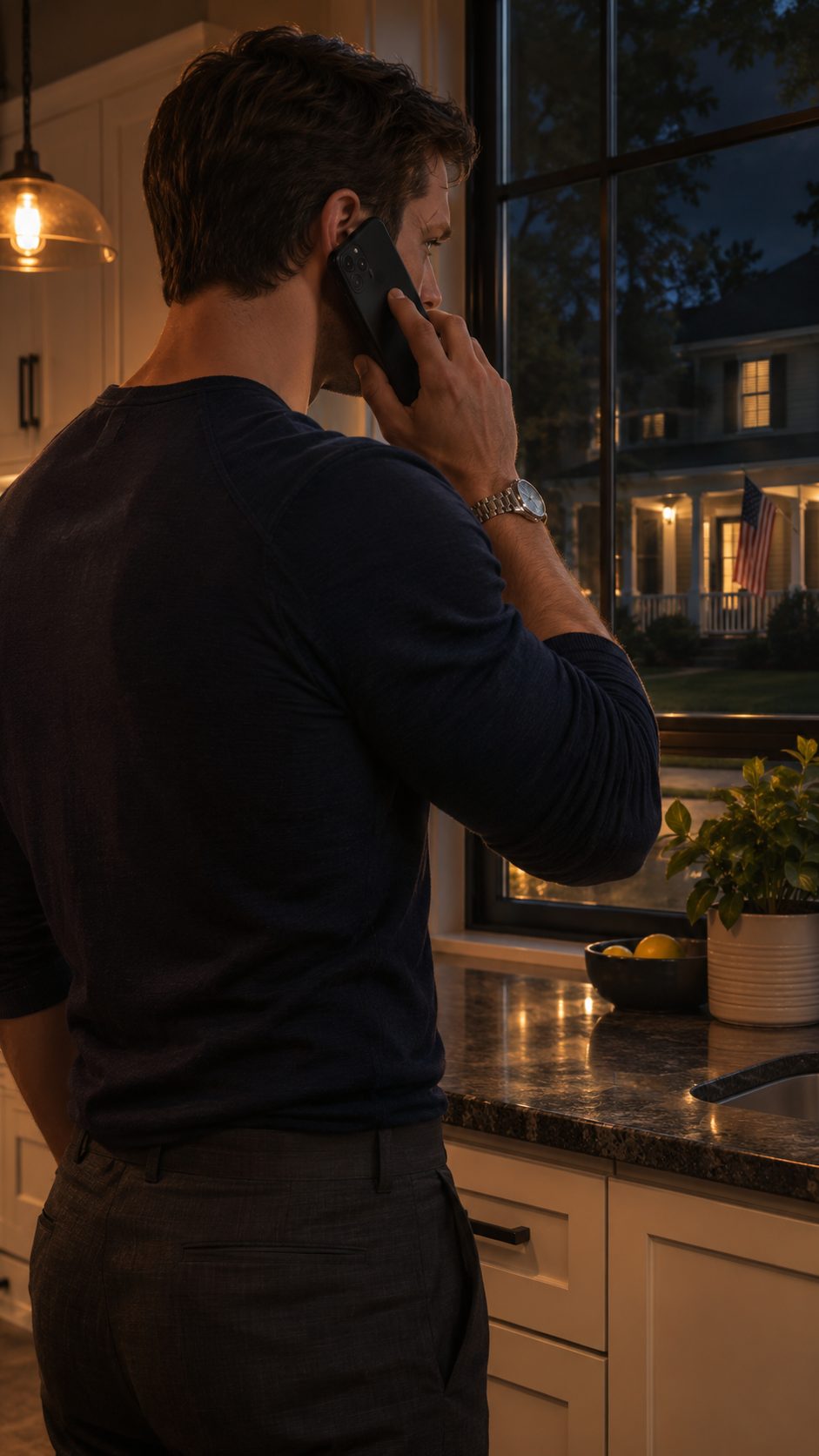
My wife thought she’d already hung up when I heard her giggle and say to another man, “That fool has no idea I’m sleeping with you.”
For a moment, I genuinely wondered whether I’d misunderstood.
Maybe she was joking about someone else.
Maybe the connection had picked up a conversation from another room.
Maybe there was some perfectly innocent explanation for the way she laughed.
Then a man laughed with her.
It was a low, comfortable laugh.
The kind that came from a man who had heard the same joke before.
“He believes everything I tell him,” Rachel continued.
“I told him the conference ran late.”
The man said something I couldn’t make out.
Rachel laughed again.
Daniel wouldn’t suspect a thing.”
Then the line went silent.
I stood completely still in the kitchen, holding my phone against my ear.
Eleven years.
That was how long Rachel and I had been married.
Eleven years of shared birthdays, grocery lists, mortgage payments, Sunday mornings, family holidays, and conversations about what we wanted our lives to look like when we grew old.
And apparently, eleven years had also been enough time for my wife to become comfortable calling me a fool.
I lowered the phone.
The clock above the stove read 10:58 p.m.
Outside the kitchen window, our quiet neighborhood lay beneath a cloudless Ohio sky.
A porch light glowed across the street, illuminating the American flag hanging beside the Hendersons’ front door.
Somewhere farther down the cul-de-sac, a dog barked.
Everything looked ordinary.
That was the most disturbing part.
Our kitchen still smelled faintly of the chicken I’d cooked for dinner.
Rachel’s favorite coffee mug sat in the drying rack.
A grocery receipt from Target was attached to the refrigerator beneath a red magnet shaped like the state of Ohio.
Her cream-colored coat hung on the hook beside the front door.
On the bookshelf between the kitchen and the living room stood a framed photograph from her college graduation.
Right beside it was our wedding picture.
In that photograph, Rachel was laughing.
Her arms were wrapped around my neck, her white dress was covered in delicate lace, and I was looking at her as though the world had somehow decided to give me more happiness than I deserved.
I used to love that photograph.
That night, I couldn’t bear to look at it.
I placed the phone carefully on the granite counter.
My first instinct was to call Rachel back.
I wanted to demand an explanation.
I wanted her to say I’d misunderstood, that she hadn’t meant what I’d heard, that there was some explanation capable of making those words disappear.
My second instinct was worse.
I wanted to drive downtown, find her hotel, and confront whoever was laughing at me.
But I didn’t know which hotel she was staying in.
And I didn’t even know the man’s name.
I only knew what Rachel had told me earlier that afternoon.
She was attending a professional conference in downtown Columbus.
Her employer had supposedly arranged accommodations because the following morning’s first session began at seven-thirty.
“You know how terrible the interstate gets,” she’d said while packing her overnight bag.
“I could drive you,” I’d offered.
She smiled.
“Daniel, it’s one night.
I’ll be fine.”
Then she kissed my cheek.
A quick, casual kiss.
The same kind she’d given me before leaving for work hundreds of times.
I remembered asking if she wanted me to save some dinner.
They’re taking everyone out.”
Now I understood why she’d sounded so cheerful.
I walked to the sink and turned on the cold water.
For several seconds, I watched it run.
I wanted to feel angry enough to do something stupid.
Instead, beneath the anger, another feeling began forming.
Recognition.
Not of the affair itself.
Of all the small moments I’d pushed aside.
The calls she took outside.
The hotel reservations.
The sudden interest in expensive clothes.
The way she’d started turning her phone facedown whenever we ate dinner together.
The evenings when she said she was working late but came home smelling of a cologne I didn’t recognize.
I had noticed all of it.
I had simply chosen not to connect the dots.
Because connecting them would have meant admitting something I didn’t want to know.
I shut off the water.
Then I opened the home-security application on my phone.
Rachel and I had installed a video doorbell and smart locks two years earlier after someone stole packages from our porch.
The application kept a history of door activity.
At first, I wasn’t even sure what I was looking for.
But I remembered something unusual.
Three weeks earlier, I’d come home from a site inspection and noticed Rachel’s car in the driveway.
She’d told me she’d been at a client meeting all afternoon.
When I mentioned the car, she said she’d come home early because she wasn’t feeling well.
I’d accepted that explanation.
Now I opened the recording history.
I found the date.
Then I found the video.
At p.m., Rachel had opened our front door.
A man stood beside her.
He wore a gray jacket and carried a black overnight bag.
His face was partly turned away from the camera.
Rachel looked up at him and smiled.
Then she reached for his hand.
They entered the house together.
I watched the recording twice.
The second time, I noticed how naturally she moved around him.
There was no hesitation.
No awkwardness.
They looked like people who had done this before.
My throat tightened.
I checked the smart-lock history.
The front door had been opened with Rachel’s code at .
The door had been locked again at .
Two and a half hours.
Inside our home.
I sat down at the kitchen island.
For a while, I stared at the screen.
Then I opened our shared family calendar.
Rachel and I used it for everything: appointments, birthdays, family gatherings, dentist visits, vacations, and work events that affected our schedules.
She had created a calendar called Professional Events.
I rarely checked it.
Tonight, I did.
I scrolled backward.
Three months.
Six months.
Certain entries began repeating.
Regional planning meeting.
Client dinner.
Professional development.
Overnight conference.
Each one corresponded to a night Rachel had been unavailable, late, or unusually defensive when I asked questions.
Then I noticed an entry I’d never seen before.
It was dated June 16 of the previous year.
The title read:
Private meeting — p.m.
The location was a downtown hotel.
I stared at the date.
Our tenth wedding anniversary.
I remembered that night vividly.
Rachel had told me she needed to attend an emergency networking event.
I had made reservations at a restaurant she’d wanted to try for months.
She canceled an hour before we were supposed to leave.
I ate dinner alone.
When she finally got home, she said she was exhausted.
I gave her the anniversary gift I’d bought anyway.
A delicate gold bracelet.
She kissed my cheek, thanked me, and went upstairs.
I remembered feeling disappointed.
I remembered telling myself marriage wasn’t always romantic.
Sometimes work came first.
Sometimes people were tired.
Sometimes anniversaries were just another day.
But now I was looking at a calendar entry for a private meeting at a hotel on the exact evening my wife had canceled our tenth-anniversary dinner.
I checked the event’s creation history.
It had been entered well in advance.
This hadn’t been a sudden work emergency.
It had been planned.
My hands grew cold.
There was one more shared account.
Rachel had apparently forgotten we both had access to the cloud folder we used for household records.
It contained scanned bills, insurance documents, receipts, and photographs automatically uploaded from our old family tablet.
I opened it.
A folder labeled Household 2025 contained a hotel receipt.
The hotel name matched the location on the anniversary calendar entry.
I opened the receipt.
Two guests.
An overnight stay.
And a reservation name that made me stop breathing for a moment.
Evan Mercer.
I knew Evan.
Not well enough to call him my best friend.
But well enough to have eaten dinner with him dozens of times.
Well enough to have helped him move furniture.
Well enough to have shaken his hand at his wedding.
And well enough to know exactly who his wife was.
Mara Mercer.
Rachel’s closest friend since seventh grade.
The woman who had served as maid of honor at our wedding.
I leaned back in my chair.
The room seemed to tilt.
I had just discovered my wife wasn’t merely sleeping with another man.
She was sleeping with her best friend’s husband.
And their first documented private hotel meeting had taken place on our tenth wedding anniversary.
For twelve minutes, I had been looking for confirmation of an affair.
What I found was proof that the damage went far deeper than I’d imagined.
At 11:37 p.m., my phone vibrated.
Going to sleep.
Big morning tomorrow.
I stared at those final two words.
Then I typed:
Sleep well.
Everything is taken care of here.
Three dots appeared.
Disappeared.
Then returned.
What does that mean?
I didn’t answer.
Instead, I stood and walked toward the staircase.
Because upstairs, in the bedroom where Rachel and I had spent eleven years together, there was something I needed to change.
And inside the locked cabinet in my office was something I’d been trying to forget for almost a year.
Something Rachel thought I’d never show anyone.
Tonight, I was done hiding it.
## CHAPTER 2: THE PHOTOGRAPH I HID FOR ELEVEN MONTHS, AND THE FIRST TIME MY WIFE CONVINCED ME TO DOUBT MY OWN EYES
The photograph had arrived eleven months earlier.
It came in an ordinary white envelope with no return address.
I found it in our mailbox on a rainy Tuesday afternoon.
At first, I assumed it was a promotional mailing.
But when I opened it, a narrow strip of photographs slid into my hand.
Four pictures.
The kind produced by a rented photo booth at weddings and charity events.
In the first, Rachel stood beside Evan Mercer.
They were both smiling.
In the second, he had his arm around her waist.
In the third, she was leaning close to his face.
In the fourth, they were kissing.
Not a friendly kiss on the cheek.
Not something accidental or easily misunderstood.
His hand was against her neck.
Her fingers rested on his chest.
Their eyes were closed.
I remember standing in our driveway, staring at that final photograph while rain began falling harder.
At the bottom of the strip was a date.
The previous summer.
I recognized the occasion immediately.
The annual charity fundraiser hosted by the Columbus Children’s Arts Foundation.
Rachel and I had attended together.
Mara and Evan had been there, too.
I remembered the fundraiser because Rachel had complained about the speeches, the music, and the long line for drinks.
She’d gone to the photo booth with a group of friends while I spoke with a contractor about a renovation project.
Later, I couldn’t find her for almost an hour.
When I called, she said she’d stepped outside to take an important work call.
I never questioned it.
Until the photographs arrived.
That evening, I placed the photo strip on our dining table.
Rachel came home carrying groceries.
She smiled when she saw me.
“Hey, handsome.”
Then she noticed the photograph.
The smile disappeared.
For several seconds, she didn’t move.
“Where did you get that?”
“It came in the mail.”
“Who sent it?”
“I don’t know.”
She put her grocery bags down.
I asked one question.
“Why were you kissing Evan?”
Rachel stared at the photograph.
Then she sighed.
“Oh, my God.”
“Daniel, seriously?”
“That was months ago.”
I felt something cold move through my chest.
“So we were drinking.
Everyone was being stupid.”
I looked at the fourth picture.
“Is that supposed to make it better?”
She rubbed her forehead.
“It was one kiss.”
“Rachel, you’re kissing your best friend’s husband.”
“Does Mara know?”
Her expression sharpened.
“Why would you bring Mara into this?”
I stared at her.
“Because she’s married to him.”
Rachel turned away.
“It was embarrassing.
Evan and I both regretted it.”
“Then why didn’t you tell me?”
“Because I knew you’d react like this.”
I remember the way she said those words.
As though my reaction was the real problem.
As though her decision to hide the photograph was somehow evidence of my unreasonable nature.
“Who sent it?”
I asked again.
“I have no idea.”
“Do you think someone was trying to tell us something?”
Rachel crossed her arms.
“Probably some drunk idiot from the event.”
I shook my head.
“I don’t believe this.”
She looked wounded.
“Daniel, are you seriously going to throw away our marriage over one stupid kiss?”
I said nothing.
She came closer.
Her eyes filled with tears.
“I love you.”
I wanted to believe her.
That was the terrible thing.
Even with the photographs in my hand, even after seeing Evan’s hand around her waist, I wanted her explanation to be true.
“I made a mistake,” she whispered.
“And I’ve felt awful about it ever since.”
“Does Evan know you regret it?”
“And it’s over?”
“There was nothing to end.”
I looked at her.
She reached for my hands.
“Please don’t turn one drunken mistake into something bigger.”
I should have asked more questions.
I should have insisted on a meaningful conversation, boundaries, and honesty.
Instead, I looked at my wife crying in our dining room and felt the old instinct to protect our marriage.
So I accepted her explanation.
Or at least I pretended to.
I told her I needed time.
She promised it would never happen again.
We went to bed without speaking.
The next morning, Rachel made me coffee and kissed my cheek before leaving for work.
Two days later, she suggested we take a weekend trip.
She became affectionate again.
She asked about my projects, cooked dinner twice that week, and talked about planning a vacation together.
I allowed myself to believe we’d survived something.
But the photographs stayed with me.
I couldn’t throw them away.
I couldn’t bear to see them, either.
So I slipped the strip into a protective sleeve, placed it inside a small wooden frame, and locked it in the filing cabinet in my home office.
The frame had belonged to my father.
He had made it from walnut during the final year of his life.
For a long time, it had held an old picture of him and me fishing at Lake Erie.
After he died, I removed the photograph and stored the frame.
When the photo strip arrived, I used that frame because it was the only one small enough to hold the evidence without folding it.
I told myself I was keeping it in case I ever needed proof.
The truth was more complicated.
I kept it because some part of me didn’t believe Rachel.
And I hated that part of myself.
Over the following months, I tried to behave as though our marriage had returned to normal.
But normal had become a performance.
Rachel laughed at dinner.
I laughed back.
She asked about my day.
I told her.
We attended family gatherings.
We posed for photographs.
We wished friends happy anniversaries and congratulated people on their engagements.
Yet every time Rachel mentioned Evan, a quiet voice inside me remembered that picture.
I hated myself for becoming suspicious.
I hated checking the clock when she worked late.
I hated noticing when she changed perfume.
I hated the small, ugly question that appeared whenever she smiled at her phone.
Who are you talking to?
I never asked.
Because I knew what would happen.
She would sigh.
She would accuse me of living in the past.
And eventually, I would apologize for making her feel distrusted.
So I stayed quiet.
I told myself that forgiveness required letting things go.
But I was confusing forgiveness with refusing to see reality.
Now, standing outside my office at nearly midnight, I understood the difference.
The photo strip had been taken two months after the anniversary hotel meeting.
Rachel hadn’t made a single drunken mistake.
She had already been involved with Evan.
And when I found evidence, she had convinced me that questioning her was more damaging than what she had done.
I unlocked the cabinet.
The old walnut frame was exactly where I’d left it.
I removed it and stared at the fourth photograph.
The hand at her neck.
The intimacy I had tried so desperately to explain away.
Then I carried it into our bedroom.
On the dresser stood our wedding photograph inside a polished silver frame.
I removed the wedding picture from its frame and carefully set it inside a drawer.
I had no desire to destroy it.
It had been real to me.
Whatever Rachel had done afterward, the happiness I felt on our wedding day was not a lie.
At least not on my side.
I slipped the photo strip of Rachel and Evan into the empty silver frame.
Then I carried it downstairs.
I placed it on the entryway console, directly beside the front door.
Rachel would see it the moment she came home.
Not because I wanted to frighten her.
Not because I needed to scream at her.
But because I was no longer going to let her decide which version of the truth existed inside our house.
I stepped back and looked at the frame.
Two familiar faces.
Four small pictures.
One undeniable story.
Then I turned off the lights and went upstairs.
For the first time in months, I slept without waiting for Rachel to come home.
## CHAPTER 3: THE ELEVEN YEARS I THOUGHT WE WERE HAPPY, AND THE SMALL LIES THAT TAUGHT ME HOW TO LOOK THE OTHER WAY
I met Rachel at a friend’s backyard barbecue on the Fourth of July.
I was working for my father’s renovation company at the time.
She was finishing a professional certification and working part-time at an event-planning firm.
We were both at the age when everyone seemed to be getting married, buying houses, or moving away.
I wasn’t looking for a serious relationship.
Neither was she.
At least, that’s what we told each other.
Rachel was standing beside a folding table, trying to open a bottle of sparkling water.
The cap wouldn’t budge.
I offered to help.
She looked me up and down.
“You think you’re stronger than me?”
“Not necessarily.”
“Then let me struggle in peace.”
Five minutes later, she brought the bottle over.
“Okay,” she said.
“You can try.”
I opened it.
She shook her head.
“Show-off.”
That was our first conversation.
I fell in love with her slowly, then all at once.
She had a sharp sense of humor and an almost reckless enthusiasm for life.
She loved music, crowded restaurants, weekend trips, and conversations with strangers.
I was quieter.
I liked woodworking, old houses, baseball games, and spending Sunday afternoons in the garage with my father.
Rachel made my world feel larger.
I thought I gave hers stability.
For years, it worked.
We rented our first apartment on the north side of Columbus.
It had a tiny kitchen and unreliable heating.
During one particularly cold February, the furnace broke while a snowstorm moved through central Ohio.
We spent the evening wrapped in blankets, eating takeout Chinese food by candlelight.
Rachel laughed so hard when I suggested camping in the living room that she spilled soy sauce on the carpet.
We slept on a mattress near the fireplace.
I remember waking up the next morning and finding her curled against me, her hand resting on my chest.
I thought then that happiness was simpler than people made it.
Someone to come home to.
Someone who laughed at your terrible jokes.
Someone who made even a broken furnace feel like an adventure.
We married three years later.
Mara stood beside Rachel at the altar.
Evan was there, too, although he and Mara were only dating at the time.
I remember Evan shaking my hand at the reception.
“You’re a lucky guy,” he said.
The photograph of that handshake would later become one of the hardest images to look at.
When Rachel and I bought our house, we were both working long hours.
My father had recently retired, and I was slowly taking over more of the family business.
Rachel had become an account coordinator at a corporate event company.
She was ambitious.
She wanted to manage larger clients, travel to major conferences, and eventually become a regional director.
I encouraged her.
I helped her prepare presentations.
I stayed up late reviewing proposals.
When she was offered a promotion that required more travel, I bought her a new suitcase.
It was dark blue with a silver handle.
She loved it.
“Now I look like an important businesswoman,” she joked.
“You already are.”
She kissed me.
“That’s why I married you.”
I smiled then.
Years later, I would wonder how much truth had been hiding inside that joke.
But I don’t believe our marriage was always bad.
That’s important.
It would be easier to tell the story as though Rachel had been cruel from the beginning.
She wasn’t.
There were years when she was thoughtful and generous.
When my father was diagnosed with cancer, she drove him to appointments whenever I couldn’t leave a job site.
She sat with me in the hospital when we received bad news.
After he died, she held my hand through the funeral and stayed beside me when I couldn’t find the words to speak.
I will always be grateful for that.
What makes betrayal so difficult is that the person who hurts you often possesses real qualities you once loved.
The good memories don’t disappear simply because the relationship ends badly.
They remain.
And sometimes they hurt more than the bad ones.
Things began changing after Rachel received another promotion.
Her company started sending her to larger industry conferences.
She stayed in nicer hotels.
She met executives and consultants.
Her clothes became more expensive.
Her schedule became less predictable.
None of that bothered me initially.
I was proud of her success.
Then she began talking about our life as though it were something she’d outgrown.
One evening, we were eating dinner when she mentioned that a coworker had purchased a downtown condominium.
“Can you imagine having a place like that?” she asked.
“Floor-to-ceiling windows.
Rooftop terrace.
Everything.”
“Sounds nice.”
She looked around our kitchen.
“Sometimes I feel like we live in a retirement community.”
“We’re twenty minutes from downtown.”
“That’s not the point.”
“What is the point?”
She sighed.
That word became common between us.
If I asked why she was upset, the answer was nothing.
If I asked why she’d come home late, nothing.
If I noticed she was distracted, nothing.
Eventually, I stopped asking.
I told myself I was giving her space.
In reality, I was becoming afraid of another argument.
The first serious argument about Evan happened at a neighborhood cookout.
Mara had gone home early because their daughter, Sophie, wasn’t feeling well.
Evan stayed behind.
Rachel spent most of the evening talking with him.
At one point, I saw them standing near the fence, laughing over something on his phone.
They stood close enough that their shoulders touched.
I didn’t think much of it until Rachel pulled away when she noticed me watching.
Later, I asked what they’d been discussing.
“Work,” she said.
“Evan works in commercial property investment.”
We were talking about a potential event partnership.”
She glanced at me.
“No reason.”
“Please don’t be weird.”
I was embarrassed.
So I changed the subject.
Months later, Rachel began mentioning Evan more often.
He knew someone who could help with her company’s expansion.
He had an interesting investment opportunity.
He’d recommended a restaurant.
He’d suggested a better hotel for a conference.
Whenever I asked whether Mara was involved, Rachel had an answer.
Sometimes she said Mara was busy with Sophie.
Sometimes she said Mara wasn’t interested in business conversations.
Sometimes she simply laughed and told me I was overthinking things.
I wanted to believe that people who had shared so many birthdays and family dinners couldn’t betray each other that easily.
I was wrong.
By the time the anonymous photo strip arrived, Rachel had already learned exactly how to manage my concerns.
She didn’t need to create convincing lies.
She only needed to convince me that asking questions made me a bad husband.
That was the pattern I finally recognized.
When she was dishonest, I felt guilty.
When I was hurt, she felt accused.
When I wanted clarity, she demanded trust.
And somehow, every argument ended with me apologizing.
I don’t tell that part of the story because I think I was helpless.
I made choices, too.
I chose silence when difficult conversations were necessary.
I chose comfort over honesty.
I allowed my fear of losing the marriage to become more important than whether the marriage was still healthy.
Rachel was responsible for cheating.
But I was responsible for ignoring the warning signs that told me I needed to protect myself.
The night of the phone call, those two truths finally became impossible to separate.
And once I understood them, I knew my next decision couldn’t be based on anger alone.
It had to be based on what I could actually prove.
Because the more I reviewed our household records, the more I began to suspect that Rachel had been hiding something beyond the affair.
And by morning, I would discover just how expensive her secrets had become.
## CHAPTER 4: THE MONEY THAT DISAPPEARED FROM OUR HOUSEHOLD ACCOUNTS, AND THE PLAN MY WIFE HAD BEEN BUILDING WITHOUT ME
I woke at six-thirty the following morning.
For a brief moment, I forgot what had happened.
Then I saw Rachel’s empty side of the bed.
The memories returned all at once.
The phone call.
The laughter.
The calendar.
The hotel receipt.
I sat on the edge of the mattress and looked toward the dresser.
Our wedding photograph was gone.
The empty space where it had stood seemed larger than it should have.
Downstairs, the silver frame holding Rachel’s photo-booth pictures waited on the entryway console.
I made coffee and opened my laptop.
I wasn’t a private investigator.
I wasn’t particularly good with technology beyond the software I used for work.
But my father had taught me something years earlier.
When a renovation went wrong, you didn’t start tearing down walls because you were angry.
You examined the structure.
You found the problem.
Then you decided what could be repaired.
I began with our household finances.
Rachel and I had three main accounts.
A shared checking account for bills and everyday expenses.
A joint savings account.
And separate personal accounts.
Our mortgage was paid from checking.
Our property taxes, insurance, groceries, and utilities came from the same place.
We had always agreed to contribute proportionally based on our incomes.
For years, it worked.
Recently, though, the savings balance had seemed lower than I expected.
I’d assumed it was because we’d replaced the roof and renovated the guest bathroom.
Rachel handled most of the household bookkeeping, and I’d trusted her to keep track of everything.
Now I opened the statements.
One transfer caught my attention.
The receiving account was labeled Northline Property Services.
I didn’t recognize it.
Another transfer followed three weeks later.
Then $6,500.
Each payment had been described in our household spreadsheet as a home-related expense.
I checked the invoices stored in the shared cloud folder.
There were contractor estimates for landscaping, bathroom fixtures, and exterior repairs.
But the amounts didn’t match the actual work.
We hadn’t done twelve thousand dollars of landscaping.
And the guest bathroom renovation had been completed months earlier.
I totaled the suspicious transfers.
I checked another page.
A larger transfer had come from our joint savings account.
Same receiving company.
Altogether, more than sixty thousand dollars had been moved into an account I knew nothing about.
My mouth went dry.
I searched the shared documents for Northline.
A PDF appeared.
It was a preliminary purchase agreement for a small condominium near downtown Columbus.
The buyer was listed as an LLC.
R&E Property Ventures.
I stared at the name.
The agreement contained an address, a proposed closing date, and a section describing the funds being contributed toward the purchase.
I opened a second document.
It included a financing worksheet.
I recognized several figures from our savings statements.
Then I found something worse.
A document indicating that Rachel had been discussing a home-equity line of credit secured by our house.
There was an unsigned application among the scans.
My name appeared as a proposed co-borrower.
I had never discussed applying for that loan.
I hadn’t signed anything.
I didn’t even know she was considering it.
For several minutes, I sat completely still.
The affair was one thing.
The money was another.
We had spent years saving for emergencies, retirement, and repairs to the home.
That money represented time.
Late nights.
Early mornings.
Jobs I had accepted when I would rather have been home.
Vacations we had postponed.
Expenses we’d carefully considered.
And Rachel had apparently been using some of it to help build a future with another man.
I printed the statements.
Then I checked the account access permissions and saved copies of the records I was authorized to review.
I didn’t try to enter Rachel’s private email.
I didn’t guess passwords.
I didn’t attempt to access Evan’s accounts.
I didn’t need to.
The financial records we shared already raised enough questions.
At eight-thirty, I called an attorney named Elena Brooks.
She had handled a property dispute for my father’s business several years earlier.
When I explained the situation, she listened without interrupting.
Finally, she said, “Daniel, I’m going to need you to separate what you know from what you suspect.”
“I have the statements.”
“And a purchase agreement.”
Send me copies through a secure channel.”
“What can I do about the money?”
“First, don’t move or hide assets out of retaliation.
We need to confirm who was authorized to make the transfers, what the accounts were used for, and whether there are outstanding obligations.”
I rubbed my forehead.
“Can she take out a loan against our house without me?”
“That depends on the exact documents, ownership, lender requirements, and applicable law.
If your name has been used without authorization, that needs immediate attention.
But let’s examine what was actually submitted before drawing conclusions.”
I appreciated how calm she was.
I needed calm.
I had enough anger for both of us.
She asked whether I wanted to begin divorce proceedings.
I looked across the kitchen.
The sunlight was falling across the granite counter.
Rachel’s coffee mug still sat in the drying rack.
“I think so,” I said.
“Think so?”
I took a breath.
There was a pause.
“Then we’ll discuss your options and how to protect your interests appropriately.”
After we hung up, I contacted the bank to ask about the transactions and any credit applications associated with our jointly held property.
The representative explained what records could be provided and how to report suspected unauthorized activity.
I made notes.
For the first time since hearing the phone call, I felt as though I was doing something useful.
Not punishing anyone.
Not winning.
Just protecting what remained.
At ten-fifteen, Rachel texted.
Morning, babe.
Heading into my first session.
How’s everything at home?
I stared at the message.
The audacity was almost impressive.
She was asking about our home while apparently planning to use its equity to finance another home.
Everything’s fine.
We’ll talk when you get back.
She replied immediately.
Are you mad about something?
I didn’t answer.
A moment later:
You’re acting strange.
I put the phone down.
I had spent months feeling strange because of things Rachel refused to explain.
She could tolerate a few hours of uncertainty.
At eleven, my phone rang.
It wasn’t Rachel.
It was Mara Mercer.
I stared at her name.
Rachel’s best friend.
Evan’s wife.
The woman whose marriage had apparently been damaged alongside mine.
For several seconds, I hesitated.
Then I answered.
“Hey, Mara.”
She sounded exhausted.
“I’m sorry to call you like this.”
“What’s wrong?”
There was a long silence.
Then she asked a question I hadn’t expected.
“Did Rachel tell you she was staying downtown last night?”
My grip tightened around the phone.
Mara took a shaky breath.
“Evan told me the same thing.”
I closed my eyes.
She continued.
“I think we need to talk.”
## CHAPTER 5: THE WOMAN MY WIFE BETRAYED WAS HER BEST FRIEND, AND SHE BROUGHT THE PIECE OF EVIDENCE I WAS MISSING
Mara arrived at my house twenty minutes later.
She parked her silver Honda beside the curb rather than pulling into the driveway.
I watched her sit behind the steering wheel for almost a minute before getting out.
She wore jeans, a pale-gray sweater, and a pair of white sneakers.
Her dark hair was pulled into a loose ponytail.
She wasn’t crying when she reached the porch.
Somehow, that made her look worse.
I opened the door before she could knock.
She glanced past me.
“Rachel’s not here?”
Mara nodded.
I stepped aside.
She entered slowly, looking around the house she’d visited for birthdays, Christmas dinners, and summer cookouts.
Her eyes stopped on the silver picture frame on the entryway console.
For a moment, she didn’t move.
Then she walked closer.
I stood behind her.
She picked up the frame and examined the photographs.
Her face went pale.
“Where did you get these?”
“They were mailed to me last year.”
She turned.
“Last year?”
“Rachel told me it was one drunken kiss.”
Mara looked down again.
“Evan told me something similar.”
I felt my stomach tighten.
“You knew?”
“Not everything.”
She lowered the frame carefully.
“He told me there had been a misunderstanding at the fundraiser.
He said Rachel had kissed him after a few drinks, and he’d pulled away.”
I stared at her.
“He said Rachel kissed him?”
I almost laughed.
The stories were different, but the strategy was identical.
Each spouse had been made to believe the person they loved was the one who had made a single mistake.
Mara shook her head.
“I wanted to believe him.”
“So did I.”
She looked at me.
We walked into the kitchen.
I offered her coffee.
She declined.
Instead, she sat at the island and placed a manila folder on the counter.
“I found this yesterday.”
Inside were copies of bank statements and property documents.
Mara explained that she and Evan had maintained a joint savings account for years.
Their original plan was to use the money toward a larger house.
They wanted a place with a backyard where Sophie could play.
Instead, Evan had begun transferring money to a business account.
He claimed the transfers were temporary investments.
“Bridge financing,” Mara said bitterly.
“That’s what he called it.”
I looked at her.
“Northline Property Services?”
Her head snapped up.
“How do you know that name?”
I turned my laptop toward her.
She studied the statements.
Her eyes widened.
“That’s the same company.”
Mara covered her mouth.
For several seconds, neither of us spoke.
Then she said, “He told me it was a real estate opportunity.”
“Rachel apparently believed something similar.”
“How much?”
“More than sixty thousand from our shared accounts.”
Mara looked down.
“Forty-two thousand from ours.”
I sat back.
Over one hundred thousand dollars.
Two marriages.
Two sets of savings.
And a property venture bearing Rachel and Evan’s initials.
Mara stared at the ceiling.
“Oh, my God.”
I gave her time.
Finally, she looked at me.
“Daniel, I think they’ve been planning to leave us.”
I didn’t answer immediately.
The thought had occurred to me.
But hearing someone else say it made it real.
“What makes you think that?”
She reached into the folder.
“I found a copy of a rental agreement.”
She placed it on the counter.
A condominium downtown.
The same building listed in Rachel’s shared documents.
A move-in date several weeks away.
The agreement named Evan as an intended occupant.
Rachel’s name appeared as a second occupant.
I stared at the page.
Mara spoke softly.
“He told me he was traveling for work next month.”
I remembered Rachel telling me she might have to attend an extended corporate training session.
Two weeks away.
Maybe three.
She hadn’t confirmed the dates.
She’d said her employer was still finalizing the schedule.
I looked at Mara.
“Rachel told me she’s going away for training.”
Mara closed her eyes.
“Of course she did.”
We sat in silence.
Then she asked, “How did you find out?”
I told her about the phone call.
The accidental connection.
Rachel’s laughter.
The words she’d used.
Mara listened without interrupting.
When I repeated the sentence, That fool has no idea I’m sleeping with you, something changed in her expression.
Not surprise.
Disappointment.
A deep, exhausted disappointment.
“I’ve known Rachel since we were twelve,” she said.
“She was there when my parents divorced.
She helped me study for exams.
She held Sophie in the hospital before anyone else except my mother.”
Her voice cracked.
“She was my person, Daniel.”
I looked down.
“She knew what Evan and I went through two years ago.”
“What happened?”
Mara rubbed her eyes.
“We almost separated.
We were fighting all the time.
Work, money, parenting.
Everything.”
I remembered that period.
Evan had spent several nights at our house.
Rachel said he needed space.
I hadn’t questioned it.
Mara continued.
“Rachel told me to fight for my marriage.”
She gave a painful laugh.
“She used to call me every week and tell me not to give up on him.”
I felt sick.
Mara looked at me.
“Now I wonder whether she was encouraging me to stay because it made everything easier for them.”
I didn’t know what to say.
There are moments when reassurance feels insulting because the truth is too obvious.
I couldn’t tell Mara everything would be fine.
I couldn’t tell her Evan loved her.
I couldn’t even tell her Rachel had once been a good friend.
Not when the evidence suggested how thoroughly she’d betrayed that friendship.
So I said the only thing I knew was true.
“You didn’t deserve this.”
Mara nodded.
Then she began crying.
Not loudly.
Just silent tears that ran down her cheeks while she stared at her wedding ring.
After a while, she wiped her face.
“What are you going to do?”
“I’ve spoken to an attorney.”
“About divorce?”
She nodded slowly.
“I think I need to do the same.”
I pushed a box of tissues toward her.
“Do you want me to call someone?”
I have a friend who can watch Sophie.
And my sister’s already offered to help.”
She glanced toward the front door.
“Does Rachel know you know?”
Mara studied me.
“She’s coming home today?”
“That’s what she said.”
“Does she know I’m here?”
Mara looked at the silver frame in the entryway.
Then she took a deep breath.
“I want to hear what she has to say.”
I considered that.
“Mara, we don’t have to turn this into a confrontation.”
“She’ll probably lie.”
“I know that, too.”
Her expression became firm.
“But I’ve spent months wondering why my husband stopped looking at me the way he used to.
I blamed myself for being tired.
For not dressing up.
For spending too much time with Sophie.”
She paused.
“I need Rachel to look me in the face and tell me what happened.”
We agreed that Mara would leave to collect herself and return after lunch.
She would contact an attorney of her own.
We would preserve copies of the records available to us and allow professionals to determine whether any financial misconduct had occurred.
We would not threaten anyone.
We would not publish photographs online.
We would not involve Sophie in a confrontation between adults.
Before leaving, Mara stopped beside the silver frame again.
She looked at the fourth picture.
Rachel kissing Evan.
Then she turned toward me.
“Daniel, can I ask you something?”
“Of course.”
“Why did you keep that photograph?”
I looked at it.
“I think part of me knew I might need it someday.”
She nodded.
“Doesn’t make it hurt less, does it?”
I opened the front door.
Mara stepped onto the porch.
Then she looked back.
“Whatever happens this afternoon, don’t let her convince you that you imagined any of this.”
I held her gaze.
After she left, I stood in the doorway for a long time.
It was a beautiful afternoon.
The sky was clear.
A lawn mower hummed somewhere down the street.
Across the cul-de-sac, the Hendersons’ flag moved gently in the wind.
Our neighborhood looked exactly as it always had.
But inside my house, the marriage I had spent eleven years protecting had already begun to fall apart.
At p.m., I heard Rachel’s SUV turning into the driveway.
I looked through the living-room window.
She stepped out wearing sunglasses and carrying her dark-blue overnight bag.
She checked her appearance in the car window.
Adjusted her hair.
Then smiled.
A practiced, cheerful smile.
The same one she’d probably used after every hotel night.
I watched her walk toward the porch.
She had no idea Mara had been there.
No idea what we had discovered.
No idea that two marriages and more than one hundred thousand dollars in shared savings were tied to documents she had left inside an account we could access.
And no idea that the photograph I’d hidden for eleven months was now waiting beside the front door.
Rachel reached for the handle.
I stepped back into the living room.
Then the door opened.
## CHAPTER 6: MY WIFE WALKED INTO THE HOUSE SMILING, BUT THREE STEPS LATER HER BAG HIT THE FLOOR AND HER BEST FRIEND STOOD BEHIND HER
Rachel’s voice carried through the entryway.
“I’m home!”
I sat in the leather chair beside the living-room window.
I didn’t answer.
Her heels clicked against the hardwood.
Then silence.
I could picture the exact moment she saw the frame.
The silver border.
The four photographs.
The final picture of her kissing Evan.
A small, sharp breath.
Then the unmistakable sound of her overnight bag falling to the floor.
Her voice had changed.
She was staring at the entryway console.
Her sunglasses were still pushed up on her head.
Her face had gone pale.
Slowly, she looked toward me.
“What did you do?” she whispered.
I walked into the foyer.
“Hello, Rachel.”
She pointed at the frame.
“Why is that there?”
“Because I think it’s time we stopped pretending.”
She stared at me.
“Where’s our wedding picture?”
“Somewhere safe.”
“Daniel, this isn’t funny.”
She looked toward the open front door, then back at me.
“What’s going on?”
I took a breath.
“I heard you last night.”
Her eyes narrowed.
“On the phone.”
She stared at me.
“I called to say goodnight.”
“Then what are you talking about?”
“You thought the call had ended.”
I watched her face.
For a moment, nothing happened.
Then her eyes widened.
I continued.
“I heard you laughing with Evan.”
She opened her mouth.
I repeated her words.
“’That fool has no idea I’m sleeping with you.’”
Rachel’s shoulders dropped.
A long silence followed.
Then she whispered, “Daniel…”
I shook my head.
She swallowed.
“You don’t understand.”
I almost smiled.
That familiar sentence.
The opening line to a thousand arguments.
The invitation to let her explain why my interpretation of something obvious was wrong.
“Then explain it,” I said.
She looked at the photographs.
“Evan and I—”
“Have been involved since at least our tenth wedding anniversary.”
Her face drained of color.
“June sixteenth.
Downtown hotel.
Seven-thirty.”
She stared at me.
I continued.
“You canceled dinner with me that night.”
“Daniel, I—”
“You said there was an emergency networking event.”
She stepped backward.
“How do you know about that?”
I looked at her.
“Because our shared calendar remembers things even when you expect me to forget.”
She placed a hand against the entryway wall.
“You went through my accounts?”
“I reviewed records we both had access to.”
Her eyes flashed.
“That’s an invasion of privacy.”
For a moment, I couldn’t believe what I was hearing.
Then I saw the fear beneath her anger.
She was reaching for an old defense.
Something that had worked before.
But not today.
“Rachel, I didn’t read your private messages.
I didn’t break into your phone.
I reviewed our household records and financial accounts.”
She looked away.
I continued.
“Do you want to explain Northline Property Services?”
Her head snapped toward me.
“The transfers.”
She didn’t answer.
“Or R&E Property Ventures?”
Her lips parted.
I watched her realize how much I knew.
“Daniel, listen to me.”
“I am listening.”
“Evan was helping me with an investment.”
“Using our savings?”
“We were going to pay it back.”
She flinched.
“Rachel, who is ‘we’?”
She couldn’t answer.
I stepped aside and gestured toward the silver frame.
“You told me that was one drunken kiss.”
Her eyes filled.
“You looked me in the face and told me it meant nothing.”
“I was scared.”
“Losing you.”
The words hung between us.
I looked at the woman I’d loved for more than a decade.
She was beautiful.
She was frightened.
And she was still trying to present herself as someone who’d simply become trapped by circumstances.
“You weren’t scared enough to stop,” I said.
She began crying.
“Daniel, please.”
“Did you ever intend to tell me?”
She shook her head.
Then she seemed to realize what that answer meant.
“I mean—I didn’t know how.”
I watched her struggle.
For years, I had tried to help Rachel find the right words.
Tonight, I wouldn’t do it for her.
Then I heard footsteps on the front porch.
Rachel looked toward the open door.
Mara stepped inside.
She carried the same manila folder she’d brought earlier.
Her expression was calm.
Almost painfully calm.
Rachel stared at her.
Mara closed the door softly behind her.
“Hi, Rachel.”
The color disappeared from Rachel’s face.
She looked at me.
Then at Mara.
Then at the silver frame.
Her knees buckled.
She reached for the console table to steady herself.
The small frame rattled against the wood.
“Oh, my God,” she whispered.
Mara said nothing.
Rachel shook her head.
Still, Mara remained silent.
Rachel looked at me.
“Daniel, what have you done?”
I met her eyes.
“I told the truth.”
She turned back toward Mara.
“Mara, please, let me explain.”
Mara placed the folder on the console.
Rachel blinked.
The simplicity of the word seemed to disarm her.
She had expected shouting.
Accusations.
Maybe tears.
Instead, Mara stood beside the front door and waited.
Rachel opened her mouth.
For several seconds, nothing came out.
Finally, she whispered, “It wasn’t supposed to happen.”
Mara nodded slowly.
“Which part?”
Rachel stared.
“The affair?”
Mara asked.
“Or the condo?”
Rachel’s eyes widened.
“You know about that?”
Mara opened the folder.
“Forty-two thousand dollars from my family’s savings.
More than sixty thousand from Daniel’s household accounts.”
She looked directly at Rachel.
“Were you going to tell me before you moved in with my husband?”
Rachel covered her mouth.
Tears spilled down her cheeks.
“Mara, I swear—”
“Please don’t swear to me.”
Her voice cracked for the first time.
“I’ve heard enough promises.”
Rachel leaned against the wall.
“Evan told me the money was temporary.”
Mara stared at her.
“You knew he was married.”
Rachel nodded.
“You knew we have a daughter.”
“You knew I was trying to save our marriage.”
Rachel began crying harder.
Mara’s voice rose slightly.
“Because you were the person telling me to save it.”
I looked away.
There was something unbearable about hearing Mara say that aloud.
Rachel reached for her.
“Mara, I love you.”
Mara stepped back.
Rachel froze.
“Please don’t say that to me right now.”
For a long moment, the three of us stood in silence.
Then Mara asked the question I’d been afraid she would ask.
“How long?”
Rachel stared at her.
Mara’s voice trembled.
“How long have you been sleeping with my husband?”
Rachel shook her head.
“How long?”
The answer came so quietly I almost missed it.
“Fourteen months.”
Mara closed her eyes.
Fourteen months.
I thought of Christmas dinners.
Of summer barbecues.
Of Rachel holding Sophie while Mara prepared food.
Of Evan sitting at our dining table, asking about my business.
Fourteen months of birthday parties, family gatherings, and shared meals.
Fourteen months of two people pretending to be loyal while secretly planning a different life.
Mara opened her eyes.
“And when were you going to leave Daniel?”
Rachel didn’t answer.
Mara nodded toward the folder.
“The rental agreement says next month.”
Rachel looked at me.
“Daniel, I never agreed to that.”
I stared at her.
“Your name is on it.”
“I was considering it.”
“Did you sign it?”
She hesitated.
I felt something inside me settle.
Not hatred.
Rachel began speaking quickly.
“Evan told me we could sell the condo if things didn’t work out.
He said it was an investment.
He said the money was going to come back.”
I interrupted.
“Rachel, stop.”
She looked at me.
“You’re explaining the money.
I’m asking about our marriage.”
Her lips trembled.
I continued.
“Were you planning to leave?”
She looked down.
Then nodded.
Mara drew a sharp breath.
Rachel began crying openly.
“But I wasn’t sure!”
I stared at her.
“I didn’t know what I wanted,” she said.
“I was confused.
Evan made everything feel exciting, and I thought—”
She stopped.
“I thought I needed something different.”
I looked toward the wedding photograph, now stored safely in a drawer upstairs.
For years, I had wondered what I needed to change to make Rachel happy.
Maybe I should work less.
Travel more.
Buy nicer things.
Take her to better restaurants.
Be more spontaneous.
Now she was standing in our entryway telling me she’d been planning to leave with her best friend’s husband.
There was no version of me that could have prevented her from making those choices.
I said quietly, “You could’ve told me you were unhappy.”
Rachel nodded.
“You could’ve asked for counseling.”
“You could’ve left before beginning another relationship.”
She started crying harder.
Mara picked up her folder.
“I can’t do this anymore.”
Rachel looked at her.
“Mara, please.”
Mara shook her head.
“I came here because I wanted to hear the truth from you.”
She swallowed.
“And now I have.”
Rachel moved toward her.
Mara stepped away.
“I need you to understand something,” Mara said.
Rachel stopped.
“I wasn’t some stranger you hurt.”
Her voice broke.
“I trusted you with my child.
My marriage.
Rachel covered her face.
“And when I told you I was afraid Evan didn’t love me anymore, you told me to keep trying.”
Mara wiped her eyes.
“You knew exactly why he was pulling away.”
Rachel sank onto the bottom stair.
For the first time, she had nothing to say.
Mara looked at me.
“Daniel, I’ll call you after I’ve spoken to my attorney.”
“Take care of yourself.”
She gave a small, exhausted nod.
Then she walked out.
Rachel watched the door close.
For several seconds, she stared at the place where her best friend had been standing.
Then she looked up at me.
“What happens now?”
I took a breath.
“Now we stop lying.”
Her eyes filled again.
I looked at her.
The woman I had married.
The woman who had held my hand through my father’s funeral.
The woman who had helped me build this home.
The woman who had laughed at my trust less than twenty-four hours earlier.
I wanted to remember the good years.
But I also had to accept the truth about the last fourteen months.
“I’ve spoken to a divorce attorney,” I said.
Rachel went completely still.
“No, Daniel.
She stood too quickly and grabbed the railing.
“Please don’t do that.”
I looked at her.
“You were planning to leave me.”
“I wasn’t sure!”
“But you were sure enough to sign a lease.”
She began shaking her head.
“I made a mistake.”
I held her gaze.
“An affair that lasted fourteen months wasn’t a mistake that happened once.”
Her mouth trembled.
“It was a series of choices,” I continued.
“And you made them knowing what they would do to the people who trusted you.”
She stared at me.
Then she whispered something I would remember for a long time.
“I thought you’d always forgive me.”
I looked at her.
And finally understood everything.
My patience had become permission in her mind.
My loyalty had become weakness.
My love had become something she believed she could spend without consequence.
I answered quietly.
“I probably would have tried.”
She began crying.
“But that was before I heard what you really thought of me.”
Rachel closed her eyes.
I stepped away.
“For now, we need space.
We’ll discuss the house and finances with our attorneys.
I’m not going to throw you out or make decisions out of anger.”
She stared at me.
“Then can we still fix this?”
I looked toward the front door.
The same door she’d walked through smiling only minutes earlier.
“I don’t think so.”
She began sobbing.
I wanted to comfort her.
The instinct was still there.
Eleven years of marriage don’t disappear in an afternoon.
But I stayed where I was.
Because comforting her now would have meant pretending she hadn’t just admitted she was preparing to leave me.
And I was finally done pretending.
## CHAPTER 7: THE MAN SHE CHOSE OVER OUR MARRIAGE DIDN’T LOVE HER ENOUGH TO ANSWER THE PHONE WHEN EVERYTHING FELL APART
Rachel stayed in the house that evening.
I slept in the guest bedroom.
We had agreed to avoid making any permanent decisions until we’d both spoken with attorneys.
I didn’t trust myself to discuss money or property while emotions were still running high.
At nine-thirty, I heard Rachel walking down the hallway.
Then a bedroom door closed.
A few minutes later, her voice drifted through the wall.
She was talking on the phone.
I couldn’t hear every word.
But I heard enough.
“Evan, you need to call me.”
Mara knows everything.”
Another silence.
Then Rachel began crying.
“I can’t handle this alone.”
I closed my eyes.
For eleven years, I’d been the person she called when something went wrong.
Now she was calling Evan.
And he wasn’t answering.
The following morning, Rachel came downstairs looking exhausted.
She wore an oversized sweatshirt and jeans.
Her hair was tied back.
The confidence she’d carried into the house the previous afternoon had vanished.
I was making coffee.
She stood in the kitchen doorway.
“Can we talk?”
I looked at her.
“About what?”
I turned off the coffee maker.
She sat at the island.
“He says this is all my fault.”
I didn’t respond.
“He says I shouldn’t have left anything in the shared accounts.”
I looked at her.
“That’s an interesting thing to blame you for.”
Rachel wiped her face.
“He says the condo deal might fall apart.”
“And he said if it does, I’m responsible for the money.”
I leaned against the counter.
“Rachel, this is why we need attorneys to review the documents.”
She nodded.
Then she looked up.
“I think he was using me.”
I took a slow breath.
“That may be true.”
Her eyes filled.
“You don’t sound surprised.”
She stared at me.
“You knew?”
“I knew he was willing to deceive Mara.
I knew he was willing to have an affair with his wife’s best friend.
And I knew he was willing to mix that relationship with money from two marriages.”
“None of those things made him seem particularly trustworthy.”
Rachel looked down.
For several moments, she said nothing.
Then she whispered, “He told me he loved me.”
I felt a familiar ache.
Not jealousy exactly.
Something sadder.
“Did you love him?”
She hesitated.
“I thought I did.”
Rachel began crying.
“I loved you, too.”
I shook my head slowly.
“Rachel, I believe you had feelings for me.
But you weren’t treating me like someone you loved.”
She covered her face.
I poured coffee into a mug and sat across from her.
For once, I didn’t feel the need to argue.
I had no interest in competing with Evan.
I didn’t need Rachel to choose me anymore.
She had already made too many choices.
After a while, she asked, “Are you going to tell everyone?”
She looked surprised.
“Because this isn’t entertainment.”
Her eyes widened slightly.
I continued.
“Mara deserves privacy.
Sophie deserves privacy.
And I don’t need our entire neighborhood discussing our marriage.”
Rachel nodded.
“Thank you.”
“I’m not doing it for you.”
She looked down.
“I’m doing it because I want to handle this in a way I can live with afterward.”
A few hours later, Elena called.
We discussed the joint accounts, the condominium agreement, and the documents Rachel had signed.
I explained that Rachel had acknowledged her involvement in the property venture.
Elena asked whether Rachel would be willing to provide records voluntarily through counsel.
I told her I would ask.
Then Elena gave me advice I hadn’t expected.
“Daniel, don’t make your entire recovery dependent on whether Rachel or Evan suffers.”
I leaned back in my chair.
“What do you mean?”
“If you spend the next year waiting for them to lose everything, you’re still allowing their choices to control your life.”
I stared through the study window.
She continued.
“Our job is to protect your legal and financial interests.
Your job is to decide what kind of life you want after this.”
I thought about that for a long time.
I’d imagined the moment of discovery for months without admitting it to myself.
A confrontation.
A confession.
Maybe some dramatic scene where Rachel begged for another chance.
But now that it had happened, I didn’t feel victorious.
I felt tired.
I felt older.
And I felt grief for a marriage that had ended long before either of us admitted it.
Over the following weeks, the financial picture became clearer.
The condominium purchase had not closed.
Some of the money had been held as deposits or in accounts tied to the proposed transaction.
Other funds had been spent on fees, travel, and expenses that would require further review.
The bank confirmed there was no completed home-equity loan in my name.
That was a relief.
But it didn’t mean our savings were safe or that every transfer could easily be reversed.
An accountant retained through counsel helped trace the transactions.
Our attorneys reviewed which payments had been authorized, how they were characterized, and what claims might be available.
Mara took similar steps regarding her accounts with Evan.
There were no instant victories.
No magical court order that returned every dollar overnight.
Just documents, meetings, and the exhausting work of untangling financial decisions made in secrecy.
Eventually, Rachel agreed to cooperate with the review and provide the records she possessed.
She moved into a rented apartment after we reached a temporary agreement about the house and expenses.
The afternoon she left, I helped her carry a box to her car.
We stood in the driveway.
For a moment, it felt almost normal.
Like she was leaving for a work trip.
She looked at the house.
“I thought we’d live here forever.”
I followed her gaze.
“So did I.”
She turned toward me.
“Do you remember when we planted that maple tree?”
I looked toward the front yard.
The tree was much taller now.
Its branches cast a shadow across the grass.
“Of course.”
“You said one day we’d sit under it when we were old.”
I smiled sadly.
“I remember.”
She began crying.
“I’m sorry I ruined that.”
I looked at her.
“Rachel, I hope someday you understand why an apology isn’t enough to rebuild something you repeatedly chose to damage.”
She nodded.
“I think I’m starting to.”
She opened the car door.
Then paused.
“Will you ever forgive me?”
I thought about the question.
“I don’t know yet.”
She looked disappointed.
“But I’m working on not letting what happened make me bitter.”
She nodded.
Then she got into the car.
I stood in the driveway as she backed away.
This time, she looked back.
And this time, I didn’t feel the need to follow.
## CHAPTER 8: EIGHT MONTHS AFTER MY WIFE CALLED ME A FOOL, I FINALLY UNDERSTOOD WHAT REAL REVENGE LOOKED LIKE
Eight months later, the house was quiet.
Not lonely.
There was a difference.
The divorce process had moved forward, and our financial separation was being finalized with legal help.
The property dispute had required considerable negotiation.
Some of the funds connected to the failed condominium purchase were recovered or accounted for through settlement arrangements.
Other expenses became part of the broader financial resolution between the people involved.
The outcome wasn’t perfect.
I lost money.
I paid legal fees.
I spent hours gathering records when I would rather have been working or spending time outdoors.
But I protected my business, addressed the disputed transactions, and eventually reached a point where I could stop checking my phone with dread.
The house itself was going to be sold.
Rachel and I had agreed it was the cleanest way to move forward after our attorneys reviewed our options.
I didn’t want to live there alone.
Every room contained reminders of the life we’d planned.
The dining room where we’d hosted Thanksgiving.
The kitchen where we’d danced while waiting for dinner to finish cooking.
The bedroom where I’d once believed nothing could come between us.
I knew I could spend years trying to replace those memories with new ones.
But I no longer wanted the house badly enough to carry that weight.
I found a smaller place near a park on the northwest side of Columbus.
Two bedrooms.
A comfortable living room.
A garage large enough for my woodworking tools.
It wasn’t as impressive as our old house.
I loved it.
On Saturday mornings, I made coffee and worked in the garage with the door open.
Sometimes I repaired old furniture.
Sometimes I built shelves for friends.
Sometimes I simply sat outside and watched people walking their dogs.
I had forgotten how peaceful an ordinary weekend could feel when you weren’t wondering where your spouse really was.
Mara and I stayed in occasional contact.
Not in the way people might expect.
There was no sudden romance.
No dramatic decision to seek comfort in each other’s arms.
We had both been hurt.
The last thing either of us needed was to turn shared pain into another relationship before understanding what we wanted.
We spoke mostly about the practical issues involving Evan and Rachel.
Sometimes we checked on each other.
Sometimes months passed without a conversation.
Mara was rebuilding her life with Sophie.
She had returned to a routine that revolved around work, school, friends, and small family traditions.
One afternoon, she called to tell me Sophie had won an award at school.
“That’s great.”
“She wanted to celebrate with pizza.”
“Smart kid.”
Mara laughed.
For a moment, she sounded like the woman I’d known before everything happened.
Then she grew quiet.
“I wanted to thank you.”
“For what?”
“For telling me.”
I thought about the photograph.
The hotel receipt.
The terrible afternoon in our entryway.
“I almost didn’t.”
“I didn’t want to hurt you.”
She paused.
“You didn’t create the truth.”
I looked toward the window.
“You just stopped hiding it,” she finished.
That sentence stayed with me.
Rachel sent me a letter shortly before our divorce was finalized.
Not a text.
Not an email.
A handwritten letter in a plain white envelope.
I recognized her handwriting immediately.
For years, she’d left little notes around the house.
Don’t forget milk.
Dinner with Mara tonight.
Sometimes she’d draw a small heart beside my name.
I sat at my kitchen table and opened the envelope.
The letter was four pages long.
She wrote about our marriage.
About the good years.
About how she’d begun feeling restless and dissatisfied.
About the attention Evan gave her and how quickly she had started confusing excitement with happiness.
She admitted something I’d suspected for months.
She hadn’t truly intended to stop seeing him after the fundraiser photographs surfaced.
She had only become more careful.
I knew you wanted to believe me, and I used that against you.
I stopped reading for a moment.
The sentence hurt.
But it also relieved something I’d carried for almost a year.
She finally acknowledged what she’d done without asking me to accept responsibility for it.
Later in the letter, she wrote:
I thought having someone chase me meant I was valuable.
I thought being wanted by two men made me powerful.
I didn’t understand that I was destroying the only relationships in my life that were built on real trust.
I read that paragraph twice.
Then I continued.
She described the night at the hotel.
After our phone call ended, she’d believed she’d disconnected.
Evan had made a joke about how easily she managed her marriage.
She had laughed.
And she’d said the words that changed everything.
That fool has no idea I’m sleeping with you.
She wrote that she’d never intended for me to hear them.
I believed her.
That was the point.
She had been comfortable saying them precisely because she thought I wasn’t listening.
At the end of the letter, she asked whether there was any chance we could begin again.
She didn’t demand an answer.
She said she would respect whatever I decided.
For the first time since our separation, I believed that part.
I folded the pages and placed them back in the envelope.
Then I sat quietly for a long time.
I remembered the first time I saw Rachel at that Fourth of July barbecue.
Her laughter.
The stubborn bottle cap.
The way she’d challenged me to open it.
I remembered the apartment with the broken furnace.
Our wedding.
The years when I had genuinely believed we’d grow old together.
And I remembered the moment my phone stayed connected long enough for me to hear what she really thought.
Both versions of our relationship belonged to my past.
I didn’t need to pretend the happy years had never happened.
But I also didn’t need to return to a marriage that had cost me my peace.
That evening, I wrote Rachel a short reply.
I thanked her for acknowledging the truth.
I told her I hoped she continued working on understanding her choices.
And I told her I would not be restarting our marriage.
I wished her well.
Then I mailed the letter.
There was no dramatic final argument.
No last-minute confession that changed everything.
Just a decision.
And for the first time in a long time, it felt like mine.
A few weeks later, I was organizing boxes in my new garage when I found my father’s old walnut picture frame.
The one I’d kept locked in my office for nearly a year.
The one that had held the photo strip of Rachel kissing Evan.
I sat down at my workbench.
Carefully, I opened the back.
I removed the four photographs.
For a moment, I looked at them.
They didn’t make my heart race anymore.
They were still unpleasant.
Still painful.
But they no longer made me question my own judgment.
I placed the photographs into an envelope with the other records my attorney had advised me to retain.
Then I cleaned the glass.
I polished the walnut frame.
And I found the old photograph it had held before everything happened.
My father and me on a fishing trip to Lake Erie.
I was younger in the picture.
My father stood beside me, holding a fishing rod and wearing the faded Cleveland baseball cap he seemed to wear everywhere.
I slipped the photograph back into the frame.
Then I placed it on the shelf above my workbench.
For a while, I stood looking at it.
My father had always been a practical man.
He believed in hard work, honest conversations, and keeping promises.
When I was younger, he used to say something that annoyed me.
“Daniel, the truth doesn’t disappear just because you don’t want to look at it.”
I used to think he was talking about crooked walls and bad construction.
Now I understood he had been talking about life.
I turned off the garage lights.
Outside, the evening air was cool.
Somewhere down the street, a family was grilling dinner.
Children were riding bicycles on the sidewalk.
The sky above Columbus glowed orange as the sun began to set.
I sat on the front steps with a cup of coffee.
And I thought about the night Rachel called me a fool.
She believed my trust meant I was stupid.
She believed my patience meant I was weak.
She believed that because I loved her, I would always find a way to excuse her choices.
For a long time, she was almost right.
I had accepted explanations I shouldn’t have accepted.
I had ignored questions I needed to ask.
I had allowed my fear of losing her to become stronger than my responsibility to myself.
But I had finally learned something.
You can love someone without surrendering your judgment.
You can forgive someone without inviting them back into your life.
And you can walk away from betrayal without allowing revenge to turn you into someone you don’t recognize.
My wife thought she knew what a fool like me was capable of.
She expected me to shout.
To threaten.
To make a scene.
Instead, I reviewed the truth.
Protected what I could.
Told the people who deserved to know.
And stepped away from a life that had become built around someone else’s lies.
In the end, the most powerful thing I changed wasn’t the photograph in our house.
It was the way I saw myself.
For eleven years, I’d believed being a good husband meant holding on no matter what.
Now I understood that sometimes being a good man meant knowing when to let go.
I finished my coffee.
Watched the last sunlight disappear.
Then went inside.
My phone was sitting on the kitchen counter.
For once, I didn’t feel the need to check it.
I had no one to investigate.
No suspicious messages to explain.
No late-night conference stories to believe.
And no reason to wonder whether the person I loved was laughing at me somewhere else.
I had lost the marriage I thought would last forever.
But I had finally recovered something I hadn’t realized was missing.
My self-respect.
And this time, I intended to keep it.
Final thought: Sometimes the person who calls you a fool is only able to do so because you’ve been kind enough to trust them.
The answer isn’t to become cruel.
It’s to become wise enough to know when that trust has been broken.
✓ Lynn R. Adams
# MY WIFE CALLED ME A FOOL WHEN SHE THOUGHT SHE’D HUNG UP THE PHONE—SO I CHANGED ONE THING IN OUR HOUSE, AND THE PERSON WHO WALKED IN BEHIND HER DESTROYED EVERY LIE SHE’D TOLD An American Story of In…