CG – MY WIFE ASKED ME TO PUT OUR MARRIAGE ON HOLD SO SHE COULD TRY ANOTHER MAN—SO I TOLD HER TO TAKE ALL THE TIME SHE NEEDED, BUT AT 9:15 THE NEXT MORNING, THE SECRET I UNCOVERED MADE HER REALIZE SHE HAD RISKED FAR MORE THAN OUR MARRIAGE
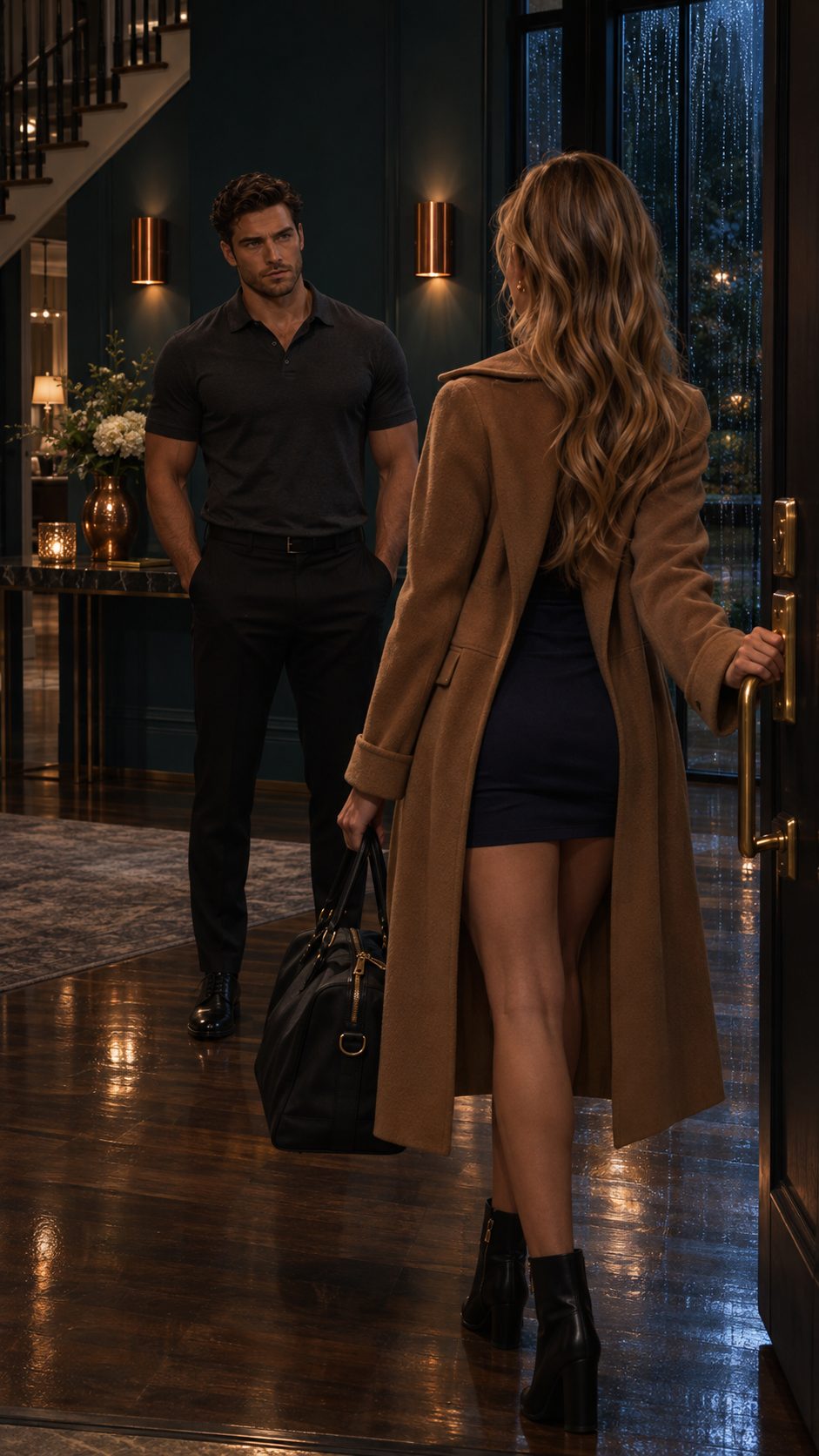
My wife looked me straight in the face and asked if we could put our marriage on hold for a few weeks so she could explore her feelings for another man.
She said it as casually as someone asking to reschedule a dentist appointment.
I didn’t yell.
I didn’t slam my fist against the table.
I didn’t even ask his name.
I just smiled and said, “Take as much time as you need.”
The relief that spread across her face told me everything I needed to know.
She thought I’d just given her permission.
What she didn’t realize was that the moment she walked out of our house, I was going to make a phone call I’d been avoiding for almost three years.
And by the following morning, that phone call would uncover something much worse than an affair.
But let me start at the beginning.
My name is Nathan Reed.
I was thirty years old, living in a quiet Ohio suburb with my wife, Claire.
Claire was twenty, beautiful, ambitious, and the kind of woman people noticed the moment she entered a room.
She had long blonde hair, bright blue-green eyes, and a smile that once made me believe the world could never be entirely cruel.
We had been married for nineteen months.
We’d met shortly after her eighteenth birthday, dated, fallen in love, and gotten married the following spring.
Some people questioned our age difference.
I understood why.
But at the time, Claire seemed mature, independent, and unusually certain of what she wanted.
She’d told me she wanted a family, a comfortable home, and a husband who would never make her feel unimportant.
I thought I could give her those things.
And for a while, I believed I had.
We lived in a beautiful four-bedroom house with hardwood floors, a stone fireplace, and a kitchen overlooking a small backyard.
We had a mortgage, two cars, a savings account, and Sunday mornings at a diner just off Route 17.
Every Thanksgiving, we visited her parents.
Every Christmas, we argued about whether to buy a real tree.
We had routines.
We had plans.
We had a framed wedding photograph hanging on the wall beside the dining room.
In that picture, Claire was looking at me like I was the only man in the world.
I used to look at it every morning before leaving for work.
On the Tuesday evening that changed everything, the photograph was hanging less than ten feet from where she sat.
It was November.
Rain slid down the kitchen windows, and the streetlights outside reflected across the wet pavement.
I’d made dinner.
Grilled chicken, roasted potatoes, and the salad Claire liked with apples and walnuts.
She’d barely touched her plate.
I assumed she was tired.
She’d been distracted for weeks.
Her phone was always nearby.
She started taking evening walks alone and frequently came home later than expected.
Whenever I asked whether everything was okay, she gave me the same answer.
“I’m fine, Nathan.
Stop worrying.”
That evening, she was wearing a short burgundy satin dress.
Her hair fell loosely over one shoulder.
She had poured herself a glass of red wine and spent almost fifteen minutes looking at it instead of speaking.
Finally, she set the glass down.
“Nathan, we need to talk.”
I put my fork beside my plate.
She inhaled.
“I’ve been thinking about us.”
“All right.”
“And I think maybe we need some space.”
I studied her.
“What kind of space?”
She looked toward the window.
“Just a few weeks.
Maybe three.
Maybe four.”
“For what?”
She hesitated.
Then she said it.
“There’s someone else.”
I felt something tighten beneath my ribs.
But I didn’t move.
Claire continued quickly.
“It’s not what you think.”
I almost smiled.
People always say that when they know exactly what you’re thinking.
“We haven’t really done anything wrong,” she said.
“Not really?”
She sighed.
“Nathan, please don’t make this harder.”
I leaned back in my chair.
“I’m listening.”
She tucked her hair behind her ear.
“We’ve been talking.
Spending time together.
There’s just this connection between us.”
I looked at her.
“And the attraction is too strong to ignore.”
For a moment, the only sound in the kitchen was the refrigerator humming.
Claire watched me carefully.
I could tell she’d rehearsed this conversation.
She probably expected me to demand his name.
Where they’d met.
Whether they’d kissed.
Whether she’d already slept with him.
But I didn’t ask those questions.
Not because I didn’t care.
Because I understood that the questions themselves wouldn’t change what she was asking.
My wife wanted to temporarily set aside our marriage so she could discover whether another man was worth choosing over me.
And she wanted me to remain available while she made that decision.
I glanced toward our wedding photograph.
Then back at her.
“So you want a trial period?”
She frowned.
“With him.”
“Don’t say it like that.”
“How should I say it?”
She looked annoyed.
“I’m just trying to be honest with you.”
“And if things don’t work out with him?”
She went quiet.
Finally, she said, “Then maybe we’ll realize what we have together.”
That answer hurt more than her confession.
Because it told me exactly how she saw me.
Not as her husband.
As the safe option.
The life she could return to if the exciting alternative turned out to be a disappointment.
She reached across the table.
“I hope you understand.”
I looked at her hand.
I didn’t take it.
“I understand more than you think.”
She studied my face.
Then asked, “So you’ll give me the time?”
“Take as much time as you need.”
Her shoulders relaxed.
“Oh, Nathan.”
She looked almost grateful.
“I knew you’d understand.”
I nodded once.
Then asked the question she hadn’t prepared for.
“When are you leaving?”
Her smile disappeared.
“What do you mean?”
“You said you need space.”
She blinked.
“I thought maybe I could stay here while I figure things out.”
I stared at her.
It took everything I had not to laugh.
“You want to live here?”
“Of course.”
“While dating another man?”
She crossed her arms.
“I’m not saying we’re dating.”
“You’re asking for time to find out whether you want to.”
She looked down.
“That’s different.”
“No, Claire.
Her expression hardened.
“So you’re kicking me out?”
“I’m telling you that if you need space to explore another relationship, you should probably have actual space.”
She pushed her chair backward.
For a second, she looked like she expected me to reach for her.
She walked toward the staircase.
A moment later, I heard her bedroom closet open.
Then drawers.
Then the sound of a suitcase rolling across the hardwood floor.
I remained at the kitchen table.
Looking at the empty chair.
There was a half-finished glass of wine across from me.
Her dinner was getting cold.
And something inside me had gone very, very quiet.
I wasn’t planning revenge.
I wasn’t planning to embarrass her.
But I had just remembered a conversation with an attorney almost three years earlier.
A conversation involving a piece of property my mother had left me.
And several strange questions Claire had been asking about that property over the past month.
Suddenly, those questions didn’t seem strange anymore.
They seemed deliberate.
Twenty minutes later, Claire came downstairs.
She had put on a camel-colored coat and black ankle boots.
She carried an overnight bag in one hand and her phone in the other.
Her suitcase waited near the front door.
I was standing beside the kitchen window.
She stopped in the hallway.
“You’re really going to let me leave?”
I looked at her.
“You told me you wanted to.”
She frowned.
“That’s not what I asked.”
“Then what are you asking?”
She looked away.
“I just thought you’d fight for us.”
That sentence nearly broke my composure.
I walked toward her.
“Claire, you sat across from me at dinner and told me there’s another man you want to explore a relationship with.”
She swallowed.
“I said I needed time.”
“To decide whether he’s better for you than I am.”
“That’s not fair.”
“Isn’t it?”
She stared at me.
I kept my voice low.
“You want me to fight for a marriage you’re asking permission to step outside of.”
Her eyes filled.
“I don’t want to lose you.”
“Then why are you leaving?”
She had no answer.
I looked toward her suitcase.
“Is he waiting for you?”
Her face changed.
Just slightly.
But I saw it.
You don’t have to answer.”
She tightened her grip on her bag.
“You’re being cold.”
I looked at her for a long moment.
I wanted to tell her how badly she’d hurt me.
I wanted her to know that every calm word cost me something.
But I understood that she was expecting an emotional reaction she could use as proof that I was unreasonable.
So I said something simpler.
“I’m not okay with this, Claire.”
Her eyes widened.
“Then why are you acting like you are?”
“Because you asked for freedom.
Not permission.”
For the first time that evening, she had nothing to say.
She opened the door.
Cold November air entered the house.
She pulled her suitcase onto the porch and stopped.
“I’ll call you in a couple of days.”
She looked disappointed.
Then she turned and walked toward her SUV.
I watched through the window as she loaded her luggage into the back.
She climbed into the driver’s seat.
For several seconds, the vehicle didn’t move.
I wondered whether she was calling him.
Maybe telling him everything had gone better than expected.
Maybe explaining that her husband had practically encouraged her to leave.
Then the taillights came on.
She reversed out of the driveway.
Turned toward the main road.
And disappeared into the rain.
I stood beside the window until the red glow was gone.
Only then did I let my shoulders drop.
I went back to the kitchen.
The food was cold.
I cleared the plates, put the leftovers away, and poured Claire’s unfinished wine down the sink.
I didn’t do those things because I felt strong.
I did them because ordinary movements kept my hands from shaking.
Then I sat at the table and opened my phone.
I didn’t text Claire.
I didn’t call her parents.
I didn’t search social media for the man she was leaving to see.
Instead, I scrolled through my contacts.
There was a number I hadn’t called in almost three years.
Martin Kessler.
Martin was an attorney in Columbus.
He’d helped settle my mother’s estate after she died.
My mother had left me a small wooded property outside town called Briar Creek.
Fourteen acres of old farmland, trees, and the remains of a stone foundation where her grandparents had lived.
It wasn’t worth much when she first inherited it.
But several years earlier, a developer had started buying land along a proposed transportation corridor near Route 17.
Suddenly, Briar Creek became interesting.
A development company offered to buy the land.
Martin handled the correspondence.
The developer kept asking for access rights, an easement, or an option to purchase.
Martin advised me to keep the property’s title records organized and to contact him if anyone approached me with new documents.
Then the pressure stopped.
The file went into storage.
And I hadn’t thought about it much since.
Until recently.
Because five weeks earlier, Claire had suddenly become very interested in Briar Creek.
She asked how much it was worth.
Whether I’d ever sell it.
Where I kept the deed.
Whether both our names were on the property.
I’d answered casually.
At the time, I thought she was simply curious about our finances.
Now I wasn’t so sure.
I stared at Martin’s contact information.
My thumb hovered over the number.
Then I pressed Call.
He answered on the fourth ring.
It’s Nathan Reed.”
There was a brief pause.
Well, that’s a surprise.
How’ve you been?”
“I’ve had better evenings.”
His tone changed.
“What’s going on?”
I glanced at Claire’s empty chair.
“I need you to reopen something we discussed three years ago.”
Another pause.
“The Briar Creek matter?”
“Has someone contacted you about the property?”
I looked toward the window.
“Not directly.”
“What does that mean?”
“My wife has been asking questions.
A lot of them.
And tonight she told me she wants to take a break from our marriage to see another man.”
“I’m sorry to hear that.”
“There’s something about the timing that doesn’t feel right.”
Martin was quiet.
Then he asked, “Do you still have the original deed and your mother’s estate documents?”
“Bring them tomorrow morning.
And bring any recent correspondence concerning the land.”
“And Nathan?”
“Has anybody asked you to sign an option agreement recently?”
I sat straighter.
“Are you absolutely certain?”
A long silence followed.
Then Martin said something that made my stomach tighten.
“I want to check the county records before you get here.”
“Because if somebody’s been asking about that property again, I need to know whether anything has been filed without your knowledge.”
I looked toward the hallway.
“Martin, is something wrong?”
“I don’t know yet.”
“Bring everything you have.
Nine-fifteen tomorrow morning.”
When the call ended, I remained seated in the dark kitchen.
The rain struck the windows.
The refrigerator hummed.
And the wedding photograph on the wall looked strangely distant.
I went upstairs and opened the metal filing cabinet in my home office.
Inside was a red folder containing everything connected to Briar Creek.
The estate documents.
The survey.
And copies of the correspondence from the developer three years earlier.
I placed the folder on my desk.
Then noticed something.
One of the old survey copies had been moved.
I knew because the original documents were usually kept together inside a sealed plastic sleeve.
Now the sleeve was open.
And the survey was sitting on top.
I stared at it.
Then remembered Claire asking whether I had a digital copy.
She’d said she wanted to show the property to someone who understood real estate.
At the time, I’d thought nothing of it.
Now I wondered who that someone had been.
I closed the folder.
For the first time all evening, my hands were shaking.
I didn’t know whether my wife was simply having an affair.
Or whether the man she wanted to explore things with had another reason for being interested in her.
But I knew one thing.
Whatever happened at the following morning, I wasn’t going to ignore it.
I arrived at Martin Kessler’s office fourteen minutes early.
The rain had continued all night.
Downtown Columbus looked gray and exhausted beneath a heavy November sky.
I parked across from the glass-front building where Martin worked, switched off the engine, and sat there with both hands on the steering wheel.
The red folder rested on the passenger seat.
I hadn’t slept.
Every time I closed my eyes, I saw Claire sitting across from me.
There’s someone else.
The attraction is too strong to ignore.
I thought maybe I could stay here while I figure things out.
I kept hearing those sentences.
But another memory had joined them.
Claire standing in my home office five weeks earlier, holding the Briar Creek survey.
She’d smiled when I asked what she was doing.
“Just looking, baby.
You never told me you owned so much land.”
I’d laughed.
“It’s mostly trees.”
It could be valuable.”
Then she’d kissed my cheek.
I had forgotten that conversation until the previous night.
Now it was all I could think about.
At , I entered the building.
Martin’s assistant greeted me and showed me into a conference room.
The walls were pale gray.
A long walnut table stood beneath recessed lighting.
Beyond the windows, traffic moved slowly through the rain.
At exactly , Martin walked in carrying a thick blue folder.
He was in his early sixties, with silver hair, rectangular glasses, and the serious expression of a man who had spent decades telling clients things they didn’t want to hear.
He shook my hand.
He looked tired.
That worried me.
He set the folder on the table.
“Before we start, I need to ask you something.”
“Have you authorized anyone to negotiate the sale of Briar Creek?”
“Have you signed any document granting an option to purchase?”
“Have you given your wife power of attorney over that property?”
“Absolutely not.”
He sat down.
Then opened the folder.
“All right.”
He slid a document across the table.
At the top were the words:
MEMORANDUM OF OPTION TO PURCHASE REAL PROPERTY
Below that was a description of Briar Creek.
The parcel number.
The legal boundaries.
The acreage.
Everything matched.
I looked at Martin.
“What is this?”
“A document recorded with the county approximately two weeks ago.”
My mouth went dry.
“Recorded by who?”
He pointed to a company name.
Summit Access Partners LLC.
I’d never heard of it.
The document claimed that I’d granted the company an exclusive option to purchase Briar Creek for an agreed price.
I stared at the page.
Then saw my name.
Nathan Reed.
Below it was a signature.
It looked like mine.
But it wasn’t.
I stopped breathing for a second.
“That’s not my signature.”
Martin nodded.
“I was afraid you’d say that.”
I studied it again.
Someone had copied the way I formed the capital N.
They’d even imitated the small hook at the end of my last name.
But the pressure and slant were wrong.
I would have recognized the difference anywhere.
“Who submitted this?”
Martin turned the page.
“The company representative was listed as an independent land acquisitions consultant.”
He pointed to another line.
The name meant nothing to me.
At least, not yet.
I looked at Martin.
“Who is he?”
Martin removed a document from the old file.
“Three years ago, when that development group first approached you, the correspondence came through a brokerage working with several property acquisition agents.”
He placed an old email printout beside the newer filing.
Near the bottom was a name.
I looked from one page to the other.
Three years apart.
I felt cold all over.
“So he’s trying again?”
“It appears he’s involved in a new attempt to secure the property.”
“Without asking me?”
Martin nodded.
“That is what we’re going to investigate.”
I leaned back.
“How could anybody record something with a signature I didn’t provide?”
Martin removed his glasses.
“Documents can be submitted even when the underlying authorization is disputed.
Recording a document doesn’t prove the signature is genuine or that the agreement is enforceable.”
I looked at the page again.
“What does it mean for my land?”
“It creates a potential title problem.
We need to challenge it promptly and preserve evidence.”
I ran a hand over my face.
“Can they take the property?”
“Not simply because this paper was recorded.
But it could complicate a sale, financing, or other transactions until the dispute is resolved.”
I stared at him.
“Why would somebody do this?”
Martin was quiet for a moment.
Then he turned to a map.
“Because Briar Creek is no longer just fourteen acres of woodland.”
He unfolded the map across the table.
It showed the proposed transportation corridor, several parcels of surrounding land, and a planned commercial access route.
Briar Creek sat directly along one of the most important sections.
I leaned forward.
Martin pointed to a narrow strip running along the property’s eastern edge.
“The development plans have changed.
This corridor has become more attractive to commercial buyers.
Your property could provide access that neighboring parcels don’t.”
I stared at the map.
“So it’s worth more?”
“Potentially much more than it was three years ago.
We’d need a proper appraisal to determine a defensible value.”
“How much more?”
Martin hesitated.
“Enough that I understand why someone might want to secure an option before you learn its current value.”
I felt my pulse quicken.
Then I remembered Claire.
The questions.
The survey.
And the man she was suddenly willing to risk our marriage for.
I looked up.
“Martin, I think my wife knows this guy.”
His expression sharpened.
“She said there’s someone else.
She wouldn’t tell me his name.
But she’s been asking about the land for weeks.”
“Has she shown any interest in selling it?”
“She told me recently we should do something productive with it.”
Martin folded his hands.
“That could be a coincidence.”
“But it’s significant enough that we need to document the timeline.”
I looked at the forged signature again.
Then asked the question that had been forming in my mind since he opened the folder.
“What if the man she’s seeing is Evan Ross?”
Martin didn’t answer immediately.
He looked at me with an expression I would remember for years.
Then he said, “Nathan, before we assume anything, we need facts.”
He continued.
“But if there’s a connection, you need to understand something.”
“Whoever prepared this document may already have had access to your private property records.”
I stared at the pages.
The room seemed to grow smaller.
Last night, I’d thought my wife wanted a temporary break from our marriage.
Now I was sitting across from an attorney looking at a document that appeared to carry my forged signature.
A document involving the only property my mother had left me.
And the possibility that the man Claire wanted to explore things with wasn’t simply interested in her.
He might have been interested in something I owned.
For a long time, I said nothing.
Then Martin asked, “Do you want us to proceed with challenging this?”
I looked at the document.
“And the marriage?”
I swallowed.
“I need to speak with a family-law attorney.”
Martin nodded.
“I can make a referral.”
I stared out at the rain.
Less than fourteen hours earlier, Claire had been sitting at our kitchen table explaining that she needed a few weeks to figure out whether another man was worth choosing over our marriage.
She thought I’d given her freedom.
But at that morning, I understood something she didn’t.
Her little experiment with another man might already have put my family’s land at risk.
And whether she’d intended it or not, I was finished letting her make decisions about my future without me.
I left Martin’s office shortly before eleven.
The rain had stopped, but the streets were still wet.
I sat in my car with the red folder on the passenger seat and tried to decide what to do next.
My first instinct was to call Claire.
Demand the truth.
Ask whether she had helped another man forge my signature.
But Martin had advised against making accusations before we understood what had happened.
He’d already contacted a colleague who handled property litigation.
His office would obtain certified copies of the filing, preserve the correspondence, and begin the appropriate process to dispute the claimed option.
He’d also referred me to a family-law attorney named Rebecca Shaw.
I had an appointment with her the next afternoon.
Until then, my job was simple.
Don’t sign anything.
Don’t destroy anything.
Don’t threaten anyone.
And don’t let my anger make decisions that could create bigger problems.
I drove to work.
I was a project manager at a mid-sized engineering firm, where I’d spent the past six years coordinating commercial construction projects.
Usually, work helped me clear my mind.
Numbers were predictable.
Measurements were either correct or incorrect.
A structural drawing didn’t tell you it loved you while secretly pursuing another foundation.
That morning, I couldn’t concentrate.
At noon, my coworker Sarah stopped beside my desk.
“Nathan, you okay?”
I looked up.
“You’ve been staring at the same page for twenty minutes.”
I glanced at my monitor.
She was right.
I hadn’t read a word.
“Personal stuff,” I admitted.
She nodded.
“Need anything?”
She hesitated.
“Go home if you need to.
The building isn’t going anywhere.”
I almost laughed.
“That’s comforting.”
She smiled.
Then left me alone.
At one-thirty, I finally called Claire.
She answered immediately.
Her voice was soft.
Almost cheerful.
It hurt hearing it.
“Are you okay?”
I looked at the property documents on my desk.
“Not particularly.”
There was a pause.
“Nathan, I know last night was hard.”
I closed my eyes.
“Claire, I need to ask you something.”
“What’s his name?”
Then she sighed.
“Why does that matter?”
“Because I’m asking.”
“I don’t want you contacting him.”
“I’m not planning to.”
“Then why do you need to know?”
I looked toward the window.
“Is his name Evan Ross?”
The silence changed.
It became heavy.
Then I heard Claire inhale sharply.
“How do you know Evan?”
I closed my eyes.
There it was.
The confirmation.
The moment the two separate disasters in my life became one.
I opened my eyes.
“Claire, what exactly have you told him about Briar Creek?”
She didn’t answer.
“He knows about it.”
“How much?”
“I don’t know.”
“Did you give him the survey?”
A long pause.
I gripped the phone.
“He works in real estate, Nathan.
I thought maybe he could help us.”
“Help us do what?”
I stared at the wall.
“Without asking me?”
“I asked you about selling it.”
“And I said no.”
“You never even considered it!”
“It’s my mother’s property.”
“I know that.”
“Then why were you showing documents to a man I didn’t even know you were seeing?”
Her voice sharpened.
“Because I thought you might listen if someone showed you what it was worth.”
I took a slow breath.
“Claire, did Evan ask you for copies of the deed?”
She hesitated.
“Did you give them to him?”
“Just scans.”
I closed my eyes.
“Did he ask for my signature?”
“Did he give you anything to sign?”
“Are you sure?”
She sounded frightened now.
“Nathan, what is going on?”
I looked at the document Martin had given me.
“Someone filed paperwork claiming I agreed to sell Briar Creek.”
“An option agreement.
With my signature on it.”
Her breathing became uneven.
“That’s impossible.”
“That’s what I thought.”
“Nathan, I didn’t sign anything.”
“I didn’t say you did.”
I remained quiet.
She began speaking quickly.
“Evan told me he was helping identify buyers.
He said the land could be part of a commercial project.
I thought he was preparing a proposal.”
“Did he tell you he was recording paperwork?”
I listened to her breathing.
Then asked, “Where are you?”
She hesitated.
“At a hotel.”
“With him?”
I felt something twist inside me.
Even though I had expected the answer, hearing it was difficult.
“Is he there now?”
He went to a meeting.”
I looked at the clock.
Two-fifteen.
Less than eighteen hours after Claire told me she needed time to explore things with another man, she was already staying at a hotel with him.
I wondered how much exploring she’d done before our dinner conversation.
“Claire, I need you to preserve every message you have about the property.”
“Because there may be a serious problem.”
Her voice shook.
“Am I in trouble?”
“I don’t know.”
“Can you please tell me what’s happening?”
“I’ve told you what I know.”
She began crying.
“Nathan, I didn’t mean for any of this.”
I stared at the wall.
I wanted to believe her.
Part of me did.
But her intentions were no longer the only thing that mattered.
She’d given a stranger access to private information about my property.
A stranger she was romantically involved with.
A stranger who had been involved in an attempt to acquire that same land three years earlier.
And she hadn’t told me any of it.
I swallowed.
“Claire, don’t delete anything.”
“And don’t sign any documents Evan gives you.”
I hesitated.
Then asked one last question.
“Have you already slept with him?”
The silence returned.
My heart pounded.
Finally, she said, “Nathan, can we please talk about that later?”
I closed my eyes.
That wasn’t a no.
“Okay,” I whispered.
I ended the call.
For several minutes, I sat motionless at my desk.
The office continued around me.
Phones rang.
People discussed deadlines.
A printer hummed in the hallway.
Life went on.
And I realized something that frightened me more than I wanted to admit.
I had spent the previous night wondering whether my marriage could survive another man.
Now I was beginning to wonder whether the other man had entered my marriage for reasons neither Claire nor I fully understood.
Briar Creek wasn’t impressive to most people.
Fourteen acres.
Overgrown trails.
A small creek running through the eastern boundary.
A few old apple trees that barely produced fruit anymore.
And the remains of a stone foundation where my great-grandparents had once lived.
There was no mansion.
No beautiful farmhouse.
No rental income.
Most of the land was wooded.
But it was mine.
And more importantly, it had belonged to my mother.
Her name was Margaret Reed.
She died three years earlier after a long battle with cancer.
For most of my life, she was the person I called whenever something went wrong.
When I failed my first engineering exam, she told me failure was only a problem if I stopped trying.
When I got my first real job, she showed up at my apartment with a cake.
When I bought my first car, she insisted on taking a photograph of me standing beside it.
And when I told her I wanted to get married someday, she laughed and said, “Just make sure you marry somebody who likes you when things aren’t exciting.”
I used to think that was a funny thing to say.
Now I understood it.
As a child, I spent summers at Briar Creek.
My mother would take me there on Saturday mornings with a picnic basket and an old folding chair.
She taught me how to identify trees.
How to skip stones across the creek.
How to recognize the smell of rain before it arrived.
There was a small clearing near the water where wildflowers grew every spring.
When I was sixteen, she told me she wanted that place to remain in the family.
Not because it was valuable.
Because it reminded her of the people she’d loved.
After she died, I promised myself I would take care of it.
A few months later, development companies began making offers.
The first was reasonable.
The second was higher.
Then a representative contacted me through Martin Kessler’s office.
The company wanted an option to purchase the property and access rights for a possible commercial project.
Martin explained that the land could become more valuable if the transportation plans went forward.
He advised me to understand what I was being offered before making any decision.
I considered everything.
Then declined.
I wasn’t against development.
I wasn’t pretending the land had no financial value.
But I didn’t want to sell it simply because someone had offered me a check.
I had time.
I wanted to understand the future of the area.
And I wanted to keep the promise I’d made to my mother.
That was the property Claire had been discussing with Evan.
The property she’d treated like an unused investment.
I remembered the first time I took her there.
We had been dating for about four months.
It was late spring.
The trees were green, and the creek had risen after several days of rain.
Claire wore denim shorts, a white tank top, and old sneakers.
She complained about mosquitoes during the first ten minutes.
Then she saw the wildflowers.
She smiled.
“Oh my God, Nathan.
This place is beautiful.”
I remember feeling proud.
Not of the land.
Of being able to share it with someone I loved.
We spent the afternoon walking along the creek.
I told her stories about my mother.
Claire listened.
At one point, she took my hand and said, “I wish I’d gotten to meet her.”
I believed she meant it.
Maybe she did.
That’s the difficulty with betrayal.
It doesn’t automatically make every good memory a lie.
Some moments were real.
Some feelings were genuine.
But they existed alongside choices that eventually destroyed our marriage.
Over the next year, Claire and I grew closer.
She was bright and energetic.
She had a natural eye for design and spent hours rearranging furniture, experimenting with colors, and talking about the business she wanted to start.
I encouraged her.
I bought her books.
Helped her research design courses.
Introduced her to a friend who worked in commercial interiors.
After we married, I thought we’d spend several years building our careers before starting a family.
Claire agreed.
At least, that’s what she told me.
But somewhere along the way, she became restless.
She began comparing our life to the lives of people she followed online.
Luxury vacations.
Designer clothing.
Expensive apartments.
Couples who seemed to spend every weekend somewhere glamorous.
I noticed the change.
But I dismissed it as ordinary frustration.
One evening, she asked whether we could sell Briar Creek and use the money to buy a larger house.
I told her I wasn’t interested.
She laughed.
“You’re too sentimental.”
“It’s just land, Nathan.”
I remember looking at her.
“It’s not just land to me.”
She rolled her eyes.
Not because she disagreed with me.
Because of the way she said it.
Like my memories were an inconvenience.
Later, she apologized.
I forgave her.
And I convinced myself the conversation was over.
I didn’t know she’d already started seeing the land as something standing between her and the life she wanted.
Months later, she met Evan.
He was thirty-four, charming, and worked as a land acquisitions consultant.
He drove an expensive car, wore tailored jackets, and talked about real estate investments as though they were guaranteed opportunities.
Claire met him at a design-industry networking event.
He complimented her ideas.
Asked about her ambitions.
Told her she was wasting her talent thinking small.
Then he began asking questions about our finances.
Our savings.
And eventually, Briar Creek.
Claire later admitted that she’d mentioned the land during one of their first conversations.
When Evan asked for more details, she told him the acreage and general location.
According to her, his interest seemed natural.
He worked in real estate.
Why wouldn’t he be curious?
What she didn’t know was that Evan had already encountered the property years earlier.
He knew exactly where it was.
He knew its development potential.
And he knew I’d rejected an earlier attempt to secure rights to it.
The more I learned, the more disturbing the situation became.
Because Evan wasn’t simply a stranger who happened to fall for my wife.
He was a man who knew what I owned.
And somehow, he’d become close enough to my marriage to obtain documents I had never agreed to share.
But I still couldn’t blame him for everything.
Claire had made choices too.
She’d chosen to lie.
Chosen to keep meeting him.
Chosen to share private property records.
And chosen to sit across from me and ask for time to explore another relationship.
Those choices belonged to her.
Whatever Evan had promised, she was responsible for deciding whether to believe him.
That evening, I drove out to Briar Creek.
The rain had stopped.
I parked near the old fence and walked through the damp grass.
The trees were almost bare.
The creek moved slowly beneath a gray sky.
I stood in the clearing where my mother used to sit.
For a while, I said nothing.
Then I looked toward the old stone foundation.
“I don’t know what I’m doing, Mom,” I whispered.
The wind moved through the branches.
I thought about Claire.
About Evan.
About the forged document.
And about the life I thought I had built.
Then I remembered something my mother once told me.
“You can’t control who stays, Nathan.
You can only decide what kind of person you’ll be when they leave.”
I stood there until the light began fading.
When I returned to my car, I’d made two decisions.
I would do everything legally possible to protect Briar Creek.
And I would stop treating Claire’s happiness as something I was required to purchase with my own peace.
Evan Ross called me Thursday afternoon.
I was leaving a meeting when my phone displayed an unfamiliar number.
Normally, I wouldn’t answer.
But something told me to.
“Is this Nathan Reed?”
“Speaking.”
“This is Evan Ross.”
I stopped walking.
He sounded confident.
Almost amused.
Like two men discussing a business transaction rather than one man calling the husband of a woman he was involved with.
“What do you want, Evan?”
“I think there’s been a misunderstanding.”
“About what?”
“The Briar Creek property.”
I looked toward the empty conference room.
“Then speak with my attorney.”
“Come on, Nathan.
We don’t have to make this difficult.”
I remained silent.
He continued.
“Claire told me you’re a reasonable guy.”
I almost laughed.
And I think if we sat down together, we could work something out.”
“What exactly are you proposing?”
“The land is more valuable as part of a larger development.
There’s a narrow window to secure the deal.”
“Then you should have made me an offer.”
“We tried that three years ago.”
There it was.
He’d just admitted he knew the earlier history.
I looked at my phone.
“You were involved in that?”
I worked with the brokerage that contacted your lawyer.”
“Then you knew the land belonged to me.”
“Of course.”
“And you knew I wasn’t interested in selling.”
“People change their minds.”
I took a slow breath.
“Not when somebody files a document with a signature I never provided.”
His tone changed.
“I don’t know what you’re talking about.”
“Then I’m sure you’ll be happy to explain that to my attorney.”
“Nathan, you’re making this personal.”
I stared at the wall.
“You’re sleeping with my wife.”
Then he said, “Claire’s an adult.
She makes her own decisions.”
“She does.”
“I’m not trying to cause trouble.”
“You already have.”
He hesitated.
“Look, there’s a lot of money involved here.
You could benefit from this.”
I felt anger rise.
Not because he wanted to buy the land.
Because he was still talking about money as though everything else were irrelevant.
“Have your attorney contact mine,” I said.
I ended the call.
My hands were shaking.
I stood in the hallway for several seconds before returning to my desk.
Then I wrote down everything I remembered from the conversation.
The number.
The statements he made.
Martin had advised me to preserve details, and I was going to follow that advice.
I forwarded the information to his office.
Twenty minutes later, Claire called.
I let it ring.
Then answered.
“Did Evan call you?”
She sounded frightened.
“What did he say?”
“He wanted to discuss the property.”
She exhaled.
“Claire, why does he think I should be negotiating with him?”
“He said there’s a really good opportunity.”
I closed my eyes.
“Do you understand what he’s accused of doing?”
“He said the paperwork was preliminary.”
“There’s a recorded document with a signature I didn’t provide.”
“Then stop describing this like a normal business deal.”
She became quiet.
Then she said something unexpected.
“He told me you were going to ruin everything.”
I stared at the desk.
“Everything?”
“The investment.”
I leaned back.
“Claire, listen to me carefully.
There is no investment we agreed to make.”
She started crying.
“He said we could make a lot of money.”
“Me and him.”
I looked toward the window.
For a moment, the office seemed to disappear.
There it was.
The future she’d imagined.
Using my land.
I swallowed.
“So that was the plan?”
“Nathan, no—”
“You wanted to explore another relationship while he tried to secure my property?”
“I didn’t know about the forged document.”
“I believe you might not have known about that part.”
She began sobbing.
“But you knew he wanted Briar Creek.”
“And you knew I didn’t want to sell.”
I looked down.
“Then what were you expecting to happen?”
She cried harder.
“I thought once you saw how much money was involved, you’d change your mind.”
I felt sick.
“And if I didn’t?”
She didn’t answer.
Then she whispered, “I don’t know.”
The silence stretched.
Finally, I asked, “Claire, did Evan know who you were when you met him?”
She hesitated.
“I told him I was married.”
“Did he know you were married to me?”
“I don’t know.”
“Did you tell him my name?”
She was quiet.
“Nathan, why does that matter?”
“Because he was involved in trying to acquire my property three years before you met him.”
I heard her breathing change.
“He knew about Briar Creek.
He knew my name.
And he knew I’d refused to sell.”
She didn’t speak.
I continued.
“Claire, I need you to consider the possibility that he was interested in the land before he was interested in you.”
The word came out immediately.
Defensively.
“He cares about me.”
I looked at the phone.
“Maybe he does.”
“Then ask him why he submitted an agreement I never signed.”
“Ask him why he wanted scans of my private documents.”
More silence.
“And ask him why he’s more concerned about securing the property than the fact that our marriage is falling apart.”
Claire began crying again.
I closed my eyes.
“I’m not saying this to hurt you.”
“Then why are you saying it?”
“Because you need to know what you’re involved in.”
She whispered, “I love him.”
The words landed like a blow.
I sat motionless.
Then quietly said, “I know.”
A few seconds passed.
She started to speak.
I stopped her.
“Claire, I hope he turns out to be the man you think he is.”
I looked toward the wedding ring on my hand.
“But I’m not going to risk my mother’s land to help you find out.”
Then I ended the call.
That evening, Martin sent me an update.
The filing was being challenged.
His office had preserved the relevant records and notified the parties that I disputed the claimed agreement.
The matter would take time.
There would be documentation, legal procedures, and possibly litigation.
Nothing was magically resolved.
But we had begun.
And that was more than I’d done while trying to convince myself my marriage was still normal.
What I didn’t know was that Claire’s next conversation with Evan would change her understanding of everything.
Because when she finally asked him the right questions, he didn’t respond the way a man in love was supposed to.
Claire called me again that evening.
This time, I almost didn’t answer.
I was sitting in the living room with a bowl of soup I’d barely touched.
The house felt enormous without her.
Her shoes were still beside the front closet.
Her favorite blanket was folded across the couch.
The framed wedding photograph remained on the wall.
Nothing had changed except the one thing that mattered.
I answered.
For several seconds, I heard nothing.
Then Claire whispered, “You were right.”
I set my spoon down.
“About what?”
I closed my eyes.
“What happened?”
She began crying.
“I asked him about the property.”
“I showed him the information you told me about.
The filing.
Your signature.”
“He got angry.”
Her voice shook.
“He said I had no business questioning his work.
He told me the paperwork was standard and you were making trouble because you were jealous.”
I didn’t interrupt.
“Then I asked how he knew about Briar Creek before we met.”
She took a shaky breath.
“He said he’d worked on the project years ago.”
I looked down.
“He admitted that?”
“What else?”
She hesitated.
“I asked if he knew I was your wife when we first started talking.”
“He said yes.”
The room went quiet.
Claire began sobbing.
“He knew, Nathan.
He knew who I was.”
I stared at the wall.
I had suspected it.
But hearing the confirmation still shocked me.
“What did he say?”
“He said it didn’t matter.
That he liked me anyway.”
I closed my eyes.
She continued.
“I asked whether he would have approached me if I hadn’t mentioned the property.”
Her voice broke.
“He wouldn’t answer.”
For a long time, neither of us spoke.
Then Claire said, “I think he was using me.”
I looked toward the wedding photograph.
She started crying harder.
“He told me I could help him get the deal done.
He said once the property was secured, we could build something together.”
I felt a dull ache in my chest.
“Did he promise you a future?”
“Did he promise you money?”
“And did he ask you to keep things from me?”
She whispered, “Yes.”
I leaned back.
There it was.
The pattern.
Evan had offered Claire exactly what she wanted to hear.
Excitement.
Financial independence.
A life that seemed larger and more glamorous than the one we shared.
Then he’d used that promise to get close to information he couldn’t obtain directly from me.
But the realization didn’t erase Claire’s choices.
I knew that.
And slowly, I think she was beginning to understand it too.
She told me she had asked Evan whether he’d help clear up the paperwork.
He said his attorney would handle it.
Then he suggested she return home and persuade me to reconsider the sale.
When she refused, he accused her of being disloyal.
“He said if I really cared about him, I’d stop making things difficult.”
I stared at my hands.
“Claire, where are you now?”
“At my sister’s.”
She took a breath.
“He left the hotel.”
“He said he needed to focus on business.”
I closed my eyes.
“And the relationship?”
She started crying again.
“He said we should stop seeing each other until everything settles down.”
I didn’t respond.
The cruelty was almost predictable.
Once the property deal became uncertain, Evan’s enthusiasm disappeared.
Claire had risked her marriage for a man whose affection seemed to depend on whether she could deliver something he wanted.
But I wasn’t happy.
I wasn’t celebrating.
Because despite everything, the sound of her crying still hurt.
I had loved this woman.
I had planned a future with her.
Hearing her realize she’d been manipulated didn’t make me feel victorious.
It made the entire situation seem even sadder.
After a while, Claire whispered, “Can I come home?”
My chest tightened.
I looked around the living room.
The quiet house.
The framed photographs.
The life we’d built.
Part of me wanted to say yes.
I wanted to tell her to come home, take a shower, and sleep beside me.
I wanted to wake up the next morning and pretend we’d simply had a terrible argument.
But I knew that wouldn’t solve anything.
“Claire, we need to keep some distance.”
She started crying harder.
“Please, Nathan.”
“I’m not saying this to punish you.”
“Then why?”
“Because we can’t pretend the last few days didn’t happen.”
She was silent.
I continued.
“You need time to understand your decisions.
And I need time to decide what I can live with.”
She whispered, “I choose you.”
I closed my eyes.
Those were the words I’d wanted to hear on Tuesday evening.
Before the suitcase.
Before the hotel.
Before the forged document.
Before discovering she’d imagined a future with another man using property my mother had left me.
Now they sounded different.
Not like a declaration of love.
Like a person reaching for a lifeline after another one had broken.
“I hear you,” I said.
“Is that all?”
“For tonight, yes.”
She began crying again.
I told her to preserve her messages with Evan and to speak with her own attorney before giving statements or signing documents.
She agreed.
Then we ended the call.
I sat alone for a long time.
And one uncomfortable truth became impossible to ignore.
Claire had started questioning Evan only after our marriage, our property, and her future with him were already in danger.
I didn’t know whether she’d ever have questioned him if everything had gone according to plan.
That thought stayed with me long after the house went dark.
Exactly twenty-one days after Claire walked out of our house, she came back.
It was another rainy Tuesday.
The kind of November evening when everything outside looked gray and distant.
I had just finished dinner when the doorbell rang.
I wasn’t surprised to see her.
She’d texted earlier asking whether we could talk.
I’d agreed.
She stood on the porch wearing jeans, a cream sweater, and a dark coat.
Her blonde hair was tied back.
She looked tired.
There were shadows beneath her eyes.
“Hi,” she said.
I stepped aside.
She entered slowly.
For several seconds, she looked around the living room.
Nothing had changed dramatically.
The furniture was still there.
The fireplace.
The family photographs.
But I had moved our wedding picture from the dining room wall into a drawer.
Claire noticed immediately.
“Where’s our picture?”
I looked toward the empty space.
“I put it away.”
Her eyes filled.
We sat on opposite sides of the living room.
The distance between us seemed much greater than the few feet separating our chairs.
She folded her hands.
“I’ve been thinking about everything.”
“I figured.”
She looked at me.
“I made a terrible mistake.”
I remained silent.
“Not just with Evan.
With how I treated you.”
Her voice cracked.
“I took our marriage for granted.”
I watched her carefully.
She continued.
“I thought I needed something exciting.
Something different.
I convinced myself that meant something was missing between us.”
I looked down.
She wiped her eyes.
“Now I realize I was looking for the wrong things.”
I nodded slowly.
She took a breath.
“I want to come home.”
I felt my chest tighten.
There it was.
The sentence I’d feared and hoped to hear.
Not because I’d been waiting for her.
Because part of me still loved her.
And love doesn’t always disappear when it should.
“Claire, I need to ask you something.”
She nodded.
“Did you sleep with Evan before you asked me for a break?”
Her face changed.
She looked toward the window.
Finally, she whispered, “Yes.”
The room seemed to fall silent.
I had suspected it.
But I had still been holding on to the possibility that she hadn’t crossed that final line.
“How long before?”
She began crying.
“Two weeks.”
I stared at her.
Fourteen days.
Fourteen nights when she’d slept beside me.
Fourteen mornings when she’d kissed me before leaving.
Fourteen days when she’d been deciding how to tell me she wanted permission to pursue something she’d already done.
I swallowed.
“How many times?”
She covered her face.
I looked away.
For a long moment, I couldn’t speak.
Then I asked, “Why did you tell me nothing had happened?”
She wiped her eyes.
“Because I knew you’d leave me.”
I nodded slowly.
There was the truth.
Not confusion.
Not uncertainty.
She’d lied because she understood the consequences.
She wanted to control when I learned them.
I stood and walked toward the window.
Rain slid down the glass.
Behind me, Claire whispered, “I’m sorry.”
I kept looking outside.
“Nathan, please.”
I turned toward her.
“Do you know what hurts the most?”
She shook her head.
“It’s not that you found another man attractive.”
She stared at me.
“It’s not even that you wanted something different.”
I took a breath.
“It’s that you expected me to remain your husband while you tested whether somebody else could give you a better life.”
She started crying.
“And when you realized he wasn’t the person you thought he was, you came back expecting everything to be exactly where you left it.”
She lowered her eyes.
“I didn’t think of it that way.”
I sat down again.
“That’s part of the problem.”
For several minutes, she cried quietly.
Then she looked at me.
“Can we go to counseling?”
I considered the question.
A month earlier, I might have agreed immediately.
Now, I understood that counseling couldn’t erase what had happened.
It might help us communicate.
It might help us understand why our marriage failed.
But it couldn’t create trust simply because one person suddenly wanted it back.
“I think we should both get help,” I said.
Her face brightened.
“But I’m not promising reconciliation.”
The hope faded.
She swallowed.
“What does that mean?”
I looked at her.
“I’ve spoken with a divorce attorney.”
Her face went white.
“You want a divorce?”
“I’ve started the process.”
She stared at me.
Then shook her head.
We said a few weeks.”
I closed my eyes.
“We didn’t agree to pause our marriage.”
“You told me to take as much time as I needed!”
“Then why are you doing this?”
I looked directly at her.
“Because I wasn’t promising to wait.”
I continued.
“You asked for freedom.
I gave you the freedom to make your decision.”
My voice remained calm.
“But I still had the right to make mine.”
She covered her mouth.
For the first time, I think she truly understood what had happened that Tuesday night.
She’d interpreted my calmness as acceptance.
My lack of anger as permission.
My refusal to beg as proof that I’d always be waiting.
She had been wrong.
I hadn’t agreed to become an option in my own marriage.
I’d simply stopped trying to control her choice.
And then I’d made my own.
Claire sat down slowly.
She looked toward the empty space where our wedding photograph used to hang.
“Do you still love me?”
I felt tears burn behind my eyes.
She looked up.
“Then why?”
I swallowed.
“Because love isn’t the only thing a marriage needs.”
She began crying again.
Then said the hardest words I’d spoken in my life.
“I don’t trust you anymore, Claire.”
She covered her face.
And for the first time since she’d asked for a break, neither of us had anything left to negotiate.
The divorce took longer than I expected.
So did the dispute over Briar Creek.
I used to think that when someone discovered a lie, the truth would immediately fix everything.
It doesn’t.
Sometimes discovering the truth is only the beginning of a much longer process.
There were lawyers.
Financial statements.
Appointments.
Questions that required answers I didn’t have.
And more than a few nights when I wondered whether I had the strength to keep going.
Martin and his property-litigation colleague worked to challenge the recorded option.
They obtained the available filing records, compared the disputed signature against verified documents, and investigated how the agreement had been submitted.
Evan’s attorney initially maintained that the transaction had been handled properly.
But as more information was reviewed, that position became increasingly difficult to support.
One particularly important detail involved the date of the supposedly notarized agreement.
According to the document, I had signed it in Ohio on a Thursday afternoon.
There was one problem.
I hadn’t been in Ohio that afternoon.
I’d been attending a three-day engineering conference in Indianapolis.
I had hotel records, conference registration information, work emails, and colleagues who could confirm where I was.
Martin was careful not to promise that one detail would resolve everything.
But it was significant evidence.
And it supported what I’d maintained from the beginning.
I hadn’t signed the agreement.
I hadn’t authorized anyone else to sign it.
And I hadn’t granted Evan or Summit Access Partners the right to purchase my property.
Claire’s cooperation helped clarify the events that led to the filing.
Through her own attorney, she provided copies of messages showing that Evan had repeatedly requested property information.
The messages showed how he’d presented the proposal as an opportunity for all of us to benefit.
At first, he used phrases like potential buyers and preliminary research.
Later, his messages became more urgent.
I need the deed information today.
Can you get the updated survey?
Once Nathan sees the numbers, he’ll understand.
And finally:
Don’t tell him too much yet.
I don’t want him killing the deal before we have everything ready.
I stared at that last message for a long time when Martin showed it to me.
It wasn’t proof of every allegation.
But it helped me understand how Evan had operated.
He’d used Claire’s access to obtain information.
Then tried to create an advantage before I knew anyone was negotiating.
Whether Claire understood the full extent of what he intended remained uncertain.
But the messages made it clear that she knew Evan wanted to influence my decision without telling me everything.
That was painful enough.
Eventually, after months of legal pressure and review, Evan’s side agreed to execute documents releasing the claimed option.
Martin made sure the necessary documents were recorded and that the property’s title records reflected the resolution.
We obtained confirmation that the disputed claim was no longer asserted against Briar Creek.
Any remaining questions about the preparation and submission of the documents were separate matters for the relevant authorities.
I didn’t know what would ultimately happen to Evan.
And I stopped spending my nights wondering.
There were things I could control.
Things I could document.
Things I could challenge through proper channels.
His future wasn’t one of them.
What mattered was that Briar Creek was still mine.
One afternoon in April, Martin called me.
“Nathan, I have good news.”
I was sitting at my desk.
“What’s that?”
“We’ve received the final recorded release and the title update we were waiting for.”
I closed my eyes.
For a moment, I couldn’t speak.
He continued.
“The property claim has been resolved as planned.”
I leaned back.
“Thank you, Martin.”
“You’re welcome.”
I looked toward the window.
Rain was falling again.
For some reason, the weather made me think of the night Claire left.
I remembered calling Martin from the kitchen.
The empty chair.
The half-finished wine.
The overwhelming feeling that I’d made a decision without knowing what would happen next.
Now, months later, one of the biggest uncertainties had finally been settled.
Martin cleared his throat.
“Your mother would be glad you took care of that place.”
My eyes filled.
I swallowed.
I think she would.”
After the call, I sat alone for several minutes.
Then I drove to Briar Creek.
Spring had begun changing the landscape.
The trees were turning green.
Water moved quickly through the creek.
Tiny wildflowers had appeared in the clearing.
I walked along the familiar trail until I reached the old stone foundation.
Then I sat on a fallen log.
For the first time in months, the property didn’t feel threatened.
It felt like home.
I thought about how close I’d come to letting guilt and confusion keep me from acting.
If I’d reacted to Claire’s confession by screaming, begging, or spending the entire night obsessing over Evan, I might never have made that call.
If I’d agreed to let Claire remain in the house while she explored the relationship, I might have continued ignoring the strange questions about the property.
I couldn’t know exactly what would have happened.
But I knew the decision to seek professional help had mattered.
And I was grateful I’d made it.
Of course, protecting the land didn’t make the divorce easier.
Claire and I still had to divide the life we’d built.
The house involved a mortgage and marital financial contributions.
My inherited property was addressed separately, with the documentation needed to establish its history.
Our attorneys helped us negotiate a settlement that accounted for the relevant assets, debts, and circumstances.
Neither of us got everything we wanted.
That’s often how the end of a marriage works.
It isn’t a victory ceremony.
It’s a series of difficult decisions about a life two people once expected to share forever.
Claire moved into a small apartment near her sister.
She found a new position at a local interior-design company.
The pay wasn’t impressive.
The apartment was much smaller than our house.
And the life Evan had promised never materialized.
But I didn’t take pleasure in that.
I didn’t want Claire to suffer.
I wanted her to accept responsibility for the choices she’d made.
And eventually, I wanted both of us to move forward.
During one of our final settlement meetings, she sat across from me in a conference room.
The resemblance to our last dinner together struck me immediately.
Two people.
A conversation neither wanted to have.
But this time, she wasn’t asking for a few weeks.
She was signing documents acknowledging that our marriage was ending.
Afterward, while our attorneys gathered their papers, Claire looked at me.
“Can I say something?”
She looked down at her hands.
“I know I can’t undo what happened.”
I remained silent.
“And I know I kept telling myself Evan manipulated me.”
She swallowed.
“But he didn’t make me lie to you.”
I looked at her.
“He didn’t make me leave.”
Her voice trembled.
“He didn’t make me ask you to wait while I figured out whether I wanted somebody else.”
I felt a familiar ache in my chest.
Claire continued.
“I chose those things.”
For the first time, she wasn’t defending herself.
She wasn’t explaining why she’d felt neglected.
She wasn’t talking about what Evan promised.
She was simply taking responsibility.
“I’m sorry,” she whispered.
I nodded slowly.
“Thank you.”
Tears filled her eyes.
She looked toward the window.
Then back at me.
“Do you think we could ever have been happy?”
The question hurt.
Because the answer wasn’t simple.
I remembered laughing with her in the kitchen.
Driving to the diner on Sunday mornings.
Decorating our first Christmas tree.
Watching movies together during snowstorms.
Those moments had been real.
I didn’t want to pretend otherwise.
“We were happy sometimes,” I said.
She nodded.
I looked at her.
“But we needed honesty when things stopped being easy.”
She started crying quietly.
Then added, “I wish you’d talked to me before you decided somebody else was the answer.”
She wiped her eyes.
For a moment, I thought she might hug me.
She didn’t.
Instead, she gave me a small, sad smile.
“Take care of yourself, Nathan.”
I looked at the woman I’d once imagined growing old with.
“You too, Claire.”
Then we walked in opposite directions.
It wasn’t dramatic.
Nobody shouted.
Nobody collapsed.
There was no final accusation.
Just two people leaving a room with separate futures.
And somehow, that quiet ending hurt more than any argument we’d ever had.
A year after Claire asked me to put our marriage on hold, I was sitting in the same kitchen.
It was another November evening.
Rain tapped against the windows.
The refrigerator hummed.
Traffic moved along the wet street outside.
Almost everything sounded exactly the way it had that night.
But the house felt different.
I’d repainted the dining room.
Replaced the old pendant lights.
Changed the photographs on the walls.
The wedding picture was no longer hanging beside the table.
It was stored in a box with other things I wasn’t ready to throw away but no longer needed to see every day.
The divorce had been finalized months earlier.
I still lived in the house.
I still worked at the engineering firm.
I still went to the diner off Route 17 on Sunday mornings.
But I no longer ordered Claire’s favorite breakfast.
I didn’t save the seat across from me.
And I no longer checked my phone whenever I heard a notification, wondering whether she’d finally decided what she wanted.
I’d started living again.
Not all at once.
And not without setbacks.
There were lonely nights.
There were mornings when I woke up and reached toward the other side of the bed before remembering it was empty.
There were times when I drove past places Claire and I had visited together and felt an unexpected wave of sadness.
But there were good days too.
Days when I laughed without feeling guilty.
Days when I came home and enjoyed the silence.
Days when I made plans without wondering whether they were enough to keep someone interested.
I began running again.
I reconnected with old friends.
I took a weekend trip to the Smoky Mountains with a few coworkers.
And for the first time in years, I started spending time at Briar Creek without feeling pressured to turn it into something profitable.
That summer, I hired a local crew to clear some fallen branches and repair the old fence.
I didn’t build a house.
I didn’t sell the land.
I didn’t try to transform it into a business.
I simply took care of it.
One Saturday afternoon, I brought a folding chair and a small cooler.
I sat near the creek until sunset.
It reminded me of the summers I spent there with my mother.
There was a peace in doing something for no reason other than loving it.
A peace I’d almost forgotten.
Claire and I spoke occasionally about practical matters after the divorce.
Once, she called to ask whether I still had a box of family photographs.
I found it and arranged for her to collect it.
Another time, she sent me a message about a piece of furniture she’d forgotten.
Our conversations were polite.
We didn’t fight.
But we didn’t pretend to be friends.
Maybe we never would be.
That was okay.
One afternoon, near the end of October, she sent me a longer message.
I was walking out of work when it arrived.
Nathan, I know it’s been a while.
I’ve been thinking about something, and I wanted to tell you.
I stopped beside my car.
Another message followed.
When I asked for those few weeks, I thought I was being brave.
I told myself I was following my heart.
I stared at the screen.
But I wasn’t being brave.
I was afraid to make a real decision.
I wanted to find out whether another man could give me something better without losing what I already had.
I leaned against the car.
She continued.
I thought you would wait because you loved me.
Another message appeared.
I never considered what it felt like for you to sit across from your own wife and hear that she wanted to try somebody else.
I swallowed.
I’m sorry I put you through that.
And I’m sorry about Briar Creek.
I knew what that land meant to you, and I treated it like something I had a right to use for my own plans.
I looked toward the parking lot.
The sky was beginning to darken.
There was one final message.
You deserved honesty.
I wish I’d understood that before I lost you.
I stood there for a long time.
Then I put the phone in my pocket.
I didn’t answer immediately.
Not because I wanted to hurt her.
Because I wanted to think carefully about what I actually felt.
A year earlier, I would have given anything to receive that message.
I would have read it over and over.
I would have believed it meant our marriage could be saved.
Now, I felt sadness.
Compassion.
And a quiet sense of closure.
Claire was finally understanding what had happened.
But her understanding didn’t require me to return.
That evening, I replied.
Thank you for saying that, Claire.
I hope things are going well for you.
I’ve made peace with what happened, and I hope you can too.
She responded a few minutes later.
I’m trying.
I wrote back.
That’s all any of us can do.
Then I put the phone down.
I didn’t sit waiting for another message.
I made dinner.
Watched a baseball replay.
And went to bed.
Life continued.
A week later, on the anniversary of the night Claire left, my sister Megan came over for dinner.
She was older than me by four years and had always been the person in our family who told the truth even when nobody wanted to hear it.
During the divorce, she’d checked on me constantly.
Sometimes with phone calls.
Sometimes by appearing at my house with food.
Once, she drove over just to drag me out for a walk because she said I’d been sitting inside too long.
That evening, we ate in the kitchen.
She looked around.
“Place looks good.”
“You finally got rid of those terrible dining room lights.”
“You hated those?”
“Everybody hated those.”
I shook my head.
“Claire picked them.”
We both laughed.
It felt good.
For a while, we talked about work.
Our friends.
Her children.
The holidays.
Then she looked at me.
“Can I ask you something?”
“Do you ever wish you’d handled that night differently?”
I looked down at my plate.
“What do you mean?”
“When Claire told you she wanted a break.”
I leaned back.
For a moment, I remembered everything.
The wineglass.
The suitcase.
The front door closing.
The phone call.
The meeting at the following morning.
The forged document.
The divorce.
I thought carefully.
“Sometimes I wish I’d asked more questions earlier,” I admitted.
Megan nodded.
“I wish I’d paid attention when Claire started acting differently.
I wish I’d taken the property questions more seriously.”
“But that night?”
She waited.
I shook my head.
I don’t think I’d change what I did.”
I looked toward the kitchen window.
“Because I finally stopped trying to make her choose me.”
Megan didn’t interrupt.
I continued.
“I spent so much time worrying about whether I was good enough for her that I forgot to ask whether the marriage was still good for me.”
She nodded slowly.
“I loved Claire.
I really did.”
“And I probably would have kept trying to save things if she’d been willing to be honest.”
I looked at Megan.
“But she wasn’t asking us to work on our marriage.
She was asking me to stand still while she decided whether someone else was worth leaving for.”
Megan was quiet.
Then she asked, “Do you still love her?”
I considered the question.
I didn’t feel the same anger anymore.
I didn’t hate Claire.
I didn’t want her to fail.
I wanted her to learn from what happened.
And I wanted her to find happiness without hurting someone else to get it.
But the love I once felt had changed.
It had become something quieter.
Something that no longer required a place in my future.
“I’ll always care about her,” I said.
Megan smiled sadly.
“That’s not the same thing.”
“No,” I agreed.
“It isn’t.”
After dinner, Megan helped me clear the dishes.
Before leaving, she hugged me.
“Mom would be proud of you.”
My throat tightened.
I held her a little longer.
After she drove away, I returned to the kitchen.
The house was quiet.
Rain continued sliding down the windows.
I stood beside the dining table.
The same table where Claire had looked at me and explained that another man’s attraction was too strong to ignore.
For a moment, I imagined her sitting across from me again.
The burgundy dress.
The glass of wine.
The careful way she’d avoided my eyes.
I could almost hear her voice.
I need a few weeks.
I need to know.
I hope you understand.
Then I remembered my answer.
Take as much time as you need.
I smiled faintly.
Back then, Claire thought those words meant I’d agreed to wait.
She thought I was giving her a temporary vacation from marriage.
A chance to explore another relationship without losing the security of ours.
She didn’t understand that love doesn’t work like a hotel reservation.
You can’t simply put someone on hold while you decide whether another option looks more attractive.
You can’t demand loyalty from someone while asking them to accept your disloyalty.
And you can’t expect trust to remain untouched while you test how much betrayal it can survive.
I thought about the man I had been that evening.
Terrified of losing the woman he loved.
He hadn’t known whether his marriage was over.
He hadn’t known about the property filing.
He hadn’t known whether the man Claire wanted was involved in something dishonest.
He only knew that the person sitting across from him no longer wanted to honor the commitment they’d made.
And for the first time, he chose not to beg.
That decision had changed everything.
It led me to make the call I’d been avoiding.
It led me back to Martin Kessler.
It led me to discover the document filed against my mother’s property.
And ultimately, it forced me to face a truth I’d been avoiding long before Claire walked out the door.
I couldn’t build a secure future with someone who wanted the freedom to betray me and the guarantee that I’d still be there afterward.
I walked toward the living room.
On the bookshelf stood a small framed photograph of my mother and me at Briar Creek.
I picked it up.
We were sitting beside the creek on a sunny afternoon.
I couldn’t have been older than twelve.
My mother had one arm around my shoulders.
We were both laughing.
I stared at the photograph for a long time.
Then set it back on the shelf.
Outside, the rain began to slow.
I switched off the kitchen lights.
And for a moment, I stood in the dark hallway, listening to the silence.
It didn’t feel lonely anymore.
It felt peaceful.
I had lost a marriage.
I had lost the future I once imagined.
I had learned that someone I loved was capable of lying to me in ways I never expected.
But I hadn’t lost everything.
My mother’s land was safe.
My home was peaceful.
My friendships were stronger.
And the man I’d become was no longer afraid of being alone.
I realized that the greatest change wasn’t what had happened to Claire.
It wasn’t what happened to Evan.
It wasn’t even what had happened at that Wednesday morning.
The greatest change was what had happened inside me.
I no longer believed that loving someone meant accepting whatever they did.
I no longer confused patience with surrender.
And I no longer thought a marriage could survive simply because one person refused to let go.
A marriage required two people choosing each other.
Not just on their wedding day.
But every day afterward.
Claire had wanted to stop choosing me for a few weeks.
She expected me to remain available until she made up her mind.
I hadn’t argued.
I hadn’t threatened her.
I hadn’t tried to compete with Evan.
I had simply allowed her to make her choice.
Then I’d made mine.
And one year later, standing alone in the quiet house she’d walked away from, I finally understood something that had taken me a long time to accept.
She hadn’t needed my permission to leave.
And I hadn’t needed hers to move on.
I turned toward the stairs.
Then I smiled.
Because the night Claire asked to put our marriage on hold, she thought my calmness meant she had nothing to lose.
What she never understood was that my silence wasn’t surrender.
It was the moment I stopped waiting to be chosen.
And by the time she came back three weeks later, I’d already chosen myself.
✓ Lynn R. Adams
My wife looked me straight in the face and asked if we could put our marriage on hold for a few weeks so she could explore her feelings for another man. She said it as casually as someone asking to r…