CG-MY BEST FRIEND CLIMBED INTO BED WITH MY WIFE WHILE I PRETENDED TO SLEEP—AND THE MESSAGE I SENT THAT NIGHT DESTROYED THE FUTURE THEY HAD PLANNED BEHIND MY BACK A Story of Marriage, Betrayal, Broken Friendship, and the Revenge That Never Required Raising My Voice
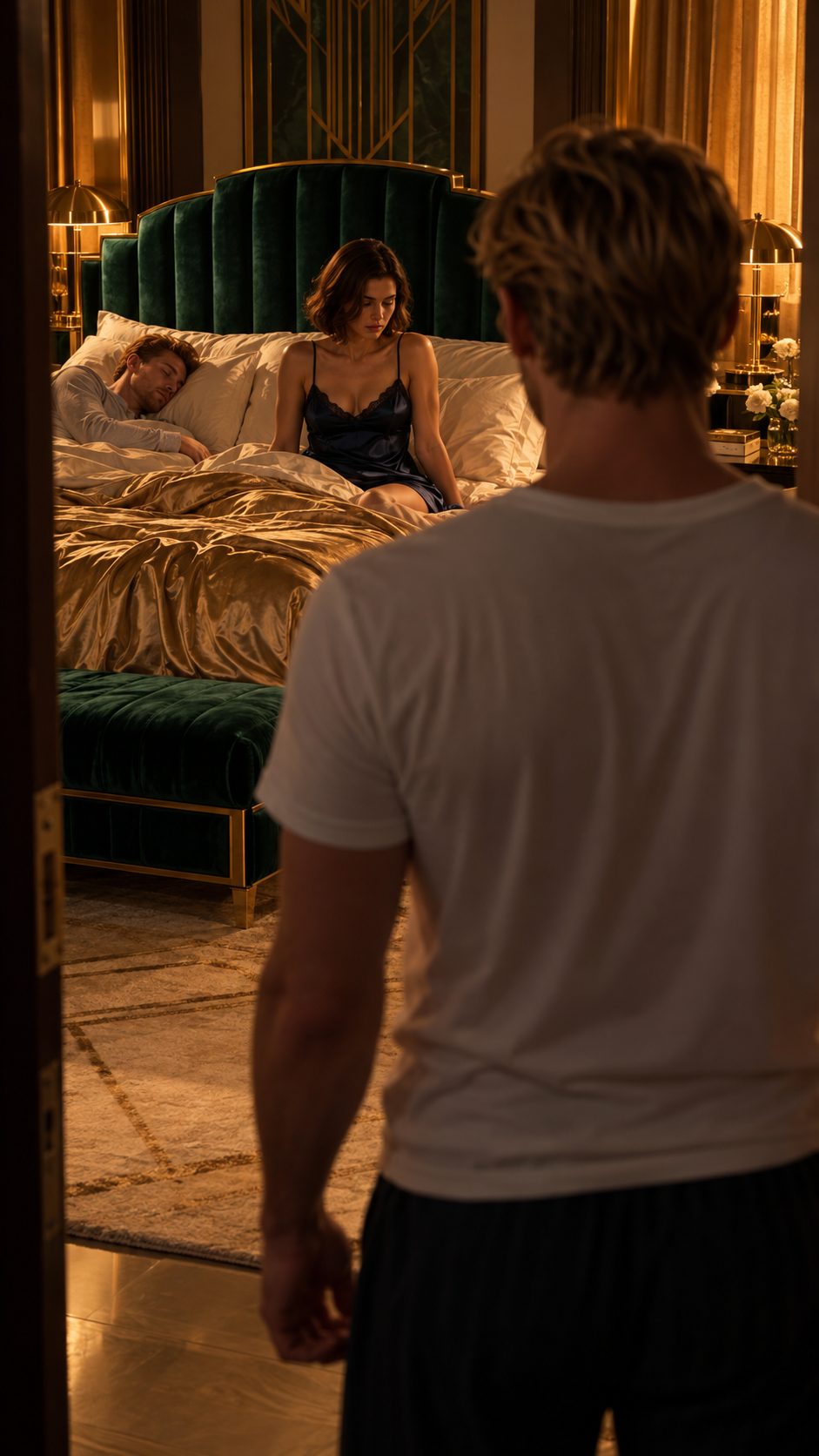
The first thing I felt was the mattress sinking.
Just enough to tell me that someone had climbed onto the bed from the other side.
Then I heard a man’s breathing.
My name is Everett Hale.
I was thirty years old, living in a townhouse in Tacoma, Washington, and until that night, I had spent most of my adult life believing there were two people I could trust without question.
My wife, Mallory.
And my best friend, Bryson.
At in the morning, those two people were lying together less than a foot from me.
I kept my eyes closed.
The mattress shifted again.
Fabric whispered against fabric.
I felt Mallory move slightly beside me, followed by a small, uncomfortable silence.
Then Bryson spoke.
“I’ve missed holding you like this.”
His voice was barely louder than the rain hitting our bedroom window.
I knew that voice almost as well as my own.
I’d heard it on fishing trips, at backyard barbecues, during late-night arguments about football, and across hospital waiting rooms when my father was dying.
Now I was hearing it in my marriage bed.
For one brief second, Mallory didn’t respond.
I could almost picture her expression without opening my eyes.
Her eyebrows drawing together.
Her lips parting as she calculated how much noise she could make.
Finally, she whispered, “Be quiet.
Everett could wake up.”
Bryson gave a soft chuckle.
“He never notices anything.”
Four ordinary words.
Four words that somehow hurt more than discovering the affair itself.
Because there was no guilt in his voice.
Just amusement.
He sounded like a man discussing a neighbor who never remembered to bring his trash cans inside.
I lay perfectly still.
Outside, the October rain had settled into a steady rhythm.
Somewhere down the street, a car moved through standing water.
Its tires made a soft hissing sound before disappearing into the distance.
My wife shifted beneath the blanket.
“You shouldn’t be here,” she whispered.
“He’s right there.”
Another silence.
Then he answered, “And he’s asleep.”
I wanted to turn around.
I wanted to grab Bryson by the collar and drag him out of my house.
I wanted to demand that Mallory explain herself.
But I’d already spent three days preparing for this moment.
If I confronted them now, they would cry, apologize, minimize everything, and spend the rest of the night inventing explanations.
They would tell me it was a mistake.
They would tell me nothing had happened.
And somehow, I would become the unreasonable one for refusing to listen.
I’d seen enough dishonesty over the previous seventy-two hours to know better.
So I stayed where I was.
My breathing remained slow and even.
I had deliberately placed my phone beneath the edge of the blanket before getting into bed.
The screen was dimmed, the sound was off, and a message I’d written earlier was ready to send.
Everything depended on not being discovered.
Behind me, Mallory whispered something I couldn’t understand.
Bryson answered.
“After Friday, none of this will matter.”
My stomach tightened.
That word changed everything.
It confirmed something else I’d been afraid of—something that had very little to do with who was sleeping with my wife.
Mallory asked, “Are you sure?”
“Absolutely.”
“And Everett?”
Bryson laughed again.
“He’ll figure it out when it’s too late.”
My fingers slowly moved beneath the blanket.
I found my phone without looking.
The message was still open.
For a moment, I hesitated.
Not because I doubted what I’d discovered.
Because pressing that button meant accepting that my marriage, my oldest friendship, and the future I’d spent years building were already gone.
Then Bryson pulled Mallory closer.
She didn’t move away.
I pressed SEND.
There was no sound.
No vibration.
No sudden flash bright enough for either of them to notice.
Just a message disappearing into the darkness.
I slid the phone back beneath the blanket.
Bryson and Mallory continued whispering.
They had no idea what I’d just done.
And they certainly had no idea that, a few hours later, Bryson would be kneeling on my living room floor, begging me to take it back.
But before I tell you what happened that morning, you need to understand something.
Bryson wasn’t just a friend who had betrayed me.
He was practically my brother.
And that was exactly why I’d never seen it coming.
I met Bryson Mercer when I was eighteen.
He was nineteen, studying business at the community college where I was taking evening classes while working construction during the day.
We met because he accidentally backed his beat-up Ford pickup into my truck outside a gas station.
He’d damaged my rear bumper and shattered one of his own taillights.
Instead of apologizing immediately, he climbed out, stared at the damage, and said, “Well, I think your truck won.”
Then he laughed.
Two hours later, we were sitting in a diner eating cheeseburgers while he promised to pay for the repairs.
He never paid me back.
I never asked.
For some reason, that ridiculous beginning turned into twelve years of friendship.
Bryson was the kind of person who could walk into a room full of strangers and leave knowing everybody’s name.
He was funny without seeming to try.
Confident without looking nervous.
He could convince a skeptical customer to buy something, persuade a bartender to stay open five minutes longer, and make my mother laugh when nobody else could.
I was different.
I liked predictable things.
Work that had a clear beginning and end.
People who meant what they said.
A problem that could be fixed with a wrench, a tape measure, or a few hours of honest labor.
My father had founded Hale Restoration when I was a kid.
We repaired older houses around Tacoma, sometimes restoring places that other contractors considered too difficult or expensive to save.
When Dad became ill, I took over more of the business.
Bryson started helping with scheduling, customer calls, and estimates.
He turned out to be good at it.
By the time my father died, Bryson had become an essential part of the company.
I was twenty-four when we buried Dad.
I remember standing beside his grave, staring at the wet grass while everyone offered condolences I could barely hear.
Bryson stayed after the other mourners left.
He didn’t tell me to be strong.
He didn’t offer some inspirational speech about grief.
He simply stood beside me beneath his black umbrella.
Then he said, “Whatever happens with the company, you’re not doing it alone.”
And he kept that promise.
At least for a while.
We worked ridiculous hours together.
We took jobs we probably should have turned down, learned from expensive mistakes, and celebrated when we finally landed contracts that meant we could stop worrying about payroll every month.
I trusted him with my business.
Eventually, I trusted him with my house.
When Mallory and I bought our Tacoma townhouse, Bryson helped us move.
He carried the heavy furniture upstairs, installed the television, and brought pizza for everyone afterward.
I gave him a spare key because he’d always had one to my previous apartment.
It seemed natural.
He was family.
Then there was Mallory.
I met her at a waterfront fundraising event almost two years before that night.
She was helping coordinate the event, rushing between vendors with a clipboard and an expression that suggested she was the only person preventing the entire evening from collapsing.
She had long blonde hair, bright blue eyes, and a smile that could turn a stressful conversation into something easy.
She was ten years younger than me.
I noticed the difference.
So did other people.
But she was funny, ambitious, and surprisingly direct.
She wanted to build a career planning events, travel more, and eventually own a business.
I was attracted to her optimism.
She liked that I was steady.
At least, that’s what she told me.
Our relationship moved quickly.
Coffee became dinner.
Dinner became weekends together.
Eventually, she started leaving clothes at my apartment, then moving furniture around, then making jokes about how badly I decorated.
When I proposed, she cried before I finished asking.
We married the following year.
Bryson stood beside me at the ceremony.
I can still remember him straightening my boutonniere five minutes before Mallory walked down the aisle.
“You nervous?” he asked.
“A little.”
She’s crazy about you.”
Then he put a hand on my shoulder.
“You found a good one, Ev.
Don’t screw it up.”
After the ceremony, he raised a glass at the reception.
He told everyone we’d been friends since we were teenagers and that he’d never seen me happier.
Then he looked at Mallory.
“Take care of my brother,” he said.
She smiled.
Everyone applauded.
I remember thinking that life had finally become exactly what I’d hoped it would be.
I had a wife I loved.
A business that was growing.
A comfortable home.
And a best friend who had stood beside me through everything.
I didn’t know that the two people smiling for photographs with me that evening would eventually become the reason I couldn’t stand looking at those pictures.
And I didn’t know that, one day, I’d remember Bryson’s wedding toast as the cruelest joke I’d ever heard.
Affairs don’t always announce themselves through dramatic discoveries.
Sometimes they begin with things so ordinary that you feel foolish for noticing.
A phone turned facedown.
A canceled dinner.
An unfamiliar restaurant charge.
A conversation that stops when you walk into the room.
For months, nothing in my marriage seemed obviously wrong.
Mallory still kissed me before leaving the house.
She still asked about my day.
She still reminded me when we needed groceries and complained that I never put my work boots in the closet.
But something had changed.
I couldn’t identify the exact moment.
We used to spend Sunday mornings drinking coffee in bed and deciding what to do with the day.
Sometimes we’d drive to Point Defiance and walk along the waterfront.
Sometimes we’d stay home and cook breakfast together.
Then Mallory started waking earlier.
She’d sit downstairs with her phone, smiling at messages while I was still brushing my teeth.
One morning, I leaned against the kitchen counter and asked what was so funny.
“Just something from work,” she said.
She locked her phone and set it facedown.
I didn’t think much of it.
Mallory had started getting more freelance event-planning jobs, and she was excited about finally building something of her own.
There were more evening meetings.
More last-minute schedule changes.
More times she’d say, “I might be late, so don’t wait up.”
I wanted to support her.
I’d worked hard to build a career, and I understood what it felt like to need someone to believe in you.
So when she said she had to meet a vendor at eight o’clock, I told her to be careful driving.
When she canceled our dinner reservation because of an unexpected client meeting, I ordered takeout.
When she started spending more time with Bryson, I thought it was convenient.
He’d always been around.
Sometimes he’d drop by during the afternoon to pick up project documents.
Sometimes he’d bring food when I was working late.
And sometimes Mallory would mention that he’d helped her with something—a stubborn printer, a flat tire, a heavy piece of furniture.
It sounded normal.
Until it didn’t.
One Thursday, I came home earlier than expected.
Mallory was in the kitchen, standing beside Bryson.
He had one hand resting on the counter near hers.
They weren’t touching.
They weren’t doing anything that should have concerned me.
But when I entered, both of them looked up at exactly the same time.
And both stopped smiling.
“Hey,” I said.
Mallory moved away from the counter.
“You’re home early.”
“Job finished faster than expected.”
Bryson picked up his keys.
“Good timing.
I was just heading out.”
He gave me a quick pat on the shoulder.
“See you tomorrow, brother.”
I watched him leave.
When I turned back, Mallory was rinsing a perfectly clean glass in the sink.
“What was he here for?”
She shrugged.
“Something about work.”
“What about work?”
“I don’t know, Everett.
Her irritation surprised me.
I wasn’t accusing her of anything.
At least, I didn’t think I was.
“Okay,” I said.
That evening, she was unusually affectionate.
She sat close to me on the couch, rested her head on my shoulder, and asked if we could plan a weekend away.
I was relieved.
I told myself I’d imagined the uncomfortable moment in the kitchen.
Looking back, I can see how badly I wanted everything to be fine.
That’s something people don’t tell you about suspicion.
You don’t always want to discover the truth.
Sometimes you spend weeks searching for reasons to dismiss it.
I blamed my long hours.
I blamed stress.
I blamed the fact that we’d stopped making time for each other.
And some of those things were real problems.
We had grown distant.
We weren’t communicating as well as we should have.
But distance doesn’t make dishonesty inevitable.
A struggling marriage still contains choices.
Mallory could have told me she was unhappy.
She could have asked for counseling.
She could have told me she wanted to leave.
Instead, she kept telling me she loved me.
And Bryson kept coming through our front door.
The first time I truly stopped making excuses was on a Sunday afternoon.
Bryson had been over to watch football.
He left around six.
Twenty minutes later, while cleaning up the living room, I found something that had slipped from his jacket.
At first, it looked like an ordinary key.
Then I turned it over.
And my entire body went cold.
The object was a key attached to a small blue enamel tag.
An anchor had been stamped into one side.
On the other side were three numbers.
Most people would have dropped it into a drawer and forgotten about it.
But I recognized the anchor.
Seven years earlier, Hale Restoration had worked on the conversion of an old waterfront building into furnished apartments.
The building was called Harbor House.
I’d supervised the carpentry and finish work on several floors.
The property owner had chosen distinctive blue key tags for the furnished suites because he wanted something guests would remember.
I could still recall him standing in the lobby, holding one between his fingers.
“Nobody keeps a plain brass key,” he’d told me.
“Give them something pretty, and half of them will accidentally take it home.”
The blue tag in my palm looked exactly like those keys.
Harbor House.
Apartment 614.
I stared at it for a long time.
Why would Bryson have a key to a furnished apartment downtown?
There were innocent explanations.
He could have met a client there.
He could have been helping with a renovation.
He might have borrowed it from someone.
A key wasn’t proof of anything.
But the date made me uncomfortable.
The previous Wednesday, Mallory had told me she was attending an evening planning session near the waterfront.
She’d come home at almost midnight, smelling faintly of perfume and the lemon-scented soap she usually used before bed.
I’d asked whether the meeting went well.
She’d said it was exhausting.
Then she’d gone straight upstairs.
I looked down at the key again.
Suddenly, I remembered another conversation.
About two weeks earlier, Bryson had told me he was considering renting a small downtown office to meet potential clients.
When I’d suggested a couple of reasonably priced spaces, he said he’d already found somewhere.
He never told me where.
I stood in the living room, holding the key, while the television continued playing highlights from a football game I’d stopped watching.
My first impulse was to call him.
“Hey, man, you left something here.
What’s it for?”
I could almost hear his response.
Just a place I’m checking out for work.”
And then what?
I’d have nothing but another explanation.
So I didn’t call.
I placed the key inside a small envelope and put it in my desk drawer.
The next morning, I drove downtown.
Harbor House looked almost exactly as I remembered it.
The brick exterior had been cleaned, the original windows restored, and the entrance framed by black metal doors.
A modest sign near the lobby advertised furnished accommodations for extended stays.
I parked across the street.
For several minutes, I watched people coming and going.
A man in business clothes emerged carrying a suitcase.
A couple entered with takeout containers.
A woman walked out holding a small dog.
Nothing unusual.
I eventually went inside and picked up a brochure from the reception desk.
The building still used the same blue anchor logo.
The brochure showed photographs of modern apartments with views over the water, polished kitchens, and comfortable bedrooms.
It advertised weekly and monthly stays.
I asked the receptionist whether the building still used physical keys.
“Some of the older suites do,” she said.
“We’ve been replacing the locks in stages.”
I thanked her.
I didn’t ask who was staying in 614.
She wouldn’t have told me, and she shouldn’t have.
Instead, I went back outside.
I sat in my truck, holding the brochure against the steering wheel.
The building itself was not proof.
The key wasn’t proof.
But now I knew exactly where Bryson had been going.
I needed to find out whether Mallory was going there too.
As I started the engine, my phone rang.
For a moment, I considered ignoring him.
Then I answered.
“What’s up, brother?”
Just running around.”
“You at the office?”
“Not right now.”
Listen, you still good for Friday?”
I gripped the steering wheel.
Friday was the day we were supposed to sign the paperwork for our company’s expansion.
“Yeah,” I said carefully.
“Just making sure.
Big day for us.”
He laughed.
“After all these years, we’re finally gonna do it.”
I stared across the street at Harbor House.
“Looks that way.”
“All right, man.
Talk later.”
He hung up.
I remained parked for another minute.
Then I looked at the building’s sixth-floor windows.
Somewhere up there was apartment 614.
And for the first time, I felt as if my entire life had become a puzzle with half the pieces missing.
I wasn’t interested in inventing the remaining pieces.
I needed to see what actually fit.
Monday night, Mallory came home carrying takeout.
She smiled when she saw me.
“I got your favorite.”
She held up a bag from the Thai restaurant near our house.
Normally, that would have made me happy.
Instead, I found myself wondering where she’d been before buying it.
I hated that feeling.
I hated analyzing my own wife’s expression as if she were a stranger giving a statement.
We ate on the couch while a cooking show played in the background.
She told me about a demanding client who kept changing the seating arrangement for an upcoming event.
I listened.
I asked questions.
She answered naturally.
Nothing about the conversation sounded suspicious.
That was the most frightening part.
I couldn’t tell when she was lying anymore.
At one point, she reached across the couch and squeezed my hand.
“You’ve been quiet lately.”
“Work’s been busy.”
“Don’t let Bryson stress you out about Friday.
He’s just excited.”
I looked at her.
“He’s talked to you about it?”
“A little.”
“What did he say?”
She shrugged.
“Just that you guys are finally becoming real partners.”
“We’ve been working together for years.”
“You know what I mean.”
She smiled and turned back to the television.
I watched her for another moment.
There was something strange about the way she’d said it.
Finally becoming real partners.
That sounded more like Bryson than Mallory.
Tuesday morning, she told me she had an evening meeting with an event client.
She paused while fastening an earring.
Near the water.”
“What time will you be back?”
“Probably ten or eleven.”
“Have fun.”
“It’s work, Everett.”
She kissed me on the cheek before leaving.
At seven that evening, I drove toward Harbor House.
I parked legally along a public street with a clear view of the building entrance.
I wasn’t proud of what I was doing.
There are few experiences more humiliating than sitting in your own truck, waiting to discover whether your spouse is betraying you.
Every passing car made me feel ridiculous.
I kept thinking about driving home.
Maybe I was wrong.
Maybe Bryson really was meeting a client.
Maybe Mallory was somewhere else entirely.
Then, at p.m., Bryson’s silver SUV pulled up outside Harbor House.
I recognized it immediately.
He parked near the entrance.
For a few seconds, nothing happened.
Then the passenger door opened.
Mallory stepped out.
She was wearing a black jacket over a short red dress.
Her hair was loose.
She looked beautiful.
That was the first thought that went through my mind.
Not suspicion.
Just the familiar, automatic feeling I’d had hundreds of times when watching my wife enter a room.
Then Bryson walked around the SUV.
He placed his hand against the small of her back.
Mallory looked up at him.
They exchanged a smile.
He opened the building door.
She went inside.
He followed.
I took two photographs from where I was parked.
Then I lowered my phone.
My hands were trembling.
I’d spent days wanting proof, and now that I had it, I would have given almost anything to be wrong.
I waited until nearly ten.
They didn’t come back out.
I drove home.
Mallory arrived at 11:17.
She found me sitting at the kitchen table with a glass of water.
“You’re still awake?”
“Couldn’t sleep.”
She set her purse down.
“Long day.”
“How’d the meeting go?”
The client was impossible, but we finally agreed on everything.”
She opened the refrigerator.
“Did you eat?”
She took out a bottle of water.
I noticed the slightest change in her expression when she caught me watching her.
“You’re staring.”
“Just tired.”
For a second, I thought she might say something.
I almost wanted her to.
I wanted her to look at me and admit the truth without needing to be cornered.
Instead, she came around the table and kissed the top of my head.
“Go to bed, babe.”
Then she walked upstairs.
I sat alone in the kitchen.
The refrigerator hummed.
Rain began tapping against the window.
I opened the photographs again.
There was Mallory.
There was Bryson.
And there was his hand on her back.
It was a simple gesture.
The kind of gesture I used to make when we entered a restaurant.
I looked at that photograph for a long time.
Then I saved a copy in a private folder and placed my phone facedown.
I couldn’t sleep.
But something inside me had stopped arguing.
For the first time, I no longer wondered whether Mallory was keeping something from me.
I knew she was.
I just didn’t know how much.
Wednesday morning, I arrived at the office before anyone else.
Hale Restoration occupied a modest brick building near an industrial area south of downtown.
The office wasn’t impressive.
There was a scratched conference table, several filing cabinets, a break room with an unreliable coffee maker, and photographs of completed restoration projects covering one wall.
But every inch of that place mattered to me.
My father had worked himself nearly to death building the company.
I’d spent years trying to keep it alive after he was gone.
Bryson had helped me.
That was true.
But I’d begun to wonder whether helping me had eventually stopped being enough.
At eight-thirty, my older sister Nora arrived.
She handled the company’s bookkeeping and payroll.
Nora was thirty-four, practical, stubborn, and almost impossible to impress.
She took one look at my face and put down her coffee.
“What happened?”
I closed the office door.
“I need you to look at something.”
She frowned.
“Financial something or personal something?”
“Possibly both.”
I explained that I’d found a key connected to Harbor House.
I told her about Mallory’s late-night meetings and the photograph of her entering the building with Bryson.
I didn’t show her the photograph immediately.
I needed to say the words first.
When I finished, Nora sat quietly.
Then she asked, “Are you sure?”
“I watched them go inside.”
“That doesn’t prove what they were doing.”
She studied me.
What do you need?”
“I want to know whether the company has paid for anything connected to that building.”
Nora turned to her computer.
Because I owned the company and had full authorization to review its finances, she opened the vendor records.
We searched through recent invoices and reimbursements.
At first, nothing unusual appeared.
Equipment rental.
Subcontractor payments.
Then Nora found three expenses assigned to a new vendor.
Northline Guest Services.
The descriptions were vague.
Client hospitality.
Temporary project accommodation.
Business development.
Together, they totaled a little over four thousand dollars.
All three had been approved by Bryson.
Nora clicked through the supporting paperwork.
One invoice included an address.
Harbor House.
Another contained a reference number.
I felt my throat tighten.
Nora leaned back.
“I see it.”
“Does Bryson have a project there?”
“Not that I know of.”
She opened our current contracts.
There was no Harbor House project.
No client correspondence.
No approved estimate associated with the location.
“Could this be legitimate business development?” she asked.
“Possibly.”
“Then don’t assume it’s theft.
But we need receipts, the approval history, and an explanation.”
She was right.
A suspicious invoice wasn’t the same as proof of fraud.
Still, the connection was impossible to ignore.
My best friend had been charging the company for accommodation at the building where I’d watched him take my wife.
And Friday, he was supposed to become a legal partner in the company’s new expansion business.
I sat down.
Nora watched me for a long moment.
“You need a lawyer,” she said.
“No, Everett.
I mean today.
Not after you talk to Mallory.
Not after you confront Bryson.
She softened her voice.
“And please don’t do something stupid.”
Despite everything, I nearly smiled.
“What would qualify?”
“You know exactly what I mean.”
Part of me wanted to walk straight into Bryson’s office.
He’d probably greet me with that familiar grin.
Ask whether I wanted coffee.
Talk about our upcoming contracts.
And I wasn’t certain I could stand hearing him call me brother again.
Instead, Nora and I copied the records we were authorized to preserve.
She started an internal review of the expenses.
I contacted Celia Hart, the attorney who’d helped us prepare the partnership documents.
By four that afternoon, I was sitting across from her in a quiet conference room.
I explained everything.
The personal betrayal.
The building.
The invoices.
The photographs.
She listened without interrupting.
When I finished, she folded her hands.
“First, don’t make public accusations about the financial records until we know exactly what happened,” she said.
“We need to establish whether any expenses were unauthorized.”
“Second, the expansion agreement is still unsigned.
You are not obligated to complete it on Friday.”
“Can we stop it?”
I’ll notify the necessary people that signing is postponed pending review.”
I stared at her.
For weeks, I’d felt as though everything in my life was moving beyond my control.
Now, for the first time, someone was telling me there was still something I could protect.
Celia continued.
“As for your marriage, I strongly recommend you take a little time before making irreversible decisions.
We can discuss separation and divorce, but you should understand your options.”
“I don’t want to destroy anyone,” I said.
“I just don’t want them making decisions for me anymore.”
She nodded.
“That’s a very different thing.”
Before I left, she gave me one final piece of advice.
“Whatever happens tonight, don’t let anger become your whole strategy.”
I carried that sentence home with me.
By then, I knew Bryson had betrayed my trust as a friend.
I had serious questions about his business conduct.
And I knew Mallory had lied about where she’d been spending her evenings.
But there was someone else caught in their deception.
Someone who had been making wedding plans while the man she loved was secretly visiting my wife.
Her name was June.
And I had no idea how to tell her.
June Parker was twenty-nine.
She owned a small floral studio and had the kind of thoughtful, unhurried manner that made people feel comfortable around her.
Bryson had been dating her for almost two years.
They were getting married in six weeks.
I’d liked June from the moment I met her.
She was warm without being overly familiar.
She remembered birthdays.
She brought homemade cookies to the office during the holidays.
When my mother had surgery, June delivered flowers to her hospital room without telling anyone she’d done it.
Most importantly, she loved Bryson.
I had never questioned that.
I’d watched her look at him across crowded rooms with the same expression I once wore when Mallory laughed at something I’d said.
June believed she’d found her person.
That Wednesday afternoon, while I was sitting in my truck outside Celia’s office, I received a message from her.
It was a photograph of two wedding invitations.
One had elegant blue lettering.
The other had a simple cream design.
Quick question!
Which one do you think Bryson would like better?
He keeps saying he doesn’t care.
Under normal circumstances, I would have laughed.
Bryson had never cared about stationery in his life.
I stared at the message.
There were six weeks until their wedding.
Six weeks until she stood in front of their families and promised to spend her life with him.
And I knew something that could change everything.
I typed three different responses.
Deleted all of them.
Finally, I wrote:
The cream one looks great.
She replied with a heart.
I felt sick.
My first instinct was to protect June from the pain.
But the more I thought about it, the more dishonest that instinct felt.
I wasn’t protecting her by remaining silent.
I was protecting the illusion she was living inside.
And I knew exactly how dangerous that illusion could be.
I called Nora.
“Do you think June should know?”
My sister was quiet for a moment.
“Would you want someone to tell you?”
“Then there’s your answer.”
“It’s going to break her heart.”
Nora sighed.
“Everett, her heart is already being broken.
She just doesn’t know it yet.”
I closed my eyes.
“What if she doesn’t believe me?”
“Then you tell her what you actually know.
Nothing more.
Let her decide what to do with it.”
That sounded simple.
I knew June would remember the person who delivered the news.
I’d become part of the worst day of her life.
But I also knew how cruel it would be to sit in a church six weeks later, watching her marry Bryson while keeping his secret.
That evening, I started writing a message.
I didn’t accuse Bryson of things I couldn’t prove.
I didn’t describe the company expenses.
I didn’t speculate about how long the affair had been happening.
I simply explained that I’d seen Mallory and Bryson enter a furnished apartment building together late at night, that their explanations didn’t match what I’d witnessed, and that I had photographs.
I told June I was sorry.
I told her I wouldn’t blame her if she needed time before responding.
Then I attached the two photographs.
I read the message several times.
Every word felt heavier than it should have.
I imagined June opening it.
I imagined her calling Bryson.
I imagined him talking his way out of it.
And that frightened me more than anything.
Bryson was charming.
He was persuasive.
He knew how to make a lie sound reasonable.
He’d spent twelve years learning what people wanted to hear.
So I made one final decision.
I would wait until I had direct confirmation.
Not because I wanted to protect Bryson.
Because June deserved the truth, not my suspicions.
I saved the message without sending it.
Then I went home.
Mallory’s car was in the driveway.
The porch light was on.
Through the front window, I could see her arranging a vase of flowers on the dining table.
For a moment, I stood outside and watched her.
She looked exactly like the woman I’d married.
And I realized that was what made betrayal so difficult to understand.
The person hurting you doesn’t suddenly become a stranger.
They still have the same smile.
The same familiar gestures.
The same voice calling your name when you walk through the door.
What changes is the meaning of everything you remember.
I unlocked the front door.
Mallory looked up.
“Hey, babe.”
She walked over and kissed my cheek.
“How was your day?”
I looked into her eyes.
I could have asked her anything.
Where had she really been Tuesday night?
Why did Bryson have a key to apartment 614?
How long had she been lying?
Did she still love me?
Instead, I asked the only question I could bear.
“Is there anything you need to tell me?”
Her smile faded.
For one brief second, I thought she’d confess.
Then she shook her head.
“Just asking.”
She studied me.
“You’re acting weird.”
“I’ve got a lot on my mind.”
She put a hand on my arm.
“Well, don’t bring all that stress home.”
Then she turned back toward the dining room.
I stood there watching her.
And I knew the last opportunity for an honest conversation had just passed.
To understand why Friday mattered, you need to understand the business.
Hale Restoration had never been a large company.
We employed fourteen people, including office staff and field crews.
Some had been with us since my father was alive.
They weren’t just names on a payroll report.
They were people with mortgages, kids, car payments, medical bills, and lives outside the work they did for us.
That responsibility had shaped almost every major decision I made.
For years, Bryson had been pushing us to expand.
He wanted a second division focused on commercial renovation projects.
Larger contracts.
Higher margins.
More employees.
More money.
His ideas weren’t bad.
In fact, several were excellent.
But expansion meant taking risks, and I wasn’t willing to gamble with the company my father had built.
Bryson thought I was too cautious.
We’d argued about it more than once.
“You can’t keep running this place like it’s 2005,” he told me during one disagreement.
“And you can’t treat every new client like a winning lottery ticket,” I answered.
He’d shake his head.
“Man, sometimes I think you’re afraid of success.”
I hated that accusation.
But I also understood his frustration.
He’d helped build the business for years without ever owning part of it.
So eventually, we worked out a plan.
We would create a separate company for the expansion.
Hale & Mercer Projects.
Bryson would manage new business development and earn a thirty-five-percent ownership interest under an agreement tied to his continued work and the division’s performance.
It wasn’t a gift without conditions.
But it was a major opportunity.
And Friday was supposed to be the beginning.
I had spent months preparing.
Talking to attorneys.
Reviewing projections.
Meeting with potential lenders.
Making sure our existing company wouldn’t be exposed to unnecessary risk.
I genuinely wanted Bryson to succeed.
That Wednesday, after speaking with Celia, I returned to the office and opened the framed photograph on my desk.
It showed my father standing in front of our first workshop.
He was smiling, holding a cordless drill, with sawdust on his shirt.
I’d been fifteen when the photograph was taken.
Dad had always told me, “A handshake is only worth something if both people mean it.”
For years, I thought Bryson understood that.
Now I wondered whether he’d started seeing my trust as an opportunity.
I thought about the payments associated with Harbor House.
Maybe he’d considered the apartment a temporary business expense.
Maybe he’d convinced himself that, once he became a partner, nobody would question him.
I couldn’t know what he was thinking.
But I knew what he’d done to my marriage.
And I knew I wasn’t going to sign documents that gave him additional control over my family’s business while serious questions about his conduct remained unanswered.
Celia had already begun the process of postponing the agreement.
Nora was reviewing every recent expense Bryson had approved.
Neither of them needed the details of what might happen that night.
I asked only that they preserve the records and keep the matter confidential until we had a clear understanding of the facts.
Around five, Bryson appeared in my office doorway.
“Hey, brother.”
I nearly flinched.
He was holding two coffees.
“Got your usual.”
He placed one on my desk.
I looked at the cup.
For twelve years, he’d remembered exactly how I liked my coffee.
He leaned against the doorframe.
“Big day Friday.”
“You excited?”
I looked at him.
He was smiling.
The same easy smile I’d known since we were teenagers.
“I hope everything works out,” I said.
He laughed.
“Come on, man.
We’ve worked too hard for this not to happen.”
I said nothing.
He lifted his coffee.
“To the future.”
I watched him take a drink.
Then he walked away.
I sat there for several minutes.
Something about that exchange stayed with me.
Not the words.
The certainty.
He was so confident that Friday would happen exactly as planned.
So confident that I would sign whatever we’d agreed to.
So confident that the world would keep moving in the direction he wanted.
He had no idea that the signing was already being postponed.
But even that wasn’t the worst part.
I was beginning to suspect that Bryson wasn’t merely risking our friendship for an affair.
He was planning a life that depended on me remaining ignorant.
And Mallory appeared to be part of that plan.
Wednesday evening, I came home around seven.
Mallory was cooking pasta.
She had music playing quietly in the kitchen, and the house smelled of garlic and fresh tomatoes.
It should have felt comforting.
Instead, walking through the front door felt like entering a carefully maintained illusion.
“Hey, honey,” she said.
“Long day?”
She looked at me.
“You look awful.”
“I’ve got a headache.”
That part was true.
My head had been pounding since the afternoon.
She lowered the heat beneath the sauce.
“Do you want something for it?”
“I’ll be fine.”
We ate at the small dining table near the back window.
Rain ran down the glass.
Mallory talked about a wedding she was helping coordinate and complained that the bride’s mother kept changing the flower arrangements.
I listened.
At one point, she asked whether Bryson had mentioned Friday.
“He’s really excited.”
She twirled pasta around her fork.
“I think this could be good for you guys.”
She looked up.
“Of course.”
She frowned.
“What do you mean, why?”
“I’m just asking.”
“Because you’ve both worked hard.
Because the business could grow.
Because maybe you’ll finally stop worrying about every dollar.”
I leaned back.
“Bryson’s been telling you a lot about the company.”
“He’s excited, Everett.
You’re making it sound strange.”
I looked down at my plate.
She sighed.
“I don’t understand what’s gotten into you lately.”
Neither did I, really.
I’d never imagined myself sitting across from my wife, pretending not to know she’d spent the previous evening in a furnished apartment with my best friend.
It was humiliating.
It was exhausting.
And yet, I still wanted her to tell me the truth.
After dinner, I helped clear the table.
Mallory stood beside me at the sink.
For a while, we washed dishes without speaking.
Then she said, “Are we okay?”
“Why wouldn’t we be?”
She looked at the dish towel in her hands.
“I don’t know.
You seem far away.”
There it was.
The opening.
A chance for either of us to stop pretending.
She waited.
Then I asked, “Are you happy, Mallory?”
She looked surprised.
“What kind of question is that?”
“A simple one.”
“Of course I’m happy.”
She gave a nervous little laugh.
“Everett, what’s going on?”
I studied her face.
I wanted to remember it.
Not because I expected to stop loving her immediately.
But because some part of me knew I was looking at the final moments of our marriage as it had existed.
“Nothing,” I said.
She stepped closer and wrapped her arms around me.
“I love you.”
I rested my hands lightly against her back.
“I love you too.”
And that was the worst part.
I meant it.
Love doesn’t always disappear the moment someone betrays you.
Sometimes it stays, useless and painful, long after trust is gone.
Around ten, I told Mallory I was going to bed early.
“My head’s killing me.”
“Want me to get you something?”
“I’ve already got something upstairs.
I’ll take it and sleep.”
She nodded.
I’ll be up in a little while.”
I went to the bedroom.
I placed my phone beneath the edge of the blanket, lowered the screen brightness, and checked the message I’d prepared for June.
It was still there.
I didn’t take any sleeping medication.
Instead, I lay down, closed my eyes, and listened.
I knew this was an unusual thing to do.
Part of me was ashamed that I’d reached a point where I was testing my own marriage.
But I also knew I’d seen enough to justify asking serious questions.
I had the key.
I had the photographs.
I had evidence that Bryson was using company funds for expenses connected to the same apartment.
What I didn’t have was an honest admission.
And I wanted to know how far their lies would go when they believed nobody was listening.
Mallory came upstairs around eleven.
She changed into her pajamas and moved quietly around the room.
At one point, she stood beside the bed.
I didn’t answer.
She waited.
Then she touched my shoulder.
I kept breathing slowly.
After a few seconds, she pulled her hand away.
The bedroom became quiet.
Later, I heard the faint sound of her phone vibrating.
She picked it up.
Then another vibration.
Mallory slipped out of bed.
She walked toward the bathroom, but I didn’t hear the light switch click.
Instead, I heard her whisper.
“He’s asleep.”
My heart began pounding.
There was another silence.
Then she whispered, “Just be careful.”
A few minutes later, I heard the familiar sound of our front door opening downstairs.
Not a knock.
Not a doorbell.
A key turning in the lock.
I knew who it was.
I knew whose key it was.
And still, some desperate part of me hoped I was wrong.
Footsteps moved through the hallway.
Then up the stairs.
Mallory returned to bed.
A moment later, our bedroom door opened.
Bryson entered.
I could hear his breathing.
The floor creaked beneath his weight.
Then the mattress sank.
And he climbed into bed beside my wife.
I’ve replayed those next few minutes hundreds of times.
Not because I enjoy remembering them.
Because there are moments in life when you know you’re crossing an invisible line.
On one side is everything you used to believe.
On the other is everything you can no longer deny.
Bryson settled beside Mallory.
He whispered that he’d missed holding her.
She warned him I might wake up.
Then he made that dismissive comment about how I never noticed anything.
Every word confirmed that this wasn’t an accident.
They weren’t two people surprised by feelings they hadn’t expected.
They were two people accustomed to deceiving someone who trusted them.
After that, the conversation changed.
Bryson lowered his voice.
“Just a couple more days.”
Mallory whispered, “You keep saying that.”
“Because it’s true.”
“What if something goes wrong?”
“Nothing’s going wrong.”
I felt the mattress move.
He must have turned toward her.
“Everett signs Friday.
We get the new company running.
Then we figure out the rest.”
“And June?”
“I’ll handle June.”
Mallory didn’t answer.
Then she asked, “Are you really going to leave her?”
“When the timing is right.”
My chest tightened.
He was making promises to my wife while preparing to marry another woman.
He was planning a business partnership with me while keeping a secret life that directly threatened the trust required for that partnership.
And somehow, he believed he could manage all of it.
Mallory whispered, “I don’t want to keep doing this.”
“Then we won’t.”
“You said that last month.”
“Mal, listen to me.
Once the paperwork is done, things will be different.”
His confidence sounded almost rehearsed.
I knew then that I’d been right to stop Friday’s signing.
But what hurt was the way Mallory answered.
The same way she used to answer me when I promised everything would work out.
I thought about the wedding photographs.
The spare house key.
My father’s funeral.
The Christmas dinners.
The late nights Bryson had stayed at the office helping me prepare estimates.
For a moment, I wanted to believe that the man beside me couldn’t possibly be the same person.
But he was.
People don’t become strangers when they betray us.
Sometimes we simply discover parts of them we never knew existed.
I moved my right hand beneath the blanket.
My phone was exactly where I’d left it.
The message to June was still ready.
I had written:
June, I’m sorry to send you something this painful.
I have reason to believe Bryson and Mallory have been seeing each other.
I personally watched them enter Harbor House together Tuesday night after they gave me different explanations about where they’d be.
I’ve attached the photographs.
I’m not asking you to believe more than what I can show you.
I know you’re planning your wedding, and I couldn’t let you make that decision without knowing what I’ve discovered.
If you want to talk, I’ll tell you everything.
The message didn’t mention the conversation occurring beside me.
I wasn’t recording them.
I wasn’t trying to collect some perfect piece of evidence for a public spectacle.
I was trying to stop one more person from being deceived.
And after hearing Bryson dismiss June as a problem he would “handle,” I couldn’t find another reason to wait.
I pressed SEND.
The message disappeared.
Then I placed the phone beneath the blanket again.
My pulse hammered so hard that I was certain Mallory would hear it.
She didn’t.
Bryson continued whispering.
For several minutes, they talked about things I could barely process.
A possible trip.
Somewhere they wanted to go together.
An apartment with more space.
A future in which June and I appeared to be little more than inconvenient details.
Eventually, Mallory told him he had to leave.
“Seriously, Bryson.
“All right.”
The mattress shifted.
I heard him stand.
Then he leaned toward her one final time.
“Love you.”
She hesitated.
“I love you too.”
I felt something inside me collapse.
Not explode.
Just collapse.
Like an old house whose foundation had finally given way.
Bryson left the bedroom.
A few moments later, the front door closed downstairs.
Mallory lay beside me.
The room was silent except for the rain.
Then she turned toward me.
“Everett?” she whispered.
I kept my eyes closed.
Her fingers brushed my arm.
For one terrible moment, I thought she might try to hold me.
Instead, she rolled onto her other side.
Within minutes, her breathing slowed.
She fell asleep.
I remained awake.
I thought about every time she’d told me she loved me.
Every time Bryson had called me brother.
Every promise I’d made at our wedding.
And I wondered how long it would take before the message reached June.
At a.m., my phone vibrated once beneath the blanket.
Mallory didn’t wake.
I carefully looked at the screen.
It was June.
Her message contained only four words.
Please tell me everything.
I stared at them.
Then I typed:
A second message arrived.
Is she with him now?
I swallowed.
He just left my house.
Three small dots appeared on the screen.
Disappeared.
Then appeared again.
For several seconds, there was nothing.
Finally, June wrote:
I’m calling off the wedding.
I lowered the phone.
Outside, the sky had begun to lighten.
And for the first time in twelve years, I knew I would never call Bryson my best friend again.
At six-thirty that morning, I went downstairs and made coffee.
The house was quiet.
Rainwater dripped from the gutters.
A garbage truck moved slowly down the street, stopping in front of each townhouse.
Everything looked ordinary.
That almost made it worse.
I sat at the kitchen table, holding a mug I hadn’t taken a single sip from.
My wedding ring felt unusually heavy.
I turned it around my finger.
Then I took it off.
There was a pale mark beneath it.
I stared at the mark for a long time before placing the ring beside my coffee.
At seven, Mallory came downstairs.
She was wearing one of my old T-shirts.
Her hair was messy, and she looked sleepy.
“Morning,” she said.
I didn’t answer immediately.
She walked toward the coffee maker.
“You’re up early.”
“Couldn’t sleep.”
She glanced toward me.
“Your headache still bothering you?”
She poured herself coffee.
Then she noticed the ring.
For several seconds, she didn’t move.
I looked at her.
She stared at the table.
“Why is your wedding ring off?”
I opened my mouth.
Before I could answer, someone began pounding on the front door.
Three hard knocks.
Then three more.
Mallory jumped.
I knew who it was.
She turned toward the hallway.
“Who’s that?”
She hesitated.
Then she walked to the front door.
I heard the lock turn.
A moment later, Bryson’s voice filled the hallway.
“Where is he?”
Mallory sounded startled.
What are you doing?”
“Where’s Everett?”
“He’s in the kitchen.
What’s wrong?”
Bryson walked past her.
He looked terrible.
His hair was disheveled.
His face was pale.
He hadn’t shaved.
His eyes were red, as if he’d spent the last hour desperately trying to understand something that couldn’t be undone.
He stopped when he saw me.
I looked at him.
That single ordinary word seemed to confuse him.
“Can we talk?”
“We’re talking.”
He glanced toward Mallory, who had followed him into the kitchen.
Then he looked at me again.
“Did you send June something?”
Mallory went still.
I picked up my coffee.
Bryson swallowed.
“Why would you do that?”
I almost laughed.
Not because anything was funny.
Because the question was unbelievable.
“Why do you think?”
He rubbed both hands over his face.
“Everett, listen—”
“Please, man.”
“Don’t call me that.”
I set down my mug.
“You don’t get to walk into my house and call me your brother anymore.”
Mallory looked between us.
“Everett, what’s happening?”
I turned toward her.
“How was Harbor House?”
All the color drained from her face.
She opened her mouth.
Nothing came out.
“Apartment 614,” I continued.
“Nice place?”
Bryson looked at her.
Then back at me.
“You followed us?”
“I saw you enter the building.
From the street.”
His expression changed.
For the first time, I saw genuine fear.
“How much do you know?”
I stared at him.
“You climbed into my bed last night.”
Mallory’s hand flew to her mouth.
Bryson took a step backward.
I continued.
“I heard what you said.
I heard what she said.
I heard you talking about Friday.”
Mallory began shaking her head.
“Oh my God.”
I looked at her.
“You thought I was asleep.”
Tears filled her eyes.
“Everett, please—”
“You let him into our bedroom.”
She looked down.
“You let him get into our bed while I was lying there.”
She started crying.
I turned back to Bryson.
“And you thought that was funny.”
He didn’t answer.
“You said I never notice anything.”
Bryson’s face tightened.
“Everett, I messed up.”
I shook my head.
“Messed up?”
“That’s not what I mean.”
“You spent months lying to me.
You used my house.
You used my trust.
And you’ve been charging the company for that apartment.”
He stepped forward.
Those expenses—”
“You don’t understand.”
“Then explain them to the accountant.
With receipts.”
He stared at me.
“And what about Friday?”
“Were you planning to tell me about Mallory before or after I signed over thirty-five percent of the new company?”
He said nothing.
That silence told me more than his excuses could have.
Finally, he whispered, “I never meant for it to go this far.”
I looked at him.
“Which part?”
He blinked.
“The affair?
The business expenses?
Which part got out of hand?”
He lowered his eyes.
Then his phone vibrated.
He looked down at the screen.
I watched his expression collapse.
“June canceled the wedding,” he whispered.
Mallory covered her face.
Bryson looked up at me.
“You have to fix this.”
I stared at him.
“Excuse me?”
“You have to talk to her.”
“Because she’ll listen to you.”
I shook my head.
“She deserves to make her own decision.”
Bryson stepped toward me.
“Everett, please.
I love her.”
For the first time that morning, I raised my voice.
“Then why were you in bed with my wife?”
He stopped.
The room became silent.
Even Mallory stopped crying.
Bryson looked down.
Then he did something I never expected.
He dropped to his knees.
Right there on the kitchen floor.
The same man who’d once stood proudly beside me at my wedding was now kneeling in front of me, his face drained of color.
“Please,” he whispered.
I didn’t move.
“Don’t let this ruin everything.”
I watched him struggle to speak.
“Tell June there was a misunderstanding.
Tell her you weren’t sure.
Please, Everett.
We can figure something out.”
I shook my head.
“I’m not lying to her for you.”
He began crying.
Not quietly.
Not gracefully.
The kind of crying that makes a person’s entire body tremble.
“I’ll pay back the money.
I’ll quit the company.
Whatever you want.
Just please don’t take the final step.”
I looked down at him.
“What final step, Bryson?”
“Don’t cancel the partnership.
Don’t let everyone find out.
Don’t let June throw everything away.”
I took a slow breath.
“June already knows what I saw.
She made her own decision.”
He shook his head.
“And the partnership signing was postponed yesterday.”
His eyes widened.
“Celia has the instructions.
Nora is reviewing the expenses.
You’re not getting access to the new company while this is unresolved.”
He stared at me as if he hadn’t understood a word.
Then he whispered, “You can’t do that.”
I looked around my kitchen.
At the coffee cups.
At the wedding photograph hanging beside the staircase.
At Mallory standing against the counter, crying into her hands.
Then I looked back at him.
“Actually, I can decide not to sign an agreement that hasn’t been completed.”
Bryson lowered his head.
For a moment, I felt something I hadn’t expected.
Not forgiveness.
Not the desire to rescue him.
Just sadness.
This was a man I’d loved like a brother.
He’d helped me bury my father.
He’d been there when my business nearly collapsed.
He’d held my spare key for years.
And now he was kneeling on my kitchen floor, begging me to protect him from the consequences of choices he’d made while believing I was too stupid to notice.
I didn’t enjoy seeing him like that.
There was no victory in it.
I simply felt exhausted.
“Get up, Bryson.”
He shook his head.
Slowly, he stood.
I held out my hand.
He looked at it.
“Your house key.”
For a second, he didn’t move.
Then he reached into his pocket and placed the key in my palm.
It was the same brass key I’d given him when we bought the townhouse.
I closed my fingers around it.
“We’re done.”
His mouth opened.
But I had nothing left to hear.
I walked to the front door and opened it.
Bryson stood in the hallway for several seconds.
Then he walked outside.
He turned once.
I shook my head.
He stopped.
Then he walked away.
I closed the door.
Behind me, Mallory was crying.
And I realized the hardest conversation was still waiting.
For several minutes after Bryson left, Mallory and I stood on opposite sides of the kitchen.
Neither of us spoke.
Our wedding photograph hung in the hallway.
In the picture, she was laughing.
I was looking at her.
Bryson stood behind us, smiling directly at the photographer.
I couldn’t stop thinking about how happy we’d been that day.
Or at least, how happy I’d believed we were.
Finally, Mallory broke the silence.
“How long have you known?”
“Three days.”
She stared at me.
“Three days?”
“I found the Harbor House key on Sunday.”
She closed her eyes.
“Then I saw you together Tuesday.”
Her shoulders dropped.
“And last night?”
“Last night.”
She began crying again.
I didn’t try to comfort her.
That was unfamiliar.
For most of our marriage, if Mallory cried, my first instinct was to hold her.
Now I couldn’t bring myself to move closer.
“How long?”
She wiped her face.
“How long have you been seeing him?”
She stared at the floor.
For once, just answer me.”
There was a long silence.
Then she whispered, “Four months.”
I felt the words settle inside me.
Four months.
A third of a year.
An entire season of my life.
I thought about birthdays, dinners, ordinary mornings, and evenings when she’d kissed me before going to meet him.
I wondered how many times I’d asked whether she was okay and accepted her answer without thinking twice.
“Four months,” I repeated.
She nodded.
“It started when you were working those late jobs.”
I looked at her.
“Don’t do that.”
She shook her head.
“I’m not blaming you.”
“Then don’t begin your explanation with my work schedule.”
She looked away.
“I was lonely.”
The words hurt.
Not because I didn’t believe she’d felt lonely.
Because I wished she’d told me before the loneliness became an excuse for betrayal.
“I know I wasn’t always around,” I said.
She nodded.
“And I know we stopped talking the way we used to.”
She wiped her eyes.
“But none of that made you lie to me.”
“You could have told me you were unhappy.”
“You could have left.”
Her voice broke.
“I didn’t want to lose you.”
I looked at her.
For a moment, I genuinely didn’t understand.
“You were planning to leave with Bryson.”
She shook her head.
“I didn’t know what I was doing.”
“But you knew about Friday.”
She hesitated.
Then she nodded.
“He told me once the business was settled, we’d have options.”
Her face crumpled.
“He said we wouldn’t have to keep lying.”
I sat down.
There it was.
The truth I’d been afraid of.
Not every detail.
Not a complete explanation of how two people could convince themselves that this was acceptable.
But enough.
Bryson had imagined a future where he could become my business partner, leave his fiancée, and build a life with my wife.
Mallory had allowed herself to believe in that future.
And neither of them had given much thought to the people they would leave behind.
“Did you love him?”
She looked at me.
For a long moment, I thought she wouldn’t answer.
Then she whispered, “I thought I did.”
I nodded slowly.
Tears ran down her face.
“I do love you, Everett.”
I stared at her.
“I believe that you feel something for me.”
She started to speak.
I held up a hand.
“But I don’t know what that word means to you anymore.”
She sat across from me.
“Can we go to counseling?”
I looked at her.
“Maybe we should have gone months ago.”
“We still can.”
I turned the wedding ring between my fingers.
For a moment, I imagined trying.
I imagined sitting in an office, telling a stranger about our marriage while Mallory cried beside me.
I imagined spending years wondering whether she was telling me the truth whenever she went somewhere without me.
I imagined every late arrival, every unfamiliar number, every time she smiled at her phone.
I knew some couples recovered from betrayal.
I wasn’t going to pretend it was impossible.
But I also knew what I could and couldn’t live with.
I looked up.
“I want a divorce.”
She covered her mouth.
“I’m sorry.”
“Everett, please.”
I shook my head.
“I can’t keep living in a marriage where I have to investigate my own wife to find out whether she’s being honest.”
She cried harder.
I wanted to say something that would make the pain smaller.
But I couldn’t.
Sometimes the kindest available truth is still devastating.
We sat together for a long time.
Eventually, Mallory went upstairs.
I stayed at the table until the coffee turned cold.
That afternoon, I called Celia.
We began discussing the legal steps involved in separation.
I didn’t ask her to punish Mallory.
I didn’t want a public fight or a series of humiliating accusations.
I wanted to separate our lives fairly and protect what I’d spent years building.
Mallory moved temporarily into her sister’s apartment later that week.
We worked through the arrangements with legal advice.
On the day she left, she stood in the doorway holding a small suitcase.
“I really did love you,” she said.
I looked at her.
She blinked.
“You believe me?”
“I believe you loved parts of our life together.”
Her eyes filled.
“But love without honesty wasn’t enough.”
She lowered her head.
Then she stepped outside.
I watched her get into her car.
I didn’t chase her.
I didn’t ask her to stay.
When she drove away, I closed the door and stood in the quiet hallway.
For the first time since we’d moved into the townhouse, the house felt completely empty.
It took months to understand that emptiness wasn’t always something to fear.
Spring came slowly to Tacoma.
The rain continued, but the mornings grew brighter.
Hale Restoration survived.
The financial review confirmed that several Harbor House accommodation charges had been submitted as company expenses without an adequate business purpose.
After the records were examined with legal and accounting advice, Bryson agreed to reimburse the company for the improper charges.
His employment ended.
The proposed partnership was never completed.
It wasn’t an easy process.
There were contracts to review, responsibilities to reassign, and employees who needed reassurance that their jobs were secure.
Some of them had known Bryson almost as long as I had.
They were confused.
A few were angry.
I didn’t explain the details of my marriage to the entire office.
The people who needed to know about the business issues received the necessary information.
Everyone else was told that Bryson was no longer with the company and that our work would continue.
That was enough.
For a while, I worried that losing him would destroy the business.
He’d handled so many client relationships that I couldn’t imagine managing without him.
But Nora helped reorganize the office.
We promoted an experienced project manager.
I started attending meetings I’d previously delegated.
We made mistakes.
We adjusted.
Eventually, the company found a new rhythm.
One afternoon, Nora walked into my office carrying two coffees.
She placed one on my desk.
She glanced at the photograph of our father.
“You doing okay?”
I thought about it.
She nodded.
Then she returned to work.
It was a small moment.
But I’d begun appreciating small moments again.
June and I spoke several times during those months.
She called off the wedding and eventually returned her engagement ring to Bryson.
I never asked for details.
She didn’t owe me any.
One afternoon, we met for coffee.
She looked tired but calmer than she had during our first conversation.
“Can I ask you something?” she said.
“Did you know what that message would do?”
I looked down at my cup.
“I knew it would hurt.”
She waited.
“I didn’t know what you’d decide.
And I didn’t want to decide for you.”
She nodded.
Then she looked out the window.
“For a while, I wished you hadn’t told me.”
I felt a familiar ache in my chest.
“I’m sorry.”
She turned back.
That’s not what I mean.”
She took a breath.
“I wished I could go back to being happy.
Even if it wasn’t real.”
I understood.
More than she knew.
“But I couldn’t marry him without knowing,” she continued.
“I would have been making promises based on a lie.”
She reached across the table and briefly touched my hand.
“Thank you for telling me.”
I didn’t know what to say.
So I simply nodded again.
We finished our coffee.
Then we went back to our separate lives.
There was no unexpected romance between us.
No dramatic announcement.
No new relationship created out of two broken ones.
We were simply two people who had been hurt by the same betrayal and were learning how to move forward.
That was enough.
Mallory and I continued the divorce process.
She wrote me several letters.
Some were apologies.
Some were attempts to explain.
One contained a memory of our first date that I’d almost forgotten.
I read them.
I didn’t answer all of them.
I didn’t hate her.
That surprised me.
For weeks, I’d expected hatred to arrive eventually.
Instead, the anger slowly became something quieter.
I mourned the person I’d believed she was.
I mourned the marriage I’d thought we had.
And I mourned the version of myself who used to hear her car in the driveway and feel happy.
Those losses were real.
But so was the possibility of building something new.
I never reconciled with Bryson.
He called several times after leaving the company.
I didn’t answer.
Eventually, he sent a letter.
It was four pages long.
He apologized for the affair.
For the business expenses.
For the way he’d treated June.
He wrote that he’d been jealous of me for years.
He said he’d always felt like the second man in a company that should have belonged partly to him.
He’d resented the fact that my father’s name was on the building.
He’d resented the way people introduced him as my best friend before mentioning his accomplishments.
And somewhere along the way, he’d begun treating my life as something he deserved a share of.
I read the letter twice.
Then I put it away.
I didn’t send an angry reply.
I didn’t offer forgiveness.
There was nothing I needed to say.
Maybe someday I would feel differently.
But I no longer believed that every broken relationship had to be repaired.
Some endings are necessary.
Not because you want revenge.
Because continuing would mean betraying yourself.
One Saturday in April, I drove to Point Defiance.
It was a beautiful morning.
The clouds had finally broken, and sunlight moved across the water.
I walked along the shoreline, listening to the waves and the distant calls of seabirds.
For the first time in months, I wasn’t thinking about where Mallory was.
I wasn’t wondering whether Bryson had contacted her.
I wasn’t replaying their whispers.
I was simply walking.
Watching the water.
I thought about my father.
About the first truck I’d owned.
About the gas station where Bryson and I had met.
About my wedding.
And finally, about that rainy October night.
The moment the mattress shifted.
The moment Bryson whispered to my wife.
The moment I heard him say that I never noticed anything.
For so long, I’d thought those words were the worst part of the betrayal.
But I’d begun to see them differently.
Bryson hadn’t understood me.
He’d confused patience with stupidity.
Trust with blindness.
Kindness with weakness.
And because I rarely raised my voice, he’d assumed I would never stand up for myself.
He was wrong.
I didn’t have to scream.
I didn’t have to fight him.
I didn’t have to destroy his possessions, threaten him, or humiliate him in front of strangers.
I simply stopped protecting the lies that made his life comfortable.
I told the truth.
I protected my business.
And I walked away from people who had stopped treating my trust as something valuable.
As I stood beside the water, my phone vibrated.
It was a message from Nora.
Don’t forget Mom’s coming over for dinner.
And please buy actual groceries this time.
A real laugh.
The kind that came without forcing it.
I typed back:
Already on it.
Then I put the phone away.
The wind moved across the water.
A ferry traveled slowly in the distance.
For a moment, I closed my eyes and listened.
Six months earlier, I’d lain motionless in my own bed while the two people I trusted most whispered about a future that didn’t include me.
I’d thought sending that message would destroy everything.
In some ways, it had.
My marriage ended.
My oldest friendship disappeared.
The future I’d imagined was gone.
But the strange thing about losing a life built on things you didn’t know was that, eventually, you stop mourning the illusion and start appreciating what remains.
My ability to trust myself.
And the freedom to begin again.
I opened my eyes.
The sun was breaking through the clouds.
I turned toward the parking lot and started walking.
I didn’t know what my life would look like a year from then.
Maybe I’d meet someone new.
Maybe I’d fall in love again.
Maybe I’d spend some time alone and learn to enjoy it.
For the first time, not knowing didn’t frighten me.
Because I finally understood something I’d spent thirty years learning.
You can lose the people you thought you couldn’t live without and still discover that your life is worth living.
And sometimes, the strongest thing you can do when someone betrays you isn’t to get even.
It’s to stop begging them to be the person they promised they were.
I got into my truck.
Started the engine.
And drove home.
For once, I wasn’t looking over my shoulder.
✓ Lynn R. Adams
The first thing I felt was the mattress sinking. Just enough to tell me that someone had climbed onto the bed from the other side. Then I heard a man’s breathing. My name is Everett Hale. I was th…