Broke at Nineteen, She Inherited a Hoarder’s Hillside House—Then Gold in the Walls Exposed Who Had Betrayed Her Family
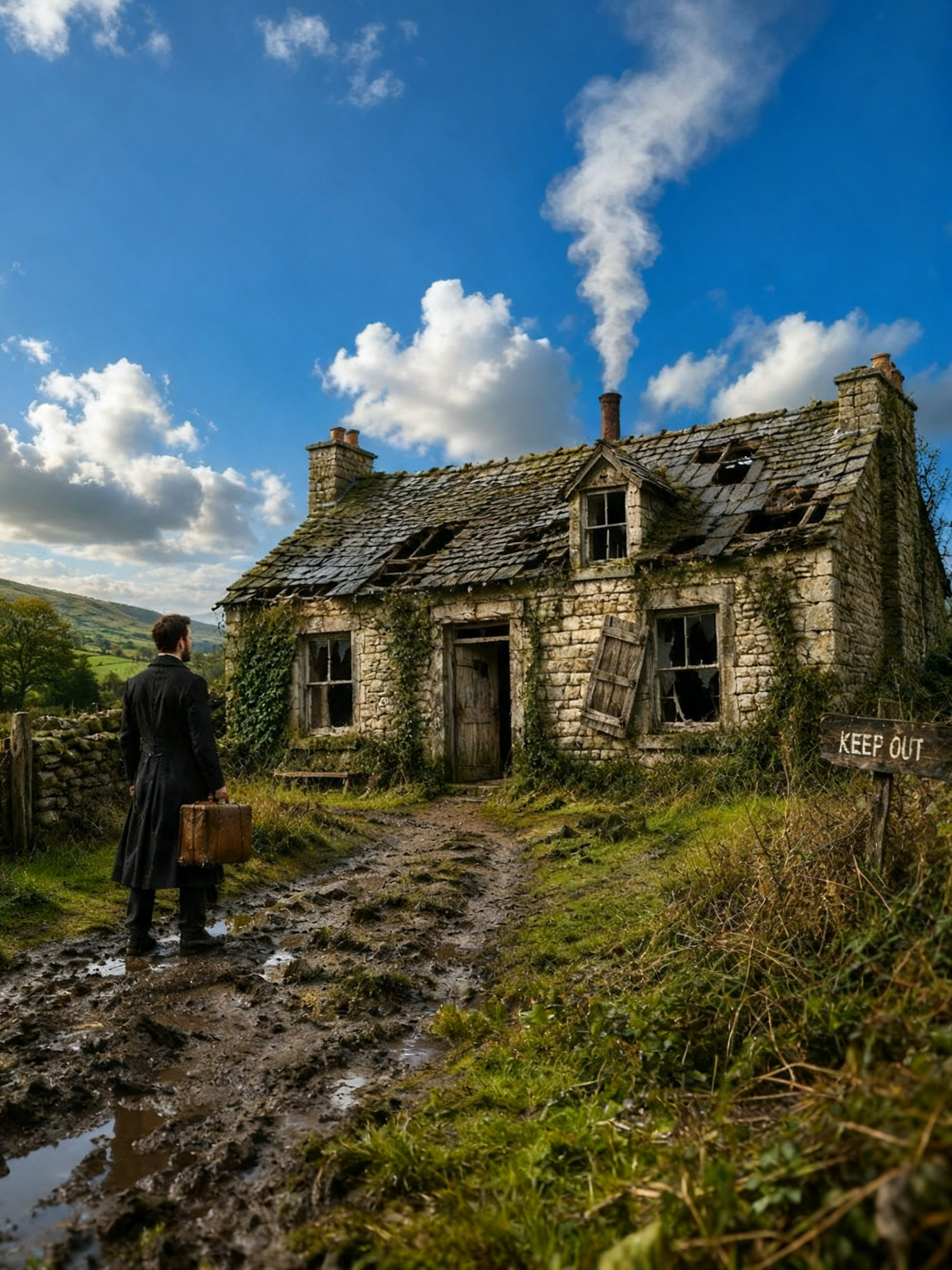
Broke at Nineteen, She Inherited a Hoarder’s Hillside House—Then Gold in the Walls Exposed Who Had Betrayed Her Family
On the fourth morning after my mother’s funeral, Aunt Marlene put my suitcase on her front porch and told me grief wasn’t rent.
My cousin Travis stood behind her with his phone in his hand, recording me like he expected a scene.
Uncle Wade tossed an old brass key onto my suitcase.
“Congratulations, Emma,” he said. “Crazy Aunt Vivian left you her garbage pile.”
Nobody laughed harder than Marlene.
I didn’t cry.
That seemed to disappoint them.
I was nineteen years old, had one hundred forty-three dollars in my checking account, six dollars in cash, half a tank of gas in my mother’s twelve-year-old Ford Escape, and exactly nowhere else to sleep.
Four days earlier, Marlene had squeezed my shoulders at the cemetery and whispered, “You’re not alone. We’re family.”
Now she stood inside the doorway of her four-bedroom house in Hendersonville, North Carolina, wearing a cream sweater that probably cost more than my car insurance.
“You can’t expect us to support you indefinitely,” she said.
“It’s been four days.”
Her mouth tightened.
“That attitude is exactly why this won’t work.”
I looked at the suitcase.
Then at the key.
Then at Travis’s phone.
He was grinning.
“Want me to get your good side?” he asked.
I picked up the key.
That was all.
No screaming.
No begging.
No speech about how my mother, Rebecca, had spent twelve years doing favors for these people.
No reminder that she had driven Marlene to chemotherapy appointments before Marlene’s cancer went into remission.
No reminder that Mom had kept Wade’s two boys every summer for free while he and his wife traveled.
No reminder that Mom had taken care of Grandma Calder during the final eight months of her life because everybody else was “too busy.”
No reminder that when my father died, none of them had offered us money.
No reminder that when Mom got sick, they suddenly stopped answering their phones.
I had watched my mother give them weekends.
I had watched my mother give them money.
I had watched my mother give them forgiveness.
I had watched my mother give them excuses.
I had watched my mother die still believing blood eventually remembered what blood owed.
I lifted my suitcase.
Marlene blinked.
“You’re just leaving?”
“You asked me to.”
For the first time, Travis lowered his phone.
Wade folded his arms.
“You know that house is probably condemned.”
“I’ll find out.”
“There’s no heat.”
“I’ll find out.”
“Vivian was a hoarder.”
“I remember.”
That shut him up for half a second.
Unlike most of the family, I actually remembered Vivian Calder as a person.
Not a punch line.
Not “the crazy old woman on the hill.”
Not “that disgusting hoarder.”
Vivian was my grandfather’s older sister. She had never married, never had children, and had lived for more than fifty years in a stone house overlooking Laurel Creek.
When I was ten, my mother sometimes took me there to help carry groceries.
The hallways had been narrow even then.
Newspapers.
Canning jars.
Coffee tins.
Old clothes.
Broken radios.
Stacks of receipts bound with rubber bands.
Vivian saved everything.
But she had never smelled dirty.
Her kitchen counters were always clean.
Her hands were always washed.
And every time I visited, she made grilled cheese sandwiches with sharp cheddar and cut mine diagonally because I had once told her triangles tasted better.
The family called her insane.
She called them impatient.
The last time I saw her, three years before her death, she pressed a quarter into my palm.
It was dated 1932.
“Don’t spend that one,” she said.
“Because sometimes people tell you something is worth twenty-five cents because they hope you’re foolish enough to believe them.”
I still had the quarter.
It was in my wallet when Marlene threw me out.
I loaded my suitcase into the Ford.
Marlene followed me onto the porch.
“You should probably sell Vivian’s place immediately.”
There it was.
The first thing she had said that actually interested me.
I looked back.
“It’s a liability.”
Wade answered too quickly.
“Taxes. Cleanup. Repairs. Structural problems. Mold, probably.”
Travis lifted his phone again.
“My dad knows somebody who might give you ten grand just for the land.”
“Maybe eight.”
Marlene gave him a sharp look.
I didn’t ask about it.
Instead I put my mother’s car into reverse.
Marlene stepped toward the driveway.
I rolled down the window.
She softened her voice.
Almost maternal.
“Don’t let pride ruin your life. Take whatever someone offers. Vivian didn’t leave you a gift. She left you a problem.”
I looked at the brass key in my cup holder.
Then at my aunt.
And I drove away.
Vivian’s house sat sixteen miles west of town, where pavement narrowed into a twisting county road and expensive new subdivisions climbed the mountains in tidy rows of beige stone and black roofs.
The Calder place was different.
Eleven acres.
Mountain laurel.
A steep gravel drive.
A two-story stone house built in 1918, according to family legend, with green shutters and a deep porch sagging slightly in the middle.
It looked less like a house than something the mountain had pushed out of the ground.
There was a chain across the driveway.
A faded NO TRESPASSING sign leaned sideways from one post.
I unlocked the chain with Vivian’s key.
That surprised me.
I had expected the key to fit the house.
Instead, it fit the property gate.
I drove upward.
A hundred yards from the porch, I saw the first dumpster.
It had been placed beside Vivian’s barn.
A white sticker on the side read:
SLOAN RIDGE DEVELOPMENT.
I stopped the Ford.
For several seconds, I didn’t move.
Then I took out my phone and photographed it.
The date and location saved automatically.
I photographed the tire tracks around it.
I photographed the fresh scrape on the barn door.
I photographed everything before I touched anything.
My mother had taught me that.
When money was tight, she kept receipts.
When an employer shorted her hours, she photographed timecards.
When Dad’s life insurance company tried to deny part of his claim, she made copies of every letter until a supervisor finally corrected the “clerical error.”
“People get brave when they think you can’t prove things,” she used to say.
I walked to the porch.
The house key was taped underneath the mailbox.
That made me smile despite myself.
Typical Vivian.
The brass key opened the gate.
The house key had been left in a place nobody in the family would bother to touch because the mailbox was stuffed with fifteen years of grocery-store circulars.
The front door resisted until I leaned my shoulder into it.
Then the smell came.
Old fabric.
And something faintly sweet, like dried apples.
I stood there with one hand over my mouth.
Not because it was disgusting.
Because it was overwhelming.
There were boxes everywhere.
Stacks reached nearly to the ceiling.
A narrow path led through the living room.
Old magazines were bundled by year.
Glass jars lined three bookshelves.
Coffee cans sat in milk crates.
Pieces of furniture were covered in sheets.
Hundreds of envelopes had been sorted into plastic bins.
Nobody had lived here for nine months.
Vivian had moved into hospice in January.
She died in September.
Mom died six weeks later.
For a moment, that timing bothered me.
Then I noticed the kitchen table.
Everything in the house was dusty except one rectangular patch at the center.
Something had recently been removed.
I photographed that too.
I spent the next hour checking windows and doors.
The electricity still worked.
The water didn’t.
One upstairs bedroom was clear enough to sleep in if I moved six boxes.
The bathroom had no running water, but the toilet tank could be filled manually.
It wasn’t comfortable.
It was shelter.
At nineteen, shelter was luxury.
I carried my suitcase upstairs.
Then I found a note.
It was inside the pillowcase.
Not under the pillow.
Inside the case.
My name was written across the envelope in Vivian’s blocky handwriting.
My fingers went cold.
I sat on the bed.
The envelope contained a single sheet of yellow legal paper.
If Wade gives you one brass key, he has already lied to you.
There are three.
Do not ask him for the others.
Do not argue with Marlene.
Do not let anyone “inventory” this house.
Photograph before moving anything.
Call Naomi Bell.
The will is the door.
The trust is the lock.
Most important: if they tell you I was crazy, remember that crazy people can still keep receipts.
At the bottom was a phone number.
I read the note twice.
Then a third time.
Vivian had known Wade would hand me that key.
She had known Marlene would pressure me to sell.
She had known they would use the word inventory.
And she had written the note before she died.
I called Naomi Bell.
A woman answered on the fourth ring.
“My name is Emma Calder.”
Not confusion.
Recognition.
“Where are you?”
“At Vivian’s house.”
“Are you alone?”
“Have you moved anything?”
“Not much.”
“Has Wade entered the property?”
“I don’t know. There’s a developer’s dumpster near the barn.”
Another silence.
This one lasted longer.
“Take pictures.”
“I already did.”
Vivian would have liked the way Naomi exhaled.
“Good girl.”
I hated being called that.
But something in her voice made it sound less like condescension and more like relief.
“Who are you?” I asked.
“I was Vivian Calder’s attorney for twenty-seven years.”
“Wade told me Howard Pike handled her estate.”
“Howard Pike handles her probate estate.”
“What’s the difference?”
“The difference,” Naomi said, “may be the only reason you still own that house.”
I looked around the dusty bedroom.
“What exactly did Vivian leave me?”
Naomi didn’t answer immediately.
“First, check the sewing room.”
“I don’t know where that is.”
“You will.”
“Vivian said you would remember.”
I almost laughed.
“I haven’t been here in three years.”
“Neither had I when she told me.”
“Anything else?”
Naomi’s voice changed.
“If Wade, Marlene, Travis, Howard Pike, or anyone from Sloan Ridge Development arrives, do not sign anything. Do not allow them inside unless they produce an actual court order. Not a letter. Not an estate notice. A court order.”
“Why would a developer come here?”
“You should ask them.”
“No. I’m asking you.”
Then Naomi said, “Because they have spent eleven years trying to buy the road underneath your feet.”
The call ended ten minutes later.
I found the sewing room upstairs at the end of the hall.
I recognized it because of the wallpaper.
Tiny blue flowers.
When I was twelve, Vivian had repaired the hem of my mother’s winter coat in that room.
The doorway was almost blocked by plastic tubs of fabric.
I moved them one at a time.
On the sewing desk sat an antique Singer machine.
The drawers contained thread.
In the bottom drawer was a wooden box.
I searched for fifteen minutes.
Then I remembered Vivian’s note.
Three keys.
Wade had one.
Where were the others?
I checked beneath the drawer.
Under the sewing machine.
Then I noticed an old pincushion shaped like a tomato.
It was heavier than it should have been.
I turned it over.
Someone had cut the fabric underneath and stitched it closed again.
I used nail scissors from the desk.
A small black key dropped into my palm.
It opened the wooden box.
Inside were twelve rolls of coins.
A photograph of my father.
A folded map of the house.
And one gold coin.
Not yellow-colored.
Bright despite its age.
An American Eagle.
I knew enough to know that one ounce of gold was worth real money.
More than my checking account.
More than my car.
I turned it over carefully.
Taped beneath it was a narrow strip of paper.
ONE IS A MESSAGE.
THE REST ARE ACCOUNTING.
My heartbeat changed.
Not faster.
I unfolded the house map.
Small red circles had been drawn in twenty-seven places.
Living room fireplace.
Kitchen wall.
East bedroom vent.
Basement stairs.
Library shelves.
Porch post.
Attic beam.
Water heater closet.
Beside each circle was a number.
Not amounts.
The same years appeared repeatedly in Vivian’s saved receipts.
I should have started tearing open walls.
I called Naomi back.
“I found the sewing room.”
“What did you find?”
Naomi went quiet.
“Do not describe it over the phone.”
That scared me more than if she had gasped.
“Because Vivian believed at least one person in your family had been inside that house without permission during the last year of her life.”
I looked toward the doorway.
The house suddenly felt bigger.
And less empty.
“She never proved it.”
“The dusty table.”
“There’s a clean rectangle on the kitchen table. Something was removed recently.”
“Photograph it.”
“Already did.”
Naomi sighed again.
“I can be there tomorrow morning.”
“Why not tonight?”
“Because if I come tonight, Marlene will hear about it before breakfast.”
Another pause.
“That is one of the things Vivian was trying to prove.”
I slept with the bedroom door locked.
At two in the morning, headlights moved across the ceiling.
A vehicle climbed halfway up the driveway.
Then backed down.
I didn’t turn on a light.
I took video through a crack in the curtain.
All I could see were taillights.
Rectangular.
At seven the next morning, I found fresh mud tracks near the gate.
I photographed those too.
Naomi Bell arrived at nine in a dark-blue Volvo that looked older than I was.
She was sixty-eight, silver-haired, small, and dressed in black slacks with hiking shoes.
She carried a leather briefcase and a thermos.
The first thing she did was hug me.
The second thing she did was look past me toward the house.
“Did they come?”
“Someone did.”
She studied the tire tracks.
“You didn’t confront them?”
“Your mother raised you well.”
My throat tightened.
I looked away.
Naomi didn’t pretend not to notice.
She simply handed me the thermos.
We sat at Vivian’s kitchen table.
Naomi opened her briefcase and removed three folders.
She did not show them to me immediately.
“Vivian executed a new will fourteen months ago,” she said. “Howard Pike prepared it.”
“Why would she use him if she trusted you?”
“She didn’t.”
Naomi continued.
“She wanted Howard involved.”
“Because Howard represents Wade and Marlene in most of their business matters. Vivian believed anything she told Howard would reach them.”
“So she intentionally gave him information?”
“Limited information.”
“Like what?”
“That you would receive this property through her will.”
My stomach tightened.
“So they knew before she died.”
“That explains the dumpster.”
Naomi slid the first document across the table.
It was a deed.
Vivian Calder, Grantor.
Calder Restitution Trust, Grantee.
Dated eight months earlier.
Recorded with the county.
I looked up.
“If the trust owns the house, why did the will leave it to me?”
“It didn’t.”
“But Wade said—”
“Wade assumed you wouldn’t understand the paperwork.”
Naomi tapped the deed.
“The trust transferred beneficial ownership of the property to you upon Vivian’s death. The will contains a pour-over provision for several minor assets, but the house never entered probate.”
My mouth went dry.
“So Wade isn’t executor of the house?”
“The contents?”
“Some are ordinary estate property.”
Naomi opened the second folder.
There were seventeen pages.
A schedule of assets.
Precious metals.
Numismatic collections.
Bearer instruments.
Certain antiques.
Historical records.
Family accounting records.
Personal correspondence.
All specifically assigned to the Calder Restitution Trust.
I looked toward the hallway.
“The gold?”
Naomi’s eyes met mine.
“You found some.”
“One coin.”
“Then yes.”
“How much is there?”
“I don’t know.”
“You were her attorney.”
“I know what she declared to the trust. I do not know where she put it.”
“How much did she declare?”
Naomi hesitated.
“Approximately three point eight million dollars in precious metals and collectible coins as of the last formal valuation.”
For several seconds, all I could hear was the refrigerator humming.
Three point eight million.
I looked at the stained kitchen ceiling.
The cracked linoleum.
The stacks of grocery bags.
The rusted toaster.
“Three point eight million dollars is hidden in this house?”
“Maybe more now.”
I laughed once.
Not because it was funny.
Because my brain had nowhere else to send the shock.
“My aunt threw me out over rent.”
Naomi’s face tightened.
“She knew Vivian had money.”
“She knew this?”
“Did Wade?”
“Vivian. Me. The trust company. An appraiser in Charlotte.”
I stared at the schedule.
“This makes no sense.”
Naomi removed the third folder.
This one was thin.
A handwritten note was clipped to the cover.
IF EMMA ASKS WHY, SHOW HER THE LEDGER.
Inside was a photocopy of an old partnership agreement.
CALDER RIDGE ORCHARDS.
My grandfather’s name was on it.
So was Vivian’s.
So was my father’s name.
Michael Calder.
My father had been twenty-five when it was signed.
Naomi turned several pages.
“In 1998, the family sold most of the original orchard property to a timber and development company.”
It was one of those family stories told at Christmas.
The Calders used to own half the mountain.
Then taxes forced them to sell.
Everybody got almost nothing.
At least that was the version I knew.
Naomi slid a closing statement toward me.
Sale price: $6,840,000.
My pulse jumped.
“That’s not nothing.”
The distribution schedule showed four primary interests.
My grandfather.
A family trust.
Michael’s allocation was $1,026,000 before tax.
I stared at the number.
“My dad never had a million dollars.”
“He worked at a tire plant.”
“He and Mom rented until I was eight.”
“So where did this go?”
Naomi opened another document.
A transfer authorization.
It directed my father’s share into Calder Ridge Holdings LLC.
His signature appeared at the bottom.
I recognized it.
Or thought I did.
Naomi put a second paper beside it.
My father’s driver’s license application from the same year.
I saw the difference immediately.
Dad’s real signature started with a tall M that leaned backward.
The transfer form leaned forward.
“How did Vivian get this?”
“She spent almost twenty years collecting documents.”
“Why didn’t Dad fight it?”
“According to Vivian, Michael was told his share had been consumed by debts attached to the property.”
“Who told him?”
“Your grandfather. Wade. Marlene.”
I looked toward the window.
Marlene had been twenty-eight in 1998.
Wade thirty-one.
But old enough.
“Why would Grandpa do that?”
“Calder Ridge Holdings was financing several developments. They needed cash.”
“And Dad’s money became their cash.”
“Did Vivian know then?”
“No. She discovered inconsistencies years later.”
“Did she sue?”
“She tried to confront them.”
“What happened?”
“They told the family she was becoming unstable.”
I looked around at the stacks.
Understanding began to arrive in pieces.
The saved envelopes.
Statements.
Newspapers.
Bank records.
“Everyone started calling her crazy.”
“Because she kept documents.”
“Because she asked questions.”
Naomi didn’t answer.
She didn’t need to.
I stood and walked to the window.
The blue dumpster waited beside the barn.
SLOAN RIDGE DEVELOPMENT.
“What does the developer have to do with this?”
Naomi closed the ledger.
“The original eleven acres surrounding this house were excluded from the 1998 sale. Vivian owned them outright.”
“The easiest legal access to the new Sloan Ridge project crosses Vivian’s old driveway for approximately nine hundred feet.”
I remembered the expensive subdivisions along the county road.
“You said they’ve tried to buy it for eleven years.”
“How much?”
“Latest offer I saw was six hundred seventy-five thousand for a permanent access easement.”
I nearly laughed again.
“And Travis said someone might give me eight thousand for the land.”
Naomi smiled without humor.
“Family discount.”
A truck engine sounded outside.
Naomi’s smile disappeared.
I looked through the window.
Three vehicles were coming up the driveway.
A black Tahoe.
A white pickup.
A county SUV.
Marlene climbed out of the Tahoe.
Wade followed.
Howard Pike stepped from the passenger side wearing a gray suit.
The county vehicle belonged to Building Safety.
A man in a reflective vest got out carrying a clipboard.
Behind them came Travis.
And behind Travis came a tall man in a quarter-zip sweater I recognized from billboards around town.
Gavin Sloan.
Sloan Ridge Development.
“They brought everybody,” I said.
Naomi closed her briefcase.
I looked at her.
“Systems are easier to expose when they stand in one photograph.”
I took out my phone.
By the time I opened the front door, Marlene was halfway across the porch.
Her expression changed when she saw Naomi.
It was subtle.
“Emma,” Marlene said. “We were worried.”
“No, you weren’t.”
Her smile stiffened.
Howard stepped forward.
“Ms. Calder, I represent the estate of Vivian Calder.”
Naomi moved beside me.
“And I represent the Calder Restitution Trust.”
Howard’s face lost color.
Only for a second.
But I saw it.
So did Naomi.
Wade recovered first.
“There is no trust.”
Naomi looked at him.
“That’s a confident statement.”
“I’m executor.”
“Of the probate estate.”
“Which includes this property.”
Howard put one hand on Wade’s arm.
The county inspector cleared his throat.
“We’ve received a complaint that the residence is unsafe for occupancy.”
“From whom?” I asked.
“I’m not permitted to disclose complainant information.”
“Can you inspect without my permission?”
He hesitated.
Howard spoke.
“As estate counsel, I can authorize—”
“No,” Naomi said.
Howard looked at her.
She opened her briefcase and handed the inspector a certified copy of the recorded deed.
He read the first page.
Then the second.
His expression changed.
“Ms. Calder is trustee beneficiary?”
“And the property is outside probate?”
Wade stepped closer.
“This is ridiculous. Vivian was incompetent.”
Naomi looked at him.
“You’ll want to be careful with that argument.”
“Because Howard witnessed her competency affidavit eight days before the deed was recorded.”
Slowly, everybody looked at Howard.
His jaw tightened.
Gavin Sloan took one step backward.
Mini-payoff number one.
Nobody yelled.
Nobody confessed.
Nobody needed to.
The first crack had appeared.
The inspector eventually entered because I gave permission.
He found electrical hazards.
Blocked exits.
One damaged stair rail.
Water service disconnected.
But the structure itself was sound.
He posted a temporary notice prohibiting overnight occupancy until the exit paths were cleared and the water restored.
Marlene looked almost pleased.
“You see?” she said. “You can’t stay here.”
“I heard him.”
“You’ll need somewhere to go.”
“I’ll manage.”
She lowered her voice.
“We can still help you.”
I looked at the woman who had placed my suitcase on a porch the day before.
Gavin Sloan finally spoke.
“I’d be willing to discuss a fair number.”
“Eight thousand?”
Travis looked down.
Gavin frowned.
“I never offered eight thousand.”
Interesting.
Marlene glared at Travis.
Another crack.
“What would you offer?” I asked Gavin.
Howard interrupted.
“This is not the appropriate setting.”
I ignored him.
Gavin studied me.
“For the entire parcel?”
“Seven hundred fifty thousand.”
Wade turned toward him.
Too quickly.
Marlene’s face froze.
Travis actually whispered, “What?”
I almost enjoyed that.
Seven hundred fifty thousand.
The land they had called worthless less than twenty-four hours earlier.
“Thank you,” I said.
“For what?”
“For answering honestly.”
I closed the door.
That afternoon, Naomi and I cleared the required exits.
She paid to restore water from the trust’s operating account.
I didn’t know there was an operating account.
Apparently Vivian had funded it with forty-two thousand dollars for taxes, insurance, repairs and legal expenses.
Every humiliation Marlene had tried to build suddenly looked smaller.
Not painless.
I moved into a cheap motel for three nights while the repairs were completed.
I paid for it myself.
Naomi offered.
Not because I was proud.
Because I needed to know I could still take care of one ordinary thing.
That first night, I sat cross-legged on the motel bed with Vivian’s map spread in front of me.
Twenty-seven circles.
Twenty-seven dates.
Three point eight million dollars.
I didn’t sleep much.
The next morning, Naomi brought a professional appraiser and two bonded security officers.
We began with the living room fireplace.
Red circle.
The mantel looked ordinary.
Vivian had stacked thirty years of Reader’s Digest magazines on top of it.
Behind the magazines was an iron plate secured with four screws.
The screws had been painted to match the wall.
I removed them.
Behind the plate was a rectangular cavity.
Inside sat three canvas bank bags.
The first contained gold coins.
The second contained smaller gold bars wrapped individually in old newspaper.
The third contained documents.
Not random documents.
Cancelled checks.
Wire records.
Closing statements.
Copies of bank deposit slips.
On top was a card in Vivian’s handwriting.
MICHAEL — 1998.
They called it a family necessity.
Families do not forge signatures.
The appraiser stopped counting.
Naomi sat down.
I held the card.
My father had been dead seven years.
My mother six weeks.
For the first time since the funeral, I wanted to break something.
Not because of the money.
Because I could suddenly picture my parents at our old kitchen table when I was little.
Dad calculating which bill could wait.
Mom cutting coupons.
The two of them whispering after they thought I was asleep.
I remembered a winter when our furnace failed.
Dad repaired it himself using a used part because a new one cost four hundred dollars.
I remembered Mom returning a coat because my school needed seventy dollars for a field trip.
I remembered Dad working Saturdays.
I remembered him telling me, “We’re not poor, kiddo. We’re just between paychecks.”
He had been entitled to more than a million dollars.
And his own family had taken it.
I placed Vivian’s note back inside the bag.
That was when Naomi said, “Emma.”
I looked up.
She was holding a bank statement.
“This isn’t only about 1998.”
The statement was dated 2007.
Calder Ridge Holdings.
A withdrawal for $184,000.
Authorized by Wade Calder.
The destination account belonged to Michael Calder.
Except Dad never received it.
A second document showed the money transferred again three days later.
To Marlene.
“Why put money into Dad’s account first?” I asked.
“To make it appear he had been repaid.”
“Then remove it?”
Naomi pointed at a power-of-attorney form.
My father’s signature appeared at the bottom.
The date was two months after his death.
I stopped breathing.
The appraiser looked away.
Even the security guard muttered, “Jesus.”
There are moments when rage arrives hot.
Mine didn’t.
Mine arrived cold enough to make every detail clearer.
“What is the statute of limitations?” I asked.
Naomi looked at me.
No screaming.
Just the question.
“It depends on the causes of action. Fraud concealed through forged documents can alter limitation periods. Estate claims complicate things. We need a forensic accountant.”
“Can we freeze anything?”
“If we establish probable fraud and risk of dissipation, possibly.”
Naomi nodded once.
My family believed they were dealing with a homeless nineteen-year-old.
They did not understand that having nothing left to lose can make patience very inexpensive.
Over the next six days, we opened nine marked locations.
Not twenty-seven.
Naomi insisted we stop after enough evidence was recovered to secure the property legally.
The caches were brilliant.
One was inside a hollow curtain rod.
Another beneath a false bottom in a flour cabinet.
Twenty-two coins were sealed inside an antique floor lamp.
Two gold bars sat inside a box marked CHRISTMAS LIGHTS — BROKEN.
Another cache was concealed behind the air-return vent.
Vivian had hidden fifty thousand dollars’ worth of coins inside a rusted pressure cooker nobody would have bothered opening.
Every cache contained paperwork corresponding to its date.
The gold wasn’t random.
It was indexed.
Accounting.
Exactly as Vivian had written.
When we added the first nine caches, the estimated precious-metal value exceeded $1.4 million.
The documents were worth more.
They showed transfers.
Property distributions.
Signatures.
Shell companies.
One company appeared again and again.
Blue Laurel Management LLC.
Naomi’s forensic accountant traced it to Marlene.
Calder Ridge Holdings had transferred more than $900,000 into Blue Laurel over eleven years.
Another $610,000 went to a company managed by Wade.
And several transfers had been disguised as reimbursements to dead, elderly or inactive family members.
My father’s name appeared seven times after his death.
Vivian had been collecting proof piece by piece.
No wonder they called her crazy.
Crazy was cheaper than admitting she could count.
On Friday morning, Howard Pike filed a petition challenging the trust.
He claimed Vivian lacked capacity.
He claimed I had exercised undue influence.
I had barely seen Vivian in three years.
He claimed the house and all its contents belonged to the probate estate until ownership could be determined.
He requested an emergency order placing Wade in control of the property.
For four hours, they believed they had won.
At p.m., a temporary preservation order was entered pending a hearing.
Wade sent me a screenshot before my attorney even called.
Looked like you celebrated too early.
Then Travis sent a photograph of himself standing outside Vivian’s gate.
He was smiling.
TIME TO TAKE OUT THE TRASH.
I showed Naomi.
“Do we respond?” I asked.
At p.m., Naomi filed the trust’s response.
Attached were Vivian’s competency evaluation.
Video testimony from two independent doctors.
The recorded deed.
Howard Pike’s own signature as witness to Vivian’s competency certification.
And something Naomi had deliberately not shown me before.
A forty-three-minute video.
Vivian sat in this kitchen eleven months before her death.
Same table.
Same chair.
She looked smaller than I remembered.
White hair.
Blue cardigan.
Hands folded.
Naomi’s voice came from behind the camera.
“Vivian, why are you creating this trust?”
Vivian looked directly into the lens.
“Because my family has mistaken silence for stupidity.”
My skin prickled.
Naomi asked, “Do you know what property you own?”
Vivian listed the house.
The acreage.
Bank accounts.
Precious-metal holdings.
Investment accounts.
Specific antiques.
She gave approximate values with startling accuracy.
“Why is Emma Calder the beneficiary?”
Vivian’s face changed.
“Because Michael was robbed.”
“And because Rebecca paid for that robbery every day afterward.”
Vivian looked down at her hands.
“Rebecca worked until her hands cracked while people who stole from her husband vacationed in Hilton Head. She cared for my brother when the children who received his money would not. She raised Emma without poisoning her against the family. I watched them mistake her decency for weakness.”
Naomi asked, “Are you leaving Emma this trust because she asked?”
“Has Emma pressured you?”
“Has she discussed your estate with you?”
“Then why her?”
Vivian looked into the camera again.
“Because she is the only one who never asked me what this house was worth.”
My vision blurred.
I paused the video.
Not because I wanted to cry.
Because I needed to keep hearing her clearly.
Naomi waited.
After a minute, I pressed play.
Vivian continued.
“They will call me incompetent.”
Naomi asked, “Who?”
“Wade. Marlene. Howard, if Howard thinks there is enough money in it.”
A grim smile crossed Vivian’s face.
“Howard will be particularly offended to discover I used his paperwork against him.”
“What do you mean?”
“I needed someone they trusted to witness my capacity.”
Naomi laughed in the video.
Real laughter.
Vivian didn’t.
“They assume old women stop understanding rooms when people begin speaking around us instead of to us.”
Then she leaned closer to the camera.
“If they challenge the trust, release the orchard files.”
Naomi asked, “All of them?”
“And the gold?”
“Emma gets the gold.”
“Why gold?”
Vivian was silent for several seconds.
“Because numbers on paper were how they stole from Michael. I wanted Emma’s restitution to be something she could hold in her hand.”
I paused the video again.
That sentence did what the three-point-eight-million-dollar estimate hadn’t.
It broke through.
One tear hit my wrist.
Then another.
I wiped them away.
Naomi didn’t say anything.
That was kindness.
I finished the video.
Near the end, Vivian gave one final instruction.
“If Wade attempts to enter the house after notice of the trust, do not stop him.”
Naomi asked why.
Vivian’s eyes sharpened.
“Let him show the judge what he thinks belongs to him.”
The next morning, Wade did exactly that.
He arrived with Travis, two junk-removal workers, and a locksmith.
The preservation order prohibited destruction or removal.
It did not authorize entry.
Wade apparently missed that distinction.
Or Howard failed to explain it.
Our trail camera recorded them cutting the chain.
The porch camera recorded Wade telling the locksmith, “I’m the executor. I own what’s inside.”
The living-room camera recorded Travis opening boxes.
The kitchen camera recorded him taking three silver coins and putting them into his jacket.
The hallway camera recorded Wade instructing workers to carry six bins into the truck.
The bins were labeled BANK RECORDS.
They lasted fourteen minutes inside the house.
The bonded security company Naomi had hired called the sheriff.
Deputies arrived before the truck left the property.
I watched from across the road with Naomi.
She had insisted I not be present at the house.
Wade argued.
Travis swore.
Marlene arrived ten minutes later.
Howard arrived twelve minutes after that.
Nobody was arrested immediately.
But the six bins went back inside.
Travis emptied his pockets on the hood of a patrol car.
Three silver coins.
One antique watch.
A small envelope containing two old stock certificates.
Marlene saw me across the road.
Even from fifty yards away, I knew what she wanted.
A reaction.
I gave her none.
At the court hearing three days later, Judge Elaine Porter watched twelve minutes of security footage.
She did not smile.
She did not raise her voice.
She simply removed Wade as temporary executor of Vivian’s probate estate.
Howard tried to interrupt.
The judge raised one hand.
“Mr. Pike, if you speak over me again, you will spend the afternoon explaining courtroom etiquette from the other side of that rail.”
He stopped.
The court appointed an independent administrator.
The trust retained control of the house.
The court prohibited Wade, Marlene, Travis and their agents from entering the property.
The judge also ordered preservation of records connected to Calder Ridge Holdings and Blue Laurel Management.
That was the moment Marlene stopped looking smug.
Not when the house stayed mine.
Not when Wade lost executor status.
When the judge said Blue Laurel.
Because Marlene had never told anyone she owned it.
At least, she thought she hadn’t.
Outside the courthouse, reporters waited.
Small-town court filings travel fast when the words gold, family fraud and luxury development appear together.
Marlene walked directly toward me.
Naomi stepped between us.
Marlene stopped.
“You’re destroying this family,” she said.
I looked at her.
That was the first direct conversation we had had since she threw me out.
“You put my suitcase on your porch.”
Her face hardened.
“This is bigger than that.”
“You don’t understand what Vivian was doing.”
“Then explain it.”
“She hated us.”
“No. She documented you.”
Marlene flinched.
“You think because some lonely old woman buried coins in walls, you suddenly understand thirty years of family business?”
“Your father made choices.”
“Then show me his original signatures.”
Her mouth closed.
“Show me the bank records.”
“Show me where his million dollars went.”
“Show me why money moved through his account after he died.”
Her eyes changed.
That was the first time I knew for certain she understood exactly what I was talking about.
I stepped closer.
Not threatening.
Just close enough that she couldn’t pretend not to hear me.
“Mom died with thirteen thousand dollars in medical debt.”
Marlene swallowed.
“She had insurance.”
“Bad insurance.”
“That wasn’t my fault.”
“It wasn’t.”
She looked confused.
I continued.
“The furnace that broke wasn’t your fault. Dad losing overtime wasn’t your fault. Mom working two jobs wasn’t your fault. Cancer wasn’t your fault.”
Naomi remained silent beside me.
Reporters were recording from several yards away.
“What was your fault,” I said, “was taking money that belonged to him and then watching his family struggle.”
Marlene’s face became very still.
“You can’t prove that.”
Not “I didn’t.”
Not “That never happened.”
You can’t prove that.
Naomi heard it.
So did the cameras.
Marlene realized what she had said about two seconds too late.
Mini-payoff number two.
She turned and walked away.
The forensic accounting took seven weeks.
I spent those weeks cleaning Vivian’s house.
Not with a demolition crew.
Box by box.
Every newspaper checked.
Every envelope opened.
Every container photographed.
Some days we found nothing.
Other days we found fifteen thousand dollars in gold coins inside a jar labeled SCREWS.
Once I opened an old vacuum-cleaner bag and discovered twelve Krugerrands wrapped in wax paper.
Another cache was hidden in the base of a grandfather clock.
One was beneath a loose porch column.
The largest single discovery came from an upstairs linen closet.
At the back stood four sealed cans marked WALL PAINT — GRAY.
One had dried paint around the lid.
Inside were six gold bars.
The other cans held more.
Value: nearly half a million dollars.
Vivian had understood something important about people.
They searched jewelry boxes.
They opened safes.
They checked mattresses.
Nobody wanted old paint.
By Christmas, twenty-four of the twenty-seven marked caches had been recovered.
Appraised value of precious metals and coins: $4,184,600.
But the gold became almost secondary.
The paperwork built a history of theft stretching back decades.
Dad’s inheritance was the biggest piece.
Not the only one.
Grandma had been charged “care expenses” while Mom was providing most of her care for free.
Checks supposedly reimbursing Mom had been deposited into an account Wade controlled.
A family land distribution had been altered.
Two cousins had been shorted on mineral-rights royalties.
Vivian herself had been denied payments from a timber lease.
Small thefts.
Big thefts.
The kind families hide because everybody benefits just enough to avoid asking where the money came from.
Not one villain.
Wade signed.
Marlene moved money.
Howard prepared paperwork that made questionable transfers look ordinary.
Travis benefited from a college fund financed partly through Blue Laurel.
My grandfather had started much of it years earlier.
Other relatives looked away.
Everybody had a reason.
Business survival.
Family stability.
Tax planning.
Protecting property.
Avoiding conflict.
They had so many explanations that after a while the explanations became the crime.
The Sloan Ridge deal was the final piece.
The development company needed access across my land.
Gavin Sloan had paid Calder Ridge Holdings a $300,000 nonrefundable “consulting advance” based on Wade and Marlene’s promise that the easement would be secured after Vivian died.
They had promised land they did not own.
Vivian knew.
That explained the dumpster.
The pressure.
The eight-thousand-dollar insult.
They needed me to sell fast before I understood the value of the property.
If I had signed a deed for ten thousand dollars that first week, they could have flipped the access rights for hundreds of thousands and protected the entire development.
When I learned that, I sat at Vivian’s kitchen table and laughed until Naomi asked whether I was all right.
“I’m thinking about Travis.”
“What about him?”
“He recorded Aunt Marlene throwing me out.”
Naomi smiled.
“He filmed the whole conversation.”
“Including them telling me the land was worthless.”
“And he posted part of it online.”
“So there’s a public video of an interested family member pressuring a nineteen-year-old beneficiary to sell a seven-hundred-fifty-thousand-dollar property for eight thousand dollars.”
Naomi’s smile widened.
“There is.”
Sometimes greed documents itself.
Gavin Sloan withdrew from his deal with Wade and Marlene within forty-eight hours of the accounting report.
He also produced emails under subpoena.
Those emails were devastating.
Marlene had written:
Once Vivian is gone, the girl won’t be a problem. She has no money and no attachment to the property.
Wade replied:
We control probate. Give it a week.
Howard Pike had responded:
Do not put that in writing.
Unfortunately for Howard, that sentence was also in writing.
He resigned as counsel for the probate estate.
Then he hired his own lawyer.
Wade blamed Marlene.
Marlene blamed Wade.
Travis blamed both parents.
Two extended relatives suddenly remembered conversations they had supposedly forgotten for fifteen years.
Nobody wanted to be the last person holding the lie.
By February, the civil case had become a criminal investigation.
Nobody had been convicted of anything yet.
Naomi reminded me of that whenever reporters used words like thieves.
But accounts were frozen.
Properties were encumbered.
The independent administrator sought recovery of estate assets.
My father’s estate was reopened.
Mom’s estate was reopened too.
Forensic experts concluded Dad’s signatures on at least four key documents had almost certainly been forged.
One power of attorney had been created after his death.
There was no innocent explanation for that.
The settlement negotiations began in March.
Marlene wanted privacy.
Wade wanted immunity from additional civil claims.
The insurance companies wanted limits.
I wanted one thing.
The truth entered into the record.
Their lawyers offered money.
A lot of money.
More than I knew how to imagine.
Naomi slid the first offer across Vivian’s kitchen table.
“Four point one million, combined.”
I looked at it.
“What do they want?”
“Dismissal of several claims. Confidentiality. No admission of wrongdoing.”
“You should understand that litigation has risk.”
“I understand.”
“They may increase it.”
“I don’t care.”
Naomi studied me.
“Emma, money can change your life.”
“It already has.”
I looked around the kitchen.
The house was different now.
The paths were wide.
The trash was gone.
The papers were organized.
Sunlight reached windows that had been blocked for years.
Under the mess, Vivian’s home was beautiful.
Oak floors.
Stone fireplace.
Handmade cabinets.
A view across the Blue Ridge Mountains that turned purple at sunset.
I placed my hand on the settlement papers.
“They spent twenty years saying Vivian was crazy.”
“They let Mom believe Dad failed us.”
“They let Dad die thinking he lost the family money.”
Naomi nodded.
“They don’t get confidentiality.”
She leaned back.
“Vivian would have liked you.”
“She did like me.”
“You know what I mean.”
The final civil hearing happened in May.
Eight months after Vivian died.
Seven months after my mother.
Nine months after Marlene had promised me at the cemetery that family took care of family.
The courtroom was full.
Marlene sat behind her attorneys.
Wade sat separately.
Travis didn’t look at me.
Howard Pike sat with counsel near the back.
Gavin Sloan had settled his portion of the dispute by releasing all claims to access across my property and cooperating with investigators.
The trust remained mine.
The gold remained mine.
Nobody disputed that anymore.
The primary civil issue involved restitution owed to Dad’s reopened estate and damages associated with forged transfers.
After months of forensic work, the number attributed to diverted funds, lost gains and related transfers exceeded $2.6 million.
Judge Porter approved a settlement requiring substantial repayment and property transfers.
No confidentiality.
No statement that “all parties deny wrongdoing.”
The factual accounting report remained part of the public record.
That mattered more to me than the extra money their first confidentiality demand might have bought.
When proceedings ended, people began filing out.
I stayed seated.
Naomi touched my arm.
“You did it.”
“Vivian did.”
“You both did.”
Across the courtroom, Marlene stood.
She looked older than she had in October.
Not ruined.
Not broken.
Real life rarely gives villains the courtesy of collapsing beautifully.
She still wore expensive clothes.
Her hair was still perfect.
She would probably spend years insisting the entire story was more complicated than people understood.
Maybe parts of it were.
People do terrible things for reasons they think are practical.
That doesn’t make the damage imaginary.
Marlene noticed me watching.
For a second, we were the only two people in the room who seemed still.
Then she walked over.
Naomi shifted closer.
I shook my head.
Marlene stopped beside the bench.
“You’re happy now?”
That answer surprised her.
“You got everything.”
“The house. Vivian’s money. Your father’s claim. What exactly is left?”
“My parents.”
Her face changed.
Just slightly.
“You can’t bring people back.”
She picked up her purse.
“Then maybe eventually you’ll learn that punishment doesn’t heal anything.”
I thought about that.
Maybe she was right.
Punishment wasn’t healing.
Neither was money.
Neither was revenge.
But truth was different.
Truth let dead people stop carrying blame that belonged to the living.
“My father didn’t fail us,” I said.
Marlene stared at me.
“That’s what I got.”
She walked away.
I thought that was the end.
For almost three months, it was.
I enrolled in community college again.
Business accounting.
Naomi laughed when I told her.
I kept Vivian’s house.
I repaired the porch.
Replaced the plumbing.
Installed new wiring.
Sold nothing from the property until it had been catalogued.
I paid Mom’s medical debt.
I created an account for school.
I placed most of the gold with professional custodians instead of keeping millions of dollars inside coffee cans.
Vivian might have disapproved.
Or maybe not.
She had hidden gold because she distrusted people, not mathematics.
I also started something in Mom’s name.
The Rebecca Calder Care Fund.
Small grants for local families caring for sick parents while working.
The first check was $2,500.
The woman who received it cried in my kitchen.
Her husband had leukemia.
She had missed twelve shifts in three months.
She kept apologizing for crying.
I understood.
That was when the inheritance finally felt like something other than evidence.
By August, only three red circles remained unopened on Vivian’s map.
Naomi had wanted professionals present.
One mark was inside an attic beam.
Someone had opened it years earlier.
Another was beneath an old cistern behind the barn.
It held silver coins, family photographs and a sealed envelope addressed to my mother.
I never opened it.
It belonged to her.
Maybe someday I would.
The final circle was strange.
It wasn’t inside the house.
It sat at the northern edge of the property near an old stone retaining wall overlooking the creek.
Beside the circle Vivian had written one date.
And one word.
My father died in 2019.
I stared at the map for a long time.
His crash had happened on Route 9 after midnight.
Single vehicle.
His truck went through a guardrail.
The state trooper said Dad probably hydroplaned.
No alcohol.
No other car identified.
Mom never questioned it.
Neither did I.
Why would we?
Accidents happened.
I called Naomi.
She came the next morning.
We hired two laborers and a surveyor.
The retaining wall was fifty years old.
Nothing looked unusual until the surveyor noticed one stone had mortar around only three sides.
We removed it.
Behind it was a metal tube.
Inside the tube were no coins.
Just a key.
A photograph.
And a microSD card sealed in plastic.
The photograph had been taken at night.
It showed Dad’s truck parked outside a diner in Chimney Rock.
The timestamp read 11:18 p.m.
Forty-three minutes before the estimated time of his crash.
A black Chevrolet Tahoe was parked beside him.
The passenger door was open.
Someone stood between the vehicles.
The image was grainy.
But I recognized the cream-colored coat.
I had seen it in hundreds of family photographs.
On the back, Vivian had written:
HE DID NOT LEAVE ALONE.
Naomi sat down on the grass.
My body had gone perfectly still.
“What’s on the card?” she asked.
“I don’t know.”
We returned to the house.
I used an offline laptop.
The card contained twelve files.
Eleven were scans.
Phone records.
Insurance correspondence.
A repair invoice.
A police report.
One file was video.
Eight seconds long.
A gas station camera.
Dad’s truck crossing the frame.
Then the black Tahoe.
Six seconds behind him.
I watched twice.
Naomi called the attorney handling the criminal investigation.
He told us not to contact anyone.
Not Marlene.
Not reporters.
We gave him copies.
I thought that would be enough.
Then he called back forty minutes later.
“Emma, did Vivian ever mention a second vehicle in your father’s crash?”
“Did the police report?”
“Were you aware your aunt owned a black Tahoe in 2019?”
“Do you know what happened to it?”
I remembered.
Marlene had traded it the following spring.
She complained about the dealer for months.
“Because DMV records show it wasn’t traded.”
“It was reported destroyed.”
I gripped the phone.
“Destroyed how?”
Naomi closed her eyes.
The investigator continued.
“Three weeks after your father died.”
I looked toward Vivian’s map.
The last red circle had been cut open.
But I suddenly understood something.
Vivian’s map had never been a treasure map.
It was a chain of evidence.
The gold was what kept me looking.
The money was what made the family panic.
The house was what brought everybody back to the scene.
And Vivian had saved the worst thing for last.
That evening, I found one more object inside the metal tube.
I had missed it because it was pressed flat against the cap.
A tiny folded piece of paper.
Three sentences.
The gold repays what they stole from your father.
The records prove how they did it.
But if Marlene ever says Michael died alone, ask her one simple question.
Two days later, Marlene appeared at the house.
She stood beyond the new gate because the court order still prohibited her from entering.
I walked down the driveway alone.
She looked nervous.
For the first time in my life, Aunt Marlene looked genuinely afraid of me.
Not because I had money.
Because I had stopped needing answers from her.
“I heard investigators contacted Wade again,” she said.
I said nothing.
“What did you find?”
I leaned one arm against the gate.
“Why do you think I found something?”
“Because this family can’t sneeze without somebody calling a reporter now.”
Still, I said nothing.
Her eyes moved toward the retaining wall.
That was enough.
Maybe not what we found.
Marlene swallowed.
“Vivian filled your head with poison.”
“She’s dead.”
“She hated me.”
“She left documents.”
“Documents can be misunderstood.”
“Photographs too?”
Her face emptied.
That tiny fracture.
I remembered Vivian’s note.
The exact wording.
Ask her one simple question.
Something weak.
Something almost casual.
A question a frightened nineteen-year-old might ask because she didn’t know any better.
I unlocked the gate but didn’t open it.
Then I looked directly at the woman who had thrown me out four days after my mother’s funeral, stolen years from my father’s life, watched my parents struggle, and spent eight months insisting dead people could no longer contradict her.
“Aunt Marlene,” I said quietly, “before you go… do you remember who was driving your Tahoe the night my father died?”
✓ Lynn R. Adams
Broke at Nineteen, She Inherited a Hoarder’s Hillside House—Then Gold in the Walls Exposed Who Had Betrayed Her Family On the fourth morning after my mother’s funeral, Aunt Marlene put my suitcase on…