Broke at Nineteen, Her Family Sold Her a Collapsed Barn for $1—Then She Found What They Buried Beneath It
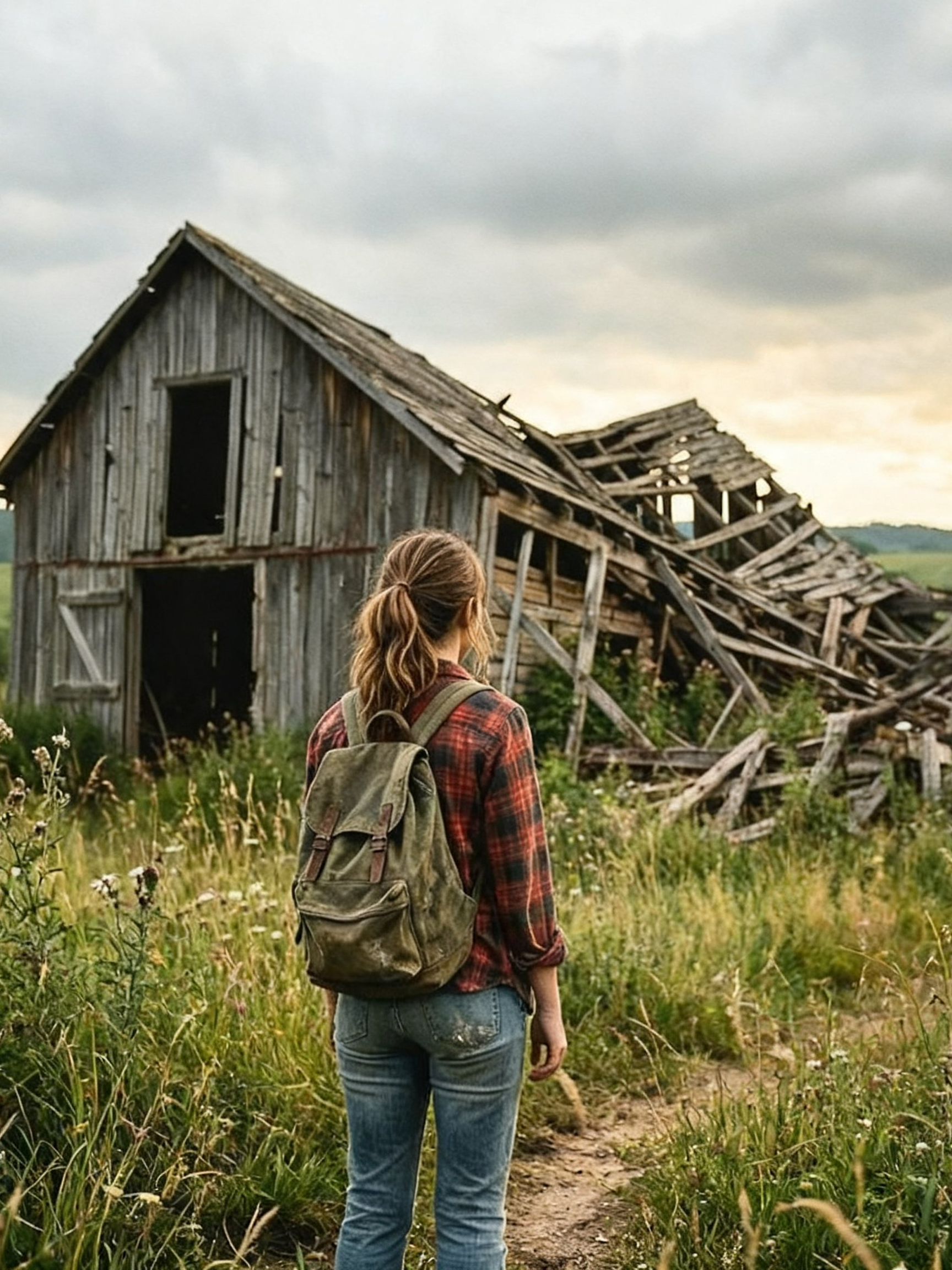
Broke at Nineteen, Her Family Sold Her a Collapsed Barn for $1—Then She Found What They Buried Beneath It
“You should be grateful we’re giving you anything.”
Uncle Wade slid a wrinkled dollar bill across the kitchen table, then laughed when nineteen-year-old Riley Bennett didn’t pick it up.
Her aunt laughed too.
So did her cousin Travis.
Three days earlier, Riley had buried her grandmother.
Now the only relatives she had left were explaining why she needed to leave the house before Friday.
“You’re an adult,” Aunt Marlene said, twisting the diamond ring on her finger. “Adults figure things out.”
Riley looked around the kitchen she had scrubbed every Saturday since she was twelve.
The same kitchen where she had cooked soup for Marlene after surgery.
The same kitchen where she had helped Wade sort receipts when his construction company nearly collapsed.
The same kitchen where Grandma Evelyn had whispered, only six weeks before her death, “Don’t let them make you think kindness means stupidity.”
Riley said nothing.
That seemed to bother them more than tears would have.
Wade leaned back in his chair.
He was fifty-two, broad-shouldered, sunburned around the neck, wearing the expensive silver watch he had bought two months after Riley’s mother died.
“You understand what we’re saying, right?”
“I understand.”
Her voice was level.
Travis smirked.
“Then why are you staring like that?”
“I’m listening.”
“Everything.”
His smile faded slightly.
Marlene reached for a folder.
“Your grandmother’s estate is straightforward. She left the house to Wade because he maintained the property financially.”
That was a generous interpretation.
Wade had paid the electric bill twice.
Riley had spent four years bathing her grandmother, driving her to oncology appointments, organizing medication, changing bandages, cooking meals, and sleeping on a recliner beside Evelyn’s bed whenever the pain medication made her breathing shallow.
Riley’s senior year had disappeared into hospital hallways.
Her community-college savings had disappeared into prescriptions Medicare did not fully cover.
The used Honda she had bought at sixteen had been sold to repair Evelyn’s roof after Wade promised to reimburse her.
He never did.
But Riley didn’t mention any of that.
Marlene tapped the folder.
“Your grandmother did leave you one thing.”
Travis started laughing before she finished.
Wade reached into his pocket and pushed the dollar toward Riley again.
“The old Harlan barn.”
Riley blinked once.
The barn sat four miles outside the tiny Missouri town of Bellweather, near an abandoned county road and forty acres of overgrown pasture.
At least, people still called it a barn.
Half its roof had collapsed during an ice storm fifteen years earlier.
One wall leaned hard enough that locals joked the building was waiting for permission to die.
Nobody had used it since before Riley was born.
“Technically,” Wade said, “the estate values it at one dollar because demolition will probably cost more than the land is worth.”
Marlene smiled.
“We thought it was appropriate.”
Riley looked at her.
“Appropriate?”
“Well, sweetheart…”
Marlene tilted her head with practiced sympathy.
“You always liked fixing broken things.”
That got the laugh she wanted.
Even Wade chuckled.
Riley’s face didn’t move.
She remembered Evelyn squeezing her hand from the hospice bed.
Remembered the old woman struggling for enough breath to speak.
Remembered six words.
If they offer the barn, take it.
At the time, Riley had assumed the medication had confused her.
Now she stared at the dollar.
Something cold settled behind her ribs.
“When do I have to leave?” Riley asked.
Marlene seemed disappointed.
“Friday would be best.”
It was Tuesday.
“Three days?”
“You’re nineteen,” Wade said. “You’ve had months to plan your life.”
Riley looked at him.
“I spent those months taking care of Grandma.”
His jaw tightened.
Nobody spoke for a moment.
Then Wade pushed the estate folder closer.
“You can stay in the barn, I guess.”
Travis snorted.
“There’s probably raccoons with squatter’s rights.”
Riley opened the folder.
Inside was a one-page transfer document.
Parcel number.
County description.
One dollar consideration.
Approximately 6.8 acres.
That stopped her.
Riley had always heard the barn sat on forty acres.
She looked up.
“You said the barn came with forty acres.”
Wade answered too quickly.
“No. Most of that acreage was divided years ago.”
“Divided how?”
“Does it matter?”
Travis rolled his eyes.
“There she goes. Erin Brockovich with a GED.”
Riley had graduated with honors.
He knew that.
She looked back down.
A narrow strip of land extended north from the barn lot like a crooked finger toward Miller Creek.
The survey sketch was faint.
Almost illegible.
But Evelyn had taught Riley to read plat maps when she was thirteen.
They used to sit at the dining room table with county tax notices spread between them while Evelyn explained sections, easements, boundaries, and why people should never sign property papers they didn’t understand.
Riley studied one tiny notation.
She didn’t know what it meant.
Wade snapped the folder shut.
“Do you want it or not?”
Riley looked at his hand.
Then at Marlene.
Then at Travis.
All three of them were watching her.
Not casually.
That was the moment Riley understood something important.
The barn was not a joke.
Or at least, not only a joke.
They wanted her to take it.
She picked up the dollar.
Turned it over once.
Then pushed it back across the table.
“You keep that.”
Wade frowned.
“The deed requires consideration.”
Riley opened her wallet and placed one of her own dollars on the table.
“I’ll buy it myself.”
No one laughed.
The title transfer was signed at 10:14 the next morning.
By noon Friday, everything Riley owned fit inside two plastic storage tubs, a duffel bag, and a cardboard box filled with Evelyn’s medical notebooks.
Marlene stood at the front door while Riley carried her belongings outside.
“You’re taking Grandma’s blue blanket?”
“She gave it to me.”
“I don’t remember that.”
Riley stopped on the porch.
“You want it?”
Marlene’s eyes dropped to the faded knitted blanket.
She didn’t.
But she wanted Riley to surrender something.
“No,” she said. “Just making sure.”
Riley put the blanket in her borrowed truck.
Her best friend from high school, Noah Mercer, had loaned her his rusted Ford Ranger for the weekend.
Noah stood beside the tailgate watching Wade carry a box from the garage.
“You okay?” he asked quietly.
Riley nodded.
Noah glanced toward the house.
“That wasn’t the question.”
“You can stay at Mom’s.”
“For more than one night.”
“We’ll see.”
She looked at him.
He had known her since fifth grade.
He knew pushing too hard made her retreat farther.
So he shoved his hands into his jacket pockets.
“Just don’t sleep inside that barn.”
“Wasn’t planning to.”
“Because the south wall looks like it has personal problems.”
That almost made her smile.
Wade dropped the last box beside the truck.
“Everything’s out.”
Riley glanced through the open front door.
The house already looked unfamiliar.
Travis had moved his gaming console into the living room.
Her grandmother’s rocking chair was gone.
“Where’s Grandma’s chair?”
Marlene folded her arms.
“Donation pile.”
“I’ll take it.”
“It’s already promised.”
“Riley, don’t do this.”
Ask where the dead woman’s chair went?
Ask why the people who visited Evelyn six times during her final year now spoke as if they had inherited the burden along with the property?
Riley looked at Wade.
He avoided her eyes.
That was answer enough.
She climbed into the Ranger.
Marlene called after her.
“We really do want you to succeed.”
Riley closed the door.
Noah got into the passenger seat.
As Riley started the engine, he muttered, “Your aunt lies like she’s being charged by the truth.”
Riley backed out without answering.
They drove west.
Past Bellweather Feed & Grain.
Past the high school football field.
Past the First Baptist church where Evelyn’s funeral had been held.
Then onto County Road 16, where pavement became gravel and cell service dropped to one bar.
The Harlan barn appeared after the second bend.
Noah whistled.
“That thing got worse.”
The barn leaned against a gray November sky.
The roof had caved over the western half.
Weeds reached Riley’s waist.
A rusted hay wagon sat beneath a cottonwood tree.
The old silo had lost its cap.
No windows remained intact.
Still, Riley felt something she hadn’t felt at her aunt’s house.
Not hostile silence.
She climbed out.
Cold wind moved through the weeds.
Noah stared at the structure.
“You paid a dollar too much.”
Riley opened the tailgate.
“Probably.”
She had $312 in checking.
Eighty-six dollars in cash.
No permanent job.
No parents.
Her mother, Laura, had died in a highway accident when Riley was fourteen.
Her father had disappeared long before that.
Evelyn had raised her afterward.
Now Evelyn was gone too.
But the barn was hers.
Not borrowed.
Not tolerated.
Not conditional.
That mattered.
They spent two hours clearing enough space beside the old milk room for Riley’s boxes.
She had no intention of sleeping there.
Noah’s mother had insisted she use their basement until she found work.
But Riley wanted her belongings somewhere her family couldn’t touch.
Near sunset, Noah found an old metal workbench under fallen boards.
He brushed off dirt.
“This looks ancient.”
Riley helped pull away debris.
The bench had been bolted to the concrete foundation.
A vise remained attached.
Underneath sat three coffee cans full of nails.
Nothing unusual.
Then Riley noticed the floor.
Most of the barn rested on cracked concrete poured in mismatched sections.
But beneath the workbench was a rectangle of reddish brick.
Six feet by four.
The bricks were cleaner than everything around them.
Less settled.
Riley crouched.
“Hand me that pry bar.”
Noah looked over.
“Because those bricks were replaced.”
“I don’t know.”
They lifted the first brick.
Damp soil underneath.
Second brick.
Same thing.
Noah sighed.
“If a skeleton grabs me, I’m charging you gas money.”
By the twelfth brick, Riley found metal.
A flat iron ring.
Her heartbeat changed.
Noah saw it too.
“What is that?”
Riley pulled.
Nothing moved.
They cleared more bricks.
A rectangular steel hatch emerged beneath them.
Three feet wide.
Five feet long.
Rust stained the edges.
But someone had coated the hinges with grease.
Recently enough that the metal wasn’t frozen solid.
Riley stared at it.
Noah crouched beside her.
“Tell me your grandmother knew about this.”
Riley remembered the hospice bed.
If they offer the barn, take it.
“I think she did.”
The hatch opened with a deep groan.
Cold air rose from darkness.
Concrete steps descended underground.
Noah switched on his phone flashlight.
“Absolutely not.”
Riley took the light from him.
“Stay up here.”
“That was not me volunteering you.”
She descended anyway.
Eight steps.
Then twelve.
The underground room was taller than expected.
Poured concrete walls.
An old desk.
Two steel cabinets.
A battery lantern sat beside the stairs.
Riley switched it on.
She turned slowly.
Dust covered everything except a narrow path between the stairs and the desk.
On the desk sat a green metal box.
And on top of that box was an envelope.
Her name was written across it.
Not Miss Bennett.
Not sweetheart.
Just Riley.
She knew the handwriting.
Her knees nearly weakened.
But she remained standing.
Noah came down behind her despite his earlier protest.
“Oh my God.”
Riley touched the envelope.
Evelyn’s handwriting had gotten shaky in the last year.
This handwriting wasn’t shaky.
It had been written earlier.
Possibly years earlier.
Riley opened it carefully.
Inside was one sheet of yellow legal paper.
If you are reading this, then Wade gave you the barn.
That means I was right about him.
Do not confront anyone.
Do not show anyone what you find here.
Do not sign anything else from the estate.
The people involved have had years to make their version of the truth look official.
Official does not mean honest.
Start with Cabinet Two.
Take the blue ledger.
Then call Margaret Sloan.
Her number is written inside the cover.
Do not call Wade’s lawyer.
Do not call the county recorder until Margaret tells you to.
I am sorry I waited so long.
Some mistakes can be repaired.
Others can only be documented.
Noah read over her shoulder.
Neither spoke.
Outside, wind pushed against the barn.
Somewhere above them, loose sheet metal rattled.
Riley folded the letter.
“Cabinet Two.”
The cabinet was locked.
A key had been taped beneath the desk.
Inside lay six file boxes.
Tax documents.
Survey maps.
Old photographs.
Bank statements.
A stack of property deeds dating back to 1948.
And a blue clothbound ledger.
Riley opened it.
The first pages contained handwritten dates and amounts.
Names she recognized.
Bellweather Savings.
County Land Development Board.
Then newer pages appeared.
Wade Bennett.
Richard Cole.
Marlene Bennett.
Travis Bennett Holdings LLC.
Red Cedar Residential Partners.
Riley frowned.
Noah leaned closer.
“Isn’t Red Cedar the company building those houses by the lake?”
The biggest development in Bellweather’s history.
Two hundred fourteen luxury homes.
A golf course.
Retail space.
A private marina planned for the second phase.
Wade had bragged for months that Bennett Construction had won part of the earthwork contract.
The mayor had called it “the economic future of Bellweather.”
Riley turned another page.
Numbers had been written beside parcel references.
$1.2 million.
$3.8 million.
Option contract.
Water access.
North tract.
Creek corridor.
She stopped.
The narrow strip on her barn survey.
The one marked N.R.A.
North riparian access.
The barn property did not merely include 6.8 worthless acres.
It included a narrow strip reaching Miller Creek.
And according to a survey folded inside the ledger, that strip touched the only legally recorded access point for an underground water easement feeding the planned Red Cedar development.
Riley sat down.
Noah whispered, “How much is that worth?”
Riley shook her head.
“That’s not the important part.”
“What’s the important part?”
She turned another page.
There was a photocopy of a deed.
Evelyn Bennett, grantor.
Wade Bennett, grantee.
Forty-three acres transferred.
Signature dated June 6, 2019.
Riley stared.
Noah noticed first.
Riley didn’t answer.
He looked at her.
“What is it?”
“My grandmother was in St. Louis that day.”
“You sure?”
Evelyn had undergone emergency colon surgery on June 4.
Riley had slept in a chair beside her hospital bed for eleven nights.
On June 6, Evelyn had been sedated and intubated.
She couldn’t have signed her name.
Riley pulled another file.
Another deed.
Another signature.
Another date.
December 18, 2020.
The day Evelyn fell in the bathroom and fractured her wrist.
Her writing hand.
Riley knew because she had signed every Christmas card for Evelyn that year.
“Forgery?” Noah asked.
The word sounded too dramatic.
Riley preferred evidence to conclusions.
She kept reading.
By that night, they understood enough to be afraid.
The Bennett family had once owned nearly 420 acres around Miller Creek.
Not just Evelyn.
Her husband, Samuel.
His brother.
Two cousins.
A widowed aunt named June Harlan.
Over thirty years, the land had been divided, refinanced, transferred, and sold.
On paper, all of it looked ordinary.
Until Evelyn started comparing signatures.
Until she noticed several elderly relatives had transferred property during hospitalizations, dementia diagnoses, or periods of financial dependency.
Until one transfer was notarized by a woman who had been dead for eleven months.
Evelyn had spent years collecting copies.
But she had never filed a lawsuit.
Riley found out why in another envelope.
Wade found out I was asking questions in 2021.
He told me that if I accused him publicly, he would make sure you lost your home.
At seventeen, you had already lost enough.
I chose time.
I told myself I was protecting you.
Maybe I was protecting myself from the fight.
I do not know anymore.
But I knew Wade would eventually want this barn because Samuel hid the original Harlan trust documents beneath it in 1989.
I also knew greed would make Wade careless.
If he believes the barn is worthless, he may place it in your name to isolate the final liability from the rest of the estate.
If he does, let him.
The land is not the treasure.
The documents are.
Riley read that line three times.
The land is not the treasure.
The documents are.
She thought of her grandmother’s thin hands.
The woman who saved foil.
Washed plastic bags.
Cut mold off cheese because wasting food felt sinful.
A woman Wade described after the funeral as “confused toward the end.”
Evelyn had not been confused.
She had been waiting.
Riley closed the ledger.
Noah stared at her.
“What are you going to do?”
“Exactly what she said.”
“Call Margaret Sloan?”
“It’s almost ten.”
Noah pointed toward the letter.
“She didn’t say business hours.”
Margaret Sloan answered on the second ring.
Her voice was sharp and awake.
“Who is this?”
“Riley Bennett.”
“Where are you?”
Riley hesitated.
“The barn.”
“Is anyone with you?”
“A friend.”
“Does Wade know you’re there?”
“He knows I own it.”
“That wasn’t my question.”
Riley looked up toward the hatch.
“I don’t think he knows I found the room.”
Margaret exhaled.
“Listen very carefully. Photograph the condition of everything before you move another document. Do not post anything online. Do not call the sheriff yet. Do not call the county. And do not spend tonight there.”
“Because your grandmother believed somebody searched that barn twice in the last five years.”
Riley looked at Noah.
His expression changed.
Margaret continued.
“I’ll meet you tomorrow morning at nine.”
“Are you a lawyer?”
“I was your grandmother’s lawyer.”
“Wade said Harold Pike handled her estate.”
“Harold Pike handles Wade.”
Another pause.
“I handled Evelyn.”
The next morning, Margaret Sloan arrived driving a fourteen-year-old Volvo.
She was sixty-three, thin, silver-haired, wearing black slacks and hiking boots.
She inspected the barn before stepping inside.
Then she photographed the hatch.
Every hinge.
Every brick.
Every shelf.
She wore gloves while handling the files.
Riley watched.
“You expected this.”
“I hoped I was wrong.”
“About Wade?”
“About several people.”
That answer unsettled Riley more.
Margaret sat at the underground desk and opened the blue ledger.
She did not seem surprised.
She seemed tired.
“You read everything?”
“Most of it.”
“Did you remove anything?”
“Only Grandma’s letter.”
“Why wasn’t any of this in probate?”
“Because Evelyn didn’t trust the probate process available to her.”
“That sounds paranoid.”
“It would be paranoid if she had no evidence.”
Margaret tapped one deed.
“She had evidence.”
Over the next hour, Margaret explained what Riley’s family had spent decades hiding.
Samuel Bennett, Riley’s grandfather, had inherited land through his mother’s family, the Harlans.
In 1989, when developers first began buying farmland along Miller Creek, Samuel and his sister June created a private land trust.
Its purpose wasn’t to make them rich.
It was to prevent vulnerable family members from being pressured into selling their homes.
The trust included right-of-first-refusal provisions, water rights, access corridors, and restrictions preventing certain parcels from being developed without unanimous beneficiary consent.
Then Samuel died suddenly in 1994.
June suffered a stroke in 1997.
Records vanished.
The family began behaving as though the trust had never existed.
Land moved.
Mortgages appeared.
Rights were waived.
Wade, still in his twenties, learned there was money to be made helping buyers “clean up old title problems.”
Over time, a network formed.
A local lawyer.
A title agent.
A county official.
Family members willing to sign documents they barely understood.
Other family members willing to sign for those who couldn’t.
“They stole it?” Riley asked.
Margaret held up a hand.
“Use precise language.”
Riley nodded.
“They may have transferred interests they did not legally possess.”
“Why didn’t Grandma stop them?”
“She tried.”
Margaret studied her.
“You think silence is weakness because loud people say it is. Your grandmother understood that silence can also be reconnaissance.”
Riley thought about the kitchen.
The laughter.
The dollar.
“You sound like her.”
“I miss her.”
That was the first moment Riley nearly cried.
Not when Wade threw her out.
Not when she entered the barn.
Not when she found Evelyn’s letter.
But hearing another person say those three ordinary words almost broke something open.
She swallowed.
Margaret pretended not to notice.
“Your grandmother had one problem. She could prove irregularities. She could not prove the trust had survived.”
Riley looked at the file boxes.
Margaret pointed to the steel cabinet.
“Now you may have the original.”
They found it inside a cylindrical map case.
Twenty-seven pages.
Signed by Samuel Bennett.
Signed by June Harlan.
Stamped by a Kansas City law firm that no longer existed.
Attached was a schedule listing every original parcel.
Margaret’s hands trembled once.
Then she steadied them.
“This changes things.”
“How much?”
“Potentially everything.”
For the first time, Riley asked the obvious question.
“How much land?”
Margaret turned through the schedule.
“Originally? Four hundred eighteen acres.”
“Much of it has been developed. Some sold repeatedly.”
Riley pictured families living in homes.
Businesses.
People who had done nothing wrong.
“I don’t want to take houses from anybody.”
Margaret looked at her for several seconds.
“That sentence is why Evelyn wanted you to find this instead of Wade.”
Riley’s stomach tightened.
“What does that mean?”
“The trust contains a remedy clause. Innocent third-party residential purchasers are protected. Claims attach primarily to proceeds, commercial interests, undeveloped land, and parties with notice.”
“So normal homeowners are safe.”
“If these documents are authentic and enforceable, yes.”
“And Red Cedar?”
Margaret’s eyes hardened.
“Red Cedar had notice.”
“Wade gave it to them.”
Riley stared.
Margaret pulled a letter from one file.
It was dated eleven months earlier.
A title consultant had warned Red Cedar Residential Partners that old trust restrictions might affect water access and approximately sixty-eight acres of phase-two land.
Wade had replied on behalf of Bennett Land Services.
Issue resolved.
Beneficiary releases obtained.
No enforceable trust remains.
Attached were four beneficiary releases.
One signature belonged to Evelyn.
Riley immediately recognized it as false.
Too smooth.
Too upright.
Evelyn’s arthritis had bent her letters for years.
Margaret pointed at the date.
“Your grandmother was hospitalized again.”
“Then somebody got greedy.”
Riley looked toward the ceiling.
“You don’t think so?”
“I think Wade is involved.”
“That isn’t the same answer.”
Margaret’s expression became grim.
“Your uncle is not sophisticated enough to build this alone.”
By Monday, Riley’s family believed they had won completely.
Wade moved into Evelyn’s bedroom.
Marlene hired a realtor to evaluate the house.
Travis posted pictures from the property with the caption: New beginnings.
Riley saw it only because Noah showed her.
She didn’t respond.
She took a temporary job unloading inventory at Bellweather Farm Supply.
She slept in Noah’s mother’s basement.
She spent evenings with Margaret cataloging documents.
She told no one.
That silence began to irritate Wade.
On Wednesday, he called.
“How’s barn life?”
“I’m not living there.”
“Good. Place is probably condemned.”
“Probably.”
“You should sell the parcel eventually.”
“Anyone dumb enough to take it.”
“What would you offer?”
Barely a second.
But Riley heard it.
Then Wade laughed.
“For that dump? Five hundred bucks.”
Riley looked at Margaret across the desk.
Margaret raised one eyebrow.
Riley put the call on speaker without telling him.
“Five hundred?”
“I’m being generous.”
There it was.
The word people used when they needed access to your labor.
The word people used when they wanted obedience without explanation.
The word people used when they demanded sacrifice and called repayment selfish.
The word they wrapped around betrayal so the knife looked like a gift.
Riley stared at the copied deed in front of her.
“Send me an offer.”
Wade hesitated.
“Seriously?”
His voice changed immediately.
“Now you’re thinking.”
He offered $750 the next morning.
Not personally.
Through an LLC.
Harlan Creek Agricultural Holdings.
Formed forty-eight hours earlier.
Registered agent: Harold Pike.
Margaret smiled when she saw it.
“A little obvious.”
“Should I reject it?”
Riley looked up.
“Ask for seven days to consider.”
“Because greed dislikes uncertainty.”
Riley emailed Harold Pike.
Thank you for the offer. I’d like seven days to review it.
His reply arrived in four minutes.
Thirty minutes later, Wade texted.
Smart move. Don’t overthink it.
Riley showed Margaret.
“What now?”
“Now we see who gets nervous.”
By sunset, three things happened.
First, Red Cedar filed an application with the county to accelerate grading on phase two.
Second, Wade called Riley twice.
Third, a black Chevrolet Tahoe drove slowly past the barn at p.m.
Noah photographed the license plate.
The Tahoe belonged to Cole Survey & Title.
Richard Cole.
One of the names in Evelyn’s ledger.
The system was moving.
Riley felt fear then.
Not movie fear.
No dramatic music.
No trembling hand against a window.
Just a hard realization that grown men with businesses, lawyers, county contacts, and millions of dollars at stake now cared what a nineteen-year-old girl might have found under a ruined barn.
She locked the documents in Margaret’s office safe.
Copies went to two separate law firms in different cities.
A digital archive was created.
Three originals were placed in a bank deposit box.
Margaret made Riley memorize one sentence.
“If something happens to me, the evidence does not disappear.”
Riley hated hearing it.
She memorized it anyway.
Two nights later, someone entered the barn.
They didn’t break the chain.
They cut it.
The underground room had been searched.
Desk drawers opened.
Cabinets emptied.
Boxes thrown across the floor.
But Margaret had removed every important original.
The intruder found only photocopies.
And a motion-activated trail camera Noah had mounted inside an old birdhouse.
The footage showed a man wearing gloves and a baseball cap.
His face remained hidden.
But his truck appeared for four seconds.
White Ford F-250.
Aftermarket toolbox.
Cracked left taillight.
Riley recognized it.
So did Noah.
Riley sat at Margaret’s table watching the footage.
Noah paced.
“We call the cops now.”
Margaret remained silent.
Riley replayed the clip.
At 11:43 p.m., the man turned toward the workbench.
A small tattoo showed between his glove and sleeve.
Black compass.
Travis had gotten that tattoo in college.
Noah slapped the table.
“That’s him.”
Riley paused the video.
“You’re weirdly calm.”
“I’m not calm.”
“You look calm.”
“That’s different.”
She took a screenshot.
“What do we do?” Noah asked.
Riley looked at Margaret.
“Report property damage.”
Margaret nodded.
“And nothing else?”
“Nothing else.”
Noah stared at them both.
“That’s it?”
Riley closed the laptop.
“If Travis thinks we caught him searching for documents, he’ll know we have documents.”
Noah slowly understood.
“So we act like he only vandalized the barn.”
“That’s terrifying.”
Riley finally looked at him.
“He threw me out of my home three days after Grandma died.”
“Wade did.”
“No. They all did.”
She wasn’t angry when she said it.
That made the sentence heavier.
Two deputies came the next morning.
One photographed the broken chain.
The other, Deputy Mark Ellis, glanced toward the underground hatch.
“What’s down there?”
“You lose anything?”
“Some old papers were moved.”
“What kind?”
“Family records.”
His eyes stayed on Riley a fraction too long.
“Valuable?”
“Not that I know of.”
He wrote something.
“Any idea who did it?”
Riley looked at him.
“Aren’t you supposed to ask if I have evidence?”
The deputy gave a thin smile.
“I have camera footage.”
His pen stopped.
That was useful.
Riley noticed everything now.
The deputy cleared his throat.
“Well, sure, we’ll want that.”
“I already made copies.”
Another pause.
Noah stood ten feet away and looked at the ground so no one would see him react.
Riley sent the footage later.
Without identifying Travis.
She wanted to see whether the sheriff’s office would.
Two days passed.
No interview.
Then Riley learned Deputy Ellis’s wife worked as a project coordinator for Red Cedar Residential Partners.
The system was larger than family.
Margaret had warned her.
Riley just hadn’t understood how much larger.
A week after the break-in, Wade invited her to lunch.
Bellweather Grill.
Public place.
Riley agreed.
Margaret hated the idea.
“That man threw you out.”
“That’s why I should go.”
“He thinks I’m isolated.”
“You are isolated.”
Riley closed her notebook.
“He thinks I don’t know I’m not.”
Wade arrived wearing work boots and a Bennett Construction jacket.
He ordered coffee.
Riley ordered water.
For several minutes he talked about ordinary things.
The cold front coming in.
Farm supply job.
Her future.
Finally, he folded his hands.
“You should take the offer.”
“Seven hundred fifty dollars?”
“It’s junk land.”
“Then why do you want it?”
“Because it connects to one of our equipment routes.”
That was new.
“I thought your equipment route was east.”
“It can change.”
Riley nodded.
Wade watched her.
“You always were quiet.”
“Grandma liked quiet.”
Something flashed in his face.
Then disappeared.
“Your grandmother liked secrets.”
Riley’s fingers remained wrapped around the water glass.
“You lived with her. You tell me.”
Riley shrugged.
Wade leaned forward.
“Look, kid. Evelyn got suspicious toward the end. People do. She started thinking everyone wanted something from her.”
“Did they?”
His jaw flexed.
“I took care of that family for thirty years.”
Riley said nothing.
“I handled taxes.”
“I kept land from getting foreclosed.”
Wade’s voice hardened.
“You think changing bandages for a couple years makes you understand everything?”
Riley looked into his eyes.
That stopped him.
He had expected an argument.
“What do you think you understand?”
She tilted her head.
“Why do you care?”
Wade sat back.
Then smiled again.
“There’s the attitude.”
Riley picked up her water.
“Grandma used to say people call it attitude when a woman stops making them comfortable.”
His smile vanished.
He lowered his voice.
“Be careful with Margaret Sloan.”
“She fills people’s heads with ideas.”
“What ideas?”
“That they’re owed things.”
Riley thought about Evelyn’s medication bills.
The car she sold.
The nights she missed school events.
The funeral flowers Wade charged to Evelyn’s estate.
“What am I owed?”
Wade looked at her.
And for one dangerous second, Riley thought he might say too much.
Instead he reached into his jacket.
He placed a new envelope on the table.
“Five thousand.”
Riley looked down.
“For the barn?”
“All cash at closing.”
“You increased your offer by more than six times in a week.”
“I’m trying to help you.”
Riley looked at him.
His hand tightened.
“You always do that.”
“Ask questions like you already know the answer.”
Riley left the envelope untouched.
“Maybe you just don’t like your answers.”
Wade grabbed her wrist.
But not gently.
People at nearby tables noticed.
Riley looked down at his hand.
Then back at him.
She did not pull away.
She did not raise her voice.
She said, “Take your hand off me.”
Wade released her.
Immediately.
Riley picked up her coat.
At the door, he called after her.
“You’re making a mistake.”
She turned.
“Which one?”
Wade didn’t answer.
That night, Margaret received a notice from Harold Pike.
Wade intended to challenge the barn transfer.
Claiming clerical error.
He now argued Evelyn’s estate never meant to convey the north access strip.
Riley laughed once when she read it.
Margaret looked surprised.
“He offered me five thousand for something he says I don’t own.”
Margaret smiled slowly.
“Can we use that?”
“Oh, Riley.”
Margaret closed the notice.
“We are absolutely going to use that.”
The first hearing happened ten days later.
Not a trial.
Not even close.
A procedural hearing in the county courthouse over the transfer description.
Wade arrived with Harold Pike and two junior attorneys.
Marlene sat behind them.
Travis sat beside her.
Richard Cole from the title company stood near the hallway.
A Red Cedar executive Riley recognized from newspaper photographs entered five minutes before proceedings began.
Riley sat beside Margaret.
No expensive suit.
No dramatic makeover.
She wore black slacks, a cream sweater, and Evelyn’s small silver watch.
Wade looked over once.
He believed he had already won.
Harold argued that the north corridor had been “mistakenly included” in an estate conveyance intended only to transfer the collapsed barn footprint.
Margaret asked one question.
“If inclusion was accidental, why did your client create Harlan Creek Agricultural Holdings two days after the transfer for the purpose of purchasing the exact parcel description now claimed to be erroneous?”
Harold paused.
Only half a second.
The judge noticed.
Wade noticed.
Everyone noticed.
Harold recovered.
“Business planning is not evidence of testamentary intent.”
“No,” Margaret said. “But his written purchase offer is evidence he recognized Ms. Bennett’s ownership.”
Harold objected.
The judge overruled.
Mini-payoff.
Then Margaret produced Wade’s five-thousand-dollar offer.
The judge read it.
Looked at Harold.
“Your client offered to purchase land he now claims was conveyed to Ms. Bennett by mistake?”
Harold shifted.
“The offer was intended to avoid unnecessary litigation.”
“It predates the litigation.”
Riley never looked at Wade.
That irritated him more than triumph would have.
The judge refused to void the transfer.
Not a total victory.
But the north corridor stayed Riley’s pending further review.
Outside the courtroom, reporters gathered around the Red Cedar executive, not Riley.
Bellweather was a small town.
Everyone had heard enough rumors to smell money.
Wade caught Riley beside the courthouse steps.
Margaret was speaking to a clerk fifteen feet away.
“You think this is funny?”
Riley zipped her coat.
“You have no idea what you’re messing with.”
“Then tell me.”
“You want advice?”
“Sell the land.”
“Because five thousand dollars is more money than you’ve ever had.”
That landed exactly where Wade intended.
He wanted to remind her she was poor.
Sleeping in someone else’s basement.
Riley looked at him.
“My grandmother had less than twenty thousand dollars left when she died.”
Wade frowned.
“She owned over four hundred acres once.”
His face changed.
Riley continued softly.
“Where did it go?”
Wade stared at her.
The courthouse doors opened behind him.
People stepped outside.
He lowered his voice.
Not denial.
Riley’s pulse hammered.
But her expression remained still.
“Don’t what?”
Wade walked away.
That afternoon, Margaret filed the first civil action.
Not for four hundred acres.
One parcel.
A thirty-one-acre undeveloped Red Cedar tract purchased directly through a Wade-controlled entity.
The complaint alleged fraudulent conveyance, breach of trust restrictions, title defects, and forged beneficiary release documents.
They attached only enough evidence to survive dismissal.
Not the entire ledger.
Not the complete trust archive.
Margaret called it “showing one card.”
Red Cedar responded violently.
Three law firms appeared within forty-eight hours.
A public-relations statement called Riley’s claims “baseless attempts to interfere with a community development project.”
An anonymous Facebook account posted that she was a “disgruntled teenager trying to extort local businesses.”
Someone uploaded a photograph of the collapsed barn.
Comments followed.
She wants millions for THIS?
Gold digger.
Entitled generation.
Riley read three comments.
Then closed the app.
She went to work at Farm Supply the next morning at six.
At , her manager called her into the office.
He looked uncomfortable.
“Corporate says we need to let you go.”
“Attendance concern.”
“I haven’t missed a shift.”
“Then what attendance concern?”
He stared at his desk.
Riley understood.
“Who called?”
“I can’t discuss that.”
She removed her name badge.
“Was it Bennett Construction?”
His face answered before he did.
Riley put the badge on the desk.
“Thanks, Mr. Carson.”
“It’s okay.”
“No, it isn’t.”
That almost made her stop.
He rubbed his face.
“I’ve got two kids. Bennett Construction buys eighty grand in materials from us every year.”
Riley nodded.
That was how systems worked.
Not always with evil people.
Often with frightened people.
People with mortgages.
People who convinced themselves they had no choice because somebody else had more leverage.
She walked out carrying her lunch in a paper bag.
Noah waited outside twenty minutes later.
“How did you know?”
“My mom saw your manager call Margaret.”
Riley got into the truck.
Noah watched her.
“You want me to say something angry?”
“Good, because I have options.”
“I need another job.”
“You just got fired because your uncle leaned on your employer.”
“I still need another job.”
Noah shook his head.
“You’re scary.”
Riley looked out the window.
She thought of Evelyn.
“I’m learning.”
Three days later, Red Cedar made an offer.
Two hundred thousand dollars.
For Riley to dismiss the lawsuit, sell the barn parcel, waive claims, sign confidentiality, and certify she possessed no additional documents affecting development title.
Margaret placed the offer on the table.
Riley stared at the number.
Two hundred thousand dollars.
She had eighty-nine dollars in her checking account.
Her phone screen was cracked.
Her shoes leaked near the right toe.
She owed Noah’s mother three weeks of groceries even though the woman refused to take payment.
Two hundred thousand could buy a small house.
Breathing room.
Riley read the final paragraph again.
Certify that she possessed no additional documents.
“They’re not buying the barn,” she said.
Margaret nodded.
“They’re buying silence.”
“Then they know.”
“They suspect.”
“How high should we counter?”
Margaret leaned back.
“That depends on what you want.”
Riley looked at the blue ledger photocopy.
She thought of June Harlan.
Stroke victim.
Land transferred afterward.
She thought of Evelyn being sedated while someone signed her name.
She thought of family members who may have lost property without ever understanding why.
She thought of homeowners now living in houses built on land carrying title questions they did not cause.
She thought of Wade telling her five thousand dollars was more money than she had ever had.
She pushed the settlement aside.
“I don’t want a counteroffer.”
Margaret’s face softened.
“Because Grandma could have taken money.”
“She didn’t.”
“Then I want to know why.”
The breakthrough came from an old photograph.
Noah found it while scanning documents.
A 1992 Polaroid.
Samuel Bennett standing beside the barn with four other people.
On the back, someone had written:
After north well inspection. June says seal stays until county fulfills agreement.
North well.
Riley had seen that phrase elsewhere.
She searched Evelyn’s notes.
Found it three times.
North well capped.
North well exempt from development.
North well records missing.
Margaret frowned.
“That isn’t in the trust schedule.”
“Then why mention it?”
They drove to the barn.
Along the narrow north corridor.
Trees crowded the old fence line.
After half a mile, they reached Miller Creek.
No structure.
Only brush.
Noah used a metal detector borrowed from his grandfather.
Twenty minutes later, it screamed near a cluster of cedar trees.
They cleared leaves.
Found a rusted circular plate buried under six inches of soil.
County Water Survey.
Riley stared.
Margaret crouched beside it.
“Don’t open it.”
“I wasn’t going to.”
“What is it?”
“I think your grandfather knew something Red Cedar doesn’t.”
The answer came from Jefferson City.
A retired hydrologist named Franklin Moss returned Margaret’s call.
He had worked for Missouri’s environmental division in the late 1970s.
When Margaret mentioned Miller Creek, he went silent.
Then asked them to drive to him.
Franklin was eighty-one and lived in a ranch house filled with bird carvings.
He remembered Samuel Bennett.
“He was stubborn.”
Riley almost smiled.
“So was Evelyn.”
“Oh, Evelyn was worse.”
That did make Riley smile.
Franklin pulled a banker’s box from a closet.
Inside were old survey copies.
Miller Creek sat above a limestone aquifer.
The north well had been drilled to test capacity.
What inspectors found changed development plans for decades.
The aquifer supplied not only Bennett land but three nearby rural communities and dozens of private wells.
Heavy commercial pumping risked lowering pressure and contaminating shallow groundwater.
A county agreement was drafted.
Development rights around the north access area were restricted unless a new environmental review proved safe.
“What happened to the agreement?” Riley asked.
Franklin tapped the box.
“County said it was superseded.”
“How do you know?”
“Because I wrote the original.”
Margaret leaned forward.
“Do you have a signed copy?”
Franklin looked at Riley.
Her disappointment must have shown slightly.
Because he smiled.
“I have something better.”
He pulled out a microfilm receipt and an index card.
“The original was filed with the state.”
For the first time, Red Cedar’s project was not merely a title dispute.
It was an environmental liability.
And Wade had spent two years assuring investors water access was secure.
Riley understood why the barn mattered now.
Not because it contained gold.
Not because a millionaire had buried cash.
Not because some fairy-tale inheritance would turn a poor girl rich overnight.
The barn held continuity.
A chain of memory powerful people had counted on everyone forgetting.
Samuel saved the trust.
Evelyn saved the evidence.
Franklin saved the index.
Riley was simply the first person young enough, angry enough, and underestimated enough to put them together.
She returned to Bellweather with copies.
She still told nobody.
That week, Wade announced publicly that Red Cedar phase two would proceed.
At a county development meeting, he stood beside Commissioner Dale Morris and Richard Cole from the title company.
Marlene attended in a new green coat.
Travis posted a photograph.
BIG THINGS COMING TO BELLWEATHER.
They believed Riley was cornered.
Red Cedar’s lawyers had filed six motions.
She was unemployed.
Local gossip was brutal.
Harold Pike moved to challenge Evelyn’s mental capacity.
They subpoenaed medical records.
They implied Riley had manipulated a dying woman.
The cruelty of that accusation finally pierced her calm.
Not publicly.
In Margaret’s office.
Riley read the filing twice.
Then quietly set it down.
“They’re saying I pressured her.”
“I was seventeen when some of these papers were created.”
“They know that.”
Riley stared at the wall.
“I cleaned blood off her bathroom floor.”
Margaret said nothing.
“I cut her food into pieces small enough to swallow after chemo.”
“I missed prom because she had a fever.”
Margaret’s eyes lowered.
“I sold my car.”
“And Wade visited when people were watching.”
Riley’s voice never rose.
“That’s what they’re going to use?”
Something changed in her face.
Margaret saw it.
Riley picked up the filing.
“Then we stop protecting him.”
Until then, they had targeted one parcel.
Now Margaret amended the complaint.
They named Wade.
Harold Pike.
Richard Cole.
Cole Survey & Title.
Two Wade-controlled LLCs.
And Commissioner Dale Morris in relation to specific recorded documents.
They attached the first forensic handwriting analysis.
Seven Evelyn signatures were highly likely forged.
They attached hospital records proving Evelyn physically could not have signed two documents.
They attached the notarization involving the deceased witness.
They attached the state archive reference for the groundwater restriction.
They attached Wade’s purchase offers.
Then came the piece Riley had saved.
Travis’s break-in footage.
The judge issued preservation orders.
No party could destroy title records, emails, transaction files, surveys, trust-related materials, or communications involving the Bennett/Harlan parcels.
Two days later, a Red Cedar employee contacted Margaret.
Then a former title clerk.
Then a retired bank teller.
Systems look invincible until the first person inside decides survival matters more than loyalty.
The title clerk had saved emails.
The bank teller remembered elderly June Harlan being brought into Bellweather Savings after her stroke.
“She couldn’t speak clearly,” the woman said in a sworn statement. “Wade answered questions for her.”
Then came the email that changed the case.
Richard Cole to Wade Bennett.
We need Evelyn’s release before any northern tract deal. Her signature history is inconsistent. Harold says he can handle execution if necessary.
If necessary.
Three words.
Enough to make Harold Pike request his own attorney.
Wade stopped calling Riley.
Marlene stopped posting.
Travis deleted social media.
Red Cedar’s public statement changed from “baseless” to “complex historical title questions.”
Commissioner Morris announced temporary leave for “family reasons.”
Mini-payoff.
Mini-payoff.
Mini-payoff.
But Riley did not celebrate.
Because Margaret kept reminding her—
A collapsing system can hurt people on the way down.
One evening, Riley drove alone to Evelyn’s old house.
She parked across the road.
Lights glowed in the windows.
Marlene had hung Christmas wreaths.
Someone had thrown out Evelyn’s porch plants.
The rocking chair was still gone.
Riley sat there until Wade’s truck pulled into the driveway.
He saw her.
For a moment they simply watched each other across the road.
Then Wade walked over.
Riley lowered the window.
“What do you want?” he asked.
“To look at the house.”
“You lost the right to that house.”
He leaned closer.
“You think you won?”
“You think Margaret cares what happens to you?”
Riley said nothing.
“Lawyers get paid. Developers settle. Judges retire. You’re the one who’ll still be here when everybody remembers what you did to this family.”
There it was.
The moral inversion.
He had thrown her out.
Forged Evelyn’s name.
Helped transfer land from incapacitated relatives.
Pressured employers.
Sent Travis into the barn.
Yet somehow Riley was destroying the family by refusing to remain quiet.
She looked at him.
“Did Grandma ask you to stop?”
His mouth tightened.
“Before she died. Did she ask you to stop?”
“I don’t know what you’re talking about.”
Riley nodded.
Then started the engine.
Wade slapped one hand against the roof.
“Don’t walk away from me.”
She looked up.
“I’m sitting in a truck.”
For half a second, the absurdity almost broke his anger.
Then his face hardened again.
“You won’t get rich from this.”
Riley studied him.
He still didn’t understand.
“This isn’t about getting rich.”
“Everybody says that until the check clears.”
Riley drove away.
A week later, the court froze transfers affecting seventy-eight acres.
Red Cedar halted phase-two grading.
Investors demanded independent title review.
Three county employees received subpoenas.
The state attorney general’s office requested copies of selected filings.
Local reporters who had called Riley an opportunist began using different language.
Historical land dispute.
Potential forged deeds.
Elder exploitation questions.
Nobody apologized.
Riley hadn’t expected them to.
She got another job.
This time at a veterinary clinic twenty miles away.
Thirty hours a week.
Barely above minimum wage.
She bought a 2008 Corolla with 186,000 miles after Noah’s uncle sold it to her cheaply.
She moved into a studio apartment above a laundromat.
The radiator knocked at night.
The shower water turned cold after eight minutes.
It was the best place she had ever lived.
Because every key belonged to her.
In January, Margaret called at one morning.
“Get dressed.”
“What happened?”
“Federal agents are at Cole Survey & Title.”
Riley sat upright.
“And don’t go there.”
“I wasn’t—”
“You were thinking about it.”
The search warrant was not solely about Riley’s case.
That became clear quickly.
Investigators were examining title irregularities involving elderly landowners across three counties.
Thirty-two parcels.
Possibly more.
Evelyn’s ledger had names Riley didn’t recognize because they weren’t relatives.
People in nursing homes.
People whose children lived out of state.
The Bennett scheme had not remained a Bennett scheme.
It had become a business model.
Riley sat at Margaret’s table surrounded by copies.
“My grandmother knew?”
“She suspected.”
“She had these names.”
“Why didn’t she tell someone sooner?”
Margaret looked at her.
“Maybe she did.”
“What do you mean?”
Margaret opened Cabinet Two’s inventory list.
One box was missing.
Riley frowned.
“There were only six boxes when we opened it.”
“But Grandma’s inventory says seven?”
“Where is it?”
“I don’t know.”
That was the first true mystery left by Evelyn.
Everything else had pointed somewhere.
Box Seven had vanished.
Margaret found one reference in Evelyn’s notebook.
7 moved after Wade visit.
No location.
No explanation.
Then the criminal side accelerated.
Travis was questioned.
Deputy Ellis was placed on administrative leave after investigators discovered he had accessed Riley’s break-in report more than twenty times.
Harold Pike withdrew as Wade’s attorney.
Richard Cole resigned from his own title company.
Red Cedar suspended its Bellweather project indefinitely.
Wade kept pretending he could outlast it.
Until Margaret deposed him.
The room was plain.
Gray carpet.
Conference table.
Court reporter.
Two attorneys.
Riley sat quietly at the far end.
Wade looked older than he had four months earlier.
His hair had gone mostly gray at the temples.
Margaret began with boring questions.
Property descriptions.
For two hours, nothing dramatic happened.
Then she placed Evelyn’s forged release in front of him.
“Have you seen this document?”
“I don’t remember.”
“Did Evelyn Bennett sign it?”
“I assume so.”
“Were you present?”
“I don’t remember.”
Margaret slid over hospital records.
“She was under sedation at Barnes-Jewish Hospital on the date of execution.”
Wade’s attorney leaned toward him.
Margaret continued.
“Would you like to revise your answer?”
“I said I assumed.”
Another document.
A letter from Cole.
The purchase offer to Riley.
Wade’s answers shrank.
I don’t remember.
I don’t recall.
That wasn’t my responsibility.
You’d have to ask Richard.
I relied on counsel.
Then Margaret brought out the original Harlan trust.
Wade looked at it.
And for the first time, his composure failed completely.
But enough.
His left hand moved backward on the table.
As if the document itself could bite.
Margaret noticed.
“So you recognize this?”
“You reacted to it.”
“I didn’t.”
“Have you seen this document before?”
Margaret turned to page twenty-six.
There was a handwritten notation.
Copy shown to Wade, 8/14/21.
Wade stared.
Margaret spoke softly.
“Still never?”
His attorney interrupted.
“We need a break.”
Riley watched Wade stand.
At the door, he looked back at her.
Not angry this time.
For the first time in Riley’s life, Wade Bennett was afraid of a nineteen-year-old girl saying nothing.
Settlement discussions began three weeks later.
Not because Wade became sorry.
People like Wade often mistook consequence for persecution.
He settled because lenders froze.
Insurance carriers reserved rights.
Red Cedar sued one of his companies for misrepresentation.
The bank called two business loans.
His construction firm lost municipal bids.
Marlene filed for separation.
Travis accepted immunity on limited state charges in exchange for testimony about the barn break-in and document destruction.
That testimony hurt Wade most.
Because Travis revealed his father had ordered him to find “the blue book.”
The blue ledger.
He knew exactly what existed.
Exactly where it had been.
Exactly why it mattered.
The civil resolution took another eleven months.
Riley turned twenty during the process.
No party received everything.
No magical judge handed her four hundred acres.
Innocent homeowners kept their houses.
Commercial buyers with clean title were protected.
But Wade-controlled entities surrendered undeveloped parcels.
Red Cedar paid into a compensation fund.
Cole Survey & Title’s insurer contributed.
Several transfers were rescinded.
Other claims converted into financial restitution.
The trust’s remaining environmental restrictions were recognized.
The north well corridor received permanent conservation protection.
And the largest recovered tract—one hundred six acres along Miller Creek—returned to the Harlan family trust.
Margaret asked Riley what she wanted to do with it.
Riley stood near the creek one cold March morning.
The land could sell for millions eventually.
More if zoning changed.
Noah waited beside her.
“What are you thinking?”
Riley watched the water move over stone.
“Grandma spent her life trying to stop people from taking land from people who couldn’t fight back.”
“So selling it to the next developer seems stupid.”
Noah smiled.
“A little.”
Riley created the Evelyn Harlan Foundation.
The recovered tract became protected farmland and public creek access.
A portion was leased cheaply to young farmers.
Another portion funded legal assistance for elderly rural property owners facing coercive transfers or predatory contracts.
The old barn stayed.
Riley rebuilt it.
Not into a mansion.
Not into a tourist trap.
Into an archive.
One wall held photographs of Samuel.
People whose signatures had nearly vanished beneath newer ink.
The underground room remained almost untouched.
Except for better lights.
And a steel door.
Riley placed Evelyn’s original letter beneath glass.
The land is not the treasure.
The documents are.
Visitors sometimes misunderstood.
They thought Evelyn meant paperwork was worth money.
Riley knew better.
Records gave the powerless a second voice.
Receipts remembered.
Deeds remembered.
Dates remembered.
Signatures remembered.
Paper could sit silently for thirty years and still tell the truth when everyone who benefited from the lie had grown comfortable.
Wade eventually pleaded guilty to conspiracy involving fraudulent real-estate instruments and financial misconduct tied to multiple transactions.
The sentence was not as dramatic as townspeople wanted.
Justice rarely looked dramatic after paperwork touched it.
But his companies were gone.
The house Riley had been thrown out of was sold to satisfy judgments.
Riley did not buy it.
She never wanted it again.
Marlene moved to Springfield.
Travis left Missouri.
Commissioner Morris resigned.
Deputy Ellis lost his position but avoided prison.
Harold Pike faced disciplinary proceedings.
Richard Cole cooperated with investigators.
Bellweather survived.
People still bought groceries.
Kids still played football Friday nights.
Church bells still rang Sunday mornings.
The world did not end because powerful people were exposed.
That fact mattered to Riley.
Systems survive accountability.
Only people benefiting from corruption insist otherwise.
On the first anniversary of the barn discovery, Riley sat alone underground after closing the archive.
Twenty years old now.
College classes part-time.
Still driving the old Corolla.
Still wearing Evelyn’s watch.
She opened the blue ledger.
Not because she needed evidence anymore.
Because she missed her grandmother.
Inside the back cover was Margaret Sloan’s phone number.
Riley ran her thumb across it.
Then felt something beneath the cloth.
She frowned.
The cover was thicker than the front.
Riley fetched a small utility knife.
Carefully lifted one loose corner of fabric.
And something flat hidden between them.
Her pulse quickened.
She peeled the cloth farther.
A small brass key fell onto the desk.
Riley stared.
Attached to it was a strip of brittle paper.
Three words.
Union Station. 318.
Kansas City Union Station had storage lockers decades ago.
Most were removed.
Riley called Margaret.
She tried again.
Riley photographed the key.
Then she searched Evelyn’s notes.
Samuel’s papers.
June Harlan.
Finally, buried inside an old tax folder, she found an envelope she had never noticed because it was stuck to the back of another page.
The envelope contained a faded baggage claim receipt.
Kansas City.
Locker 318.
And one handwritten date.
April 17, 1994.
The day before Samuel Bennett died.
Riley stopped breathing for a moment.
Samuel’s death had always been described as a heart attack.
Nothing suspicious.
She unfolded the receipt completely.
Something had been written on the reverse.
Not by Evelyn.
A man’s handwriting.
If they find out you copied the county file, they’ll come for the originals first.
Do not bring Evelyn into this yet.
The Miller Creek deeds are only part of it.
Check the state acquisitions from ’82 through ’91.
Same names.
Same notary.
Same method.
If anything happens to me, locker 318 contains enough to prove Bellweather was never the beginning.
Riley read the final line twice.
Then a third time.
Her phone rang.
Riley answered immediately.
“I found a key.”
Margaret did not speak.
“Margaret?”
A long pause.
Then the older woman whispered, “Where?”
“In the ledger.”
Another silence.
Riley heard movement on the other end.
A door closing.
“Listen to me,” Margaret said. “Do not go to Kansas City.”
Riley looked at the note.
“Because locker 318 doesn’t exist anymore.”
Riley’s stomach tightened.
“How do you know?”
“Evelyn and I searched for it twelve years ago.”
“Then what does the key open?”
“I don’t know.”
Riley stared at the brass key in her palm.
A number had been stamped into the other side.
A different number.
Then headlights swept across the barn floor above her.
Riley froze.
The archive had been closed for forty minutes.
Nobody was supposed to be there.
A vehicle door slammed.
Then another.
Margaret’s voice sharpened through the phone.
“Riley, get out.”
Riley switched off the underground light.
Footsteps crossed the barn.
Not one person.
At least two.
She moved toward the emergency exit installed during renovation.
Then stopped.
Because someone above dragged the workbench aside.
They knew where the hatch was.
A voice came through the floor.
“Riley Bennett?”
She did not answer.
The hatch handle moved.
Then the man above said something that turned her blood cold.
“We’re not here about Wade.”
Riley looked down at the brass key.
Margaret was still whispering into the phone.
“Do not tell them what you found.”
The man above knocked three times on the steel hatch.
Not pounding.
Almost polite.
“Ms. Bennett, we only need one item that belonged to your grandfather.”
Riley slipped the key into her pocket.
She stepped toward the emergency exit.
Then paused beside the desk.
Because beneath the place where the ledger had rested, she noticed a shallow scratch in the wood.
Evelyn’s handwriting.
So faint Riley had missed them for a year.
ASK WHO SENT THEM.
Riley stared at those words.
Then at the locked hatch.
Two men above her.
A dead grandfather’s hidden key.
A missing locker.
Documents suggesting her family’s stolen land had been only one piece of something far larger.
Riley picked up her phone.
Margaret whispered, “Riley, don’t engage them.”
Riley’s hand closed around the brass key.
Then she stepped beneath the hatch and raised her voice just enough for the men above to hear.
“I’m sorry,” she said quietly. “Before I open the door, could you tell me why my grandfather wrote your employer’s name down the day before he died?”
✓ Lynn R. Adams
Broke at Nineteen, Her Family Sold Her a Collapsed Barn for $1—Then She Found What They Buried Beneath It “You should be grateful we’re giving you anything.” Uncle Wade slid a wrinkled dollar bill a…