Broke at 22, She Bought a $10 Livery Stable—Then the Feed Bin Exposed the Inheritance Her Family Stole
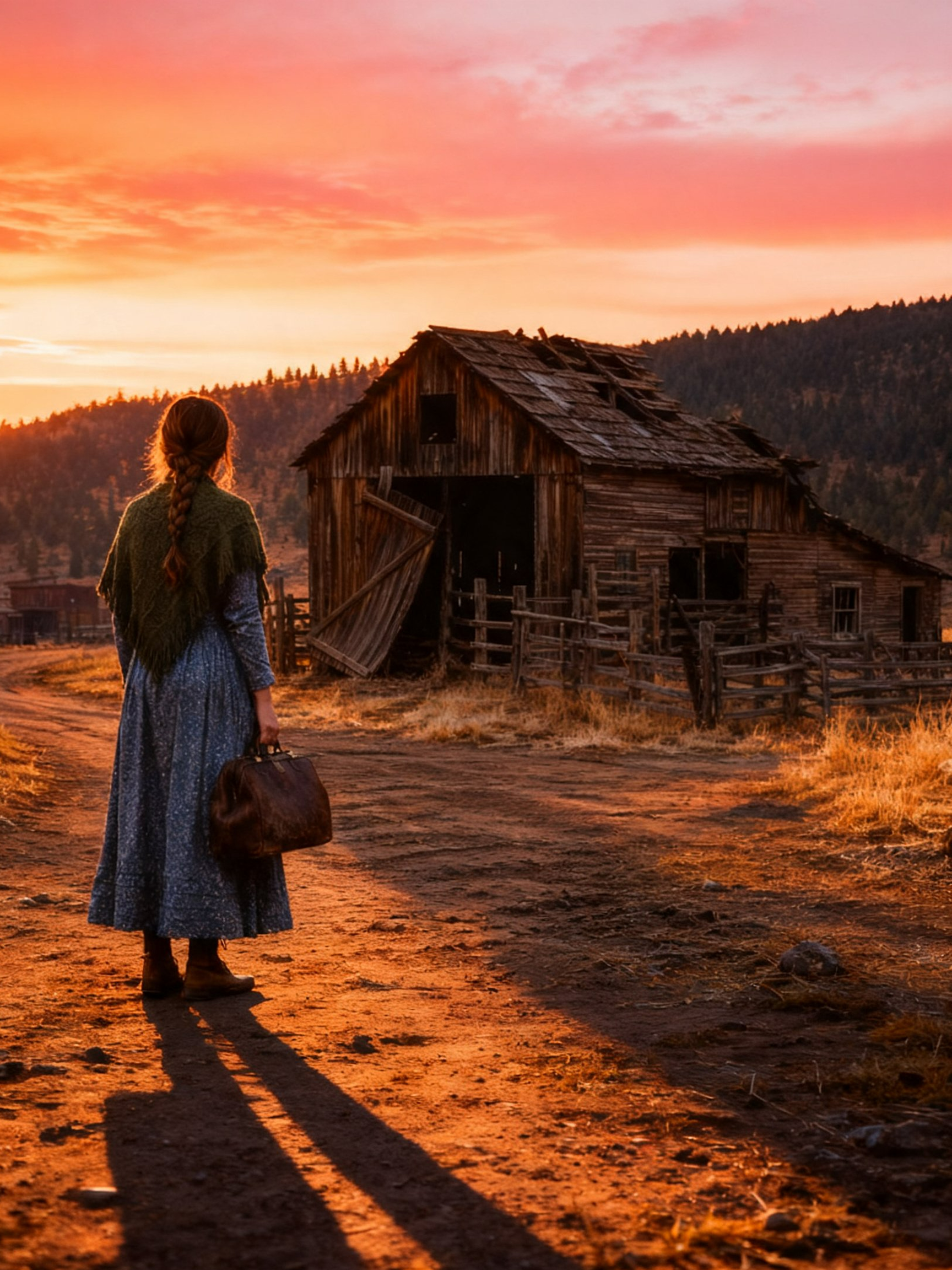
Broke at 22, She Bought a $10 Livery Stable—Then the Feed Bin Exposed the Inheritance Her Family Stole
Three days after her grandmother’s funeral, Madison Reed’s uncle set her suitcase on the front porch and told her she had until sunset to disappear.
Her mother stood behind him holding a mug of coffee.
Her older brother leaned against the hallway wall.
Nobody stopped him.
“You’ve lived off this family long enough,” Uncle Warren said. “Grandma’s gone. The free ride is over.”
Madison looked at the single suitcase beneath his hand.
Everything she owned fit inside it.
Two pairs of jeans.
Four shirts.
Her grandmother’s old denim jacket.
A laptop with a cracked corner.
And an envelope containing forty-three dollars and nineteen cents.
She did not cry.
That seemed to irritate Warren more than tears would have.
He had prepared himself for tears.
For pleading.
For one of those messy scenes people later described as proof that the person they had hurt was unstable.
Instead, Madison tucked a strand of dark auburn hair behind one ear and asked, “Is the probate inventory finished?”
Her mother’s mug stopped halfway to her mouth.
Warren’s face hardened.
“Don’t start.”
“I asked a question.”
“The estate attorney has everything under control.”
“Which attorney?”
Her brother, Caleb, laughed.
It was a short laugh.
Cruel because it was casual.
“Listen to her,” he said. “Three days ago she was pouring coffee at Denny’s, and now she thinks she’s a lawyer.”
Madison looked at him.
Caleb had spent four years at a private college their grandmother had paid for.
Madison had spent those same four years working.
First at a grocery store.
Then at a motel front desk.
Then waiting tables at night while helping Grandma Evelyn through congestive heart failure, two hip surgeries, and the final winter when she could no longer get from her bedroom to the kitchen without stopping to breathe.
Caleb had visited six times.
Madison knew because Grandma Evelyn kept every birthday card, every receipt, every appointment reminder and every tiny disappointment in a blue metal box beside her bed.
Madison had driven her to cardiology appointments.
Madison had washed her hair in the kitchen sink.
Madison had learned which soup she could swallow when food tasted like metal.
Madison had slept on the floor beside her bed after the second surgery because Grandma was afraid of falling in the dark.
Madison had turned down community college twice because somebody had to stay.
And now Caleb was laughing.
Warren lifted her suitcase and dropped it down the porch steps.
The zipper burst.
A sweater slid onto the wet grass.
“There,” he said. “Now you’ve got something useful to do.”
Madison looked at the sweater.
Then at Warren.
Still no tears.
Still no shouting.
Her silence became its own kind of weapon.
Her mother finally spoke.
“Madison, don’t make this uglier than it needs to be.”
That almost made her smile.
Not because it was funny.
Because cruelty often became clearest when people renamed it.
They had thrown her out of the house where she had spent five years caring for the woman they had barely visited, and somehow Madison was the one in danger of making things ugly.
She walked down the steps.
Picked up the sweater.
Placed it back inside the suitcase.
Then she turned around.
“Grandma owned the livery stable on Cottonwood Street, didn’t she?”
For the first time, nobody looked relaxed.
It lasted less than a second.
But Madison saw it.
Warren recovered first.
“That rotten building?”
“It’s condemned.”
“Roof leaks. Foundation’s cracked. County’s been trying to get it torn down for years.”
Caleb smirked.
“You want it?”
Madison zipped her suitcase slowly.
Warren turned toward him.
“Don’t be stupid.”
But Caleb was already enjoying himself.
The old Reed Livery Stable stood six blocks from downtown Bellweather, Kansas, on a neglected strip of land wedged between a tire shop and an abandoned grain office.
It had been built in 1889.
Once, ranchers had tied horses outside while buying supplies.
Now pigeons lived in the rafters.
Half the windows were boarded.
A faded sign leaned over the street as if exhausted by gravity.
REED & SONS LIVERY AND FEED.
It was the kind of property people called historic right before deciding it should be demolished.
Caleb folded his arms.
“Sell it to her.”
Warren stared at him.
Caleb laughed again.
“For ten bucks. That way nobody can say we left Grandma’s favorite little charity case with nothing.”
Their mother gave a nervous smile.
“What? It solves everything.”
Madison watched Warren.
He was doing math behind his eyes.
Demolition.
Whatever value he believed remained in the stable clearly felt smaller than the pleasure of humiliating her.
Finally he said, “Ten dollars.”
Madison opened her wallet.
Her fingers never trembled.
She pulled out a ten-dollar bill.
Caleb actually applauded.
“Congratulations,” he said. “You’re officially the owner of a pile of horse manure.”
Madison handed the bill to Warren.
“No,” she said quietly. “Not yet.”
His smile faded.
“I want it in writing.”
That silence lasted longer.
Her mother looked down into her coffee.
Caleb stopped grinning.
Warren stared at Madison as though noticing for the first time that the girl they had mistaken for obedient might simply have been patient.
“You don’t trust family?” he asked.
Madison looked at her suitcase on the wet grass.
“Should I?”
By noon, Warren had called Mason Pryce, a local attorney who handled most of the Reed family’s business.
By two, a quitclaim deed had been prepared.
By four, Madison was standing in Pryce’s office while Warren signed away the livery stable and its narrow parcel for ten dollars.
Pryce barely looked at her.
“Property is transferred as-is,” he said. “No warranties. No claims against the sellers regarding structural defects, environmental conditions, title problems or future code enforcement.”
Madison read every line.
“Title problems?”
Pryce tapped the page.
“Boilerplate.”
Warren gave an exaggerated sigh.
“She thinks she’s buying Rockefeller Center.”
Madison kept reading.
Near the bottom was a parcel number.
17-04-22-311.
She remembered it.
She didn’t know why yet.
But she remembered it.
When she finished, she signed.
Pryce notarized the document.
Caleb took a photograph of her holding the deed.
“Wait,” he said. “This is perfect.”
Madison looked at him.
“For what?”
“My group chat.”
He typed while smiling.
BROKE SISTER JUST BOUGHT CONDEMNED BARN FOR $10.
A minute later, his phone began vibrating with laughing reactions.
Madison folded the deed and slipped it into her jacket.
“Finished?”
Caleb looked up.
She nodded.
Then she walked away.
She walked away from the house.
She walked away from the family photographs.
She walked away from the bedroom she had surrendered years earlier so Grandma could sleep closer to the bathroom.
She walked away from the people who had counted her sacrifices as proof that she had no ambition.
She walked away from the brother whose tuition she had helped protect by giving up her own.
She walked away from the uncle who thought silence meant stupidity.
She walked away carrying forty-three dollars, one suitcase, and a ten-dollar building nobody wanted.
By nightfall, she was sleeping inside it.
The stable smelled of wet wood, dust, rust and something older than any living person in Bellweather.
Madison used her phone flashlight to inspect the first floor.
Twelve stalls lined the walls.
Some doors had collapsed.
Leather hooks remained nailed into beams blackened by a century of hands.
A cracked office window faced Cottonwood Street.
Behind the office stood the feed room.
That was where she found the first thing that made her stop.
Not treasure.
One of the old feed bins had been shoved against the north wall.
Unlike everything else in the stable, its iron handles had no rust.
Madison crouched.
The floor beneath it was layered with dust.
The floor directly behind it was not.
Someone had moved the bin recently.
Very recently.
Grandma Evelyn had not been able to climb stairs during the last three years of her life.
But she could drive until eight months before her death.
And several times, Madison remembered, Grandma had insisted on running errands alone.
One afternoon she had returned with mud on her shoes.
Another time she had come home smelling like cedar dust.
Madison had asked where she had been.
Grandma had smiled.
“Putting something back where it belongs.”
At the time Madison thought she meant returning library books.
Now, inside the dark stable, that memory changed shape.
Madison put both hands against the feed bin.
It was heavy.
She pushed.
She tried again.
The iron legs groaned against the boards.
Half an inch.
Then one inch.
Then enough for Madison to see a brass ring set into the floor.
Her breathing changed.
Not faster.
She moved the bin another foot.
The brass ring was attached to a square hatch.
Madison knelt.
A line had been scratched into the wood beside it.
Not random.
Evelyn Reed.
Madison’s grandmother.
She hooked two fingers through the ring and pulled.
The hatch lifted.
Cold air touched her face.
Below it, a narrow staircase disappeared into darkness.
Madison did not go down.
Not immediately.
She photographed everything first.
The undisturbed boards.
The initials.
The staircase.
Then she emailed the photographs to a new account she had created two years earlier after Warren once “accidentally” reset Grandma’s banking password.
Only after the images were backed up did Madison climb down.
Eight wooden steps led into a brick storage chamber.
The room was perhaps ten feet square.
There were old harnesses hanging from one wall.
Two wooden trunks.
A shelf of ledgers.
A cast-iron lockbox.
And in the center, wrapped in oilcloth, sat a red document case.
Madison touched nothing for almost a minute.
Her grandmother had taught her that.
Whenever Evelyn misplaced jewelry, Warren had a habit of arriving first, opening drawers, touching everything, then announcing there was no proof anyone had stolen anything.
“Hands destroy stories,” Grandma once told Madison.
At twelve years old, Madison thought she meant fingerprints.
At twenty-two, she understood she meant much more.
Madison filmed the entire room on her phone.
Then she opened the red case.
Inside were four things.
A handwritten letter.
A sealed envelope addressed to Madison Elise Reed.
A flash drive.
And a copy of a deed dated September 14, 1978.
Madison unfolded the letter.
The handwriting was unmistakable.
If you are reading this, then either I was finally brave enough to tell the truth, or death made the decision for me.
If Warren knows you found this room, do not argue with him.
If Mason Pryce tells you the papers are meaningless, do not hand them to him.
If anyone claims the stable is worthless, let them keep believing it.
Most importantly, do not sell anything until you speak with Eleanor Voss in Wichita.
The law can punish a thief.
But only evidence can prove one.
There are people in this family who have been waiting thirty-eight years for me to die.
Forgive me for making you wait a little longer to understand why.
Madison read it twice.
Then a third time.
She picked up the envelope with her name.
Inside was a key and another note.
Safe-deposit box 442.
Prairie Union Bank, Wichita.
Ask for Eleanor first.
The key is only half of what you need.
The other half is beneath the feed bin, but not in this room.
Madison looked up.
The chamber suddenly felt smaller.
She examined the deed.
The document transferred 640 acres of farmland and mineral rights from Henry Reed—Evelyn’s father—to Evelyn Reed.
The acreage lay east of Bellweather.
Madison knew the land.
Everyone did.
Reed Development Group had just announced plans to build a massive logistics park there.
Warehouses.
Rail access.
Data facilities.
A truck terminal.
The local newspaper called it the largest private development project in county history.
Estimated value after rezoning: forty-eight million dollars.
Warren had spent the past year telling anyone who would listen that the land belonged to the family trust.
Madison looked at the deed again.
Sole grantee: Evelyn Margaret Reed.
Not the Reed family.
Not a trust.
Madison sat very still.
Then she noticed the legal description.
Parcel numbers had changed over time, but one sequence jumped out at her.
The beginning of the parcel number printed on her ten-dollar livery stable deed.
Coincidence was possible.
But Grandma Evelyn had raised Madison never to confuse possible with probable.
She placed the papers back inside the case.
Then she heard a sound overhead.
A car door.
Madison switched off the flashlight.
She listened.
Another door slammed.
Footsteps crossed broken gravel.
Someone tried the stable’s front entrance.
Then Warren’s voice came through the dark.
She said nothing.
“Maddie, open up.”
She remained inside the hidden chamber.
The front door shook.
“I know you’re in there.”
A second voice.
Mason Pryce.
Madison’s pulse slowed.
That frightened her more than if it had raced.
They had sold her the stable less than five hours ago.
And now the family attorney was outside it after dark.
Warren tried the door again.
“Maddie, we made a mistake in the paperwork.”
Still she said nothing.
Pryce spoke more quietly, but the empty stable carried his voice.
“We need her signature tonight.”
Warren whispered something she could not hear.
Then Pryce answered.
“No. If she records us, we’ve got a bigger problem.”
Madison took out her phone.
Pressed record.
Warren raised his voice.
“Madison, this isn’t a game.”
She looked at Grandma Evelyn’s letter.
If Warren knows you found this room, do not argue with him.
So Madison didn’t.
She waited.
After four minutes, the men left.
She stayed underground another fifteen.
Only when she saw their taillights disappear through a crack in the boards did she climb out.
She immediately checked the front door.
A white envelope had been pushed underneath.
Inside was a document titled CORRECTIVE QUITCLAIM DEED.
The correction would return the stable to Reed Holdings LLC.
Madison laughed once.
She photographed it.
Then she locked the door.
By eight the next morning, Warren had called eleven times.
Caleb sent six texts.
Mom sent three.
The first said:
PLEASE CALL YOUR UNCLE.
The second:
THIS IS GETTING RIDICULOUS.
DON’T DESTROY YOUR FAMILY OVER A FALLING-DOWN BUILDING.
Madison sat inside an all-night laundromat charging her phone while a dryer spun her clothes.
She searched for Eleanor Voss.
Sixty-eight years old.
Probate attorney.
Former assistant attorney general.
Private practice in Wichita.
No website beyond a single page containing an address and phone number.
Madison called at .
A woman answered.
“Eleanor Voss Law.”
“I need to speak with Ms. Voss.”
“Regarding?”
“My grandmother, Evelyn Reed.”
Not receptionist silence.
Recognition.
“Your name?”
“Madison Reed.”
Another pause.
Then the woman said, “Do not tell anyone you called this number.”
Madison straightened.
“Are you Eleanor?”
“My grandmother left instructions to contact you.”
Madison looked through the laundromat window.
A pickup sat across the street.
Engine running.
She couldn’t see the driver.
Eleanor’s voice sharpened.
“Where are you?”
“Bellweather.”
“Are you alone?”
“I think so.”
“Thinking is not enough today.”
Madison glanced again at the truck.
It pulled away.
“I have a deed,” she said. “Six hundred forty acres.”
Eleanor was silent for two full seconds.
Then: “Do you have the original?”
“I have a copy.”
“Where did you find it?”
“In a concealed room beneath Grandma’s old stable.”
Another silence.
“What else?”
“A flash drive. Letters. A safe-deposit key.”
“Do not open the flash drive.”
“Because if Evelyn did what I told her, it’s encrypted and logged.”
Madison stared at the dryer.
“What exactly is happening?”
Eleanor exhaled.
“Your grandmother spent twenty-nine years preparing for the possibility that her own relatives would steal her estate.”
Madison’s stomach tightened.
“Not just Warren.”
That sentence mattered.
A system, Madison thought.
Not one villain.
Eleanor continued.
“Your grandmother believed several land transfers had been falsified. She also believed the family attorney was involved. She refused to accuse anyone without evidence strong enough to survive court.”
“Mason Pryce.”
“I did not say that name.”
“You didn’t need to.”
“Good. Then Evelyn taught you something.”
Madison looked at the spinning dryer.
“Why didn’t she go to police?”
“Because thirty-eight years ago, the first person she accused was her own husband.”
Madison stopped breathing for a moment.
Her grandfather, Samuel Reed, had died when she was four.
In family stories, he had been described as stern but respectable.
A cattleman.
A church donor.
A county commissioner.
There was a photograph of him shaking hands with a governor.
“What did he do?”
“That,” Eleanor said, “is what the safe-deposit box is for.”
Madison was in Wichita by eleven.
She borrowed seventy dollars from her former manager at Denny’s, promising to repay it within a week, then rented the cheapest compact car she could find because her own Buick had been repossessed four months earlier.
Prairie Union Bank occupied an old limestone building near Douglas Avenue.
Eleanor was waiting inside.
She was small.
White-haired.
No jewelry except a plain watch.
She did not hug Madison.
Did not offer sympathy.
She simply looked at her for several seconds and said, “You have Evelyn’s habit of watching the door.”
Madison glanced behind her.
“I learned from her.”
“Then perhaps we have a chance.”
The bank manager led them downstairs.
Safe-deposit box 442 required two keys.
And the bank’s.
But Eleanor had said the key was only half of what she needed.
When the box was placed inside a private viewing room, Madison understood.
There was a combination lock around it.
Four digits.
Madison tried Grandma’s birthday.
Her mother’s birthday.
Then she remembered something.
The parcel number.
17-04-22-311.
She entered 0422.
The lock opened.
Inside were no diamonds.
No stacks of cash.
There was a ledger.
A cassette tape.
A yellowed photograph.
A notarized affidavit.
And a sealed will.
Madison touched the photograph first.
It showed Grandma Evelyn at perhaps thirty-five years old standing beside a Black man in work clothes and a white woman holding a baby.
Behind them was a farmhouse Madison recognized from the east acreage.
On the back, Evelyn had written:
THE DAY I PROMISED THEM IT WOULD NOT BE STOLEN TWICE.
Madison looked at Eleanor.
“Who are they?”
“Thomas and Ruth Bell.”
“I don’t know those names.”
“You should.”
Eleanor opened the ledger.
Pages of handwritten numbers.
Property taxes.
Lease payments.
Farm yields.
Royalty estimates.
Then something else.
A list of names.
Seventeen families.
Beside each name was an acreage amount.
Madison frowned.
“I thought Grandma owned the land.”
“But these people—”
“Worked it.”
Eleanor sat opposite her.
“In 1951, Henry Reed bought several distressed farms during a drought. Some owners sold willingly. Others did not have many choices. One of those families was the Bells.”
Madison looked again at the photograph.
“Grandma knew?”
“She found out after Henry died.”
“Why didn’t she return it?”
“She tried.”
Eleanor pushed the affidavit toward her.
Madison did.
The affidavit had been signed by Evelyn in 1998.
It stated that upon inheriting the 640 acres, she discovered evidence her father had manipulated tax liens and private debts to pressure neighboring Black farming families into selling below market value during the 1940s and 1950s.
Not illegal by the standards prosecutors could prove decades later.
But not clean.
Never clean.
Evelyn had spent years locating descendants.
Some accepted settlements.
Others could not be found.
She had then created something called the Bellweather Restitution Trust.
Madison looked up.
“I’ve never heard of it.”
“That was intentional.”
“Who controls it?”
Eleanor met her eyes.
“Until four days ago? Evelyn.”
“That depends on whether her real will still controls.”
The sealed document suddenly seemed heavier.
Eleanor broke the outer seal in front of a bank employee and a camera.
The will was dated eighteen months earlier.
It revoked all prior wills.
It left the house, bank accounts and personal property in modest portions to Evelyn’s children.
Then came the stable.
To my granddaughter Madison Elise Reed, who gave me time when others gave me excuses, I leave the property known as Reed Livery Stable and all fixtures, subsurface structures, records, hereditaments, easements, reversionary interests and appurtenant title rights associated with its originating parcel.
Madison stopped.
“Originating parcel?”
Eleanor nodded.
“Keep reading.”
Madison did.
I further appoint Madison Elise Reed as successor trustee of the Bellweather Restitution Trust, with full authority to recover any real property, mineral rights, proceeds, rents, royalties or development compensation improperly diverted from said trust.
Her eyes moved faster.
Then stopped completely.
The 640 acres were not inherited by Madison personally.
They belonged to the restitution trust.
Grandma Evelyn had intended them to benefit the descendants of families harmed by Henry Reed’s land acquisitions.
Madison sat back.
Forty-eight million dollars.
Potentially more.
And none of it was really hers.
Strangely, that made everything clearer.
Warren wasn’t stealing from Madison.
He was stealing from people who had already been cheated once.
People whose grandparents had lost farms while Henry Reed built the family name everyone in Bellweather admired.
Madison felt something cold settle into place inside her.
Eleanor watched her closely.
“Disappointed?”
“Most people would be.”
“Most people weren’t raised by Evelyn.”
For the first time, Eleanor smiled.
“There you are.”
The cassette contained Evelyn’s voice.
They found an old player in the bank’s records room.
The recording began with static.
Then Grandma spoke.
“My name is Evelyn Margaret Reed. It is April seventeenth, 2025.”
Her voice was weaker than Madison remembered.
But deliberate.
“If this recording is being played, I assume Warren has attempted to transfer the east acreage.”
Madison looked at Eleanor.
The tape continued.
“He believes I never discovered the 1994 deed substitution. Samuel taught him how to hide land by changing entities instead of changing owners. Warren believes paperwork is truth if enough people sign it.”
Then Grandma coughed.
“The stable matters because my father’s original acquisition records were filed using the livery parcel as the anchor tract. In 1988, Samuel separated the stable from the farm on paper but failed to extinguish the reversion clause Henry placed in the original chain of title.”
Madison leaned forward.
Eleanor whispered, “There’s your land mine.”
Grandma’s recorded voice continued.
“If the stable is transferred outside Reed Holdings while the east acreage is under an unexecuted development option, the originating title review can be reopened by the stable owner.”
Madison stared at the table.
Warren had sold her the trigger.
For ten dollars.
Grandma continued.
“I cannot guarantee a court will enforce every claim. I can guarantee Warren does not know the clause exists.”
Eleanor looked almost amused.
The tape clicked.
Then Grandma’s voice changed.
Softer now.
“Maddie, if you’re the one hearing this, I am sorry.”
Madison swallowed.
“I should have told you sooner. I kept saying I was protecting you. Sometimes protection is simply another word older people use when we are afraid to trust the young with pain.”
Madison’s eyes burned.
She did not wipe them.
“I watched you give up school.”
“I watched you pretend you didn’t mind.”
Another pause.
“I watched your mother accept your help as though it cost you nothing.”
Madison closed her eyes.
“I wanted to leave you money. But money would let them say you stayed because you expected payment.”
A longer pause.
“So I am leaving you something harder.”
The tape hissed.
“I am leaving you the chance to finish what I was too ashamed to finish quickly.”
Madison lowered her head.
Eleanor looked away, giving her privacy without leaving.
Grandma’s final sentence came quietly.
“Do not save the Reed name, Maddie. Make it mean something different.”
The tape ended.
For several seconds, the room contained only the soft mechanical click of the cassette player.
Madison finally looked up.
“What happens now?”
Eleanor folded her hands.
“Now we discover how much they’ve already stolen.”
By the time Madison returned to Bellweather, Warren had changed the locks on the stable.
A demolition notice had been taped across the front door.
So had a county order declaring the structure unsafe.
Two orange machines sat behind a chain-link construction fence.
One excavator.
One skid steer.
Caleb was standing on the sidewalk filming.
When Madison parked, he grinned.
“Oh, good. You’re back.”
She stepped out.
“What’s this?”
“Public safety.”
“You sold me the property yesterday.”
“And yesterday nobody knew the west wall was about to collapse.”
Madison looked at the wall.
It was leaning.
But not more than it had the day before.
A man wearing a county inspection jacket approached.
“Madison Reed?”
“Carl Dempsey. Building department.”
Madison recognized the name.
Dempsey played golf with Warren.
She had seen pictures on Facebook.
He handed her a notice.
“Emergency abatement.”
“What inspection supports it?”
His confidence flickered.
“Visual assessment.”
“This morning.”
“What time?”
He looked annoyed.
“Does it matter?”
“It will in court.”
Caleb lowered his phone slightly.
Madison pointed toward the excavator.
“Who hired the demolition company?”
Warren stepped from behind the stable.
He was smiling again.
That meant he believed the game had returned to familiar territory.
“You don’t own it,” Madison said.
“I’m preventing an accident.”
“On somebody else’s property.”
“Don’t be dramatic.”
Madison looked at Dempsey.
“Has the county issued a demolition warrant?”
He frowned.
“A signed emergency authorization permitting destruction of a privately owned historic structure without the owner’s consent.”
Dempsey glanced toward Warren.
Madison saw it.
She took out her phone.
“I’ll ask the sheriff.”
Warren’s smile disappeared.
“You’re calling police over a barn?”
Madison selected Eleanor’s number instead.
“I’m calling my attorney.”
Caleb snorted.
“Your attorney?”
“Who? Some legal-aid intern?”
Madison put the phone on speaker.
Eleanor answered.
“I’m at the stable. They’re preparing demolition.”
“Put me on speaker.”
Eleanor’s voice became crisp.
“Who is present?”
“Warren Reed. Caleb Reed. County inspector Carl Dempsey. And a demolition crew.”
Silence from everyone.
Then Eleanor said, “Mr. Dempsey, this is Eleanor Voss. Has the county obtained judicial authorization?”
Dempsey’s face changed.
He knew the name.
Apparently everyone in Kansas law eventually did.
“Well, Ms. Voss, this is an emergency—”
“That was not my question.”
“Has the property owner consented?”
“Is there an immediate fire, collapse or public exposure requiring summary demolition under county ordinance 8-14?”
Dempsey looked at the building.
“No immediate fire.”
“Collapse?”
“Potential.”
“Current collapse.”
“Public exposure?”
“It fronts a sidewalk.”
“Which is currently fenced.”
He swallowed.
“Then I recommend you ask the equipment operator to turn off his engine.”
Nobody moved.
Eleanor continued.
“Because the moment that bucket touches Ms. Reed’s structure, I will seek an injunction, preservation order, damages and discovery into every communication between the building department and Reed Development Group during the last seventy-two hours.”
The excavator engine shut down.
Warren stepped closer to Madison.
“You hired her?”
“No,” Madison said.
“She was already waiting.”
That hit him.
She saw it.
The first crack.
“What does that mean?”
Madison slipped the demolition notice into her pocket.
“It means Grandma expected you.”
Warren’s face became still.
Caleb stopped recording.
Madison walked past them toward the door.
Warren grabbed her wrist.
“Expected me to do what?”
Madison looked down at his hand.
Then up at his face.
“Do you really want the county inspector recording you assaulting the property owner?”
He released her immediately.
She unlocked the replacement padlock with bolt cutters borrowed from the demolition crew.
The hidden chamber was intact.
But the feed bin had been moved.
Someone had been inside.
The trunks were open.
The ledgers were gone.
The red case was gone.
Madison stared at the empty shelf.
Warren stood in the doorway above her.
“Lose something?”
She turned.
His expression told her everything.
He knew enough to be afraid.
Not enough to know she had already removed the critical documents.
He thought he had won.
That was useful.
Madison climbed the steps slowly.
“What did you take?”
Warren smiled.
“Nothing from your property.”
“You were here.”
“Prove it.”
Caleb stepped forward.
“Grandma stored junk everywhere. Maybe you imagined whatever you think you found.”
Madison studied him.
He was nervous.
He touched his phone twice without looking at it.
A habit he had when lying.
She looked at Warren again.
“I’m going to ask you once.”
“Oh, please.”
“Did you remove anything from beneath the feed bin?”
Warren laughed.
There it was.
The question sounded weak.
Almost pathetic.
Exactly what he wanted.
He spread his arms.
“Under the feed bin? Madison, listen to yourself.”
“You’re saying no?”
“I’m saying you’re broke, homeless, angry and digging holes in a condemned stable because you can’t accept that Grandma didn’t leave you anything.”
Madison nodded.
“Thank you.”
His smile twitched.
“For what?”
“For answering clearly.”
She walked away.
The hidden camera was still recording.
She had installed it above the feed-room door at six that morning.
Warren had been inside for twenty-three minutes.
Caleb for eleven.
Mason Pryce for nine.
All three had been filmed entering the concealed room.
All three had carried boxes out.
Madison slept that night in a motel Eleanor paid for from Evelyn’s estate-contest reserve.
At the next morning, Reed Development Group held a press conference.
Warren stood before a blue banner beside Mason Pryce, the county commissioner, two bankers and the president of Great Plains Logistics.
Behind them was an artist rendering of the future development.
Six enormous warehouses.
A rail spur.
Truck plazas.
Data storage.
Estimated construction investment: sixty-three million dollars.
Warren announced that the final land transfer would occur Friday.
Applause filled the room.
Local television cameras recorded every smile.
Caleb posted:
BIGGEST DEAL IN REED FAMILY HISTORY.
Madison watched from the back.
Nobody noticed her at first.
Then her mother did.
Their eyes met.
Mom looked away.
That hurt more than Warren.
Not because Madison expected courage from her.
Because some small, childish part of her had still expected shame.
Warren saw Madison next.
His smile widened.
After the press conference, he approached.
“You came.”
“I wanted to hear the timeline.”
“That’s fast.”
“Business moves fast when competent people are involved.”
Madison nodded toward the rendering.
“Looks expensive.”
“How much are you getting?”
His eyes narrowed.
“That’s none of your concern.”
“Grandma’s concern, then.”
His voice softened.
That was new.
He stepped closer.
“Whatever you think you found, stop.”
She said nothing.
“I can give you money.”
“How much?”
He had not expected that.
His shoulders relaxed.
“Fifty thousand.”
“For the stable?”
“For everything. Stable, claims, complaints. You sign a confidentiality agreement and walk away.”
Madison pretended to consider.
“Caleb said it was horse manure.”
Warren smiled.
“He’s immature.”
“You laughed.”
“People say things.”
“Grandma said things too.”
His smile vanished.
Madison continued.
“She said somebody had been waiting thirty-eight years for her to die.”
Warren’s jaw tightened.
“You’re playing with things you don’t understand.”
“Then explain them.”
“I’m trying to protect you.”
Madison almost admired the choice of words.
The same sentence powerful people had used on weaker people for generations.
“I’m twenty-two,” she said. “Yesterday I was too stupid to understand a deed. Today I need protection?”
“You need perspective.”
“I have forty-eight million dollars’ worth.”
His pupils changed.
But enough.
So he knew that number.
Madison stepped away.
“Friday, right?”
“The closing.”
He did not answer.
She smiled.
“I’ll see you there.”
Thursday brought the first attack that looked respectable.
The Bellweather Gazette published a story suggesting Madison was attempting to exploit her grandmother’s death by interfering with a development project expected to create 600 jobs.
The article quoted Warren.
It quoted Caleb.
It quoted Carl Dempsey.
It quoted the mayor.
It did not quote Madison.
The comments were worse.
Ungrateful.
Gold digger.
Crazy girl.
Trying to steal jobs from working families.
One person posted a photograph of her waiting tables.
Another shared Caleb’s picture from the day she bought the stable.
BROKE SISTER THINKS $10 BARN MAKES HER A LAND BARON.
Madison read every comment.
Then she closed the app.
At noon she met Eleanor and a title historian named Benjamin Cross in the basement of the county recorder’s office.
Benjamin was seventy-three, wore suspenders and treated old property documents like sacred texts.
He traced the Reed chain of title across microfilm, handwritten indexes and survey maps.
At , he found it.
“Son of a gun.”
Madison leaned over his shoulder.
Benjamin pointed at an 1889 deed.
The livery stable had originally been part of a 702-acre tract.
Sixty-two acres were later sold off.
The remaining 640 became the east farmland.
In 1912, Madison’s great-great-grandfather refinanced the property.
The lender inserted a clause preserving access, water and reversion rights through the livery parcel because it contained the original well and commercial loading easement.
Most of those rights became obsolete.
One did not.
Benjamin tapped the sentence.
If the dominant agricultural tract is transferred for nonagricultural commercial use before extinguishment of the originating parcel covenant, consent shall be required from the holder of the originating parcel.
Madison read it again.
“The holder.”
Benjamin smiled.
Eleanor was less celebratory.
“A clause this old will be challenged.”
“But it’s valid?”
“It was never released.”
“So I can stop the sale?”
“You can complicate it.”
Madison looked at her.
“That’s not the same thing.”
“No. Which is why Evelyn left a second weapon.”
Eleanor placed the flash drive on the table.
The encryption password had been hidden in the ledger.
The ledger Warren stole.
Fortunately, Evelyn had given Eleanor a duplicate.
They opened the drive.
Folders filled the screen.
BELL FAMILIES.
Madison clicked WARREN.
Scanned checks.
Corporate filings.
And one spreadsheet.
Payments from Reed Holdings to shell companies.
Twenty-seven transactions over nine years.
Total: $4.6 million.
“What am I looking at?” Madison asked.
Eleanor’s face was grim.
“Money from land leases and mineral royalties.”
“The restitution trust?”
Madison stared at the total.
Four point six million dollars.
Taken from people who did not even know they had a claim.
The money had paid for Caleb’s education.
A lake house.
Warren’s vacation property in Colorado.
Political donations.
Country-club dues.
And something called PRYCE CONSULTING RETAINER.
Madison sat back.
Mason had not merely covered paperwork.
He had been paid.
Then Benjamin found the worst document.
A deed dated 1994.
It appeared to transfer the 640 acres from Evelyn Reed into Reed Family Holdings.
Her signature was notarized.
But Evelyn’s passport records on the flash drive showed she had been in Ireland that week.
More importantly, the notary had died eleven months before the supposed signing date.
Madison stared at the screen.
“They forged it.”
Eleanor nodded.
“And every later transfer rests on it.”
“Then the land isn’t Warren’s.”
“It’s the trust’s.”
“Most likely.”
“And he’s selling it tomorrow.”
“He’s attempting to.”
Madison looked at the clock.
“Can we stop the closing?”
Eleanor packed the files.
“We can ask a judge.”
At p.m., they filed for emergency injunctive relief.
At , Judge Rebecca Alvarez scheduled a hearing for the next morning.
At , Warren called Madison.
She answered.
“You filed against me.”
“You accused me of fraud.”
“The documents accuse you.”
“You have no idea what you’re doing.”
“I’m learning.”
“Do you understand what happens if this deal collapses? Lawsuits. Lost jobs. Millions in penalties.”
“Then you probably shouldn’t have based it on a forged deed.”
For the first time since Grandma died, Warren had no immediate answer.
Then he said, “Your mother could lose the house.”
Madison closed her eyes.
“You put her house into the project?”
“But if this becomes litigation, family assets get pulled apart.”
“You mean assets you moved through family entities.”
“Madison, listen to me. Your mother is fifty-four years old. She has no retirement plan. Do you want her starting over because you need revenge?”
Madison opened her eyes.
“I don’t want revenge.”
“Don’t lie.”
“I want the land returned to the people Grandma intended.”
He laughed bitterly.
“People who have never met you.”
“That makes it easier.”
“They can’t manipulate me by saying they’re family.”
Warren hung up.
The hearing began Friday morning in a packed courtroom.
Half of Bellweather seemed to be there.
Journalists lined the rear benches.
Great Plains Logistics sent three lawyers.
The bank sent two.
Warren arrived in a charcoal suit with Mason Pryce beside him.
Caleb sat behind them.
Madison’s mother sat alone.
Madison entered with Eleanor carrying one slim folder.
The difference looked almost ridiculous.
An empire on one side.
A twenty-two-year-old waitress and a sixty-eight-year-old lawyer on the other.
Judge Alvarez took the bench.
Eleanor spoke first.
She did not tell a dramatic story.
She did something more dangerous.
She gave dates.
September 14, 1978.
April 3, 1994.
November 12, 1993—the death of the notary whose stamp appeared on the 1994 deed.
June 7, 2017.
February 18, 2022.
April 17, 2025.
Then she presented the 1889 covenant.
Mason attacked immediately.
“Your Honor, counsel is attempting to resurrect an archaic commercial provision unrelated to modern land use.”
Eleanor stood.
“The opposing party relied on that same chain of title to claim ownership. They cannot call the chain valid where it gives them land and archaic where it creates obligations.”
Judge Alvarez looked over her glasses.
“Mr. Pryce?”
Mason shifted.
“We dispute the interpretation.”
“Then dispute it at trial.”
Mason’s face tightened.
The judge turned to Eleanor.
“What immediate relief are you seeking?”
“A fourteen-day injunction preventing closing or transfer.”
Great Plains’ attorney stood.
“That delay could destroy the transaction.”
Judge Alvarez looked at him.
“If ownership is uncertain, perhaps the transaction deserves to be destroyed.”
Nobody breathed.
Then Warren whispered something to Mason.
Mason stood again.
“Your Honor, the plaintiff has no standing. The livery stable was fraudulently conveyed to her for nominal value under family misunderstanding.”
Madison almost smiled.
There it was.
The ten dollars.
Their joke.
Their humiliation.
Now suddenly important.
Eleanor reached into her folder.
“We anticipated that.”
She handed the clerk three documents.
“The conveyance was drafted by Mr. Pryce, executed by Mr. Warren Reed, notarized in Mr. Pryce’s office and expressly transferred as-is.”
Judge Alvarez read.
Then she looked at Mason.
“You drafted this?”
“Yes, Your Honor, but—”
“For ten dollars?”
“It was a symbolic family transfer.”
“Did Ms. Reed misrepresent anything?”
“Threaten anyone?”
“Lack capacity?”
“Then I’m struggling to understand why your client’s embarrassment creates fraud.”
A laugh moved through the courtroom.
Judge Alvarez silenced it with one look.
Then came the deed.
The forged one.
Mason objected before Eleanor finished introducing it.
“Authentication.”
Eleanor nodded.
“Of course.”
She called Benjamin Cross.
He explained the record history.
Then Eleanor produced the death certificate of the notary.
November 12, 1993.
The deed supposedly notarized five months later.
The courtroom changed.
You could feel it.
People stopped shifting.
Pens stopped.
Even the Great Plains lawyers leaned toward one another.
Warren stared straight ahead.
Judge Alvarez studied the deed.
“Mr. Pryce, your firm recorded this document.”
Mason’s voice was careful.
“My father’s firm did.”
“Your father is deceased?”
“Did you know the notary was deceased?”
Madison watched him.
No outrage.
No surprise.
Just containment.
That told her more than words.
Judge Alvarez granted the injunction.
Fourteen days.
No transfer.
No demolition of the stable.
No destruction of records.
And, at Eleanor’s request, no disposal of documents related to Reed Holdings, the Bellweather Restitution Trust or the 640-acre parcel.
Outside the courthouse, reporters surrounded Madison.
“Are you trying to take the development land?”
“Do you believe your uncle committed fraud?”
“Will you sell the stable?”
“Are you demanding money?”
Madison ignored the first three.
She answered the fourth.
The reporter blinked.
“The land isn’t mine.”
That quieted them.
Madison continued.
“My grandmother believed some of that land came from families who were treated unfairly decades ago. She created a trust to repair what she could. I’m trying to protect that trust.”
A reporter raised his voice.
“How much are you personally seeking?”
The crowd changed again.
Not dramatically.
But enough.
The greed story no longer fit.
Warren emerged from the courthouse and heard the last answer.
His face darkened.
That afternoon the Gazette changed its headline.
$10 STABLE DISPUTE REVEALS POSSIBLE DECADES-OLD LAND FRAUD.
By evening, descendants of the families listed in Grandma’s ledger began calling.
A school principal in Topeka.
A retired nurse in Denver.
A mechanic in Oklahoma City.
A pastor in Tulsa.
A woman named Dr. Naomi Bell in Chicago.
Thomas and Ruth Bell’s granddaughter.
Naomi was seventy-one.
She had spent twenty years researching what happened to her grandfather’s farm.
When Madison called, Naomi did not speak for several seconds.
Then she asked, “Is Evelyn dead?”
“I’m sorry.”
“You knew her?”
“I met her once.”
Madison looked at the photograph from the safe-deposit box.
“Why didn’t she tell me?”
Naomi’s voice held no cruelty.
Only exhaustion.
“Good people sometimes think shame is a form of payment. It isn’t.”
Madison sat on the motel bed.
“What happened to your family?”
“My grandfather’s father borrowed money after two bad harvests. Henry Reed purchased the note. Then he demanded payment before the contract allowed.”
“Couldn’t they fight it?”
Naomi gave a sad laugh.
“A Black farmer against the county commissioner’s biggest donor?”
Madison closed her eyes.
“I’m sorry.”
“Don’t apologize for a dead man’s choices.”
“My grandmother tried to fix it.”
“Not enough.”
Madison appreciated the honesty.
Naomi continued.
“But she was the first Reed who came to us without asking us to forget.”
Madison looked toward the stable through the motel window, though it was miles away.
“What do you want me to do?”
“Find the truth.”
“And the land?”
“If the trust is valid, follow it.”
“That could mean selling.”
“Development?”
Madison frowned.
“You’re not against it?”
“I’m against theft. Don’t confuse that with being against change.”
That sentence stayed with Madison.
Justice was not preserving land like a museum.
Justice was restoring choice to people who had been denied it.
Over the next week, Warren’s system began breaking apart.
Not collapsing.
One small crack at a time.
The county inspector admitted under oath that Warren had called him before the demolition notice.
The demolition company produced an invoice dated two days before Madison purchased the stable.
Two days before.
Meaning Warren had planned demolition before giving her the building.
Because someone knew evidence was inside.
Caleb’s group chat was subpoenaed after Eleanor discovered he had messaged a friend:
OLD LADY HID PAPERS IN BARN. DAD SAYS WE CLEAN IT FRIDAY.
Friday had been the day before Grandma died.
Mason Pryce filed a motion to withdraw as Warren’s counsel.
Judge Alvarez denied his attempt to remove his firm’s records from discovery.
Great Plains Logistics suspended the development agreement.
The bank froze one Reed Holdings line of credit.
Then Madison’s mother came to the stable.
It was raining.
She stood beneath the sagging awning in a beige coat, looking older than she had two weeks earlier.
Madison opened the door.
Neither woman spoke.
Mom stepped inside.
She looked around at the broken stalls.
“You’re really staying here?”
“Not anymore.”
Madison waited.
Her mother rubbed her hands together.
“Warren says you’re destroying everything.”
“Warren says a lot.”
“He says Grandma confused you.”
“She left documents.”
“People can misunderstand documents.”
“Dead notaries are harder to misunderstand.”
Her mother flinched.
Madison regretted the sharpness but not the truth.
Mom stared at the feed room.
“I hated this place.”
“Your grandfather used to bring Warren here.”
Madison watched her.
“For what?”
“Business.”
“What business?”
“I don’t know.”
Her mother looked away.
There it was.
The old family reflex.
Silence used not as patience.
Silence used as camouflage.
Madison stepped closer.
“I was seventeen.”
“When I first saw the boxes.”
“What boxes?”
“Records. Deeds. Tax files.”
“Grandpa and Warren?”
“His father.”
Madison’s voice hardened.
“You knew.”
“I knew men were doing things they didn’t want women asking about.”
“That’s not the same answer.”
“It was a different time.”
“No. That sentence is what people say when they want time itself to take the blame.”
Her mother looked at her sharply.
Madison did not back away.
“You threw me out three days after Grandma died.”
Tears entered her mother’s eyes.
Madison felt nothing triumphant.
Only tired.
“I thought Warren was protecting us,” Mom whispered.
“From what?”
“Losing everything.”
“What belongs to us?”
Her mother opened her mouth.
Nothing came out.
Madison asked again.
“What belongs to us?”
“I don’t know anymore.”
That, finally, was honest.
Mom sat on an overturned bucket.
“Your father left debt. Caleb’s tuition was enormous. Grandma covered so much. Warren said the development would make everyone secure.”
“So nobody asked where the land came from.”
“We grew up believing it was ours.”
“The Bells grew up knowing it wasn’t.”
Her mother wiped her cheek.
“Do you hate me?”
Madison considered the question.
It was true.
That almost hurt more.
“Are you going to forgive me?”
Madison looked toward the feed bin.
“Not because you’re scared now.”
Her mother lowered her head.
Before leaving, she stopped at the door.
“There’s something you should know.”
Madison waited.
“The night before Grandma went to the hospital, Warren came to the house.”
Madison’s body became still.
“What time?”
“I was working.”
“What did he want?”
“Grandma’s blue metal box.”
Madison felt cold.
The box from Evelyn’s bedside.
Appointments.
Disappointments.
“What happened?”
“She wouldn’t give it to him.”
“I heard them arguing.”
“About what?”
“I couldn’t hear everything.”
Her mother turned toward the rain.
“But Grandma said one thing very clearly.”
“She said, ‘If you touch Madison’s inheritance, the stable will bury you.’”
Madison stared at her.
The stable will bury you.
“Where’s the blue box?”
“I don’t know.”
“Did Warren take it?”
“I don’t know.”
“Did you see him leave?”
“With anything?”
Her mother paused.
“A grocery bag.”
Madison closed her eyes.
Another missing record.
Another piece.
But Evelyn had built redundancies.
Hidden rooms.
Safe-deposit boxes.
Flash drives.
She had known exactly what kind of family she was dealing with.
The next morning, federal agents visited Mason Pryce’s office.
Not because of Madison.
Because the frozen trust transactions included mineral royalties subject to federal tax reporting.
A forensic accountant found unexplained transfers.
Then another.
Then another.
The system Warren trusted began doing what systems sometimes do when enough evidence is forced into daylight.
It protected itself by abandoning him.
The county commissioner denied knowing anything.
Carl Dempsey hired his own lawyer.
The bank claimed Reed Holdings had provided false certifications.
Great Plains sued for return of its deposit.
Mason claimed he had relied on information supplied by Warren.
Warren claimed Mason handled all legal details.
Caleb deleted social-media posts.
Madison said almost nothing publicly.
That became more frightening than any angry interview could have been.
Every time reporters asked whether she wanted her family punished, she gave the same answer.
“I want the records followed.”
Records did not scream.
Records did not insult.
Records did not need revenge.
They simply remained.
Three weeks after Madison bought the stable, Judge Alvarez convened a title hearing.
This time the courtroom overflowed.
Naomi Bell attended.
So did twelve descendants from six families listed in Evelyn’s ledger.
Some had driven overnight.
One man carried a photograph of his grandfather standing beside a wheat field that had later become Reed property.
The court validated the Bellweather Restitution Trust pending final accounting.
The 1994 deed was declared presumptively fraudulent.
Reed Holdings’ claim to the 640 acres was suspended.
Warren’s lawyers requested an appeal.
They requested a stay.
Then Eleanor introduced Grandma’s final trust amendment.
The room went silent.
It required any recovered property to be evaluated by the beneficiaries collectively.
Not Madison.
Not Eleanor.
Not a Reed.
The families.
If they chose development, the proceeds would fund education, land purchases, elder care and agricultural grants for descendants.
If they chose preservation, the trust could lease farmland.
If they chose sale, they could sell.
For the first time in seventy-five years, choice returned to the people whose families had lost it.
Naomi Bell cried quietly.
Madison did not.
She simply reached across the aisle and placed Grandma Evelyn’s old handkerchief beside Naomi’s hand.
Warren watched.
His face looked hollow.
During recess, he cornered Madison near the courthouse stairwell.
No lawyers.
No cameras.
Just the two of them.
“You think you won.”
Madison looked at him.
“Didn’t you?”
He gave a bitter laugh.
“You’re twenty-two.”
“You have no career.”
“No house.”
“No money.”
“Almost none.”
“And you just gave away land worth tens of millions.”
“It wasn’t mine.”
“It could have been.”
“You could have fought the trust.”
“I could have become you.”
His jaw tightened.
“You think Evelyn was some saint?”
That surprised him.
Madison continued.
“She benefited from what her father did. She waited too long to fix it. She hid things. She made mistakes.”
Warren stepped closer.
“She also tried.”
“Too late.”
“Then why destroy us for her?”
Madison shook her head.
“I’m not destroying you.”
He laughed.
“Spare me.”
“You signed the deed.”
“The stable.”
His face changed.
“You gave it to me.”
“I made a mistake.”
“No. You made a joke.”
Madison leaned closer.
“You wanted me to understand my value.”
He stared at her.
“So thank you.”
She walked away.
At the bottom of the stairs, Warren called after her.
“You haven’t found everything.”
Madison stopped.
Behind her, his voice had lost its anger.
What remained was almost fear.
“You think the land was the secret?”
She turned.
He was smiling.
But the smile looked wrong.
“What else is there?” she asked.
Warren shook his head.
“That’s the problem with Evelyn. She never knew when to stop digging.”
Then his attorney appeared and pulled him away.
Madison told Eleanor immediately.
Eleanor dismissed nothing.
They returned to the stable that afternoon.
For six hours, they searched the hidden room.
Floorboards.
Harness hooks.
At sunset, Naomi Bell joined them.
She walked through the building slowly.
“My grandfather came here once.”
Madison looked up.
“The stable?”
“He told my mother about it.”
“Before I was born.”
Naomi ran her fingers along the old feed-room wall.
“He said Henry Reed used to settle accounts here.”
Madison glanced at the feed bin.
“Accounts?”
“Cash. Grain debts. Land notes.”
Benjamin Cross arrived an hour later with copies of old building plans.
The original stable had included a grain scale.
Its mechanism ran beneath the floor.
Madison pointed.
Benjamin overlaid the drawing.
They were standing on it.
The feed bin had concealed the hatch to the first chamber.
But according to the plan, a mechanical channel continued another twelve feet beneath the north wall.
Madison remembered Grandma’s note.
The key is only half of what you need.
The other half is beneath the feed bin, but not in this room.
Not in this room.
They moved the bin again.
Examined the floor.
Then Naomi tapped the iron side.
“Why is this empty?”
Madison frowned.
“Because nobody uses it.”
Naomi knocked again.
The sound changed near the bottom.
They removed the rusted interior panel.
Behind it was a narrow compartment.
Inside sat a brass cylinder.
Madison lifted it out.
A keyhole ran through its center.
Safe-deposit key 442 fit perfectly.
The cylinder opened.
Inside was a rolled piece of linen and a small iron key.
The linen was a survey map.
Not 640 acres.
Madison stared.
Three times the size.
The original Reed acquisitions stretched farther east than anyone had admitted.
Across land now occupied by twenty-seven houses, a shopping center, the municipal maintenance yard and part of a natural-gas storage facility.
Naomi whispered, “Oh my God.”
Eleanor said nothing.
Benjamin sat down.
Madison’s stomach turned.
The land scandal was not over.
It was bigger.
Much bigger.
But there was more.
On the back of the map, Grandma Evelyn had written:
THE 640 ACRES ARE WHAT WARREN KNOWS I DISCOVERED.
HE DOES NOT KNOW I FOUND THE SECOND LEDGER.
DO NOT OPEN THE NORTH WALL UNTIL A COURT HAS RECOGNIZED YOUR OWNERSHIP OF THE STABLE.
IF YOU OPEN IT EARLY, THEY WILL SAY YOU PLANTED WHAT IS INSIDE.
WAIT UNTIL THEY LOSE THE LAND.
THEN ASK FOR WITNESSES.
Madison looked at Eleanor.
“The court recognized my ownership this morning.”
Eleanor slowly nodded.
Naomi stepped back.
“What’s behind the north wall?”
Nobody answered.
They called Judge Alvarez’s clerk.
They called the sheriff.
They called a court-certified videographer.
They called Benjamin.
They called representatives of the restitution trust.
By 10:40 p.m., twelve people stood inside the old livery stable.
Sheriff Daniel Moss personally recorded the beginning of the search.
Madison stood before the north wall holding the iron key.
Benjamin found the outline first.
A hidden steel door had been bricked over and painted.
The key fit a lock concealed behind a removable timber peg.
Madison turned it.
The mechanism clicked.
Nobody spoke.
Two deputies helped remove the false brick panel.
Behind it was a steel vault door.
Madison opened it.
Cold air rolled out.
The smell was paper.
Thousands of pages.
Shelves covered every wall.
Property maps.
Canceled checks.
Loan documents.
Photographs.
County correspondence.
Tax records.
Dozens of boxes.
Each labeled with a family name.
Naomi covered her mouth.
Madison entered slowly.
On the center table sat Grandma’s blue metal box.
The missing one.
Her mother had been right.
Warren had taken it.
But somehow it was here.
Madison looked at Eleanor.
“Warren put it back?”
“How else—”
Then they saw the envelope taped underneath.
Madison’s name.
Grandma’s handwriting.
She opened it with witnesses watching.
If Warren stole my blue box from the house, he would bring it here.
He believes this vault belongs to him.
He never discovered that I changed the lock in 2019.
The key he carries opens the outer steel door.
It does not open the inner evidence cabinet.
I left the box at home deliberately.
If it is here now, Warren moved it.
Which means he entered this vault after my death.
The room became completely silent.
Madison looked toward Sheriff Moss.
His expression had changed.
Grandma had set a trap from beyond the grave.
A physical chain of evidence.
The blue box had been bait.
Inside it were photocopies, not originals.
But Warren’s fingerprints would prove he entered the vault after Evelyn died.
And if surveillance existed—
Madison looked around.
Above the door.
A tiny black camera.
Benjamin whispered, “Good Lord.”
A deputy removed its memory card.
The recording showed Warren entering the vault the night before Grandma went to the hospital.
Then again after her death.
Mason Pryce joined him on the second visit.
They sorted documents.
Photographed files.
Removed a ledger.
Then Warren placed the blue box on the table.
His voice was captured clearly.
“Once the stable comes down, none of this matters.”
Mason answered.
“What about Madison?”
Warren laughed.
“She’ll sign anything if we scare her enough.”
Madison did not move.
The deputy looked away.
The video continued.
Mason asked, “And if she doesn’t?”
Warren’s answer came through the speaker.
“Then we make sure everyone thinks she’s crazy before she understands what she owns.”
Sheriff Moss stopped the recording.
“I need to call the district attorney.”
Madison nodded.
But Eleanor was staring deeper into the vault.
At one shelf.
Not the land files.
A smaller group of folders.
Each marked with a year.
“What are those?” Madison asked.
Eleanor pulled the 1994 folder.
Inside were copies of county contracts, bank records and letters.
Not simply property theft.
Bank officers.
County officials.
Developers.
Names crossed three decades.
Naomi whispered, “This isn’t a family scandal.”
“No,” Eleanor said.
“It’s a town.”
By midnight, state investigators were on their way.
By morning, the stable was under evidence seal.
Warren Reed was arrested on suspicion of evidence tampering, fraud and conspiracy.
Mason Pryce surrendered through counsel six hours later.
Carl Dempsey was placed on administrative leave.
The county commissioner announced he was “temporarily stepping aside.”
The bank hired outside counsel.
The mayor canceled two public appearances.
Caleb deleted his accounts.
Madison’s mother called.
Madison let it ring once.
Then answered.
“Did they arrest Warren?”
Her mother began crying.
Madison listened.
She did not comfort her.
Not because she was cruel.
Because comfort had been Madison’s family job for too long.
“Madison,” her mother whispered, “what happens now?”
“I don’t know.”
“Can you come home?”
Madison looked around the motel room.
“The house.”
“You told me to leave.”
“Caleb laughed while Warren threw my things onto the lawn.”
“You watched.”
Then her mother whispered, “I was afraid.”
Madison stared through the window.
“So was I.”
Another silence.
“But I still had to leave.”
Her mother had no answer.
Madison softened only slightly.
“I’ll call you later.”
She hung up.
Two months passed.
The investigations grew.
The beneficiaries of the Bellweather Restitution Trust voted to negotiate with Great Plains instead of rejecting development completely.
But this time the terms changed.
The trust retained twenty percent ownership in the finished commercial project.
A portion of the acreage remained agricultural.
A scholarship fund was created.
A land-repurchase fund was created.
Revenue sharing replaced the one-time payout Warren had negotiated for himself.
People who had once been excluded from the table now occupied half the seats.
Madison accepted no salary for the first year.
Eleanor forced her to accept one afterward.
“You cannot build justice by requiring the person doing the work to remain poor,” she said.
Madison enrolled in community college.
Business law.
Accounting.
American history.
She moved into a small apartment above a pharmacy.
She kept Grandma’s denim jacket.
The stable did not come down.
The trust restored it.
Not into a museum exactly.
Something more useful.
The front became legal-aid offices and an archive for disputed property records.
The rear stalls became meeting rooms.
The hidden vault remained preserved behind glass.
Above the restored entrance hung a simple wooden sign:
REED & BELL LAND JUSTICE CENTER.
Naomi chose the order of the names.
“Your grandmother started the repair,” she said. “My grandfather paid the original price. Both belong there.”
Madison disagreed.
On opening day, hundreds of people came.
People who had once laughed at the ten-dollar stable.
Caleb did not attend.
He had moved to Arizona.
Madison’s mother stood near the back.
She had begun therapy.
She had also turned over financial records showing Warren had used her signature on two LLC filings she claimed never to have understood.
Madison did not magically forgive her.
But once every Sunday, they had coffee.
Trust returned in teaspoons.
Never buckets.
Warren’s criminal case was still pending.
Mason had begun negotiating with prosecutors.
Bellweather’s former county commissioner resigned permanently.
Two retired bank executives hired defense attorneys.
Everyone kept asking Madison whether she felt vindicated.
She hated that word.
Vindication sounded clean.
Nothing about the truth had been clean.
Grandma Evelyn was still dead.
Naomi’s grandfather had never gotten his farm back.
Madison had still lost years she could not recover.
Her mother had still stood in the doorway while her suitcase fell into wet grass.
Justice did not erase any of that.
It simply stopped the lie from owning the future too.
Three months after the center opened, Madison stayed late on a Friday.
Rain struck the windows.
Almost the same kind of rain as the afternoon she had been thrown out.
She was cataloging the last unopened box from the vault.
Most of it was ordinary.
Medical bills.
Trust correspondence.
Then she found a white envelope sealed with black wax.
Inside was a photograph.
Madison stared at it.
Grandma Evelyn stood beside the livery stable.
The photograph looked recent.
Very recent.
Beside her stood Mason Pryce.
And between them stood a man Madison had never seen before.
Gray-haired.
Late sixties.
He held a document.
On the back of the photograph, Grandma had written:
IF THIS MAN RETURNS, DO NOT TELL HIM YOU FOUND THE VAULT.
HE HAS THE ORIGINAL 1951 LEDGER.
AND HE IS THE ONLY PERSON WHO CAN PROVE HENRY REED NEVER LEGALLY OWNED THE FIRST FARM AT ALL.
Madison’s heartbeat changed.
Below that was a name.
JONATHAN VALE.
She immediately called Eleanor.
She tried again.
Then someone knocked at the front door.
Three soft knocks.
Madison looked at the clock.
The center had been closed for three hours.
Another knock.
She walked toward the entrance slowly.
Through the glass she saw a tall gray-haired man standing beneath the awning.
Rain ran from his coat.
He held an old leather briefcase.
Madison looked at the photograph in her hand.
But unmistakable.
Jonathan Vale.
She kept the door locked.
“What do you want?” she called through the glass.
The man looked past her toward the hidden vault.
Then he looked directly at Madison.
“Evelyn told me you’d ask that.”
Madison’s hand tightened around the photograph.
“Who are you?”
He placed one palm against the glass.
Not threatening.
Almost tired.
“I’m the man your grandmother paid to disappear in 1994.”
Madison did not unlock the door.
Behind her, somewhere deep inside the restored stable, a phone began ringing.
Not her cell phone.
The old black rotary telephone preserved on Grandma Evelyn’s desk.
A telephone that had not been connected to a working line in thirty-two years.
Jonathan Vale heard it too.
Every trace of color left his face.
He stepped backward into the rain.
Madison turned toward the ringing phone.
Three times.
Then Jonathan said something through the glass.
So softly she almost missed it.
“Don’t answer that.”
Madison looked back at him.
His eyes moved toward the vault.
“Because if that phone is ringing, Warren wasn’t the one Evelyn was afraid of.”
The rotary phone rang a fourth time.
Madison placed her hand on the receiver.
And asked the weakest question she could think of.
“Then who was?”
✓ Lynn R. Adams
Broke at 22, She Bought a $10 Livery Stable—Then the Feed Bin Exposed the Inheritance Her Family Stole Three days after her grandmother’s funeral, Madison Reed’s uncle set her suitcase on the front p…