Before Labor, I Heard My
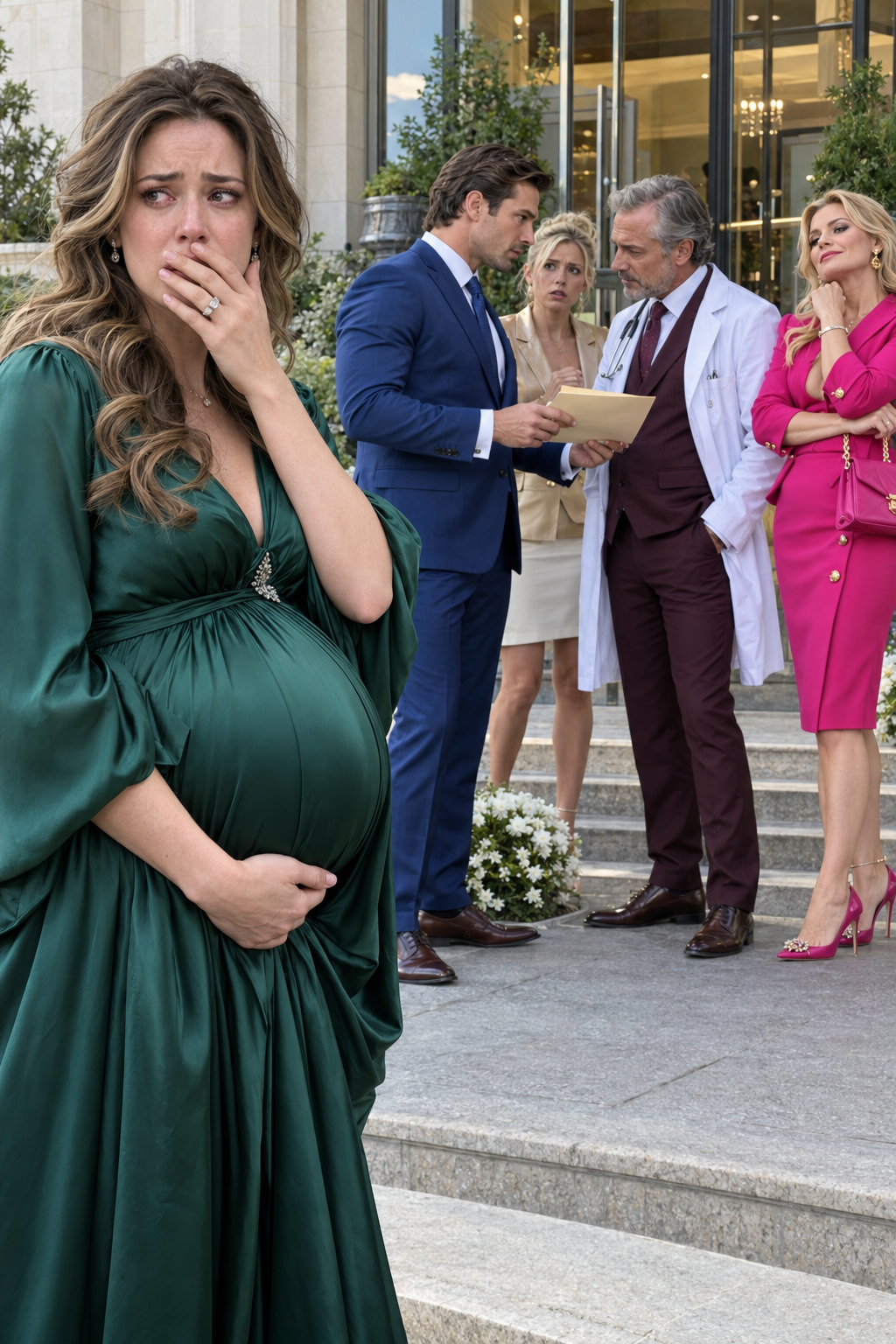
Before Labor, I Heard My Husband Offer My Doctor $650K—So I Let Him Believe I Was Going to Die
Three hours before I was supposed to give birth to our daughter, I heard my husband offer my obstetrician six hundred and fifty thousand dollars to make sure I never left the hospital alive.
He didn’t whisper because he was afraid someone might hear.
He whispered because he thought I was asleep.
“Complications happen every day,” Grant said from the other side of the half-closed consultation-room door. “Especially with a pregnancy like hers.”
There was a pause.
Then Dr. Malcolm Pierce said, “You’re asking me to commit murder.”
“No,” my husband replied calmly. “I’m asking you not to work too hard when things go wrong.”
I stood barefoot in the hallway of St. Catherine’s Medical Center in Charlotte, North Carolina, one hand beneath my nine-month belly and the other gripping an IV pole so tightly my fingers had gone white.
The hospital gown was open slightly at the back.
My ankles were swollen.
A contraction had begun somewhere deep in my spine.
And twenty feet away, the man who had kissed my stomach that morning was negotiating the price of my death.
Six hundred and fifty thousand dollars.
That was what Grant Whitmore believed my life was worth.
Or, more accurately, what he was willing to pay to remove me from his.
I didn’t scream.
I didn’t burst through the door.
I didn’t call his name and ask why.
I simply backed away.
One silent step.
Then another.
Then another.
That silence was the first thing Grant would later tell the police frightened him.
Because after thirteen years of marriage, Grant knew something about me that most people didn’t.
I became loud when I was hurt.
I became silent when I had decided what to do.
A nurse named Olivia rounded the corner carrying a tray of syringes.
She froze when she saw my face.
“Mrs. Whitmore?”
I pressed one finger to my lips.
Her eyes shifted toward the consultation room.
She heard Grant’s voice through the door.
“After she’s gone, the estate releases automatically. That was the structure her grandfather chose.”
Dr. Pierce’s voice dropped lower.
“And the baby?”
“The baby lives.”
My stomach tightened.
Not from the contraction this time.
Grant continued.
“I’m not a monster.”
That almost made me laugh.
Olivia stared at me.
I leaned close enough for her to hear me breathe.
“Can you take me somewhere with a lock?”
She nodded immediately.
No questions.
That saved her life in my memory forever.
She guided me down a service hallway, past a linen cart, through a staff door, and into a small lactation consultation room with no windows.
The second the lock clicked, I reached beneath my hospital gown and pulled a thin black leather case from the elastic maternity support band around my waist.
Olivia blinked.
“You brought a document case into labor?”
“Because my grandfather taught me never to walk into a hospital, courthouse, bank, funeral home, or family meeting without the document everyone else hopes you forgot.”
Inside the case were three things.
A sealed letter written by my grandfather nine years before his death.
A brass key no one in Grant’s family knew existed.
And a notarized affidavit I had signed forty-eight hours earlier.
I had not known my husband planned to kill me.
But I had known he was planning something.
Grant had made three mistakes during the previous month.
The first was becoming affectionate again after nearly a year of treating me like furniture.
The second was asking whether my grandfather’s trust changed if I died during childbirth.
The third was believing I was still the same woman he had married at twenty-seven.
The woman who apologized first.
The woman who paid quietly.
The woman who let his mother call her “lucky.”
The woman who surrendered every room she entered because Grant’s family had spent generations convincing people that Whitmore money made them royalty.
What they never understood was that the Whitmores had never been the wealthy family in our marriage.
They were simply the family that talked about money.
Mine was the family that buried it beneath land, companies, trusts, conservation easements, and ownership structures designed by people who had survived wars, bank collapses, betrayals, and relatives like Grant.
My grandfather, Warren Hale, used to say, “Flashy money buys champagne. Quiet money buys the vineyard, the road leading to the vineyard, the water beneath it, and the mortgage on the fool holding the champagne.”
Grant had always thought Warren was an eccentric old farmer.
That was because Warren wanted him to.
Olivia stared at the leather case.
“What do you need me to do?”
I pulled out my phone.
“No matter what happens, I need you to stay in this room while I make three calls.”
My first call went to my attorney, Rebecca Sloan.
She answered on the second ring.
“Activate the hospital clause.”
Then, “Are you sure?”
“I heard Grant offer my doctor six hundred fifty thousand dollars if I die during delivery.”
Rebecca inhaled once.
Nothing more.
That was why she had been my attorney for eleven years.
“Do you have a witness?”
“Nurse Olivia Bennett.”
Olivia gave a nervous nod.
“Recording?”
“I’m contacting the district attorney’s office and hospital security. Do not confront Grant. Do not eat or drink anything. Do not accept medication unless a second physician independently verifies it. I’m also triggering Section Nine.”
My eyes moved to the sealed letter.
“You understand what that means?”
“Once it’s triggered, Grant loses access even if this turns out to be a misunderstanding.”
“It isn’t.”
Rebecca’s voice hardened.
“Then congratulations.”
“For what?”
“For surviving the first mistake he made.”
I ended the call.
Olivia stared at me.
“What’s Section Nine?”
“Something my husband should have read before trying to become a widower.”
My second call went to a number saved in my phone under the name HENRY PLUMBING.
It had never belonged to a plumber.
A man answered.
“It’s Eleanor.”
Then a chair scraped across a floor.
“What happened?”
“I need you at St. Catherine’s. Now.”
“I’m leaving.”
Henry Cole had spent thirty-two years with the FBI before retiring into the sort of life where he restored antique clocks and pretended nobody could still make him dangerous.
He had been my grandfather’s closest friend.
More importantly, he had been executor of the private portion of Warren’s estate.
The portion Grant did not know existed.
My third call was to my mother.
She didn’t answer.
That hurt more than it should have.
I called again.
Straight to voicemail.
For one foolish second, standing in that locked room while my husband plotted my death, I still wanted my mother.
Not my attorney.
Not an ex-FBI agent.
I wanted to say, Mom, something terrible is happening.
I wanted her to say, I’m coming.
Instead, seven minutes later, she sent a text.
Can’t talk. Grant’s mother asked us to meet downstairs. It’s important.
My mother and my younger brother, Daniel.
Meeting Grant’s mother.
At the same hospital.
While I was upstairs in labor.
I looked at the screen for a long time.
Then another message appeared.
Please don’t create drama today, Ellie. Everyone is already stressed.
I read it twice.
Olivia shifted uncomfortably.
“You okay?”
It was a lie.
But not the weak kind.
The useful kind.
I had spent most of my life being the reliable daughter.
When my father died, I handled the funeral because my mother “couldn’t face paperwork.”
When Daniel’s restaurant failed, I quietly paid the $84,000 tax lien because he had two young children and no health insurance.
When my mother wanted to keep the house after Dad’s death, I covered the mortgage for six years.
When Grant’s company nearly collapsed after a disastrous commercial project in Raleigh, I transferred $1.8 million from one of my premarital distributions as a “temporary marital loan.”
Temporary lasted eight years.
No one thanked me twice.
That had been my mistake.
I gave quietly.
They learned to receive loudly.
I solved problems before anyone could feel the consequences.
They began believing consequences simply did not exist.
And slowly, very slowly, I became less like a woman they loved and more like infrastructure they assumed would always be there.
I paid when Daniel failed.
I fixed what Grant broke.
I forgave what my mother excused.
I waited for one of them to notice the difference between my kindness and my obligation.
No one did.
That morning, however, I finally understood the danger of being endlessly useful.
People eventually stop seeing the person.
They only see what disappears if the person says no.
A knock hit the door.
Olivia looked at me.
I slid the leather case back beneath the maternity band.
Her eyes widened.
“Are you sure?”
Grant entered wearing a navy suit instead of the sweater I had bought him for the hospital.
That detail mattered.
He had dressed for business.
Not for the birth of his child.
His face rearranged itself into concern when he saw me.
“There you are.”
He crossed the room quickly.
I watched him.
Really watched him.
The expensive watch.
The polished shoes.
The faint smell of cedar cologne.
The wedding ring.
The face I had kissed thousands of times.
“You scared me,” he said.
I gave him a tired smile.
The relief in his eyes was tiny.
But it was there.
He believed I had heard nothing.
That was when I knew I could beat him.
“Contractions getting worse?” he asked.
“A little.”
He touched my cheek.
I didn’t flinch.
That might have been the hardest thing I had ever done.
“I talked with Dr. Pierce,” Grant said. “He thinks things may move faster than expected.”
“I’m sure he does.”
Grant smiled.
Then his hand lowered toward my stomach.
“Our little girl.”
My daughter kicked beneath his palm.
For half a second, something human crossed his face.
Maybe love.
Maybe regret.
Maybe possession.
Then it vanished.
“Your mom’s downstairs,” he said.
“She texted.”
“And Daniel.”
“Mom’s with them.”
By Mom, he meant Claudia Whitmore.
His mother.
A woman who had called me “sweet little Eleanor” until the day she discovered that the house Grant and I lived in was legally mine.
After that, I became “controlling.”
Grant glanced toward Olivia.
“Could you give us a minute?”
Olivia didn’t move.
I said, “It’s okay.”
She left slowly.
Grant waited until the door shut.
Then he exhaled.
“There’s some paperwork we should handle before delivery.”
Of course there was.
“What kind?”
“Routine estate clarification.”
“In labor?”
“It’s just precautionary.”
He pulled a folded document from the inside pocket of his suit.
Not a hospital form.
Legal stationery.
I nearly admired the nerve.
He handed it to me.
The first paragraph was enough.
TEMPORARY MEDICAL AND FINANCIAL AUTHORITY.
It granted Grant power over medical decisions if I was deemed incapacitated.
It also confirmed him as interim controller of any assets released upon my death.
At the bottom was a signature line.
“How thoughtful,” I said.
Grant’s eyes searched my face.
“Pierce said anesthesia can make things complicated.”
“Of course.”
“Your grandfather’s trust paperwork is old. This protects the baby.”
There it was.
The moral disguise.
Every betrayal Grant committed eventually arrived wearing the baby’s name.
For our daughter.
For our future.
For stability.
For the family.
He set a pen on the table.
I picked it up.
Grant’s shoulders loosened.
He had always mistaken my willingness to avoid conflict for stupidity.
I put the pen to paper.
Then paused.
His expression tightened.
I smiled faintly.
“Nothing. I just realized I left my glasses upstairs.”
“You don’t need your glasses.”
“I’d rather read it first.”
The voice he used when he wanted me to know kindness had an expiration date.
I set the pen down.
“You wouldn’t want me signing something I don’t understand.”
He stared at me.
Then smiled.
“Of course not.”
“After delivery.”
“Before would be better.”
A simple question.
Grant blinked.
“Why is before better?”
“It just is.”
“That’s not an answer.”
For the first time, irritation showed.
Only a flicker.
“We don’t need to turn everything into a courtroom.”
I leaned back.
“We don’t.”
The door opened.
Dr. Pierce stepped inside.
I recognized him from eight months of prenatal visits.
Silver hair.
Expensive frames.
A careful voice.
A framed photograph in his office of his two sons.
A man who had once told me he had delivered more than four thousand babies.
Now I wondered how many frightened mothers had trusted the same hands my husband had tried to purchase.
He looked at Grant.
Then at me.
His eyes paused on my face.
Had he said yes?
That was the question.
I knew Grant had offered the money.
I did not yet know whether Pierce had accepted it.
“We’re going to move you to surgery,” Pierce said.
“The fetal tracing has become less reassuring.”
I looked toward the monitor mounted on the wall.
The baby’s heart rate was steady.
Olivia had told me ten minutes earlier it looked normal.
“How less reassuring?”
Pierce hesitated.
Grant stepped closer.
“Ellie, don’t make this harder.”
I ignored him.
Pierce cleared his throat.
“There have been intermittent decelerations.”
“May I have a second opinion?”
Grant’s jaw hardened.
Pierce said, “There isn’t time.”
“Then there’s enough time to show me the tracing.”
Silence filled the room.
A clean, dangerous silence.
Then Pierce said, “You’re under stress.”
“Which can affect judgment.”
“My judgment seems fine.”
Grant leaned toward me.
“Why are you doing this?”
I looked directly into his eyes.
“To be safe.”
He went pale.
Just a little.
He heard something in the words.
Not certainty.
But suspicion.
Let him wonder.
Let him spend the next hour looking at every nurse and every camera and every locked door.
Fear works best when people build it themselves.
I held out my hand to Pierce.
“I want another obstetrician to review the tracing.”
“And I want an anesthesiologist I haven’t previously met.”
Grant’s voice sharpened.
“That’s ridiculous.”
I turned to him.
A child’s question.
Weak on the surface.
A blade underneath.
He had no answer.
Pierce did.
“Of course,” he said quietly.
That changed everything.
Grant looked at him.
Pierce didn’t look back.
Something had shifted in the doctor’s face.
Shame, maybe.
I couldn’t tell which.
But I realized then that Grant had made another mistake.
He had treated Pierce like an employee.
Maybe doctors could be greedy.
Maybe they could be frightened.
Maybe they could make terrible choices.
But most people still wanted to believe they were good.
Grant’s offer had forced Pierce to choose which version of himself he would live with afterward.
A hospital administrator entered three minutes later with another obstetrician, Dr. Naomi Harris.
Forty-seven.
Short dark hair.
Gray sneakers under blue scrubs.
She reviewed the monitor.
Then she reviewed me.
“Baby looks stable right now,” she said.
Grant’s face changed.
“Pierce said—”
“I said right now.”
Dr. Harris turned to me.
“You are having regular contractions. There are reasons we might still recommend a C-section depending on progression, but I don’t see an immediate emergency.”
“Thank you.”
Grant stared at Pierce.
Pierce stared at the floor.
That was mini-payoff number one.
But I needed small victories.
Small victories keep you breathing until the large ones arrive.
Dr. Harris said, “I’ll remain involved.”
“I’d like that.”
Grant interrupted.
“My wife’s physician is Dr. Pierce.”
“My patient is Mrs. Whitmore,” Harris replied.
Not your wife.
My patient.
I liked her immediately.
Grant’s phone vibrated.
He checked it.
Something flashed across his face.
“Excuse me.”
He walked into the hallway.
Through the narrow gap in the door, I saw Claudia Whitmore approaching.
She wore cream wool.
Perfect hair.
Not a woman dressed to meet her granddaughter.
A woman dressed for probate.
Behind her were my mother and Daniel.
My own brother.
He wouldn’t meet my eyes through the doorway.
That was when the second blade entered.
I had expected Grant.
I had suspected Claudia.
But Daniel?
Claudia entered without knocking.
My mother followed.
“Sweetheart.”
Daniel stayed near the door.
I looked at each of them.
No one smiled.
No one asked how I felt.
Claudia placed a leather folder beside Grant’s document.
“We need to settle something before the delivery.”
I almost laughed.
“Apparently everyone does.”
My mother came closer.
“This is about protecting the family.”
“Which family?”
She flinched.
Daniel rubbed the back of his neck.
“Ellie, don’t start.”
Don’t start.
Those two words had followed me since childhood.
When Dad missed my college graduation because Daniel had gotten into another financial mess.
Don’t start.
When Mom used money from my wedding account to cover Daniel’s DUI attorney.
Don’t start.
When Grant “temporarily” transferred a lake property deed into a Whitmore development company and I objected.
Don’t start.
Women like me were not expected to have anger.
We were expected to have understanding.
I looked at Claudia.
“What are you settling?”
She opened the folder.
The deed to Hawthorne House.
A 14,000-square-foot stone estate outside Charlotte sitting on seventy-eight acres.
My grandfather had purchased the property when I was sixteen.
He put it in trust for me at twenty-five.
Grant had lived there for eleven years.
Claudia spoke carefully.
“Grant has explained that Hawthorne becomes complicated if something happens to you.”
I turned toward my husband.
“You explained that?”
He said nothing.
Claudia continued.
“For everyone’s peace of mind, we think you should transfer your interest to a family holding company today.”
My mother reached for my hand.
I moved it.
She stopped.
“Ellie, it’s just paperwork.”
“To whose company?”
Claudia’s lips tightened.
“Whitmore Heritage LLC.”
I looked at Daniel.
“And you’re here because?”
His face reddened.
“Mom asked me.”
I kept my voice level.
“Why are you here?”
He looked at Grant.
That told me before anyone spoke.
Grant said, “Daniel would receive a consulting position.”
There it was.
My little brother had sold me for a job.
“How much?”
Daniel’s head snapped up.
“How much is the position worth?”
“Jesus, Ellie.”
“Two hundred thousand.”
My mother whispered, “It includes benefits.”
I looked at her.
She looked ashamed.
Shame meant some part of her still knew right from wrong.
I turned back to Claudia.
“And my mother?”
Claudia answered for her.
“We would clear the remaining balance on her house.”
One hundred seventy-three thousand dollars.
That was the price of my mother’s loyalty.
I had paid nearly double that mortgage over six years.
But because I had never made a ceremony of it, my payments had become invisible.
Grant’s family understood theater.
They offered one dramatic rescue and made people forget a decade of quiet support.
“How generous,” I said.
My mother’s eyes filled.
“Please don’t talk like that.”
“How should I talk?”
“You’re about to have a baby.”
“And all of us are trying to make sure she’s protected.”
I rested both hands on my stomach.
“My daughter is protected.”
Claudia smiled coolly.
“You can’t know that.”
I met her eyes.
Something in my tone made her expression falter.
Grant stepped in.
“Enough. Sign the medical authority. We can handle Hawthorne later.”
“Good idea.”
He blinked.
I pulled the document closer.
Everyone watched.
Dr. Pierce, still silent near the wall.
Five people, each for different reasons, waiting for my signature.
I took the pen.
And signed.
My mother exhaled.
Grant’s face relaxed.
Claudia nearly smiled.
I handed the document back.
No one noticed that I had signed my married name incorrectly.
Eleanor Hale Whitmore.
Legally, since my marriage certificate, tax filings, driver’s license, passport, trust amendments, and property records all used Eleanor Grace Hale.
I had never legally adopted Whitmore.
Grant knew that.
But arrogance makes people forget facts that inconvenience desire.
Rebecca had taught me years earlier that a signature could be evidence even when it couldn’t be authority.
Now Grant had a document proving he intended to exercise control over me.
And I had given him exactly enough rope to believe I had surrendered.
A contraction rolled through me hard enough to bend my spine.
I gripped the bed rail.
Grant moved forward.
I raised one hand.
He stopped.
That was the first moment everyone noticed something was wrong.
Not physically.
Between us.
My mother whispered, “Ellie?”
I breathed through the contraction.
Ten seconds.
Then it passed.
I looked at Grant.
“Take your paperwork.”
His eyes narrowed.
“Because I want to rest.”
Claudia gathered the folders.
Daniel avoided my eyes.
My mother hesitated.
“You want me to stay?”
That question hurt.
Because she was my mother.
Because she shouldn’t have needed to ask.
Because somewhere beneath fifty-nine years of habit and fear, she probably loved me.
But love that repeatedly chooses convenience over courage becomes difficult to distinguish from selfishness.
“No,” I said.
She nodded.
Not relieved.
Not exactly.
But not devastated either.
Grant was last.
At the door he turned.
“I love you.”
“I know what you love.”
His face went still.
Then he walked out.
Three minutes later, Henry Cole arrived disguised by old age so effectively I almost smiled.
He wore khaki pants, a brown jacket, and reading glasses hanging from his neck.
To anyone else, he looked like somebody’s grandfather.
To me, he looked like consequences.
Olivia let him in.
He closed the door.
Every word.
He listened without interrupting.
When I finished, he held out his hand.
“The letter.”
I gave him the sealed envelope.
He read the front.
FOR ELEANOR, IF THEY EVER TRY TO REMOVE HER BEFORE THEY CAN REMOVE THE MONEY.
Henry’s mouth tightened.
“Warren always did enjoy subtlety.”
“What’s in it?”
“You never opened it?”
“He made me promise.”
“And Warren’s dead.”
“I still promised.”
Henry looked at me for a long moment.
Then broke the seal.
Inside were four handwritten pages.
The first sentence made my chest tighten.
Ellie, if you are reading this, someone has mistaken your kindness for surrender.
I kept reading.
Warren described a trust structure he had created twenty-two years earlier.
The Hale Continuity Trust.
Not an inheritance in the ordinary sense.
A controlling ownership network.
Medical properties.
Industrial leases.
Mineral rights.
Water rights.
Two insurance companies.
Three regional logistics firms.
A private lending entity.
So much land.
Some of it I knew.
Most of it I didn’t.
The estimated combined value when he wrote the letter was $312 million.
Henry quietly corrected me.
“Current audited value is closer to $487 million.”
I looked up.
“That’s impossible.”
“I would know.”
“That was the point.”
Henry tapped the letter.
“Your distributions were deliberately small. Warren didn’t want the family treating you like a lottery ticket. He also didn’t want Grant marrying the balance sheet.”
I read the next page.
My grandfather had expected betrayal.
Not murder.
But betrayal.
He specifically named Claudia Whitmore.
I never trusted that woman’s smile. She counts rooms before she greets people.
Despite everything, I almost laughed.
Then I reached the legal warning.
If your spouse, parent, sibling, child, trustee, physician, attorney, or business partner attempts to coerce a transfer while you are medically compromised, Section Nine activates automatically upon sworn notice from you or designated counsel.
I looked at Henry.
“What happens?”
“Every asset you indirectly control freezes.”
“For how long?”
“Until an independent fiduciary review.”
“And Grant?”
“If coercion is established, he becomes permanently disqualified from inheriting, managing, borrowing against, residing on, or benefiting from trust property.”
My pulse quickened.
“Hawthorne?”
“Trust property.”
“The Whitmore headquarters?”
Henry’s expression changed.
“Granddad owned the note?”
“Warren’s private lending company bought Whitmore Development’s debt during the 2009 restructuring.”
Henry nodded.
“Grant’s company headquarters sits on Hale-owned land under a ninety-nine-year ground lease.”
I whispered, “He doesn’t own the building?”
“He owns improvements.”
“The land?”
“You do, through the trust.”
“What about Claudia’s house?”
“Collateral.”
I almost laughed.
Not because it was funny.
Because justice sometimes arrives so perfectly shaped it becomes absurd.
The Whitmores had spent thirteen years treating me like the poor relation who had married upward.
They hosted Christmas parties under chandeliers financed by my family.
They held board meetings on my land.
Claudia once suggested I should be “grateful” Grant had given me access to their world.
Their world had a mortgage.
My grandfather held it.
Henry pointed to the final paragraph.
“Keep reading.”
The wealth is not the gift.
The power to stop people from using wealth to humiliate the weak is the gift.
If they come for the money, make them face every person they stepped over to reach it.
That was Warren.
He had grown up above a laundromat in West Virginia.
His father died in a mining accident.
His mother cleaned offices at night.
He spent his life building companies and hated people who treated money as proof of moral value.
Suddenly, the trust felt heavier.
It wasn’t treasure.
It was responsibility.
My daughter kicked again.
I put a hand over her.
Henry said, “There’s more.”
Of course there was.
He pulled a small brass key from my leather case.
“This opens Box 717 at Piedmont Federal.”
“You know what’s inside?”
“Warren told me only this: if Section Nine ever activates, you open that box before any settlement, reconciliation, or criminal cooperation agreement.”
“He wouldn’t tell me.”
The brass key sat in his palm.
For the first time that day, I felt afraid of something other than Grant.
Because my grandfather never created drama without reason.
“What did he say exactly?”
Henry’s eyes stayed on the key.
“He said, ‘The money will explain why they came for her. The box will explain who taught them how.’”
A knock hit the door.
Dr. Harris.
My labor had progressed quickly.
Five centimeters.
Then seven.
My daughter had apparently inherited my timing.
Hospital security had quietly moved Dr. Pierce off my case.
Nobody arrested him.
Rebecca wanted evidence.
Henry wanted Grant confident.
I wanted my daughter born safely.
That became the center of the world.
For the next ninety minutes, the conspiracy shrank beneath something larger.
Heartbeats.
The sterile smell of the delivery suite.
Dr. Harris giving calm instructions.
Olivia wiping sweat from my forehead.
My body doing what bodies have done for thousands of years while powerful men stood outside rooms making plans they imagined were more important than birth.
Grant appeared twice.
Both times security told him I had requested limited access.
The second time, he demanded to see the medical authority I had signed.
The hospital attorney reviewed it.
Grant shouted.
That was mini-payoff number two.
I heard him through the door.
“She signed it!”
The attorney replied, “She signed a name that is not her legal identity, Mr. Whitmore.”
Then Grant said something too low to hear.
The attorney answered more loudly.
“And because your wife is competent and conscious, she retains full decision-making authority regardless.”
I closed my eyes.
For the first time in years, I felt something inside me loosen.
Grant had not lost yet.
But he had been told no.
People like Grant rarely hear no.
It makes them reckless.
My daughter was born at p.m.
Seven pounds, three ounces.
Furious lungs.
Perfect fingers.
Dr. Harris placed her on my chest.
Everything stopped.
Grant disappeared.
Money disappeared.
The trust disappeared.
The betrayal disappeared.
There was only warmth.
Tiny breath.
A face I had never seen and somehow recognized.
“Hi,” I whispered.
My daughter opened her mouth and screamed directly at me.
Olivia laughed.
I laughed too.
Then I cried.
Not for Grant.
Not for my mother.
Not for myself.
Because she deserved a life where love did not come with invoices.
I named her Grace Warren Hale.
Grace for the thing my mother mistook for weakness.
Warren for the man who taught me that kindness without boundaries is surrender.
Hale because she would never need someone else’s name to prove she belonged.
When Grant learned I had not used Whitmore on the birth certificate, he lost control.
I heard him before I saw him.
“You can’t do that!”
He pushed through the door.
A security officer followed.
Grant’s tie was loose.
Hair disordered.
The polished husband had disappeared.
“What did you name her?”
I held my daughter.
“Grace what?”
“Grace Warren Hale.”
He stared at me.
“That’s my child.”
“She is a Whitmore.”
The word landed between us.
Grant glanced at the security officer.
Then lowered his voice.
“Eleanor, whatever game you’re playing—”
“You first.”
His pupils shifted.
Not how much.
But enough.
“You heard something,” he said.
I didn’t answer.
His face drained.
“You were outside the consultation room.”
Still nothing.
“Jesus Christ.”
He sat down.
For ten full seconds, the room was silent except for my daughter’s tiny breathing.
Then Grant leaned forward.
“You misunderstood.”
The oldest refuge of guilty men.
“You misunderstood.
“It wasn’t what you think.”
I looked at him.
“What do I think?”
He opened his mouth.
That was the trap.
To deny something, he first had to name what I knew.
He couldn’t.
Not safely.
I adjusted Grace’s blanket.
Grant stared at me.
“Pierce had concerns.”
“So did I.”
“I was talking about financial arrangements.”
“Six hundred and fifty thousand dollars?”
His face twitched.
Confirmation.
“I can explain.”
“I said don’t.”
He stopped.
My voice never rose.
That was what frightened him.
I had spent thirteen years trying to be understood by a man who benefited from misunderstanding me.
I was done explaining.
Grant leaned back.
“What do you want?”
That question told me everything about him.
Not Are you hurt?
Not How do I fix this?
Not What have I done?
What do you want?
Negotiation.
Transaction.
He believed every human problem eventually produced an invoice.
So I gave him an answer he couldn’t process.
His eyes narrowed.
“You want a divorce?”
“Eventually.”
“Hawthorne?”
“It was never yours.”
His jaw flexed.
“We’ll let a judge decide.”
He leaned closer.
“I’m her father.”
“You can’t erase me.”
“I have rights.”
That calmed him slightly.
He thought fairness meant weakness.
Then I said, “So do I.”
The security officer stepped closer.
Grant stood.
“This is ridiculous. We’re both exhausted. Your hormones are—”
The officer said, “Sir.”
Grant turned.
It was beautiful.
Not dramatic.
Not violent.
One ordinary man in a hospital uniform telling Grant Whitmore to leave his wife’s room.
Grant looked at me one last time.
He expected me to stop it.
The door closed behind him.
Twenty-two minutes later, Rebecca arrived with two detectives.
That was mini-payoff number three.
Detective Lena Ortiz was compact, direct, and unimpressed by wealth.
Her partner, Marcus Bell, looked as if he had spent most of his career waiting for arrogant men to talk too much.
They interviewed Olivia first.
Then Pierce.
Pierce finally admitted everything.
Grant had approached him six weeks earlier.
Not with an explicit murder request.
With concern.
About my “risk factors.”
About whether certain interventions might be withheld if complications arose.
Two weeks later, Grant became more direct.
The morning of delivery, he offered $650,000 through a consulting contract with a shell company.
Pierce claimed he never intended to accept.
I believed half of that.
He had delayed reporting it.
He had considered it.
That mattered.
But he had also contacted the hospital’s legal office twelve minutes before finding me in the lactation room.
He had decided against Grant before he knew I had overheard.
That mattered too.
People are complicated.
Justice does not require pretending everyone is pure.
Only that choices have consequences.
Grant was detained at p.m.
Not arrested.
Rebecca told me not to expect dramatic handcuffs yet.
“Prosecutors prefer cases that survive more than one news cycle.”
I had survived thirteen years.
I could wait.
My mother arrived at .
She stood in the doorway staring at Grace.
“Can I come in?”
She entered.
For once, she wasn’t carrying advice.
She wasn’t explaining Daniel.
She wasn’t defending Grant.
She sat beside the bed.
“I didn’t know.”
I looked at her.
“What didn’t you know?”
Her face crumpled.
“That he meant to hurt you.”
“But you knew he wanted my property.”
“You knew Claudia offered Daniel a job.”
“You knew they were paying your mortgage.”
She lowered her head.
“And you came upstairs anyway.”
“I thought it was estate planning.”
“While I was in labor.”
She cried quietly.
I did not comfort her.
That was new.
“I was scared,” she whispered.
“Being alone.”
I nearly smiled from the sadness of it.
“I’ve paid your mortgage for six years.”
“I paid Dad’s medical bills.”
“I paid Daniel’s tax debt.”
“I paid for your roof.”
“You were never alone.”
She looked at me.
“I know that now.”
My voice stayed soft.
“You know it now because you may lose it.”
She covered her mouth.
I hated the pain on her face.
That was the terrible thing about betrayal by family.
Justice does not erase love.
It sits beside it.
“I’m sorry,” she said.
“I believe you.”
Hope appeared.
Then I continued.
“But sorry and forgiven are not the same thing.”
Her eyes closed.
“I understand.”
For once, maybe she did.
Daniel came later.
I refused to see him.
Not forever.
Just that night.
Boundaries do not need to become cruelty to become real.
At , Rebecca returned.
“You need to hear this.”
Grace slept beside me.
“What happened?”
“Grant’s attorney requested an emergency meeting.”
“He says Grant will waive any claim to Hawthorne, waive spousal support, agree to supervised contact with Grace temporarily, and cooperate regarding Pierce.”
I looked at her.
“In exchange for?”
Rebecca smiled without humor.
“You declining to trigger Section Nine.”
“He knows.”
“He knows something.”
I sat straighter.
“Claudia knows about Section Nine?”
“Apparently.”
That was not possible.
The trust had been private.
Even Grant did not know the language.
“Her attorney referenced the clause by number.”
The room became cold.
Henry entered seconds later.
One look at Rebecca told him something was wrong.
Henry stopped moving.
For the first time all day, I saw genuine alarm on his face.
“Only five people knew the clause number,” he said.
“Warren. Me. Rebecca’s predecessor at Sloan & Pierce. The trust protector. And—”
He stopped.
Henry looked at Dr. Pierce’s name on the hospital whiteboard.
Rebecca saw it too.
Henry turned toward me.
“Sloan & Pierce.”
Rebecca said, “My firm was founded by Arthur Sloan and…”
Her face changed.
“Malcolm Pierce’s father.”
The obstetrician.
The man Grant had tried to bribe.
His father had been one of my grandfather’s original estate attorneys.
Twist number one was no longer Grant’s murder plan.
Grant was only standing on a road someone else had paved.
Henry pulled out his phone.
“Pierce needs protective custody.”
Rebecca said, “Why?”
“Because if he knows Section Nine exists, and Grant knows through Claudia, someone has been talking for decades.”
The detectives were contacted.
Pierce was moved.
At least, they tried.
At p.m., a nurse discovered his office empty.
His phone remained inside a drawer.
His car remained in the physicians’ garage.
The hospital had twelve exits.
Security footage showed Dr. Malcolm Pierce entering an employee stairwell at .
No footage showed him leaving.
Police locked down the floor.
Grant’s detainment became formal custody.
Claudia stopped answering calls.
And at 10:02 p.m., Rebecca received an email.
No subject line.
No sender name visible.
One attachment.
A scanned photograph.
It showed my grandfather Warren at a long dining table twenty-four years earlier.
Beside him sat Henry.
Arthur Sloan.
A younger Claudia Whitmore.
And my father.
I stared at it.
“My father knew her?”
Henry took the phone from Rebecca.
His face went gray.
“That’s impossible.”
“Because your father told Warren he had never met Claudia before your wedding.”
I enlarged the image.
On the table was a document.
The photograph was too old to read most of it.
But one line was visible.
HALE CONTINUITY SUCCESSION REVIEW.
And beneath the photograph, someone had typed four words.
ASK WHO CHOSE GRANT.
I felt my daughter shift against my chest.
Rebecca whispered, “Eleanor…”
I already knew what she was thinking.
Grant and I had supposedly met by accident.
A charity auction in Asheville.
He spilled wine on my dress.
He paid for the dry cleaning.
We had dinner two weeks later.
We married nineteen months after that.
At least, that was the story I had lived inside for thirteen years.
Henry looked sick.
“Warren knew Grant’s family before you met him.”
“Apparently.”
“He never told me.”
“I don’t know.”
I thought of the brass key.
The money will explain why they came for her.
The box will explain who taught them how.
Suddenly I wanted out of the hospital.
Not because I was afraid.
Because I needed the truth.
Grace and I were discharged thirty-six hours later under private security.
Grant remained under investigation.
Dr. Pierce was still missing.
Claudia had retained two criminal attorneys and disappeared from public view.
My mother moved into a hotel instead of returning to the house Claudia had offered to pay off.
Daniel left six voicemails.
I deleted none.
I listened to none.
Hawthorne House was legally mine, but Rebecca advised me not to return immediately.
Section Nine had frozen trust-controlled properties pending review.
So I went to a smaller residence my grandfather had maintained outside Davidson.
A brick farmhouse surrounded by forty acres of trees.
Grant had never been there.
That alone made it feel clean.
Two days after Grace’s birth, while sunlight moved across the nursery walls, Rebecca spread documents across the dining table.
The numbers were almost obscene.
Four hundred eighty-seven million dollars in underlying assets.
Thirty-one commercial properties.
Nine thousand four hundred acres across five states.
Thirty-eight percent of a regional insurance company.
Majority interests in two logistics businesses.
Agricultural leases.
Water rights.
A private credit portfolio.
And one item that made me sit down.
Whitmore Development Group.
“What percentage?”
Rebecca looked at me.
“Forty-two.”
“I own forty-two percent of Grant’s company?”
“The trust does.”
“He owns thirty-one.”
“You are the largest controlling interest.”
I laughed once.
Then covered my mouth because Grace was sleeping nearby.
Grant had tried to kill the woman who could remove him from his own board.
No wonder Warren believed wealth was funniest when it remained quiet.
Rebecca slid another page toward me.
“There’s more.”
“Of course.”
“Hale Credit holds Whitmore Development’s senior debt.”
“How much?”
“Nineteen point six million.”
“And they can’t refinance during Section Nine?”
“No lender will touch it while ownership is disputed.”
“So they’re trapped.”
I looked out the window.
A blue jay landed on the fence.
For years, Grant had used company stress as justification for everything.
Missing dinner.
Missing anniversaries.
Selling family land.
Borrowing money.
Humiliating employees.
Belittling me.
“You don’t understand what pressure feels like, Ellie.”
He had said that hundreds of times.
Now I understood.
Pressure was not shouting.
Pressure was paperwork quietly arriving at the correct address.
We scheduled a special Whitmore Development board meeting for Friday.
Grant’s attorney objected.
Claudia’s attorney threatened litigation.
Rebecca replied with two pages of trust language.
Daniel called again.
My mother sent one message.
I am sorry for every time your silence made my life easier.
I read that one repeatedly.
No request.
Maybe someday.
Friday arrived rainy and cold.
I wore a navy suit my father had bought me ten years earlier.
Not emerald.
Nothing theatrical.
I carried my grandfather’s leather case.
Inside were the letter and brass key.
Grace remained home with a licensed neonatal nurse and Henry’s wife, Margaret.
It was the first time I left her.
That hurt more than entering the boardroom.
Whitmore Development occupied the top three floors of a glass tower in uptown Charlotte.
A tower built on Hale-owned land.
I had entered it dozens of times as Grant’s wife.
Receptionists had called me Mrs. Whitmore.
Executives had smiled politely, then returned to important conversations.
Claudia once introduced me at a company gala as “Grant’s wonderfully supportive wife.”
Supportive.
The invisible pillar.
That morning, security met me in the lobby.
“Ms. Hale.”
Not Mrs. Whitmore.
A new world.
The boardroom fell silent when I entered.
Eleven directors.
Grant’s empty chair.
Claudia seated at the far end beside counsel.
Daniel was there.
That surprised me.
He wore a new suit.
Whitmore blue.
So he had taken the consulting job.
For less than three days, apparently.
He couldn’t look at me.
I sat opposite Claudia.
She studied me.
“You look well.”
“I survived.”
Her mouth tightened.
No one breathed.
My attorney placed the trust documents on the table.
The corporate secretary confirmed my voting position.
Forty-two percent.
Claudia objected.
The independent directors reviewed the allegations against Grant.
His temporary suspension passed nine votes to two.
Mini-payoff number four.
Then came the debt covenant.
Whitmore Development had sixty days to cure three technical defaults created by Grant’s unauthorized asset transfers.
If not, Hale Credit could accelerate the debt.
Claudia’s face lost color.
“What transfers?”
Rebecca distributed copies.
Grant had moved twelve million dollars from a construction subsidiary into three shell companies.
One was the same entity proposed to pay Dr. Pierce $650,000.
That was mini-payoff number five.
The murder money came from his company.
The company partly owned by me.
He had attempted to finance my death with money he did not control.
There are humiliations so complete they become architecture.
Claudia stared at the document.
“Grant would never do this without a reason.”
I looked at her.
“He had one.”
“To protect this company.”
“By killing me?”
Daniel flinched.
Claudia lowered her voice.
“You don’t know the pressure he was under.”
There it was again.
The holy excuse of privileged cowards.
I leaned forward.
“Then tell me.”
“What pressure justifies paying a doctor to let your wife die?”
Claudia said nothing.
The room waited.
Her attorney touched her wrist.
She stopped herself from speaking.
Good attorney.
Bad client.
I opened my grandfather’s letter.
“There’s a sentence Warren Hale wrote about people like you.”
Claudia’s eyes sharpened.
“You always worshipped that man.”
I looked at Daniel.
Then at her.
“I listened to him. There’s a difference.”
I read aloud.
“The wealth is not the gift. The power to stop people from using wealth to humiliate the weak is the gift.”
Nobody spoke.
I closed the letter.
“Effective immediately, I’m voting to suspend all executive bonuses, freeze related-party payments, audit every company acquisition over the past fifteen years, and create a restitution reserve for subcontractors whose invoices were delayed during Grant’s debt manipulation.”
One director sat straighter.
Claudia stared.
“That will cost millions.”
“You’ll destroy shareholder value.”
I looked around the table.
“Grant already did that.”
The vote passed.
Eight to three.
Mini-payoff number six.
But money was never the best part.
The best part came when Rebecca announced that the trust’s agricultural land outside Cabarrus County contained housing previously rented to seasonal workers through a Whitmore subsidiary.
Grant’s team had raised rents twice during a bad harvest.
My grandfather’s trust owned the land.
I ordered the rent increases reversed.
Medical debt created by company insurance errors would be reviewed.
A worker injury fund would reopen.
Nobody applauded.
Justice doesn’t need applause.
It needs execution.
The meeting ended after three hours.
Directors scattered.
Claudia remained seated.
Daniel hovered by the door.
I gathered my papers.
Claudia said, “You think you won.”
I looked up.
“You always wanted this.”
“The company. The money. To humiliate Grant.”
I almost pitied her.
“That’s how you know we’re different.”
“What is that supposed to mean?”
“If I wanted the company, I could have taken control years ago.”
Her face changed.
“You knew?”
“Not the percentage.”
“But you knew your grandfather had leverage.”
“And you let us think—”
“That you were rich?”
She went silent.
I smiled faintly.
“You did that yourselves.”
Her composure cracked.
“My son loved you.”
“He gave you everything.”
My voice was almost gentle.
“He gave me his name every chance he got.”
She stepped closer.
“And you’re destroying him.”
“He offered six hundred and fifty thousand dollars for my death.”
“He was desperate.”
The room froze.
Daniel looked up.
Rebecca stopped packing.
Claudia realized too late what she had said.
I did not move.
“Desperate about what?”
Her attorney stood.
“Claudia, we’re leaving.”
I looked directly at her.
“What was Grant desperate about?”
Claudia picked up her bag.
I let her reach the door.
Then I asked quietly, “Was he desperate before or after Dr. Pierce disappeared?”
She stopped.
Only for half a second.
But half a second is enough.
Then she walked out.
Daniel stayed.
We stood twenty feet apart.
My little brother.
The boy who once slept outside my bedroom after Dad died because he was afraid Mom would die too.
The teenager whose first car I helped buy.
The man who had accepted a job from people attempting to steal my property while I was in labor.
“I didn’t know,” he said.
“You knew enough.”
“I thought Grant was trying to protect the company.”
“You took the job.”
“I needed it.”
“You owned a restaurant.”
“It failed.”
“I paid your debt.”
“You never paid me back.”
“You never even told your wife where the money came from.”
He looked down.
“Because I was ashamed.”
That answer was honest.
More honest than anything Grant had said.
Daniel wiped his face.
“I spent my whole life being the screwup.”
I said nothing.
“You were Dad’s smart kid. The dependable one. The one Grandpa trusted. Every time I failed, you fixed it.”
“You asked me to.”
“So what are you blaming me for?”
His eyes met mine.
“For making it easy.”
The words hurt.
Because they contained something true.
I had made it easy.
Not because I caused his failures.
But because rescuing him had allowed him to avoid becoming someone who could survive consequences.
I had confused help with love.
“So what happens now?” he asked.
“You live with what you chose.”
“That’s it?”
“That’s enough.”
Then turned away.
At the door, he stopped.
“Claudia knew Grant would meet you.”
I went still.
Daniel looked back.
“The charity auction. In Asheville. She knew.”
My pulse slowed.
“I heard her arguing with Grant once. Years ago. She said, ‘I put you in that room and you nearly ruined everything by spilling wine on her.’”
I stared at him.
“Why didn’t you tell me?”
“I thought she meant she introduced you.”
“She didn’t.”
“I know that now.”
“When did you hear this?”
“Four years ago.”
Four years.
“And you said nothing.”
He swallowed.
“I’m sorry.”
I looked at him for a long time.
Then asked the question I already knew would haunt me.
“Did Dad know?”
Daniel’s face crumpled.
“I don’t know.”
That night, I opened Box 717.
Piedmont Federal kept its private vault beneath an old stone branch near downtown.
Rebecca came.
Henry came.
Two investigators came.
The bank manager verified identity.
The brass key turned.
Inside was a gray metal case.
No jewelry.
No stock certificates.
Photographs.
Cassette tapes.
Two flash drives.
And a sealed envelope addressed in my father’s handwriting.
TO ELLIE — I AM SORRY.
My knees weakened.
Henry caught my arm.
“I’m fine.”
But I opened the envelope.
Dad’s letter was nine pages.
The first page destroyed the version of my childhood I had carried for thirty-eight years.
He had known Claudia Whitmore before I met Grant.
He had known her for nearly a decade.
They had served together on the board of a charitable foundation used by several wealthy families to coordinate land purchases.
My father discovered that Claudia and others were secretly steering acquisitions toward distressed owners, then using intermediaries to buy land cheaply.
Warren found out.
He shut the scheme down.
That created enemies.
Dad’s letter described threats.
Financial sabotage.
Then Grant.
Claudia discovered I would eventually control significant Hale interests.
She arranged for Grant to attend the Asheville auction.
He was supposed to charm me.
Nothing more, according to Dad.
But we fell in love.
Dad learned the truth six months before my wedding.
He wanted to tell me.
Warren told him to wait until he had proof.
Then my father died in a car accident.
Officially, a tire failure.
The letter ended with a sentence that made Henry sit down.
If anything happens to me before I tell Eleanor, do not assume it was an accident. Do not confront Claudia. Open the maintenance records on the Volvo.
We sat in silence.
My father had been dead twelve years.
The Volvo had been destroyed after the insurance investigation.
Or so we thought.
Henry opened the ledger.
A storage unit number was written inside.
Morganton, North Carolina.
Paid in advance for twenty years.
We drove there the next morning.
I stayed with Grace.
Henry and the investigators went.
At p.m., he called.
“The car is here.”
I closed my eyes.
“Anything else?”
“Maintenance records.”
“The tire didn’t fail, Ellie.”
My hand tightened around the phone.
“What happened?”
“Two lug bolts were deliberately replaced with structurally weakened replicas. They were designed to fracture under highway load.”
I sat down.
My father had not died in an accident.
The old grief inside me changed shape.
It didn’t become larger.
It became sharper.
Someone had taken twelve years from the truth.
Henry continued.
“There’s something else.”
“A fingerprint was preserved on the storage paperwork.”
“We don’t know yet.”
The answer came two days later.
Not Claudia.
Not Dr. Pierce.
I stared at Rebecca when she told me.
“The storage agreement was signed by Margaret Hale.”
“My mother stored Dad’s car?”
“She hasn’t explained.”
My phone rang before I could call her.
I answered.
“Where are you?”
Her voice trembled.
“Stay there.”
“Stay there.”
I drove myself.
Rebecca followed.
Two investigators followed behind her.
My mother’s house looked exactly as it always had.
White shutters.
Porch swing.
Hydrangeas Dad planted.
The mortgage I had paid for six years.
She opened the door before I knocked.
She looked older.
Not guilty.
Not innocent.
Just tired.
“I wondered when you’d find the car,” she said.
My stomach dropped.
“You knew.”
“Dad was murdered.”
The room tilted.
Rebecca stepped closer.
I raised a hand.
I needed to hear it from my mother.
“How long?”
“Since three days after he died.”
“And you said nothing?”
“I was protecting you.”
The sound frightened even me.
“From what?”
“From Warren.”
My mother sat down slowly.
“Your grandfather was not the only person trying to protect the Hale assets.”
“What does that mean?”
“It means Claudia was dangerous. But Warren was dangerous too.”
“You asked.”
“My father was murdered.”
“By Claudia?”
My mother’s silence became an answer and then changed before it fully formed.
“I don’t know.”
“Then who?”
She looked toward the hallway.
Toward an old photograph of my father holding Daniel and me at the beach.
“I think your father found something larger than Claudia’s land scheme.”
“He stopped trusting Warren.”
Henry’s words returned.
The money will explain why they came for her.
The box will explain who taught them how.
My mother clasped her hands.
“Your father came home two nights before he died. He was terrified. I had never seen him like that.”
“What did he say?”
“He said Warren’s trust wasn’t built only to protect you.”
“Then what?”
“He said it was built to control something.”
“I don’t know.”
“You expect me to believe that?”
“He wouldn’t tell me.”
“He said if I didn’t know, I couldn’t tell anyone.”
I looked at her.
“After Dad died, you stored the car.”
“Because your father left instructions.”
“Why didn’t you tell Henry?”
“He told me not to trust Henry.”
Rebecca and I both turned.
My mother nodded weakly.
“He wrote it down.”
Walked to the fireplace.
Removed a framed picture of Daniel’s children.
Behind it was a small wall safe.
She opened it.
Inside were two envelopes.
One bore my father’s handwriting.
DO NOT GIVE THIS TO WARREN OR HENRY COLE.
My grandfather’s best friend.
The man who had protected me.
The man who had opened the trust.
The man standing at the center of every secret.
My mother handed me the envelope.
My fingers shook for the first time since the hospital.
Inside was one sheet of paper.
Eight words.
Ellie, if Henry gives you Box 717, run.
Beneath it was a photograph.
Henry Cole.
Twenty-five years younger.
Standing beside Claudia Whitmore.
And Dr. Malcolm Pierce’s father.
On the back, Dad had written:
THE THREE OF THEM BUILT THE FIRST VERSION OF SECTION NINE.
Rebecca went pale.
My phone rang.
I stared at his name.
My mother whispered, “Don’t answer.”
The phone stopped.
Then a text arrived.
We found Pierce.
Another message.
He’s alive.
Then a third.
And he says your father wasn’t the target.
I looked at Rebecca.
Before either of us could speak, Henry sent a photograph.
Dr. Pierce sat in what looked like a motel room, bruised but conscious, holding a handwritten note.
Rebecca enlarged it.
Five words.
THE BABY WAS ALWAYS THE TARGET.
My blood turned cold.
I called the security team at the farmhouse.
I grabbed my keys.
Rebecca was already dialing 911.
My mother caught my wrist.
“Eleanor, wait.”
I turned on her.
“My daughter is there.”
“Then let go.”
She didn’t.
Instead, she looked at me with terror so old it seemed inherited.
“There’s something you still don’t understand.”
“Warren’s trust never transfers its real controlling interest to the daughter.”
I stared at her.
“What are you talking about?”
“It transfers to the first granddaughter born after Warren’s death.”
The room went silent.
Grace Warren Hale.
Two days old.
Worth nearly half a billion dollars on paper.
And sleeping in a farmhouse protected by men who were no longer answering their phones.
My mother finally released my wrist.
I moved toward the door.
Then stopped.
One thought.
One detail.
One thing my grandfather had written.
If they come for the money, make them face every person they stepped over to reach it.
Maybe Grace was the target.
Maybe she had been the target before she was born.
Maybe Grant had never planned to inherit my fortune at all.
I turned back toward my mother.
My voice came out strangely calm.
She was crying now.
I held up my father’s warning.
A question that sounded small.
A question that sounded almost helpless.
A question no one in that room was prepared to answer.
“If Grandpa built Section Nine to protect Grace…”
I looked at the photograph of Henry, Claudia, and Pierce’s father.
“…why did he build it twenty-two years before she existed?”
✓ Lynn R. Adams
Before Labor, I Heard My Husband Offer My Doctor $650K—So I Let Him Believe I Was Going to Die Three hours before I was supposed to give birth to our daughter, I heard my husband offer my obstetricia…