Before Fridges: The Weird Things Americans Did to Keep Food Cold
The Summer Butter Float
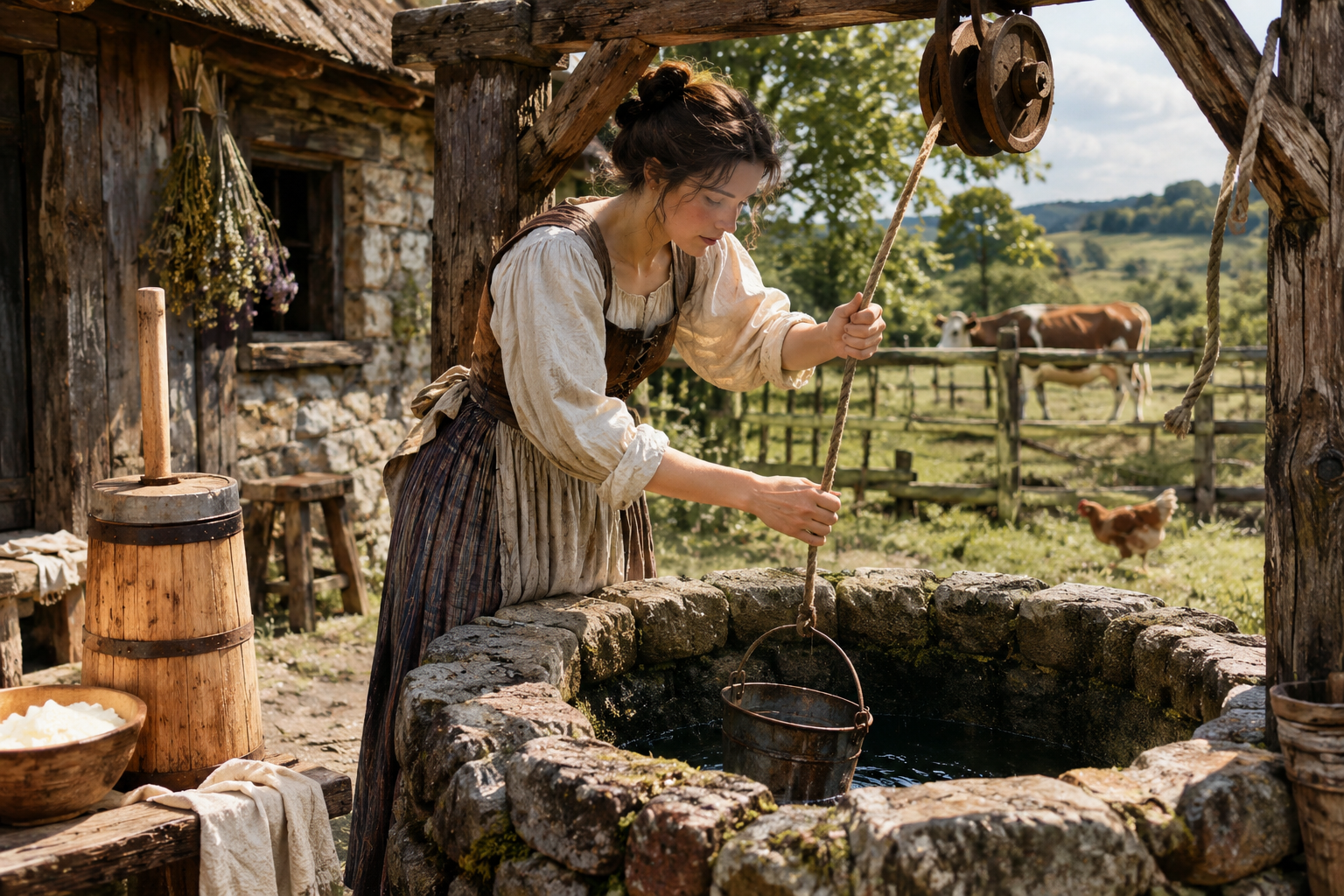
Imagine a sweltering July afternoon in 1875. A farm wife in rural Ohio needs to keep a pound of butter from turning rancid. She doesn’t reach for a refrigerator—they don’t exist yet. Instead, she walks to the backyard well, lowers a wooden bucket into the cool darkness, and lets the butter float in a sealed jar atop the water. It’s a small ritual, repeated across America for generations, and it’s just one of the bizarre, brilliant, and sometimes desperate ways families kept food cold before the age of electricity.
Long before the hum of a compressor became the soundtrack of the American kitchen, keeping things cold was a full-time job. It involved digging, hauling, harvesting ice in winter, and engineering makeshift cooling systems out of whatever the land provided. Some methods were ingenious. Others were downright weird. All of them tell the story of how we ate, preserved, and survived before modern refrigeration.
The Icebox: The First Cold Machine
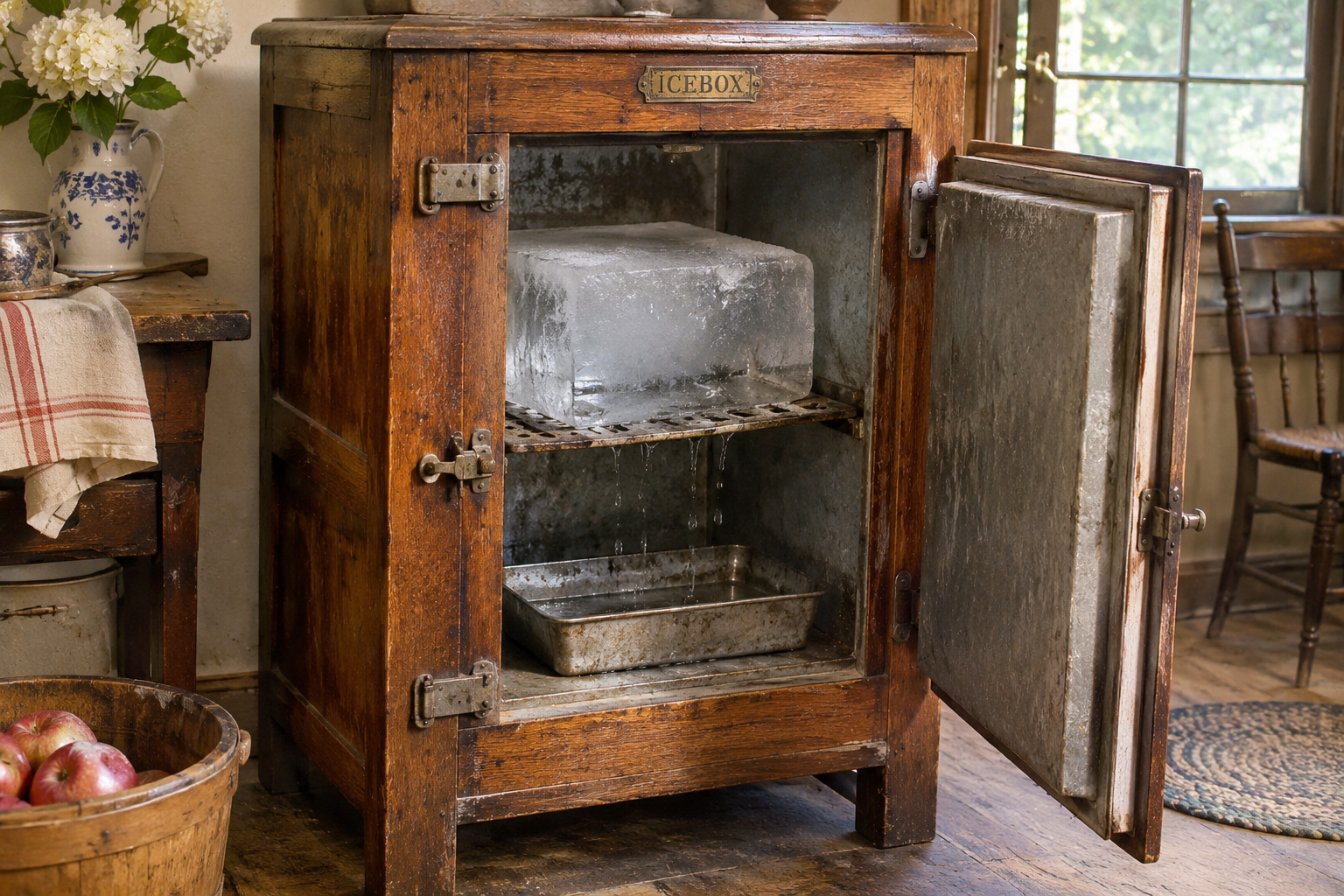
By the mid-1800s, the icebox had become the closest thing to a refrigerator most Americans had ever seen. It wasn’t a machine at all—just a wooden cabinet lined with tin or zinc, insulated with sawdust, cork, or straw. A block of ice sat in a compartment at the top, and as it melted, cold air sank down to chill the food below.
The icebox was a marvel of simplicity, but it came with a catch: you had to buy the ice. In cities, ice wagons rumbled down streets, and kids would chase them for chips of ice on hot days. A card in the window told the iceman how much you needed—25, 50, or 100 pounds. By 1900, the ice trade was a massive industry, with ice harvested from frozen lakes in Maine and shipped as far as the Caribbean.
The Meltdown Problem
But the icebox had a dirty secret. As the ice melted, water collected in a drip pan underneath. Someone had to empty it—usually daily—or the kitchen floor became a slippery mess. And if the ice ran out before the next delivery, food spoiled fast. Families learned to plan meals around ice deliveries, and a melted block meant a frantic dash to the neighbor’s or a dinner of canned beans.
The Springhouse: Nature’s Refrigerator
For rural families, the springhouse was a godsend. Built over a natural spring or stream, these small stone or wooden structures used the constant 50-degree temperature of groundwater to keep milk, butter, and cheese cool. Inside, shelves or troughs held crocks of cream, and the cold water flowed around them.
The springhouse was often a short walk from the main house, and children were dispatched with buckets of perishables. In winter, the springhouse could freeze, so families switched to keeping things in unheated rooms or buried in straw. But in summer, it was a sanctuary. The air inside smelled of wet stone and fresh milk, and the sound of trickling water was a lullaby for the butter.
Floating Butter and Other Tricks
Not everyone had a springhouse. For those with a well, the bucket trick was common: butter, milk, and even meat were sealed in jars or wrapped in cloth and lowered into the well, where the water stayed cool. In some households, a rope was tied to the handle, and the bucket hung just above the water line, swaying gently with each gust of wind.
Others used evaporative cooling. A porous clay pot, called a zeepot or water cooler, was filled with water and set in a breezy spot. As the water evaporated, it chilled the pot’s contents. In the dry heat of the Southwest, Native Americans had used this principle for centuries, and settlers quickly adopted it.
The Ice Harvest: A Winter Obsession
Before mechanical refrigeration, ice was a crop. Every winter, teams of men and horses descended on frozen lakes and ponds, cutting blocks of ice with saws and storing them in icehouses packed with sawdust. The ice harvest was a community event, often accompanied by hot cider and hearty stews.
The ice was then shipped by train and wagon to cities, where it was sold door-to-door. In 1880, New York City alone consumed over a million tons of ice a year. But the trade had a dark side: ice harvesting was dangerous, and many workers drowned or were crushed by blocks. And the ice itself was often dirty, carrying debris and sometimes even dead animals from the lake.
The End of an Era
By the 1920s, the electric refrigerator began to appear in American homes. It was expensive, noisy, and prone to breakdowns, but it promised something the icebox never could: independence from the iceman. No more drip pans. No more melted butter. No more waiting for the wagon.
Still, the transition was slow. During the Great Depression, many families couldn’t afford a fridge and clung to their iceboxes. It wasn’t until after World War II that refrigerators became standard. By then, the springhouse had crumbled, the ice wagons had disappeared, and the art of floating butter in a well was a fading memory.
What We Lost in the Cold
Today, we take cold for granted. We open a door, and the cold is there—instant, silent, and invisible. But the old methods had a rhythm, a seasonality that connected people to the land and to each other. The ice harvest brought neighbors together. The springhouse was a quiet place of work and wonder. The well bucket was a daily reminder of nature’s limits.
Perhaps the strangest thing about the pre-fridge era is how creative people had to be. They didn’t just keep food cold; they built entire rituals around it. And in doing so, they left us a legacy of ingenuity that’s easy to forget in our push-button world. So next time you open your fridge, pause for a second. Somewhere in the hum, you might hear the echo of a butter float bobbing in a well.
✓ story2
Americans once kept butter floating in wells and milk in springhouses. The weird, brilliant ways we stayed cold before fridges.