Barefoot in the Catering Kitchen: Two Days Before the Wedding, I Heard the Truth That Changed Everything
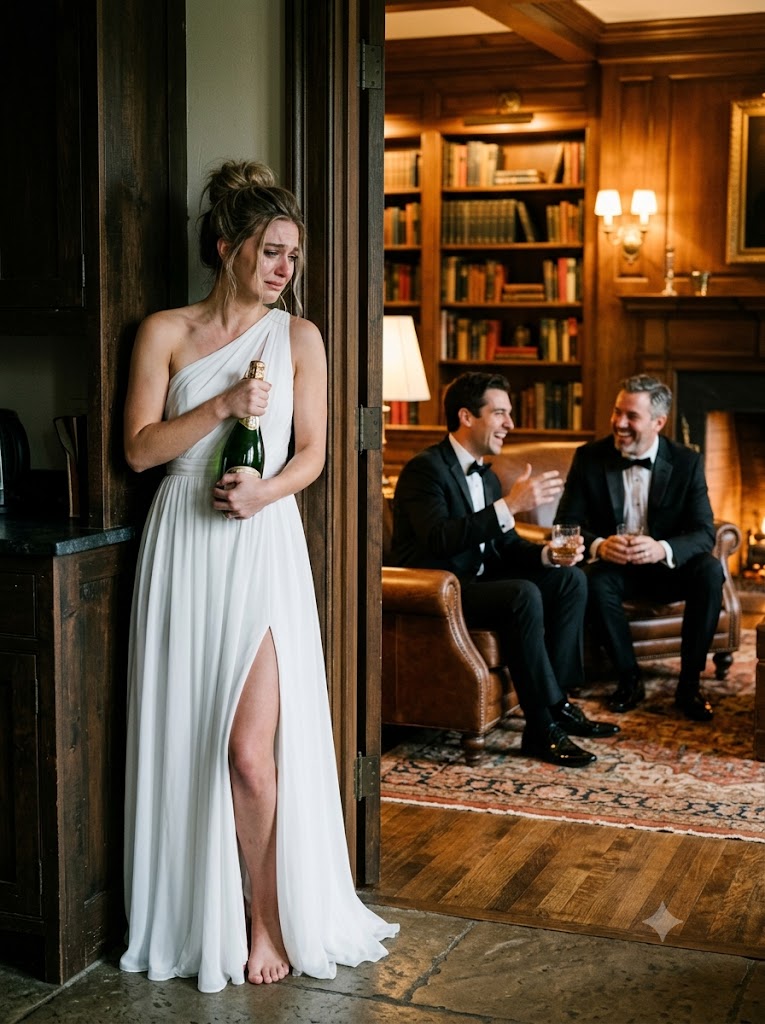
Barefoot in the Catering Kitchen: Two Days Before the Wedding, I Heard the Truth That Changed Everything
What would you do if the man you were about to marry told someone else exactly why he chose you—and it wasn’t for love?
The silver spoon clattered from my fingers and hit the tile so hard it rang. I didn’t bend to pick it up. I couldn’t move. Two days. Only two days until I would walk down the aisle in this very estate’s garden, say “I do,” and bind my life to his. And here I stood—barefoot, rehearsal dress still clinging to my shoulders, the lace smudged with flour—listening to the man who promised forever speak as if I were not just in the next room, but beneath his notice entirely.
He didn’t know I’d come back for my phone. He thought I’d left with the florist. His voice carried through the swinging kitchen doors, low and smooth, the tone he used when he wanted to sound reasonable.
“She’s steady,” he said. “Reliable. Her family’s name holds weight in every boardroom from Raleigh to Charlotte. She doesn’t ask too many questions. She doesn’t make scenes. She’s safe.”
Safe. Not loved. Not cherished. Not the one he couldn’t live without. Safe.
I pressed my back to the cold wall, my breath shallow and slow. I didn’t burst in. I didn’t scream. I didn’t let the tears I felt prickle at my eyes fall. I stood perfectly still and listened.
“You make it sound like a business deal,” a woman’s voice replied—soft, warm, familiar. My cousin. My maid of honor. The woman who’d hugged me this morning and said I was the luckiest girl alive.
He laughed, and it was a sound I’d never heard before—light, unburdened, free. “In a way, it is. Why do you think I proposed when I did? Her father’s health is fading. The inheritance will go to her within months. Everything we need—funds, connections, social standing—will be ours. And she’ll never suspect. She’s too busy being grateful someone like me looked twice at someone like her.”
Someone like her. As if I were less. As if I hadn’t built my own small consulting firm from scratch, as if I hadn’t helped him rewrite his business plan when no one would return his calls, as if I hadn’t loved him through every late night and failed launch.
I did not shatter. I did not crumble. I did not run out sobbing into the rain.
I did not reach for the door handle in blind rage. I did not hurl accusations. I did not beg him to tell me it was a lie.
I did not let them see how deeply the words cut. I did not give them the satisfaction of knowing they had broken me. I did not, for even one second, forget who I was.
I stepped back. I smoothed the front of my dress. I locked every word away where it would not cloud my judgment.
I listened a moment longer. He spoke of dates—when the accounts would transfer, when they would tell me, when it would be “safe” to leave. She murmured that it was cruel. She didn’t sound sorry. She sounded impatient.
I slipped out the back service entrance before they could finish. I walked across the wet cobblestones in my bare feet, the cold biting into my skin, grounding me. The rehearsal dinner was still going on up at the house. Guests laughed and toasted our future. I walked right past the open patio doors, head high, smile exactly where it belonged. No one would have guessed. No one would have known the ground beneath my life had just fallen away.
That night, I sat at my desk and did not sleep. I pulled no folders marked secret. I hacked no accounts. I simply remembered. I remembered every conversation he’d had about timing. Every offhand comment he’d made about my father. Every time he’d gently steered me away from legal discussions or financial planning. I mapped it all out in my head—dates, meetings, sudden “opportunities” that had appeared right after my father’s diagnosis. It wasn’t random. It was planned. Step by step. And my cousin—my own flesh and blood—was right there beside him, waiting to collect her share.
I did not cancel the venue. I did not call the guests. I did not send a single text saying it was off.
The next morning, I showed up at the estate as scheduled. I greeted everyone with the same warmth. I approved the flower arrangements. I tasted the cake. When he took my hand and asked if I was nervous, I looked him in the eye and said, “Not at all. I’ve never been more sure of anything.” He smiled, confident, smug. He thought I was his. He thought I didn’t have a clue.
I spent the next two days letting him believe it. I let him make decisions. I let him talk about “our” future. I nodded. I smiled. And all the while, I was quietly making calls of my own. My father’s lawyer. My most trusted financial advisor. The one person who had known me since before I had money, before I had a name, before I had met him.
By the evening before the wedding, I had the pieces. Not all of them—not yet—but enough to see the shape of the trap. It was deeper than I’d imagined. There were signatures he’d pressed me to sign when I was tired, distracted, grieving. Joint accounts opened in my name without my full knowledge. A partnership agreement he’d said was “just a formality” that gave him authority to act on my behalf in matters I had never discussed. He hadn’t just been waiting for an inheritance. He’d been positioning himself to take control long before my father ever fell ill.
He’d chosen me not despite my name, my family, my future—he’d chosen me exactly because of them. And he’d chosen me because he thought I was easy to fool.
The night of the rehearsal dinner, he stood at the head of the table and raised a glass. “To my future wife,” he said, his eyes meeting mine across the candles. “The woman who makes everything possible.” The room cheered. I raised my glass back. “To us,” I said. His smile widened. My cousin winked at him from across the room, quick and secret. I saw it. I said nothing.
Later, as the guests drifted away, he pulled me aside in the hallway. “Everything is falling into place,” he said. “Just like we planned.”
“Just like you planned,” I said, so softly he almost didn’t catch it.
His smile flickered. “What?”
I adjusted his lapel—slow, deliberate, calm. “Nothing. I was just thinking about how much we have to look forward to.”
He relaxed again. “You have no idea.”
“Oh, I think I do,” I said. And then I stepped back, because I didn’t want him close enough to see the rest of the truth.
That night, I packed a single bag. Not everything. Just what mattered. Documents. Keys. A small silver locket my mother had given me—the one he’d once asked if I’d sell because “it’s just metal, after all.” I left the rest. Let him sort through the dresses and the gifts and the things he thought he wanted.
I sat by the window until dawn, watching the sky turn pale over the North Carolina pines. Two years. Two years of my life. Two years of loving someone who had never actually seen me. I didn’t feel anger, not the hot, burning kind. I felt something sharper and colder: clarity.
They had made two mistakes. First, they’d underestimated me. Second, they’d assumed I had no one.
By sunrise, the replies had come back. The lawyer confirmed what I’d suspected—those documents I’d signed under pressure had loopholes, things he hadn’t bothered to hide well enough because he hadn’t thought I would check. My advisor had traced the first small transfers, money moved from my family’s foundation into accounts he controlled, money he’d said was for “wedding expenses.” And the friend I’d called—someone who worked in digital forensics—had found something else: messages deleted but not gone, conversations stretching back far longer than our relationship did. Plans that had been made before we ever met.
I put on my wedding dress. I did not cry as I zipped it. I did not tremble as I pinned the veil. I looked in the mirror and saw a woman who had been mistaken for weak, and who was about to show everyone exactly how strong she was.
When I walked down the aisle that afternoon, the guests stood and smiled. He waited at the altar, handsome and sure of himself. Beside him stood my cousin, her dress the shade of envy, her eyes bright with anticipation. They thought they knew how this story ended. They thought I would say yes, sign the papers, and never see it coming.
I reached him. The officiant began. “Who gives this woman?” My father—pale, frail, but there—squeezed my arm. “She gives herself,” he said. He’d known. He’d seen it too. He’d waited for me to be sure.
The vows came. He spoke his first, loud and clear, words of devotion that tasted like lies. Then it was my turn. I looked at him—the man who had chosen me not for me, but for what I could give him—and I did not speak the words written on the card.
“I have something I need to say first,” I said. My voice carried across the garden, steady and clear. No one moved. “Two days ago, I stood in the kitchen of this very house and heard you tell my cousin exactly why you married me. You said I was safe. Convenient. A means to an end. You spoke of timelines and accounts and waiting for my father’s health to fail. You said I wouldn’t notice. You said I wouldn’t understand.”
The gasp went through the crowd like wind through grass. His face went white. “Lila—”
“Don’t,” I said. “You don’t get to use my name like you know it.”
My cousin stepped forward, face hard. “She’s upset—she doesn’t know what she’s saying—”
“I know exactly what I’m saying,” I said, and turned to the guests. “I also know about the accounts opened without proper authorization. The documents signed under false pretenses. The messages proving this was planned from the very beginning. And I have proof. All of it.”
He reached for my arm. “Let’s talk privately—”
“There is nothing private left,” I said, stepping back. “You wanted what belongs to my family. You wanted my name, my money, my future. But you forgot one thing. None of it was ever yours to take.”
For a moment, silence hung heavy as rain. Then his expression shifted—no longer guilty, but hard. Calculating. “You think you’ve won?” he said, voice low so only I could hear. “You think this ends here? I’ve been planning this for years. There are things you don’t know. Things that will destroy your family’s reputation if they come out. You ruin me, and I ruin all of you.”
I felt the cold prickle at the back of my neck. This was the part he hadn’t revealed in the kitchen. The real secret. The one he’d kept even from her.
He smiled, seeing the flicker in my eyes. “That’s right. Your perfect family isn’t as clean as you think. And I’m not the only one who’s been keeping secrets.”
My cousin went still beside him, and in that moment I realized—she didn’t know. Whatever he was holding over us, he hadn’t told her either.
He turned to the crowd, raising his voice. “Before anyone decides who to believe, you should know something about why her father’s business grew so fast twenty years ago. The deals. The investors. The things they never wanted anyone to find—”
“That’s enough,” my father said, stepping forward. His voice was quiet, but it stopped him cold. “Let her speak. It’s her turn now.”
The groom hesitated. He looked at me, at my father, at the guests watching in stunned silence. He realized something then—he had planned for everything except the possibility that I would not run. That I would stand. That I would face him down with nothing but the truth.
But he didn’t back down. He just changed tactics. “Fine,” he said. “You want the truth? The truth is, your father didn’t build his empire alone. He made deals. With people he shouldn’t have. And I have the records. Names, dates, payments. If I go down, I take this entire family with me.”
I held his gaze. “If those records exist, let them be seen. My father has done nothing illegal. And if he made mistakes, he has faced them. But you—you came into our lives with nothing but lies. You used love as a weapon. You planned to steal from the people who trusted you most. And none of that can be excused, explained away, or buried.”
He took a step closer, and for the first time I saw fear in his eyes—real, raw fear. “You don’t understand,” he whispered. “It’s not just your father. It goes deeper. To the day your mother died. To what really happened that night.”
The air left my lungs. My mother’s death had been sudden, quiet, ruled natural causes. No one had questioned it. Not in twenty years.
He saw the color drain from my face and smiled—sharp, triumphant. “That’s right. Ask him. Ask your father what really happened. And ask him why he paid me—and my father—to keep quiet all these years.”
I looked at the man standing at the altar—the man I was supposed to marry—and then at my father, whose face had gone ashen. The groom wasn’t just after money. He was here for something else entirely. Revenge. Restitution. A debt he claimed was owed. And he had chosen me—deliberately, carefully—because I was the daughter of the man he held responsible.
The wedding was never about inheritance. It was about destroying the family he believed had destroyed his. And I—the “safe, reliable, unsuspecting” daughter—had been the perfect pawn.
My father met my eyes, and in them I saw not defense, not denial, but grief. Old, heavy, unspoken grief. “Lila,” he said, his voice breaking. “I never told you because I wanted to protect you.”
“From what?” I said, my voice barely a whisper. “From the truth?”
The groom laughed—a harsh, broken sound. “From knowing that the family you’ve worshipped has blood on its hands. And now you’re going to find out exactly what they did.”
He reached into his pocket, his hand closing around something small and hard—an envelope, thick and sealed, held out like a weapon. “Everything is in here. Names. Dates. Witnesses who were paid to disappear. And when I hand this to the press, to the police, to everyone who looks up to your family—your name won’t mean respect anymore. It will mean scandal. Shame. Ruin. You wanted to expose me? Fine. But you’re going down right beside me.”
I stood there in my white dress, the weight of twenty years of silence pressing down, and realized the trap had never been about money. It had been set long before I was born. And I had walked straight into it—armed with nothing but courage, and unaware of the one secret that could shatter everything I thought I knew about who I was.
He extended the envelope toward the crowd, his fingers loosening—
And that was when I saw it. The corner of a second paper beneath the first, peeking out from his pocket. A letter. Dated three weeks ago. Addressed to him. Signed by the same lawyer who had overseen my mother’s estate. And I knew—before he spoke another word—that whatever he held wasn’t the whole story. That someone else had been pulling strings all along. That his revenge was itself part of someone else’s plan.
The groom’s eyes locked on mine. “Last chance,” he said. “Call this off. Marry me. And I’ll never show a soul what’s in here.”
I didn’t reach for the envelope. I didn’t step back. I took one slow, steady breath and met his gaze, and for the first time since I’d heard his voice in the kitchen, I smiled—not because I was happy, but because I finally understood. He wasn’t the master of this story. He was only a character in it. And there was someone else, someone I had never suspected, waiting in the shadows for the moment the truth came out.
“Show it,” I said.
His smile faltered. “You don’t know what you’re asking.”
“Yes I do,” I said. “I want the truth. All of it. Even the parts that hurt. Especially the parts you’ve been hiding.”
He hesitated, his hand trembling. Behind him, my cousin shifted uneasily. My father stared at the ground, as if seeing a past he’d spent his life trying to outrun. And somewhere in the crowd, someone took a step back—just one—and vanished into the shadows beneath the oak trees.
I didn’t see who it was. But I knew.
✓ Lynn R. Adams
Barefoot in the Catering Kitchen: Two Days Before the Wedding, I Heard the Truth That Changed Everything What would you do if the man you were about to marry told someone else exactly why he chose yo…