Bankrupt Widow Bought the Flooded Quarry Her Family Mocked—Then Her Father’s 31-Year-Old Secret Put Them All on Trial
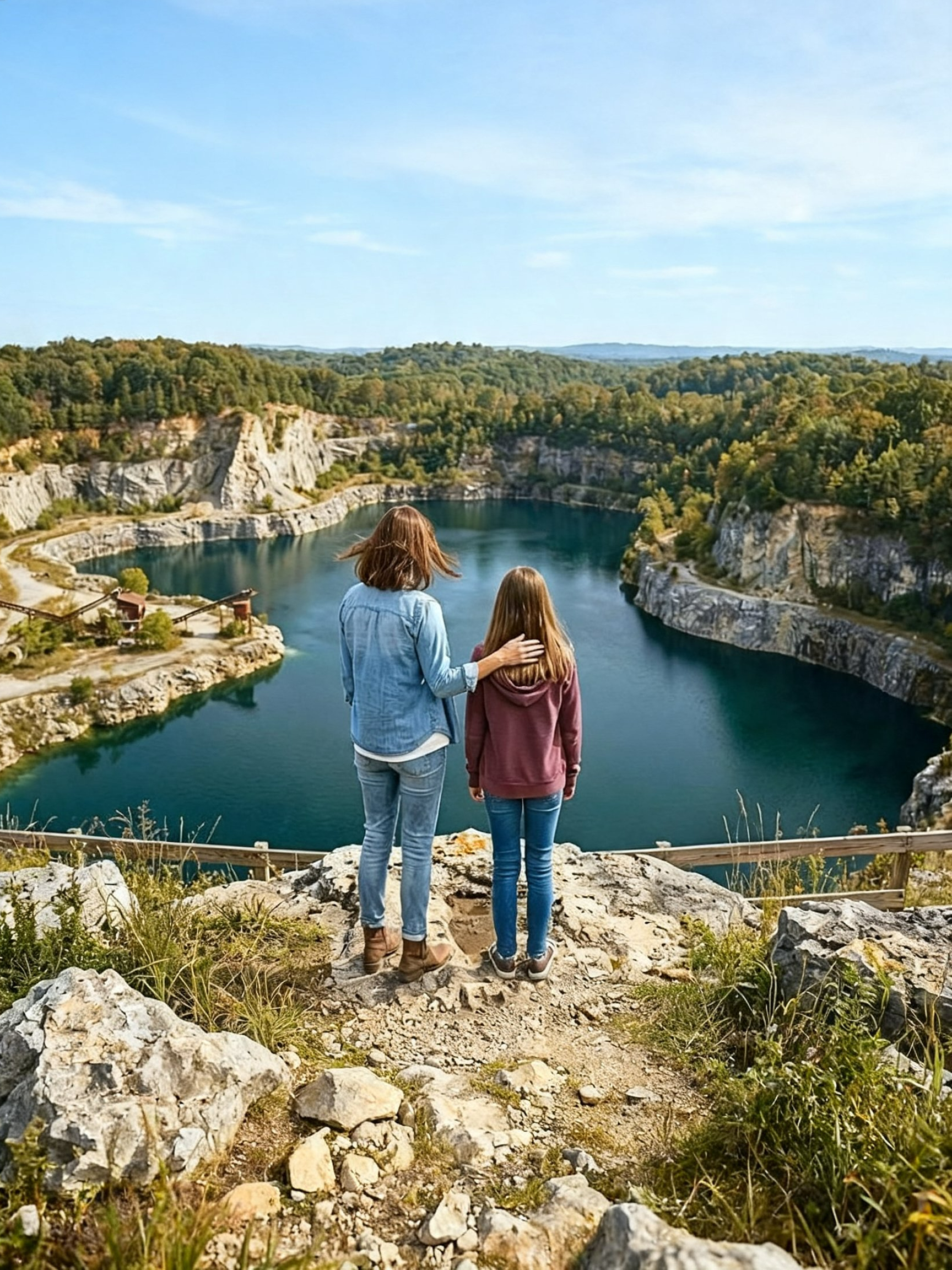
Bankrupt Widow Bought the Flooded Quarry Her Family Mocked—Then Her Father’s 31-Year-Old Secret Put Them All on Trial
Four days after I buried my husband, my brother dumped my clothes onto our mother’s wet driveway in black contractor bags and told me grief did not make me special.
“You had a husband, Nora. You had a house. You had choices.” Dean folded his arms while rain tapped the shoulders of his expensive navy coat. “You lost all three. The rest of us aren’t paying for it.”
Behind him, my sister-in-law Melissa stood inside the warm kitchen with a glass of white wine.
My uncle Wade sat at the breakfast table.
My mother stared at the floor.
Nobody told Dean to stop.
Nobody asked why he had changed the locks while I was at the cemetery arranging the stone for my husband’s grave.
Nobody mentioned that for eleven years I had paid half our mother’s property taxes, every winter heating bill she could not cover, and nearly twenty-three thousand dollars toward Dean’s contracting company when his first business failed.
Dean dropped the final bag.
My husband’s old gray sweatshirt landed in a puddle.
That was the moment everyone expected me to break.
I bent down, lifted the sweatshirt out of the water, wrung the sleeve once, folded it against my chest, and placed it carefully on top of the torn bag.
Then I looked at Dean.
Not angrily.
Not tearfully.
Just long enough that his mouth stopped moving.
There are silences people mistake for weakness because they have never had to stand inside one.
Mine scared him.
He glanced toward Uncle Wade.
Wade gave him a tiny shrug.
Melissa took another sip of wine.
My mother whispered, “Nora, maybe it’s better if you stay somewhere else for a while.”
I looked at the woman whose prescriptions I had picked up every Tuesday for six years.
The woman whose roof my husband, Michael, had repaired for free in August heat.
The woman who had cried into my shoulder after Dad died and said I was the only child who understood what loyalty meant.
“Okay,” I said.
That was all.
I loaded the bags into the back of my twelve-year-old Ford Escape.
Dean followed me to the driveway.
“You should probably sell the Escape too,” he said. “Bankruptcy court may take it anyway.”
I closed the hatch.
“I’m not in bankruptcy court.”
That smile mattered later.
At the time, I only stored it away.
Michael used to say I remembered insults like an accountant remembered unpaid invoices.
He meant it as a joke.
After he died, it became a survival skill.
Cancer had eaten through my husband in fourteen months and through our savings in ten. By the time I was fifty-one years old, I had a dead husband, forty-seven dollars in my checking account, a mortgage in foreclosure, and enough medical debt to make me feel as if every breath belonged to somebody else.
Two weeks before Michael died, I had sold my wedding jewelry.
Three days before he died, I had canceled my health insurance.
The morning after he died, I found a hospital invoice tucked beneath a sympathy card.
$18,904.17.
I laughed when I saw it.
Not because anything was funny.
Because sometimes numbers become so absurd that tears feel theatrical.
I had spent twenty-eight years being the woman who handled emergencies.
Dad’s stroke.
Mom’s broken hip.
Dean’s first divorce.
Dean’s second business collapse.
Uncle Wade’s DUI attorney.
Melissa’s “temporary” childcare crisis.
Michael’s cancer.
When people needed somewhere to fall, they fell toward me.
The first time I needed a floor, they removed it.
I spent that night at a twenty-four-hour truck stop outside Bellwether, Indiana, because I could not bring myself to call a friend and say the sentence out loud.
My family threw me out.
Instead, I reclined the driver’s seat beneath the yellow parking-lot lights and covered myself with Michael’s damp sweatshirt.
Around three in the morning, I remembered the wooden box.
It had been mixed in with the bags.
I sat upright.
Thomas Bennett had been dead twelve years.
He had worked most of his adult life as a surveyor, first privately and later for Bellwether County. Dad believed property lines were moral things.
“A fence can lie,” he used to say. “A deed can lie. A man can definitely lie. Dirt doesn’t.”
When he died, Dean took his guns.
Uncle Wade took his tools.
Mom gave me an old walnut surveyor’s case because nobody else wanted it.
I had never opened it.
Michael and I had been moving Dad’s things when Michael found the first lump beneath his arm.
The box went into our attic.
Then life changed.
Now it was beneath three garbage bags in my cargo area.
I climbed into the back of the Escape and pulled it free.
The brass latch had turned green at the edges.
Inside were ordinary things at first.
A plumb bob.
Two pencils sharpened with a pocketknife.
A faded photograph of Dad standing beside three quarry workers.
An aluminum compass.
A cracked leather notebook.
Then I saw the key.
It was heavy brass, nearly four inches long.
Stamped into one side were three characters.
On the other side:
Beneath the key lay an envelope.
My name was written on it.
Not “Nora Bennett.”
Dad’s handwriting.
My hands finally started shaking.
Inside was a single yellowed sheet of paper dated October 17, 1995.
Thirty-one years earlier.
The first line made me forget I was cold.
If you ever receive this, I failed to fix something while I was alive.
I read it twice.
Then I kept going.
There are papers in Blackwater that men have spent years pretending never existed. Do not argue with them about the house. Do not argue about money. If circumstances ever force you to choose between what the family says is yours and Blackwater Quarry, choose Blackwater.
Keep the brass key.
Do not sign an access agreement.
Do not sign a mineral release.
Most important: never tell them what you know until they have said, in front of witnesses, what they claim to own.
If the water is still there, Pump House Three is still there.
Trust the original survey, not the county map.
The last sentence had been underlined twice.
Some property is worth money.
Some property is evidence.
I sat alone in a truck-stop parking lot until sunrise with the letter in my lap.
Blackwater Quarry.
Everybody in Bellwether County knew Blackwater.
It was the flooded pit six miles east of town where teenagers dared each other to swim in summer.
Forty acres of black water surrounded by weeds, broken fencing, rusted equipment, and limestone cliffs.
The quarry had closed in the mid-1990s after what local people always called “the Blackwater collapse.”
I remembered Dad refusing to talk about it.
Two workers had been injured.
The company had gone bankrupt.
The pumps shut down.
Groundwater filled the pit.
For years there were lawsuits, tax liens, shell companies, and ownership disputes.
Eventually nobody cared.
The county took the surface parcel for unpaid taxes.
By 2026, Blackwater was considered an environmental nuisance.
And I knew one more thing.
It was being auctioned that Friday.
I knew because Uncle Wade had mentioned it three weeks earlier while sitting beside Michael’s hospice bed.
“County’s finally dumping that Blackwater mess,” he had said. “Starting bid twelve grand. Whoever buys it deserves the mosquitoes.”
At the time I barely listened.
Now I unfolded Dad’s letter again.
Choose Blackwater.
Friday morning, I walked into the Bellwether County Administration Building wearing the only black dress I still owned.
I had $13,118 left from the sale of Michael’s truck.
That was effectively every dollar I possessed.
Dean was there.
That surprised me.
Uncle Wade stood beside him.
That surprised me more.
Neither had mentioned attending the auction.
Dean’s expression changed when he saw me.
“What are you doing here?”
“Watching.”
“For what?”
I sat down.
He leaned closer.
I looked at him.
“You are not thinking about buying something.”
It was not phrased as a question.
Twenty minutes later the clerk announced Parcel 17-04-221.
Blackwater Quarry surface tract.
Forty-two point eight acres.
Minimum bid: $11,900.
A man in the back offered $11,900.
I raised my card.
“Twelve thousand.”
Dean turned around so fast his chair scraped the floor.
The other bidder went to twelve-two.
I said twelve-five.
He stopped.
The clerk waited.
People laughed.
Not cruelly at first.
More the way people laugh when somebody buys an old carnival ride or a condemned motel.
Then Dean stood.
“You just spent twelve thousand five hundred dollars on a hole full of water?”
I signed the bidder acknowledgment.
“Apparently.”
“You don’t have twelve thousand dollars.”
“I did this morning.”
Uncle Wade pushed through the aisle.
“Nora, listen to me. You can’t maintain that property. There are liability issues. Fencing requirements. Environmental review. You’ll drown in fines.”
I looked at him.
His concern arrived too quickly.
That was my first confirmation.
“Then I suppose I’d better learn fast.”
Dean grabbed my elbow.
I looked down at his hand.
He removed it.
“You are fifty-one years old, unemployed, almost insolvent, and sleeping God knows where.”
I said nothing.
His voice sharpened.
“You could have used that money for an apartment.”
Still nothing.
“You could have paid creditors.”
“You could have done literally anything sensible.”
The room had gone quiet.
Then I asked, “Why are you scared?”
Dean blinked.
I turned back to the clerk.
“Where do I pay?”
By noon, Bellwether knew.
By sunset, half the county had decided grief had made me insane.
Melissa posted something online about “watching someone you love self-destruct and knowing you can’t save them.”
Dean called three times.
Mom called once.
I did not answer.
That evening I drove to Blackwater Quarry.
The chain at the entrance was rusted through.
My new property looked worse up close.
Cottonwood trees had invaded the perimeter.
The remains of a conveyor system leaned over the water like a broken spine.
Graffiti covered an old concrete shed.
The quarry itself was beautiful in a brutal way.
Black water.
White limestone.
Autumn trees burning orange above sheer walls.
My headlights swept across a faded warning sign.
DEEP WATER.
NO TRESPASSING.
I parked and walked the fence line carrying Dad’s compass and brass key.
I found Pump House One collapsed beneath vines.
Pump House Two had no roof.
There was no Pump House Three.
For almost an hour I searched.
Then I remembered Dad’s wording.
Trust the original survey, not the county map.
I opened his leather notebook.
Most pages contained coordinates.
One contained a hand-drawn outline of Blackwater.
The northern property line on Dad’s sketch extended eighty-seven yards farther than the tax map.
I followed it into woods the county map said belonged to Hale Timber LLC.
Twenty minutes later I found concrete beneath leaves.
Not a building above ground.
A structure buried into the hillside.
I cleared branches.
There was a steel door.
The lock was almost invisible beneath rust.
I inserted the brass key.
I did not open the door.
Not that night.
Instead, I photographed it.
Then I drove back to town and rented the cheapest weekly room at the Pine Crest Motor Lodge.
The next morning, I called a retired title examiner named Evelyn Brooks.
She was seventy-three, sharp-eyed, and had known my father.
When I said Blackwater, she became silent.
When I said Pump House Three, she told me not to speak on the phone.
We met at a diner.
She arrived with no purse and no coat despite the cold.
“You bought it?”
“The surface parcel?”
“I think so.”
“You think so?”
“I bought what the county sold.”
Evelyn stared at me for several seconds.
“Did anyone approach you afterward?”
“My brother. My uncle.”
“Anyone from First Bellwether Bank?”
“Hale Materials?”
“Randall Pike?”
“Then they haven’t organized yet.”
The word they landed heavily.
“Who are they?”
Evelyn looked toward the waitress before answering.
“People your father was afraid of.”
“My father wasn’t afraid of anyone.”
“All brave men are afraid of something, Nora. The smart ones simply learn when fear contains information.”
I placed Dad’s letter on the table.
She read it without touching her coffee.
When she reached the sentence about the mineral release, her jaw tightened.
“Thomas really did it.”
“Did what?”
“Left you a path.”
She folded the letter.
“I don’t know yet.”
“You knew.”
“I knew pieces.”
“What happened at Blackwater?”
“Officially?”
“I already know officially.”
She looked out the window.
“In 1995 Blackwater Stone employed sixty-three people. Good union wages. Health coverage. Profit-sharing plan. Your father surveyed expansions for the company. Warren Pike owned forty percent. Lowell Hale financed operations. Everett Cole handled the legal work.”
“Names I know.”
“You should.”
Randall Pike, Warren’s son, was now county commissioner.
Hale Materials, run by Lowell Hale’s grandson Preston, had become one of the largest aggregate companies in southern Indiana.
Everett Cole’s son Mason was president of First Bellwether Bank.
Evelyn continued.
“Blackwater was profitable. Then suddenly the company announced it had dangerous debt. Equipment disappeared. Accounts were drained. Workers were told their profit-sharing shares were worthless. Three weeks later a retaining wall failed, pumps were damaged, and the quarry flooded.”
“Accident?”
“Your father never believed it.”
“Why flood a profitable quarry?”
“To bury something.”
“I don’t know.”
The answer came too quickly.
I leaned back.
Evelyn smiled without humor.
“You have Thomas’s eyes when you know somebody is lying.”
“Then try again.”
She looked down at her hands.
“There was a second mineral ledger.”
“The workers didn’t merely have profit shares. The original Blackwater charter granted an ownership percentage in the mineral estate after ten consecutive years of service. Tiny percentages individually. Collectively, substantial.”
“How substantial?”
“Your father estimated thirty-eight percent.”
I felt something inside me shift.
“What happened to it?”
“According to the official records? It never existed.”
“And according to Dad?”
I thought about the photograph in Dad’s box.
Three quarry workers.
Dirty faces.
Hands on one another’s shoulders.
“What did Dad do?”
“He refused to certify a replacement survey that erased the old mineral reservations.”
“Who asked him to?”
Evelyn stared at me.
“Your uncle.”
The diner seemed to become very quiet.
“He worked bookkeeping for Blackwater.”
I remembered Uncle Wade at our kitchen table throughout my childhood.
Thanksgiving.
Dad’s funeral.
Michael’s funeral.
Wade carrying casseroles.
Wade hugging my mother.
Wade telling me the quarry auction was a joke.
“Dad knew?”
“I don’t know.”
“He was nineteen.”
“He knows something now.”
“Probably.”
I took a breath.
“What’s behind the door?”
Evelyn shook her head.
“Thomas never told me.”
That afternoon, First Bellwether Bank called.
Mason Cole introduced himself with professional warmth.
He had heard I purchased Blackwater and wanted to “help.”
I agreed to meet.
His office occupied the top floor of a building overlooking Bellwether’s courthouse square.
Mason was sixty, silver-haired, fit, and polished in the particular way men look when they have never had to explain an overdraft fee.
Uncle Wade was already sitting there.
So was Commissioner Randall Pike.
I nearly smiled.
They had organized.
“Nora,” Wade said gently. “Before you get upset—”
“I’m not upset.”
Randall gestured toward a chair.
“This is really just about protecting you.”
“From my property?”
Mason smiled.
“From unexpected burdens.”
A folder waited on the table.
He opened it.
Hale Materials was offering me $48,000.
Nearly four times what I had paid.
For the entire quarry parcel.
Cash closing.
Seven days.
“We’re trying to give you an exit,” Mason said.
I looked at Wade.
“What do you get?”
His face reddened.
Randall answered instead.
“Hale Materials owns adjoining acreage. Cleaning up Blackwater would benefit everybody.”
“Then why didn’t Hale buy it Friday?”
Three men became very still.
Mason recovered first.
“Interesting.”
“Nora,” Wade said, “take the money.”
I picked up the contract.
Page seven contained mineral language.
Seller conveys all surface, subsurface, mineral, water, ingress, egress, easement, extraction, and associated hereditaments, whether known or unknown.
I heard Dad’s voice in my head.
Do not sign a mineral release.
I closed the folder.
“Forty-eight thousand isn’t enough.”
The men relaxed slightly.
They thought we were negotiating.
Randall asked, “What number would make sense?”
“I don’t know yet.”
Mason leaned forward.
“We could perhaps stretch.”
“Could you?”
“That depends.”
“On what I own.”
Wade’s chair scraped.
“You own a flooded pit.”
I looked at him.
He realized his mistake.
I smiled for the first time.
“Then forty-eight thousand seems extremely generous.”
I walked out.
They called twice before I reached my car.
I let the phone ring.
For the next eight days, I disappeared from everyone who expected me to defend myself.
I did not confront Dean.
I did not accuse Wade.
I did not call Mom.
I did not post online.
I did not tell friends.
Instead, Evelyn and I spent twelve-hour days in the recorder’s office tracing deeds.
Dad had been right.
The county map lied.
Not intentionally, perhaps.
But effectively.
Blackwater’s history was a maze of outdated parcel numbers, corporate dissolutions, tax foreclosures, handwritten mineral reservations, and metes-and-bounds descriptions referencing oak trees that had died before I was born.
Then Evelyn found Instrument 95-11872.
October 19, 1995.
Two days after Dad wrote my letter.
The document was titled:
DECLARATION OF TRUST AND ASSIGNMENT OF SUCCESSOR INTEREST.
Grantor: Thomas Bennett.
Trustee: Thomas Bennett.
Successor Trustee: Nora Elaine Bennett.
Purpose: preservation, adjudication, and restitution of disputed mineral interests associated with Blackwater Stone Cooperative participants.
Attached was a schedule of sixty-three names.
The photograph in Dad’s box showed three of them.
My hands went cold.
“This is real?”
Evelyn nodded.
“It’s recorded.”
“Why didn’t anyone find it?”
“Because this doesn’t transfer the quarry.”
“What does it transfer?”
“Your father’s claims, documents, fiduciary position, and any interests assigned to him by the workers.”
“How much?”
“We don’t know.”
Then she turned the page.
There was another attachment.
Thirty-seven Blackwater workers had assigned disputed mineral rights to Dad as trustee, not so he could own them, but so one person could pursue the claim without each worker fighting alone.
Most had died.
Their rights passed through the trust.
I whispered, “Dad was supposed to sue.”
“He planned to.”
“What stopped him?”
Evelyn said nothing.
“Maybe not alone.”
That evening I opened Pump House Three.
I did not go alone.
Evelyn came.
So did a former quarry maintenance supervisor named Samuel Ortiz, eighty-one years old, whose father had worked Blackwater before him.
Sam stared at the steel door for nearly a minute.
“I welded this frame.”
“Summer of ’94.”
“What was it?”
“Instrument storage.”
“You ever see inside after the flood?”
I unlocked it.
The air smelled metallic and dead.
Our flashlights crossed concrete walls.
The room extended downward through a narrow staircase.
At the bottom sat three steel cabinets.
One had rusted open.
One was empty.
The third was sealed with a padlock.
Dad’s brass key opened that too.
Inside were ledgers.
Photographs.
Survey plats.
Bank copies.
Canceled checks.
Affidavits.
A cassette tape.
And a metal document tube wrapped in oilcloth.
I knew before opening it that Dad had built his entire silence around what was inside.
The document was dated September 12, 1995.
It was an original mineral ownership ledger bearing the corporate seal of Blackwater Stone Cooperative.
Thirty-eight point four percent of the mineral estate was allocated to employee participants.
Not promised.
Then came the second document.
An option agreement.
Hale Industrial Holdings had agreed to purchase Blackwater’s mineral estate for $8.7 million in 1995.
The deal required clear title.
The workers’ interests made clear title impossible.
A handwritten memo from Everett Cole stated:
Employee mineral schedule must be extinguished prior to closing.
Another document carried Uncle Wade’s initials.
Beside a notation:
New ledger prepared.
Old schedule removed.
Then we found the photographs.
Someone had photographed men removing pump motors two nights before the flood.
One of them was Wade.
Sam sat down hard on a concrete step.
“That son of a bitch.”
There was one more envelope.
Dad’s handwriting again.
Nora—read this only if Blackwater comes back to you.
I sat on the floor.
His letter was six pages long.
He told me everything.
Dad had discovered the fraud when Wade asked him to certify a survey excluding the workers’ mineral schedule.
Dad refused.
Wade begged.
Then threatened.
Then told Dad everyone would lose their jobs if the Hale deal collapsed.
Dad started collecting copies.
Workers quietly assigned their claims into the trust.
Dad planned to take everything to the state attorney general.
Before he could, the quarry flooded.
Evidence disappeared.
Company lawyers blamed structural failure.
The workers’ retirement accounts collapsed with the corporation.
Families lost homes.
One man died by suicide.
Another left Indiana.
Three marriages ended.
Dad wrote that he had continued collecting evidence, but the original ledger had been hidden inside Pump House Three by Sam’s father.
When floodwater rose, everyone assumed it was destroyed.
The pump house had been designed as a watertight instrument vault.
Dad had known.
He also knew something else.
The quarry had not been worthless when it closed.
The lower limestone bench contained extremely high-purity calcium carbonate.
A 1995 geological report estimated more than twenty million recoverable tons.
Modern valuation would depend on extraction costs, but one thing was clear.
Hale Materials knew exactly what lay beneath Blackwater.
That was why they wanted it now.
A new state industrial corridor had been approved eighteen miles away.
Aggregate demand had exploded.
Preston Hale’s company had quietly purchased almost every adjoining parcel during the previous four years.
Except the quarry.
Except the submerged access tract.
Except the mineral interests Dad had preserved.
At the end of his letter, Dad wrote:
I may not live long enough to make this right.
If you do this, Nora, understand what I am giving you.
Not a fortune.
A responsibility.
The workers were called greedy.
Their wives were called liars.
Their children were told their fathers misunderstood the contracts.
Men with offices outlasted men with calluses.
That is not the same thing as being right.
If the day comes when they believe they have won, let them believe it a little longer.
Make them describe their ownership.
Make them put a number on it.
Make them sign their certainty.
Then ask one question.
Dad never wrote what the question was.
I sat there holding six pages written by a dead man while thirty-one years of water rested on the other side of the concrete.
For the first time since Michael died, I cried.
Not loudly.
Not helplessly.
I cried because I understood my father had spent the final years of his life carrying the shame of men who had done wrong and somehow persuaded the town that he was the difficult one.
I remembered hearing adults call Dad stubborn.
I remembered Uncle Wade laughing that Thomas Bennett could turn a fence line into a federal case.
I remembered Dad being passed over for county surveyor.
I remembered him sitting alone on our porch at night.
All my childhood, I had thought he was quiet because he lacked ambition.
He had been protecting sixty-three families with no money and almost no leverage.
I wiped my face.
Then I asked Evelyn, “What do we do first?”
“Nothing dramatic.”
“You’ll need an attorney.”
“I have forty-seven dollars.”
“You have a quarry.”
“It currently costs more than I have.”
“You also have something Hale Materials needs.”
We found an attorney named Rebecca Sloan in Indianapolis.
She agreed to review the records after Evelyn sent photographs.
Two days later, Rebecca drove to Bellwether herself.
She spent nine hours reading.
At 10:14 that night, she closed the last folder.
“This is either one of the most valuable property disputes in southern Indiana,” she said, “or one of the most elaborate collections of old paper I’ve ever seen.”
“Can we win?”
She frowned.
“People ask lawyers that because they think winning is a legal condition. It isn’t. There are claims. Defenses. Statutes. Evidence. Money. Judges. Appeals.”
“So you have unusually strong evidence.”
“Is the workers’ trust enforceable?”
“Parts almost certainly are. Some claims may be time-barred. Fraudulent concealment changes others. Mineral ownership can survive differently from damages claims. We will need specialists.”
“I can’t afford specialists.”
Rebecca looked at the Hale purchase proposal.
“Maybe we can.”
Three days later I called Mason Cole.
“I’ll sell.”
His silence lasted less than one second.
“Excellent.”
“One condition.”
“I want a better price.”
“Reasonable.”
“Five hundred thousand.”
He laughed.
Then he stopped.
“You said Hale wants to clean up the property.”
“Cleanup is expensive.”
“So why should I rescue them cheaply?”
“We might get to one hundred.”
“Five hundred.”
“That’s impossible.”
“Then I’ll keep my mosquito pond.”
Two hours later, Preston Hale himself called.
We settled at $325,000.
Or at least that was what Preston believed.
There would be a formal closing at First Bellwether Bank.
His attorney insisted on broad releases.
I insisted on reviewing everything.
Meanwhile, Rebecca filed nothing.
We wanted them comfortable.
Dean heard about the proposed sale and appeared at my motel.
He pounded on the door at p.m.
I opened it with the chain attached.
“You’re getting three hundred grand?”
“Rumors travel.”
“You owe Mom.”
“How much?”
His expression changed.
“You lived there.”
“Four days.”
“She fed you.”
“You know what I mean.”
“No. Tell me.”
He exhaled angrily.
“Family supported you.”
I stared at him.
“You put my clothes in garbage bags.”
“That was because you were becoming dependent.”
“After four days?”
“You weren’t thinking clearly.”
“Now you’re taking advantage of a company stupid enough to pay you.”
I almost admired it.
Dean could redesign history faster than anyone I knew.
“What do you want?”
His voice softened.
“We should divide the money.”
“Mom. Wade. Me. You.”
“Why Wade?”
“He told you about the auction.”
There it was.
I said nothing.
Dean mistook my silence for consideration.
“If Wade hadn’t mentioned Blackwater, you never would’ve bought it.”
“Twenty-five percent each would be fair.”
I nodded slowly.
His smile vanished.
“You selfish—”
I closed the door.
The next morning Mom called.
“I don’t understand what happened to you.”
I was standing in Blackwater’s old pump house with my father’s letter in my hand.
“I think I’m beginning to.”
“Dean says you’re refusing to share.”
“Did Wade tell you about Blackwater in 1995?”
That silence was different from mine.
Mine held information.
Hers held fear.
“Your father caused terrible trouble over that place.”
“He wouldn’t let things go.”
“What things?”
“Business things.”
“Workers’ mineral rights?”
She inhaled.
“Nora, don’t.”
Confirmation.
“You knew.”
“I knew your father was obsessed.”
“Did you know Wade helped falsify the records?”
“He was young.”
“He was thirty-four.”
“He had children.”
“So did the workers.”
“Did Dad know you knew?”
She started crying.
That made her angrier.
“You have always judged everyone.”
“No. I rescued everyone.”
“That’s not fair.”
“You’re right.”
I looked across the flooded quarry.
“It wasn’t.”
I ended the call.
The closing was scheduled for November 18.
Preston Hale ordered a title commitment.
Mason Cole’s bank prepared escrow.
Commissioner Randall Pike arranged a press event for the following morning announcing “the long-awaited remediation and redevelopment of the Blackwater property.”
They believed it was finished.
Preston even brought engineers to the fence.
One pointed across my quarry and described where they would cut a haul road.
Another marked a future processing platform.
They stood on land I owned and spoke about it as if I had already vanished.
I watched from behind the trees.
I felt no rage.
Rage would have been easier.
What I felt was colder.
I understood now why Dad’s letter had told me to let them believe they had won.
People reveal extraordinary things when they mistake anticipation for ownership.
Hale Materials circulated an investor memo.
Rebecca obtained a lawful copy from a consultant whose firm was asked to bid.
The memo valued the Blackwater redevelopment at between $67 million and $94 million over twenty years.
More importantly, the memo described Hale Materials as controlling “100% of recoverable Blackwater mineral estate upon pending surface acquisition.”
One hundred percent.
They had written it.
Distributed it.
The workers’ trust owned at least thirty-eight point four percent.
Potentially more, because Dad had separately acquired several abandoned interests over the years.
Rebecca smiled when she read the memo.
“They’re helping.”
“They’ve just established commercial value.”
The day before closing, Uncle Wade came to the quarry.
He looked older than I remembered.
Maybe guilt ages people only after they realize the witness survived.
I met him outside the gate.
“Nora, I need to talk to you privately.”
“We’re private.”
“Not here.”
“Here works.”
He looked toward the water.
“You found the pump house.”
It wasn’t a question.
I said nothing.
His face lost color.
Still nothing.
“Nora, listen to me. Your father did not understand what was happening.”
That was almost funny.
“You should take the Hale money.”
“I plan to.”
“You seem relieved.”
“It’s the sensible thing.”
“What happened in 1995?”
He looked exhausted.
“A bad company failed.”
“Was the pump failure deliberate?”
“Did you make a second mineral ledger?”
“Did you ask Dad to certify it?”
“Did you remove the motors?”
His eyes changed.
There it was.
Not confession.
Recognition.
I nodded once.
Wade stepped closer.
“You don’t know what you’re playing with.”
“Neither did the workers?”
“This was thirty-one years ago.”
“They noticed.”
“People are dead.”
“They noticed that too.”
“You could destroy this family.”
I looked at him for a long time.
“You mean the family that threw me out four days after Michael’s funeral?”
“That has nothing to do with this.”
I opened the gate.
“It just made it easier.”
He caught my arm.
I looked down.
Like Dean, he let go.
“Your father was offered money,” Wade said.
“He could have taken care of you. Your mother. All of you. He refused.”
“How much?”
“And you think that makes him foolish?”
“I think he chose strangers over his family.”
I stepped closer.
“No, Wade. He chose not to feed his family with stolen money.”
I left him standing at the gate.
The next morning, First Bellwether Bank served coffee and pastries in its conference room.
They had catered the closing.
That detail stayed with me.
People were about to purchase what they believed would make them tens of millions of dollars, and somebody had ordered cinnamon rolls.
Preston Hale arrived with two lawyers.
Mason Cole represented the bank.
Randall Pike came because he wanted photographs afterward.
Wade arrived although he had no official reason to be there.
Dean came too.
So did Melissa.
Apparently my family expected a celebration.
Rebecca sat beside me.
Evelyn sat behind us.
A court reporter sat against the wall.
That caused the first problem.
Preston frowned.
“Why is she here?”
Rebecca answered.
“My client prefers a verbatim record of closing representations.”
His attorney shrugged.
“Unusual, but fine.”
The documents were stacked in front of me.
Purchase price: $325,000.
I would convey the surface parcel.
I would release all claims.
I would warrant title.
I would relinquish all mineral, water, subsurface, easement, access, and derivative interests.
They needed every word.
Preston was nearly cheerful.
“Nora, I think this is going to be good for everyone.”
“Absolutely.”
“Even the old Blackwater workers?”
The room changed temperature.
Preston looked at his lawyer.
“I’m not sure what you mean.”
Wade closed his eyes.
I continued.
“The people who worked there before it flooded.”
“This project will improve the area generally.”
“That wasn’t my question.”
Rebecca touched my wrist lightly.
Not to stop me.
To tell me the recorder was taking everything down.
Mason intervened.
“Nora, perhaps we should focus on the transaction.”
Preston’s attorney pushed a signature page toward me.
I picked up the pen.
Dean exhaled.
Melissa smiled.
Wade stared at the table.
Randall Pike checked his watch.
They had won.
You could feel it.
The bankrupt widow had been bought.
The embarrassing sister had finally behaved sensibly.
The flooded quarry would become a Hale Materials property.
The old scandal would disappear beneath a modern processing plant.
Money would move.
Paper would be filed.
Press releases would be issued.
And Thomas Bennett’s inconvenient little war would finally die.
I held the pen over the signature line.
Then I looked at Preston.
“My father told me to ask one question before I signed.”
Wade stood.
Everyone looked at him.
Rebecca smiled faintly.
Preston frowned.
“What question?”
I made my voice almost apologetic.
Exactly the kind of voice men like him were used to forgiving.
“I’m sorry. I’m not very experienced with this.”
Dean muttered, “Jesus, Nora.”
I continued.
“I just want to understand something.”
Preston leaned back.
“Of course.”
I looked at the contract.
“You’re paying me three hundred twenty-five thousand dollars because you believe this agreement gives Hale Materials one hundred percent of the Blackwater mineral estate, correct?”
His lawyer immediately said, “The agreement speaks for itself.”
I looked only at Preston.
“I’m asking him.”
Preston shrugged.
The court reporter’s fingers moved.
“One hundred percent?”
“That’s our title position.”
“Your company has already represented that percentage to investors?”
His attorney interrupted.
“We’re not discussing investor communications.”
Preston waved him off.
“Nora, yes. Subject to closing.”
“Thank you.”
Then I set down the pen.
Preston smiled.
For half a second.
I removed a certified copy of Instrument 95-11872 from Rebecca’s folder.
Then another document.
Then the original Blackwater Stone mineral ledger.
Wade walked toward the door.
A state investigator opened it from the other side.
Behind him stood another investigator from the Indiana Secretary of State’s securities division.
Randall Pike went white.
Mason Cole stopped breathing through his nose.
Dean whispered, “What the hell?”
Rebecca stood.
“My client will not be conveying the property today.”
Preston’s lawyer rose.
“What is this?”
Rebecca placed the recorded trust declaration on the table.
“This is evidence that your title position is false.”
Preston did not touch it.
Rebecca continued.
“Thirty-eight point four percent of the original Blackwater mineral estate was vested in employee participants. Thirty-seven participants assigned enforcement authority and disputed interests to a trust established by Thomas Bennett in October 1995.”
Mason stared at Wade.
Wade stared at me.
Rebecca placed the original ledger beside the trust.
“We also have contemporaneous evidence indicating that a substitute mineral ledger was created to conceal those interests before a proposed Hale Industrial acquisition.”
Preston said, “That’s absurd.”
Rebecca added the investor memo.
“Which makes your company’s recent representation of one hundred percent control particularly interesting.”
His lawyer snapped, “This meeting is over.”
The investigator by the door spoke.
“Not for everyone.”
Randall Pike stood.
“Am I being detained?”
“No, Commissioner.”
He reached for his phone.
The investigator continued.
“But you may want counsel before making calls concerning county records.”
Randall slowly lowered the phone.
Dean stared at me as though I had changed species.
I did not look at him.
Mason pointed at the papers.
“These are thirty years old.”
“Thirty-one,” Evelyn said from behind me.
It was the first thing she had spoken.
Everybody turned.
She smiled.
“I’ve waited a long time to correct people on that.”
Over the next six months, Bellwether County learned that old paper could still bleed.
The state reopened questions surrounding the 1995 Blackwater collapse.
Federal investigators became interested after evidence suggested bank communications and interstate financing had been used in the original transactions.
No dramatic squad of agents carried Uncle Wade away that morning.
Real justice rarely performs for an audience.
It arrives in subpoenas.
Depositions.
Frozen accounts.
Forensic title examinations.
Grand-jury testimony.
Phone records.
Insurance archives.
Old tax filings.
It arrives slowly enough for guilty people to spend months wondering which document will surface next.
Uncle Wade eventually admitted that he had participated in preparing the substitute ledger.
He claimed Warren Pike and Lowell Hale pressured him.
Maybe they did.
He admitted knowing the pumps would fail.
He denied knowing workers would lose their entire retirement interests.
The cassette tape from Pump House Three complicated that denial.
Dad had recorded a meeting.
Wade’s younger voice was clear.
If the old schedule survives, Hale walks.
Another man answered.
Then make sure it doesn’t survive.
Dad had said almost nothing during the recording.
At the end, after the other men left, you could hear him whisper to himself.
“I heard you.”
Thirty-one years later, so did a grand jury.
Commissioner Randall Pike resigned after investigators found evidence that his office had repeatedly altered or approved mapping changes advantageous to Hale-affiliated parcels around Blackwater.
Mason Cole did not go to prison, but First Bellwether Bank paid dearly after civil discovery showed executives had known since at least 2012 that legacy mineral claims existed.
Preston Hale insisted he inherited a mess created by older men.
That argument contained some truth.
It did not explain why his company had attempted to acquire sweeping releases from me while representing absolute mineral ownership to investors.
Hale Materials eventually settled.
The number was confidential for exactly eleven minutes before Dean somehow heard it.
It was not ninety-four million dollars.
Life rarely resolves itself into headline numbers.
But it was enough.
Enough to create the Blackwater Restitution Trust.
Enough to locate forty-nine living descendants of workers whose mineral interests had been erased.
Enough to compensate widows.
Grandchildren.
Enough to restore retirement losses that had followed families for decades.
One of the first checks went to a seventy-six-year-old woman named Carol Mercer.
Her father had worked Blackwater for twenty-two years.
When the quarry failed, the family lost their house.
Carol had dropped out of college to work.
She arrived at the old quarry in a red Toyota with 312,000 miles on it.
I handed her an envelope.
She did not open it.
She looked at the water instead.
“My dad used to come home white,” she said.
“Limestone dust. Hair, eyebrows, everything. Mom made him take his boots off outside.”
She smiled.
“People said those men were stupid. Said they should have known profit-sharing wasn’t guaranteed.”
I looked at her.
“They weren’t stupid.”
For a moment neither of us spoke.
Then she touched my arm.
“Your dad knew too.”
The quarry itself became worth more than anyone expected.
Not because I sold it.
We created a worker-descendant ownership company with professional management.
Hale Materials hated that.
Which I considered a bonus.
Environmental engineers determined sections could be responsibly dewatered and restored.
Other sections would remain flooded.
The high-purity limestone could be extracted in controlled phases.
A conservation easement protected the northern cliffs.
The old pump house became a small archive.
Not a museum about me.
Not about Dad either.
About the workers.
Their photographs hang there now.
Years of service.
Copies of pay stubs.
Union cards.
Family pictures.
The original mineral ledger sits behind glass.
So does Dad’s brass key.
I kept the letter.
That belonged to me.
I bought a house eventually.
A small brick place outside Bellwether with maple trees and a deep porch.
Nothing grand.
Michael would have liked it.
I paid cash.
The first thing I placed in the living room was his gray sweatshirt, folded inside an old cedar chest.
Some things are worth keeping even after the person who wore them is gone.
Mom asked to see me eight months after the investigation began.
We met at a park.
She looked smaller.
She apologized.
Not perfectly.
People rarely do.
She said she had spent decades convincing herself Dad had exaggerated Blackwater because admitting the truth would mean admitting her own brother had helped ruin families.
“Your father wanted me to stop inviting Wade for holidays,” she said.
“Why didn’t you?”
“Because Wade was my brother.”
She looked away.
I did not rescue her from the question.
Finally she said, “I thought Thomas would always be there.”
That sentence hurt more than Dean’s garbage bags.
Because I understood it.
Good people are often taken for granted for the exact same reason sturdy bridges are.
Everyone assumes they will keep carrying weight.
Until one day they don’t.
I forgave Mom enough to stop being angry every morning.
I did not give her my house key.
Those are different things.
Dean’s apology came later.
His construction company was failing again.
He asked for a loan.
We sat in a coffee shop.
For nearly twenty minutes, he explained market conditions, equipment debt, delayed invoices, payroll pressure, and how one temporary cash infusion could protect twelve jobs.
When he finished, he looked at me expectantly.
“You understand,” he said. “You’ve always understood this stuff.”
His face hardened.
“I hope you find financing.”
“You could write the check without noticing.”
“Probably.”
“I’m your brother.”
“Then why would you let me lose everything?”
I looked at him.
A strange thing happens when someone repeats your own wound back to you without recognizing it.
“You had a business, Dean.”
His eyes narrowed.
“You had customers.”
He went still.
“You had choices.”
Now he understood.
I did not smile.
That would have made it revenge.
I paid for his employees to receive two weeks of emergency wages when his company later closed.
I did it through a local assistance fund.
Dean never received a dollar.
Because Dad had taught me the difference between helping people and financing the people who hurt them.
Uncle Wade eventually pleaded guilty to charges connected to falsified corporate records and obstruction tied to later concealment.
At sentencing, he looked at me.
I expected hatred.
Instead, he looked tired.
His attorney spoke about his age.
His health.
His family.
His decades of community involvement.
Then Carol Mercer spoke.
She brought a photograph of her father covered in limestone dust.
Another worker’s grandson spoke.
Then a widow.
I did not ask for the harshest sentence.
I did not call Wade evil.
I only told the court what Dad had written.
Men with offices outlasted men with calluses.
That is not the same thing as being right.
Afterward Wade asked to speak to me.
A deputy stood between us.
He said, “Thomas would hate what you did to the family.”
For a second I saw the old kitchen.
Thanksgiving turkey.
Dad washing dishes while Wade told jokes.
Mom laughing.
Dean stealing pie.
All the ordinary memories people use as proof that betrayal could not have been happening underneath them.
Then I remembered Dad’s six-page letter.
“No,” I said. “He hated what the family did to people who couldn’t fight back.”
Wade’s mouth tightened.
“You think that quarry makes you better than us?”
“You think the money does?”
“Then what?”
I looked at him.
“It means you don’t get to decide what happened anymore.”
That was the only punishment I ever wanted for him.
Not poverty.
Not humiliation.
The thing he had helped steal from everyone else.
Two years after I bought Blackwater Quarry, the county held a ceremony reopening the old east access road.
I almost refused to attend.
Rebecca convinced me.
Carol came.
Sam Ortiz came in a wheelchair, wearing a clean denim shirt.
Evelyn wore bright red lipstick and complained that county coffee remained terrible.
Families stood along the fence.
Children who had never met the quarry workers carried photographs of them.
A limestone marker had been placed near Pump House Three.
It did not mention Hale.
It did not mention Pike.
It did not mention Cole.
BLACKWATER WORKERS’ GROUND
FOR THOSE WHO BUILT VALUE THEY WERE TOLD THEY DID NOT OWN.
Dad’s name appeared at the bottom in smaller letters.
THOMAS BENNETT, TRUSTEE.
I stood there after everyone left.
Late-afternoon sunlight touched the water.
People still called me lucky sometimes.
That amused me.
Luck had not held Michael’s hand while he died.
Luck had not paid Mom’s heating bill.
Luck had not watched Dean throw my husband’s sweatshirt into rainwater.
Luck had not made Dad copy documents at midnight while his own brother-in-law called him disloyal.
Luck had not preserved thirty-seven worker assignments for three decades.
Luck had not opened Pump House Three.
And luck certainly had not sat quietly while arrogant men described stolen property as theirs in front of a court reporter.
The quarry made money now.
Good money.
My share was more than enough.
But the first annual distribution I received sat untouched in my account for almost three weeks.
Then I used part of it to purchase the property beside Mom’s old house.
Dean asked why.
I told him I wanted the trees.
That was partly true.
The land included a narrow strip Dad once surveyed.
When I was eight, he had hammered an iron pin there and told me boundaries mattered most when nobody else respected them.
I found the pin beneath six inches of dirt.
Still there.
Still exactly where Dad said it would be.
I cleaned it with a wire brush.
Then I left it in the ground.
Some things do not need to be moved to prove they exist.
One October evening, almost exactly thirty-three years after Dad signed the trust, I returned alone to Pump House Three.
The quarry was quiet.
I sat on the concrete steps and unfolded his letter.
The paper had softened along the creases.
I read the final lines again.
If the day comes when they believe they have won, let them believe it a little longer.
Make them describe their ownership.
Make them put a number on it.
Make them sign their certainty.
Then ask one question.
For years I wondered whether Dad had forgotten to write the question.
Eventually I understood.
He could not give it to me because the right question depended on the lie they chose.
At the bank, Preston Hale’s lie had been one hundred percent.
For Wade, it had been that no worker ownership existed.
For Dean, it had been that family support entitled him to my money.
For Mom, it had been that keeping peace was morally cleaner than confronting betrayal.
For me, the lie had been the oldest one.
That being useful meant being valued.
Michael knew better.
Dad knew better.
It took losing almost everything for me to learn it.
I folded the letter and locked the pump house.
Above the quarry, the sky had turned deep orange behind the sycamores.
On the drive home, I passed the old Bennett house.
The same driveway where Dean had dumped my belongings.
Someone else owned it now.
A young couple had pumpkins on the steps.
A little girl rode a bicycle in the yard.
I felt nothing bitter.
That surprised me.
For months after the Blackwater story became public, strangers asked whether I wished I had fought harder to stay in that house.
If Dean had let me remain comfortable for another month, perhaps I would never have opened Dad’s box.
If Wade had hidden his fear better, perhaps I would have sold Blackwater for forty-eight thousand dollars.
If Preston Hale had offered a fair price without demanding every possible mineral right, perhaps I would never have understood how badly they needed my signature.
People imagine power always arrives looking powerful.
Sometimes it looks like a widow sleeping in a Ford Escape.
Sometimes it wears the same black dress three days in a row.
Sometimes it has forty-seven dollars in checking.
Sometimes it is standing in a conference room while wealthy men explain what she owns.
And sometimes the strongest thing a person can do is let arrogant people finish talking.
I stopped my car beside the old house for only a moment.
The little girl waved at me.
I waved back.
Then I drove toward Blackwater, toward the lights from the restored east bench, toward land sixty-three working families had once been told they had imagined owning.
I thought about my father.
About Michael.
About Carol’s dad coming home white with limestone dust.
About Sam’s father sealing the ledger inside a concrete room while somebody outside prepared to drown the quarry.
About the thirty-one years during which men with money mistook delay for victory.
Then I remembered Preston Hale leaning back in that bank conference room, relaxed and certain, while the court reporter waited and my pen hovered above the contract.
He had looked at me as if I were a desperate widow asking permission to understand.
Maybe that was why the question worked.
Maybe powerful people become careless when they think the person across the table is asking because she is confused.
I had lowered my voice.
I had apologized.
I had even smiled.
And then I had asked him the smallest question in the room.
One that still matters more to me than the settlement, the quarry, the mineral rights, or every dollar that came afterward:
“If Blackwater was truly worthless, why did all of you spend thirty-one years making sure people like me never learned who actually owned it?”
✓ Lynn R. Adams
Bankrupt Widow Bought the Flooded Quarry Her Family Mocked—Then Her Father’s 31-Year-Old Secret Put Them All on Trial Four days after I buried my husband, my brother dumped my clothes onto our mother…