Banished Three Days After My Father’s Funeral, I Opened His Forgotten Safe House—And Found the Fortune They Buried
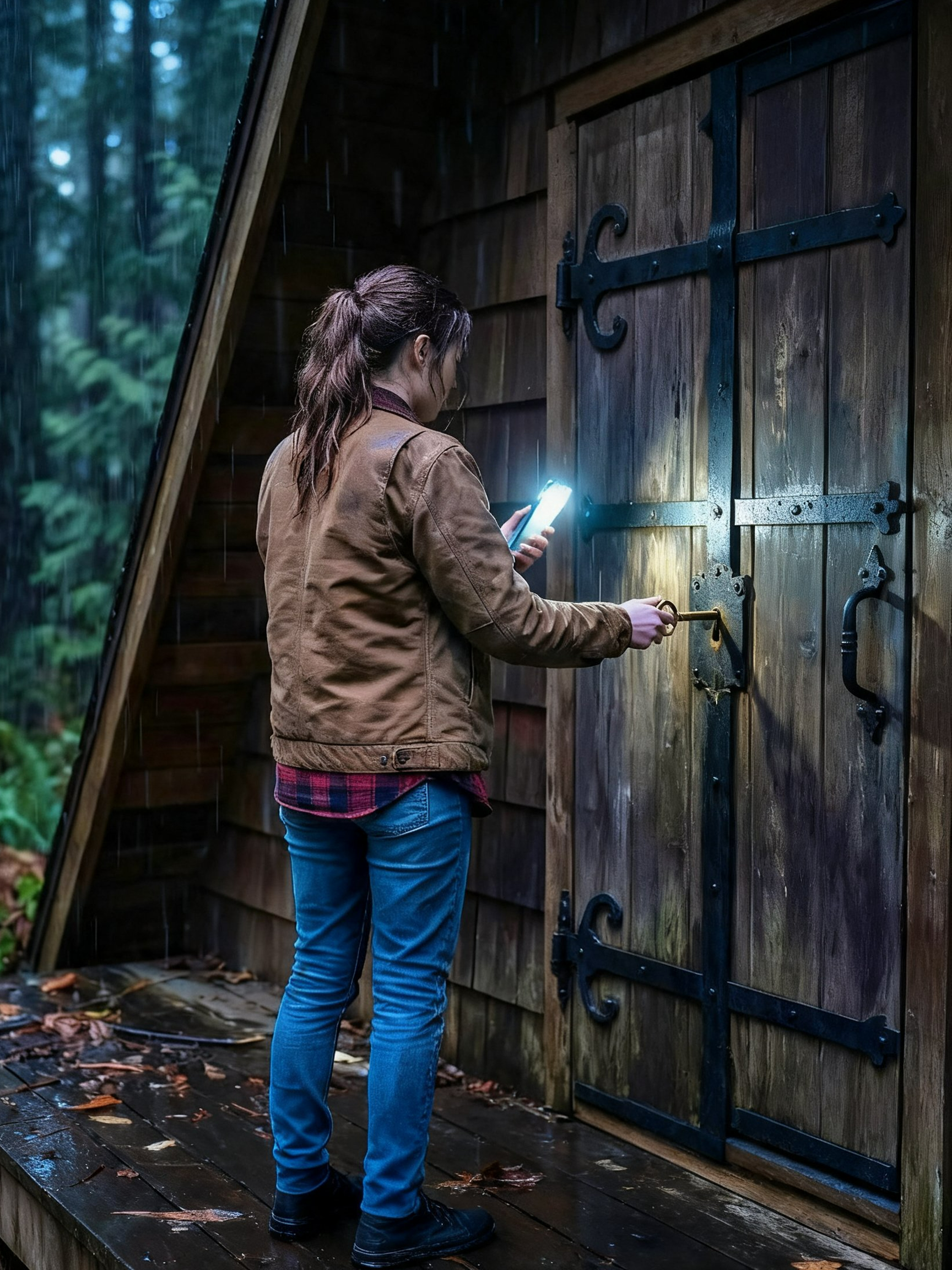
Banished Three Days After My Father’s Funeral, I Opened His Forgotten Safe House—And Found the Fortune They Buried
Three days after we buried my father, my aunt dropped my clothes into black contractor bags, set them on the front lawn, and told me the locks had already been changed.
My older brother stood behind her wearing Dad’s watch.
Then our family attorney handed me a document saying I had twenty minutes to leave the only home I had ever known—or they would call the sheriff.
I was nineteen years old.
I had $214 in my checking account, a twelve-year-old Ford with a cracked windshield, and nowhere to sleep.
I didn’t cry.
That was the first thing that frightened them.
My aunt, Deborah Mercer, had expected tears.
My brother, Grant, had expected screaming.
My uncle Russell had actually positioned himself by the porch railing with his phone held chest-high, ready to record whatever humiliation he thought I was about to provide.
Even Martin Vale, the attorney who had handled my father’s business affairs for fifteen years, watched me with the patient expression of a man waiting for a dog to realize it had been abandoned.
I looked at the bags on the grass.
Then I looked at Grant.
Dad’s silver Hamilton watch hung loose on his wrist because Grant had always been thinner through the hands than our father.
“You should take that off,” I said.
Grant smiled.
“Dad left it to me.”
“No,” I said. “It never fit you.”
His smile disappeared.
Deborah stepped forward.
“Emily, this performance isn’t going to change anything.”
“My name is Emma.”
She blinked.
She knew my name.
She had known it for nineteen years.
Calling me Emily was something she did when she wanted to remind me that remembering me required effort.
Dad used to notice.
He would correct her.
Every time.
My daughter’s name is Emma.
But Dad had been in the ground for seventy-two hours.
Nobody corrected her now.
Deborah folded her arms over an expensive cream cardigan.
“Fine. Emma. Your father’s will is clear. Grant inherits the residence and controlling interest in Mercer Ridge Holdings. Russell receives the lake property. I was appointed executor. You received the education account your father established for you.”
I stared at Martin.
“How much is in it?”
He shifted his leather folder.
“After your father’s medical expenses and certain family obligations, the account contains approximately six thousand eight hundred dollars.”
That was when Grant looked away.
Dad had put money into that account every month since I was born.
At eighteen, he once joked that if I decided not to go to college, I could probably buy a small house in cash.
Six thousand eight hundred dollars wasn’t an education fund.
It was what remained after somebody had eaten it.
I didn’t accuse anyone.
I didn’t demand statements.
I didn’t beg them to let me stay.
I didn’t ask Grant why Dad’s watch was already on his wrist.
I didn’t ask Deborah why she had brought a locksmith to a funeral week.
I didn’t ask Martin how an account that once held more than two hundred thousand dollars had nearly vanished.
I simply picked up my father’s old canvas work jacket from the top of one of the garbage bags and put it on.
Deborah’s face changed.
Only for a second.
But I saw it.
The jacket was stained at the elbows with machine grease and smelled faintly of cedar, even after years in Dad’s closet.
It wasn’t valuable.
Grant owned suits that cost more than Dad’s truck.
But Deborah stared at that jacket as if I had lifted a loaded gun.
“That belonged to your father,” she said.
“So did I.”
Nobody answered.
I put the garbage bags into the back seat of my Ford.
Russell lowered his phone.
Martin cleared his throat.
“There is one more matter.”
Of course there was.
He handed me a thick envelope.
Across the front, in black letters, were the words:
RELEASE AND FAMILY SETTLEMENT AGREEMENT.
“You’ll receive an additional twenty-five thousand dollars if you sign,” he said.
“For what?”
“It simply acknowledges that you have received everything due to you under your father’s estate and that you waive future claims against the estate, the company, its officers, and other beneficiaries.”
Grant leaned against the doorway.
“Take it, Em. Seriously. Twenty-five grand is a lot when you’ve got no place to live.”
There it was.
Not brotherhood.
Deborah wanted me desperate enough to sign before I understood what I was signing away.
I slid the agreement back into the envelope.
“I’ll read it.”
Martin’s voice sharpened.
“The offer expires Friday.”
It was Monday.
“Then I’ll read quickly.”
I got into my car.
Grant came down the walkway before I could close the door.
For one strange second, I thought maybe he was going to apologize.
Instead, he bent toward the window.
“You always make things harder than they need to be.”
I looked at the watch on his wrist.
“Dad used to say that about dishonest people.”
His jaw tightened.
I drove away.
I made it six miles before my hands started shaking.
Not because I wanted to go back.
Because the house had disappeared in my rearview mirror.
Because I had learned to walk in that kitchen.
Because Mom’s height marks were still penciled beside the pantry door beneath mine.
Because Dad had sat at that dining table while chemotherapy turned food metallic in his mouth, and I had pretended not to notice him pushing meals around his plate.
Because I had spent the final eighteen months of high school driving him to treatment while Grant lived three states away and called twice a month.
Because I had postponed college.
Because I had slept in a chair beside Dad’s hospital bed.
Because when he forgot what day it was, he never forgot my name.
And because three days after he died, the people who had barely been there were dividing his life like furniture.
I pulled into the parking lot of a closed garden center and turned off the engine.
The silence was enormous.
Then something pressed against my ribs.
I reached inside Dad’s jacket.
There was a lump sewn into the lining.
The stitching looked wrong.
Dad was meticulous. Even his work clothes were repaired neatly.
This seam was thick and crooked, done with dark brown thread that didn’t match the gray lining.
I opened the glove box and found the tiny folding knife Dad had given me when I turned sixteen.
My fingers stopped shaking.
I cut three stitches.
A brass key fell into my lap.
So did a folded strip of paper.
Dad’s handwriting covered one side.
If you are reading this, they made you leave.
Do not fight them at the house.
Do not sign anything Martin gives you.
Go to Alder Creek.
The blue house past Mile Marker 17.
The key opens the back door.
In the attic, remove the third plank beneath the east window.
Call Eleanor Shaw before you touch anything else.
She will believe you.
And sweetheart—
If Deborah tells you I forgot you, remember that she has always confused silence with surrender.
I read it three times.
On the fourth, I noticed something on the back.
A second message.
Written in red ink.
If the safe is empty, leave immediately.
Someone found it first.
My father had owned a safe house.
That was the first secret.
The second was that he had apparently expected my family to betray me.
Alder Creek was ninety miles west, a mountain town where Dad had worked construction before I was born.
I vaguely remembered him mentioning it.
Not a house.
Just the town.
There used to be a diner there with pie good enough to forgive the coffee.
That was how Dad remembered places.
By bridges.
By people who had been kind when they didn’t have to be.
Never by property values.
Never by money.
I started the Ford.
Halfway to Alder Creek, my phone rang.
I let it ring.
Then Deborah.
Then Martin.
When Martin called a second time, I answered.
“Emma, we need to know where you are.”
“No, you don’t.”
There was a pause.
“You took documents from the residence.”
“Your aunt noticed your father’s work jacket is missing.”
“It was in my bag.”
“That jacket may contain company property.”
I looked at the brass key in the cup holder.
“Like what?”
Another pause.
That one told me more.
“We don’t know. That is precisely why—”
“Then how can you say it contains company property?”
His voice cooled.
“You’re upset.”
“No. I’m driving.”
“Return the jacket.”
“Was Dad competent when he signed his final will?”
The question came out soft.
Almost weak.
The kind of question a frightened nineteen-year-old might ask because she wanted reassurance.
Martin relaxed.
I heard it in his voice.
“Of course.”
“So you personally witnessed him understand what he was signing?”
“And you’d testify to that?”
“Absolutely.”
I smiled for the first time that day.
“Thank you.”
Dad always told me the most useful questions were the ones people answered before wondering why you asked.
The mountains appeared after another forty minutes.
October had turned western North Carolina into fire.
Red maples covered the slopes.
Gold hickories flashed between dark pines.
Clouds dragged low over the Blue Ridge, and every few miles the road narrowed until the trees seemed to close around me.
Alder Creek consisted of a gas station, a Baptist church, a shuttered furniture factory, and a diner named June’s that looked like it had survived three wars through stubbornness.
Mile Marker 17 stood beyond town.
The blue house was another half mile up a gravel road almost swallowed by rhododendron.
I drove past it the first time.
That was how forgotten it looked.
The siding had faded from blue to gray.
One shutter hung crooked.
Leaves covered the porch.
A chain drooped across the driveway, but the lock was open.
My father had been dead nine days.
Yet someone had recently driven onto that property.
Fresh tire marks cut through the leaves.
I stayed in the car.
Dad had not raised me to be reckless.
Being brave and being stupid were different hobbies.
I took pictures of the tire tracks.
Then the porch.
Then the windows.
I sent them to an email account I had created in high school for scholarship applications.
Only then did I get out.
The brass key opened the back door.
The kitchen smelled like dust and old wood.
A mug sat upside down beside the sink.
A calendar from eight years earlier hung on the wall.
Dad had circled one date.
My birthday.
No other marks.
I stood there longer than I meant to.
Then I heard something above me.
I grabbed the fireplace poker from beside an iron stove.
Another sound.
Scratching.
A gray squirrel exploded down the chimney flue, bounced off a chair, and sent me backward into the refrigerator.
For the first time since the funeral, I laughed.
It came out strange.
Almost painful.
“Great,” I whispered. “Murdered by wildlife.”
The squirrel escaped through a broken screen.
I locked the door behind it.
The house had two bedrooms downstairs.
One contained an old bed.
The other held boxes of Dad’s tools.
On a shelf, I found three photographs.
Dad at twenty-three beside an unfinished cabin.
Dad and my mother laughing in front of the same blue house.
And one I had never seen.
Mom was pregnant.
Dad had one hand over her stomach.
Behind them stood a woman in a red raincoat.
On the back, Dad had written:
Sarah, Daniel, Eleanor. Alder Creek. Before everything changed.
Eleanor Shaw.
The woman Dad told me to call.
I put the photograph in my pocket.
The attic stairs folded from the hallway ceiling.
Dust rained onto my hair when I pulled them down.
The attic smelled of cedar insulation and cold air.
There was almost nothing inside.
A broken lamp.
Two chairs.
A rolled rug.
An old artificial Christmas tree.
And beneath the east window, warped floorboards.
The third plank lifted with the fireplace poker.
Below it was a metal handle.
Not a safe.
A section of floor rose on hidden hinges, revealing narrow steps descending into darkness between the walls.
My father had built a room inside the house that could not be seen from either floor.
I turned on my phone flashlight.
At the bottom stood a steel door.
The brass key fit that too.
My heart started pounding.
The note came back to me.
If the safe is empty, leave immediately.
Someone found it first.
I opened the door.
The hidden room was six feet wide and maybe ten feet long.
Steel shelves lined both walls.
At the far end sat a green gun safe.
It was not empty.
The safe door stood open.
For one terrible second, I thought I was too late.
Then I saw the shelves inside.
Three canvas document bags.
A velvet jewelry case.
A metal cash box.
And on top of everything, another note in Dad’s handwriting.
Close the door behind you before reading this.
The hidden room became silent.
I opened the note.
If you made it here, the worst thing I feared has probably happened.
Before you look at the money, look at the blue file.
Understand the wrong before you understand what it is worth.
That was my father.
Even from the grave, he was giving instructions in the order he thought mattered.
The blue file was thick.
The first page was a stock certificate.
MERCER RIDGE TIMBER AND LAND COMPANY.
The company had later become Mercer Ridge Holdings, the family business Grant believed he had inherited.
The certificate was dated twenty-one years earlier.
Registered owner:
SARAH BENNETT.
Number of shares:
Fifty-one percent.
I stopped breathing.
Mom died when I was seven.
According to everything I had ever been told, she owned nothing except her car and a small life insurance policy.
Dad’s brothers, Russell and Dean, had founded Mercer Ridge with him.
At least, that was the family story.
But the documents said something else.
Mom had provided the money.
Her grandmother had left her land outside Asheville.
Mom sold part of it and invested $410,000 into the company when it was close to bankruptcy.
In exchange, she received fifty-one percent of the original voting shares.
There were bank records.
Board minutes.
Signed agreements.
Tax returns.
Not copies.
And beneath them, a notarized trust.
THE SARAH BENNETT DESCENDANT TRUST.
Sole beneficiary:
Emma Claire Bennett.
I sat on the floor.
My mother had owned the company.
Not Russell.
When she died, her shares were supposed to transfer into a trust for me.
Dad was named trustee until I turned twenty-five.
But the next folder contained something uglier.
Three years after Mom’s death, a corporate filing declared those shares canceled after an alleged transfer back to the company.
The authorization carried Dad’s signature.
Except it wasn’t his signature.
I knew my father’s handwriting.
I had seen it on birthday cards, permission slips, hospital forms, truck titles, checks, sticky notes, and the letter in my pocket.
The forged signature was good.
Almost perfect.
But whoever copied it made his capital B too narrow.
Dad’s B always leaned backward.
Mom used to tease him that it looked drunk.
A yellow sticky note was attached to the forged transfer.
Dad had written:
I did not sign this.
MV filed it.
D approved.
Do not confront without originals secured.
Martin Vale.
My aunt had been the company bookkeeper back then.
She later became chief financial officer.
The system wasn’t new.
It had been operating since I was a child.
My phone vibrated.
Grant again.
I switched it off.
The second canvas bag contained financial statements.
Dad had apparently spent years tracing money.
Land transfers.
Shell companies.
Payments to Martin’s law firm.
Payments to Deborah.
Property purchases routed through something called Hawthorne Management LLC.
I recognized one address.
Russell’s lake house.
The one he had just inherited.
Except Mercer Ridge had paid for it.
Another address belonged to Grant’s condo in Atlanta.
Company funds.
Another was a ski rental Deborah claimed belonged to a friend.
Company funds.
They hadn’t just stolen my mother’s shares.
They had been using the company like a private bank.
The third bag contained deeds.
That was where the numbers stopped feeling real.
Six hundred and twelve acres outside Asheville.
One hundred eighty acres along the French Broad River.
Commercial parcels near a new highway interchange.
Timber rights.
Water rights.
A warehouse property.
A quarry lease.
Most had been purchased by Mercer Ridge over twenty years.
If Mom’s trust legally controlled fifty-one percent of the company, I didn’t simply inherit stock.
I controlled the voting majority of a company holding property worth tens of millions.
Maybe more.
At nineteen.
With $214 in my checking account.
My father’s next note was inside the cash box.
There was $18,000 in cash under it.
I barely looked at the money.
You will be tempted to think I hid this because I wanted you to be rich.
I hid it because I was ashamed.
When your mother died, I was not well.
I drank too much.
I trusted people because grief made decisions feel impossible.
Martin told me Sarah had signed documents shortly before the accident.
Russell told me she wanted the company “kept in the family.”
Deborah handled the books.
I believed them longer than I should have.
By the time I discovered the forged transfer, the company had borrowed millions using property as collateral. If I exposed everything immediately, hundreds of employees might lose their jobs and innocent families could lose retirement money.
So I began collecting evidence.
I intended to fix it quietly.
That was my mistake.
There is no quiet way to repair a theft this large.
Then I got sick.
I ran out of time.
I am sorry.
Not for failing to leave you more.
For failing to give you the truth while I was alive.
Do not use these papers for revenge.
Use them to put back what was stolen.
Start with Eleanor.
And one warning:
Martin wrote my final estate plan.
I signed a will.
But not the version they are going to show you.
My skin went cold.
There it was.
The legal mine Dad had planted beneath them.
I turned the note over.
One final sentence.
Ask Martin where page seventeen is.
I stared at it.
Then turned my phone back on.
Nine missed calls.
Three voicemails.
One text from Grant.
YOU NEED TO COME BACK. NOW.
Another from Deborah.
We know where you went.
I stood up.
The hidden room suddenly felt much smaller.
We know where you went.
I looked toward the steel door.
Then at the fresh tire tracks outside.
Someone had been to the house before me.
I did not pack everything.
Dad had told me not to be reckless.
I photographed every page that mattered.
Then I took the original trust, the original stock certificate, the forged transfer, Dad’s letters, and the photograph of Eleanor.
The rest went back into the safe.
I closed the hidden compartment.
Then I left by the front door instead of the back.
A black SUV was parked at the bottom of the gravel lane.
I could only see the windshield.
Nobody got out.
I took a picture.
Then another.
I climbed into my Ford and drove in the opposite direction.
The SUV followed.
Not closely.
That made it worse.
I called the number Dad had written for Eleanor Shaw.
A woman answered on the fourth ring.
Her voice sounded older than I expected.
“Is this Eleanor Shaw?”
“Who is this?”
“My name is Emma Bennett.”
Not confusion.
Recognition.
“Daniel’s daughter?”
Another silence.
Then, “Where are you?”
“Driving east from Alder Creek.”
“What are you driving?”
“A white Ford Escape.”
“Is anyone following you?”
My grip tightened on the wheel.
“What kind of vehicle?”
“Black SUV.”
“Can you see the plate?”
“Do not go home.”
“I don’t have one anymore.”
She inhaled sharply.
“They did it?”
“Did you find the attic?”
“Did you remove anything?”
“The blue file. The trust. Stock certificate. Dad’s notes.”
The word came out hard.
“Listen carefully. There’s a sheriff’s substation twelve miles ahead in Rockwell. Drive there. Park under the front cameras. Do not get out until the SUV leaves.”
“You knew this would happen?”
“I knew it might.”
“Who are you?”
“Your mother’s attorney.”
That surprised me more than the money.
Mom had an attorney?
Eleanor continued.
“I drafted the original trust.”
“Then why didn’t you stop them?”
“Because I thought the originals were destroyed.”
The black SUV remained three cars behind me.
“What happened?”
“You are not having this conversation while somebody is following you.”
Her voice softened.
“Your father spent fifteen years trying to undo one decision he made during the worst month of his life. I spent fifteen years thinking he had chosen them over you. We can argue about who failed whom after you are somewhere safe.”
I saw the sign for Rockwell.
SHERIFF SUBSTATION – NEXT RIGHT.
The SUV continued straight.
I parked under the security camera.
My hands were steady.
My stomach wasn’t.
Eleanor gave me an address in Asheville.
“Come straight here.”
Her office occupied the second floor of a brick building above an insurance agency.
She was seventy-one, silver-haired, thin, and still wore the same red raincoat from the photograph.
When I walked in, she stared at me as though someone had opened a door to thirty years ago.
“You have Sarah’s eyes,” she said.
Everyone used to say that.
Nobody had said it since Dad got sick.
I handed her the photograph.
Her mouth trembled.
Then she became a lawyer.
She locked the office.
Closed the blinds.
Put on nitrile gloves before touching the documents.
That frightened me more than the SUV.
“You think these are evidence.”
“I know they are.”
She examined the trust first.
Then the stock certificate.
Then the forged transfer.
By the time she reached Dad’s note, she had stopped sitting.
“Martin claimed this document never existed.”
“The trust?”
“The executed original. I had a copy. Daniel had the original. After your mother died, I filed notice of the trust with the company, but Martin responded that Sarah had revoked it days before her death.”
“Why didn’t you sue?”
Eleanor went to a filing cabinet.
She pulled out an old folder.
Inside was a letter from Dad.
It was dated eight months after Mom died.
Please discontinue all challenges concerning Sarah’s shares.
The transfer was legitimate.
I do not wish Emma involved.
Daniel Bennett
My father’s signature was real.
I knew it immediately.
“He told you to stop.”
“I never knew.”
Maybe pressure.
Dad’s letter from the safe had already confessed enough.
But Eleanor shook her head.
“There’s something else.”
“Your father visited me five years ago.”
She opened another folder.
“He said he had discovered evidence that the transfer was forged. I asked him why he had ordered me to stop investigating. He said Russell convinced him that challenging the transfer would bankrupt the company and expose him to criminal liability.”
“For what?”
“He wouldn’t tell me.”
That landed quietly.
Dad had hidden part of the story even from Eleanor.
She continued.
“He wanted to restore the shares without litigation. I told him that was impossible. Not with this much money involved. He said he would gather enough evidence that they would have no choice.”
Eleanor looked at the bags I had brought.
“I think he may have.”
I showed her the release Martin wanted me to sign.
She read only the first two pages before laughing.
It wasn’t a happy laugh.
“Oh, they’re terrified.”
“Twenty-five thousand dollars didn’t feel terrified.”
“That’s because you’re nineteen.”
She pushed the agreement toward me.
“This is not a family settlement. It is a liability shield. Section nine waives claims involving undisclosed assets. Section eleven waives claims involving fiduciary misconduct. Section fourteen releases corporate officers for actions taken before your father’s death.”
“And Russell.”
“And Martin?”
“Martin’s law firm is specifically named on page twenty-two.”
I leaned back.
“They thought I’d sign because they kicked me out.”
“Did they know about the safe house?”
Eleanor looked at Dad’s note.
“Somebody did.”
She called another attorney.
Then a forensic accountant.
Then a private investigator named Sam O’Neill who arrived carrying two phones and no visible sense of humor.
Within ninety minutes, the life I thought I understood had become a legal war room.
The first mini-payoff came before sunset.
Sam traced the black SUV.
The plate was registered to Vale Legal Services.
Martin’s firm.
They had followed me.
Eleanor smiled when she heard that.
“They just gave us evidence of consciousness of guilt.”
I was learning quickly.
The second came at p.m.
The education account that supposedly contained $6,800 had not paid Dad’s medical bills.
It had been drained through twelve “temporary family loans” over six years.
Every loan went to Mercer Ridge Holdings.
Every one was authorized by Deborah.
None had been repaid.
Original balance, with investment growth:
I stared at the number.
Grant had stood on the porch and told me twenty-five thousand dollars was a lot of money when I had nowhere to live.
My own money had helped pay for his condo.
I felt anger then.
Real anger.
Hot and clean.
But it didn’t make me louder.
It made me more precise.
“What happens if I confront them?”
Eleanor looked almost offended.
“You don’t.”
“Because people reveal more when they believe you know less than you do.”
Dad had understood that too.
Silence with him had never been weakness.
It had been room.
Room for people to expose themselves.
I slept that night on Eleanor’s guest-room couch.
At the next morning, Deborah texted.
Martin says you still haven’t signed. We need this resolved today.
I showed Eleanor.
“Answer normally.”
I’m reading it.
Deborah responded instantly.
There’s nothing complicated about it.
I looked at Eleanor.
She nodded.
So I asked the first weak question.
Does Grant really get everything else?
Deborah replied:
Essentially, yes. Your father made his intentions very clear.
Even the company?
Control, yes. Russell and I have minority interests. Your father wanted stability.
Eleanor whispered, “Ask about your mother.”
Did Mom ever own any of it?
The typing indicator appeared.
Appeared again.
No. Your mother was never involved in Mercer Ridge.
Eleanor took a screenshot.
“So much for an innocent accounting mistake,” she said.
At ten, Martin called.
I put him on speaker.
“Emma, your aunt says you have questions.”
“I’m confused.”
“That’s understandable.”
“I’m trying to figure out why Dad left me so little.”
Then he gave me the answer people give when they are hiding behind the dead.
“Your father loved you very much. But he had concerns about your maturity.”
Eleanor’s eyes narrowed.
I kept my voice small.
“What kind of concerns?”
“He felt Grant had more experience with the company.”
“That makes sense.”
Martin relaxed.
I could hear paper moving on his desk.
“He wanted to protect you from responsibility you weren’t prepared for.”
“Did he tell you that recently?”
“How recently?”
“During the estate review in August.”
Dad had been in hospice in August.
On morphine.
Unable to hold a spoon some days.
Yet Martin had already told me Dad was fully competent.
“Was anyone else there?”
“Your aunt.”
“I believe he joined briefly.”
“Emma, the family truly wants to avoid conflict.”
“Then sign the release.”
I let three seconds pass.
“Where’s page seventeen?”
Not breathing.
Then his chair creaked.
“What did you say?”
“My copy of Dad’s will. I was wondering about page seventeen.”
“You don’t have a copy of the will.”
Not a question.
Eleanor slowly smiled.
“I have the summary you gave me,” I said.
“Yes. Exactly. There is no reason for you to have the entire instrument.”
“So there is a page seventeen?”
“Emma, legal documents are numbered. I don’t know what you think—”
“Dad told me to ask.”
The line went dead.
Martin hung up.
Eleanor closed her eyes.
“That,” she said, “was not the reaction of a man who has nothing to hide.”
Seven minutes later, Deborah called.
I didn’t answer.
Then Grant.
Then Russell.
Then Martin again.
I turned off the phone.
By noon, Eleanor had filed an emergency petition in county probate court requesting preservation of estate records and production of the original will.
She did not mention the trust.
She did not mention the stock certificate.
She did not mention the forged transfer.
We showed them one card.
Martin responded within two hours, calling the petition “frivolous harassment by a distressed beneficiary.”
By four, the judge ordered him to produce the original executed will by ten the next morning.
At a.m., Martin’s assistant delivered it.
Sixteen pages.
No page seventeen.
The final page was numbered eighteen.
Page seventeen had been removed.
Martin claimed it was a “clerical numbering error.”
Dad had known.
That was the third mini-payoff.
The fourth came when Eleanor examined the binding.
The staple holes did not align.
Someone had dismantled the document after execution.
A forensic document examiner later found faint impressions on page eighteen left by writing pressure from the missing page.
Three words could be partially reconstructed.
Separate testamentary memorandum.
Beneficiary: Emma.
I sat in Eleanor’s conference room staring at those words.
Dad had not forgotten me.
Somebody had removed the page proving it.
That afternoon, Grant posted a photo online.
He was standing outside Mercer Ridge headquarters beneath the company sign.
Dad’s watch was visible.
The caption read:
Honored to carry my father’s legacy forward. Proud to step into leadership during a difficult season for our family.
Employees congratulated him.
Suppliers congratulated him.
Local business owners congratulated him.
He believed he had won.
The board scheduled a special meeting for Friday to confirm him as chairman.
Deborah planned to stay CFO.
Russell was set to become vice chairman.
The same people who had taken my mother’s company were about to stand together beneath my father’s name and congratulate themselves for surviving him.
Eleanor wanted an injunction.
“Let them hold the meeting.”
She studied me.
“Can they vote if they think Mom’s shares don’t exist?”
“Can their votes become evidence?”
Her expression changed.
“Then let them vote.”
Dad had spent years protecting innocent employees from the explosion.
I understood why.
Mercer Ridge had 380 workers.
Truck drivers.
Mill operators.
Office staff.
Families depended on those paychecks.
Destroying the company to punish Deborah and Russell would make me no better than people who treated everyone else as collateral.
I didn’t want Mercer Ridge dead.
I wanted it returned.
That became my line.
My moral reason.
Not revenge.
Restoration.
Eleanor filed nothing Thursday.
The family mistook quiet for surrender.
Deborah texted me that evening.
Final chance. Sign by 9 tomorrow or the additional payment is withdrawn.
I answered:
Could I have until after the board meeting?
She replied:
I waited five minutes.
Okay. Can I come there tomorrow morning?
Three dots appeared instantly.
They thought I was coming to sign.
At Friday morning, I parked my Ford beside a row of Mercedes and black SUVs outside Mercer Ridge headquarters.
The building sat on forty acres north of Asheville.
Dad had built the original warehouse himself.
Now the property held glass offices, loading yards, a timber lab, and a giant steel sign with MERCER RIDGE cut into it.
I had spent summers there filing invoices and sweeping sawdust.
Grant had spent summers in Europe.
Yet the receptionist stood when I entered as though I were a stranger.
Her name was Carla.
She had worked for Dad for twelve years.
Her eyes moved toward the security guard.
“I’m here to see Deborah.”
“She’s in the board meeting.”
The guard approached.
Then an older man came through the hallway.
Miguel Santos.
Head of logistics.
He had taught me to drive a forklift when I was fifteen and made me swear never to tell Dad.
He stopped.
“Hi, Miguel.”
His face broke.
He crossed the lobby and hugged me before anyone could stop him.
“I’m sorry about your dad.”
“Thank you.”
“He was good to me.”
The security guard stepped back.
That tiny act mattered.
Systems are made of people.
Not all of them are corrupt.
Some are simply waiting to see who is allowed to stand.
Miguel looked toward the conference floor.
“You going up?”
“Need company?”
I glanced at the guard.
“I think I’m fine.”
I took the elevator alone.
Deborah met me outside the boardroom.
Her relief was almost tender.
“You came.”
“I said I would.”
She looked at the folder under my arm.
“Is that the settlement?”
It was in there.
Under several other things.
Grant stepped out wearing a navy suit.
Dad’s watch again.
“Em. Good.”
He kissed my cheek.
“You’re doing the smart thing.”
“I’m trying.”
Russell appeared behind him.
Then Martin.
Martin looked terrible.
He had not slept.
“Why did you ask me about page seventeen?” he said.
Deborah cut in.
“Martin, not here.”
I lowered my eyes.
“I found one of Dad’s old notes. I think I misunderstood it.”
Martin stared at me.
“What note?”
“Just a note.”
“Do you have it?”
Deborah’s voice became soft.
“Emma, if Daniel left documents outside the estate file, they need to be reviewed.”
“Because he was heavily medicated near the end.”
Interesting.
Two days earlier, Martin had sworn Dad was competent.
Now Deborah needed him confused.
I nodded as if the idea had never occurred to me.
Grant gestured toward a small conference room.
“Let’s get this done.”
I didn’t move.
“Can I watch the board meeting first?”
All four of them looked at me.
“Why?” Grant asked.
I shrugged.
“If I’m signing away any claim to the company, I’d like to see what Dad gave you.”
Grant smiled.
Vanity made the decision for them.
Martin objected.
“The meeting is confidential.”
Grant waved him off.
“She’ll sign an NDA in ten minutes.”
That was Grant.
Always certain possession was the same thing as authority.
They put me in a chair against the back wall.
Twelve directors sat around the table.
Deborah gave the financial report.
Russell discussed expansion.
Grant gave a speech about legacy, modernization, and honoring Dad’s vision.
Then they voted.
Chairman: Grant Bennett.
Eleven votes yes.
One abstention.
Grant accepted applause.
Then Deborah proposed ratifying a restructuring plan that would transfer several company properties into three newly created subsidiaries.
Eleanor had predicted something like that.
Move assets.
Create distance.
Make recovery harder.
The subsidiaries were controlled by Grant, Russell, and Deborah.
I wrote down every name.
They voted.
Two abstentions.
Then Martin stood.
“As counsel, I confirm that all voting shares are properly represented and that no outside party holds an interest sufficient to challenge these actions.”
That sentence was a gift.
He had just made a factual representation to the entire board.
Knowing my mother’s shares existed.
Knowing the trust existed.
Or at minimum, knowing enough to fear page seventeen.
I raised my hand.
The room went silent.
Grant almost laughed.
“This isn’t school, Em.”
I looked at Martin.
“I have one question.”
Deborah’s face tightened.
Martin did not answer.
I continued.
“If someone owned fifty-one percent of the original voting shares, would that person have needed to approve this restructuring?”
Nobody moved.
Grant frowned.
“What are you talking about?”
Martin went pale.
Not metaphorically.
The blood actually left his face.
Deborah stood.
“Meeting adjourned.”
I stayed seated.
Russell’s voice dropped.
I opened my folder.
Not the originals.
I placed the stock certificate on the table.
Sarah Bennett.
51,000 shares.
Then the trust.
Then the forged transfer.
Then a copy of Dad’s note:
I did not sign this.
The room changed.
Directors leaned forward.
One removed his glasses.
Another whispered something I couldn’t hear.
Grant picked up the certificate.
“What is this?”
“Our mother.”
He looked at Deborah.
She did not look back.
That was the moment he learned they had not told him everything.
The first major twist wasn’t that Grant had been innocent.
He knew they drained my education fund.
He knew they were pressuring me to sign.
He knew I had been deliberately cut out.
But he had believed the company was legally Dad’s to give.
He had been cruel because he thought the theft was complete.
He didn’t know it was still happening.
Russell recovered first.
“These are old papers.”
Eleanor entered the room.
Sam followed.
Then a process server.
I had texted them from under the table when the restructuring vote began.
Eleanor placed a court-stamped document in front of Martin.
“Emergency temporary restraining order. No transfer, encumbrance, destruction, deletion, alteration, or removal of corporate assets or records.”
The process server handed copies to Deborah and Russell.
Grant stared at me.
“You set this up.”
I looked at Martin.
The next seventy-two hours were the ugliest of my life.
Not because they yelled.
Because they stopped pretending we were family.
Deborah’s attorneys claimed my mother’s certificate was superseded.
Russell claimed Dad fabricated documents while mentally unstable.
Martin claimed attorney-client privilege.
Grant claimed I was being manipulated by Eleanor.
Then forensic accountants found the deleted ledger.
Mercer Ridge’s servers contained backups going back twelve years.
Somebody had tried to erase records two days after Dad’s death.
The deletion request came from Deborah’s credentials.
That was mini-payoff number five.
Mini-payoff six arrived on Monday.
Security footage from Mercer Ridge showed Russell entering Dad’s private office during the funeral service.
He stayed nineteen minutes.
He left carrying a document box.
He had skipped part of his own brother’s funeral to search Dad’s office.
Mini-payoff seven came from the black SUV.
Vale Legal’s investigator admitted Martin sent him to Alder Creek “to secure potentially privileged materials belonging to the company.”
That proved Martin knew about the property.
He had lied when he claimed he didn’t know why Dad’s jacket mattered.
But they still had one powerful defense.
The trust might own the original shares.
Yet Mercer Ridge had been restructured repeatedly over two decades.
Shares had been split.
Bought back.
The company’s lawyers argued that even if my mother’s original transfer had been forged, recovery of fifty-one percent ownership was impossible.
Money damages, perhaps.
Control, no.
That was when Dad’s attic gave us the second major twist.
I returned to Alder Creek with Eleanor, Sam, and a sheriff’s deputy.
We opened the hidden safe again.
This time Eleanor examined everything.
At the bottom of the third canvas bag, beneath the deeds, she found a sealed envelope.
On the front:
FOR EMMA ONLY IF THEY CLAIM SARAH’S SHARES WERE DILUTED.
Dad had known every argument before they made it.
Inside was a shareholder agreement nobody in the current corporate file seemed to have.
Signed by Dad.
Signed by Russell.
Signed by Mom.
Signed by the fourth original investor, Charles Mercer.
And notarized.
Anti-dilution protection.
Any issuance of new voting shares required written consent of the majority shareholder.
After her death, her trust.
No consent meant the new shares were void.
Eleanor read the provision twice.
Then sat down on the attic floor.
She looked up at me.
“Emma, unless there’s another agreement we haven’t seen, your mother’s trust may not own fifty-one percent anymore.”
My stomach dropped.
“How much?”
“Potentially much more.”
Every unauthorized share issued after her death could be invalid.
Dad’s own later shares.
Deborah’s options.
Grant’s inherited block.
All of them.
The trust might hold closer to seventy-three percent of valid voting power.
And because the company had distributed millions in dividends to invalid shareholders, the trust could be owed decades of money.
I didn’t feel rich.
I felt tired.
I sat beside Eleanor beneath the sloped attic roof.
Outside, wind moved through the trees.
“What happens to the employees?”
“That depends on what you do.”
“I don’t want the company liquidated.”
“You may not need to.”
“I don’t want pensions touched.”
“They shouldn’t be.”
“I don’t want ordinary people punished because my family stole something.”
Eleanor looked at me for a long moment.
“You sound like your mother.”
I had almost no memories of Mom’s voice.
That sentence gave me one.
The hearing happened two weeks later.
By then, reporters were waiting outside the courthouse.
Mercer Ridge was one of the largest private landholding companies in the region.
Rumors had spread.
Family feud.
Hidden shares.
Missing will page.
Dead founder’s secret papers.
Grant’s social media account went silent.
Deborah hired a crisis public relations firm.
Russell stopped going to the office.
Martin resigned as company counsel “to avoid distraction.”
None of it changed the documents.
The judge did not decide full ownership that day.
But she did three things.
She suspended Deborah as executor pending investigation.
She froze all disputed voting actions taken after Dad’s death.
And she appointed an independent custodian to preserve Mercer Ridge’s records.
The company was no longer theirs to rearrange.
Outside the courtroom, Grant grabbed my arm.
Not hard enough to hurt.
Hard enough to remind me he still thought he could.
Sam stepped between us.
Grant backed off.
His face looked ten years older than it had on the day he wore Dad’s watch onto the porch.
“You’re destroying everything he built.”
I looked at him.
“You think taking control makes you Dad?”
“You don’t know anything about this company.”
“I know who paid for it.”
His face twisted.
“Mom is dead.”
“So is Dad.”
He flinched.
I stepped closer.
“They’re dead, Grant. That doesn’t make theft become inheritance.”
“You think Dad wanted this public?”
That surprised him.
I continued.
“I think Dad wanted to fix it without anybody knowing. And that mistake ate fifteen years of his life.”
Grant looked toward the courthouse doors.
“Deborah says he was paranoid near the end.”
“Deborah lied about Mom owning the company.”
“She says the certificate was old.”
“Deborah took loans from my education fund.”
His eyes flickered.
He had known.
“How much did you think was left?” I asked.
He shoved his hands into his coat pockets.
“Dad said he’d handle it.”
“Dad was dying.”
“I didn’t ask her to take your money.”
“But you lived in the condo it paid for.”
He looked away.
That was Grant’s problem.
He liked innocence best when someone else handled the paperwork.
I could have hated him forever.
Part of me probably always would.
But hatred is expensive.
It asks you to keep people alive in your head long after they stop deserving rent.
So I asked him one question.
“Did you know they removed me from the house before the funeral?”
His eyes returned to mine.
“Russell entered Dad’s office during the funeral. The locksmith invoice was dated the day before we buried him. Did you know?”
I believed him.
Not because he deserved trust.
Because surprise has physical details.
His pupils widened.
His mouth opened slightly before he remembered to control it.
Real surprise arrives before performance.
“Deborah told me the estate lawyer said you couldn’t stay.”
“She planned it before the funeral.”
Grant looked toward the courthouse again.
For the first time, he wasn’t angry at me.
He was recalculating who had used whom.
That mattered later.
The criminal investigation began quietly.
Embezzlement.
Fiduciary misconduct.
Evidence tampering.
Nobody was arrested immediately.
Real justice is slower than television.
It arrives in subpoenas.
Depositions.
Forensic reports.
Bank records.
It makes coffee go cold while lawyers argue over metadata.
It makes powerful people spend months pretending they aren’t afraid.
Deborah moved out of her office.
Russell stopped returning reporters’ calls.
Martin’s firm placed him on leave.
The board appointed Miguel interim operating advisor, along with two independent directors.
I asked for that.
Not because Miguel had hugged me in the lobby.
Because he understood the company from the ground up.
The trust litigation took six months.
During those months, I enrolled at the community college in Asheville.
Business law.
Accounting.
Corporate finance.
People expected me to buy a sports car.
I repaired the cracked windshield on my Ford.
That was my first luxury.
My second was a one-bedroom apartment with a washer and dryer inside the unit.
The first night there, I washed Dad’s canvas jacket.
Then immediately regretted it because the smell of cedar disappeared.
I cried then.
Not because Deborah won.
Not because Grant failed me.
Not because I had nearly been homeless.
I cried because winning could not bring Dad into the apartment to complain that the thermostat was too high.
It could not give Mom back the years in which everyone pretended she had owned nothing.
It could not erase the fact that Dad spent his final months hiding instructions inside clothing because he believed the people around him might steal from his daughter.
Justice repairs records.
It does not repair time.
Six months after the funeral, the parties reached the courthouse for the ownership ruling.
The courtroom was packed.
The judge’s decision ran eighty-four pages.
Mom’s transfer had been forged.
The shareholder agreement was enforceable.
The trust had never legally surrendered its shares.
Subsequent unauthorized issuances were void.
Sarah Bennett’s descendant trust held 72.4 percent of Mercer Ridge’s valid voting shares.
Not personally.
That distinction mattered to me.
The trust was Mom’s.
I was its beneficiary.
There was something humbling about that.
The fortune did not feel like treasure I had discovered.
It felt like something I had been asked to carry without dropping.
The valuation came later.
Development rights.
Water rights.
Investments.
Warehouses.
A quarry interest Dad had quietly purchased in 2011.
Total company value:
approximately $84 million.
Trust interest:
a little over $60 million before liabilities and restitution calculations.
The number went around the internet.
NINETEEN-YEAR-OLD HEIRESS WINS $60M FAMILY BATTLE.
They got it wrong.
I didn’t win sixty million dollars.
Mom won back her name.
Dad won back the truth.
I won the right to decide what happened next.
That was more dangerous than money.
Deborah’s attorneys approached with a settlement.
She would resign permanently.
Repay $2.1 million.
Transfer two properties.
Cooperate with the corporate audit.
In exchange, the trust would not pursue additional civil punitive damages.
Criminal matters were separate.
Russell offered something similar.
Martin offered to testify about the forged transfer in exchange for the company waiving certain claims against his firm.
Eleanor hated that one.
I hated it too.
But Dad’s note kept returning to me.
Do not use these papers for revenge.
Use them to put back what was stolen.
So we made the company whole.
Education accounts were restored.
Improperly funded properties were sold.
Employee retirement plans were audited and protected.
Unauthorized executive bonuses were clawed back.
I created a scholarship in Mom’s name for children of Mercer Ridge employees.
Not because it made a good press release.
Because my education fund had been treated like a drawer adults could open when they wanted something.
No kid should learn that family money only belongs to them until somebody more powerful wants it.
Grant surprised me.
He gave up Dad’s watch.
He left it in a box at Eleanor’s office.
Just the watch.
I didn’t wear it.
I placed it beside Mom’s photograph in my apartment.
Three months later, Grant asked to meet.
We sat in June’s Diner in Alder Creek.
The pie really was good enough to forgive the coffee.
Grant looked smaller without the company around him.
He had found a job with a logistics firm in Charlotte.
Not executive leadership.
Actual work.
“I hated you,” he said.
I took another bite of apple pie.
“You don’t have to look so calm about it.”
“You already did enough yelling for both of us growing up.”
He almost smiled.
Then didn’t.
“I thought Dad chose you.”
That surprised me.
“When we were kids. You were always with him.”
“You were away at school.”
“Because he sent me away.”
“He sent you to an expensive boarding school you wanted to attend.”
“I was fourteen.”
“And I was seven.”
He rubbed his face.
Grant had inherited Dad’s worst habit.
He needed silence before honesty.
Finally, he said, “When Mom died, you got everything emotional. Everyone protected you. Dad checked on you. Dad took you places. Dad talked to you. I was the son who was supposed to be fine.”
I looked at him.
“You think I got more because Mom died when I was seven?”
He stared at the table.
“I think I spent years being angry at a child because I didn’t know how to be angry at Dad.”
There are apologies that erase nothing and still matter.
That was one.
“I knew Deborah moved money from your education account,” he said.
“I told myself Dad approved it.”
“I didn’t check.”
“I’m sorry.”
I wasn’t ready to forgive him.
But forgiveness and honesty do not have to arrive together.
Sometimes honesty gets there first and sits alone for a while.
Before leaving, Grant took an envelope from his coat.
“I found this in a box Deborah stored at the lake house.”
My stomach tightened.
“What is it?”
“I don’t know.”
“Did you open it?”
“What’s inside?”
“One page.”
He slid it across the table.
The envelope had Dad’s handwriting.
My hands became cold.
Inside was a photocopy of a bank transfer.
$3,750,000.
Sent eighteen years earlier.
From Mercer Ridge Timber and Land Company.
Bennett Family Recovery Trust.
I had never heard of it.
The approving signatures were Dad’s and Russell’s.
The receiving trustee was somebody named Jonathan Pierce.
A handwritten note ran across the bottom.
Sarah never knew.
If this account still exists, everything we recovered is only the surface.
I looked up at Grant.
“Where did Deborah get this?”
“She won’t tell me.”
“Who is Jonathan Pierce?”
“I checked.”
“He died eleven years ago.”
“Then who controls the trust?”
Grant looked toward the diner window.
A dark sedan had pulled into the parking lot.
Two men got out.
Neither entered the diner.
Grant lowered his voice.
“There’s more.”
He showed me a photograph on his phone.
A recent photograph.
Taken through a window.
Deborah was sitting in a restaurant with Martin.
Across from them was an older man with white hair.
Grant zoomed in.
“I sent this to a private investigator.”
I studied the stranger.
Something about him looked familiar.
Not his face.
The shape of his shoulders.
The way he held one hand over the other.
Then I remembered the old photograph from Alder Creek.
And at the very edge, almost cropped out, part of another man standing beside the unfinished cabin.
I had assumed he was a contractor.
I reached into my bag, opened the scanned image on my phone, and enlarged it.
Same left ear.
But the same man.
“Who is he?”
Grant swallowed.
“According to the investigator?”
“Jonathan Pierce.”
I stared at him.
“You said he died.”
“That makes no sense.”
“How recent is that photograph?”
“Eight days ago.”
Outside, one of the men beside the sedan lifted a phone toward the diner.
Taking a picture.
Grant saw it too.
His face tightened.
“I think Deborah knows we found the transfer.”
I folded Dad’s page and slipped it inside my jacket.
The same jacket that had carried the first key.
Grant whispered, “Emma, if Pierce is alive, then Dad lied about more than the shares.”
I watched the two men outside.
“Dad warned me about what they stole.”
I thought of the hidden room.
The forged transfer.
The missing page seventeen.
The company.
The millions.
All of it suddenly felt like the outermost layer of something older.
Something my father had been trying to contain before I was born.
Grant looked at me.
“What do we do?”
“Nothing yet.”
He stared at me.
“That’s your plan?”
“For the next thirty seconds.”
I put cash on the table for the pie.
Then I looked at him.
“After that, I have one question.”
“What question?”
I turned toward the two men waiting outside.
The question sounded small.
Almost frightened.
Exactly the kind of question people answer too quickly.
“If Jonathan Pierce died eleven years ago…”
I slipped Dad’s brass key into my pocket.
“…then whose body did they bury?”
✓ Lynn R. Adams
Banished Three Days After My Father’s Funeral, I Opened His Forgotten Safe House—And Found the Fortune They Buried Three days after we buried my father, my aunt dropped my clothes into black contract…