At thirteen weeks pregnant, I lay alone in a New York hospital while a doctor
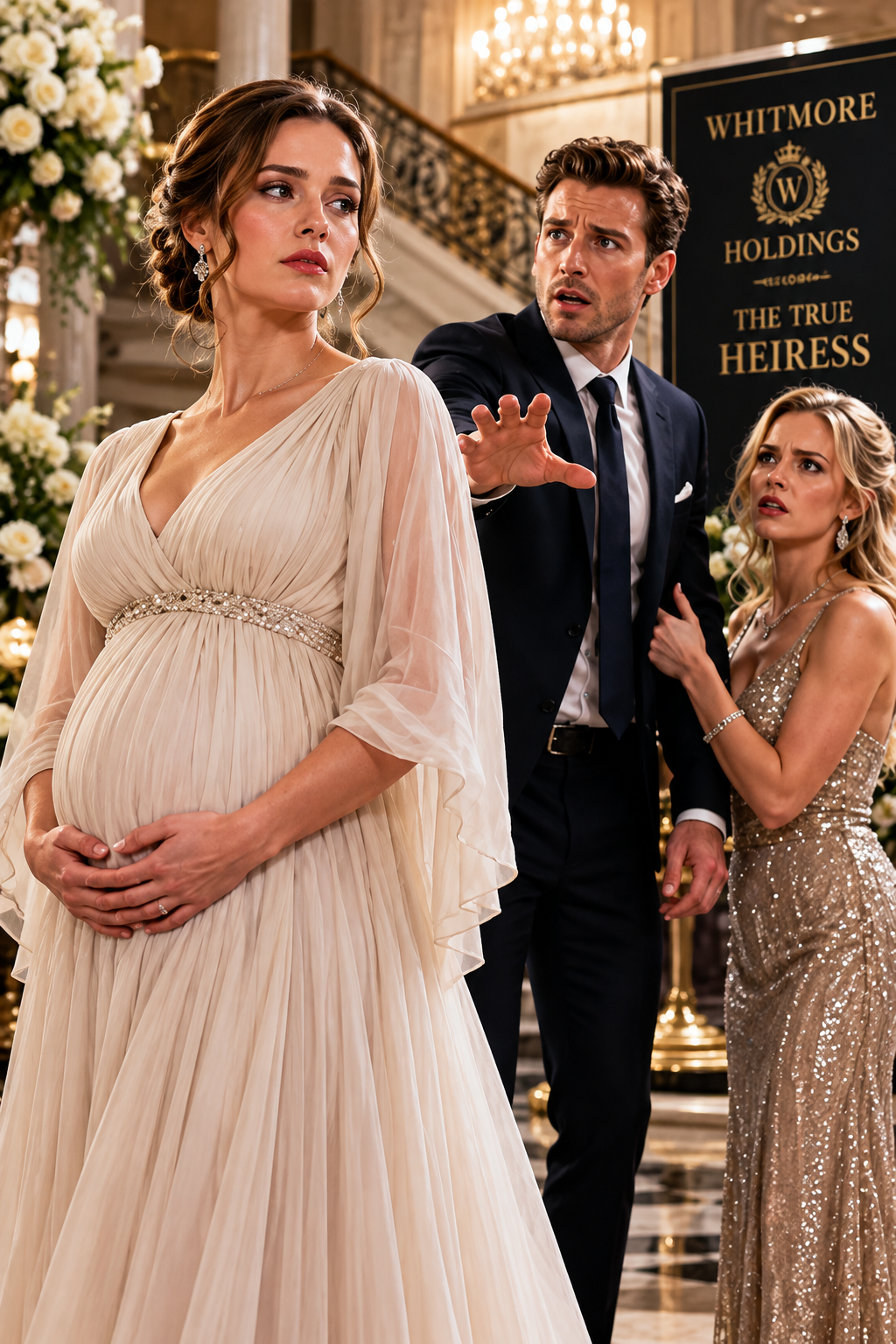
Part 2: The papers erased my work and underestimated my authority
The proposal offered me one-third of the remaining mortgage and a lump sum of $200,000. In exchange, I would give up any future claim to Cole Technologies’ intellectual property, business strategies, client relationships, and commercial achievements. I read that paragraph twice. Six years earlier, Ethan had been staring at rejection emails in the basement office of a struggling startup while I redesigned the company’s business model and persuaded the Morgan Medical Foundation to license its healthcare algorithm at almost no cost.
I had gone from hospital to hospital pitching pilot programs until one finally agreed. I spent nine months securing the company’s first state healthcare contract. When a security breach threatened to destroy everything, I stayed awake for forty-six hours with the legal and cybersecurity teams until every vulnerability was contained. Yet in Ethan’s proposed settlement, I had become a wife who merely watched from the sidelines. I picked up the pen.
Michael blinked. He reminded me that I had the right to let my own attorney review the papers. “No,” I said. “He’s in a hurry to end this. I don’t intend to slow him down.” I signed the separation proposal, my hand shaking on the final page. One tear fell onto the paper, and I wiped it away before Michael could notice.
At the door, I stopped him. Since Ethan required me to resign immediately, the Morgan Medical Foundation would begin a breach review under Section Twelve of its licensing agreement. Michael turned back. The foundation owned the core algorithm behind every medical product Cole Technologies sold. One condition required me to remain the company’s strategic and technical compliance officer; another prohibited sharing protected materials with unauthorized third parties. Ethan had violated both conditions.
The foundation could suspend access to new development tools and give Cole Technologies thirty days to cure the breach. Michael asked if Ethan knew I had the authority to do that. “He knows the contract,” I said. “He just doesn’t know the final authority behind the foundation is me.” My full name was Claire Bennett Morgan. Morgan was my mother’s name; Bennett belonged to a family that controlled Bennett Global, a conglomerate spanning healthcare, insurance, logistics, energy, infrastructure, and real estate.
My father, Richard Bennett, chaired the company. The press knew he had a daughter, but few people knew what I looked like. My mother had been a medical researcher who despised publicity and never allowed reporters to photograph me. After my parents divorced, I lived mostly with her. When I was twenty-two, I refused the marriage my father had arranged with the son of another powerful family. He froze my trust and gave me seven years to build a life without Bennett money, introductions, or a board position.
Part 3: I left the dynasty to build a company beside Ethan
I accepted his challenge. I left the estate and used my mother’s surname, Clare Morgan. A year later, I met Ethan Cole, a brilliant, ambitious twenty-six-year-old with four employees and an office in a converted Brooklyn townhouse basement. He was demonstrating hospital software to a procurement director when the system crashed halfway through the presentation. The director walked out, leaving Ethan alone in the conference room, staring at a frozen screen.
I had attended as a junior consultant for a healthcare research organization. I told him the software crash wasn’t the reason the director had left. He frowned and asked what was. “You spent twenty minutes explaining what your system can do,” I said, “and never once explained why her hospital needs it.” He was offended enough to listen as I broke down hospital approval structures, procurement concerns, compliance risks, and budget cycles.
The next morning, he asked me to join his company. I didn’t tell him who my father was; at first, because of the conditions he had placed on me, and later because I no longer wanted to. Ethan and I revised proposals through power outages, working by the light of his phone. He gave me the last slice of pizza when neither of us had eaten all day. When we landed our first $100,000 contract, he dragged me onto the Brooklyn Bridge at two in the morning and promised to give me the best life in the world.
We married a year later. Over the next six years, Cole Technologies grew from a four-person startup into a private healthcare technology company valued near $800 million. The press called Ethan a self-made visionary, and I never corrected them. I believed marriage meant our achievements belonged to both of us. But as the company grew, Ethan grew uncomfortable with how much influence I had.
At industry events, he described strategies I had created as his own ideas. He stopped inviting me to major networking functions and said I disliked publicity. After I became pregnant, he said I needed rest. Once, outside a ballroom, I heard him introduce me to a potential investor as someone who “mostly handles internal coordination.” I confronted him afterward. He said investors needed to see one clear leader, and I accepted the explanation because I still believed his success was ours.
My mother had created the Morgan Medical Foundation to fund research in medical data systems, rare diseases, and hospital efficiency. When she died, I became the ultimate beneficiary of its trust, though I first had to complete the required education and pass an independent board review. I began as a research assistant, then transformed one of the foundation’s internal data models into a hospital-management algorithm. Ethan knew Cole Technologies used technology licensed by the foundation; he thought I had used old contacts to secure favorable terms. He never asked why the foundation had supported his company at a fraction of market price.
Vanessa Hail arrived three months before I signed the separation proposal. She was beautiful, polished, and skilled at making people believe she possessed hidden power. She had once been a senior archival assistant for the Bennett family foundation, but she had been fired for copying confidential files. Ethan met her at a healthcare charity reception, where she wore an antique sapphire brooch from the Bennett archives. She told him she was Richard Bennett’s unacknowledged daughter.
Part 4: Vanessa’s story gave Ethan the excuse he wanted
Vanessa showed Ethan a private DNA report claiming a 99.8 percent biological relationship with my father. It was fake. She also produced a confidentiality letter supposedly issued by Bennett Global’s legal counsel, claiming the family was privately evaluating her inheritance rights and demanding silence until the annual gala. A former deputy director of the foundation backed her story. He had been fired for embezzlement and was drowning in gambling debt; Vanessa had paid him.
Ethan ordered a preliminary background check, but every piece of evidence pointed toward the answer he wanted. Vanessa had worked with Bennett family offices and had entered the private estate many times. She told him that if Richard publicly recognized her, she could become a major heir. But the board would never accept someone inexperienced, she said, so she needed a successful business partner to prove she belonged. Ethan heard an invitation into the Bennett empire.
On our sixth anniversary, I planned to tell Ethan the truth. My seven-year separation from the Bennett family was over. My father had accepted that I had built a career without using his money and signed documents confirming I would join the Bennett Global board. I had also persuaded him to authorize a formal review of Cole Technologies; if it passed compliance and governance checks, Bennett Global would lead the next funding round. I placed two gifts in a box: our baby’s twelve-week ultrasound and the succession confirmation with an investment letter.
I waited until eleven that night. Ethan didn’t come home. Then I saw Vanessa’s post from a private jewelry boutique. She sat before a mirror while Ethan fastened an emerald necklace around her throat. The necklace had belonged to my mother. Three days earlier, Ethan had removed it from our safe, claiming the clasp needed repair. Vanessa’s caption read, “Finally found someone willing to help me take back everything that belongs to me.”
Ethan came home at one in the morning smelling of her perfume. He said Vanessa was different from me because she knew what she wanted and understood what a man needed while building something important. I asked what I had failed to understand. He pointed to my pregnancy, doctor’s appointments, and nursery plans as distractions from the company’s most important moment. Then he said Vanessa could give him something I never could: a path into the Bennett family.
I looked toward the unopened gift box beneath the table. If I showed him the succession papers, he would understand that the access he wanted was already within reach. But I didn’t open it. I asked what would happen if Vanessa wasn’t an heir. Ethan laughed and accused me of bitterness, saying not every woman wanted to hide behind her husband and make marriage her whole identity. That night, after learning I was bleeding and might lose our child, he still chose to help Vanessa prepare for the gala.
The foundation suspended new development access the next day, as the contract allowed, while preserving existing hospital service. Ethan called and accused me of punishing him. I told him I was complying with the agreement after he forced out the executive whose supervision the license required and shared protected material with an unauthorized person. He said Vanessa would soon sit on Bennett Global’s board. “According to whom?” I asked. He said she had proof. I asked whether it had occurred to him that she might be lying.
Part 5: Ethan blamed me publicly while Vanessa deepened her fraud
Ethan didn’t mention the contract when he held a press conference. Instead, he accused the Morgan Medical Foundation of using healthcare technology as leverage in a private marital dispute. He appeared composed before the cameras and said hundreds of healthcare organizations and more than five hundred employees should not become collateral damage in the breakdown of one marriage. He never said my name, but the headlines did: “Tech CEO’s Wife Accused of Using Medical Platform to Punish Estranged Husband.”
When I returned to the Bennett estate after leaving the hospital, reporters surrounded the gate. They shouted questions about patient data, hospital service, and whether I was using the foundation to force a better settlement. My father offered to have Bennett Global’s communications team dismantle Ethan’s story by morning. I refused. If I revealed my identity then, the public might believe I had used family power against him. I would answer with contracts and evidence.
The foundation clarified that no existing clinical service had been interrupted; only new commercial licenses and product updates had been suspended under the agreement. We did not release all the evidence because Vanessa had obtained a strategic plan and other protected documents. We feared that if we revealed the investigation too early, she would destroy what remained. Ethan’s attack briefly worked. Investors sympathized with him, and several offered short-term financing if Bennett Global’s rumored investment proved real.
Vanessa assured him it would. Ethan used his apartment and founder shares as collateral for a $30 million bridge loan. He signed a conditional stock transfer giving Vanessa eighteen percent of his founder shares if she was officially recognized by the Bennett family after the gala. He even gave her partial voting authority and let her participate in fundraising discussions. He believed he was exchanging equity for entry into a dynasty. Vanessa was using his company to finance the final stage of her fraud.
My father asked what I intended to do about Ethan. I told him I wouldn’t destroy an entire company because my marriage had failed. Many employees had worked with us since the basement days; engineers supported hospital systems, and client-service teams kept critical operations running. They had not betrayed me. I instructed the foundation to work quietly with hospitals on a transition plan so that, if Cole Technologies failed, clients could move without disrupting patient care.
Meanwhile, Bennett Global investigated Vanessa’s claims. The laboratory named on her DNA report was real, but its report number belonged to someone else. Her supposed legal letter used a template retired three years earlier. We traced her payment to the former foundation executive who supported her story. Then we learned she had also bribed a Bennett Global director drowning in personal debts.
Vanessa’s plan was to have the director leak a fabricated family document to a journalist before the gala, accusing my father of hiding an illegitimate daughter. She didn’t need Richard to recognize her; she needed public uncertainty. If Ethan believed an inheritance dispute was real, he would keep giving her money and shares. Then she planned to claim persecution by the Bennett family and move assets overseas. Our internal audit team had already been monitoring the director. By the time Vanessa recruited him, he had agreed to cooperate with us and federal investigators. The gala was no longer just my return; it would be where her scheme collapsed.
Part 6: The gala revealed who I was and what Vanessa had done
One week before the gala, Ethan came to the estate without an appointment. He looked thinner, his suit wrinkled, and the confidence he wore in interviews had begun to crack. His first words were still about the company: “Restore the license.” I told him the foundation had received his proposed cure, but it didn’t address the transfer of protected materials to Vanessa. He said she was not an outsider; she would soon be on the Bennett Global board.
He asked if I was still acting out of jealousy. I told him he was risking his company for someone he’d known three months and blaming me for enforcing an agreement he had signed six years earlier. He said Bennett Global would invest after the gala and then they wouldn’t need the foundation. Before leaving, he offered to improve my divorce settlement if I withdrew the foundation’s claims and stopped “attacking Vanessa through the press.” He hadn’t asked about the baby. He was worried that Vanessa had suffered enough.
By the night of the gala, I was six months pregnant. My stylist chose a dark green gown that did not hide my pregnancy. My father said I didn’t need to appear in person; the legal team had prepared everything. I told him I needed to be there for myself. For years, I had let the world call my work Ethan’s achievement. When a woman gives away her name long enough, other people begin to believe she never had one.
Ethan and Vanessa arrived early. She wore a gold gown and the stolen sapphire brooch, holding his arm as cameras flashed. A reporter asked whether she had a connection to the Bennett family. Vanessa smiled and said many things would become clearer that night. Ethan stood beside her like a man waiting for a kingdom to open its gates. Investors asked when Bennett Global would confirm its funding; he promised an announcement.
At eight, the ballroom lights dimmed, and my father took the stage. He spoke about the company’s year, then addressed the rumors surrounding the Bennett succession. Vanessa’s smile deepened. Ethan tightened his hand around hers. My father said he would introduce the person who would help lead Bennett Global into its next era. A spotlight swept across the room. Vanessa stepped forward into the beam, believing the moment belonged to her.
Then the doors at the back opened. I entered beside Bennett Global’s chief legal counsel. Ethan saw me first, and his face went still. Cameras turned as whispers swept the ballroom. The spotlight followed me to the stage, where a screen displayed my full name: Claire Bennett Morgan, sole legally recognized heir of the Bennett family, trustee of the Morgan Medical Foundation, and incoming executive director of Bennett Global.
My father extended his hand. “Welcome home, Clare.” Applause rose around us. Vanessa turned for the exit, but security officers blocked her path. Counsel explained that Bennett Global wasn’t declaring her guilty of a crime; it had provided law enforcement with evidence concerning suspected document forgery, unlawful acquisition of confidential records, and financial deception. Investigators entered through a side door as the screen changed to show the falsified DNA report, forged legal letter, payments to the former executive, and recordings of Vanessa planning a media leak.
Part 7: The evidence exposed the fraud and Ethan’s choices
Ethan turned toward Vanessa and asked what the documents meant. She said nothing at first. Then she laughed and told him he had chosen to believe her. She had given him a story, she said, and he was so eager to throw away his pregnant wife that he barely questioned it. He had signed away shares and borrowed money because he wanted to become part of the Bennett family. No one forced him, she said. “You simply wanted it badly enough to believe anything.”
The ballroom filled with stunned murmurs. Ethan looked toward the stage, finally understanding he had abandoned his pregnant wife for a woman pretending to be the Bennett heir. And the wife he had erased from his company and left in a hospital bed was Richard Bennett’s only recognized daughter. I took the microphone and addressed the other lie he had told publicly: Cole Technologies had claimed the foundation interrupted hospital service over a marital dispute.
The licensing agreement appeared on the screen. The foundation had never interrupted clinical service for existing hospitals or withheld patient information. We suspended new licenses and development access because Cole Technologies had removed required compliance supervision and shared protected materials with an unauthorized third party. The company had received thirty days to cure the breach. Instead, its leadership concealed violations through public accusations. The screen showed an email from Ethan to Vanessa containing confidential strategy files and records of Vanessa forwarding parts of them to outside investors.
I announced that Bennett Global had considered investing in Cole Technologies, but the compliance review had revealed serious governance failures, false disclosures, and misuse of licensed intellectual property. The investment discussions were terminated. The Morgan Medical Foundation would continue supporting a transition for existing healthcare clients, protecting patients, doctors, and employees. My father announced that I would join the Bennett Global board the following month and lead its global healthcare technology operations.
Ethan pushed through the crowd toward the stage. Security moved to stop him, but I raised a hand. He asked why I had never told him who I was. I told him I had planned to on our anniversary, with the succession papers and investment letter waiting at home. He remembered not coming home that night; he had been helping Vanessa choose a gown for the same gala.
He said that if he had known, he never would have divorced me. That was precisely why we could never go back. He didn’t regret losing me, I said; he regretted discovering that I was worth more than Vanessa. He insisted he loved me and had been manipulated. I reminded him Vanessa had not forced him to take my mother’s necklace, send divorce papers to my hospital room, or hang up when I said our baby might not survive.
His gaze dropped to my stomach. “The baby survived?” he asked, with hope in his voice. I asked if he was only asking now. He’d had three months to call my doctor or ask whether the baby was safe. He had remembered he was a father only after discovering I was a Bennett. I told him the law would protect his parental rights, but the law could not make him someone his child should trust. I handed the microphone back to my father and walked away without looking back.
Part 8: I protected the employees without returning to Ethan
Vanessa was taken in for questioning. Weeks later, prosecutors formally charged her in connection with document fraud, theft of confidential information, and financial deception. Some of the money she obtained was recovered. Cole Technologies could not withstand the scandal: Bennett Global withdrew, emergency lenders vanished, and hospitals began terminating contracts after completing safe transitions. Vanessa’s conditional stock agreement was frozen, while Ethan’s $30 million personal guarantee remained valid.
A month after the gala, Ethan waited outside Bennett Global’s Manhattan headquarters in falling snow. When I came out, he held out our wedding rings. He said he had returned to the old Brooklyn office and found boxes of my notes. Every major company decision had my work behind it. “Somewhere along the way, I convinced myself I had done everything alone,” he said. I told him he became that man one decision at a time, choosing the version of events that made him feel powerful.
He asked what he could do. “Respect my decision,” I said. I returned the rings and told him custody and visitation would be handled through attorneys and the court after the baby was born. Beyond our child, he was not to contact me. He asked if I truly didn’t love him anymore. For a moment I remembered the young man in the basement who gave me the last slice of pizza and promised me the world. “I loved you,” I said. “Past tense. That is why I won’t give you another chance to hurt me.”
Two months later, Cole Technologies entered formal restructuring. Its board removed Ethan as CEO. More than five hundred employees faced layoffs, and Ethan asked me to acquire the healthcare division. Those employees hadn’t betrayed me, he said, and hospitals would otherwise have to replace entire systems. I agreed to review the acquisition—not for Ethan, but for the engineers who had worked beside me and the hundreds of hospitals relying on the platform.
Bennett Global and the Morgan Medical Foundation acquired the most valuable healthcare operations, support division, and selected patents. Most employees kept their jobs, and existing hospitals completed a smooth transition. There was no place for Ethan in the new management structure. At the signing, he sat at the opposite end of the conference table where he once held authority. Everyone waited for my signature. I signed and closed the file.
“You finally took the company back,” he said. “This was never about taking it back,” I answered. “I simply stopped giving my work away.” He apologized. I heard him, but I did not say I forgave him. An apology can be acknowledged without reopening a door. Three months later, I gave birth to a daughter and named her Grace.
My father held Grace with the careful stiffness of a man handed something priceless and fragile. After the birth, the court granted me primary custody of Lily and Grace, while Ethan received limited, supervised visitation as the court determined appropriate. I did not prevent him from seeing his children within the law. But being a father was a legal relationship; becoming someone his daughters could trust would require years of choices he had not yet made.
Part 9: I reclaimed my name, my work, and the future ahead
When my maternity leave ended, I formally took control of Bennett Global’s healthcare technology division. The Morgan Medical Foundation completed its governance transition, and many former Cole Technologies engineers joined the new organization. At our first companywide meeting, one of the people who had worked with us since the basement years stood and said, “Welcome back, Director Morgan.” For a moment, I couldn’t answer. For too long, everyone had called me Ethan’s girlfriend, then Ethan’s wife, then Mrs. Cole. It took years to hear my own name again.
A year later, our new healthcare system entered European and Asian markets. After the annual leadership meeting, my assistant brought me a package from Ethan. Inside was an old music box and a letter. He admitted that he had never built Cole Technologies alone; he had stood on a platform I helped create and accepted applause that should have belonged to both of us. He wrote that he finally understood what he had lost—not a wife with a Bennett name or access to an empire, but the woman who believed in him when he had nothing.
I returned the letter to the box and didn’t reply. I had once left the Bennett family to prove I could create a life without its name. Later, I learned that independence did not mean hiding my value for love or handing someone else credit for my work and hoping he stayed grateful. It meant that when love failed and someone tried to erase my contribution, I could still stand. I could reclaim my name, my work, my dignity, and my future.
Ethan had abandoned his pregnant wife for a fake heir. Only when I walked onto that gala stage did he understand I was the real Bennett daughter. But the most important truth was never that I was Richard Bennett’s child. It was never that I had been Ethan Cole’s wife. I was Clare Morgan, a woman who had once loved the wrong man and refused to lose herself.
The girls grew up knowing their grandmother’s research helped make the company possible. I kept my mother’s recipes and notes in a study at the new headquarters, where young researchers could read about the work that came before them. I made sure every launch credited the people who had written the code, tested the systems, secured the contracts, and kept the hospitals running. No single person’s name would swallow the work of a whole team again.
Ethan’s visits remained supervised until the family court reviewed his consistency and the children’s needs. He arrived on time, learned Lily’s favorite books, and held Grace carefully when the monitor approved. I did not interfere with those efforts, but I did not mistake them for a path back to me. A man could improve as a father without becoming my husband again. My life no longer depended on whether Ethan finally understood the difference.
Sometimes the girls asked about the years before they were born. I told them I had built a company with their father, and that I had also made mistakes by trusting someone to protect work I should have protected myself. I told them their father had made choices that hurt us, and that he was trying to make better ones now. The truth did not need to be cruel to be clear. They deserved a story that belonged to them, not a polished version designed to protect an adult’s pride.
I never recovered every memory of my marriage, and some days I still grieved the time that vanished. But I no longer measured my life by the memories I had lost. I had my daughters, my work, my name, and a future that belonged to me. Ethan abandoned his pregnant wife for a woman pretending to be an heir; I reclaimed what I had built and learned that my greatest inheritance was the strength to choose myself.
✓ Lynn R. Adams
Part 2: The papers erased my work and underestimated my authority The proposal offered me one-third of the remaining mortgage and a lump sum of $200,000. In exchange, I would give up any future claim…