At my sister’s waterfront wedding, my father handed me an ivory envelope declaring
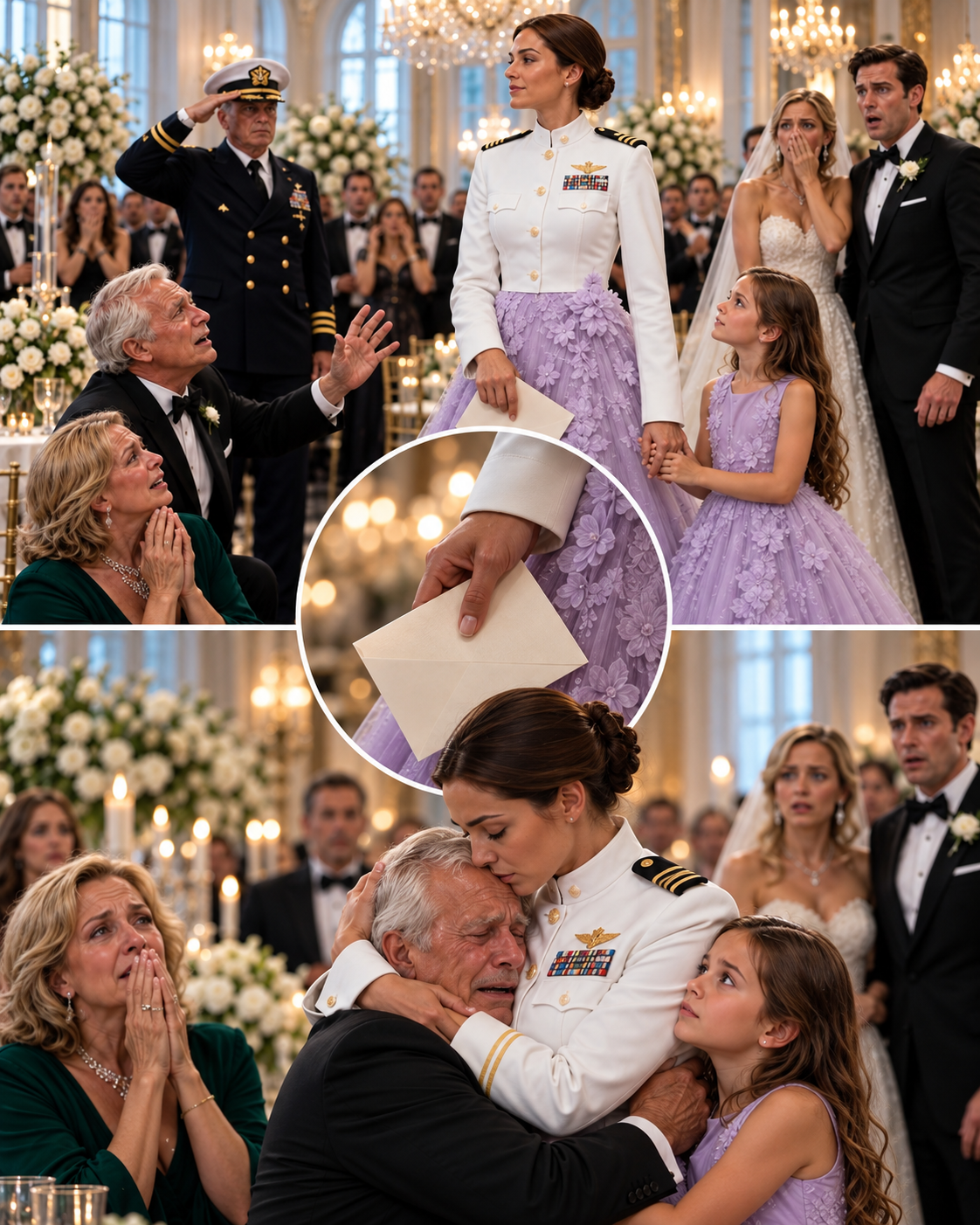
Part 2: Six silent years reveal the trust clause my father feared
People thought Dad had defeated me when I disappeared from Bennett Maritime. After Grandfather died, Walter removed my office, reassigned my staff, froze family-trust distributions, and told the company I had chosen to pursue independent work. That wasn’t true, but challenging him publicly would have required me to reveal information I did not yet understand. Two nights before Samuel died, he had placed a small brass key in my palm in a Boston hospital room. He told me not to use it until Dad made his rejection official. I had been twenty-eight and thought he was being sentimental.
“If Walter shuts you out quietly, wait,” Grandfather said. “If he does it publicly and puts his name beneath it, open the box.” I asked what box he meant, but he refused to explain more. After the funeral, his longtime attorney described the succession clause. Dad could insult me, freeze me out, erase me from family photographs, and tell executives I no longer mattered. But if he formally disowned me, the reserve shares would leave his control. For six years, I endured invitations designed to remind me I belonged only when my absence might embarrass him. I watched Lauren receive the praise, properties, and parties he thought would keep her obedient.
I let people assume I had failed while I built a consulting firm focused on maritime restructuring and commercial debt. That work led me to Bennett Maritime’s lenders. The company had borrowed heavily to renovate two terminals and buy a regional freight business. When shipping revenues weakened, lenders began selling portions of the debt. The buyers appeared unrelated: Fenwick Holdings, North Atlantic Recovery, and Crescent Harbor Partners. I traced their filings, management fees, and ownership records until each trail ended at companies connected to Ethan. Before he married Lauren, he was quietly becoming one of Bennett Maritime’s largest creditors.
I had assumed Dad knew nothing about it until I found a memo he had signed three months before the wedding. It gave one of Ethan’s companies unusually generous access to confidential information. I could not tell whether the two men were partners or predators circling the same wounded company, so I kept collecting evidence. Julian Cross, my attorney and closest professional ally, held encrypted copies of everything outside Rhode Island. By the time Lauren sent me her invitation, I suspected her marriage had a business purpose. I just didn’t know how deep it went.
After the reception, I found Julian waiting near the hotel’s service elevators, where we had agreed to meet. I handed him the ivory envelope. He read the signatures and exhaled. “He actually did it.” I told him the cameras had captured the exchange and uploaded the footage to an off-site server. “Then Walter gave us witnesses, video, and authentication in one room,” Julian said. We drove to a private bank where Margaret Vale, my grandfather’s former executive assistant, waited with a narrow wooden case.
Margaret hugged me once and said Samuel had ordered her to release the box only if Dad made the separation official. The brass key opened it. Inside were certified copies of the trust agreement, original documents proving my twenty-three-percent ownership, and a ledger showing millions of dollars moving through companies controlled by my father and several directors. Beneath the ledger was a photograph of my mother, Evelyn, beside Grandfather at Providence Pier Nine, taken weeks before the car crash that supposedly killed her. On the back he had written: Walter lied about more than the company.
Part 3: A letter from my dead mother uncovers a second betrayal
I turned the photograph over and asked Margaret what the message meant. She looked at the pavement and said she had promised Samuel the truth would come from him. “He’s dead,” I reminded her. Her eyes filled with shame. Beneath the ledger, Julian found another envelope addressed in handwriting I recognized from childhood. I opened it inside the car while rain tapped against the windows. The first line read, “My darling Mara, if Samuel has finally given you this, Walter has made the same choice he made with me: he has chosen control over family.”
My mother wrote that she had uncovered illegal transfers from Bennett Maritime and confronted Dad shortly before the crash. She survived the accident, but Walter created a story in which she had died. According to her letter, Grandfather intervened after learning what his son had done. Samuel moved Evelyn between private residences and overseas clinics, telling her that a public return would destroy the company and place her daughters in danger. My mother spent years trying to reach us through intermediaries. The letter said proof of what happened was hidden in Bennett Maritime’s original office at Pier Nine.
I wanted to go there immediately, but Julian stopped me. “Tomorrow you gain control of the board if the transfer survives challenge,” he said. He secured copies of the letter and photograph, then called two former federal investigators. Margaret finally admitted Pier Nine had never truly been sold, despite the public records. Grandfather had transferred it to an anonymous trust twenty years earlier. At the next morning, I entered Bennett Maritime headquarters in a charcoal suit, carrying the envelope from Lauren’s wedding. Walter was already in the boardroom beside six directors.
Ethan occupied a chair near the windows despite having no formal board role. Dad’s attorneys claimed the succession clause was obsolete and that I had manipulated him into signing the letter. Julian placed the authenticated trust, share documents, and wedding footage on the table. Outside counsel reviewed them for twenty minutes, then confirmed the clause remained valid. The public disowning had triggered the transfer as soon as the signed letter was delivered before witnesses. With my existing shares, I held fifty-one percent. Walter stared across the table without blinking.
I requested a forensic audit of executive transactions from the last ten years. My second motion suspended new borrowing, collateral transfers, or restructuring involving Caldwell Capital and its related companies. My third removed Walter from operational authority until the audit was complete. Three directors objected, but two had already reviewed Julian’s debt documents. When the votes were counted, my father no longer controlled the company he had dominated for three decades. Ethan stood and warned that Caldwell-controlled debt could freeze the company’s operating accounts within forty-eight hours.
Before I could answer, Lauren entered the room wearing yesterday’s makeup beneath sunglasses. She removed them and looked straight at Ethan. “Answer her,” she said. Ethan tried to guide her into the hallway, but she pulled away and opened a folder. Inside was the prenuptial agreement he had persuaded her to sign, plus an amendment she said she had never seen. The hidden amendment transferred any Bennett shares she inherited into an investment vehicle controlled by Ethan’s firm. Lauren turned to our father. “You both knew.” Walter said nothing.
Part 4: The golden daughter learns her marriage was an acquisition plan
Growing up, Lauren and I had been trained to compete before we understood what the contest was. If I earned the highest grade, Dad asked why Lauren hadn’t; if she won a dance competition, he asked why I lacked her social charm. We stopped seeing each other as sisters and began seeing each other as proof of our own inadequacies. Walter praised whichever daughter was easiest to control at that moment, then watched the other work harder for his approval. By adulthood, Lauren had won the contest because I had stopped playing.
At the board meeting, I watched her understand there had never been a prize. Dad had financed her apartments, vacations, charities, and wedding because dependence was useful. Ethan had built their courtship around that same weakness. He chose restaurants her friends admired, proposed where photographers could capture the moment, and made every investment conversation sound like praise. Lauren had married someone who studied her before pretending to love her. Ethan called the amendment a contingency, but Julian showed that it had been digitally signed through Lauren’s account three days earlier.
Lauren said she had been traveling that day and never opened the document. Ethan’s lawyer tried to stop the discussion, but one director asked security to restrict his access while the investigation continued. Dad had stayed calm until I placed Grandfather’s ledger on the table. It connected Walter to shell companies buying Bennett’s debt and showed payments to consultants associated with Caldwell Capital. My father thought he could use Ethan’s financing to force a restructuring, dilute other shareholders, and secure Lauren’s future control. Ethan intended to seize port properties when the company defaulted.
“You gambled the company on him,” I told Walter. He said I understood numbers but not strategy. “Then explain why your new son-in-law bought enough debt to take our terminals,” I answered. Lauren lowered herself into a chair, visibly shaken. Ethan looked at her and said, “This is why business was never your responsibility.” The sentence was quiet, almost dismissive. I watched something inside my sister go still. She had heard versions of those words from Dad all her life; coming from her husband, they finally sounded as cruel as they were.
Lauren removed her wedding ring and slid it toward Ethan. “Then you won’t need me for the business.” Ethan looked to Walter for help, but Dad had already begun protecting himself, denying he knew about the amendment and claiming Ethan acted alone. Security called Julian: someone had entered the corporate archive and removed files about Pier Nine, Grandfather’s trust, and Evelyn. The corridor cameras had been disabled for nineteen minutes. Only four credentials could do that. The new one was registered to Ethan Caldwell.
Lauren closed her eyes, then looked at me. “Where is Pier Nine?” I told her it was where Grandfather had hidden the truth about our mother. She picked up her handbag and said she was coming. The pier stood behind rusted fencing at the edge of an old industrial harbor, with weeds growing through the loading yard and empty warehouses facing black water. Julian insisted investigators search the original office before we entered. Lauren and I waited in his car, nearly strangers again after sharing a childhood.
“I’m sorry,” she finally said. I expected her to apologize for Ethan, for the cameras, or for the way she had watched Dad give me the letter. Instead, she apologized for believing his lies because accepting them had made her life easier. She admitted she knew the envelope would arrive during the wedding and had let the cameras focus on me. “I thought if everyone saw you lose, I would stop feeling like I had to compete,” she whispered. I asked whether it worked. “For about ten seconds,” she said.
Part 5: The abandoned pier reveals who truly owned the company
Lauren admitted most of her marriage had been built around proving she had something I didn’t. I told her I had secretly envied how easily Dad seemed to love her. We both sat with the realization that we had spent half our lives jealous of illusions. Investigators found a sealed basement beneath the old office. The brass key from Grandfather’s box opened a metal door concealed behind shelving, revealing ledgers, microfilm, contracts, and decades of shipping records. My mother’s handwriting appeared throughout the notebooks.
The records showed Evelyn had discovered bribery, customs fraud, and the diversion of company funds before she disappeared. They also exposed a falsified history of Bennett Maritime. Samuel had not created the business alone. The first vessel was financed mainly by Rose Vale, my maternal grandmother, whose investment was converted into shares through a holding company. Samuel and his partner, Daniel Caldwell, managed the company, then shifted control away from Rose using amendments she never knowingly approved. Daniel was Ethan’s father. The battle between our families began decades before Lauren met Ethan.
One document changed everything: Rose’s original ownership agreement said her controlling interest passed through her daughter Evelyn, not through Samuel. My mother should have inherited a legal claim larger than Walter’s; after her supposed death, those rights should have passed to Lauren and me. Instead, Dad had represented himself as the surviving controlling beneficiary. His authority partly depended on a death he knew had never occurred. Then a noise sounded upstairs, the electricity failed, and emergency lights flickered on. Someone had activated the old fire-suppression system, and water began dripping through the ceiling toward the paper archive.
Lauren and I moved boxes onto metal shelves while investigators searched for the shutoff valve. One container slipped and spilled photographs across the floor. Among them was a picture taken less than a year earlier at a coastal café in Maine. My mother sat beside a window, older and thinner but unmistakably alive. Ethan sat beside her. The date proved he knew she had survived months before marrying Lauren. On the back, someone had written the address of a private residence outside Portland.
Federal investigators confirmed that a woman registered as Evelyn Vale had lived there for almost four years under restricted visitation. She was still alive, less than three hours away. The first thing my mother said when I entered her room was my childhood nickname. “Mars,” she whispered. Evelyn was sixty-two, silver threaded through her dark hair, with the same eyes I saw in my reflection. I had imagined that reunion a hundred ways, but not standing frozen in the doorway, afraid touching her might make her disappear.
She walked across the room and wrapped her arms around me. Lauren began crying before either of us did. Our mother pulled her into the embrace, and the three of us held one another after more than two decades of believing she was dead. There was no speech that could restore those years. We stood together until none of us could pretend we were unaffected. Then she told us what had happened.
Part 6: Our mother returns with the evidence Walter tried to bury
Walter discovered Evelyn’s investigation shortly before the crash. She had been tracing company funds used for illegal transactions and offshore accounts. When she threatened to contact federal authorities, he arranged for her car to be tampered with. She survived after another driver found her near the coastal road. Samuel reached the hospital before police correctly identified her. Rather than expose his son, Grandfather moved Evelyn into private care and supported Walter’s story that she had died. He believed hiding her would protect the company and his granddaughters.
Walter reinforced that fear by threatening to ruin Evelyn’s credibility and permanently separate her from us if she reappeared. She was moved between facilities, sometimes overseas, through trusts connected to Bennett Maritime. She tried to escape twice but had no identification, independent money, or proof we were safe. “Your grandfather kept me alive,” she said, “but he never gave me my life back.” Ethan had found her a year earlier while investigating his father’s history. He believed reclaiming Bennett Maritime would avenge Daniel Caldwell, whose old corporate-theft conviction had been manipulated by Samuel and Walter.
Ethan promised Evelyn freedom if she helped him prove Caldwell ownership. When she learned he intended to use Lauren’s inheritance and force the company into default, she refused, so he kept her location secret. By evening, investigators were interviewing our mother and reviewing the Pier Nine archive. Walter tried to leave Rhode Island by private aircraft but was detained before departure. Ethan disappeared from the hotel as his accounts and travel documents were frozen. Company directors issued statements claiming they knew nothing. Suddenly, everyone who had ignored Walter for years claimed they barely knew him.
The court fight over the share transfer began three days later. Dad’s lawyers argued the clause was obsolete and that I had tricked him into signing the letter. The wedding footage showed him delivering it voluntarily, describing it as a family decision, and watching me read it while Lauren and cameras looked on. Emails proved the public scene had been planned nearly two weeks earlier. Lauren testified that Dad wanted my removal recorded because he believed embarrassment would stop me from challenging him. When asked if I had provoked the confrontation, she looked at him and said, “Mara sat at a wedding table and opened an envelope. We did the rest.”
The judge upheld the transfer and preserved my fifty-one-percent control while the larger ownership claims were investigated. Walter was barred from company property and prohibited from moving corporate assets. Outside the courthouse, reporters shouted questions while Lauren stood on one side of me and our mother on the other. For the first time in my life, Walter Bennett was the one standing outside the family. Four days later, Ethan resurfaced through lawyers. Caldwell Capital issued default notices on hundreds of millions in Bennett Maritime debt, claiming the change in control triggered protections in the loan agreements.
If Ethan won, his companies could seize two terminals, a logistics subsidiary, and waterfront property worth far more than the debt. It was the trap he had been building for nearly a year, with Walter’s help. Each man had assumed he would control the outcome. I called the independent lenders and showed them everything: the audit, false consulting transfers, Walter’s secret agreements, Ethan’s ownership interests, and our plan to restructure legitimate debt while challenging loans obtained through deception. Several lenders agreed to pause enforcement. Two groups offered emergency financing if the court prevented Ethan from taking collateral.
Part 7: Lauren discovers the final trap in her own marriage
The missing evidence came from Lauren. While reviewing wedding files, she found Caldwell Capital presentations in a cloud account created jointly for their household finances. Buried among insurance forms and property records was a strategy deck called Project Harbor Bride. It described how marriage to Lauren could provide access to future Bennett voting shares, family trusts, and confidential company information. Her courtship had been listed as part of an acquisition plan. She stared at the slide and said, “I was a bullet point.” I wanted to comfort her, but pretending Ethan had not used her would only have deepened the lie.
We submitted the presentation to the court. The judge temporarily suspended Caldwell’s default actions while fraud investigators reviewed the loan documents. Bennett Maritime had enough breathing room to pay its workers and keep shipping operations running. Ethan’s partners began cooperating when they realized he might expose them to criminal liability. Lauren listened to his apology over a monitored call. He insisted his feelings had eventually become real, as if affection could erase a year of surveillance and manipulation. When she asked what he would have done if she had never inherited the shares, he was silent.
Finally, Ethan admitted their marriage probably would not have lasted once her inheritance was transferred into his investment vehicle. Lauren closed her eyes. “Thank you,” she said. He asked why she was thanking him. “That’s the first honest sentence you’ve ever given me.” She ended the call and never answered another one. Two weeks later, Ethan surrendered. Prosecutors charged him with financial fraud, conspiracy, unauthorized access to corporate systems, and actions connected to our mother’s confinement. He cooperated against several directors.
His testimony confirmed Walter knew Evelyn had survived and had diverted company funds for years. He also proved Dad had planned the wedding disinheritance because he wanted to punish me, not because he understood the trust clause. That detail mattered more than I expected. Part of me had wondered whether Walter remembered Grandfather’s warning and triggered the transfer for some hidden reason. Ethan eliminated that possibility. My father truly believed the clause had expired. He had not sacrificed control to protect me; he had simply underestimated the daughter he spent years trying to erase.
By autumn, Bennett Maritime no longer resembled the company Samuel built or Walter corrupted. Six directors resigned, three were indicted, contracts were reviewed, and lenders demanded new governance rules. Analysts predicted the ports would be sold and the company would disappear within a year. Instead, I asked the employees what they needed. Dockworkers wanted their retirement accounts protected from executive raids. Captains wanted maintenance budgets separate from dividend targets. Office staff wanted whistleblower protection strong enough to report fraud without losing their careers.
Families living near the terminals wanted answers about pollution, land purchases, and secret settlements. Their demands had nothing to do with preserving the Bennett name. That changed my idea of inheritance. I had spent years preparing to defeat Walter because control seemed like the only language he respected. Once I had control, I realized I did not want to become a better version of him. I wanted to build something he would not recognize. With my mother’s approval and Lauren’s support, we began reshaping the company’s ownership and governance.
Part 8: I rebuild the empire without repeating my father’s mistakes
Thirty-five percent of voting power went into an employee trust. A restitution fund received proceeds from properties bought with diverted money. My mother transferred much of her historic ownership claim into a foundation supporting people harmed by the maritime records’ criminal schemes. Executive compensation became tied to worker safety, pension funding, and independent compliance reviews. We removed the Bennett name from the company and renamed it Vale Harbor Cooperative. Some financial reporters called the decision sentimental. Walter called it vandalism through his attorney. The employees approved it by an overwhelming margin.
Lauren refused a board seat. She said one disastrous marriage and thirty years of corporate politics had convinced her she belonged somewhere else. Instead, she built a nonprofit helping families affected by the company’s old misconduct. She turned out to be excellent at making wealthy people uncomfortable until they wrote large checks. For the first time, my sister created something no one could hand her as a wedding gift. Our mother rented a small house overlooking Narragansett Bay. Healing did not arrive simply because she was free; some mornings, she still woke afraid someone would move her again.
Walter eventually pleaded guilty to financial conspiracy, obstruction, and charges connected to Evelyn’s confinement. He never apologized in public. In a private letter, he wrote that everything he had done had been necessary to preserve the Bennett legacy. I read it once, then placed it beside the ivory envelope from Lauren’s wedding. One explained why he rejected me. The other explained why he would never understand me. Both came from a man who believed family existed to protect an empire. I finally understood that my greatest victory was not taking that empire away; it was refusing to inherit his definition of family.
Exactly one year after Lauren’s wedding, we returned to the Harborview Belmont. The ballroom had been transformed for the first Vale Harbor Scholarship and Restitution Gala. The same chandeliers shone over white flowers and champagne, but no one had been invited to watch someone suffer. The room held workers, survivors, scholarship students, investigators, families, and employees who had kept the company alive while its executives fought over control. Lauren stood beside the stage in a simple green dress. She had finalized the annulment and stopped using the Caldwell name before Ethan’s first court appearance.
Our mother walked toward us carrying the ivory envelope. It looked ordinary after investigators, lawyers, clerks, and experts had handled it. A year earlier, it represented exile. Now it was evidence of the moment everything changed. Lauren suggested we burn it. I refused. Destroying uncomfortable history was how our family had created the disaster in the first place. We would place it in the public company archive beside the trust, the financial records, and Evelyn’s testimony, so people could see how institutions become dangerous when families confuse privacy with secrecy.
Julian found me on the terrace after the speeches. For years he had stood beside me with folders, warnings, and legal opinions no one else wanted to hear. Over the previous year, something between us had become more personal, though neither had named it. He asked what I would do now that the trials and restructuring were mostly complete. I told him I had no idea. “That might be healthy,” he said. Uncertainty used to terrify me; now it felt almost luxurious. He reached for my hand without cameras, contracts, witnesses, or strategy. I let him hold it.
Later, Mom, Lauren, Julian, and I sat around the table where Walter had handed me the letter. I unfolded it one last time. The words had not changed: no longer part of the family, no future inheritance, no claim to the Bennett name. A year earlier, they were designed to make me small before two hundred strangers. Instead, they activated Grandfather’s clause, exposed Ethan’s plan, led us to our mother, ended decades of financial corruption, and forced me to decide who I wanted to become. I folded the letter twice and placed it back inside the envelope.
My father believed he was closing the door on my life. Instead, he handed me the key to his empire, the truth about my mother, and my sister back. More valuable than any of those was the freedom to build a family that did not require someone else to lose before another person could belong. Outside, a cargo ship crossed the dark Atlantic, its lights reflected on calm water. It belonged to Vale Harbor Cooperative, where hundreds of workers now shared in the company’s future. My father believed power meant making sure no one could challenge him. He was wrong. Family was never the word on the envelope. It was the people sitting beside me after the words inside it had lost their power to hurt us.
✓ Lynn R. Adams
Part 2: Six silent years reveal the trust clause my father feared People thought Dad had defeated me when I disappeared from Bennett Maritime. After Grandfather died, Walter removed my office, reassi…